Category: Uncategorized

  • ‘Obidients’ More Loyal To Obi Than Nigeria—Bwala

    ‘Obidients’ More Loyal To Obi Than Nigeria—Bwala

    Thr Special Adviser to President Bola Tinubu on Policy Communication, Daniel Bwala, has accused a segment of social media users, known as “Obidients,” of prioritizing political loyalty over national interest.

    The Obidients are a group of supporters and followers of Peter Obi, a Nigerian politician who ran for president in 2023 on the Labour Party platform.

    The Obidient Movement, as it’s called, is a nationwide coalition of individuals and groups who believe in Peter Obi’s leadership and policies.

    They have been actively mobilizing support for Obi’s presidential bid and have organised several rallies and events across the country.

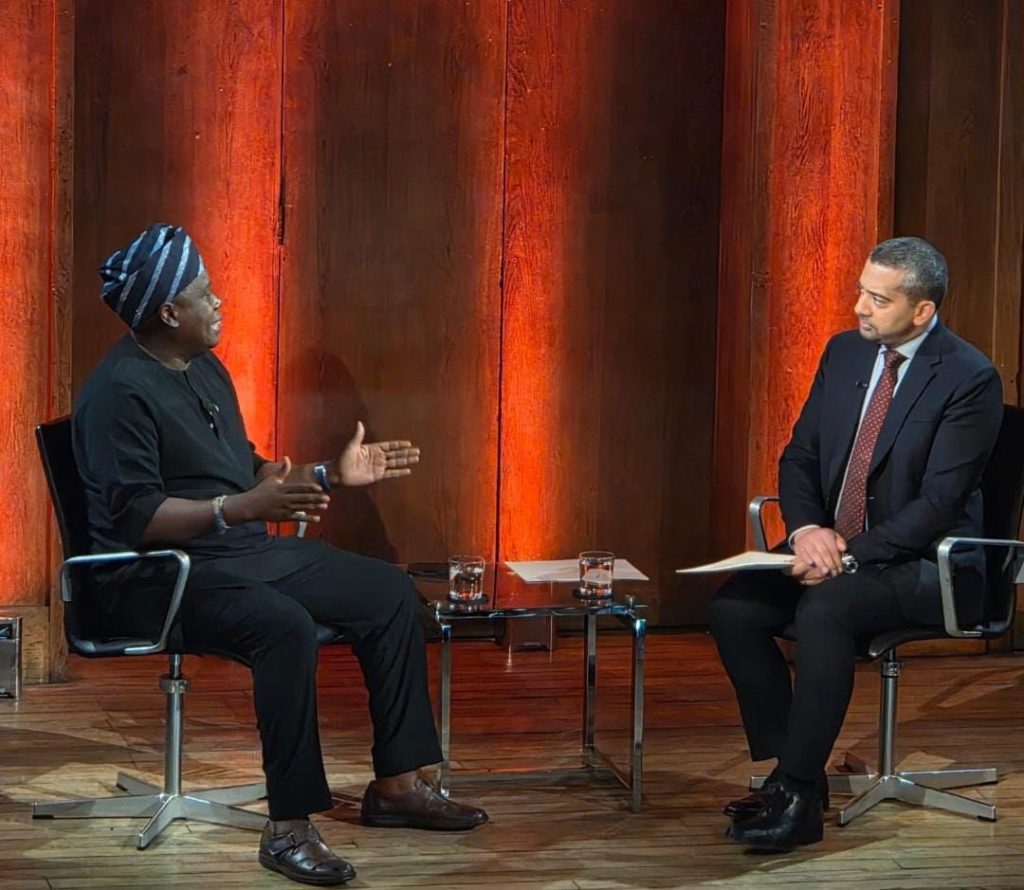
    Bwala who was speaking during an appearance on News Central’s programme, 60 Minutes with Mr Kay, aired on Friday, while addressing reactions to his recent interview with Al Jazeera’s Mehdi Hasan, also revealed undergoing throat surgery eight days after the interview.

    “Eight days after the interview with Mehdi Hasan, I underwent surgery on my throat. I don’t know whether it is the ‘Obidient’ people that threw that African thing, but in any case, I’m back and strong,” he said.

    Bwala criticized the “Obidients” for allegedly putting their loyalty to their leader, Peter Obi, above the country’s security and well-being.

    “I know the environment I come from; it’s an environment where there exists a species of ‘Trojans’ of social media called the ‘Obidient,’ who do not care about the national interest or the security of Nigeria and will do everything possible to achieve the aim of their hero, no matter the cost,” he stated.

    He defended his performance in the interview, describing Hasan’s approach as adversarial and stating that he was able to withstand the questioning .

    “What Mehdi Hasan did was what we call opposition-style journalism, where you play the role of the opposition. In that interview, Mehdi sought to elicit information from me to discredit the government, but he could not,” he said.

    The controversy stems from Bwala’s past comments criticizing President Tinubu, which he acknowledged during the interview but sought to move past.

    “In the first 15 minutes, he started by asking me to answer questions relating to things I said about President Tinubu when I was in the opposition.

    “Repeatedly, I admitted to them — I even said I had said more than what he mentioned — but I asked that we move on to the purpose of the interview,” he said.

    He added that he cautioned the interviewer against persisting on the same line of questioning.

    “He continued doing it, and at a point, I warned him that if he kept going in that direction, I would deny it. He continued, and that was why I kept denying,” Bwala said.

    ‘Obidients’ More Loyal To Obi Than Nigeria—Bwala is first published on The Whistler Newspaper

  • Nyanya, Maraba Residents Face Seven-Hour Power Outage Over TCN Maintenance

    Nyanya, Maraba Residents Face Seven-Hour Power Outage Over TCN Maintenance

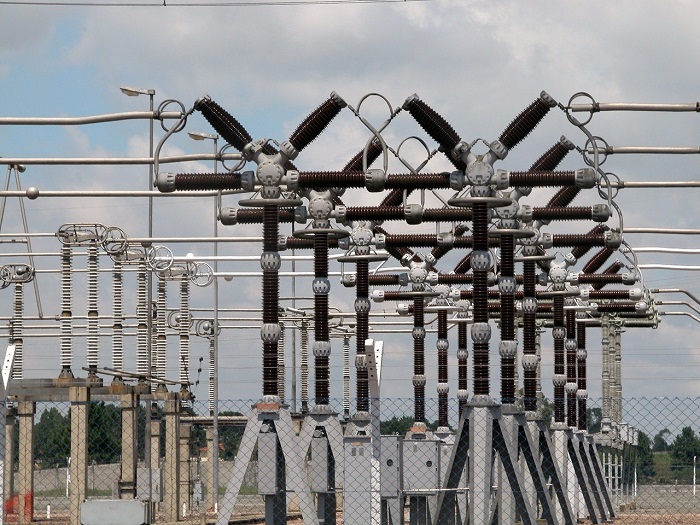
    Residents in parts of the Federal Capital Territory and neighbouring communities are set to experience a seven-hour power outage during this weekend, a statement by the Transmission Company of Nigeria, has said.

    In a statement issued by the company’s General Manager of Public Affairs, Ndidi Mbah, the blackout in the affected communities is expected to follow the TCN’s scheduled maintenance on critical infrastructure.

    According to the statement, the planned disruption would affect the electricity supply on Saturday and Sunday, with different locations impacted on each day.

    It explained that, today, (on Saturday), April 11, 2026, that power supply to Karu, Nyanya, Jikwoyi, Orozo, Karshi, and surrounding areas would be interrupted for seven hours, as the Abuja Electricity Distribution Company (AEDC) would be unable to off-take electricity during the maintenance period.

    It stated further that on Sunday (tomorrow), April 12, 2026, residents in Gwagwalada, Maraba, Ado, New Nyanya, Old Karu Road, MTN Estate, Ruga Jule and nearby communities would also experience a seven-hour outage.

    According to TCN, power supply would be restored immediately after the completion of the maintenance work each day.

    The company, however, apologised for the inconvenience, noting that the exercise is essential to ensure a reliable bulk electricity supply.

    It added that the maintenance is part of TCN’s annual preventive schedule on the 100/110MVA and 60MVA 132/33kV transformers at the Karu Transmission Substation.

    Nyanya, Maraba Residents Face Seven-Hour Power Outage Over TCN Maintenance is first published on The Whistler Newspaper

  • INEC Chair Amupitan’s Past Tweets Expose An APC Sympathiser

    INEC Chair Amupitan’s Past Tweets Expose An APC Sympathiser

    Several verifiable past tweets by INEC chairman Professor Joash Ojo Amupitan from his time as a professor at the University of Jos unmistakably reveal partisan sympathies for the APC and, more specifically, for President Bola Ahmed Tinubu. If he has any regard for institutional integrity, he should own up to them, acknowledge the moral burden they place on his office, and resign. I will return to this.

    Amupitan’s neutrality has long hovered under a cloud of suspicion, but I deliberately gave him the benefit of the doubt, to the irritation of many who urged me to call him out earlier and who falsely thought my reluctance to criticize him was the result of my having a relationship with him.

    When it surfaced that he had written a tendentious memo alleging a “Christian genocide” without acknowledging equally horrific Muslim deaths in the recurring communal violence in central Nigeria, I attributed it to what I call epistemic closure, a condition where a person’s informational environment is so internally reinforcing that outside evidence is dismissed or never encountered. In that state, complex issues get reduced to narrow, self-confirming interpretations because the person is effectively sealed inside a filter bubble.

    For a professor and Senior Advocate of Nigeria, that kind of intellectual insularity is disappointing. It runs against the grain of scholarly training, which stresses self-criticism and transcendence. Still, I did not think it was sufficient to establish bias.

    When he was criticized for fixing the 2027 election during Ramadan, I again resisted the rush to judgment. Islam does not prohibit work during Ramadan, and several Muslim-majority countries have conducted elections in that period. Besides, with figures like Malam Mohammed Haruna on the commission, it would be simplistic to assign sole responsibility to him. So, even at the cost of being suspected of unduly shielding him, I held my fire.

    But two developments began to strain my charitable reading of his actions. His push to revalidate permanent voter cards, which carried the risk of disenfranchising millions, gave me pause. Then his interventions in the ADC’s internal crisis revealed a m1an who struggled unsuccessfully to conceal partisan impulses aligned with Tinubu’s apparent determination to fracture the opposition and stall the emergence of a viable challenger.

    Even these, troubling as they were, pale beside what emerged on Friday. Evidence now shows that in 2023, about two years before his appointment as INEC chairman, Amupitan used an X account bearing his name to engage in openly partisan commentary.

    On March 18, 2023, Dayo Israel, the APC’s National Youth Leader, whom Amupitan followed, boasted that he had flipped his “nearby,” “Igbo-dominated” polling unit from the opposition to the APC. Amupitan replied: “Victory is sure.”

    Pause on that for a moment. This was a direct affirmation of a partisan boast couched in ethnically coded language. The reference to an “Igbo-dominated” polling unit invokes the ethnic polarization that defined much of the 2023 election cycle. To respond to such a claim with “Victory is sure” is to align oneself not just with a party, but with a particular narrative of electoral conquest over an implicitly defined “other.”

    A day earlier, March 17, 2023, one Okodoro Oro circulated a claim that Peter Obi supporters had repurposed an old photograph of a bloodied man to malign Lagos State legislator Desmond Elliot. Amupitan’s response was: “They are evil in the 24th [sic] century.”

    This is not the language of a detached observer. It is the language of moral condemnation directed at a clearly identified political camp. To be fair, future electoral umpires are not expected to be devoid of private opinions, but when those opinions are expressed in such stark, emotionally charged terms in the heat of a contested election, they take on a different significance.

    Then came April 25, 2023. A Tinubu support account celebrated the reception Tinubu received at the Abuja airport. Amupitan responded with a single word: “Asiwaju.”

    To the uninitiated, this may appear harmless, even innocuous. It isn’t. “Asiwaju” is a political identity marker. In Yoruba, it means “leader” or “one who leads from the front,” much like “jagaba,” his other prominent title from Borgu, but in the context of Nigerian politics, particularly the 2023 election, it functioned as a rallying cry, a badge of allegiance, and a shorthand for loyalty to Bola Ahmed Tinubu. It is the word chanted at rallies, emblazoned on campaign materials, and deployed in digital spaces to signal belonging to a political movement.

    When a supporter says “Asiwaju,” it is an affirmation of fealty. So, when a man who would later become the chairman of the electoral commission uses that word in direct response to a celebratory message about Tinubu, he is participating in a community of praise. He is, in that moment, not an observer of politics, but a participant in its partisan theater, in a patterned expressions of alignment.

    After these tweets resurfaced, the account in question underwent a series of transformations. The handle changed from @joashamupitan to @Sundayvibe00, rebranded as a “parody” account and then locked from public view. But digital traces are stubborn. Archival indexing still ties the earlier posts to the original identity.

    So, the sequence is straightforward. An account using Amupitan’s name made partisan interventions during the 2023 election cycle. That same account later changed identity multiple times, adopted a parody label, and restricted access. The timing of these changes invites obvious questions about transparency and accountability, particularly for someone who now occupies the most sensitive electoral office in the country.

    What makes this especially unsettling for me is that I publicly defended him in the past. In my October 11, 2025, column, “New INEC Boss and Tinubu’s Visibilization of Northern Yorubas,” I described him as “an accomplished professor of law and a revered Senior Advocate of Nigeria who has no known record of partisan political affiliations.” That judgment was based on the evidence available at the time. We now know better.

    The issue is not that Amupitan, as a private citizen, held political opinions. Every citizen is entitled to that. The issue is that those opinions were expressed in ways that align distinctly with one party, in the very period that defined Nigeria’s most contentious recent election, and that he now presides over an institution that demands not just neutrality, but the appearance of neutrality.

    Electoral legitimacy is not sustained by legal technicalities alone. It rests on public trust. Once that trust is eroded, even the most procedurally sound election becomes suspect in the eyes of citizens. That is why electoral umpires are held to a higher standard than ordinary public officials. They must be above reproach not only in conduct but in perception. Amupitan’s past tweets compromise that perception.

    He has compounded the problem by failing to confront the matter directly. He should address the public, acknowledge the tweets, and reckon with their implications. The moral weight of his current office is incompatible with unresolved questions about partisan loyalty.

    Yes, the law makes his removal cumbersome. The president must initiate the process, and the Senate must approve it with a two-thirds majority. In practice, that threshold is hardly insurmountable for a president who commands legislative loyalty, who gets bills debated and passed in a matter of hours. But it is unrealistic to expect President Tinubu to initiate the removal of a man whose perceived partisan alignment may well have recommended him for the position in the first place.

    Which leaves only one honorable path: resignation, which Nigerian public officers loathe. If he has any ounce of integrity left, he should resign because if he chooses to remain, every election he conducts in which the APC prevails will be shadowed by credible allegations of premeditated bias. No serious observer will dismiss such claims out of hand. In trying to protect his position, he would end up damaging both the institution he leads and, ironically, the party he is presumed to favor.

    Nigeria has had electoral umpires accused of partisanship before. But rarely has the evidence been this direct, this traceable, and this difficult to explain away.

    If he stays, Amupitan risks inscribing his name in history not merely as a controversial INEC chairman, but as one whose tenure deepened, or completely eroded, public distrust in the electoral process.

    Postscript:

    As I was about to file this column, my editor drew my attention to a news release by INEC’s Chief Press Secretary, Adedayo Oketola, claiming that the Twitter account associated with Amupitan, created in 2022, is “fake.”

    That claim does not withstand basic scrutiny. In 2022, Amupitan was an obscure professor. There was no incentive to impersonate him. The tweets now in contention were posted in 2023, before he became INEC chairman.

    Fake accounts do not typically maintain a coherent history, then change handles, rebrand as parody, and lock themselves the moment their past becomes inconvenient. That pattern suggests an attempt to obscure prior activity, not random impersonation.

    The statement is notably silent on the disappearance of the original handle, the shift to a new identity, the sudden “parody” label, and the decision to restrict public access.

    INEC Chair Amupitan’s Past Tweets Expose An APC Sympathiser is first published on The Whistler Newspaper
  • I had throat surgery 8 days after Al Jazeera interview – Bwala

    I had throat surgery 8 days after Al Jazeera interview – Bwala

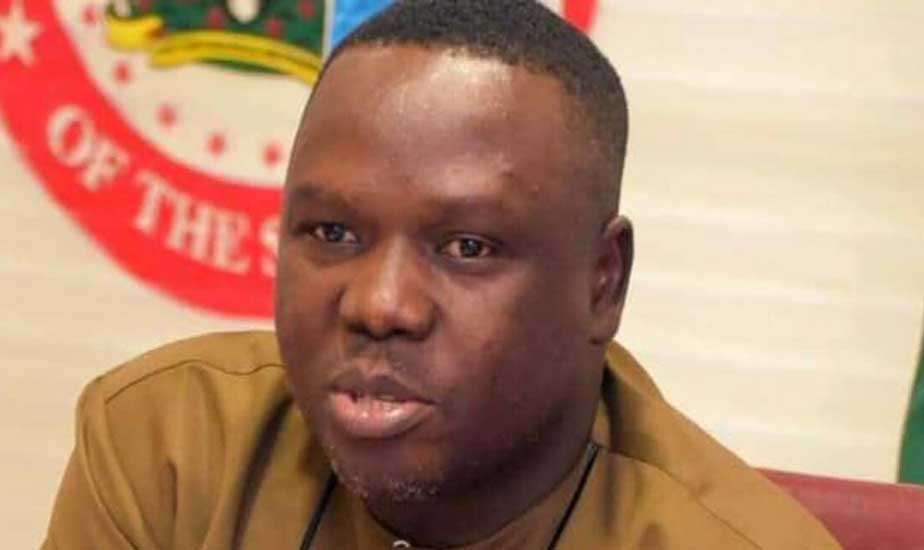
    Daniel Bwala, Special Adviser to President Bola Tinubu on Policy Communication, has disclosed that he underwent throat surgery shortly after his much-talked-about interview with Al Jazeera journalist Mehdi Hasan.

    He made the revelation during an appearance on News Central’s programme, 60 Minutes with Mr Kay, which aired on Friday. During the interview, Bwala also addressed the public reaction to his Al Jazeera appearance and criticism from social media users.

    “Eight days after the interview with Mehdi Hasan, I underwent surgery on my throat. I don’t know whether it is the ‘Obidient’ people that threw that African thing, but in any case, I’m back and strong,” he said.

    Bwala aimed at Peter Obi’s supporters referred to as “Obidients,” accusing them of placing political allegiance above Nigeria’s broader interests.

    “I know the environment I come from; it’s an environment where there exists a species of ‘Trojans’ of social media called the ‘Obidient,’ who do not care about the national interest or the security of Nigeria and will do everything possible to achieve the aim of their hero, no matter the cost,” Bwala stated.

    He also defended his conduct during the Al Jazeera interview, describing Mehdi Hasan’s questioning style as confrontational and aligned with opposition tactics.

    “What Mehdi Hasan did was what we call opposition-style journalism, where you play the role of the opposition. In that interview, Mehdi sought to elicit information from me to discredit the government, but he could not,” he said.

    According to Bwala, a significant portion of the discussion focused on remarks he made about President Tinubu while he was in the opposition, which he acknowledged but tried to move past.

    “In the first 15 minutes, he started by asking me to answer questions relating to things I said about President Tinubu when I was in the opposition.

    “Repeatedly, I admitted to them — I even said I had said more than what he mentioned — but I asked that we move on to the purpose of the interview,” he said.

    He added that he eventually cautioned Hasan against continuing along the same line of questioning.

    “He continued doing it, and at a point, I warned him that if he kept going in that direction, I would deny it. He continued, and that was why I kept denying,” Bwala said.

    The post I had throat surgery 8 days after Al Jazeera interview – Bwala appeared first on Vanguard News.

  • Nigerian govt moves to revoke passports of citizens who renounced nationality

    Nigerian govt moves to revoke passports of citizens who renounced nationality

    The Federal Government has directed the Nigeria Immigration Service (NIS) to withdraw and deactivate passports belonging to individuals who have officially renounced their Nigerian citizenship.

    The directive was issued by the Minister of Interior, Olubunmi Tunji-Ojo, who stated that the move applies strictly to persons whose renunciation had been formally approved by the President.

    “The Honourable Minister of Interior, Dr. Olubunmi Tunji-Ojo, has directed the Nigeria Immigration Service to immediately withdraw and deactivate passports of Nigerians who have renounced their citizenship but still retain the documents.

    “This directive applies strictly to individuals whose renunciation requests have been formally approved by the President.

    “The Minister emphasized that the Ministry of Interior, entrusted with safeguarding the integrity of citizenship, derives its authority from the provisions of Section 29, subsections (1) and (2) of the 1999 Constitution (as amended), which state:

    Any citizen of Nigeria of full age who wishes to renounce his Nigerian citizenship shall make a declaration in the prescribed manner for the renunciation.

    “The President shall cause the declaration made under subsection (1) of this section to be registered and upon such registration, the person who made the declaration shall cease to be a citizen of Nigeria.

    “He further noted that once a person ceases to be a citizen of Nigeria, such an individual is no longer entitled to possess any sovereign document of the country, including the Nigerian passport.

    “The Minister added that this directive aligns with ongoing passport and visa reforms initiated by the Ministry in recent years.

    “We will continue to strengthen systems that secure Nigeria’s borders, prevent identity fraud, preserve the sanctity of Nigerian citizenship, and facilitate legitimate travel while preventing unauthorized or ineligible access,” it concluded.

    Nigerian govt moves to revoke passports of citizens who renounced nationality

  • United States impose visa ban over religious violence in Nigeria

    United States impose visa ban over religious violence in Nigeria

    The United States has announced a new policy targeting individuals involved in violations of religious freedom, including those linked to violence in Nigeria.

    Mark Walker, the US Principal Advisor for Global Religious Freedom, made this known in a post on X on Friday.

    The statement reads “The United States is taking decisive action in response to the mass killings and violence against Christians by radical Islamic terrorists, Fulani ethnic militias, and other violent actors in Nigeria and beyond.

    “A new policy under Section 212(a)(3)(C) of the Immigration and Nationality Act will allow the State Department to restrict visa issuance to individuals who have directed, authorized, significantly supported, participated in, or carried out violations of religious freedom and, where appropriate, their immediate family members.

    “As President Trump made clear, the “United States cannot stand by while such atrocities are happening in Nigeria, and numerous other countries.”

    “This policy will apply to Nigeria and any other governments or individuals engaged in violations of religious freedom” it said.

    United States impose visa ban over religious violence in Nigeria

  • FG Unveils New Regulations For Online Pharmacy

    FG Unveils New Regulations For Online Pharmacy

    The Federal Government has launched the Electronic Pharmacy Regulations 2026 to strengthen oversight, improve medicine safety and regulate Nigeria’s fast-growing digital pharmaceutical market.

    The launch in Abuja on Friday followed rising concerns over fake drugs and weak supply chain controls.

    Represented at the launch by the Director of Hospital Services of the ministry, Dr Abisola Adegoke, the Permanent Secretary of the Federal Ministry of Health and Social Welfare, Daju Kachollum, described the development as a major milestone in healthcare regulation.

    Speaking during her opening remarks, Kachollum said: “This framework… is a product of collaborative engagement with relevant partners, including technology innovators, healthcare providers and legal experts.”

    She also noted that the document balances the need for accessibility, security and accountability, stressing that the framework is designed to protect Nigerians as healthcare delivery increasingly shifts online.

    “We meet this evolution with a robust modern framework designed to ensure that ethical standards, honesty and trustworthiness are not compromised, to save citizens from potential risk,” she said.

    According to her, the regulation would strengthen Nigeria’s broader digital health system. She added that the development of this regulation will further provide the needed backbone for the national electronic pharmacy policy.

    “It is expected to improve medicine traceability, strengthen prescription regime and expand safe pharmaceutical access for both underserved areas and urban centres,” Kachollum said.

    The Coordinating Minister of Health and Social Welfare, Prof Muhammad Pate, said the regulation is part of reforms to organise Nigeria’s healthcare market and attract .

    “By stabilising practices and improving transparency, the regulations address our ability to strengthen accessibility in medicines distribution across the nation,” Pate said.

    He noted that Nigeria’s pharmaceutical sector has historically been characterised by informal and loosely regulated distribution channels.

    “The haphazard market does not serve anyone. A well-organised market… must have a well-functioning regulatory framework so that social harm is reduced,” the minister said.

    He further pointed out that the regulation prioritises patient safety, data protection and accountability, stressing that digital tools will play a central role in improving health outcomes.

    “This is an evidence-based way of monitoring and protecting public health while supporting innovation and investment. Our mission is to establish a safe, accessible and fully regulated national e-pharmacy ecosystem,” he said.

    He also explained that the system would leverage technology to improve medicine access and adherence, warning that all operators must comply with the new regulations or face sanctions.

    Also speaking, the Registrar of the Pharmacy Council of Nigeria, Pharmacist Ibrahim Ahmed, pointed to how the rise of e-commerce and digital health platforms accelerated during the COVID-19 pandemic, and has further transformed how Nigerians access medicines, creating both opportunities and risks.

    Ahmed said the pandemic exposed critical gaps, stressing that the need to regulate online pharmacy operations in Nigeria became more pertinent with the emergence of the COVID-19 pandemic.

    “The pandemic accelerated interest in e-commerce, and highlighted long-running deficiencies in health systems, including inefficiencies of pharmaceutical supply chains, especially in Africa,” he said.

    He further explained that the shift to digital platforms has outpaced existing regulatory systems.

    “As the world pivots towards a digital direction, the ways in which patients access life-saving medications have evolved. Today, we meet that evolution with a robust, modern framework designed to ensure that ethical standards are not compromised and to save customers from potential risks,” Ahmed said.

    He also stated that the new regulation establishes a comprehensive structure for digital pharmaceutical services.

    “The regulations establish a comprehensive legal and technical framework for the registration, licensing, operation and oversight of digital pharmaceutical services,” he said.

    According to him, the framework aligns Nigeria with global standards while encouraging innovation.

    “Our objective is to establish a regulatory framework that aligns with international best practices for the protection of consumers, while fostering innovation in the healthcare sector,” he said.

    “We will certify and license electronic pharmacies and provide a platform for verification of electronic pharmacies. We are safeguarding the public by ensuring that only persons with requisite knowledge and qualifications are involved in online pharmacy practice.”

    FG Unveils New Regulations For Online Pharmacy is first published on The Whistler Newspaper
  • After Artemis II, NASA looks to SpaceX, Blue Origin for Moon landings

    After Artemis II, NASA looks to SpaceX, Blue Origin for Moon landings

    With Artemis II successfully completing its historic lunar mission on Friday, NASA is banking on billionaires Jeff Bezos and Elon Musk for the next step: landing astronauts on the Moon.

    The Apollo program — which sent the first and only humans to the Moon’s surface between 1969 and 1972 — was designed so that only two astronauts could land on the lunar surface for a maximum of a few days.

    More than 50 years later, American ambitions and expertise have grown, with NASA hoping to send four people on a mission lasting several weeks and eventually building a lunar base.

    For the second phase of its mission, the space agency is looking to commercial landers designed by Musk’s SpaceX and Bezos’s Blue Origin to get its astronauts on the Moon.

    After Artemis II splashed down in the Pacific Ocean on Friday after its record-breaking journey, NASA officials urged all hands on deck for a crewed landing in 2028.

    “We need all of industry to work and come along with us, and they need to accept that challenge and come with us and really start the production lines that are going to be required in order to achieve that goal,” Lori Glaze, the acting associate NASA administrator, told a press conference.

    The Apollo program relied on a single rocket, the Saturn V, which carried both the lunar lander and the capsule carrying the astronauts.

    NASA has opted for two separate systems for Artemis: the first to launch the Orion spacecraft carrying the crew from Earth, and another to launch the lunar lander, which will be privately contracted.

    – ‘Camping trip’ –

    The decision was driven by the technical limitations of the Apollo program, Kent Chojnacki, a senior NASA official in charge of lunar lander development, told AFP.

    “It was very not expandable to long-term exploration and long-term stays,” he explained.

    Although spectacular, the Apollo missions were like “camping trips,” said Jack Kiraly, director of government relations at the Planetary Society, which encourages space exploration.

    The systems NASA is looking at now are “huge compared to Apollo,” said Chojnacki, noting that the new lunar landers being developed by Blue Origin and SpaceX are two to seven times larger than before.

    The space agency is also drawing from external partners, such as the European companies that built the propulsion module for Orion.

    The new approach opens access to more equipment and resources, but also significantly complicates operations.

    To send these giant spacecrafts to the Moon, the private space exploration companies will need to master in-flight refueling, a complex maneuver that has not yet been fully tested.

    After the lunar lander is launched, additional rockets will be needed to deliver the fuel required for the journey to the Moon, some 250,000 miles (400,000 kilometers) from Earth.

    – ‘Lose the Moon’ –

    Given this risky undertaking and the numerous delays — particularly those experienced by SpaceX that was supposed to have its lander ready first — pressure has mounted in recent months.

    “We are once again about to lose the Moon,” three former NASA officials warned in an article in SpaceNews last September.

    China, which is hoping to send humans to the Moon by 2030, has been making progress as well, raising fears in the Trump administration that the United States could get left behind.

    With that in mind, NASA raised the possibility last fall of reopening the contract awarded to SpaceX and using Blue Origin’s lunar lander first, sending shockwaves through the rival companies.

    Both firms announced they were realigning their strategies to prioritize the lunar project — and keep their lucrative contracts with NASA.

    But concerns remain, particularly regarding the feasibility of in-orbit refueling.

    “We do have a plan,” Chojnacki said, noting that NASA has a back-up plan in case of failure.

    The timeline is also up in the air.

    NASA says it plans to test an in-orbit rendezvous between the spacecraft and one or two lunar landers in 2027, and carry out a crewed lunar landing in 2028.

    Before that, companies will need to test in-orbit refueling and send an unmanned lunar lander to the Moon to demonstrate its safety.

    That all needs to happen within the next two years.

    “It feels like a very small amount of time,” said Clayton Swope of the Center for Strategic and International Studies.

    The post After Artemis II, NASA looks to SpaceX, Blue Origin for Moon landings appeared first on Vanguard News.

  • Police Foil Ondo Kidnap Attempt, Rescue Two Victims

    Police Foil Ondo Kidnap Attempt, Rescue Two Victims

    The Ondo State Police Command has prevented an attempted kidnapping along the Idogun–Imeri corridor in Ose Local Government Area, successfully rescuing two victims.

    The attack occurred on Friday evening around 5:45 p.m., when suspected kidnappers stormed a social gathering attended by several guests.

    In a statement released on Saturday, the Police Public Relations Officer, Abayomi Jimoh, said officers responded promptly after receiving a distress call, moving quickly to the scene to confront the attackers and halt the operation.

    Police operatives engaged the assailants, forcing them to abandon their mission. In the process, two victims were freed and taken to a nearby medical facility for treatment.

    “Acting swiftly on distress information, operatives of the command were immediately mobilised to the scene, engaging the criminals and disrupting their operation,” the statement read.

    “During the operation, two victims were successfully rescued from the assailants and have been taken to the nearest medical facility,” it added.

    The Commissioner of Police, Adebowale Lawal, praised the officers for their swift and coordinated response, assuring residents that security efforts in the area have been strengthened.

    According to the command, additional personnel have been deployed, while search operations are ongoing to track down and arrest the fleeing suspects.

    The police reiterated their commitment to tackling violent crime, vowing to ensure those responsible are brought to justice.

    Lawal also commended the individual who provided timely information that aided the intervention, encouraging members of the public to continue sharing credible intelligence with security agencies.

    Residents have been urged to remain calm but vigilant as efforts continue to maintain security in the area, with further updates to be provided as developments unfold.

    Police Foil Ondo Kidnap Attempt, Rescue Two Victims is first published on The Whistler Newspaper
  • Plateau Speaker declares bid for re-election

    Plateau Speaker declares bid for re-election

    By Golok Nanmwa

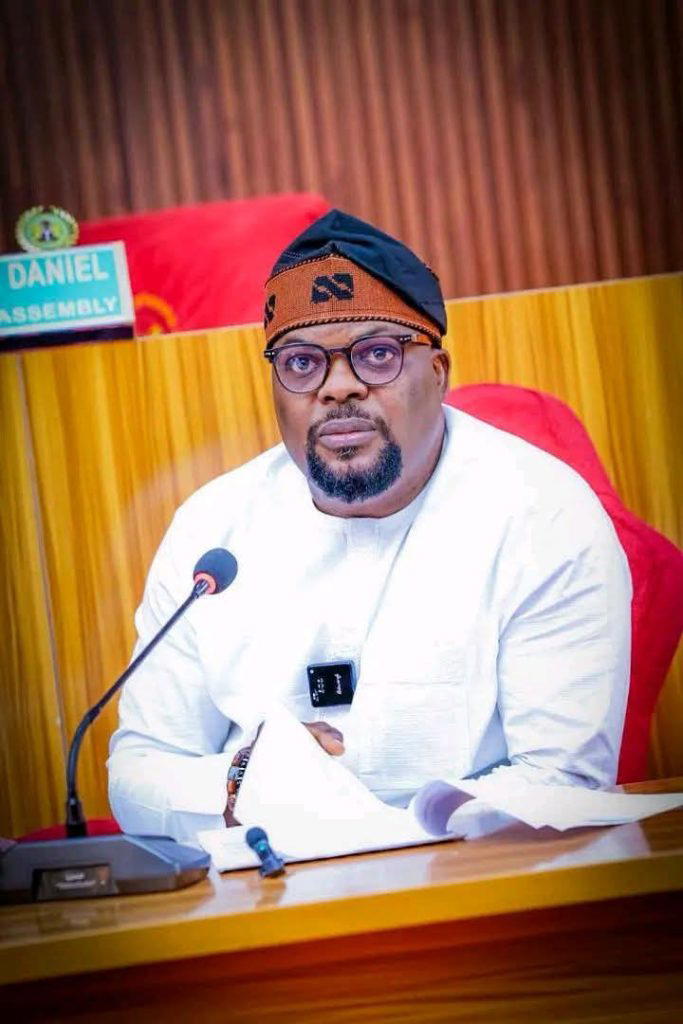
    Speaker of the Plateau State House of Assembly, Hon. Naanlong Daniel, has formally declared his intention to seek a second term in office, even as leaders and party officials in his Mikang Local Government Area constituency gave him a resounding marching order to contest.

    Daniel made the declaration during a consultative meeting with members of the Mikang Legislative Arm and All Progressives Congress (APC) officials in the area.

    Addressing the stakeholders, the Speaker described grassroots leaders as the “pillar and structure” of democratic governance, stressing that their experience and deep understanding of local dynamics are critical for sustainable development.

    He expressed gratitude to God for the prevailing unity within the APC in Mikang, describing it as vital for political stability and progress in the area.

    The Speaker said the consultation was to seek the support, prayers, and understanding of the legislators and party leadership, whose roles he described as indispensable in shaping the future of the local government.

    Highlighting the importance of experience in governance, Daniel noted that his journey, including his time as Majority Leader, had been marked by loyalty and sincerity, which had prepared him adequately for the speakership.

    He pointed out that the new harmonised Standing Rules across state houses of assembly in the federation now ensure that only returning members preside over legislative leadership, underscoring the need for continuity and institutional knowledge.

    Lamenting that Mikang had lagged in development for years, the Speaker stressed that progress must be deliberate, conscious, and driven by visionary leadership.

    “I remain a leader for the entire Local Government, not for any particular tribe or group,” he affirmed, while urging councillors and party officials to embrace purposeful leadership anchored on a clear vision for the people.

    Daniel clarified that his re-election bid was not aimed at blocking anyone’s ambition but to consolidate existing gains and accelerate development across Mikang, which he said stands at a crossroads.

    The Speaker assured his constituents of tangible dividends, disclosing that fertilisers would soon be distributed to farmers through councillors and party chairmen as points of contact.

    He added that plans are underway to drill over 25 boreholes across the four districts of the local government.

    On infrastructure, Daniel revealed that the Lifidi-Piapung to Baltep and Lalin to Garkawa road projects, facilitated through his office with the support of Governor Caleb Mutfwang, have been awarded and construction is ongoing.

    He said the roads, when completed, would boost economic activities in the area.

    The Speaker called for inclusive and friendly politics, warning against divisive tendencies, and reiterated his commitment to work with all stakeholders for the collective good of Mikang.

    “I am a leader for everybody. I am here to seek your prayers, support, and cooperation so that together, we can move Mikang to greater heights and transform it into a tourist haven,” he declared.

    In their responses, the Leader of the Mikang Legislative Arm, Hon. Putdet Shepshal, commended Daniel for his consistent and purposeful leadership, including interventions such as paying WAEC and NECO examination fees, JAMB registration, and scholarships for students across tertiary institutions.

    Shepshal noted that the council had backed the Speaker even during their time in the Peoples Democratic Party (PDP) and would continue to support him.

    Similarly, APC Chairman in Mikang, Peleng Caleb, and the Chairman of Ward Chairmen, Hon. Sati Yongpian, described the Speaker as a “miracle child” and a unifying figure.

    They collectively endorsed his re-election bid, assuring him of their full support.

    The post Plateau Speaker declares bid for re-election appeared first on Vanguard News.