Category: Uncategorized

  • UK Based Nigerian Mother Dies From Breast Cancer

    UK Based Nigerian Mother Dies From Breast Cancer

    Omotayo Abioye, a 40-year-old Nigerian mother of three, has died in the UK after “a courageous battle with breast cancer”.

    In a Friday post on X, Benjamin Kuti, popularly known as Oluomo of Derby, former president of the Nigerian community in the UK, said Abioye died on Sunday, leaving behind “three beautiful children, aged 11, nine, and seven”, which he described as her pride, joy, and greatest legacy.

    “It is with deep sorrow and heavy hearts that we announce the passing of our beloved sister, Omotayo Abioye, who departed this life on Sunday, the 5th of April, in the United Kingdom,” Oluomo wrote.

  • My govt cares – Tinubu reassures Nigerians amid worsening insecurity, hardship

    My govt cares – Tinubu reassures Nigerians amid worsening insecurity, hardship

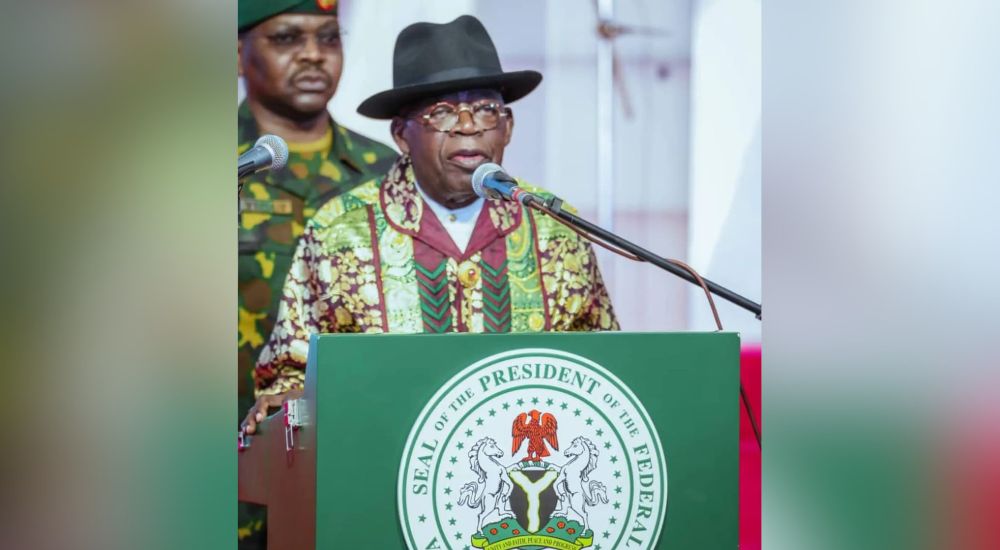
    President Bola Tinubu has restated that his government is committed to addressing the country’s main problems, including economic difficulties, power shortages and safety issues.

    Speaking in Yenagoa, Bayelsa State, Tinubu stated that his government is still focused on policies aimed at helping the poorest and most at-risk Nigerians.

    He said: “We won’t stop moving forward, and we’ll keep looking for ways to help those who are struggling.

    “This is a government that really cares.”

    He noted that having steady power supply is very important for development, stressing that industrial growth and learning new skills mostly rely on having dependable electricity.

    “You can’t have industrial growth, learning new skills, or people gaining strength without having enough power.

    “I promise Nigerians that we will provide electricity to support our country’s development,” he said.

    The president also thanked Bayelsa State Governor, Douye Diri, for the way he leads the state.

    “Diri has shown the strength of leading with a clear purpose, and I am here today making a promise that the challenges we face, along with the legacy of those who led this country, including the battles and difficulties of ensuring security, will be met with hard work to properly equip and train our men and women in the Armed Forces. We will defeat terrorism and banditry.”

    My govt cares – Tinubu reassures Nigerians amid worsening insecurity, hardship

  • Bereaved family demands probe over army officer’s death in barracks

    Bereaved family demands probe over army officer’s death in barracks

    By Nwabueze Okonkwo

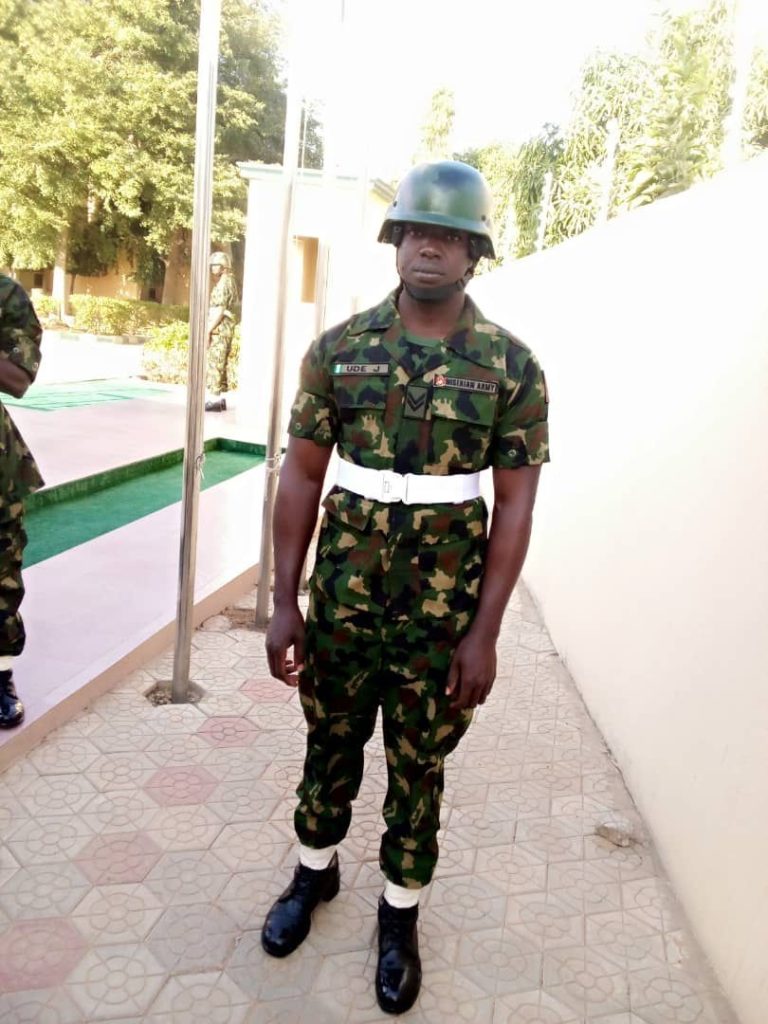
    The bereaved family of the late Lieutenant Jude Osondu Ude is demanding justice from the hierarchy of the Nigerian Army over his death.

    Specifically, the bereaved family members are asking the Minister of Defence, General Christopher Musa (Retd.), the Chief of Army Staff, COAS, Lieutenant-General Waidi Shaibu and the Chief of Defence, CDS, General Olufemi Oluyode, to immediately constitute a thorough, transparent and uncompromising investigation into the circumstances surrounding the death of the young army officer, Jude Ude, at the 17 Garrison Brigade in Katsina.

    In a press statement issued on Saturday, titled: “Blood within the Barracks: when duty is betrayed and honour abandoned – the tragic, untold demise of a young soldier”, the bereaved family which spoke through a social critic, Sir Ifeanyi Ejiofor Esq., said the spectre of internal sabotage, rivalry, and clandestine complicity must not be allowed to fester within an institution entrusted with the nation’s security. 

    The bereaved family insisted that those found culpable must be identified and brought to justice without fear or favour, adding that it is only then that public confidence in the military can be meaningfully restored.

    According to the bereaved family members, “Let it not be said that silence prevailed where outrage was demanded. Let it not be recorded that impunity was permitted to triumph over justice.

    “Let it not become the norm that a soldier must fear not only the enemy without, but the dagger within.

    “We further state, with all due solemnity, that should no meaningful administrative steps be taken within fourteen (14) days from the date hereof to unravel this most disturbing episode, we shall be constrained to invoke all lawful mechanisms to compel accountability and redress. A nation that fails to honour its fallen heroes does more than betray the dead; it imperils the living.

    “The growing whispers of internal sabotage within the military are no longer rumours to be dismissed; they are alarms that must be heeded. For when loyalty is punished, when courage is envied, and when sacrifice is met with abandonment, the very foundation of national security begins to erode, quietly but catastrophically.

    “Late Jude Osondu Ude, who was brutally stabbed on March 15, 2026, within the very precincts of the 17 Brigade Garrison in Katsina, a supposed sanctuary of brotherhood and arms, in what bears all the hallmarks of internally orchestrated attacks, may have been silenced, but the questions his death raises will not be buried with him. Justice must not only be done, it must be seen, felt, and restored.

    “Ironically, not felled by the enemy at the gates, but cut down from within. One is left to wonder: when the fortress becomes the battlefield, where then does a soldier find refuge?

    “Gravely wounded, bleeding, and fighting for his life, he staggered within the barracks, seeking, perhaps, the protection of comrades. He was later admitted to hospital, where he succumbed to his injuries on the 22nd day of March 2026, a week after the savage assault. Thus ended the life of a man who had sworn to defend others, but was denied defence in his own hour of peril.

    “Yet, the tragedy did not conclude with his death. If anything, it deepened into a most unconscionable neglect. In what can only be described as a national embarrassment of the highest order, the remains of this fallen soldier were abandoned, yes, abandoned, by the very institution he served with unwavering loyalty. No structured support. No dignified process. No honour befitting a life sacrificed in service.

    “His father, aged, grief-stricken, and himself a former soldier, was left to shoulder the burden that ought to have been borne by the State. At a staggering personal cost, he paid ₦750,000.00 merely to transport his son’s corpse from Katsina to Enugu. Additional expenses followed: ₦50,000.00 on road logistics, ₦20,000.00 on feeding those who accompanied him, ₦25,000.00 for mortuary services, and ₦35,000.00 for ambulance conveyance. Not a single kobo was provided by the Nigerian Military.

    “One is compelled to ask, perhaps rhetorically, perhaps painfully: what, then, is the worth of service? Is this the ‘reward’ for loyalty?

    “The indignity reached its bleak crescendo on the 5th of April 2026, Easter Sunday, when Jude was laid to rest in his hometown in Ezeagu Local Government Area of Enugu State. No ceremonial guard. No final salute. Not even the symbolic presence of a single soldier from the 82 Division, Enugu. He was buried, quite literally, as though he had never worn the uniform.

    “One dares to observe, with restrained but biting irony, that had he instead enlisted in a modest civic association, perhaps even the Boys’ Brigade, he might have received more honour in death than was accorded him in service.

    “There are tragedies that wound the heart, and there are those that indict the conscience of a nation. This, regrettably, is both.

    “To enlist in the Armed Forces of one’s country is, by every civilised measure, an act of courage and noble sacrifice. In saner climes, such a commitment is met with dignity, protection, and an unwavering assurance that the State shall neither forget nor forsake its own. Yet, in this deeply troubling account, that sacred covenant appears not merely broken, but callously discarded.

    “Late Jude Osondu Ude, a young and promising Nigerian, a Master’s degree holder, and a soldier on the cusp of his confirmation as a Lieutenant, chose the path of honour. Inspired by the legacy of his father, himself a retired soldier, he embraced the uniform with zeal, patriotism, and a resolute desire to serve his country gallantly. It was, tragically, a devotion that would cost him his life.

    “He was initially posted to Ibadan and later deployed on special assignment to Katsina. There, he served with the 17 Brigade, where he rose to head the Garrison. By all consistent accounts, Jude was fearless, disciplined, and uncompromising in his pursuit of those who threaten the peace of the State. Ironically, perhaps fatefully, these very qualities appeared to unsettle certain shadowy interests within the system, individuals whose sympathies, it is alleged, are disturbingly misaligned.

    “The official narrative, as casually dispensed, suggested an ambush. A convenient explanation, tidy, unexamined, and, it would seem, profoundly misleading. For the emerging truth is far more sinister.”

    The post Bereaved family demands probe over army officer’s death in barracks appeared first on Vanguard News.

  • Hardship: You’re Better Off Than Other Africans, Tinubu Tells Nigerians

    Hardship: You’re Better Off Than Other Africans, Tinubu Tells Nigerians

    President Bola Tinubu has asked Nigerians to count their blessings amid mounting economic hardship, saying the country is faring better than many other African nations despite the bite of rising fuel prices.

    Speaking at a civic reception in Yenagoa on Friday, Tinubu acknowledged widespread suffering but urged citizens to look beyond Nigeria’s borders for perspective.

    “Yes, I hear you from various angles of the economy. The fuel prices are biting hard. But look around. Let’s thank God that we are better off listening to what is happening in other African countries, what they are going through,” Tinubu said.

    He added that his administration remains committed to easing the burden on the most vulnerable and pledged to work with the Ministry of Finance to review the numbers.

    “This is a government that cares. We will look at the numbers with the Ministry of Finance, Budget and Economic Planning,” he said.

    Tinubu also ordered development of relief measures to cushion the impact of global economic headwinds on Nigerians, particularly those tied to the ongoing Middle East conflict.

    The remarks came on the sidelines of the inauguration of infrastructure projects executed by Bayelsa Governor Douye Diri.

    Tinubu was accompanied by governors Hope Uzodimma of Imo, Dapo Abiodun of Ogun, Umoh Eno of Akwa Ibom, and Sheriff Oborevwori of Delta State, according to a statement by presidential spokesperson Bayo Onanuga.

    The president used the occasion to reaffirm that the All Progressives Congress’s (APC) is committed to translating governance into tangible development.

    “Regardless of their (opposition’s) shenanigans, the All Progressive Congress (APC) believes that the people deserve to see governance translated into roads, bridges, power, jobs and real opportunities that affect human beings. That signals the development of our country,” he said.

    He commended Diri for projects aligned with the administration’s Renewed Hope Agenda, including roads, bridges, and a 60-megawatt independent power plant, stressing that federal-state collaboration was key to accelerating development.

    “Development advances further, faster when the federal government and the state government work in partnership and towards a shared purpose,” Tinubu said.

    In his remarks, Diri said federal government’s support, including presidential waivers for the importation of turbines and equipment, enabled the delivery of the power project, expected to boost electricity supply and economic activity in the state.

    Projects inaugurated during the visit include the 630-metre Angiama-Oporoma Bridge, described as closing a six-decade connectivity gap in one of Nigeria’s key oil-producing areas, and a dualised road linking New Yenagoa City. Others still under construction include a 30,000-seat international stadium, a nine-storey state secretariat, and rural road and bridge projects.

    Tinubu also observed a minute of silence in honour of fallen military personnel and late former Bayelsa governor Diepreye Alamieyeseigha.

    Hardship: You’re Better Off Than Other Africans, Tinubu Tells Nigerians is first published on The Whistler Newspaper

  • Burna boy gave me N20m to fight Speed Darlington – Portable

    Burna boy gave me N20m to fight Speed Darlington – Portable

    Nigerian singer Portable has alleged that he was paid N20 million by Burna Boy to fight Speed Darlington.

    In a recent video, Portable made the claim stating that he was to confront Speed Darlington during their public dispute, insisting Burna boy paid him based on performance.

    “The last time Speed Darlington and Burna Boy had issues, he paid me N20 million to beat him in a boxing match. I did it and he paid me,” Portable said.

    Recounting the incident further in a mix of English and Pidgin, he added “The time wey Burna Boy and Speed Darlington get issue, wey Speed Darlington dey insult Burna Boy, na me help Burna Boy beat am.

    “He promise me N20 million, and he give me. Burna Boy no just invite me like that if I no win, he no go give me the money. I win, na why I collect the N20 million.”

    Portable also stressed that the singer fulfilled his promise, noting that he would have reacted publicly if otherwise.

    “If he promise me money and he no give me, I go call am out. Na God say make I no call Burna Boy out, na why he come give me,” he said.

    In addition to this, Portable extended a similar proposition to Wizkid, offering to confront comedian Carter Efe for a price.

    “Now Wizkid should pay me N20 million so I can finish Carter Efe for him,” he added.

    Burna boy gave me N20m to fight Speed Darlington – Portable

  • How music changed my life – Tems

    How music changed my life – Tems

    Grammy-winning Nigerian singer, Temilade Openiyi, popularly known as Tems, has opened up about how being an artist changed her.
    The 31-year-old explained that before she became a professional musician, she was “hyper-indepent” and tended to push people away, but making music has taught her to be open and vulnerable without feeling odd.

    Speaking in a recent interview with Doose Of Society, Tems said, ”

    Tems: “Being an artist has changed my life. There are a lot of people that know me. It made me grow, I had to shed a lot of habits that were holding me back—one of those things was my hyper-independency and the thing I do where I push people away.”

    She added, ‘I have now learned to embrace love and just be open, and be free to give love and be vulnerable without feeling odd.”
    Tems launched her music career in 2018 with her debut single, ‘Mr Rabel’, after quitting her job.

    However, her breakthrough came after she enchanted the Western music audience with her 2020 collaborative hit with Wizkid, ‘Essence.’

    Since then she has collaborated with Drake, Beyoncé, Justin Bieber, and J.Cole, and also won two Grammys.

    She recently set a record as the first Nigerian artist to hit over 40 million monthly streams on Spotify.

    How music changed my life – Tems

  • Transfer: Beşiktaş line up move for Super Eagles striker

    Transfer: Beşiktaş line up move for Super Eagles striker

    Wolves striker, Tolu Arokodare has emerged as a transfer target for Turkish Super Lig giants Beşiktaş, DAILY POST reports.

    The Black Eagles have keen interest in the Nigeria international, and would seek to sign him in the summer to bolster their attacking options, according to Turkish website, SporX.

    Arokodare joined Wolves from Belgian Pro League outfit, KRC Genk last summer.

    The forward is however reportedly open to leaving the Old Gold, with the club set to be relegated from the Premier League.

    Rob Edwards sit in last position on the Premier League table.

    The 25-year-old has registered three goals and one assist in 28 league appearances for Wolves.

    Transfer: Beşiktaş line up move for Super Eagles striker

  • Iran delegation meets Pakistan PM ahead of negotiations with US

    Iran delegation meets Pakistan PM ahead of negotiations with US

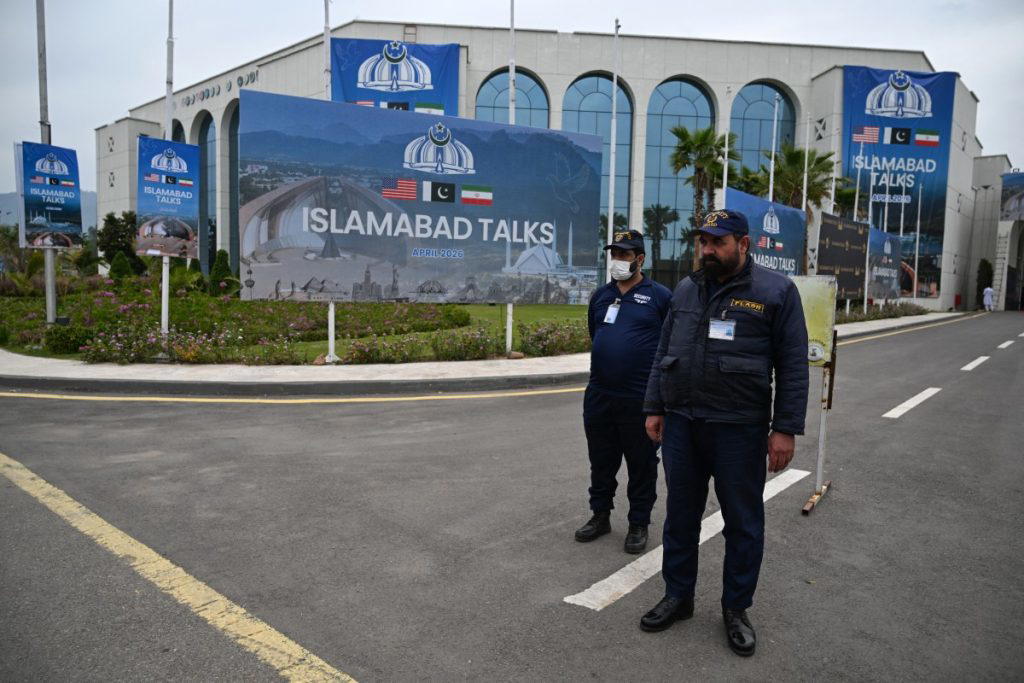
    An Iranian government delegation met Pakistan’s prime minister on Saturday to discuss the terms of planned “make or break” negotiations to end the Middle East war with a US party led by Vice President JD Vance.

    With the first talks underway at Islamabad’s Serena Hotel, Iranian media reported that the Iranian side would decide at the end of the meeting with Prime Minister Shehbaz Sharif whether to go ahead with negotiations with the Americans.

    Iran has previously said that any agreement on a permanent end to fighting must include the unfreezing of sanctioned Iranian assets and include an end to Israel’s war on Hezbollah in Lebanon, which Vance has said will not be up for discussion in Islamabad.

    But both parties had arrived at the talks venue when the Iranian delegation led by parliamentary speaker Mohammad Bagher Ghalibaf met Sharif, having arrived overnight at an air base near the capital and disembarked to embrace Pakistan’s powerful army chief Asim Munir.

    Munir, who shares a personal rapport with US President Donald Trump, also greeted Vance, escorting him down a red carpet at the Nur Khan air base, where US special envoy Steve Witkoff and Trump’s son-in-law Jared Kushner were waiting.

    The warring parties still appeared to be far apart on key issues — including sanctions, Lebanon and the opening of the strategic Strait of Hormuz — and made no attempt to hide their mutual suspicion.

    “Our experience in negotiating with the Americans has always been met with failure and broken promises,” Ghalibaf said shortly after landing, according to Iran’s state broadcaster.

    Foreign Minister Abbas Araghchi, who is also part of the delegation, told his German counterpart in a call on Saturday that “Iran enters negotiations with complete distrust due to repeated breaches of commitments and betrayals by the United States”, the Tasnim news agency reported.

    Vance said before leaving the US that if the other side was “willing to negotiate in good faith, we’re certainly willing to extend the open hand”.

    – ‘Make or break’ –

    But “if they’re going to try to play us, then they’re going to find the negotiating team is not that receptive”, he added.

    The ceasefire is already under strain, notably from Israel’s continued strikes in Lebanon, which Iran and Pakistan insist is covered under the current truce.

    Prime Minister Sharif, whose country’s down-to-the-wire mediation got both sides to the negotiating table this week, said talks would not be easy.

    “An even more difficult stage lies ahead,” he said, referring to efforts to permanently end fighting that began with US-Israeli strikes on Iran on February 28, sparking Iranian retaliation against Israel and across the Gulf.

    “This is that stage which, in English, is called the equivalent of ‘make or break.’”

    – Islamabad plays host –

    Iran — which brought a more than 70-member delegation to Pakistan — has insisted on the truce covering Lebanon and on the unfreezing of its assets for the Islamabad talks to go ahead, neither of which has materialised so far.

    On the US side, Trump demanded the opening of the Strait of Hormuz as a condition for the two-week ceasefire.

    The strait, through which one-fifth of the world’s crude passes, has not reopened to normal traffic, however, and Trump vowed on Friday to have it open soon “with or without” Iran’s cooperation.

    He added that his top priority at the Islamabad talks was to ensure the Islamic republic had “no nuclear weapon. That’s 99 percent of it.”

    Security was tight in the Pakistani capital on Saturday, with a heavy police and paramilitary presence on the streets and road diversions around the “red zone” where government and diplomatic buildings are located.

    Pakistan has formulated a team of subject matter specialists to facilitate the two sides in negotiations on navigation, nuclear and other key matters, a diplomatic source familiar with the matter told AFP.

    The negotiations will be closely watched by other key regional players, with Egypt and Turkey having helped with mediation, along with China, all of which Pakistan was still coordinating closely with for the talks, the source said.

    Beijing has been sought as a possible guarantor of any lasting agreement, official sources have said, with Trump confirming to AFP that China helped get Tehran to the negotiating table.

    – Violence in Lebanon –

    Complicating the path to a permanent ceasefire was Israel’s assertion that the current truce does not cover Lebanon.

    Israeli air strikes continued in Lebanon on Friday against Iran-backed Hezbollah despite the Iranian demand that they be halted.

    Israel’s ambassador to the United States, Yechiel Leiter, said his country would hold discussions with Lebanon’s government in Washington next week but would not discuss a ceasefire with Hezbollah.

    The militant group said overnight that it had carried out drone and rocket attacks on northern Israel, as well as on Israeli forces in southern Lebanon.

    In Tehran, a 30-year-old resident told AFP he was sceptical negotiations would be successful, describing most of what Trump says as “pure noise and nonsense.”

    AFP

    The post Iran delegation meets Pakistan PM ahead of negotiations with US appeared first on Vanguard News.

  • U.S. Begins Visa Ban On Religious Freedom Violators In Nigeria, Others

    U.S. Begins Visa Ban On Religious Freedom Violators In Nigeria, Others

    The United States has confirmed that it has already begun implementing visa restrictions targeting individuals and entities accused of violating religious freedom in Nigeria and other countries.

    Mark Walker, the U.S. Principal Adviser for Global Religious Freedom, disclosed this development in a post on X on Friday.

    “We have already executed on this policy, and we will continue to subject perpetrators to additional scrutiny,” Walker stated. “If you engage in persecution, you are not welcome in America. The United States is safer when we keep those responsible for religious persecution from entering our homeland.”

    The policy, announced in December 2025 by U.S. Secretary of State Marco Rubio, allows the State Department to restrict visas for individuals who knowingly direct, authorise, fund, support, or carry out violations of religious freedom. Where appropriate, immediate family members may also face restrictions.

    Rubio had described the measure as a decisive response to “atrocities and violence against Christians” in Nigeria, particularly attacks linked to radical Islamic terrorists, Fulani ethnic militias, and other actors.

    The move aligns with Section 212(a)(3)(C) of the U.S. Immigration and Nationality Act and builds on earlier congressional actions.

    In November 2025, Rep. Chris Smith, Chairman of the House Foreign Affairs Africa Subcommittee, introduced a resolution urging visa bans and asset freezes on perpetrators of severe religious freedom violations in Nigeria.

    The resolution specifically highlighted groups such as the Miyetti Allah Cattle Breeders Association of Nigeria (MACBAN) and Miyetti Allah Kautal Hore.

    In February 2026, U.S. lawmakers further proposed targeted sanctions, including visa bans, against figures like former Kano State Governor Rabiu Kwankwaso, citing alleged complicity in religious freedom violations.

    Nigeria has faced repeated international scrutiny over reported attacks on Christian communities, particularly in the Middle Belt and northern regions. The country was previously designated a Country of Particular Concern (CPC) for religious freedom issues.

    No specific names of individuals or entities affected by the current visa restrictions have been publicly released by the U.S. State Department.

    The Nigerian government has in the past rejected accusations of complicity in religious persecution, describing some of the claims as exaggerated or politically motivated.

    This latest enforcement signals continued US focus on global religious freedom under the current administration.

    U.S. Begins Visa Ban On Religious Freedom Violators In Nigeria, Others is first published on The Whistler Newspaper

  • Many Capital Projects In States Lack Growth Impact—NESG

    Many Capital Projects In States Lack Growth Impact—NESG

    The Nigerian Economic Summit Group (NESG) has called for targeted and inclusive interventions to address challenges facing Nigeria’s informal sector as part of ongoing economic reforms.

    The Chief Economist and Director of Research and Development, NESG, Dr Olusegun Omisakin, made the call during a virtual media interactive session.

    He said the informal segment, which accounts for a significant share of economic activity, remained largely outside the reach of government policies and support programmes.

    Omisakin noted that while policy implementation within the formal sector was relatively straightforward, engaging informal operators required more deliberate, data-driven and inclusive strategies.

    “One of the major challenges the government faces is the informal economy. It is not just about production, but also about how interventions reach those whose activities are not directly captured.

    “It is easy to reduce taxes or implement policies within the formal system, but when it comes to the informal segment, where operations are not directly tracked, it becomes more difficult,” he said.

    He stressed the need for stronger coordination between fiscal and monetary authorities to ensure that economic policies deliver desired outcomes.

    According to him, inflation remains a major concern, with significant implications for household welfare and business sustainability.

    “We have consistently advocated policy coordination so that fiscal and monetary measures work towards a common goal.

    “Inflation is extremely high, and the priority is to bring it down through well-aligned and sustained policy actions,” he said.

    Omisakin also highlighted the importance of social protection programmes, efficient public spending and critical infrastructure investment in easing economic pressures.

    He noted that improved infrastructure, particularly rail transport, could significantly reduce logistics costs and enhance productivity across sectors.

    The economist further called for improved transparency and accountability in public finance management at the sub-national level.

    He urged state governments to adopt more strategic approaches to capital expenditure, noting that while personnel costs remain obligatory, capital investments should be geared towards stimulating growth and generating returns.

    “States must be intentional in utilising capital expenditure to deliver sustainable economic outcomes.

    “Regular publication of budget implementation reports and financial statements will also enhance transparency and public trust,” he said.

    Omisakin acknowledged recent improvements in capital spending by some states, citing supporting evidence from international assessments.

    He, however, maintained that Nigeria’s economic recovery would depend on sustained reforms, inclusive policies and long-term planning.

    He reaffirmed the commitment of the ground to providing independent, evidence-based policy advice, emphasising that its role is to support the government with practical solutions rather than offer blanket criticism.

    Many Capital Projects In States Lack Growth Impact—NESG is first published on The Whistler Newspaper