Category: Uncategorized

  • FRSC expresses worry as route violation offences increase on Abia major roads

    FRSC expresses worry as route violation offences increase on Abia major roads

    The Federal Road Safety Corps, FRSC Abia State Sector Command, has expressed concern over the increasing incidence of motorists driving against traffic otherwise known as route violation, on major roads across the State.

    The Sector Commander, Corps Commander Ngozi Ezeoma, who condemned the unsafe practice, expressed worry that some drivers deliberately violate traffic rules with the unjustified excuse that designated turning points are too far, thereby endangering themselves and passengers.

    She emphasized that driving against traffic is a grave traffic offence that poses serious danger to all road users, often resulting in head-on collisions, avoidable crashes, loss of lives, and destruction of property.

    Ezeoma noted that reckless behaviour not only disrupts the orderly flow of traffic but also contributes significantly to congestion and confusion on the roads, thereby undermining traffic management efforts within the State.

    ” The FRSC reiterates that road designs, including designated turning points, are carefully structured to ensure safety and smooth vehicular movement, and should be strictly adhered to at all times.

    ” The Corps therefore warns all motorists to desist from this unlawful act, stressing that anyone caught engaging in route violation will be apprehended and sanctioned in line with the National Road Traffic Regulations”, she warned.

    The FRSC further said that it has intensified patrols and enforcement operations across critical corridors in Abia State to curb the menace.

    FRSC expresses worry as route violation offences increase on Abia major roads

  • Lionel Messi buys football club

    Lionel Messi buys football club

    Inter Miami captain, Lionel Messi, has bought UE Cornelia.

    Messi had completed a deal that gives him 100 percent ownership of the Spanish third division team.

    This means the eight-time Ballon d’Or winner is now the outright owner of the club.

    UE Cornellà currently sit third in their Tercera División group, five points behind leaders Manresa.

    With a playoff place already secured, they are aiming to achieve promotion.

    Messi follows in the footsteps of eternal rival, Cristiano Ronaldo, in buying into a club in Spain.

    Ronaldo, earlier this year, acquired a stake in Almería.

    Lionel Messi buys football club

  • 2027: Nasarawa Governor Anoints Successor

    2027: Nasarawa Governor Anoints Successor

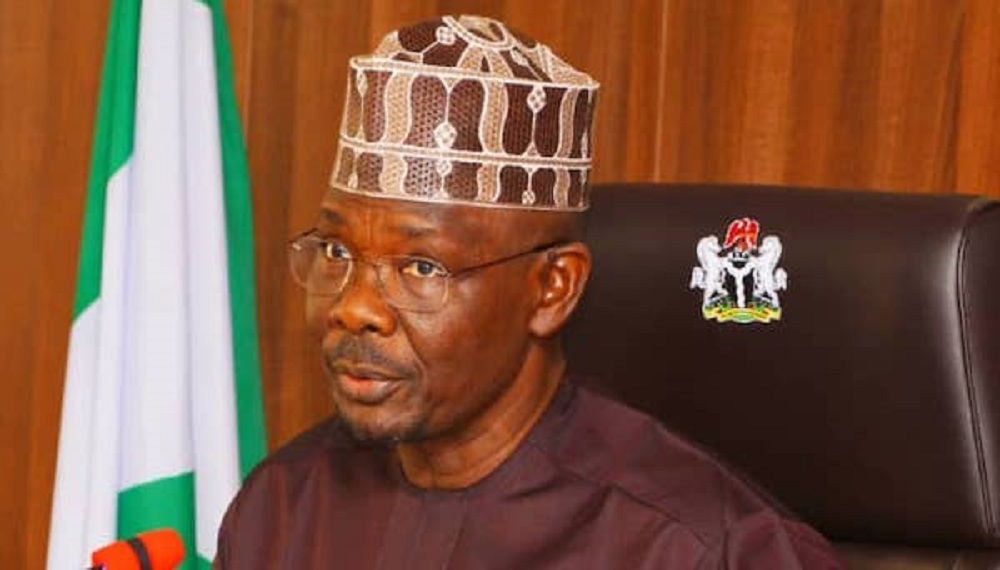
    Governor Abdullahi Sule of Nasarawa State has declared Senator Ahmed Wadada as his preferred candidate to succeed him in the 2027 governorship election.

    Sule made the declaration on Thursday during a meeting with political appointees and heads of government agencies at the Government House in Lafia.

    Wadada is the senator currently representing Nasarawa West Senatorial District on the platform of the All Progressives Congress (APC).

    The governor said his decision followed consultations that lasted over a year and involved stakeholders within and outside the state.

    According to him, the process included engagements with investors, youth groups, women’s organisations, traditional rulers and party officials across the three senatorial districts.

    He said the exercise was later narrowed to three aspirants before Wadada was selected.

    “We had to look for people who has the capacity to be able to win this election.

    “After exhaustive consultations, the field was eventually narrowed to three aspirants, each of whom was considered capable of winning. Further consultations were conducted before a final decision was reached in favour of Senator Wadada,” he said.

    He added that aspirants from Nasarawa West Senatorial District had agreed to support whoever emerged, noting that they also raised concerns about the distribution of elective positions within the zone.

    The governor said he supported the arrangement and urged his appointees to work towards its implementation.

    Sule also asked his political appointees to set aside personal interests and support the party’s candidate.

    “Now all the support , now all of us, if we are sincere about the so-called ‘Muje Maha’, now it is the period that ‘Muje Maha’ is Wadada,” the governor said.

    He cautioned against mocking other aspirants, stating that the decision did not suggest superiority, as all those considered were capable of winning the election.

    The governor also expressed confidence that President Bola Tinubu would perform strongly in Nasarawa State in the 2027 presidential election.

    Earlier, the Secretary to the State Government, Labaran Shuaibu Magaji, said appointees were ready to support the governor’s position.

    2027: Nasarawa Governor Anoints Successor is first published on The Whistler Newspaper

  • INTERVIEW: I’ll Pursue Legislation To Change FCT — Reps Aspirant, Adidi

    INTERVIEW: I’ll Pursue Legislation To Change FCT — Reps Aspirant, Adidi

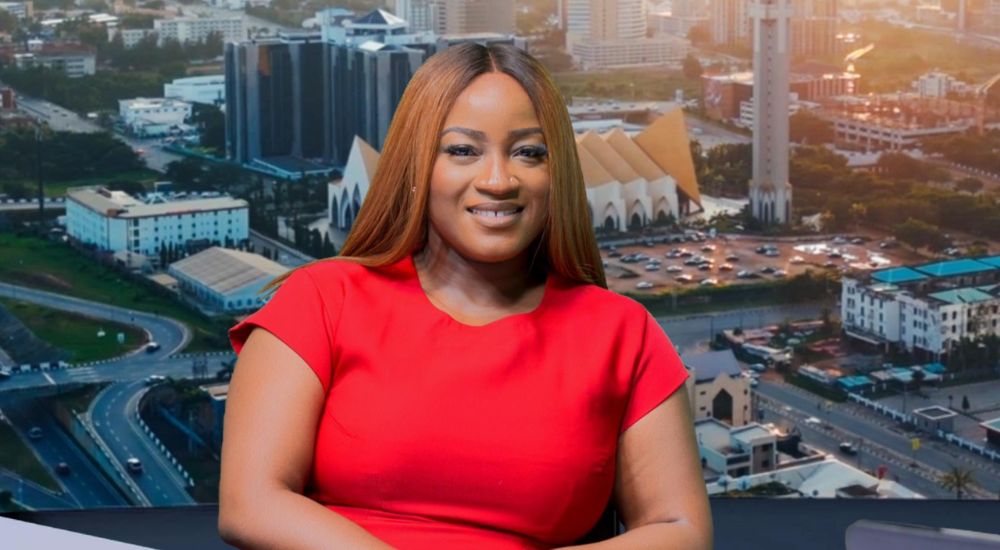
    Development economist and policy professional, Sarah Adidi, describes herself as a fresh voice in Nigerian politics and a passionate advocate for youth-focused, accountable leadership. She visited THE WHISTLER to share her vision for the Bwari/Abuja Municipal Area Council Federal Constituency and her ambition to secure the APC ticket ahead of the primaries.

    In this interview with Justina Simon, she speaks on her motivation to run, her plans for the FCT, and why women and young girls remain central to her legislative priorities.

    Excerpts

    What has been your experience from meeting stakeholders and engaging with your constituents?

    I’ve seen a lot of support from different groups, not just women, but across the FCT. It’s been interesting.

    What’s the motivation for seeking a seat in the House of Representatives?

    Well, I’ve always known from a young age that I would enter politics. Even when I was young, when people would ask me what I wanted to be when I grew up, I always said that I wanted to be the President of Nigeria.

    I think that it’s something that is in me. I have a passion for people, and I’ve always wanted to serve, and so that is kind of what motivated me to take this step at this time.

    What are you bringing on board in this case, because we’ve had a lot of women like you in this system?

    So I think that both my academic and my professional careers have really helped and shaped me to stand out from the crowd.
    I’ve studied economics, and I’ve worked in the development space for almost 15 years now, and I have had the opportunity to work across Africa and to understand governments – what works and what doesn’t work. And that experience, I am ready to bring to the Nigerian legislature.

    This is the first time you are coming into the field of politics. So what experience would you say you’ve learned from this engagement?

    So I think that I am a person who has always—once I have something in mind to do—I will do it, and I will always go all in. I am a very determined person, and so when I felt the push in my spirit to go on this journey, I felt that there was no better time than the present.

    Why is advocating specifically for female representation important to you, rather than adopting a general “for everyone” approach?

    So first of all, if elected, by the grace of God, I, of course, would be a representative of everyone in the FCT because obviously it’s not just women that live here. However, statistics have shown that countries that have more women in government and in leadership positions fare better because you can’t sideline half of the population and expect true development. Every voice needs to be heard.

    There is a perception that Nigerian women have not always excelled in elective or appointed popositions. That they rather cause troubles. Referencing cases like that of Senator Natasha, why do you think your case is going to be different?

    I think that’s actually kind of a false narrative. We see women who are bold, and I think that that is also a case of Nigerian culture. When a woman is outspoken or self-assured, she is labelled as difficult.

    And when we look at the deputy governors, even at Senator Natasha, even in the face of opposition and resistance, they still put their people first. They still make sure that their constituents are well served. You can see that Senator Natasha is still doing a lot of constituency projects, and her people are behind her.

    So I think that is also a benefit of women in politics because they make sure that they carry their people along. We’re natural nurturers, and we always want to see the good of everybody. So that is why it’s important for more women to be involved in government.

    Did you put yourself in her shoes during that controversy, thinking you would have handled it differently?

    As an outsider, I can’t really say how the intricacies of the National Assembly work because, I mean, I’m not there yet, and I’m not in her shoes.

    I’m sure that she probably handled it the way that she felt was best. So yeah, I’ll leave it at that.

    Personally, did you feel she received the support she needed from the womenfolk?

    Well, it was a bit disheartening to see that there are only four women senators, and it didn’t really seem like there was a lot of vocal support for her.

    But again, because I’m not there, I don’t know the full extent. We only know what we see on TV and in the news.

    You’ve been moving, advocating, and meeting stakeholders. What have you been receiving from the constituents and stakeholders?

    I’ve been receiving very good feedback. I have seen that a lot of people are rallying around me, and even those that I have not met yet, I’ve been hearing from other sources that they’re ready to support me. So I’m very grateful to the people of the FCT.

    What about your political structure? You’re new in the system. Where are you getting the backing from?

    Well, so far, I have been receiving good support from the APC. The APC actually prides itself on being a progressive, as the name suggests, and inclusive party, especially for youth. So I have been receiving good support so far.

    If you take a look at what’s happening in governance, are you scared that even if you were to get the ticket, this may not resonate with voters in the FCT—the killings, bad economy? Are you scared of the challenge?

    So I understand why people are a bit hesitant towards the APC because of the recent insecurity and cost of living. There have been a lot of challenges in the past few years. What I will say about the APC is that despite what it looks like, I think that they generally do have the interest of the citizens at heart. I just think that there has been maybe a miscommunication in how they are putting out their accomplishments and achievements. But I do know that they are still working very hard for the people and trying to ensure that a lot of these challenges that the Nigerian people are facing will be overcome in the near future.

    You’re not worried at all?
    No.

    So much money has been mentioned to buy tickets, to canvass for votes—in fact, to get delegates and all of that. Is the monetisation of the primaries in political parties a concern to you? Have you canvassed for a change so that women can play the game?

    I mean, politics is expensive. It is very expensive. Even before I got into this race, I counted the cost because it’s not easy. But for the APC, they have at least been able to reduce the cost of forms for women and youth.
    So I’ll be able to benefit from that. And also, when it comes to the primaries, there’s been a shift. So this year, they’re going to direct primaries or concessions. So it’s not even a question of buying votes from anyone because anybody who is a card-carrying member of the APC can vote.

    If you look at the current representation, what are the gaps that you see that you feel you could tackle if you get elected?

    So I don’t want to disparage anyone. I think that anybody who gets into this seat tries their best. But what I’ve been hearing, at least from my consultations at the grassroots level, is that they feel that once representatives get into power, they tend to forget the people who helped them get there—meaning those at the grassroots level. So I think that there seems to be a bit of a disconnect between the leadership and the people.

    Rhat is one thing that I want to ensure FCT residents—that I am not that type of person. And I have been saying that as I continue to consult with stakeholders across the constituency. When I meet people—because I do have a heart for people and I enjoy meeting them—I want to see the good of the FCT. So I make sure to carry everyone along. And even if elected, I will continue to do so.

    The original inhabitants have been pushed to the fringes of the FCT with no health facilities, no access roads, and no access to proper education. What plans do you have to tackle these problems?

    Absolutely. Even looking at the needs, travelling through the constituency, I can see the level of inequality when it comes to infrastructure. Like you said, the educational system and the primary healthcare centres on the outskirts of Bwari and AMAC are not the same as what you see in Wuse. So as part of my constituency projects, by the grace of God, I would definitely ensure that there will be more funding and support given to roads, electrification, healthcare, and education—just to bridge that gap and make sure that the constituency is as equitable as possible.

    As one of the youth, do you have any vision particularly targeting young people?

    Absolutely. One thing I have noticed, even interacting with the youth of the FCT, is that they are so brilliant and hardworking, but they just need opportunity. So I would love, as part of my constituency projects, to build skills development programmes in areas that are relevant to today’s job market.

    So we’re looking at ICT, even manual labour—things that are really moving the economy forward—manufacturing and agriculture. And not only bringing those kinds of skill development programmes but also linking up with the private sector so that they have opportunities for internships and job placements after the training. Because it’s one thing to have the training, but it’s another thing to actually have job opportunities afterwards.

    What is your plan for young girls lining the streets at night?

    Women, persons with disabilities, and youth are at the heart of what I would like to do as part of my constituency projects once I reach the legislature, by God’s grace.

    So yes, I want to ensure that women, who also seem to be left out of the job market, are empowered. It’s about speaking with them, figuring out what they need, and tailoring programmes to help them so that they don’t feel they have to resort to illicit means of livelihood.

    Could you address the issue of girls lining the streets of Abuja every night for what they call “hustle”?

    A lot of it also has to do with awareness—speaking to them and letting them know that this is not their only option. It’s about giving them self-confidence and awareness of what it means to be a woman and how to carry themselves with dignity. Then, after addressing that social aspect, providing job skills and job placements so that they can leave the streets.

    As the primary elections draw closer, what message do you have for the delegates?

    Well, I would just say that I am someone who is sincere. I’m someone who is hardworking, and I have always been a person of excellence. So anything I find my hands to do, I will always do excellently. And I’m bringing that spirit to the National Assembly. So by putting their hope and support behind me, they will not be disappointed.

    What is your message to women, whom you are so passionate about?

    My message to women is to support me because, as Nigerian women, we still face many difficulties in society. I would be going to the National Assembly as their voice—to make sure that their voices are heard and that legislation passed is beneficial to them, carries them along, and ultimately results in a fairer Nigeria.

    INTERVIEW: I’ll Pursue Legislation To Change FCT — Reps Aspirant, Adidi is first published on The Whistler Newspaper


  • FG, governors intensify push for food security

    FG, governors intensify push for food security

    The Federal Government, in collaboration with state governors, has stepped up efforts to accelerate food security across Nigeria through a coordinated national agricultural framework. This move was reinforced at a three-day Stakeholders Planning and Validation Workshop organised under the National Agribusiness Policy Mechanism (NAPM) by the Presidential Food Systems Coordinating Unit (PFSCU) in Ado-Ekiti, the […]

  • Alleged N33.8b Fraud: Ex Minister Mamman Fails to File Final Written Address

    Alleged N33.8b Fraud: Ex Minister Mamman Fails to File Final Written Address

    Proceedings were stalled in the trial of the former Minister of Power, Saleh Mamman on Thursday, April 16, 2026 as he could not file his final written address before Justice James Omotosho of the Federal High Court, Maitama, Abuja.

    Mamman is being prosecuted by the Economic and Financial Crimes Commission, EFCC on a 12-count charge, bordering on money laundering to the tune of N33,804,830,503.73 (Thirty-three Billion, Eight Hundred and Four Million, Eight Hundred and Thirty Thousand, Five Hundred and Three Naira, Seventy-three Kobo).

    At Thursday’s proceeding which was for adoption of final written addresses, Mamman through his counsel Femi Atteh, SAN, acknowledged the receipt of the final written address of the prosecution but drew the court’s attention to his motion filed on April 1, 2026 seeking for extension of time to enable him file his own final written address. With no objection from the prosecution counsel, Rotimi Oyedepo, SAN, the court obliged him.

    Justice Omotosho adjourned the matter till April 23, 2026 for adoption of final written addresses.

  • Outrage in Ibadan as NSCDC officer denies candidate access to UTME centre [VIDEO]

    Outrage in Ibadan as NSCDC officer denies candidate access to UTME centre [VIDEO]

    There was a mild drama in Ibadan on Thursday when a candidate slated for Universal Tertiary Matriculation Examination, UTME, was denied entry to sit for the examination.

    The incident occurred in the early hours of Thursday at Esther Oshinkoya Computer Based Centre, Eleyele Road in Ibadan.

    DAILY POST reports that UTME which is being conducted by Joint Matriculation Examination Board (JAMB) commenced Thursday across the country.

    However, in Ibadan, a candidate was denied access into the examination venue by an official of the Nigerian Security and Civil Defense Corps, NSCDC
    for wearing Hijab.

    This led to arguments between the parents and some officials at the venue.

    It was learnt that the NSCDC official told the student to remove her Hijab, but the order was described as unlawful by the concerned parents.

    It, however, took the intervention of some stakeholders to restore normalcy at the examination centre.

    A parent who spoke on the condition of anonymity expressed his displeasure over the conduct of the NSCDC official.

    He said, “This is to urgently alert the public, Muslim community, JAMB authorities, and human rights bodies about an ongoing violation happening right now. Candidates wearing Hijab are being compelled to remove their hijab before being allowed to sit for their JAMB exams at this centre. This is a direct violation of the candidates’ constitutional right to freedom of religion and JAMB’s own guidelines that permit hijab during examinations”.

    But, Public Communication Adviser of JAMB, Dr Fabian Benjamin, when contacted noted that the examination body has intervened in the case.

    He told DAILY POST that the candidate has been allowed to sit for the examination and that the officer has been called to order.

    Benjamin in a telephone conversation with DAILY POST on Thursday noted that the examination body does not discriminate against anyone irrespective of their religion.

    He said “We have given a clear directive that on no account should any candidate who is dressed in line with their religious injunction be denied any right or harassed. You know, we saw, we are monitoring the exercise from our headquarters and we saw what happened and we have called the officer to order that this is not what she is there to do. We have met top echelon of NSCDC and we suspect that the instructions were not properly cascaded to the lower echelon of the agency.

    “The candidate as we speak is writing her examination, yes there was a breach on her right which is unfortunate and it is not part of our protocol. Make it clear that what the officer did is regrettable and it is not part of our protocol”.

    Outrage in Ibadan as NSCDC officer denies candidate access to UTME centre [VIDEO]

  • Female circumcision helps me control sexual urges — Actress Victoria Inyama

    Female circumcision helps me control sexual urges — Actress Victoria Inyama

    Nollywood actress Victoria Inyama has revealed how female circumcision is helping her to control her sexual urges….

  • 744 Repentant Terrorists Complete Rehabilitation

    744 Repentant Terrorists Complete Rehabilitation


    No fewer than 744 former terrorists and victims of violent extremism on Thursday graduated from the Federal Government’s De-radicalisation, Rehabilitation and Reintegration Camp under Operation Safe Corridor.

    A breakdown of the 744 clients shows that two are from Abia State, 10 from Adamawa State, one from Akwa Ibom State, two from Anambra State, 12 from Bauchi State, 597 from Borno State, three from Ebonyi State, one from Enugu State, 15 from Kano State, three from Katsina State, one from Kebbi State, five from Kogi State, four from Nasarawa State, two from Niger State, two from Plateau State, two from Sokoto State, and 58 from Yobe State.

    In addition, there are foreign nationals, comprising one from Burkina Faso, one from Cameroon, two from Chad, and four from the Niger Republic.

    Speaking at the event in Gombe, the Chief of Defence Staff, Gen. Olufemi Oluyede, stated that the initiative is “not a reward” for violence but a strategic tool to curb extremism.

    Represented by the Director, Special Operations Forces at Defence Headquarters, Rear Admiral Kabiru Tanimu, he said the programme was designed to address the human dimensions of insurgency and promote lasting peace.

    “This moment is not just a ceremony; it is a statement of progress, a demonstration of national resolve and a testimony to the power of strategic thinking in addressing human dimensions of conflict,” he said.

    Oluyede stressed that while military force remains necessary, long-term stability depends on rehabilitation and reintegration.

    “Operation Safe Corridor represents Nigeria’s firm belief that while kinetic operations are necessary to neutralise threats, lasting peace can only be achieved when we address the underlying drivers of de-radicalisation, disengagement and reintegration,” he said.

    He added, “This is not a reward but a deliberate strategy to reduce violence, weaken extremist recruitment and promote long-term stability.”

    Addressing the graduates, the CDS urged them to embrace a new path, warning against a return to violence.

    “Nigeria is giving you a second chance; do not waste it. You are returning not just to your communities but to a responsibility to live peacefully, to contribute meaningfully and to reject all forms of violence and extremism,” he said.

    Oluyede also clarified that the initiative should not be mistaken for amnesty. “Operation Safe Corridor is not an amnesty programme, and it is not a sign of weakness. It complements military operations by addressing the human threats of conflict, reducing recidivism and weakening the ideological foundations of violent extremism,” he noted.

    He called on state governments and communities to support the reintegration process, saying, “Reception, monitoring and community acceptance remain critical to sustaining the gains achieved today. This must be a collective effort.”

    Earlier, the Coordinator of Operation Safe Corridor, Brig. Gen. Yusuf Ali said the programme was established as a deliberate strategic response to insurgency, combining security efforts with rehabilitation.

    “While military operations continue to degrade and neutralise threats, it became evident that lasting peace requires a structured pathway for disengagement, rehabilitation and reintegration of those willing to renounce violence,” Ali said.

    He explained that the beneficiaries underwent extensive training, including “psychosocial support, vocational training, religious reorientation, educational reform, civic education and behavioural transformation.”

    “This process is not merely about disengagement; it is about rebuilding identity, restoring values and preparing individuals to return to society as responsible citizens,” he added.

    Ali noted that many of the participants were victims of coercion and manipulation. “Some were abducted, others were forced, and many were drawn into the conflict due to circumstances beyond their control. But today marks a turning point,” he said.

    “From this moment, they have the opportunity to reclaim their identity, rebuild their lives and pursue a future defined not by conflict but by purpose, responsibility and national development,” he added.

    The coordinator emphasised that reintegration remains a shared responsibility.

    “State governments, community leaders, families and institutions all have critical roles to play in ensuring that these individuals are accepted, monitored and supported,” he said.

    The Governor of Gombe State, Muhammad Yahaya, represented by his SSA on Security Matters and Intergovernmental affairs, Ambassador Yusuf Musa, charged the graduating clients to embrace the opportunity as a new beginning.

    He said the programme reflects the federal government under the Leadership of President Bola Tinubu’s commitment to peace building and the De-radicalisation, rehabilitation and reintegration of repentant persons into society.

    “You’ve been given a second chance, do not take it for granted. Go forward and become responsible, law-abiding, and productive citizens who will contribute positively to your community and the nation at large. Do not betray the trust that Nigeria has placed in you.”

    The graduation of 744 clients under Operation Safe Corridor underscores Nigeria’s sustained shift towards combining military efforts with non-kinetic strategies in addressing insurgency, particularly in the North-East.

    Established as a structured response to the Boko Haram conflict, the programme reflects growing recognition by security authorities that durable peace cannot be achieved solely through force, but also through de-radicalisation, rehabilitation and reintegration of individuals willing to renounce violence.

    Over the years, Operation Safe Corridor has evolved into a multi-agency initiative supported by both local institutions and international partners, focusing on psychosocial support, vocational training, and ideological reorientation.

    Punch

    The latest graduation highlights the scale and continuity of the effort, as well as the Federal Government’s commitment to reducing recidivism, weakening extremist recruitment, and promoting community-based reintegration as part of a broader national stabilisation strategy.

  • Kidnappers Release Second Video of Abducted UNIJOS Student

    Kidnappers Release Second Video of Abducted UNIJOS Student

    Kidnappers holding John Arum, a student of the University of Jos, have released a second disturbing video, intensifying fears over his safety.

    In the footage, the victim is seen kneeling while an armed man points a rifle at him, as he reveals that they are currently in Zamfara State. The kidnappers also issued a direct death threat, warning that failure to meet their demands could lead to his execution.

    Arum was reportedly abducted alongside six others along the Jos–Kaduna highway, a route frequently linked to kidnapping incidents.

    Sources indicate that the ransom demand, initially set at ₦30 million, has now been reduced to ₦4 million, though there has been no official response from authorities or confirmation of ongoing rescue efforts.

    The development has sparked renewed concerns over insecurity and kidnapping across Nigerian highways, especially in the North-West and North-Central regions.