
AS part of strategies to guard against external shocks arising from the Strait of Hormuz-related disruption, an industry stakeholder has urged the Federal Government to produce more crude, refine more domestically and diversify energy sources, especially gas. According to the Chairman, Society of Petroleum Engineers, Nigeria Chapter, Mr Francis Nwaochei, this with form the most […]
Blog
-

Firm urges property tax expansion, review of waivers to boost revenue
A policy advisory firm, Amethyst & Ashlar Advisory, has called for the expansion of property taxation at the state level and a review of existing tax waivers as part of measures to strengthen Nigeria’s fiscal position and drive inclusive growth. In its report titled: “Nigeria’s Macroeconomic Recovery Amid Persistent Poverty”, the firm said Nigeria’s non-oil […]
-

Tuface, Laolu Gbenjo, others set to electrify Vanguard Personality of the Year Award
Afrobeats legend, Tuface Idibia, is set to thrill guests at this year’s Vanguard Personality of the Year Award.
Known for his timeless hits that resonate across generations, the iconic performer is expected to deliver an unforgettable performance featuring his evergreen songs.
Also billed to entertain at the glamorous event is The Laolu Gbenjo Band, one of Nigeria’s most celebrated live music groups. Adding more excitement to the lineup is the Black Edge Performance Troupe.
The 14th edition of the prestigious award ceremony will take place at Eko Hotels and Suites, Victoria Island, Lagos, on April 24, 2026, at 5 p.m.
Interestingly, the event promises to be a night dedicated to celebrating outstanding Nigerians who have excelled in various sectors.
Over the years, Vanguard Personality of the Year Award has grown into one of the country’s most distinguished media recognitions.
The ceremony will also acknowledge several individuals who have contributed significantly to Nigeria’s socio-economic development across different categories.
Among the top awardees this year are Sayyu Dantata, Chairman of MRS Group, and Olubunmi Tunji-Ojo, Minister of Interior, who emerged as Personality of the Year for their impact and leadership.
Speaking on the significance of the award, Editor of Vanguard Newspapers, Eze Anaba, said the initiative is designed to celebrate excellence, inspire national pride, and honour service to humanity.
The gathering is expected to draw an elite audience, including business leaders, government officials, elder statesmen, and celebrities, making it a night of glamour, recognition, and top-tier entertainment.
The post Tuface, Laolu Gbenjo, others set to electrify Vanguard Personality of the Year Award appeared first on Vanguard News.
-

Mixed reactions as FG cuts duties on pharmaceutical products, rice, cars, others
*Tariff cut excites pharmacists, triggers call for sector reform
*Demand presidential panel, tighter regulation, local manufacturing boost
*Rice farmers lament cut *Automobile sector reacts
By Theodore Opara, Chioma Obinna and Gabriel Ewepu
Mixed reactions yesterday trailed the Federal Government’s approval of the new 2026 fiscal policy which reduced import tariffs on drugs and pharmaceutical products, cars and rice, among others.
While players in the pharmaceutical sector hailed government’s new move, rice producers and those in the automobile sector regretted the move, said the policy would be inimical to their business.
Recall that the Federal Government had in a document dated April 1, 2026, by the Minister of Finance and Coordinating Minister of the Economy, Mr. Wale Edun, approved sweeping tariff adjustments across 127 product lines, including antimalarial medicaments now pegged at 20 per cent, as part of efforts to stimulate growth and ease the cost of critical imports.
While pharmacists say the policy could improve access to essential medicines, they insisted that weak regulation, counterfeit drugs, and poor support for local manufacturing remained major obstacles.
In an interview with Vanguard, the President of the Pharmaceutical Society of Nigeria, PSN, Ayuba-Tanko Ibrahim, described the tariff cut as a positive step but cautioned that the gains would depend on complementary policy actions.
“A drop in duties on drugs and pharmaceutical products is quite laudable. In normal circumstances, this should signpost a drop in prices of these products and promote accessibility to drugs and healthcare, albeit legitimately.
“The PSN appreciates and commends the commitment of the federal government in the ensuing scenario,” he said.
However, he warned that more needed to be done to sanitise the sector, Ibrahim said: “It is noteworthy that the federal government must do a little more in terms of regulation and control of drug matters in Nigeria.
‘’Government must see a need for urgent intervention with a template akin to an all-purpose special vehicle that can help fix fundamental issues pertaining to local manufacture and drug prices.’’
He further highlighted the persistent challenge of fake and counterfeit medicines, stressing that “we must redress the issue of fake and counterfeit drugs, especially because of the unending cycle of a preponderance of unregistered pharmaceutical premises.
‘’There is also a need to support local content in Active Pharmaceutical Ingredients, APIs, and vaccines availability to increase the contribution of the pharmaceutical sector to national GDP.’’
He also called for the implementation of long-delayed policies.
“Once again, we must ensure that the Federal Ministry of Health-approved National Drug Distribution Guidelines, NDDG, sees the light of day. For this and more, we have in the past urged the federal government to set up a presidential committee on the Pharma sector which will be driven by a seasoned registered pharmacist.
“Lawfully and experientially, only the technical skills of a pharmacist can fix this mandate,” Ibrahim stressed.
On his part, former PSN President, Mr Olumide Akintayo, said the tariff cut aligned with the National Drug Policy 2021 but questioned why similar interventions in the past failed to yield expected results.
“We must salute the sagacious conduct of the Federal Government for another well-intended move to improve accessibility to affordable drugs in line with the National Drug Policy 2021.
“This development throws up a kaleidoscope of colours, but the critical and fundamental question is why we are not getting results from the paradigm shifts the government attempts to bring to bear in the pharma sector,” Akintayo added.
According to him, the problem lies in poor implementation, driven by the wrong expertise.
“There is one major reason, which borders on the perennial utilisation of wrong drivers to move a purely creative endeavour like the pharma sector.
‘’Recall the attempt of the federal government to reduce drug prices through an Executive Order about two years ago. We warned that the move would be dead on arrival if salient professional parameters were not built ab initio into the concept. The results are there for all to appraise today,” he said.
Akintayo called for a return to foundational reforms, insisting that “we must start from basics, including redressing regulatory fees in our sector, while also allowing the trade and commerce ministry to handle certain fundamental approvals wrongly appropriated by some MDAs, probably on the basis of naivety,” he noted.
Similarly, National Chairman of the Association of Community Pharmacists of Nigeria, ACPN, Mr Ambrose Ezeh, called for a change in government strategy, insisting that technical issues in the sector required professional leadership.
“For the umpteenth time, we strongly solicit a change of strategy in government’s resolve to reduce drug costs.
“This is both a technical and professional matter best left in the hands of a Presidential Committee on an ad hoc basis with defined terms of reference within a given timeline,” Ezeh said.
While emphasising the role of pharmacists in policy coordination, he said further: “This might work out if the federal government consults the PSN to recommend fit and proper persons for such a national assignment.
‘’You will agree that similar efforts not coordinated directly by registered pharmacists have failed repeatedly in our experience.’’
Also reacting in a chat with Vanguard, Chief Executive Officer of Engraved Pharmacy, Mr Jonah Okotie, said the tariff adjustments showed marginal gains in some areas but little change in critical drug segments.
“Compared to 2023, nothing has changed for antimalarial products. It’s still the same 20 per cent tariff for imported products,” Okotie said but noted modest relief in medical devices.
“On breathing apparatuses and gas masks, there is a reduction from five per cent to zero per cent, which is an improvement and is expected to see the prices on these devices come down,” he stated.
According to him, while the gains may appear limited, they are still significant.
“Though it looks small, it is a very welcome development,” Okotie added.
He stressed that the broader objective of boosting local pharmaceutical production remained largely unmet.
“Both the 2023 FPM and the 2026 FPM are supposed to promote and enhance local production capabilities, but more needs to be done to make this a reality,” he said.
Reduced rice import duty discourages farmers – AFAN
Reacting to the tariff cut yesterday, the President, All Farmers Association of Nigeria, AFAN, Mohammed Magaji, described the Federal Government’s action as discouraging to Nigerian rice farmers.
He said: “It discourages the Nigerian farmers from going to the farm, honestly speaking, because there is no good price, there is no market.
“Unfortunately, the price of inputs, including fertilisers, agrochemicals and the rest are going up. The government should have a rethink on this policy.
“We are appealing to the government to have a rethink on it and give us a chance to produce what we eat and eat what we produce.”
Serious setback for farmers – JetFarmsNG
On his part, the Chief Farmer of Africa and Team Lead, JetFarmsNG, Jeremiah Olanrenwaju, said: “This policy is a serious setback for local rice farmers. Reducing import duty on bulk rice from 70% to 47.5% and broken rice to 30% will make imported rice significantly cheaper, putting immediate pressure on locally produced rice.
‘’For farmers already dealing with high input costs, logistics challenges, and limited access to finance, this creates an uneven playing field. At harvest, many of us may be forced to sell below cost, leading to losses and discouraging further investment in rice production.
“Farmers must be extremely cautious this season. This is not the year to expand blindly. Focus on efficiency, secure buyers early, and avoid overproduction without clear market access.
‘’With this being an election year, policy directions may shift quickly, and food production could be negatively impacted if farmers pull back. While importers may benefit from this policy, local producers face uncertainty that could affect supply in the long term.
“At this critical moment, the government must act swiftly to support farmers before production begins. We need targeted input subsidies, access to affordable financing, and guaranteed offtake mechanisms to stabilize the market.
‘’Supporting local farmers now is essential to protect national food security and prevent deeper reliance on imports.”
Automobile sector raise queries
An automobile Marketing Communication Consultant and Professor of Marketology, Advertising and Public Relations, Professor Oscar Odibo, while reacting, welcome the development, expressing worries that government could wake up and change policies, either for good or bad.
He advised industry operators to take advantage of the tariff reduction to import as many cars as they could, even if it meant taking bank loan to do so.
He pointed out that his concerns over the new tariff was people who have invested heavily in local auto assemblies in the country.
He said: “With the tariff reduction, the danger in this is that the progress recorded by the local automotive assemblers will disappear because the investments in the assemblies will be affected, including employment of youths.
“Most people have invested millions of dollars in these local plants and the implication is that the progress made so far will be reversed.
Continuing he queried: “What do you expect the local auto assembler to do? This can discourage genuine investors in local assembly businesses.
Odibo, however, advised the federal government to reduce tariff on auto spare parts, rather than cars, in order to support the growth of local assembly plants which would create jobs.
He further suggested that the government should also deal directly with the local assemblers because they were the real investors and not cash and carry businessmen who only imported and sold cars without creating jobs
Also in his reaction, Mr Ifeanyi Agwu, Managing Director of BKG Exhibitions, organisers of the Lagos and Abuja International Auto shows, wondered what the Federal Government had done about the local auto assembly plants.
“What I would like to know is what has the government done to secure the local assemblies? Did they leave it as it was? Did they reduce the tariff on imported parts as well? If they didn’t do that, I don’t know what they want to achieve with the new tariff.
‘’We need to know if the adjustment is for fully built cars and spare parts before we commend or condemn the new policy,’’ he said.
The post Mixed reactions as FG cuts duties on pharmaceutical products, rice, cars, others appeared first on Vanguard News.
-

Researchers decry regressive implicit tax as rent inflation escalates
A growing wave of housing rent inflation in Nigeria is increasingly functioning as a “regressive implicit tax” on urban households, eroding real incomes and worsening multidimensional poverty, according to researchers and housing policy experts. The warning was raised by Ayinde Yemisi of Covenant University, Ota, who argued that the rapid escalation in rent prices reflects […]
-

Rising diesel prices cripple fishing sector
,,80% of vessels grounded
By Godwin OritseMembers of the Nigerian Trawlers Owners Association, NITOA, have said more than 80 per cent of their vessels were currently grounded due to the sharp rise in diesel prices.
At Ijora Fish Market, a sharp decline in the volume of fish supplied by Nigerian trawlers was noted, resulting in scarcity of the commodity.
The development has also triggered a sharp increase in the prices of available fish across markets.
Commenting on the development, National Executive Secretary of the Fisheries Cooperatives Federation of Nigeria, Navy Captain Oladele Robinson, retd, said both the artisanal and industrial segments of the sector were being adversely affected by the rising cost of diesel and petrol, which is impacting operators’ activities.Robinson explained further that operators in the artisanal segment relied on Premium Motor Spirit, PMS, also known as petrol, to power their fishing boats, while the industrial sub-sector depended on diesel to run trawlers.
He stated that operators often deployed their vessels without securing sufficient catch to justify the high cost of petrol or diesel, adding that the situation had become unsustainable for continued operations.
He said: “At times, operators go to sea but are unable to secure enough catch to justify the cost of fuel, a situation that has driven up the prices of fish and other seafood.”Efforts to reach Mrs Ben Okonkwo, President of NITOA, was futile as she was said not to be on seat when our correspondent visited her office in the Kirikiri area of Lagos but sources close to her office told Vanguard that the cost of Automated Gas Oil, AGO, which powers fishing vessels, had surged by over 100 per cent.
The source explained that deploying a vessel for a 50-day fishing trip under current fuel costs would result in significant financial losses.
“The problem is AGO, which is diesel. The vessels run 100 per cent on AGO. Right now, the prices are so high that you can’t even think of fuelling a vessel for a 50-day trip. The vessel will come back at a very big loss.
“What has happened is that operational costs have gone far beyond what companies can handle. That’s why operators have brought their trawlers back to the jetty rather than remain at sea and continue recording losses.
“We used to get diesel at about ¦ 900 per litre. Today, it is between ¦ 1,800 and ¦ 2,000 per litre, well over a 100 per cent increase,” the source said.
The source noted that the spike in fuel prices had pushed the industry into a critical state, with operators unable to sustain vessel operations, while overhead costs remained unchanged.
“The implication is that trawlers cannot operate under these conditions. The industry is in a critical situation. Companies are going aground,” she said.
The source warned that the development posed risks to food security, stressing that fish remained an affordable source of protein for many Nigerians.
“For the economy, this affects food security. If vessels do not go to sea, there will be shortage of fish. If vessels are not running, where do the seafarers go? These vessels are meant to be at sea, not tied up at the harbour.
‘’Across the industry, both direct and indirect labour, close to 10,000 jobs are at risk if there is no immediate government intervention,” she stated.
The post Rising diesel prices cripple fishing sector appeared first on Vanguard News.
-

CPPE disagrees with World Bank over fuel, food imports
By Udeme Akpan, Energy Editor
The Centre for the Promotion of Private Enterprise, CPPE, has disagreed with the World Bank over its proposed policy advocating increased importation of petroleum products and food into the country.
In its recent 2026 report, the bank called for increased importation of petroleum products and food in response to supply-side constraints.
However, in his response, the Chief Executive Officer of CPPE, Dr. Muda Yusuf, said: “The CPPE expresses strong reservations about the policy proposition by the World Bank in its recent Nigeria Development Update, advocating increased importation of petroleum products and food as a solution to Nigeria’s supply-side constraints.
“This recommendation is deeply troubling and fundamentally misaligned with Nigeria’s current economic realities and reform trajectory. At a time when the country is making measurable progress in restoring macroeconomic stability—evidenced by improving foreign reserves, moderating inflation, a more stable exchange rate regime, and growing capacity for the export of refined petroleum products—the policy priority should be to consolidate these gains, not undermine them.
“Nigeria is gradually transitioning towards greater self-sufficiency in petroleum product supply, driven by significant private investments in domestic refining capacity. This momentum should be strengthened through deliberate policies that support local production, enhance value addition, and deepen industrial linkages within the economy.
“Encouraging increased importation of petroleum products at this stage risks reversing hard-won gains. It would exacerbate foreign exchange pressures, weaken domestic refining investments, and heighten the economy’s vulnerability to external shocks—particularly in a global environment characterised by geopolitical tensions and energy market volatility.
“The emphasis, therefore, should be on expanding and stabilising domestic production capacity, ensuring reliable crude supply to local refineries on competitive terms, and fostering an enabling environment for downstream sector investments. This is the pathway to sustainable energy security, economic resilience, and long-term industrial development—not a return to import dependence.”
Dr. Yusuf, who made a case for industrialisation and energy security, called for strategic protection of the nation’s economy.
He said: “It is therefore paradoxical—and indeed worrying—that the World Bank is urging developing economies such as Nigeria to embrace policy prescriptions that many advanced economies are increasingly retreating from. Across the developed world, there is a clear resurgence of strategic protectionism and supply chain reconfiguration—driven by lessons from recent global disruptions, including the pandemic and ongoing geopolitical tensions.
“Major economies are prioritising domestic production, safeguarding critical industries, and deploying subsidies, tariffs, and localisation policies to strengthen economic resilience and national security. In contrast, recommending import liberalisation for countries still grappling with structural deficits and industrial fragility risks entrenching dependence, undermining local capacity, and stalling the industrialisation process.”
He added: “Import liberalisation is not a sustainable solution to Nigeria’s supply-side challenges. On the contrary, it risks deepening structural vulnerabilities, accelerating de-industrialisation, and exposing the economy to greater external shocks.”
The post CPPE disagrees with World Bank over fuel, food imports appeared first on Vanguard News.
-
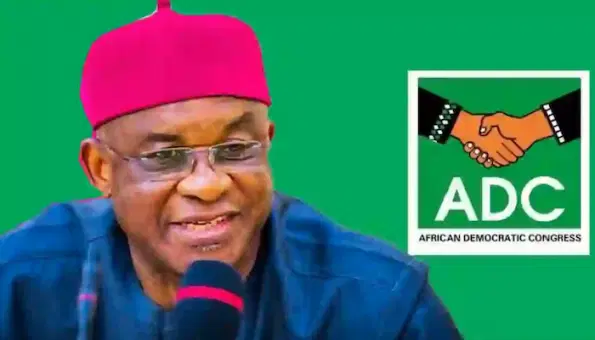
ADC fixes May 12 inauguration as Mark camp tightens grip on state excos
By Luminous Jannamike
ABUJA—African Democratic Congress, ADC, has fixed May 12, 2026, for the inauguration of its newly elected state executives, as the David Mark-led leadership pushes ahead to consolidate its hold on the party, despite ongoing internal crisis.
By proceeding with the inauguration, the Mark camp is moving to formalise its authority across the states, even as disputes, court cases and rival claims continue to trail the congresses in parts of the country.
The announcement was contained in a statement by the party’s National Publicity Secretary, Bolaji Abdullahi, who spoke on behalf of the leadership yesterday.
“African Democratic Congress, ADC, congratulates all newly elected state executives and state chairmen across the federation on the successful and peaceful conduct of their congresses.
“These elections, carried out in line with the provisions of the law and the party’s constitution, reflect the ADC’s enduring commitment to internal democracy, transparency and the rule of law.
“We commend all party members and stakeholders for exercising their democratic rights with maturity, discipline, and a shared sense of purpose,” Abdullahi said.
The party also said the inauguration would go ahead as scheduled, with changes to be communicated by its National Working Committee, NWC.
Speaking further, Abdullahi said: “The party is pleased to announce that the formal inauguration of the newly elected State Executives is scheduled to take place on May 12, 2026, or on a later date to be duly communicated by the National Working Committee.
“As you prepare to assume office, we urge all elected officials to remain steadfast in their dedication to the ideals and vision of the party.”
The task ahead requires unity, discipline and a continued commitment to building a strong, credible alternative for the Nigerian people.
“The ADC remains confident that under your leadership at the state level, the party will continue to grow, deepen its structures, and strengthen its connection with citizens across the country.’’
The move comes against the backdrop of a deepening leadership dispute within the party, with parallel congresses, court interventions and suspensions reported in several states, raising questions about the uniformity of the process nationwide.
Despite this, the Mark-led leadership has insisted the congresses conducted under its watch were valid, pressing ahead with the inauguration as it seeks to stabilise the party and position it ahead of future elections.The post ADC fixes May 12 inauguration as Mark camp tightens grip on state excos appeared first on Vanguard News.
-

Conviction of terrorists ‘ll give hope to victims — US, CSOs, lawyer
By Gabriel Ewepu
ABUJA—AMID rising insecurity across the country, the United States, civil society organizations, CSOs, and a senior lawyer have hailed the conviction and sentencing of Boko Haram terrorists to life imprisonment by the Federal High Court in Abuja.
They described the landmark judgment by Justice James Omotosho as a step in the right direction.
US commends Nigeria over 386 terrorism convictions
On its part, the United States commended the federal government for securing 386 convictions in terrorism-related cases, describing the development as a significant step towards justice and accountability.
U.S. Senior Advisor for Arab and African Affairs, Massad Boulosin, a statement he shared via X yesterday, said: “The United States commends the Nigerian government for its strong commitment to expediting trials addressing terrorism and related crimes.
“We welcome the convictions of 386 Islamist militants in cases that had previously faced significant delays in the courts, and we recognise this as an important step toward accountability and justice.’’
The U.S. further stressed the importance of transparent legal processes in tackling extremism, saying: “we believe that timely and transparent legal processes are critical in confronting extremism and reinforcing public trust in judicial institutions.
‘’Upholding the rule of law remains essential to ensuring the safety, stability, and long-term security of all Nigerians.’’
Judgment will restore Nigerians’ faith in justice system – Global Rights
The Executive Director, Global Rights Nigeria, Abiodun Baiyewu, said the judgment would give more confidence in the nation’s justice system.
Baiyewu said: “This is certainly a move in the right direction. This will help restore the public’s faith in the justice system. Prior rhetoric of amnesty and rehabilitation have been very detrimental to the psyche of communities that have borne the brunt of terrorism for the past 15 years. Hopefully, it would deter other would-be criminals’ intent on chaos.”
We don’t need special courts to prosecute terrorism cases
According to her, “terrorists should be prosecuted by regular courts. These are internal security/criminal matters, and should be treated as such. You could have a special investigations unit, but the regular courts are equipped to manage them once charged with a crime.
“The one thing they can do differently is to ensure that the justice system is overhauled to ensure criminal matters are adjudicated on time.”
Judgment reaffirms no one is above the law – ActionAid
In his reaction to the judgments, the Country Director, ActionAid Nigeria, AAN, Dr Andrew Mamedu, said: “ActionAid Nigeria believes this is a significant step in the right direction. Holding individuals accountable for acts of terrorism reinforces the principle that no one is above the law, and that the state remains committed to protecting citizens from violent extremism.
“We strongly support the idea that it is better for terrorists to serve the right and commensurate punishment within the framework of the law, while simultaneously participating in rehabilitation programmes.
“Such rehabilitation ensures that convicted individuals have the opportunity to reintegrate into society safely where applicable and reduces the likelihood of re-offending.
“At the same time, we recognise that justice is not only about convictions. Sustainable impact requires a holistic approach that addresses the structural drivers of terrorism, including poverty, social exclusion, lack of education and weak governance.
“Convictions should, therefore, complement community-based interventions, psychosocial support for victims, and long-term prevention strategies. In this sense, the court’s decision is a positive signal but it must be embedded in a broader framework that ensures lasting security and societal healing.”
We’ve confidence in conventional courts
Speaking further, Mamedu said: “ActionAid Nigeria recognises that conventional courts are an important avenue for handling terrorism cases. They demonstrate confidence in civilian judicial institutions, reinforce the rule of law, and allow for open and transparent proceedings, which promote public accountability and adherence to human rights standards.
“Conventional courts ensure that terrorism cases are treated like any other criminal matter under the law, maintaining procedural fairness and due process.’’
Sound judgment, step in right direction – Lawyer
Lawyer and Principal Counsel, Idris Faro & CO, Idris Faro, described the judgment as sound and a step in the right direction.
He said: “The judgment of Hon. Justice Omotoso of the Federal High Court, convicting and sentencing some defendants who pleaded guilty to terrorism and other offences, is a sound judgment. It is a step in the right direction. There must be punishment for those who commit crimes, especially heinous crimes.
“Administration of Criminal Justice is nothing without the imposition of custodial sentence on violent criminals. They must be taken to the penitentiary for punishment and correction as necessary.
“There has been a recurrence of violent crimes in the country because criminals get away with their crimes. When criminals are jailed or sentenced to death as the law still provides, it sends a strong message to would-be criminals or the lucky ones who escaped arrest that crime does not pay.
‘’By diligently prosecuting terrorists, the the level of insecurity will drastically reduce. There should be no sacred cows at all. Terrorists and their financiers or those who abet them must have their day in court.”
The post Conviction of terrorists ‘ll give hope to victims — US, CSOs, lawyer appeared first on Vanguard News.
-

Minister cannot interfere in individual tax enforcement, says NRS
THE Nigeria Revenue Service (NRS) has clarified that the Minister of Finance does not have the authority to interfere in specific tax enforcement actions, stressing the agency’s operational independence under the Nigeria Revenue Service (Establishment) Act No. 4. In its recently released “100 Frequently Asked Questions” on the new tax framework, the NRS explained that […]