Blog

  • 2027: Why Tinubu’s re-election is personal mission for Kogi – Ododo

    2027: Why Tinubu’s re-election is personal mission for Kogi – Ododo

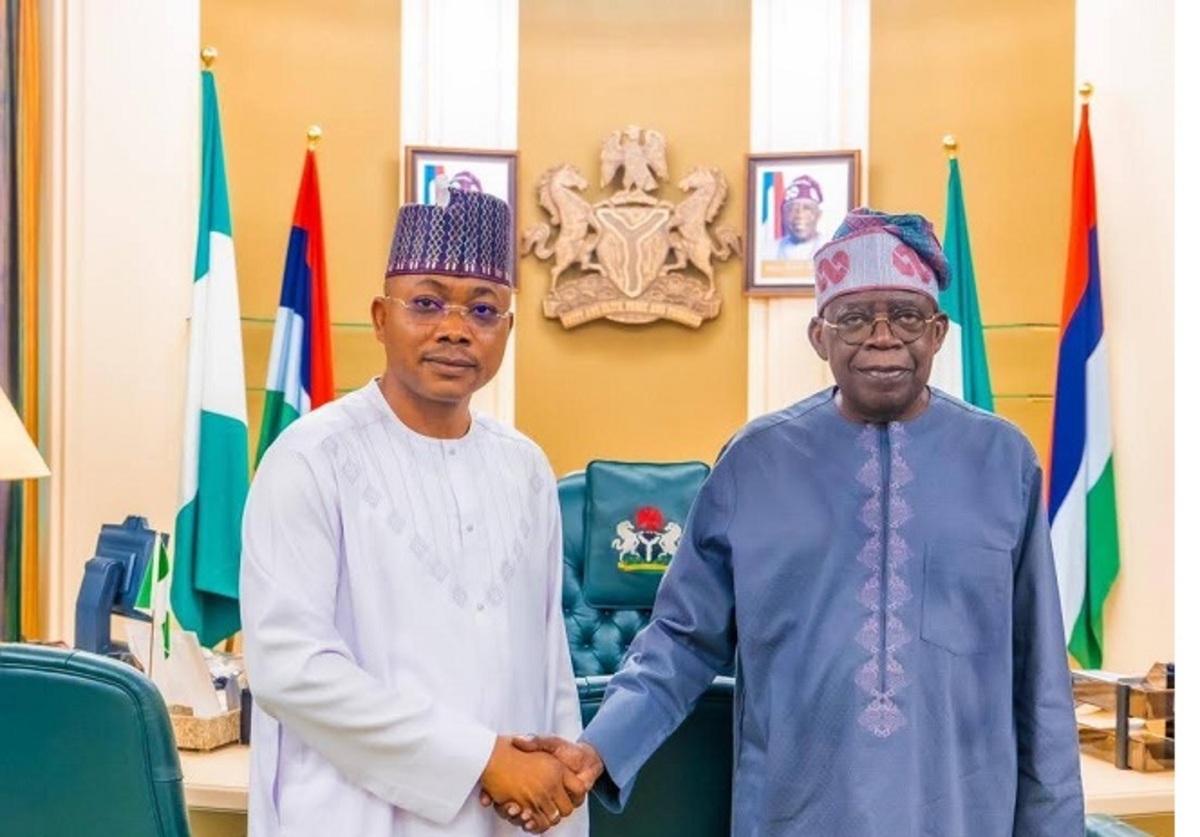
    Governor Ahmed Ododo has declared President Bola Ahmed Tinubu’s re-election bid in 2027 a personal mission for Kogi State, pledging total support for the president ahead of the next general election. Ododo made the declaration through the Kogi State Commissioner for Information and Communications, Kingsley Fanwo, on Monday in Lokoja. The governor said Tinubu’s landslide […]

    The post 2027: Why Tinubu’s re-election is personal mission for Kogi – Ododo appeared first on Tribune Online.

  • Fubara Sacrificed Second Term Bid During Peace Deal With Tinubu—Wike

    Fubara Sacrificed Second Term Bid During Peace Deal With Tinubu—Wike

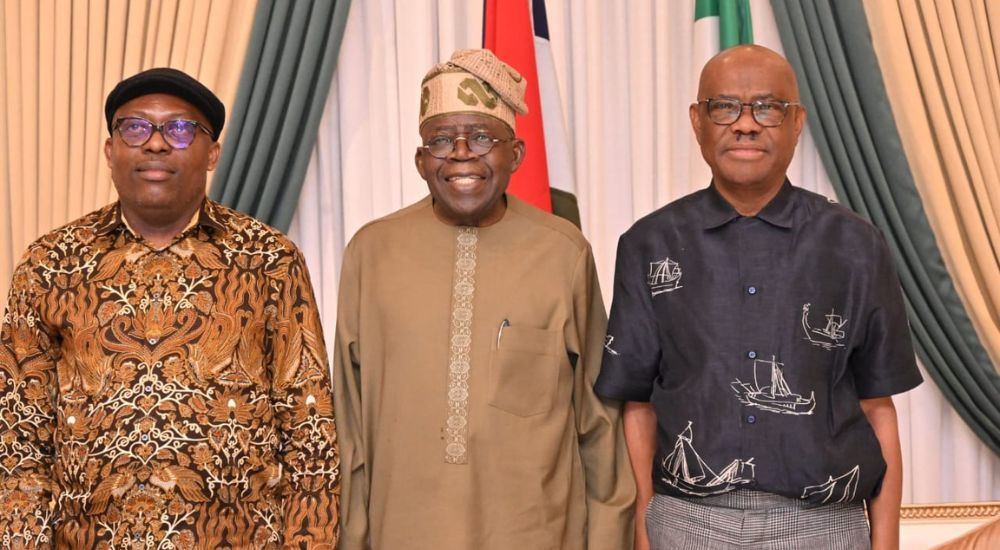
    The Minister of the Federal Capital Territory, Nyesom Wike, on Monday disclosed details of a political agreement that led to the withdrawal of Siminalayi Fubara from the 2027 governorship race in Rivers State, while stating that the emergence of Kingsley Chinda as the APC candidate showed that “a good product markets itself.”

    Wike said the decision by Fubara to step down from the race was part of a peace arrangement brokered by President Bola Tinubu to end the prolonged political crisis in Rivers State.

    Speaking with journalists during an inspection of ongoing infrastructure projects in Abuja, the former Rivers governor said the agreement required lawmakers to halt impeachment moves against Fubara on the condition that the governor would not seek a second term.

    According to him, Fubara breached the understanding by initially obtaining the APC governorship nomination form before eventually withdrawing from the contest.

    “In the first place, he ought not to have collected the form, because the agreement was reached that the impeachment should be dropped while he should also not talk about second tenure,” Wike said.

    He added that the governor’s decision to obtain the form did not demonstrate “gentlemanship” despite repeated interventions by the President to resolve the crisis.

    “We thought that Mr President had been intervening severally and pleading with the legislature not to continue with impeachment, but whatever it is, he has withdrawn and somebody has emerged,” he stated.

    Wike, however, expressed confidence in Chinda’s emergence as the APC governorship candidate, describing him as experienced and widely accepted across political circles.

    “Everybody knows that Kingsley Chinda is the material. He’s quite experienced. He has worked with the executive and now in the legislature,” the minister said.

    He suggested that Chinda’s political profile and performance in the National Assembly may have influenced the APC’s decision to back him for the governorship ticket.

    The minister spoke after inspecting several infrastructure projects in the Federal Capital Territory, many of which he said were nearing completion ahead of inauguration.

    Among the projects inspected were the Renewed Hope City in Karsana, the Old Keffi Road in Dei-Dei, the Airport Road-Kuje Road, the Kuje-Gwagwalada Road and the renovation of the Abuja City Gate.

    Wike said the Renewed Hope City project was about 98 per cent completed, while work on the Old Keffi Road had reached the final asphalt and streetlight installation stages.

    He commended the contractors handling the projects, including Arab Contractors, Gilmor Engineering and Julius Berger, for delivering quality work within schedule.

    On the Abuja City Gate project, Wike praised Nigeria’s First Lady, Oluremi Tinubu, describing the initiative as her “brainchild.”

    According to him, the project would significantly improve the appearance of the nation’s capital, especially at night.

    “I’m very happy and pleased with the quality of the job and I’m sure anybody who passes here in the night will see a different city when they are coming in. They know they are coming to a city, the capital of Nigeria,” he said.

    Fubara Sacrificed Second Term Bid During Peace Deal With Tinubu—Wike is first published on The Whistler Newspaper
  • NOA launches public enlightenment campaign on flood prevention, control

    NOA launches public enlightenment campaign on flood prevention, control

    The Director of the National Orientation Agency (NOA) in Jigawa State, Mr Tijjani Ahmed Ibrahim, has said the agency is intensifying public sensitisation campaigns on flood mitigation across the state. Addressing newsmen on the public enlightenment campaign, Ibrahim noted that one of the core mandates of the agency is to sensitise citizens on government policies, […]

    The post NOA launches public enlightenment campaign on flood prevention, control appeared first on Tribune Online.

  • Eid-el-Kabir: NSCDC deploys 4,000 personnel in FCT

    Eid-el-Kabir: NSCDC deploys 4,000 personnel in FCT

    The Commandant of the Nigeria Security and Civil Defence Corps (NSCDC) for the Federal Capital Territory (FCT), Dr. Olusola Odumosu, has ordered the deployment of 4,000 personnel throughout the FCT to maintain law and order and ensure a peaceful celebration of Eid el-Kabir (Eid al-Adha) for the Muslim faithful. In a statement issued on Monday […]

    The post Eid-el-Kabir: NSCDC deploys 4,000 personnel in FCT appeared first on Tribune Online.

  • Ex-Minister Emerges Enugu PDP Guber Candidate

    Ex-Minister Emerges Enugu PDP Guber Candidate

    Former Minister of Innovation, Science and Technology, Chief Uche Nnaji, has emerged the Peoples Democratic Party’s governorship candidate in Enugu State ahead of the 2027 general elections.

    The former minister scored 7,424 votes to defeat his co-contender, Chief Samson Nnamani, who scored 600 votes in the primary election conducted across the 17 local government areas of the state.

    The result was announced by the Chairman of the seven-member Enugu State PDP governorship primary committee, Mr Austin Nwachukwu. He stated that the declaration of Chief Nnamani as winner was in line with the power vested in him, adding that Chief Nnaji secured the highest number of votes.

    According to him, “We are satisfied with the process. What our people demonstrated shows that Enugu remains a PDP state. We are committed to restoring the party’s strength ahead of the election.” He encouraged aggrieved stakeholders to return to the party to strengthen its chances in the general election.

    Chief Nnaji pledged not to take the opportunity for granted. He said his ambition to govern the state was to correct governance failures and improve the welfare of residents through industrial development and job creation.

    In his words, “We will correct the ills in governance in Enugu State. Our people are suffering from the mistakes made three years ago. Enugu governance is built on lies and deceit.”

    He said he would serve one tenure of four years in line with the state zoning arrangements, adding that four years “is sufficient for any committed administration to deliver meaningful development and transform the state”.

    Meanwhile, facts Monday emerged that Chief Nnaji’s co-contestant, Chief Samson Nnamani, was suspended before the contest following his anti-party activities, and his refusal to appear before a disciplinary committee to defend himself.

    The explanation was made by the Chairman of PDP, South, Barr Ray Nnaji, in Enugu. Nnaji explained that Chief Nnamani engaged in anti-party activities by sponsoring the publication against the party.

    According to him, “The decision was taken on Friday, 22nd May, 2026. It is to ensure that discipline is maintained in our party. Chief Samson Nnamani obtained the form for expression of interest; the same way former Minister Nnaji obtained a form. They filled their forms, and submitted themselves to the screening committee of the party. They were cleared to go for primaries. Then there was a publication which was traced to Nnamani.

    “In the publication, the party was accused of making a strong mistake to have cleared Chief Nnaji over an alleged forgery of certificate. Nnamani distributed the publication himself. It was published some days before May 20th. A petition was written by one person from Akpugo stating that the matter was creating disaffection within the party.”

    He said the party set up a disciplinary committee to investigate the matter. “Nnamani was invited to defend himself. Nobody saw him despite that the invitation was extended to him. A decision was taken. When an allegation is made against someone, and he fails to defend himself, it is an admission of the offence. Nnamani’s suspension was in line with Section 7 (1) of the party’s constitution. We were preparing for the primaries before he, on his own, caused what happened. Not only that the publication was made in his name, he distributed it. Because we are opposition party does not mean that we shall allow anything to go by. The constitution guides everything we have done. It is enough reason to suspend him. Nobody is above the party.”

    Gov Peter Mbah earlier emerged the standard-bearer of the All Progressives Congress for the same poll.

    Ex-Minister Emerges Enugu PDP Guber Candidate is first published on The Whistler Newspaper
  • Unity Cup: Chelle anticipates difficult test against Zimbabwe 

    Unity Cup: Chelle anticipates difficult test against Zimbabwe 

    Super Eagles head coach Éric Chelle is looking forward to his side’s Unity Cup semi-final encounter against the Warriors of Zimbabwe, DAILY POST reports.

    The two countries will do battle at the Valley, London, on Tuesday night with the winner getting a place in the final of the invitational tournament.

    The opponent will be either the Reggae Boys of Jamaica or India.

    Nigeria and Zimbabwe shared spoils in their last two encounters.

    Chelle is anticipating another difficult showdown in London.

    “Zimbabwe is a great team, a great team with strong players. They come with a lot of motivation. They want to win,” Chelle said ahead of the game.

    Unity Cup: Chelle anticipates difficult test against Zimbabwe 

  • Rivers: There was agreement Fubara won’t run for second term – Wike

    Rivers: There was agreement Fubara won’t run for second term – Wike

    Minister of the Federal Capital Territory, FCT, Nyesom Wike, on Monday said he was not surprised that Governor Sim Fubara of Rivers State withdrew from the governorship race.

    Wike said Fubara should not have purchased the All Progressives Congress, APC, governorship nomination forms due to an earlier agreement that barred him from seeking a second tenure in office.

    The minister disclosed this while on an inspection tour of some projects in the FCT.

    “I’m not surprised that the governor (Fubara) withdrew. In the first place, he ought not to have collected the form because the agreement was reached that impeachment should be dropped while he should also not talk about second tenure,” Wike said.

    Wike accused Fubara of failing to demonstrate “gentlemanliness” by initially obtaining nomination forms despite the political understanding reached among stakeholders.

    According to him, President Bola Tinubu had intervened several times to restore peace in the state and prevailed on lawmakers not to proceed with impeachment moves against the governor.

    Rivers: There was agreement Fubara won’t run for second term – Wike

  • 2027: Wike mocks Fubara’s withdrawal from Rivers APC guber primary

    2027: Wike mocks Fubara’s withdrawal from Rivers APC guber primary

    ​The Minister of the Federal Capital Territory (FCT), Barr. Nyesom Wike has broken his silence on the dramatic political shifts rocking Rivers State over the last 72 hours, mocking the sudden exit of the incumbent governor, Siminalayi Fubara, from the All Progressives Congress (APC) governorship race. He, however, declared that the emergence of Kingsley Chinda […]

    The post 2027: Wike mocks Fubara’s withdrawal from Rivers APC guber primary appeared first on Tribune Online.

  • Davido’s manager, Israel DMW reacts after Phyna calls him impotent

    Davido’s manager, Israel DMW reacts after Phyna calls him impotent

    Davido’s Logistics Manager and socialite, Israel Afeare, popularly known as Israel DMW, has blasted former BBNaija winner, Phyna, for calling him an impotent man.

    It all started when Phyna attributed her fallout with VeryDarkMan to her refusal to sleep with him.

    In response to the allegations, Israel claimed that Phyna’s private part is smelling.

    However, responding to a commenter that said, “VeryDarkMan has knack you tire”, Phyna during a Livestream on Sunday evening alleged that Israel is an impotent man who can’t father a child.

    Phyna said in Pidgin English, “No, I no dey knack man wey dey knack his fellow men, you won make he give me pile? Israel DMW, that one wey don loose. Fool at 40, wey be fool for ever.

    “Israel dey go comment say Phyna toto dey smell. At least now, shey as e dey smell, I still sey go. What of you wey be impotent? Israel wey no go fit father pikin. Israel can’t even father still born or imbecile . Israel that’s 52 years old,” she said in the video.

    Reacting in a series of posts on his Instagram page, Israel stated that he is yet to have a child because of his wish to have all his kids with his legally married wife and not with a baby mama.

    Sharing Phyna’s picture on his page, he wrote, “You automatically becomes impotent in Nigeria, as a public figure who has chosen to be legally married with one wife with kids from one woman, and not the baby mama. Wahala. Mumu.”

    Davido’s manager, Israel DMW reacts after Phyna calls him impotent

  • OPINION: Russia’s Role In Widening Insecurity In Africa

    OPINION: Russia’s Role In Widening Insecurity In Africa

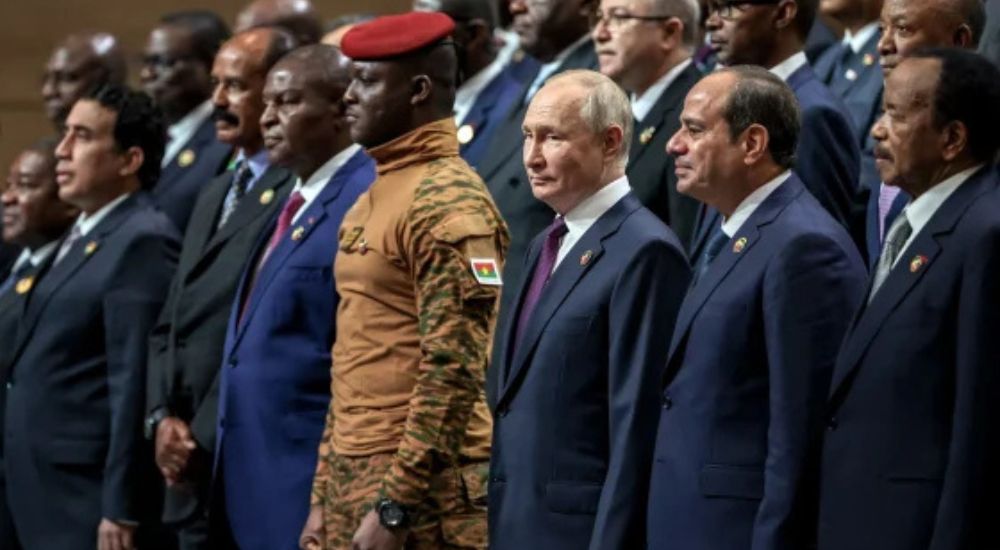
    The African continent is once again at the centre of a geopolitical storm. From the Sahel to Nigeria, insecurity is spreading at an alarming speed, threatening fragile states and destabilising entire regions. While local dynamics and systemic weaknesses play a role, Russia’s involvement raises troubling questions about its motives and the consequences for Africa and beyond.

    Nigeria faces a growing terrorist threat that is no longer confined to its borders. The collapse of governance in several states of the Alliance of Sahelian Juntas (AES) has created fertile ground for extremist groups. These failed states have become incubators of insecurity, exporting violence into neighbouring countries. The challenge is no longer whether to support or oppose the junta, but how to deal with their failures and the regional consequences of their isolation.

    Russia’s actions in Africa reveal a clear pattern: its primary aim is not to stabilise the continent but to create a secondary frontline against the West. By fostering instability in Africa, Moscow seeks to divert European attention and resources away from Ukraine. The Kremlin’s involvement is less about partnership and more about exploiting chaos for strategic advantage.

    This raises a critical question: is Russia simply incapable of offering meaningful support, or is it deliberately spreading insecurity? The evidence suggests that Moscow benefits from turmoil in Africa, whether by design or by opportunism.

    Whatever happens in Africa has little direct impact on Russia. The continent is geographically distant, and Russia’s economic ties with African nations are minimal. In fact, Africa’s collapse could even benefit Moscow. African oil, gas, and mineral exports compete with Russia’s own. If insecurity disrupts African production, global prices rise—strengthening Russia’s export revenues.

    Europe, however, bears the brunt of Africa’s instability. Migratory pressure from conflict zones is already reshaping European politics. Far-right parties, often sympathetic to Russia, are gaining ground in countries like France and the UK. By exacerbating insecurity in Africa, Moscow indirectly fuels migration flows that influence European voters. This strategy weakens European unity and undermines support for Ukraine.

    From a Russian perspective, encouraging instability in Africa is a shrewd way to manipulate European politics. The more Africans flee insecurity and attempt to reach Europe, the greater the strain on European societies. This pressure amplifies populist narratives, strengthens far-right movements, and erodes mainstream political consensus. Since many far-right parties are pro-Russia, the Kremlin gains strategic leverage by destabilising Africa.

    Russia’s record in the Sahel is damning. It has done nothing to fight terrorism. Instead, it has encouraged juntas to isolate themselves from the international community, sever ties with African neighbours, and expel Western intelligence and military support. In exchange, the Sahel states received nothing of substance. Russian involvement has failed to improve security, governance, or economic conditions. On the contrary, the situation has worsened.

    It is difficult to determine whether Russia is acting with malicious intent or simply behaving irresponsibly. Either way, the outcome is the same: worsening insecurity. Moscow’s promises of support have proven empty. Its presence has deepened instability, leaving African populations more vulnerable than before.

    The hypothesis of a cynical will to facilitate insecurity cannot be dismissed. Russia appears to be the only clear winner of Africa’s suffering. By exploiting chaos, Moscow strengthens its geopolitical position, increases its export revenues, and undermines European resolve.

    The lesson is stark: Africa must never again rely on a self-proclaimed outside “saviour.” Russia’s involvement has shown that external powers may prioritise their own interests over African stability. The continent must instead build resilience through self-reliance and multilateral cooperation.

    African nations should pursue balanced partnerships that preserve freedom of action. By engaging with multiple partners—regional organisations, international institutions, and diverse allies—Africa can avoid dependency and secure more effective support. Only through collective action can African states confront terrorism, strengthen governance, and protect their sovereignty.

    Russia’s role in Africa is not about solidarity or development. It is about exploiting insecurity to advance its global strategy. By destabilising Africa, Moscow weakens Europe, strengthens far-right allies, and boosts its own economic position. Whether through negligence or deliberate manipulation, Russia has worsened Africa’s plight.

    The challenge for Africa is to recognise this reality and chart a new path. The continent must rely on itself, build multilateral frameworks, and reject the false promises of external saviours. Only then can Africa safeguard its future and prevent its suffering from being weaponised to serve foreign ambitions.

    -Amajama, a social commentator, writes from Abuja and can be reached via amajamaip@gmail.com

    OPINION: Russia’s Role In Widening Insecurity In Africa is first published on The Whistler Newspaper