Blog

  • South-East Youths Affirm Confidence In Okoye-led SEDC

    South-East Youths Affirm Confidence In Okoye-led SEDC

    The South-East Zone of the National Youth Council of Nigeria (NYCN), Wednesday, expressed displeasure with the Senate Committee on South East Development Commission, SEDC, over what it said was a media trial of the commission’s officials in the National Assembly last week.

    The group claimed that the manner Senator Orji Kalu-led Senate Committee treated the commission’s Managing Director, Dr Mark Okoye, “was a script disguised as oversight function”. It therefore asked the Senate to allow Okoye to discharge his mandate.

    The position of the group was stated during a press conference in Enugu. The Vice President of NYCN in South East, Comrade Henry Atigwe, said, “We take exception to the media trial of the commission in Abuja without proper oversight functions by the Senate. The committee has some other selfish motives other than the interest of the people of the South East.”

    Atigwe said since SEDC’s establishment, expectations had been high for action on decades of infrastructural deficits, economic challenges, youth unemployment, and developmental neglect.

    While describing the Commission as a young institution, Atigwe said significant foundational efforts had already begun under Dr Okoye.

    Quoting the group, “The South-East Development Commission stands today as one of the most proactive regional intervention agencies in the country.”

    Atigwe listed developmental programmes, strategic engagements, capacity-building initiatives, economic empowerment, and institutional frameworks as areas where the Commission has shown commitment to repositioning the region for sustainable growth.

    The council emphasized that meaningful development requires vision, planning, consistency, and institutional stability. It stated that no serious development agency “can achieve transformational outcomes overnight”, àdding that “success depends on strong leadership, continuity, stakeholder collaboration, and public support”.

    NYCN said Dr Okoye possesses the competence, public policy experience, and strategic leadership needed for institution-building. It said his track record in governance, economic development, investment promotion, and public administration had earned him confidence from stakeholders within and outside the region, including President Bola Ahmed Tinubu.

    The council urged stakeholders to assess the Commission based on measurable outcomes, ongoing initiatives, institutional reforms, and long-term vision rather than distractions. It warned against division, unnecessary controversies, and attempts to undermine institutions working for the progress of the people.

    NYCN expressed appreciation to President Tinubu for establishing SEDC and appointing Okoye to lead it. The council said the president’s commitment demonstrates a genuine desire for inclusiveness, regional development, and national progress.

    NYCN called on South-East governors to continue supporting the Commission, saying it is yielding positive results. It urged collective support for initiatives that promote development, job creation, industrialization, entrepreneurship, innovation, peace, and prosperity.

    South-East Youths Affirm Confidence In Okoye-led SEDC is first published on The Whistler Newspaper

  • INEC Drops Gabam, Recognises Sadiq As SDP National Chairman

    INEC Drops Gabam, Recognises Sadiq As SDP National Chairman

    The leadership crisis within the Social Democratic Party (SDP) appears to have been resolved following the Independent National Electoral Commission’s recognition of Dr Sadiq Abubakar as the party’s authentic national chairman.

    INEC updated its official portal, removing the name of former chairman, Shehu Gabam, and replacing it with Abubakar, in line with Supreme Court majority judgment that overturned an earlier Court of Appeal decision on a dispute linked to the party’s Ekiti State governorship aspirant.

    Abubakar assumed the party’s leadership after Gabam was suspended and later expelled over allegations of financial malpractice, malfeasance and misappropriation.

    Gabam is currently standing trial before an Abuja Magistrate Court over the allegations.

    The Supreme Court ruling came shortly after the SDP’s national convention held in Bauchi on May 9, where delegates returned Abubakar as national chairman and endorsed lawyer and political activist, Dr Adewole Adebayo, as the party’s presidential candidate for the 2027 general election.

    Adebayo, who contested the 2023 presidential election on the SDP platform, was re-nominated amid efforts by the party to reposition itself ahead of the next electoral cycle.

    The resolution of the prolonged leadership dispute and INEC’s recognition of the new party leadership are being viewed by party members and opposition stakeholders as significant steps towards stabilising the SDP as political alignments ahead of the 2027 general election gather momentum.

    INEC Drops Gabam, Recognises Sadiq As SDP National Chairman is first published on The Whistler Newspaper

  • Alleged N2bn Fraud: Witness Says Sirika Breached Due Process

    Alleged N2bn Fraud: Witness Says Sirika Breached Due Process

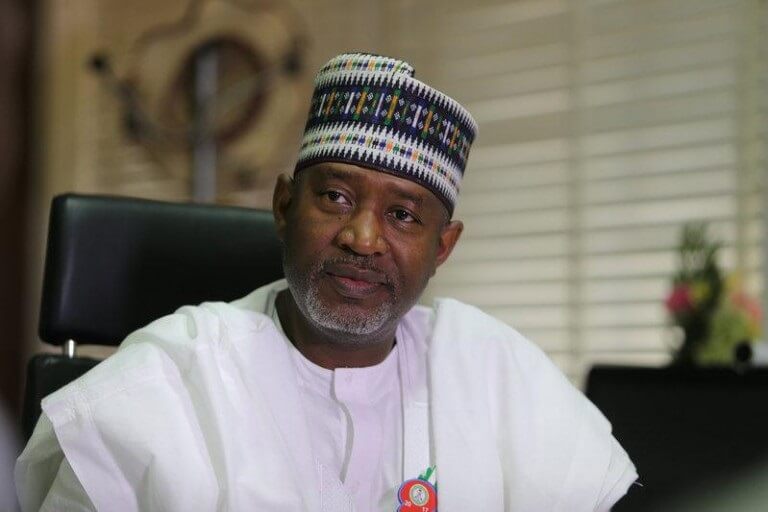
    A prosecution witness has told a Federal Capital Territory High Court that former Minister of Aviation and Aerospace Development, Hadi Abubakar Sirika, violated due process in awarding contracts worth nearly N900m to a consultancy firm for the ill-fated Nigeria Air project.

    The 12th prosecution witness, Christopher Odofin, an investigator with the Economic and Financial Crimes Commission (EFCC), made the disclosure on Wednesday before Justice S.C. Oriji while testifying in the ongoing trial of Sirika, who faces a six-count charge of abuse of office and misappropriation of public funds totalling over N2bn.

    Odofin told the court that Sirika awarded a N299m contract to Tianaero Nigeria Limited for consultancy services on 4 April 2022, days before the Bureau of Public Procurement responded to the ministry’s request for a Certificate of No Objection.

    A second contract worth N599m was subsequently awarded to the same company as an extension, with the BPP bypassed entirely.

    “Before the Ministry of Aviation and Aerospace Development received a response from the BPP, the contract award letter had already gone out to Tianaero Limited,” Odofin told the court.

    “The BPP was completely kept in the dark regarding the first defendant’s award of the contract extension.”

    The witness further revealed that Tianaero Nigeria Limited was registered with the Corporate Affairs Commission on 29 March 2021 — barely one year before the contracts were awarded.

    The company is owned by a German national, Gabriel Tilmann, described as a close friend and associate of the former minister.

    Both contract sums were paid in full to Tianaero Nigeria Limited despite nothing being available to show for Nigeria Air.

    The first contract was paid in four tranches between May and July 2022 into the company’s Access Bank account, while the second was paid in two instalments between October and December 2022 into its Guaranty Trust Bank account.

    A compact disc containing a verbal instruction allegedly given by Sirika to his permanent secretary, directing that the contracts must be awarded to Tianaero Nigeria Limited, was scheduled to be played in court but was deferred to the next hearing date due to technical difficulties.

    Sirika is being prosecuted alongside his daughter, Fatima Hadi Sirika, son-in-law Hamma Jalal Sule, and Al Buraq Global Investment Limited.

    Justice Oriji adjourned the matter to 8 and 9 July 2026 for continuation of trial.

    Alleged N2bn Fraud: Witness Says Sirika Breached Due Process is first published on The Whistler Newspaper

  • Rep Agbedi defends minority leadership rules, says Tinubu must ‘perform or quit’

    Rep Agbedi defends minority leadership rules, says Tinubu must ‘perform or quit’

    The Minority Leader of the House of Representatives, Hon. Fred Agbedi, has defended the internal rules governing the selection of principal officers in the House, insisting that legislative leadership positions are not open to all members regardless of ranking and experience. Speaking on Channels Television’s Politics Today, Agbedi addressed controversies surrounding the emergence of minority […]

    The post Rep Agbedi defends minority leadership rules, says Tinubu must ‘perform or quit’ appeared first on Tribune Online.

  • Nigeria’s Crude Oil Export Revenue Climbs To $8.11bn In Q1 2026

    Nigeria’s Crude Oil Export Revenue Climbs To $8.11bn In Q1 2026

    Nigeria’s crude oil export revenue rose to $8.11bn in the first quarter of 2026, reflecting improved oil production and stronger export performance, according to the latest Balance of Payments report released by the Central Bank of Nigeria (CBN).

    The figure represents a 19.79 per cent increase from the $6.77bn recorded in the fourth quarter of 2025 and contributed significantly to the country’s stronger external sector position during the review period.

    The CBN disclosed that the increase in crude oil earnings, alongside higher gas and refined petroleum product exports, helped drive Nigeria’s current account surplus to $4.98bn in Q1 2026, up from $1.40bn in the preceding quarter.

    According to the apex bank, gas export earnings rose to $2.53bn from $2.24bn, while refined petroleum product exports increased to $2.37bn from $1.97bn over the same period.

    The report noted that the improvement in export earnings coincided with a sharp decline in petroleum product imports. Refined petroleum product imports fell by 87.5 per cent to $0.31bn in Q1 2026 from $2.48bn in the previous quarter, reducing pressure on the country’s import bill.

    The stronger export performance boosted the goods account surplus to $5.95bn, compared with $1.77bn recorded in the fourth quarter of 2025 and $3.35bn in the corresponding period of 2025.

    “The goods account recorded a significantly higher surplus of $5.95bn in Q1 2026, as against $1.77bn and $3.35bn recorded in the preceding quarter and corresponding period of 2025,” the CBN stated.

    Total exports increased to $15.49bn from $13.36bn in the preceding quarter, driven largely by crude oil and gas shipments. Non-oil exports also improved marginally by 4.62 per cent to $2.49bn.

    On the import side, total imports declined to $9.54bn from $11.59bn, reflecting lower imports of refined petroleum products and non-oil goods. Non-oil imports fell by 10.49 per cent to $7.85bn, although crude oil imports rose to $1.39bn from $0.34bn in the previous quarter.

    The CBN said the combined impact of stronger export receipts and lower imports strengthened Nigeria’s external position despite a decline in remittance inflows and higher service-related payments.

    The report showed that the country’s overall balance of payments recorded a surplus of $2.38bn in Q1 2026, while external reserves rose to $48.35bn at the end of March 2026 from $45.75bn at the end of December 2025.

    The figures underscore the growing contribution of the oil and gas sector to Nigeria’s foreign exchange earnings, with rising petroleum exports and reduced dependence on imported fuel helping to support macroeconomic stability.

    Nigeria’s Crude Oil Export Revenue Climbs To $8.11bn In Q1 2026 is first published on The Whistler Newspaper

  • Wasa Resettlement Scheme: A Case Study In Policy Failure

    Wasa Resettlement Scheme: A Case Study In Policy Failure

    The development of Abuja as Nigeria’s Federal Capital Territory (FCT) remains one of the country’s most ambitious planning projects. Conceived as a modern and orderly capital city, Abuja was designed to avoid the challenges that characterised many rapidly growing urban centres across the country, including congestion, uncontrolled development, and inadequate infrastructure.

    The Abuja Master Plan, therefore, established a framework for sustainable urban development, efficient land use, and the provision of modern infrastructure capable of supporting national growth and development.

    A major consequence of implementing the Master Plan was the acquisition of vast tracts of land occupied by indigenous communities. To address the social and economic impacts of displacement, the Federal Capital Development Authority (FCDA) adopted resettlement as a policy tool to relocate affected communities into planned settlements with improved housing and infrastructure.

    Resettlement was intended to go beyond monetary compensation. It was conceived as a means of ensuring that displaced persons would benefit from improved living standards, better access to social amenities, and greater integration into the urban development process. It is within this policy framework that the Wasa Resettlement Scheme emerged as one of the most significant resettlement initiatives undertaken within the Federal Capital Territory.

    The Vision Behind the Wasa Resettlement Scheme

    The Wasa Resettlement Scheme was conceived in 2005 as a comprehensive intervention aimed at accommodating communities displaced by urban development activities within the Abuja Municipal Area Council (AMAC). The project was planned on approximately 700 hectares of land and designed to provide housing, infrastructure, and social amenities for thousands of affected residents.

    The scheme was structured into three phases.

    Phase I was designed to accommodate the communities of Chika, Aleita, and Pyakassa. According to available project data, the phase was expected to provide 2,280 housing units for approximately 2,010 households. The difference between the number of housing units and households was deliberate, providing room for community facilities such as schools, healthcare centres, traditional rulers’ palaces, religious centres, and other public institutions, as well as contingency provisions for demographic variations.

    Phase II was intended to resettle residents of Galadimawa and Durumi I, II, III, and IV.

    Phase III was designed for Karamajiji, Lokogoma, Kuchigoro, Piwoyi, Dakwo, Dutse, Kaura, and Damagaza communities.

    When fully implemented, the scheme was expected to become a model resettlement estate capable of demonstrating how urban expansion could be achieved without sacrificing the welfare of indigenous populations.

    From Policy Vision to Implementation Challenges

    Despite the clarity of its objectives and the strategic importance of the project, the Wasa Resettlement Scheme has struggled to achieve its intended goals. More than two decades after its conception, substantial aspects of the project remain incomplete.

    One of the most significant challenges has been inadequate and inconsistent funding. Large-scale resettlement projects require sustained financial commitment over many years. However, funding interruptions have affected the pace of construction and infrastructure development, resulting in delays that have accumulated over time.

    Administrative bottlenecks have also contributed to project stagnation. Resettlement programmes involve multiple stakeholders, including planning authorities, compensation agencies, infrastructure providers, and local communities. Weak coordination among these actors often creates implementation gaps that affect project delivery.

    In addition, political transitions have affected continuity in project execution. Long-term development projects frequently suffer when successive administrations fail to maintain the same level of commitment to policies initiated by their predecessors. The Wasa experience appears to reflect some of these challenges.

    Emergence of Unintended Occupation

    Perhaps the most visible consequence of the prolonged delay in project completion is the gradual occupation of portions of the estate by persons outside the original resettlement framework.

    Reports and observations indicate the presence of unauthorized occupants and other categories of settlers within parts of the development.

    This situation illustrates a broader challenge in urban development management. Where planned developments remain incomplete for extended periods, they often become vulnerable to informal occupation. Once such occupation becomes established, it creates additional legal, administrative, and social complications that make future project completion more difficult and costly.

    The result is a situation where a project originally conceived as a solution to displacement risks becoming a source of new land administration challenges.

    Implications for Sustainable Urban Development

    The current state of the Wasa Resettlement Scheme raises important concerns regarding sustainable urban development in the Federal Capital Territory.

    First, it undermines the implementation of the Abuja Master Plan. The success of any master plan depends on effective execution of supporting policies and projects.

    Second, the situation encourages the growth of informal settlements.

    Third, the failure of resettlement projects can weaken public confidence in government programmes.

    Fourth, the situation creates significant land administration challenges involving occupancy rights, beneficiary identification, tenure regularization, and future redevelopment.

    Lessons from the Wasa Experience

    The Wasa Resettlement Scheme provides several important lessons for policymakers and development practitioners, including the need for adequate funding, stronger institutional coordination, updated beneficiary records, and sustained political commitment.

    The Role of Estate Surveyors and Valuers

    Estate Surveyors and Valuers occupy a strategic position in the successful implementation of resettlement programmes. Their professional responsibilities extend beyond compensation assessment to include advisory services, project monitoring, stakeholder engagement, and policy support.

    The Way Forward

    To restore confidence in the Wasa Resettlement Scheme and prevent similar outcomes in future projects, the government must prioritise completion of outstanding housing units and infrastructure, undertake an audit of occupants, and strengthen institutional accountability mechanisms.

    Conclusion

    The Wasa Resettlement Scheme represents one of the most ambitious resettlement initiatives undertaken within the Federal Capital Territory. The lessons from Wasa must inform future policy decisions because resettlement is not merely a housing programme; it is a critical component of land administration, social justice, and sustainable urban development.

    Wasa Resettlement Scheme: A Case Study In Policy Failure is first published on The Whistler Newspaper


  • W’Cup: Portugal, Congo DR Share Points In Dull Game

    W’Cup: Portugal, Congo DR Share Points In Dull Game

    There was little to choose between Portugal and Congo DR on Wednesday when both teams met in their opening Group K match.

    Cristiano Ronaldo, who often rescues Portugal, had a game to forget as he was largely a peripheral figure and was frustrated by his team’s lack of fluidity against the African side.

    The match saw Portugal play quick passes, and they were rewarded when João Neves headed in the opening goal.

    However, the game soon settled into a dull rhythm until Congo DR were rewarded in added time when Yoane Wissa equalised.

    It was expected that, with the heat giving way to a predicted thunderstorm and rain, the two teams with attacking flair would serve up an exciting game.

    However, that was not the case, despite occasional flashes from a few Portuguese players.

    It was also a game of poor decision-making, especially when Francisco Conceição should have shot at goal when he was through on goal, but instead chose to pass to Ronaldo, who then scooped the ball wide.

    Ronaldo again had another chance but shot wide amid an angry grimace.

    Despite 728 passes from Portugal with 60% possession, compared to Congo DR’s 204 passes and 40% possession, Portugal could not find another goal.

    The positive for Congo DR is that they have now scored their first World Cup goal, having failed to score in all three group games in 1964.

    W’Cup: Portugal, Congo DR Share Points In Dull Game is first published on The Whistler Newspaper
  • PDP welcomes Iyabo Obasanjo, hands her Ogun senate ticket

    PDP welcomes Iyabo Obasanjo, hands her Ogun senate ticket

    The Peoples Democratic Party, PDP, in Ogun State, on Wednesday officially received former Senator Iyabo Obasanjo, following her exit from the ruling All Progressives Congress, APC.

    Recall that Iyabo, daughter of former Nigerian President, Olusegun Obasanjo, represented Ogun Central in the Senate between 2007 and 2011.

    She lost her re-election bid in 2011 and left the country to pursue a career in academics in the United States of America.

    In January this year, Senator Obasanjo returned to active politics after 15 years and joined the ruling APC, where she declared her ambition to run for governor.

    However, on the 31st of May, the former senator resigned from APC after losing the governorship ticket, citing disrespect, betrayal, and unfair treatment by the APC leadership.

    DAILY POST reports that she was officially received into the PDP fold at a massive rally held at the party secretariat in Abeokuta on Wednesday.

    The State Chairman of the PDP, Dr Abayomi Tella, presented the PDP flag to Senator Obasanjo, welcoming her back to the party and announcing her as the PDP candidate for Ogun Central in the next election.

    “On behalf of our National Chairman, Alhaji Abdulrahman Mohammed, and the entire National Working Committee of the PDP, I, Abayomi Tella, PhD, the State Chairman of the PDP, and on behalf of PDP Ogun Central, present to our revered sister, Prof. Senator Iyabo Obasanjo-Bello, this flag as the authority of the party for her candidature for the Senate in Ogun Central,” Tella said.

    Taking the party’s oath, Senator Obasanjo pledged her loyalty and allegiance to the PDP, its constitution, manifesto, and code of conduct.

    “I commit myself to the ideals of the PDP. I shall serve the people of Ogun State and Nigeria with integrity, humility, and dedication, prioritising their welfare above personal and sectional interests,” she declared.

    She declared that she remains the candidate to beat in the next election, saying she remains the best senator to have represented Ogun Central.

    On his part, Adebutu vowed that, if elected governor, his administration would ensure the viability of local government areas by implementing local government autonomy.

    He also promised to be prudent and transparent in the management of public funds.

    “I, Oladipupo, son of Adebutu, won’t steal your money. Local governments will get their funds accordingly, and we shall be transparent in all our dealings,” he said.

    PDP welcomes Iyabo Obasanjo, hands her Ogun senate ticket

  • NAPTIP Rescues 96 Trafficked Benue Children

    The National Agency for the Prohibition of Trafficking in Persons (NAPTIP) says the agency has rescued 96 trafficked children from Benue and reunited 84 of them with their families.

    Mrs Hembadoom Kuma, newly deployed Zonal Commander, Makurdi Zonal Command of NAPTIP, made the disclosure on Wednesday in Makurdi while interacting with newsmen.

    NAPTIP had said over 300 children were trafficked out of the state in 2025.

    Kuma said that upon assumption of office, she was confronted with an ongoing challenge of child trafficking in Benue, particularly the trafficking of more than 300 children from Guma LGA of the state in 2025.

    According to her, the Makurdi Zonal Command before her arrival  swung into action after receiving intelligence on the incident and rescued  87 children.

    She disclosed that 84 of the rescued children had been reunited with their parents after being recovered from Abia, Imo, Rivers and the Federal Capital Territory (FCT), Abuja.

    The zonal commander added that 9 children were recently rescued and brought to the command, while efforts were ongoing to trace and rescue the remaining victims.

    “We have rescued 96 children and reunited 84 of them with their parents.

    “We are assuring parents that we will continue to work until the remaining children are rescued and handed over to their families,” she said.

    Kuma warned traffickers and other perpetrators to desist from the criminal act, stressing that human trafficking must be eradicated in Benue and across the country.

    She noted that the fight against human trafficking required collective action, adding that NAPTIP could not tackle the menace alone.

    According to her, the agency will strengthen collaboration with the media, traditional rulers, religious leaders, schools, hotel operators, transport unions and other stakeholders to curb the crime.

    “Human trafficking is a fight that must be carried out by everybody. NAPTIP cannot do it alone.

    “We intend to engage all critical stakeholders to ensure that vulnerable children and persons are protected from traffickers,” she said.

    Speaking on her plans for the zone, Kuma said she would build on the achievements of her predecessor by strengthening existing partnerships and expanding stakeholder engagement.

    She observed that although human trafficking was a nationwide challenge, Benue remained one of the states heavily affected by the crime, making collaboration essential to addressing the problem.

    The commander urged members of the public to remain vigilant and promptly report suspicious movements and activities to security agencies.

    She also called on parents and guardians to pay closer attention to their children and wards, while reiterating the agency’s commitment to combating human trafficking in the state.

    “Always say no to human trafficking,” she advised.

    NAPTIP Rescues 96 Trafficked Benue Children is first published on The Whistler Newspaper

  • NUC Approves Engineering, Management Programmes For Margaret Lawrence Varsity

    NUC Approves Engineering, Management Programmes For Margaret Lawrence Varsity

    Margaret Lawrence University (MLU), Delta State, has received approval from the National Universities Commission (NUC) to commence Engineering programmes and additional courses in Management and Social Sciences.

    ‎The Vice-Chancellor of the university, Prof. Ernest Izevbigie, disclosed this to newsmen in Abuja on Wednesday.

    Izevbigie said the approval was conveyed in a letter to the university dated May 12, 2026, and signed by the Director of Academic Planning, Mr Abubakar Girei, on behalf of the NUC Executive Secretary, Prof. Abdullahi Ribadu.

    ‎He said the approval followed a resource verification visit by a panel of NUC experts to assess the human and material resources available for the proposed programmes. He also said the commission approved four engineering programmes at the university’s main campus in Delta State with effect from the 2026/2027 academic session.

    He listed the approved programmes as Electrical and Electronics Engineering, Mechanical Engineering, Computer Engineering and Civil Engineering. He also announced the commencement of some programmes under its Faculty of Management and Social Sciences at its Abuja campus.

    Izevbigie also listed the courses approved at its Abuja campus to include Accounting, Banking and Finance, Business Administration, Mass Communication, International Relations, Public Administration, Sociology, Economics and Taxation.

    The NUC Executive Secretary, Prof. Abdullahi Ribadu, had earlier stated that the approval was limited to the full-time mode of study and did not cover part-time programmes. Ribadu advised the university to seek further approval before introducing any part-time undergraduate programme.

    He also urged the institution to provide adequate human and material resources for the development and growth of the approved programmes. He described the approval as a major milestone in its commitment to providing quality education and contributing to national development.
    ‎He added that the newly approved engineering programmes would be driven by a modern curriculum developed in consultation with industry experts and as well aligned with national and global standards.

    He added that the approval reflected the institution’s commitment to producing future leaders and innovators that would contribute to societal and national development.‎

    NUC Approves Engineering, Management Programmes For Margaret Lawrence Varsity is first published on The Whistler Newspaper