Blog

  • UK Defence Deputy Chief Visits Maiduguri To Strengthen Security

    UK Defence Deputy Chief Visits Maiduguri To Strengthen Security

    The United Kingdom’s Deputy Chief of the Defence Staff, Lieutenant General Sir Charlie Collins, has arrived in Maiduguri, Borno State, as part of efforts to strengthen defence cooperation between the UK and Nigeria.

    The British Defence Staff West Africa announced the visit on its official X handle on Tuesday, saying the engagement reflects the UK’s continued support for Nigeria’s efforts to tackle insecurity and promote stability in the West African region.

    According to the statement, Collins is in Maiduguri to engage with officers of the Nigerian Army and assess ongoing areas of military collaboration between both countries.

    “Welcome to Nigeria, Lt Gen Sir Charlie Collins KBE DSO, UK Deputy CDS (MSO). In Maiduguri with Nigerian Army colleagues, seeing UK-Nigeria defence cooperation first-hand and supporting Nigeria-led efforts to strengthen security and regional stability,” the post read.

    Photographs from the visit showed the British military chief being received with a guard of honour and participating in ceremonial exchanges with senior Nigerian military officers.

    The visit comes amid intensified efforts by Nigeria to strengthen international partnerships in the fight against terrorism, insurgency and banditry, particularly in the North-East and other troubled parts of the country.

    Military authorities said the engagement underscores the growing defence relationship between both countries and their shared commitment to addressing security challenges and enhancing regional peace and stability.

    UK Defence Deputy Chief Visits Maiduguri To Strengthen Security is first published on The Whistler Newspaper

  • $2.3 trillion infrastructure deficits: Nigerian govt moves against predatory contracts

    $2.3 trillion infrastructure deficits: Nigerian govt moves against predatory contracts

    The Nigerian government has intensified efforts to reduce contractual disputes in infrastructure projects across the country amid the country’s $2.3 trillion infrastructure deficits.

    This comes as the federal government engages with key stakeholders on contractual obligations between public-owned entities and private establishments. 

    Speaking at an event in Abuja on Tuesday, the Solicitor-General of the Federation and Permanent Secretary of the Federal Ministry of Justice, Beatrice Jedy-Agba, said the complexities associated with long-term public-private partnership infrastructure contracts in Nigeria often expose the country to significant risks and liabilities.

    She explained that the introduction of the Model PPP Agreement is aimed at shielding Nigeria from predatory litigation arising from poorly structured contracts.

    According to Jedy-Agba, the new government model represents a collective commitment to promoting efficient governance, sustainable development, and economic prosperity.

    “This has been a journey of collaboration, diligence, and shared purpose. We’ve had a series of engagements, retreats, and meetings where legal experts from across the country gathered to review and refine the model agreement. These engagements have laid the foundation for clearer, stronger, and more effective PPP agreements,” she said.

    She noted that the framework would improve transparency, accountability, value for money, and investor confidence while ensuring adequate protection of public interest.

    Jedy-Agba stressed that the Ministry of Justice remains central to safeguarding government interests in long-term infrastructure transactions.

    “The complexities of long-term PPP infrastructure contracts naturally introduce significant risks and liabilities. This is where the Ministry of Justice plays a critical, non-negotiable role in mitigating risks, scrutinising indemnity clauses, and structuring robust dispute resolution mechanisms to ensure that the federal government is fully protected from predatory litigation, sovereign defaults, and lopsided risk allocation,” she stated.

    In his remarks, Director-General of the ICRC, Jobson Ewalefoh, said Nigeria’s infrastructure deficit is currently estimated at $2.3 trillion, warning that the country would need to mobilise about $100 billion annually to bridge the gap by 2043.

    “I wish to begin this morning not with a speech, but with a figure: $2.3 trillion. That is the conservative estimate of Nigeria’s infrastructure deficit today,” he said.

    Ewalefoh noted that government revenues alone are insufficient to meet the country’s infrastructure needs, making private sector participation crucial to the success of President Bola Tinubu’s Renewed Hope Agenda.

    He observed that for nearly two decades, Nigeria negotiated PPP projects on a case-by-case basis, resulting in inconsistencies in risk allocation, dispute resolution mechanisms, and investor protections.

    According to him, the framework provides nationally accepted guidelines that will shorten negotiation timelines, reduce transaction costs, and enhance the bankability of infrastructure projects. 

    The ICRC director-general explained that the agreement contains provisions covering risk allocation, lender protections, dispute resolution, insurance requirements, performance monitoring, and anti-corruption safeguards.

    He added that the framework introduces a structured dispute resolution mechanism that begins with consultations and negotiations before proceeding to arbitration under the Arbitration and Mediation Act, 2023.

    “The result is a system that exhausts reasonable avenues for resolution before litigation costs arise,” he said.

    Ewalefoh further stated that the agreement was designed to provide predictability for the government, protection for investors, and improved service delivery for Nigerians.

    He said Ministries, Departments, and Agencies, MDAs, would no longer be required to negotiate PPP agreements from scratch, as the framework establishes a legally grounded baseline for infrastructure transactions.

    “I am confident that, working together, the ICRC, our MDAs, development partners, and investors can help close the trillion-dollar infrastructure gap and, concession by concession, build the Nigeria that Renewed Hope has promised,” he said.

    Stakeholders from various federal MDAs attended the engagement.

    The initiative comes amid renewed government efforts to strengthen legal safeguards in major commercial agreements following Nigeria’s successful defense against the $11.5 billion arbitration claim filed by Process & Industrial Developments in the United Kingdom.

    $2.3 trillion infrastructure deficits: Nigerian govt moves against predatory contracts

  • UAE to launch first passenger train later this month

    UAE to launch first passenger train later this month

    The UAE will launch its first passenger train later this month, state media reported on Tuesday….

    The post UAE to launch first passenger train later this month appeared first on Tribune Online.

  • Abuja’s landscape will change completely before end of Tinubu’s first term –  Wike

    Abuja’s landscape will change completely before end of Tinubu’s first term –  Wike

    Minister of the Federal Capital Territory (FCT), Nyesom Wike, on Tuesday declared that the landscape of Abuja would be completely transformed before the end of President Bola Ahmed Tinubu’s first term in office, insisting that ongoing infrastructure projects would not be abandoned because of the approaching election season.

    Wike spoke at the official flag-off of the construction of the Southern Parkway service carriageways in Gaduwa District, Abuja, where he reaffirmed the commitment of the FCT Administration to sustaining the ongoing infrastructure revolution across the nation’s capital.

    The project was flagged off by the All Progressives Congress (APC) National Chairman,  Professor Nentawe Yilwatda.

    “Let me say clearly, by the time Mr. President finishes his first tenure on May 29, 2027, before he is sworn in as President for a second tenure, the landscape of Abuja would have entirely changed, to the glory of God,” the minister said.

    Addressing concerns that the administration might slow down project execution ahead of the 2027 elections, Wike dismissed such fears, stressing that development of the FCT would continue unabated.

    “Today is our 10th day of commissioning projects, but Today was specifically selected because so many people have been asking questions: ‘Are you saying that after commissioning all these projects, now that we are going into elections, projects will be abandoned?’ We said no. Elections or no elections, we must continue to do that which Mr. President has directed to make sure that we change the landscape of the Federal Capital Territory,” he stated.

    The minister disclosed that he had personally contacted the management of CGC Nigeria Limited late Monday night to ascertain the timeline for completing the Southern Parkway project.

    According to him, the contractor assured him of its readiness to work round the clock to deliver the project within schedule, provided the FCT Administration fulfills its financial obligations.

    “Last night, around midnight, I called the Deputy Managing Director of CGC and asked when this project would be completed. After consulting his team, he assured me they would work day and night to complete it if we perform our own obligation.

    “Today, June 23, 2026, I assure the management and workers of CGC that we will not fail in our obligation of paying for the work done. This is not the first time we are giving you challenging jobs and you have performed excellently,” Wike said.

    The minister expressed confidence that the project would be completed and commissioned before the January 2027 elections. 

    “I want this road commissioned before we go for election in January 2027. Here in Abuja, it is possible. We shall call the APC Chairman back to represent Mr. President and commission this project because it is very important to us,” he added.

    The minister further vowed to intensify the crackdown on land grabbers and individuals developing lands without valid allocations, describing the trend as a major threat to the Abuja Master Plan.

    “All these land grabbers who have started developing lands that were not allocated to them should know that those structures will go down. Heaven will not fall. Heaven will be at peace when things are done properly.

    “We have discovered that whenever government wants to execute projects, some people rush to such locations with forged documents and begin illegal developments. It will not work,” he warned.

    Wike directed the Development Control Department and the Department of Lands to identify and remove all illegal structures along the project corridor.

    “Tell the Acting Director of Development Control to liaise with the Director of Lands and ensure that anybody who has started building on land not legally allocated should stop. It is in vain. We will bring such structures down,” he declared.

    The Southern Parkway service carriageways project is expected to improve connectivity within Abuja’s Southern Development Corridor, reduce traffic congestion and support the rapid expansion of residential and commercial districts within the Federal Capital Territory.

    The event was attended by senior government officials, traditional rulers, community leaders, political stakeholders and representatives of the contracting firm, CGC Nigeria Limited.

    Abuja’s landscape will change completely before end of Tinubu’s first term –  Wike

  • Southern Parkway Service Lanes to end gridlock, transform Abuja’s southern corridor – Tinubu assures

    Southern Parkway Service Lanes to end gridlock, transform Abuja’s southern corridor – Tinubu assures

    President Bola Ahmed Tinubu has assured residents of Abuja that the construction of the two service carriageways of the Southern Parkway will significantly ease traffic congestion, improve connectivity and accelerate development across the southern districts of the Federal Capital Territory (FCT).

    Represented by the National Chairman of the All Progressives Congress (APC), Prof. Nentawe Yilwatda, at the official flag-off of the project in Gaduwa District, Abuja, on Tuesday, the President described the initiative as a critical component of his administration’s infrastructure renewal programme and the implementation of the Renewed Hope Agenda.

    According to him, “the Southern Parkway remains one of the most strategic corridors in the Abuja Master Plan, linking several districts across the southern axis of the capital city.”

    “The Southern Parkway is a major route of the Southern Development Corridor. It starts from the Inner Southern Expressway in Phase One and terminates at the same corridor in Phase Four. When fully developed, it will enhance vehicular traffic circulation within the southern part of the city and provide vital inter-district connections across the Federal Capital Territory,” he said.

    Tinubu noted that while the main carriageway, now known as the Bola Ahmed Tinubu Way, had already been completed and commissioned by the administration, the service lanes were necessary to complete the original vision for the corridor.

    “These service carriageways are not a luxury. They are designed to ease access and improve mobility for our people. Residents of Durumi, Gudu, Gaduwa and the mass housing estates in Phase Two face heavy traffic congestion daily. When these service lanes are completed, travel time will reduce, businesses will save money and families will spend less time on the road. That is the dividend of democracy and the Renewed Hope Nigerians can see and feel,” he stated.

    The President said the project formed part of a broader infrastructure revolution being pursued by his administration, citing completed and ongoing projects across the FCT, including the Arterial Road N20, now named Professor Wole Soyinka Way, the N16 Interchange linking Jahi and Gwarimpa, and road networks in Kuje, Gwagwalada and Mabushi.

    He commended the Minister of the Federal Capital Territory, Nyesom Wike, for what he described as exceptional leadership and commitment to delivering infrastructure projects.

    “Mr. Wike, you have truly earned the name ‘Mr. Projects.’ Since assuming office, you have revived abandoned projects, set clear targets and delivered them in record time. You have brought discipline, vision and political will to the administration of the FCT. Nigerians are seeing the transformation and feeling its impact,” he said.

    Tinubu also lauded the Minister of State for FCT, Dr. Mariya Mahmoud, and the entire FCT Administration for maintaining quality standards and ensuring effective project supervision.

    Addressing residents of affected communities, the President appealed for patience during the construction period, acknowledging that diversions, traffic delays and temporary inconveniences would accompany the works.

    “To the contractor, CGC Nigeria Limited, we expect speed but we demand quality. Employ our youths, train our artisans and ensure this project becomes a source of jobs and skills acquisition for Nigerians,” he added.

    Earlier, FCT Minister Nyesom , Barr. Wike dismissed concerns that infrastructure development in the territory could slow down because of the approaching election season, insisting that the administration remained focused on completing ongoing projects.

    “Today is our 10th day of commissioning projects, but some people have asked whether projects will now be abandoned because elections are approaching. The answer is no. Elections or no elections, we must continue implementing the directive of Mr. President to transform the Federal Capital Territory,” Wike said.

    The minister expressed confidence that Abuja’s landscape would be significantly transformed before the end of Tinubu’s first term in office.

    “By the time Mr. President finishes his first tenure on May 29, 2027, before he is sworn in for a second tenure, the landscape of Abuja would have entirely changed, by the grace of God,” he declared.

    Wike disclosed that he had personally engaged the management of CGC Nigeria Limited on the project timeline and received assurances that the contractor would work round the clock to deliver the project, provided government fulfilled its funding obligations.

    “I want this road commissioned before we go into the elections in January 2027. I assure CGC Nigeria Limited that the FCT Administration will not fail in its obligation to pay for the work done. We have confidence in your capacity because this is not the first challenging project you have successfully delivered,” he said.

    The minister also issued a stern warning against illegal developments and land grabbing along the project corridor, directing officials of the Development Control Department and Lands Department to identify and remove structures erected on lands not legally allocated.

    “Those who have forged documents and encroached on government land should know that it will not work. Any illegal structure along the corridor will be removed. We must protect the integrity of the Abuja Master Plan,” he warned.

    In his technical presentation, Acting Executive Secretary of the Federal Capital Development Authority (FCDA), Engr. Richard Yunana Dauda, explained that the contract for the construction of the two service carriageways was awarded to CGC Nigeria Limited in May 2026 and that the contractor had already mobilised to site.

    He said the project covers approximately three kilometres of dual service roads, construction of two river bridges, drainage facilities, culverts and street lighting infrastructure.

    According to Dauda, the Southern Parkway serves as the vehicular spine of the Southern Development Corridor and will provide seamless inter-district connectivity from the Central Area to Phase Four districts of the city.

    “When completed, the project will significantly reduce the heavy traffic congestion currently experienced on roads such as Shehu Yar’Adua Way, Oladipo Diya Way and other connecting routes serving Durumi, Gudu, Gaduwa and Duboyi districts,” he said.

    Delivering the vote of thanks, Acting Head of Service of the FCT Administration, Mrs. Nancy Sabanti Nathan, expressed appreciation to President Tinubu for approving the project and to stakeholders whose support made the initiative possible.

    She described the project as a critical intervention that would ease traffic congestion, improve transportation efficiency and stimulate economic activities in the affected districts.

    Nathan also urged the contractor to maintain the highest standards of quality and safety while adhering strictly to the agreed delivery timelines.

    The Southern Parkway service carriageways project is expected to further open up the southern development corridor of Abuja, improve access to emerging residential districts and strengthen the capital city’s transportation infrastructure as part of the Federal Government’s urban renewal drive.

    Southern Parkway Service Lanes to end gridlock, transform Abuja’s southern corridor – Tinubu assures

  • Nigeria Spends Five Times More On Debt Than Health, Education — ActionAid

    Nigeria Spends Five Times More On Debt Than Health, Education — ActionAid

    Nigeria spends nearly five times more of its national revenue on servicing external debts than it does on healthcare and education combined, according to a new report by ActionAid International and ActionAid Nigeria.

    The report, released on Tuesday and titled “Still Cooking with a Failed Recipe: A Review of IMF Country Advice on Social Spending, Public Services, Debt, Tax and Gender Equality,” examined 29 International Monetary Fund (IMF) documents across 11 countries between February 2022 and February 2025.

    The countries reviewed include Nigeria, Brazil, Ghana, Kenya, Malawi, Nepal, Senegal, Uganda, the United Kingdom, Zambia, and Zimbabwe.

    According to the report, Nigeria allocates 20.1 per cent of its national revenue to external debt servicing, compared with 4.06 per cent for healthcare and 4.40 per cent for education.

    ActionAid described the debt burden as a major obstacle to improving public services, noting that debt servicing exceeds health spending in seven of the eight African countries assessed.

    The organisation accused the IMF of failing to adequately address the impact of debt repayments on social spending, arguing that the institution treats debt servicing as a fixed obligation while expecting governments to fund health and education with whatever resources remain.

    The report also criticised the IMF’s recommendation for Nigeria to remove fuel subsidies, stating that measures introduced to cushion the impact on vulnerable citizens were insufficient.

    According to ActionAid, the IMF acknowledged that compensatory measures for poor households were not scaled up quickly enough, contributing to rising living costs and eventually prompting the government to reintroduce subsidy-related interventions.

    The report further claimed that IMF policy advice to Nigeria has remained largely unchanged despite the institution’s stated commitment to social spending and gender equality.

    It noted that Nigeria’s public sector wage bill has remained at 1.9 per cent of Gross Domestic Product (GDP) for six consecutive years, significantly below the African average of 7.6 per cent and the global average of nine per cent.

    Despite this, the report said the IMF did not recommend increasing spending on public-sector workers, including teachers, nurses, and doctors.

    ActionAid Nigeria Country Director, Andrew Mamedu, criticised what he described as the IMF’s double standards.

    “For six years running, the IMF has looked at a wage bill that funds Nigeria’s teachers, nurses, and doctors at less than a quarter of the regional average and found nothing to recommend beyond keeping it frozen.

    “Meanwhile, ordinary Nigerians are being asked to absorb a doubling of VAT and the lingering effects of a poorly cushioned subsidy removal. This is not the advice of an institution that has reformed. It is the same recipe, repackaged,” he said.

    The report also disclosed that the IMF advised Nigeria to increase its Value Added Tax (VAT) from 7.5 per cent to 15 per cent by 2026 and recommended higher excise duties on tobacco and alcohol.

    ActionAid argued that the measures are regressive because they place a heavier burden on low-income households without imposing corresponding taxes on the wealthiest citizens.

    The organisation concluded that the IMF remains heavily influential in managing debt crises and described the institution as “the world’s debt collector and lender of last resort.”

    It added that despite claims of reform, the IMF’s policies and approach remain largely unchanged, calling for a fundamental rethink of the institution’s role in global economic governance.

    Nigeria Spends Five Times More On Debt Than Health, Education — ActionAid is first published on The Whistler Newspaper

  • Kebbi Senator Defects To ADC, Cites Injustice In APC

    Kebbi Senator Defects To ADC, Cites Injustice In APC

    Senator Garba Maidoki, Kebbi South, switched allegiance from the ruling All Progressives Congress (APC) to the African Democratic Congress (ADC).

    According to him, he defected to ADC because of what he described as injustice and internal crises within the ruling party.

    Maidoki’s letter was read during plenary by the Deputy President of the Senate, Senator Barau Jibrin, APC, Kano North, who presided over plenary.

    In a letter addressed to the President of the Senate, Senator Godswill Akpabio, Maidoki said his decision was informed by concerns about developments in the APC.

    The letter read, “I am writing to inform Your Excellency, the President of the Senate, and the distinguished colleagues of my defection from the All Progressives Congress, APC, to the African Democratic Congress, ADC.

    “My decision is based on the lingering internal crisis of the APC that has made my political inspiration a source of concern.”

    The Senator, who noted that he believes that the ADC provides a better platform to advance the interests of his senatorial district and Nigeria, said, “I believe that the ideas of the ADC are better for the benefit of my senatorial district and Nigeria at large.”

    Maidoki, who also accused the APC of failing to uphold its core values, particularly during the recently concluded primary elections in Kebbi state, said, “The All Progressives Congress APC) has not exhibited its slogan as justice, peace, and unity, especially in Kebbi State during the just concluded primary elections.

    “It is in this regard, therefore, that I wish to inform you of my defection to the African Democratic Congress, which I believe guarantees my political aspiration.”

    Kebbi Senator Defects To ADC, Cites Injustice In APC is first published on The Whistler Newspaper

  • ICRC Rolls Out PPP Template To Close $2.3tn Infrastructure Deficit

    ICRC Rolls Out PPP Template To Close $2.3tn Infrastructure Deficit

    The Infrastructure Concession Regulatory Commission (ICRC) has unveiled a Model Public-Private Partnership (PPP) Agreement aimed at attracting private capital and accelerating infrastructure delivery as Nigeria seeks to bridge an estimated $2.3tn infrastructure deficit.

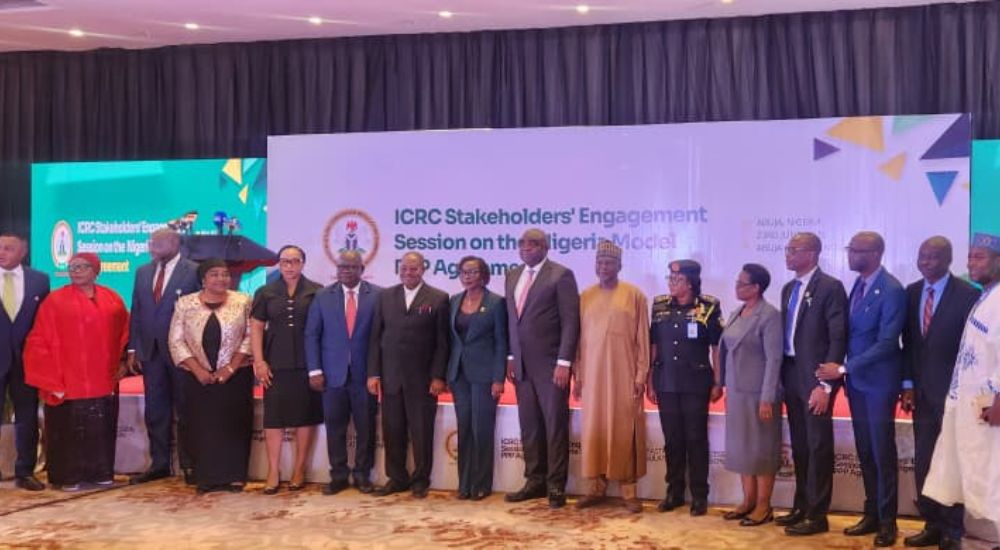
    Director-General and Chief Executive Officer of the Commission, Dr. Oseodion Ewalefoh, disclosed this on Tuesday at a one-day stakeholders’ engagement session on the Model PPP Agreement for Ministries, Departments and Agencies (MDAs) of the Federal Government in Abuja.

    According to him, Nigeria would require about $100bn annually over the next two decades to close the infrastructure gap by 2043, a task he said could not be funded solely from government revenues.

    He said the administration of President Bola Tinubu had positioned Public-Private Partnerships at the heart of its development strategy under the Renewed Hope Agenda, stressing that mobilising private sector capital, expertise and innovation had become imperative.

    “I wish to begin this morning not with a speech, but with a figure: $2.3tn. That is the conservative estimate of Nigeria’s infrastructure deficit today,” Ewalefoh said.

    “To close that gap by 2043, Nigeria must mobilise approximately $100bn every year. Government revenue alone, even under the most disciplined fiscal management, cannot bear that weight.”

    He noted that for nearly two decades after the enactment of the ICRC Establishment Act in 2005, PPP transactions in Nigeria were negotiated on a project-by-project basis, leading to inconsistencies in risk allocation, dispute resolution mechanisms and contractual provisions.

    According to him, the absence of a standard framework resulted in prolonged negotiations, increased transaction costs and reduced investor confidence.

    “To address these challenges, the Commission spent almost two years developing a Model PPP Agreement that provides a dependable framework benchmarked against Nigerian laws and global best practices,” he said.

    The ICRC boss explained that the model agreement was designed as a reference document rather than a one-size-fits-all template, adding that each project would still require sector-specific structuring and commercial considerations.

    He said the framework would enable MDAs to negotiate from a common baseline, thereby shortening the period required to achieve financial close and reducing disputes arising from unclear risk-sharing arrangements.

    Ewalefoh stated that the Commission reviewed existing concessions, engaged legal experts, financial advisers and development partners, and sought inputs from investors and lenders before finalising Version 1.0 of the model agreement.

    According to him, the document would remain a living instrument subject to periodic reviews in line with evolving laws, project experiences and international best practices.

    He identified deliberate risk allocation as one of the major features of the framework, saying risks are assigned to parties best positioned to manage them.

    He said the agreement contains provisions on conditions precedent, insurance, force majeure, changes in law, default and termination arrangements.

    “The default and termination regime is carefully balanced. It defines defaults applicable to both the concessionaire and the grantor, complete with remedies and compensation formulas. This balance is what lends the agreement credibility with serious investors and lenders,” he said.

    Ewalefoh further explained that the framework protects project financiers through direct agreements that provide lenders with cure and step-in rights, enabling them to remedy defaults before project termination.

    He added that the dispute resolution mechanism adopts a graduated approach beginning with consultation and negotiation, followed by confidential intervention by the ICRC and arbitration under the Arbitration and Mediation Act, 2023.

    According to him, the arrangement is intended to minimise litigation costs and ensure quicker resolution of disputes.

    The Director-General also said the agreement provides a robust contract management and performance monitoring framework comprising governance structures, key performance indicators, reporting obligations and periodic reviews.

    He stressed that anti-corruption and ethical standards were embedded across the provisions to strengthen transparency and accountability in concession agreements.

    Ewalefoh said the framework would strengthen Nigeria’s negotiating position and reassure investors that government institutions operate within a predictable and legally sound environment.

    He urged MDAs to engage competent legal, financial and technical advisers while adapting the template to their specific sectors and project requirements.

    “Every adapted agreement must be returned to the ICRC for statutory review, not as a bureaucratic hurdle, but as a safeguard for the MDA, the Government and the Nigerian public,” he said.

    The ICRC chief noted that standardisation would improve the bankability of projects, lower the cost of capital and facilitate access to alternative sources of infrastructure financing, including pension funds, Sukuk, green bonds and blended finance.

    He said Nigeria’s recent removal from the Financial Action Task Force (FATF) grey list had renewed international investor interest, adding that a transparent and predictable PPP framework could convert that interest into long-term capital commitments.

    “In global finance, reputation is pricing. This document constitutes reputational infrastructure, every bit as vital as the roads, rail lines and airports it will help finance,” he said.

    Ewalefoh charged MDAs to study the agreement closely, provide feedback and champion its adoption across government institutions.

    He assured stakeholders that the Commission would continue to provide support to facilitate faster and more efficient project delivery.

    Also speaking, Solicitor-General of the Federation and Permanent Secretary, Federal Ministry of Justice, Mrs Beatrice Jedy-Agba, said the Ministry played a critical role in strengthening the legal foundations of the framework.

    She said legal experts worked extensively on provisions relating to dispute resolution, sovereign obligations, liability and contractual safeguards to ensure the interests of the Federal Government were adequately protected.

    Jedy-Agba called on stakeholders to actively participate in refining the framework, noting that their contributions would help build a more transparent, accountable and investor-friendly PPP ecosystem.

    She expressed optimism that the initiative would serve as a cornerstone for future infrastructure development and contribute significantly to Nigeria’s economic growth and prosperity.

    The stakeholders’ engagement brought together representatives of MDAs, legal practitioners, financial experts, development partners and private investors to review and validate the framework, which the ICRC described as a key instrument for delivering sustainable infrastructure through stronger collaboration between the public and private sectors.

    ICRC Rolls Out PPP Template To Close $2.3tn Infrastructure Deficit is first published on The Whistler Newspaper

  • ICPC charges Customs officers on integrity, transparency in revenue collection

    ICPC charges Customs officers on integrity, transparency in revenue collection

    The Independent Corrupt Practices and Other Related Offences Commission (ICPC) has urged officers of the Nigeria Customs Service (NCS) to uphold the highest standards of integrity, transparency and accountability in the discharge of their duties to strengthen public confidence and improve service delivery. The charge was delivered during a sensitisation lecture and interactive session organised […]

    The post ICPC charges Customs officers on integrity, transparency in revenue collection appeared first on Tribune Online.

  • Kwara Poly suspends lecturer for flogging IJMB exam candidates

    Kwara Poly suspends lecturer for flogging IJMB exam candidates

    Kwara State Polytechnic, Ilorin (Kwara Poly), has suspended a lecturer seen in a viral video caning candidates of the Interim Joint Matriculation Board (IJMB) programme during an examination exercise on the institution’s premises. The suspension followed public outrage after the video surfaced on social media on Monday, showing the lecturer flogging candidates who were kneeling […]

    The post Kwara Poly suspends lecturer for flogging IJMB exam candidates appeared first on Tribune Online.