Category: Uncategorized

  • Osun APC dismisses lawmaker’s claims over INEC staff transfer

    Osun APC dismisses lawmaker’s claims over INEC staff transfer

    All Progressives Congress, APC, in Osun State has criticised the state House of Assembly over allegations linking a former governor to recent staff movements within the Independent National Electoral Commission, INEC.

    In a statement issued on Thursday, by Kola Olabisi, the Osun APC Director of Media and Information, the party described the claims by lawmakers led by Speaker Adewale Egbedun as unfounded, following a press briefing held in Osogbo earlier in the day.

    The Assembly had alleged that Gboyega Oyetola, now Minister of Marine and Blue Economy, was behind what it described as internal operational changes within INEC in the state.

    Responding, the APC maintained that “such staff redeployments fall strictly within the statutory responsibilities of the electoral body and are guided by existing electoral laws.

    “Routine administrative actions of INEC should not be misconstrued or politicised. Such transfers have occurred previously without controversy.”

    The party stated that it had no involvement in the internal affairs of INEC and was unaware of the specific staff movement referenced by the lawmakers.

    “We are not even aware that such action has taken place, and we are not concerned with the internal operations of the commission,” the APC said.

    The statement also dismissed the allegation against Oyetola as lacking evidence, stressing that “it is a fundamental principle that whoever makes an allegation must provide proof.”

    The APC accused the lawmakers of diverting attention from governance issues, suggesting that their actions were politically motivated ahead of the August 15, 2026 governorship election.

    The party linked the controversy to broader political developments in the state, noting that preparations for the election were intensifying among various stakeholders.

    It reaffirmed its support for its governorship candidate, stating that efforts were ongoing to secure electoral victory through lawful means.

    “Oyetola and other party members remain committed to working within the law to ensure success at the polls,” the statement added.

    The APC also urged the public to disregard the allegations, describing them as “baseless and unsupported by any empirical evidence.”

    Reiterating its position, the party maintained that INEC should be allowed to carry out its duties independently, without external interference or political pressure.

    The Osun State House of Assembly on Thursday raised concerns over recent administrative changes within the Independent National Electoral Commission, INEC, warning that the developments could affect the integrity of forthcoming elections in the state.

    Addressing journalists at a press conference in Osogbo on Thursday, Speaker of the Assembly, Adewale Egbedun on behalf of lawmakers said the redeployment of Dr Mutiu Agboke, the Resident Electoral Commissioner in Osun had drawn attention, particularly as it appeared sudden and without clear justification.

    The Assembly disclosed that it had also received reports suggesting that further redeployments of key electoral personnel were being considered, including officials such as Administrative Secretaries, Electoral Officers, Assistant Electoral Officers and ICT staff across the state.

    DAILY POST also reported that the Independent National Electoral Commission, INEC redeployed its Resident Electoral Commissioner, REC, in Osun State, Dr. Mutiu Agboke.

    The redeployment came amid petitions to the electoral umpire’s chairman, Prof Joash Amupitan over alleged partisanship.

    DAILY POST gathered that the All Progressives Congress, APC, and the New Nigeria Peoples Party, NNPP, demanded for Agboke’s redeployment ahead of the 2026 Osun governorship election.

    Osun APC dismisses lawmaker’s claims over INEC staff transfer

  • Artemis astronauts return, splash down into Pacific Ocean

    Artemis astronauts return, splash down into Pacific Ocean

    The NASA spacecraft that carried four astronauts around the Moon splashed down as planned Friday into the Pacific Ocean.

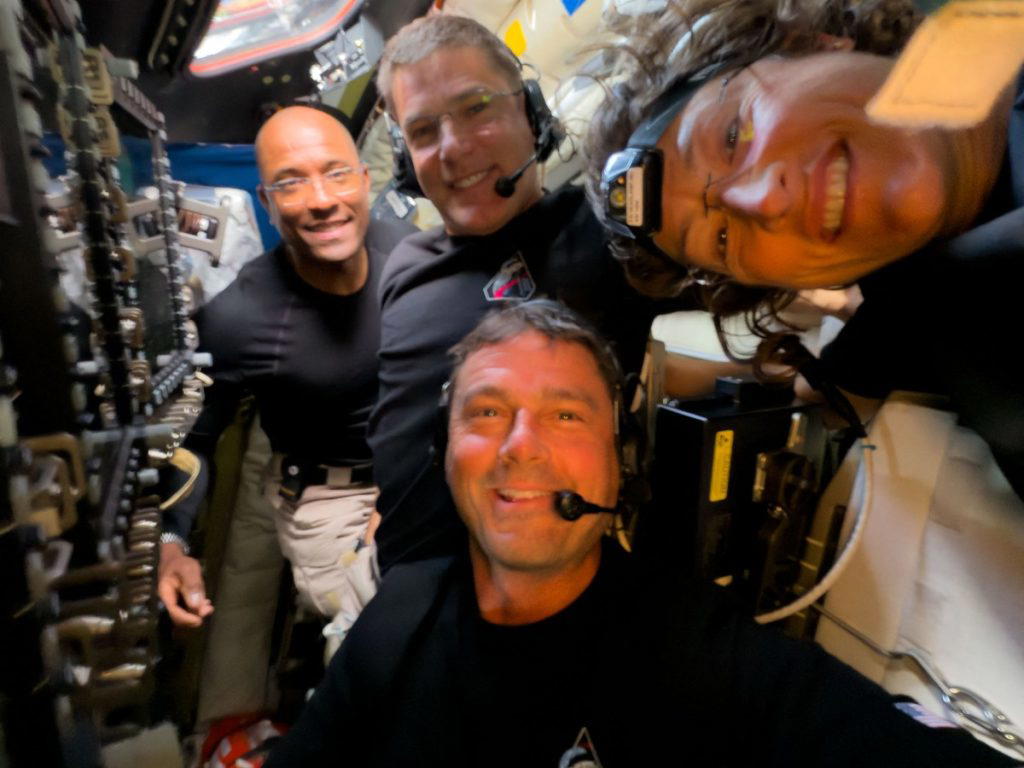
    The crew members – Christina Koch, Victor Glover, Jeremy Hansen and Reid Wiseman – are to be met by recovery teams and flown to a US military ship for medical evaluations.

    “We have you loud and clear,” mission commander Wiseman said following a communications check.

    “What a journey,” he added. “We are stable.”

    From false claims that a historic lunar fly-by was staged in a movie studio to unfounded narratives that footage of the crew was AI-generated, the Artemis II mission has been clouded by a blizzard of misinformation.

    The falsehoods — circulating across tech platforms including X, TikTok and Facebook — have also added fresh fuel to a longstanding conspiracy theory that NASA’s 1969 Apollo 11 moon landing was faked.

    Hashtags such as “fake space” and “fake NASA” have gained traction online since NASA’s lunar fly-by sent astronauts farther from Earth than any human before.

    Among the falsehoods was an image, viewed over a million times on X, purporting to show the Artemis II crew floating before a green screen and facing film cameras — suggesting their mission was staged in a studio, but in reality bore the hallmarks of AI manipulation.

    Some users also shared a video showing text appearing through the mission’s official mascot as purported proof the flight was staged.

    But a digital forensics expert told AFP’s fact-checkers that the anomaly was the result of a failed text overlay by a news station that had syndicated the official feed.

    Unfounded claims that the Artemis II mission detected a mysterious moving object on the moon’s surface also racked up millions of views across platforms.

    The misinformation spread as four astronauts — preparing on Friday for a high-stakes re-entry and splashdown — captivated the world with stunning visuals from their fly-by of the Earth’s natural satellite from aboard the Orion spacecraft.

    Internet Wild-West

    Once confined to the internet’s fringes, conspiracy theories have moved squarely into the mainstream amid growing mistrust of public institutions and traditional media.

    Scientific achievements such as the lunar mission present “very easy content for conspiracy influencers,” said disinformation researcher Mike Rothschild.

    “There are some people whose reflexive reaction to any kind of major event is to claim it’s fake and staged, no matter what it is,” Rothschild told AFP.

    Many of them “pass themselves off as experts in science and physics because it’s somehow more believable to their followers than just going with ‘the official story.’”

    The trend underscores a Wild West internet landscape that is largely bereft of guardrails as false narratives erode digital trust. Several tech platforms have gutted trust and safety teams and scaled back moderation, making them what researchers call a hotbed for misinformation.

    Further sowing online confusion were claims that the entire Artemis II mission was a hoax powered by artificial intelligence tools.

    The assertion underscores how the rise of cheap and widely available AI tools has given misinformation peddlers a handy incentive to cast doubt on authentic content — a tactic researchers have dubbed as the “liar’s dividend.”

    ‘Secret knowledge’

    The swirl of falsehoods has also bolstered one of the longest enduring conspiracy theories — that NASA faked the 1969 Apollo 11 moon landing, broadcasting visuals shot in a Hollywood studio.

    The conspiratorial discourse has seeped into pop culture, becoming a plotline in movies like romantic comedy “Fly Me to the Moon” — with Scarlett Johansson’s character tasked with faking a moon landing — and some celebrities also amplifying the claim.

    “The moon landing is an example of a conspiracy that will not die,” Timothy Caulfield, a misinformation expert from the University of Alberta in Canada, told AFP.

    “These conspiracies are attractive for a host of reasons including that they are linked to the allure of having ‘secret knowledge’ or being aware of things others don’t know.”

    Though easy to debunk, such theories persist as Artemis II comes decades after the previous lunar missions, events today’s internet-savvy generation has little recollection of.

    “In many ways, it is a testament to how hard it is for humans to travel to the moon — after all, we did it from 1968 to 1972, and it has taken until 2026 to do it again. It makes many people wonder if it ever happened,” space exploration expert Francis French told AFP.

    “Right now we are seeing remarkable photographs and video of the Earth and the moon…These photos alone should remove doubt and show once again the amazing things humans are capable of.”

    Vanguard News

    The post Artemis astronauts return, splash down into Pacific Ocean appeared first on Vanguard News.

  • Kano federal lawmaker, Danjuma is dead

    Kano federal lawmaker, Danjuma is dead

    A member of Nigeria’s House of Representatives, Muhammad Danjuma Hassan, who represented Dawakin Kudu/Warawa Federal Constituency of Kano State, has died at the age of 66 following a prolonged illness.
    His death, which reportedly occurred on Friday evening was confirmed by House spokesman, Akin Rotimi.

    Rotimi described the late lawmaker’s passing as a significant loss to the National Assembly and the country, noting his decades-long contribution to legislative development.

    “His passing is a profound loss to the House of Representatives, his constituents, and the nation at large,” Rotimi said.»

    Hassan, who was elected into the House in 2023 under the platform of the New Nigeria Peoples Party, served as the Deputy Chairman of the House Committee on Judiciary.

    According to Rotimi, the deceased was widely regarded as one of Nigeria’s foremost legislative counsels and legal draftsmen, with many laws enacted over the years bearing his imprint.

    “With his demise, Nigeria has lost one of its foremost Legislative Counsel and Legal Draftsmen, whose contributions significantly advanced legislative development and constitutional processes,” he added.

    Before venturing into partisan politics, Hassan had a long career within the National Assembly bureaucracy, rising to the rank of Permanent Secretary. His institutional knowledge and administrative experience, lawmakers said, enriched parliamentary deliberations and policy oversight.

    During his tenure in the House, he also served on several committees, including Public Petitions, Aviation, Solid Minerals, Constitution Review, and Treaties, Protocols and Agreements.

    The Speaker of the House, Tajudeen Abbas, extended condolences to Hassan’s family, constituents, and the government and people of Kano State.

    Hassan is scheduled to be buried on Saturday in accordance with Islamic rites.

    “May his soul rest well, and may his legacy endure,” Rotimi said.

    Kano federal lawmaker, Danjuma is dead

  • House Of Reps Loses Another Member

    House Of Reps Loses Another Member


    Statement issued by House of Representatives, National 

    House of Representatives Mourns the Passing of Rep. Muhammad Danjuma Hassan

    With profound sorrow but in total submission to the will of Almighty Allah (SWT), the House of Representatives regrets to announce the passing of our esteemed colleague, Rep. Muhammad Danjuma Hassan, Deputy Chairman, House Committee on Judiciary, and Member representing Dawakin Kudu/Warawa Federal Constituency of Kano State.

    Rep. Hassan, who was elected into the House of Representatives in 2023 on the platform of the New Nigeria Peoples Party (NNPP), passed away in the evening of Friday, April 10, 2026, in Abuja, after a period of illness. He was 66 years old.

    His passing is a profound loss to the House of Representatives, his constituents in Dawakin Kudu/Warawa Federal Constituency of Kano State, and the nation at large. With his demise, Nigeria has lost one of its foremost Legislative Counsel and Legal Draftsmen, whose contributions over the years significantly advanced legislative development and constitutional processes in the country. Indeed, many of the laws enacted over past decades bear his enduring imprint.

    He brought to the legislature decades of cognate experience within the National Assembly bureaucracy, having risen through the ranks to the highest administrative cadre and retiring as a Permanent Secretary prior to his entry into partisan politics. His extensive background in administration and governance, as well as his wealth of institutional memory, significantly enriched his contributions to parliamentary work and national discourse.

    Within the House, he distinguished himself as a committed, reflective, and diligent legislator. As Deputy Chairman of the House Committee on Judiciary, he made valuable contributions informed by deep institutional knowledge, administrative competence, and a firm commitment to strengthening Nigeria’s justice system and upholding the rule of law.

    He also served as a member of several other Committees, including Public Petitions, Aviation, Solid Minerals, Constitution Review, and Treaties, Protocols & Agreements, where he contributed meaningfully to legislative oversight and national policy considerations. Across committee engagements and plenary deliberations, his interventions consistently reflected maturity, professionalism, and a strong sense of public duty.

    He was widely respected for his professionalism, depth of legislative experience, and commitment to public service, as well as for his humility, calm disposition, and dedication to consensus-building.

    The Speaker of the House of Representatives, Rt. Hon. Abbas Tajudeen, Ph.D., GCON, on behalf of the House, extends heartfelt condolences to his immediate family, the people of Dawakin Kudu/Warawa Federal Constituency, the Government and people of Kano State, and all colleagues and associates.

    He will be buried according to Islamic rites later today, Saturday, 11th April, 2026. Further details will be communicated in due course. 

  • NASA’s Artemis II astronauts splash down on Earth after lunar mission

    NASA’s Artemis II astronauts splash down on Earth after lunar mission

    An elated NASA late Friday was celebrating its successful voyage around the Moon, after four astronauts safely returned to Earth having completed the first lunar flyby in more than 50 years.

    The NASA spacecraft carrying four astronauts — three Americans and one Canadian — splashed down without a hitch off the California coast, capping the US space agency’s crewed test mission that returned with spectacular images of the Moon.

    “What a journey,” said mission commander Reid Wiseman, who reported that the crewmembers — himself along with Christina Koch, Victor Glover and Jeremy Hansen — were “stable” and “green.”

    “They’re in great condition, that’s what that means,” said Rob Navias, the NASA public affairs official who narrated their return on the agency’s livestream.

    Following an expected but nerve-wracking communications blackout during their high-stakes re-entry, Wiseman’s voice triggered relief that the astronauts were well on their way back home.

    “We have you loud and clear,” he said following a voice check from mission control in Houston.

    NASA personnel and the US military helped extract the astronauts from the bobbing capsule — to the applause of those watching from mission control.

    By late Friday, helicopters had lifted the astronauts to a recovery ship off the Pacific coast near San Diego, where they all proved capable of walking unassisted.

    NASA administrator Jared Isaacman called the voyage “a perfect mission.”

    “We’re back in the business of sending astronauts to the Moon,” he said, and “this is just the beginning.”

    • ‘A great day’ –

    As the astronauts returned to Earth their spacecraft reached maximum speeds more than 30 times the speed of sound, and faced searing temperatures around half as hot as the surface of the Sun.

    It was a key test of their heat shield, which in an earlier trial uncrewed mission had faced complications that they attempted to mitigate this time around by shifting the return trajectory.

    “If you didn’t have anxiety bringing this spacecraft home, you probably didn’t have a pulse,” said flight director Rick Henfling.

    But the Artemis II re-entry was smooth sailing.

    The Orion capsule will now be painstakingly examined to assess how it fared.

    US President Donald Trump praised the astronauts for their “spectacular” trip and said he “could not be more proud” — while wasting no time in looking ahead to the eventual goal of sending missions even further into space.

    “Next step, Mars!” he wrote on social media.

    Artemis II was the inaugural crewed mission of NASA’s program aiming to install a sustained presence on the Moon, including the eventual construction of a base that could be used for further exploration including to Mars.

    • ‘Fresh confidence’ –

    From liftoff to splashdown, the trip clocked in at nine days, one hour, 31 minutes and 35 seconds — though NASA rounds up and calls it a 10-day mission.

    It began with a dramatic launch from Florida on April 1, and was studded with firsts, records and extraordinary moments.

    The four astronauts become the humans to travel furthest away from the Earth, at 252,756 miles (406,771 kilometers).

    While hurtling through deep space and zipping around the Moon they took thousands of photographs, amassing a stunning portfolio of images that captivated people on Earth.

    They also witnessed a solar eclipse along with extraordinary meteorite strikes on the lunar surface.

    Several achievements added to the voyage’s historic nature: Glover was the first person of color to fly around the Moon, Koch was the first woman, and Canadian Hansen the first non-American.

    Astronomer Derek Buzasi of the University of Chicago called the mission “an almost flawless success.”

    “I admit to having had my doubts about the Artemis program, but now I have fresh confidence in our next steps as we go back to the Moon to stay,” he told AFP.

    • ‘Eye on the prize’ –

    NASA is hoping it can put boots on the lunar surface as soon as 2028 — the final full year of Trump’s second White House term.

    Experts, however, have voiced skepticism that the lunar landers being developed by SpaceX and Blue Origin, companies owned by billionaires Elon Musk and Jeff Bezos respectively, will be ready in time.

    China, meanwhile, is forging ahead with its own effort targeting 2030 to put astronauts on the Moon.

    In the meantime, NASA is hoping to capitalize on the Artemis II mission’s success to drum up excitement about space exploration.

    Clayton Swope, a space policy expert at of the Center for Strategic and International Studies, told AFP that the mission stands as “proof that when America keeps its eye on the prize, it can still do very great things.”

    The post NASA’s Artemis II astronauts splash down on Earth after lunar mission appeared first on Vanguard News.

  • Islamabad talks: We don’t trust US despite our good intentions – Iran

    Islamabad talks: We don’t trust US despite our good intentions – Iran

    Iran has stated that it does not trust the United States of America as they engage in peace talks in Islamabad, Pakistan.

    Mutual distrust continues to prevail as both nations arrive in the Pakistani capital for discussions aimed at achieving lasting peace in the Gulf.

    “We have good intentions, but we do not have trust,” Iranian state television reported the head of the Iranian delegation, parliamentary speaker Mohammad-Bagher Ghalibaf, as saying upon his arrival.

    “Our past experiences in negotiations with the Americans have consistently resulted in failure and unfulfilled promises,” he added.

    JD Vance, the US vice-president and leader of their delegation, expressed similar caution, stating before departing aboard Air Force II, “If [the Iranians are] going to attempt to manipulate us, they will discover that the negotiating team is not particularly accommodating.”

    Meanwhile, US President Donald Trump has declared that his primary objective is to ensure that the Islamic Republic does not acquire a nuclear weapon.

    “That constitutes 99% of the issue,” Trump remarked.

    However, halting the ongoing Israeli strikes on Lebanon is a crucial demand from Iran as a prerequisite for the truce, along with specific terms for permitting shipping traffic through the blockaded Strait of Hormuz.

    The Iranian representatives assert that negotiations cannot commence without assurances regarding Lebanon and the unblocking of Iranian assets that have been seized due to sanctions. The positions of Israel and the US maintain that Lebanon is not included in the ceasefire agreement.

    Trump, in a social media post, stated, “The Iranians do not seem to understand that they possess no leverage, aside from a temporary extortion of the world by utilizing international waterways. The only reason they are still in existence today is to negotiate!”

    Pakistan’s Prime Minister, Shehbaz Sharif remarked that achieving progress will require significant effort. “This is the stage which, in English, is referred to as the equivalent of ‘make or break,’” he commented.

    In Islamabad, all access routes leading to the Serena Hotel, the venue for the talks, were secured with heavy security measures, accompanied by banners and signs along the expressway announcing the “Islamabad Talks.”

    Islamabad talks: We don’t trust US despite our good intentions – Iran

  • Ex-Attorney General, Ochinke faults INEC over ADC leadership

    Ex-Attorney General, Ochinke faults INEC over ADC leadership

    A ruling party chieftain and former Attorney General of Cross River State, Attah Ochinke, has criticised the Independent National Electoral Commission (INEC) for what he described as a misreading of a court order in its decision to de-recognise the David Mark-led leadership of the opposition African Democratic Congress (ADC).

    Ochinke, a former Nigerian Bar Association chairman in Cross River State, expressed disappointment with INEC’s handling of the matter, insisting that the commission’s interpretation of the subsisting court directive was legally flawed.

    Speaking in an interview, the All Progressives Congress (APC) stalwart, said the court order was explicit in directing all parties to maintain the status quo pending the determination of the substantive suit.

    He explained that one of the factions within the ADC had approached the court seeking to restrain the executive committee led by Mark from functioning.

    According to him, rather than grant the request, the court directed all parties to revert to and maintain the existing leadership structure until the case is fully heard.

    “In practical terms, maintaining the status quo meant retaining the David Mark-led leadership,” Ochinke argued.

    He, however, faulted INEC for what he described as a misapplication of the order, saying the commission effectively created a vacuum by stripping the party of leadership.

    “You cannot remove an existing leadership and claim to be preserving the status quo when, at no time, the party was without leadership,” he said.

    Ochinke also took a swipe at the INEC Chairman, Joash Amupitan, noting that his legal background raised expectations of a more precise interpretation of the court ruling.

    “I am surprised because the INEC chairman is a respected Professor of Law and Senior Advocate of Nigeria. One would expect him to properly interpret such a directive,” he said.

    He warned that the commission’s decision could further erode public confidence, adding that it reinforces existing concerns about INEC’s credibility.

    On the way forward, Ochinke advised the ADC to seek judicial clarification of the court order rather than pursue an appeal, which he said could be time-consuming.

    While expressing his desire for the APC to win future elections, he stressed the need for credible electoral processes, dismissing claims that the ruling party was behind internal crises in opposition parties.

    “There is no evidence to support such allegations. The actors involved in the crises within the PDP, ADC and Labour Party are all members of those parties,” he said.

    Ex-Attorney General, Ochinke faults INEC over ADC leadership

  • Artemis II Crew Returns To Earth After Historic Moon Mission

    Artemis II Crew Returns To Earth After Historic Moon Mission

    NASA’s Artemis II astronauts have safely returned to Earth after completing a 10-day mission around the Moon, marking the first crewed voyage beyond low-Earth orbit in more than five decades and a major step forward in the United States’ return-to-the-Moon program.

    The Orion spacecraft, Integrity, splashed down in the Pacific Ocean at 8:07 p.m. EDT on Friday, April 10, off the coast of San Diego, bringing to an end a mission that covered approximately 694,000 miles and included a close flyby of the Moon’s far side.

    The landing, which NASA described as precise and stable, followed a high speed re-entry through Earth’s atmosphere at about 25,000 mph, during which the spacecraft endured extreme temperatures before deploying parachutes for its final descent.

    The four-member international crew comprised NASA astronauts Reid Wiseman (Commander), Victor Glover, and Christina Koch, alongside Canadian Space Agency astronaut Jeremy Hansen.

    Their mission was designed as a critical test flight for the Orion spacecraft and the broader Artemis program, which aims to return humans to the lunar surface later this decade.

    Recovery operations began minutes after splashdown, with U.S. Navy vessels and NASA teams moving in to secure the capsule.

    The astronauts were then airlifted by helicopter to the USS John P. Murtha, where medical teams conducted initial health checks. NASA confirmed all four crew members were in good condition following recovery operations.

    Flight Director Rick Henfling said in a post-landing briefing that the astronauts were “happy and healthy” and had successfully completed all mission objectives.

    He added that the crew would travel later to NASA’s Johnson Space Center in Houston for further debriefings, data analysis, and reunions with their families.

    Throughout the mission, the Artemis II crew tested key systems aboard the Orion spacecraft, including its life support systems, heat shield performance, navigation systems, and deep space communication capabilities.

    NASA officials said the data gathered would be crucial in preparing for future crewed lunar landings, particularly Artemis III, which is expected to put astronauts back on the Moon for the first time since 1972.

    NASA also said Artemis II demonstrated the spacecraft’s ability to safely support humans in deep space for extended periods, with the mission serving as the farthest distance humans have traveled from Earth since the Apollo era.

    Shortly after recovery, NASA released images showing the astronauts aboard recovery vessels, smiling and interacting with personnel as they underwent post-flight medical evaluations.

    Additional imagery and video from the mission are expected to be published in the coming days through NASA’s official channels.

    Public reaction to the mission has been broadly positive, with updates and images circulating widely online as the successful splashdown marked another milestone in renewed global interest in lunar exploration.

    As the crew begins their return to normal gravity conditions and prepares for debriefing in Houston, NASA officials have described the mission as a significant validation of the Artemis program’s readiness for future lunar landing operations and long-term human exploration beyond Earth orbit.

    Artemis II Crew Returns To Earth After Historic Moon Mission is first published on The Whistler Newspaper

  • From emergency interventions to economic lifelines: How Abdulrazaq is transforming Kwara — Olododo

    From emergency interventions to economic lifelines: How Abdulrazaq is transforming Kwara — Olododo

    Before Abdulrahman Abdulrazaq stepped into office as Kwara Governor, Ilorin wore the look of a quiet city waiting to be noticed. COVID 19 hit it badly. The airport, in particular, told a familiar story, one of hesitation and neglect. Daily flights? That was a luxury the state could hardly boast of.

    Back then, the economy simply didn’t have the muscle to sustain the kind of business and social buzz that keep airlines interested. Operators came, looked around, did the math and quietly stayed away. For those who dared, it was a gamble. Only one airline kept the route alive, and even then, flights were anything but reliable. 

    Then came Abdulrazaq, and with him, a shift in tempo.

    Rather than patching symptoms, his administration went for the roots. Moribund companies got a second look, key sectors like education, health, and agriculture were confronted head-on, and infrastructure became more than a talking point, it became a mission. Roads stretched smoother across the city, new structures began to rise with confidence, and urban spaces started to breathe again.

    Slowly but surely, Kwara found its rhythm.

    Today, the story has changed. Insecurity is a concern in some border areas but generally life is better than it used to be. Activities in Ilorin say a lot about the renewed economic pulse of the state. The city is no longer waiting to be discovered; it is announcing itself.

    Across Kwara, there’s a visible transformation. Roads don’t just connect, they impress. Architecture isn’t just functional, it inspires. Public spaces are gaining character, and empowerment programmes are weaving governance into the daily lives of the people. For many indigenes, politics aside, there is a growing sense of pride in what is unfolding.

    Behind the scenes, key figures are driving this machinery. Aminat Ahmed El-Imam oversees the health sector, while Lawal Olohungbebe steers education. Their efforts, alongside others, form the backbone of the administration’s broader agenda.

    To get a closer look at these developments, we spoke with Abdulquawiy Abdulganiyu Olododo, a prominent APC chieftain and commissioner for works in the last week of March. During the interview, he offered insights into both the strides and the struggles of governance under Abdulrazaq.

    In this edition, we bring you images and excerpts from Olododo’s reflections on infrastructure development over the past seven years, what he describes as bold, far-reaching, and in many ways unprecedented since the creation of the state.

    In a conversation with Saturday Editor Onochie Anibeze and Demola Akinyemi, Olododo lays out what he believes are the defining infrastructure achievements that have carved Abdulrazaq’s name into Kwara’s history.

    Education and health will take the spotlight in subsequent editions.

    For now, the focus is clear: This is part of Kwara’s infrastructure story told through the eyes of a man who has watched it unfold, brick by brick, road by road.

    What was the state of infrastructure and roads in Ilorin and indeed Kwara state about seven years ago,when Governor AbdulRahman AbdulRazaq was sworn in as the governor and what is it like now?

    When His Excellency, Governor AbdulRahman AbdulRazaq, assumed office in 2019, the condition of our road infrastructure was frankly deplorable. Many critical routes had collapsed, township roads were neglected, and several communities were practically cut off.

    The administration had to begin with emergency interventions just to restore basic mobility.

    Today, the difference is clear and measurable. We have transitioned from just repairs to a structured, statewide infrastructure programme. Across Kwara, we have completed 330.77km of kilometres of roads, with 257.96km ongoing, spanning urban renewal, rural access, and major connecting Local Government corridors.

    What you see today is not just road construction, it is a deliberate rebuilding of the state’s economic backbone.

    In the past seven years, what would you describe as the most significant milestones your ministry has achieved in road construction and infrastructure development?

    The most significant milestone over the past seven years would be the scale and structure of the work done. 

    His Excellency has embarked upon more road infrastructure than the combined previous administrations since 1999, (882.73km) including the Federal Government Tax credit scheme intervention. But beyond numbers, we have changed the philosophy, from isolated projects to a coordinated development agenda.

    A major highlight is the Rural Access and Agricultural Marketing Project (RAAMP), which connects farming communities to markets. The Governor was also able to  facilitate a strategic intervention to achieve a ring road for the State through the innovative Tax credit scheme of the Federal Government  spanning over 290km of road. 

    So the milestone is not just roads, it is connectivity, productivity, and long-term planning.

    Can you provide insights into the number and scale of projects completed under your leadership, and how these have impacted economic growth and connectivity across the state?

    We are looking at hundreds of kilometres of roads across the state, completed, ongoing, and facilitated through partnerships. To properly break it down, we have 330.77km of road already completed, 257.96km ongoing, including the 209.77km of the RAAMP project, and also the 294km of the Federal Government intervention he facilitated is also ongoing with about 72km of it completed as we speak. 

    At different points, we have handled well over a hundred projects simultaneously across the three senatorial districts. These range from urban renewal road projects in Ilorin to township roads across the state, to strategic rural roads and major economic corridors.

    We have also completed over 200 interlocking projects across several communities in Kwara State. The very first of its kind in the history of kwara state. 

    These interlocking projects were introduced to serve communities that have been deprived of road network since the creation of the state, and now they are accessible. Also, places that were swamped with water, muddy neighborhoods, now wear a new look, accessible, and cleaner due to the interlocking projects.  

    The impact of these projects  have been profound, from reduction in travel time across key routes, to Improved access to markets for farmers, to Lower transportation costs, to Increased commercial activity, etc. Infrastructure is the foundation of economic growth, and we are already seeing those benefits materialise across Kwara.

    What innovative strategies or policies has the ministry introduced to improve project delivery, quality, and cost efficiency during this period?

    For smooth project delivery and quality, we have deployed a system that allows the leadership of the ministry have a real time update on all awarded projects being supervised by our qualified Resident Engineers, we have also invested in the training and retraining of all our engineers to ensure they are up to date with the required exposure necessary to match the 21st century demand, and our ambition with infrastructure development in the State. 

    Second, we have a diversified funding sources, combining state resources, development partner support, and intervention model like the tax-credit financing.

    Third, we emphasised value for money delivery ensuring that projects meet standards without unnecessary cost inflation.

    How has your ministry addressed challenges such as funding constraints, contractor performance, and maintenance of existing infrastructure?

    These challenges you’ve mentioned are real, but with the kind of leadership we have in Kwara today, we’ve been able to manage the challenges with discipline, structure, and tunnel focus vision.

    On funding, we prioritised projects and leveraged partnerships to stretch resources further.

    On contractor performance, we insist on strict adherence to specifications and timelines. Accountability is key.

    On maintenance, we moved away from ad-hoc repairs to a system-driven approach, it’s why you are also seeing the massive rehabilitation and upgrades of most of our roads.

    The goal is simple: every kilometre of road must deliver long-term value to the people.

    In what ways have your projects improved the daily lives of citizens, particularly in rural and underserved communities?

    The impact of these projects is very real and very human.

    In our rural communities, these are not just roads, to them, it means; 

    • Farmers getting produce to market without losses

    • Easier access to healthcare and education

    • Lower transport costs

    • Improved quality of life

    While for the urban residents, it means reduced traffic stress, better drainage, safer roads, aesthetically pleasing environment, and a more vibrant business environment.

    We fully understand Infrastructure is not just concrete and asphalt, it is dignity, opportunity, and inclusion.

    You must be the lucky  ministry going by the massive works your ministry is doing. Do you agree with this? And looking back, how proud are you about  the things the govt of Abdulrahman Abdulrazaq has achieved?

    I would not describe us as merely lucky, I would say we have been privileged to work under a governor who made infrastructure a serious development priority and backed that priority with political will. Road development at this scale does not happen by chance. It requires vision, budgeting, institutional discipline, follow up, and the readiness to think outside the box as funds required for these level of developments go beyond the regular budgetary allocations. It’s where the RAAMP and FG Intervention comes to play. 

    Personally, I would say I am proud because the achievements are visible and measurable. 

    When official figures show that this administration has exceeded the combined road records of the previous three administrations, that says something important about ambition and execution. Beyond the numbers, I am proud that the works have touched all three senatorial districts and have begun to reposition Kwara from a largely salary dependent state to one that increasingly thinks in terms of productivity, connectivity, agribusiness, tourism, and investment. To put it in proper context, we have completed 113.57km of roads in Kwara Central, while 65.5km are ongoing, totaling 179.07km in Kwara central. In Kwara South, 117.74km of roads have been completed, while 96.19km are ongoing, totaling 213.93km. In Kwara North, we have completed 99.46km, whil 96.27km are ongoing, totaling 195.73km. Also, of the 294km of the Federal Govt. Tax credit scheme intervention, 252km of it connects the Kwara North senatorial district upto the border of Kwara with Benin republic through Baruteen LGA, while the 42km left connects Kwara Central to Kwara South senatorial district. 

    What legacy projects or reforms would you say will have the most lasting impact, and how do they position the state for future development? The AA govt appears to have made things easy for the next APC governorship candidate in Kwara. Your  parting words on this!

    The most enduring legacies, in my view, are not just individual roads but the systems and strategic corridors we are leaving behind. From the road network of high impact corridors across the state, especially the rural access roads and the facilitated tax-credit road projects that will improve internal and interstate economic movement. Also, is the broader urban renewal and infrastructure agenda, which has changed the development conversation in Kwara from managing decline to planning growth.  

    Politically, when people can see and feel the impact through roads, infrastructure, and improved livelihoods like we are witnessing in Kwara State today, then naturally it builds confidence in continuity.

    My parting words would be that the most important thing is not the ease of politics, but the continuity of progress. Kwara has seen what focused leadership can achieve, and the task ahead is to deepen that progress, protect the reforms, and keep development people-centered.  

    The post From emergency interventions to economic lifelines: How Abdulrazaq is transforming Kwara — Olododo appeared first on Vanguard News.


  • Jos, a city in ruins, a people in pains

    Jos, a city in ruins, a people in pains

    By Emeka Alex Duru

    It should not have required extra intelligence for anyone following the trends in Jos, the Plateau State capital, to decode the tension in the city. A three-day visit to the state in September last year, was all that it took for me to conclude that Jos, the Tin City that one knew, had lost its placidity and had in fact, become a timebomb waiting to explode.

    Read Also: Drug addiction: Youth hit hard as 14.3m Nigerians consumed ilicit drugs in one year

    By what seemed a conspiracy of coincidences, everything I knew about Jos, had changed. The usual alluring climate normally associated with September, had given way to excruciating heat. The characteristic smiling faces of residents, even in poverty and the kindred spirit in the midst of multiple cultures and languages, had evaporated. In their stead were hostile faces, pent-up anger and barely concealed animosity at no one in particular but against everyone.

    A tour around the major roads in the city, confirmed the suspicion that all was not well. In some areas, rubbles of buildings torched at previous disturbances, offered disturbing spectacles. Inside commercial buses that ordinarily provided forums for social exchanges, the mistrust was large. There were no banters, no common issues of discussion. Everyone kept to himself. The message was not lost on me – Jos, the city I knew and was proud of was in ruins, and the people in pains!

    Only one that had lived in Jos in its days of innocence and harmony would appreciate the extent of rape the city has undergone in the hands of bloodthirsty hounds with the government not rendering any tangible help. I had once, told the story of my encounter with Jos on this space.  I was in the city for a graduate programme in University of Jos (UNIJOS) in the early 1990s. Before then, I had longed to visit Plateau. Growing up, my parents, especially my mother, regaled us with stories of the beauty and serenity of Jos. My family was in Jos during our infancy before it was forced out of the city following the crisis and pogroms of 1966 that eventually snowballed to the civil war.

    Those tales fired my imagination and the urge to visit Plateau. While in UNIJOS between 1991 and 1993, I confirmed the beauty and placidity of the place. The unique Jos weather, relative low cost of living, peaceful environment and fellow-feeling among the residents, compared to no other place in the country. It was in Jos, that for the first time, I saw churches and mosques sharing the same compounds or separated by thin walls.

    Angwan Rogo where I lived with other students, was behind the University and predominantly populated by Muslims. But it did not really matter to us. At festive periods by either Christians or Muslims, we were served with food items by wealthy members of the faith celebrating. Nobody in the neighbourhood, to my knowledge, was discriminated against or attacked on the basis of faith, sect or ethnicity. It was not for nothing that we prided UNIJOS as a mini-Nigeria; an institution that had many students living in peace without any group dominating the others.

    Sadly, that era is gone. The Tin City has lost its ambience and beauty. Violence and intolerance have taken over.  It was so bad that in September last year when I had cause to be in Jos, I learned with pains of the existence of metaphorical “Wall of Jericho” by which the residents were divided on religious lines. Even without official pronouncement, some parts of the city were inhabited by Muslims, while Christians had their zones of habitation.

    It rankled in particular that a friend that I pleaded with to take me to my former place of residence in Angwa Rogo, bluntly refused to go and advised me against embarking on the trip, which he said was risky. That spoke much on how bad things had gone. This is the depressing story of Jos and entire Plateau; an unflattering index of state failure and irresponsibility on the parts of successive leadership in the state and country.

    The March 29, Palm Sunday terrorist attack on the capital city in which over 30 residents were killed, was therefore not surprising. It was rather a manifestation of the disharmony in the city, a spillover of unmanaged tension and mismanagement of the already parlous security situation in the state Put in other words, it was an accident waiting to happen.

    The laxity in preventing and managing the situation showed in the tepid attitude of the leadership of the state and lifelessness of the federal government, while the City boiled. Neither the governor, Caleb Mutfwang, nor the President, Bola Tinubu, promptly rose to the occasion to give the people the needed assurance of protection.

    It took efforts for the governor to dismount from an armored car to address the people directly. For Tinubu, a visit to the City, merely ended at Yakubu Gowon (Heipang) Airport. This is in line with the serial lapses and failures that have feathered the recurring crisis in Jos. It is one in which after the initial assurances of getting to the roots of the problem, nothing is done. The fraud did not commence with the latest Palm Sunday mayhem and may not end with it.

    For over 30 years, Jos has experienced repeated crises which have eroded the peace and tranquility which the city was known for. Within the period, the Federal and the Plateau State government have established six Commissions of Inquiry into the various crises. These included the Justice J. Aribiton Fiberesima Commission of 1994, set up by the then Military Administrator of the State, Lt. Col. Mohammed Maina, to investigate the riots that erupted in the metropolis on April 12, 1994, over the appointment of a Hausa-Fulani person as the chairman of Jos North Local Government Area, which was contested by the indigenous Berom, Anaguta, and Jarawa ethnic groups.

    A deadly outbreak of violence in the city on September 7, 2001, which resulted to loss of hundreds of souls, massive destruction of properties and worship centres, led to the setting up of the Justice Niki Tobi Commission, by Governor Joshua Dariye.  Another crisis in 2009, saw the establishment of Justice Bola Ajibola (SAN) Commission of 2009 by Governor Jonah Jang.

    Ajibola panel faulted the creation of Jos North Local Government Area, LGA, by former Military President, Gen. Ibrahim Babangida, retd. It recommended that the present Jos North LGA be re-delineated into three sustainable local governments with an equitable representative number of wards within each local government.

    Unfortunately, in all the efforts, the reports were never published, never fully debated, and never translated into action. It was a case of motion without movement.  More than any other lapse, the non-implementation of the findings of the Commissions, seems to widen the scope of impunity and encourage more attacks on innocent citizens in Jos.

    Tinubu’s lame-duck visit to Heipang Airport and the rootless threat of dealing with the masterminds of the attacks, cannot do much in stemming the tide of violence in the city. Neither, will the timorous approach by Governor Mutfwang in defecting to the President’s All Progressives Congress (APC) do much in keeping the murderous marauders at bay.

    Rescuing Jos from its continuous ruins, easing the pains inflicted on the people, go beyond the tokenistic overtures by President Tinubu and Governor Mutfwang. It requires strategic thinking, mustering the political will to get to the root of the recurrent violence and taking decisive actions against the agents of the bloodbath and their sponsors. Until such measures are taken, Jos and other cities in Plateau, will continue to bleed, while the leaders keep throwing their hands in the air in utter helplessness.

    Emeka Alex Duru, PhD is the Editor, TheNiche Newspapers, Lagos 

    (08054103327, nwaukpala@yahoo.com)       

    The post Jos, a city in ruins, a people in pains appeared first on Vanguard News.