
The 17 Brigade, Nigerian Army, Katsina, has formally cleared the air regarding the death of
Category: Uncategorized
-

Manufacturing tax contributions maintain upward trend in 2025
…VAT rises 45.6% to N1.17trn; CIT up 32.8% to N881.3bn
By Yinka Kolawole
The manufacturing sector’s contribution to tax revenue collections in Nigeria maintained an upward trend in 2025, contributing a total of N1.17 trillion in Value Added Tax (VAT) representing an increase of 45.61 percent over the N803.53 billion recorded in 2024 while the sector’s Company Income Tax (CIT) contribution rose to N881.29 billion, marking a 32.83 per cent increase from N663.46 billion recorded in 2024.
Analysts say that the strong year-on-year growth reinforces the sector’s expanding role in government revenue generation and Nigeria’s industrial development.
The latest data from the National Bureau of Statistics (NBS) highlights the resilience of the manufacturing sector despite prevailing economic challenges, underscoring the sector as a critical pillar of the country’s fiscal base.
The NBS data shows that sector maintaining its position as the country’s largest contributor to VAT revenue. VAT contributions from the manufacturing sector remained relatively stable throughout 2025, generating N286.95 billion in the first quarter of 2025 (Q1’25), N297.68 billion in Q2’25, N290.79 billion in Q3’25, and N292.12 billion in Q4’25.
A breakdown of the figures also revealed that manufacturing contributed N107.90 billion to CIT in Q1’25, rising significantly to N360.20 billion in Q2’25 – the highest quarterly figure for the year. CIT collections, however, moderated to N271.34 billion in Q3’25 before declining further to N141.84 billion in Q4’25.
The trend suggests that while the sector sustained strong overall growth, macroeconomic pressures continued to influence performance across quarters.
This pattern aligns with broader CIT trends as the total CIT collections dropped sharply to N1.49 trillion in Q4’25 from N2.96 trillion in Q3’25, representing a 49.81 per cent quarter-on-quarter decline. Nonetheless, total CIT still recorded a 13.38 per cent year-on-year increase compared to Q4’24. Aggregate CIT for 2025 stood at N9.218 trillion.
Overall, the data highlight the manufacturing sector’s growing importance in driving Nigeria’s non-oil economy and supporting ongoing diversification efforts away from crude oil dependence. Key segments such as consumer goods, cement, and industrial materials were instrumental in boosting output and tax revenues.
However, industry operators continue to grapple with persistent challenges, including high production costs, exchange rate volatility, and infrastructure deficits.
Despite these constraints, the sector’s rising tax contribution points to its resilience, even as macroeconomic conditions remain a significant determinant of quarterly performance.
The post Manufacturing tax contributions maintain upward trend in 2025 appeared first on Vanguard News.
-
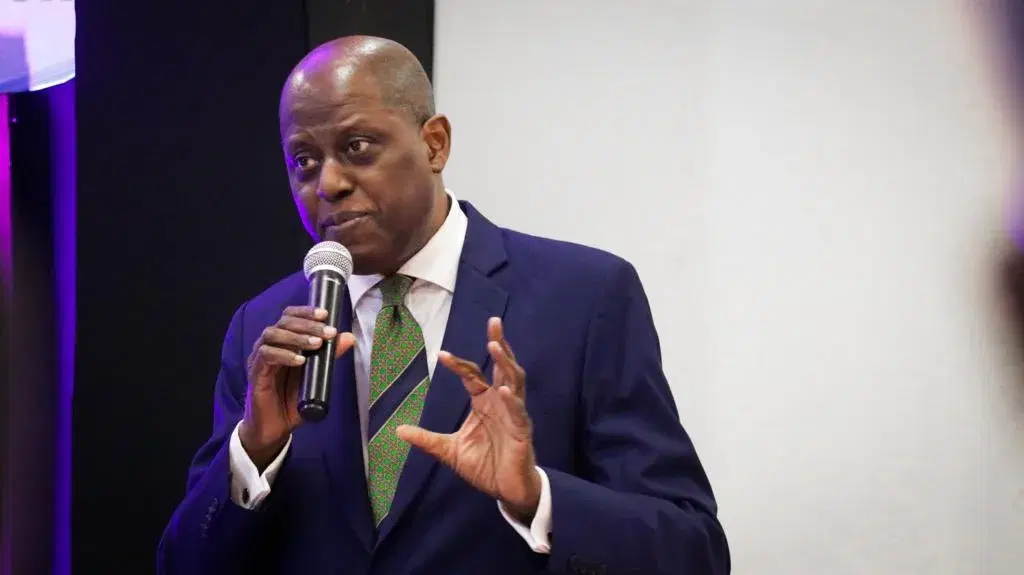
Cardoso living up to his promise 1
By Dele sobowale
CBN Governor Yemi Cardoso, during his confirmation hearing, September 2023.
Thank God, there is one silver lining in a predominantly dark sky over Nigeria. The current Governor of the Central Bank of Nigeria, CBN, has returned the institution to its former glory. Four Governors have managed the affairs of the bank, before him, since 1999 – Joseph Sanusi, 1999-2004, Charles Soludo 2004-2009, Sanusi Lamido, 2009-2014 and Godwin Emefiele, 2014-2023. The two Sanusis, Joseph and Lamido, were thorough bred professionals. To them managing monetary policy was a sacred duty to be discharged with intelligence and integrity. There was no compromise with the Presidents they served to subvert policy. That mostly explained why they did not last longer.
Two other former Governors, Soludo and Emefiele, left the CBN and the Nigerian economy a lot worse than they found them. Nigeria is still reeling from the impacts of their individual and collective stewardship. Emefiele was reserved but Soludo was garrulous, media-focussed, hyperbolic and complacent. As the Greatest, Mohammed Ali…. had warned us: “the bigger they come, the harder they fall.” He was unraveled in just three years; after hoodwinking everybody including those who gave him Banker of the Year Award; before the roof caved in on the consolidated banks he approved to operate in January 2006.
Because character is destiny, Soludo and Emefiele’s poor performance followed two different paths. Briefly stated, this is how they went from the sublime to the ridiculous.
SOLUDO: THREE SHOTS, THREE BLANKS“It is better sometimes not to follow great reformers …beyond the threshold of their homes.” George Eliot, 1819-1880, VANGUARD BOOK OF QUOTATIONS p 210.Soludo was a great reformer; at least on paper. And, most Nigerians trooped after him. Nigeria never had a CBN Governor who was photogenic, had stage presence and a baritone voice to complete the irresistible image – unless you remember to take your thinking cap along when he was on stage. Such obvious towering intelligence! Such captivating delivery of the messages intended to obtain approval without doubt.Professor Soludo took the nation by storm when President Obasanjo, starting his second term in 2003, first appointed the brilliant economist as Chief Economic Adviser, CEA. The ambitious former academic had other things in mind; other than the sterile CEA office. Within six months, he had produced a document titled NATIONAL ECONOMIC EMPOWERMENT AND DEVELOPMENT STRATEGY, NEEDS, which was supposed to last for four years – 2003 to 2007. It was voluminous, about 385 pages long, full of graphics, beautifully packaged and promising to deliver Gross Domestic Product, GDP, growth of 6% by 2004, 7% by 2005 and about ten per cent by 2007 during the first phase. The second phase promised to sustain the GDP growth rates which would propel Nigeria to a top 20 economy by the year 2020. Everybody was entranced; because few people, including Obasanjo, read the document carefully. I did, because VANGUARD paid me to read such things before writing my columns. My verdict, which was a minority view, was simple. “It is a salad bowl of illusions, long on theory, short on practical experience and it will never be implemented.” It was never implemented. Tucked in the mountain of questionable assumptions and data was one recommendation; from which Soludo would profit immensely. There were about 73, admittedly, under-capitalised banks operating in Nigeria. They should be reduced and strengthened.“It ain’t the things that you don’t know that cause the problem; it’s the things that you think you know that ain’t so. “ Ralph Waldo Emerson, 1803-1882, VBQ p 117.To become a top 20 economy, the nation required a few strong banks; and Prof alone knew exactly how that could be done. Obasanjo must have been persuaded. Out went Joseph Sanusi, a professional but conservative banker; in came Professor Soludo, economist, with no experience in banking whatsoever. He immediately proceeded to lecture the bankers about banking. Minimum share capital was raised to N25 billion to operate a bank in Nigeria; and seven months were the deadline to comply. All CBN Governors, even in democratic Nigeria, are dictators, invested with near absolute powers and immunity from the consequences the exercise of power induces. Attempts to get Soludo to extend the time were derisively dismissed. The suggestion to create two or three categories of banks – those with N25 billion and those with less – were rejected with contempt. Thus began the race for the greatest capital acquisition in Nigerian history. Winners were announced in January 2006; and a self-congratulatory Governor announced to Nigerians that “Nigerians can now keep their money in banks and go to sleep with their two eyes closed”. For two years, 2006 and 2007, consolidation appeared like the work of a genius. Soludo collected every banking award available globally – until the banking crisis of 2008 which caught the world by surprise. Those of us who had misgivings about the unsafe speed of consolidation were the first to raise alarms about Nigerian banks. Soludo responded with assurances that Nigerian banks were insulated from the global contagion. It was false and the repercussions were soon felt nationwide. By August 2008, sleeping with two eyes closed turned to nightmares for shareholders and depositors. Consolidation was crumbling faster than the CBN could rescue the banks – which had all been mismanaged in various ways.By early 2009, Soludo, like a magician who lost his bag of tricks, was desperate to save his imperiled legacy. His tenure was drawing to a close; with failure staring at him in the mirror. He sought to be re-appointed by President Yar’Adua. Two inextricably linked measures were introduced – decimalization of currency and Financial System Strategy, FSS, 2020. The first initiative, aimed at controlling galloping inflation, entailed reducing the face value of existing currency notes, N1000, N500, N200 and N100 would change to N100, N50, N20 and N10 respectively. All other currencies were to be coined and also decimated appropriately. The new notes and coins were already ordered and were being actively promoted before someone remembered to seek the President’s permission for all the changes involved. One change, which ultimately torpedoed the scheme, and which was ignored in Soludo’s theories, was the status demotion Nigeria’s rich and wealthy people would suffer. Billionaires would become millionaires and millionaires would fall into “thousandnaires” (I just made that up). A volcanic eruption followed – for which the Governor was ill-prepared. The idea fell flat.Resourcefulness, at least in coming up with novel schemes, was one of Soludo’s strongest attributes. Led by the Minister of Finance, Dr Shamsudeen Usman, a few die-hard economists, had revived the moribund VISION 2020; promising to propel Nigeria to the top 20 rank. Seeking their support, Soludo launched the Financial System Strategy, FSS, 2020, which would make Nigeria the financial hub by 2020; when Nigeria would have become top 20. History would record that none of the dreams turned to reality. Soludo was removed in 2009 and Sanusi Lamido inherited a monumental mess. LAMIDO INHERITS BANKING SECTOR ON BRINK OF COLLAPSE..To be continued …Follow me on Facebook @ J Israel BiolaThe post Cardoso living up to his promise 1 appeared first on Vanguard News.
-

‘We are not safe’ – Experts warn of earthquake threat in Nigeria
The Nigerian Institution of Structural Engineers has raised concerns over Nigeria’s susceptibility to earthquake-related damage, identifying major cities such as Lagos, Ibadan, Abeokuta, and Benin City as potentially at risk.
A former president of the institution, Olushola Sanni, issued the warning, noting that a significant number of buildings across the country were constructed without adequate engineering oversight or consideration for seismic forces.
He referenced recent global incidents to highlight how earthquake vibrations can travel vast distances, sometimes hundreds of kilometres, leading to damage and widespread panic even in areas far from the epicentre.
Sanni explained that although Nigeria is generally classified as a low seismic-risk zone, it is not entirely immune to earth tremors. He warned that the absence of major earthquakes in recent years should not create complacency.
According to him, most structures in the country are not designed to withstand seismic activity, thereby exposing residents to potential danger.
To address this gap, he disclosed that the institution is set to introduce new guidelines for earthquake-resistant building design in Lagos on April 16, 2026.
The framework, he said, is intended to align Nigeria’s construction practices with global safety standards.
“Earthquakes do not recognise geographical boundaries, and distance from the source does not guarantee protection. The lack of recent seismic events should not give a false sense of security,” Sanni stated.
He also pointed out that neighbouring Ghana has experienced several earthquakes, particularly around Accra, stressing that geological formations along the West African coastline cut across national borders.
This, he explained, suggests that seismic energy from that region could extend into parts of southwestern Nigeria.
Sanni further warned that cities situated on soft soil formations, including Lagos, Ibadan, Abeokuta, and Benin City, could experience intensified ground shaking if seismic waves reach them.
He therefore called for the adoption of earthquake-resistant construction practices, urging stakeholders to prioritise structural safety in building design.
According to him, the proposed guidelines will provide simplified procedures for engineers while promoting international best practices. He added that safer structures should incorporate balanced designs, strong structural connections, and adequate reinforcement detailing.
‘We are not safe’ – Experts warn of earthquake threat in Nigeria
-
UBA equips over 700 young professionals under Graduate Programme
By Babajide Komolafe
United Bank for Africa (UBA) Plc has reinforced its commitment towards tackling youth unemployment across the continent with the successful employment of over 700 young professionals under its Graduate Management Acceleration Programme (GMAP).
Since inception, the bank’s GMAP initiative has empowered more than 5,000 young graduates across Africa, providing them with world-class training, hands-on experience, and a platform to thrive in the financial services industry.
While welcoming and addressing the fresh intake yesterday in Lagos, UBA’s Group Chairman, Tony Elumelu, reiterated the importance of ambition, discipline, and institutional pride, describing the gathering as living proof that Africa’s future belongs to its youth.
“I am so happy to see smiling, young faces. You know, they say the future of Africa belongs to our youth, and as I see all of you, I see that in action. Welcome to UBA Group. Congratulations on being part of our family,” he stated.
Elumelu challenged the graduates, to take personal ownership of their performance and to exhibit the discipline that distinguishes great institutions from average ones.
“Selecting the right people, training them, developing them, nurturing them, and getting them to align with the vision is not easy. But it is critical for sustained success. What we must do is institutionalise our approach, to build an organisation that can deliver and create systems that endure, so that perpetuity is achieved,” Elumelu said.
The milestone induction, which welcomed Cohorts 19 and 20 into the bank’s dynamic workforce, underscores the bank’s strategic focus on nurturing Africa’s next generation of high-performing talent equipped to drive innovation and sustainable growth.
Group Managing Director/CEO, Oliver Alawuba, who went down memory lane, took the youth on his personal journey from a young professional to Group CEO, and reminded the graduates that the path from entry-level to leadership is not reserved for a privileged few.
“Our young Africans are equipped to drive Africa into excellence. Your current role is not your final destination. If we could rise, you can rise too, because the journey is not reserved for a special class of people. It is reserved for people who decide to grow and then do the work,” he said.
Alawuba anchored his address in UBA’s corporate ethos, the 3Es of Excellence, Enterprise, and Execution, and the SRG persona of Simplicity, Responsiveness, and Goal-orientation, challenging each new hire to make these values visible in their daily conduct.
With the new cohort of 720 trainees, 435 of whom are women and account for over 60% of the intake, this stands as a powerful testament to the bank’s unwavering commitment towards women’s empowerment.
The post UBA equips over 700 young professionals under Graduate Programme appeared first on Vanguard News.
-
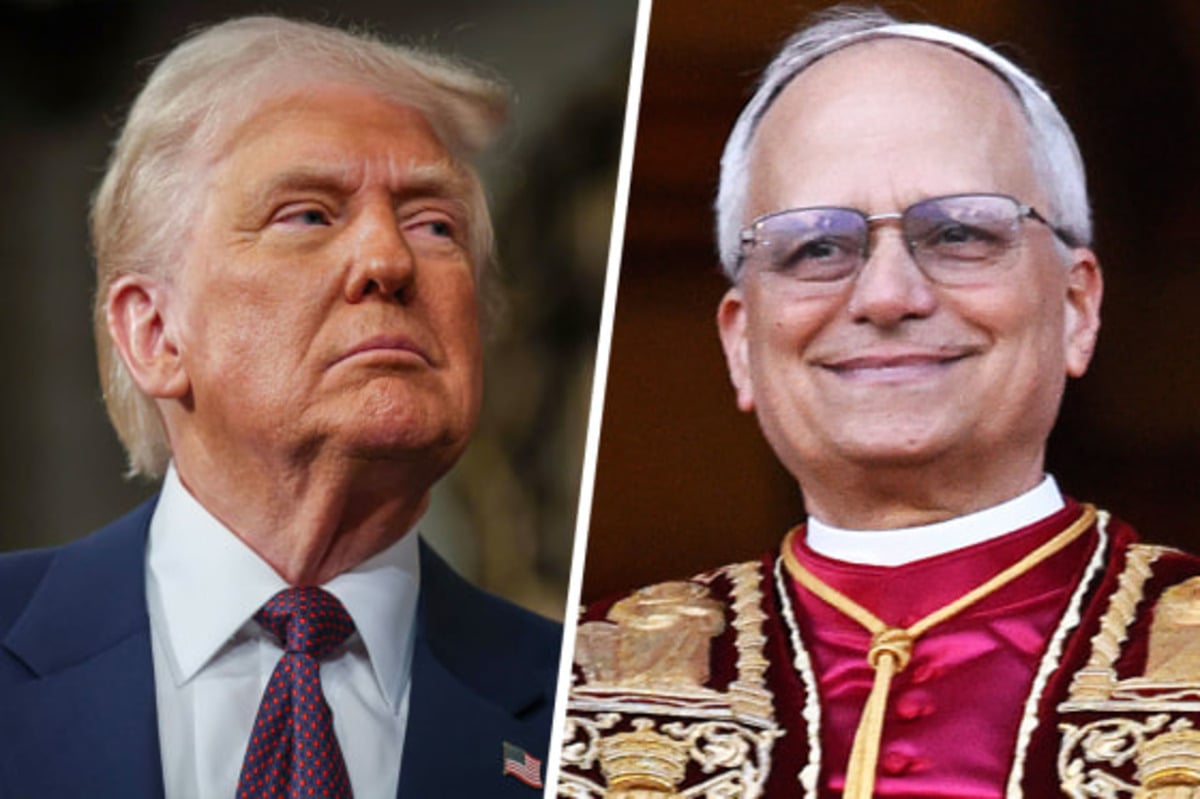
Why I’m not a big fan of Pope Leo — Trump
US President Donald Trump has openly criticised Pope Leo XIV, saying he is “not a big fan” of
-

Sugar Production: FG tasks Dangote Group on 600,000MT target by 2030
The Minister of State for Industry, Senator John Owan Enoh, has tasked the management of the Dangote Group of Companies on the need to expand the annual production capacity of its subsidiary, the Dangote Sugar Refinery (DSR), to 600,000 metric tonnes by the year 2030.
The Minister, accompanied by the Executive Secretary of the National Sugar Development Council (NSDC), Mr. Kamar Bakrin, gave the charge when he visited the DSR Complex in Numan, Adamawa state.
The visit was part of the ongoing strategic inspection of sugar projects across the country in line with President Bola Ahmed Tinubu’s directive to concerned officials for the acceleration of Nigeria’s attainment of self-suûciency in sugar production.
The Minister noted that the current local sugar production is a far cry from the 1.8m metric tonnes that the country consumes annually, adding that as a leader in the sector, the DSR must contribute at least 600,000 metric tonnes in the year 2030 and sustain it.
“DSR is a very big player in the industry, one of the three major operators. Our circumstances in this sector will continue to depend on what DSR does. It is very important. I mean since coming to this ministry, I found the NSDC Executive Secretary to be hardworking and passionate about sugar sector development. I have seen the commitment he has demonstrated. But that is the much he can give, he needs to get the cooperation of everyone to make sure that we achieve the laudable goals of the Nigeria Sugar Master Plan (NSMP).
“I have lost count of the number of times Mr. President has talked about developments in the sugar industry in Federal Executive Council (FEC) meetings and other sessions,” he said, adding that the 600,000 MT target must be delivered by DSR before 2031.
While commending the NSDC for the great job it has done in motivating and monitoring the operators, the Minister noted that the scale of infrastructure, level of investment, and degree of project advancement – especially at the new 6000 TCD plant – observed at DSR reflect a tangible commitment to the objectives of the Backward Integration Programme (BIP).
He equally commended the DSR team for the commitment to improving recent performances, adding that the federal government is willing to work with them to eradicate all obstacles to increased local sugar production in the country.
“I am indeed very happy with what I have seen today but scaling up production to be able to meet Mr. President’s expectations is very important. My final comment would be to encourage you, just to let you know that my visit here is to show the government’s continuous seriousness and how important the government looks at our ability as a country to be self-sufficient in sugar production,” the Minister said.
Also speaking, the Vice President of the Dangote Group, Mr. Olakunle Alake, assured the Minister of the company’s renewed commitment to invest more resources and scale up its production capacity, promising that the 600,000 MT target will be met in the year 2030.
The post Sugar Production: FG tasks Dangote Group on 600,000MT target by 2030 appeared first on Vanguard News.
-

Bauchi: Retired permanent secretary, Dankama, emerges ADC state chairman
The African Democratic Congress (ADC) has conducted its state congress in Bauchi, electing a state executive committee. A retired Parliamentary Secretary in the Bauchi State Civil Service, Alhaji Shu’aibu Abdullahi Dankama, has emerged as the State Chairman of the opposition African Democratic Congress (ADC) in Bauchi State. He, alongside 30 others, emerged during the party’s […]
-

Experts express concern as housing crisis deepens
Nigeria’s housing crisis is worsening as rental costs continue to surge across major cities, with experts attributing the trend to deep-rooted structural and macroeconomic challenges rather than arbitrary decisions by landlords. Recent data indicate that rents have risen by between 50 and 200 percent in the past two years, with some locations in Lagos, Abuja […]
-
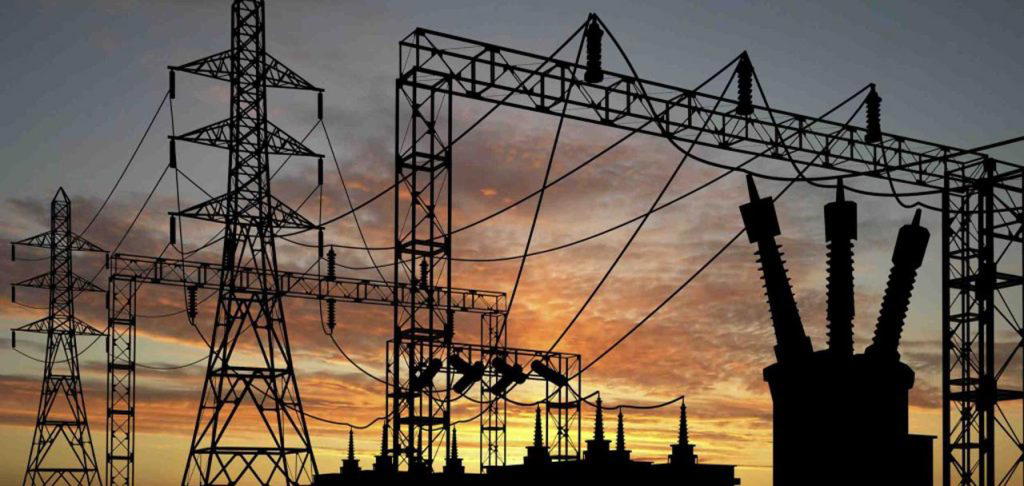
Electricity: FG sets up committee to tackle gas to power challenge
By Obas Esiedesa
The Federal Government has inaugurated a Gas-to-Power Monitoring Committee to address persistent gas supply challenges affecting electricity generation in the country.
Speaking at the inauguration in Abuja, the Minister of Power, Chief Adebayo Adelabu, described the initiative as a decisive step towards resolving one of the most critical constraints in the Nigerian Electricity Supply Industry (NESI).
In January, gas companies significantly reduced the volume of gas supplied to power generation companies over $1.3 billion debt which led to drastic drop in power generation to the national grid.
Adelabu, according to a statement by his media aide, Bolaji Tunji, noted that gas-fired power plants account for about 80 per cent of Nigeria’s electricity generation, but continue to face setbacks due to supply disruptions, pipeline vandalism, mounting debts to gas producers, and weak coordination across the value chain.
He said the move underscores the Federal Government’s determination to end the longstanding issues limiting generation capacity and undermining reliable electricity supply.
According to him, the committee was constituted following deliberations at the first quarter 2026 Ministerial Power Sector Working Group meeting, where key challenges such as infrastructure gaps, liquidity constraints, and pricing issues were identified.
The minister explained that the committee would monitor and drive the resolution of critical bottlenecks, including the repair and maintenance of damaged gas pipelines, settlement of outstanding debts to suppliers, and other commercial and operational barriers affecting gas availability to power plants.
Adelabu charged members of the committee to go beyond routine oversight and provide proactive, data-driven recommendations, particularly on mechanisms to guarantee payment for gas supplies and ensure sustainability in the sector.
He stressed that the committee would be held accountable for measurable progress, with expectations for regular reporting, clear milestones, and timely escalation of issues requiring government intervention.
The minister expressed confidence in the committee’s ability to deliver, noting that its membership reflects a broad representation of stakeholders across the gas-to-power value chain. The committee comprises representatives from the Ministry of Power, Nigerian Independent System Operator (NISO), Transmission Company of Nigeria (TCN), Association of Generation Companies, Niger Delta Power Holding Company (NDPHC), Nigerian Gas Association, and consumer advocacy groups.
Earlier in his remarks, the Permanent Secretary in the Ministry of Power, Alhaji Mahmuda Mamman, represented by the Director of Distribution, said the inauguration aligns with the minister’s directive to urgently tackle challenges affecting gas supply to the power sector.
He identified infrastructure deficits, pipeline vandalism, liquidity constraints, and coordination gaps as major issues hindering electricity generation and impacting economic growth.
The post Electricity: FG sets up committee to tackle gas to power challenge appeared first on Vanguard News.