Category: Uncategorized

  • ‘No warning’: Survivors say Nigerian air force bombed packed market

    ‘No warning’: Survivors say Nigerian air force bombed packed market

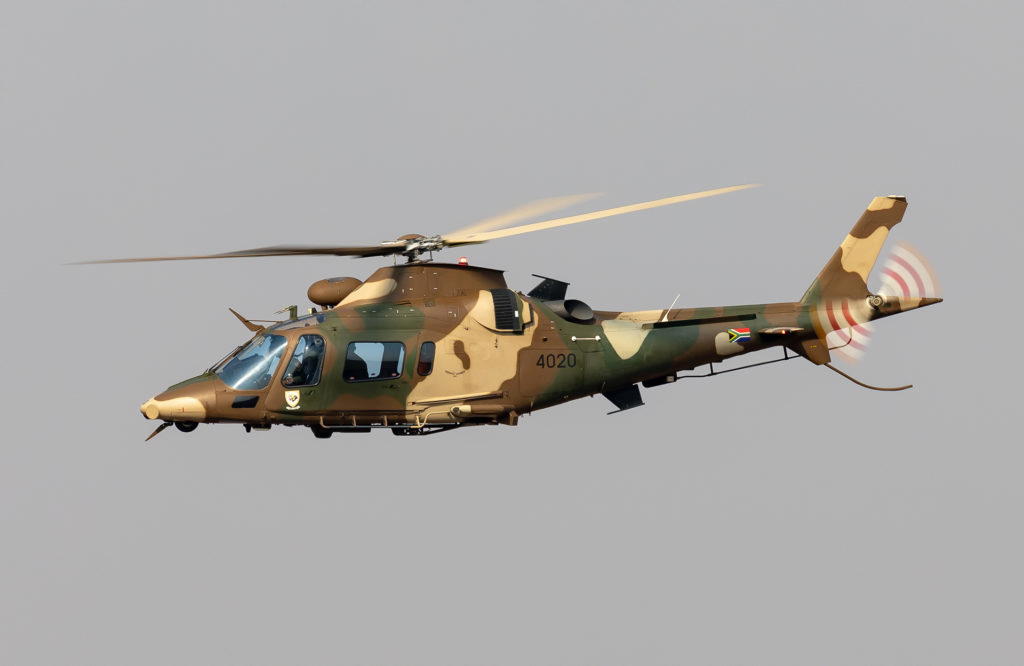
    The market was packed, like it was every Saturday, when the Nigerian air force jets screamed overhead.

    Soon after, swathes of trading stalls at a market in Jilli, a small town in Nigeria’s northeastern Yobe state, were reduced to ash, with incinerated bodies lying in the rubble, a video from the scene shared with AFP shows.

    Survivors, human rights groups and local officials say it is yet another massacre of civilians by the Nigerian air force.

    The Nigerian military said it targeted a “logistics hub” located “near the abandoned village of Jilli”, on the Borno-Yobe state border, targeting militants from Islamic State West Africa Province (ISWAP).

    But according to a conflict monitoring report prepared by the UN and seen by AFP, the strikes hit the Jilli market and “mistakenly killed at least 56 people,” with local chief Lawan Zanna Nur saying that the dead and injured together numbered “around 200”.

    “I don’t know if there were jihadists at the market. We are just ordinary people,” Mala Garba, 42, told AFP from a hospital in Borno state capital Maiduguri while recovering from bullet wounds.

    He was among the 46 victims from the town an AFP reporter saw at the hospital, some heavily bandaged, others with IV drips attached.

    The governor of Borno state, the epicentre of Nigeria’s 17-year-long jihadist insurgency, said the government shut the market down five years ago.

    But Yusuf Bagana, a tailor who survived the strike, said it was operating normally.

    He told AFP he “didn’t know” about any closure orders and “was just focusing on my daily activities” before the bombing knocked him unconscious.

    The “airstrike hit the entire Jilli town,” said Garba. “All of us were living in the town. There was no warning.”

    – Living under, among jihadists –

    During the peak of Nigeria’s insurgency, about a decade ago when ISWAP forerunner-turned-rival Boko Haram controlled swathes of territory, “some elders knew there were Boko Haram and informants around,” Garba said.

    More recently, he said, in 2023 the army conducted house-to-house searches in the village and arrested two people. But there had not been any major security incidents since then, he added.

    A security source told AFP that jihadists “control” and collect taxes from the market.

    Pictures released by the military showed trucks and motorcycles allegedly belonging to jihadists amid what appeared to be a crowded market — with one of the photos even labelled “market”. Photos then show the site destroyed by strikes.

    The Nigerian air force said it is investigating reports of civilian casualties.

    When civilians are killed by the military, they are often accused of “harbouring” jihadists, said Isa Sanusi, country director at Amnesty International Nigeria — an accusation that is often impossible to distinguish from simply living under jihadist control, as many Nigerians do across swathes of the northeastern countryside held by the militants.

    Lieutenant Colonel Sani Uba, spokesman for operations in the northeast, said that the strikes followed “sustained intelligence” and “a rigorous and professional targeting process”.

    The military also said the strike hit targets that were affiliated with the killing of a Nigerian brigadier general last week, the second killing of a high-ranking officer in five months.

    But Sanusi, who spoke to local residents and shared the video of the scorched market with AFP, said that militants simply being present did not justify the high civilian death toll.

    “If the market is entirely run by insurgents, that is a different story,” he told AFP. “But if the allegation is that insurgents used the market, that makes their claim very baseless.”

    – US says not involved –

    The United States, which has sent troops to the country to train the Nigerian military, including in target selection, was “not involved in the planning, intelligence sharing, or execution of this operation,” a US Africa Command spokesperson told AFP.

    Over the years, Nigerian airstrikes have repeatedly killed civilians, with Human Rights Watch warning after a deadly strike in January that “such deaths have become a recurring feature”.

    Issa Mammane, another man recovering in Maiduguri hospital, told AFP that “five members of my family were killed” in the strikes.

    Across Borno state, the violence has continued.

    On Sunday, about 150 kilometres away from Jilli, ISWAP militants struck the garrison town of Monguno, near Lake Chad.

    Ten soldiers, including a colonel, were killed, two anti-jihadist militia sources told AFP.

    The post ‘No warning’: Survivors say Nigerian air force bombed packed market appeared first on Vanguard News.
  • Strike: Judiciary workers accuse Abia govt of undermining judicial autonomy

    Strike: Judiciary workers accuse Abia govt of undermining judicial autonomy

    The members of the Judiciary Staff Union of Nigeria, JUSUN, Abia State chapter, have alleged that the state government is planning to compress the judiciary under the executive arm, insisting that their ongoing strike is to protect judicial autonomy.

    The judiciary workers also accused the Accountant General of Abia State, Njum Onyemenam, of allegedly withholding funds approved by Governor Alex Otti for the court session of former Chief Judge of the state, Justice Kalu Amah.

    Abia State Chairman of JUSUN, Chinedu Ezeh, stated this on Monday at the Umuahia High Court complex while responding to the Abia State Government’s earlier challenge to his union to provide details of their consolidated salary payment table.

    Ezeh, who said the Abia State Government failed to implement the contents of the June 14, 2023 agreement it entered into with JUSUN, advised the executive arm of the state government to allow the judiciary to enjoy autonomy as backed by the Nigerian Constitution.

    He said the ongoing strike by his members was approved by the national headquarters of JUSUN and was communicated to the Abia State Government before the industrial action began.

    Ezeh, who dismissed claims that his members are receiving leave allowance within their consolidated salary scheme, said that Level 5 Step 1 workers in the judiciary are paid N86,000 as monthly salary before tax, whereas other civil servants on the same level outside the judiciary receive a higher salary of N91,000 before tax.

    He further said that Abia judiciary workers are not afraid of verification but insisted that such exercise should be carried out by the judiciary itself as an independent arm, not by an Abia State Government-hired consultant.

    He lamented that the state government is withholding the March 2026 salaries of judiciary staff, claiming that the idea is to subject them to hunger and possibly force suspension of the strike.

    “They already have our salary table and therefore should not be asking us to provide the salary table,” he said.

    The Abia State JUSUN Chairman denied the state government’s accusations that the strike is affecting the verification of retired judiciary workers, arguing that the files of the retirees are already with the state government.

    Strike: Judiciary workers accuse Abia govt of undermining judicial autonomy

  • Iran War: FG Cuts Tariffs On Vehicles, Machinery To Ease Hardship

    Iran War: FG Cuts Tariffs On Vehicles, Machinery To Ease Hardship

    The Federal Government has approved sweeping reductions in import duties on electric vehicles, mass transit buses, and key manufacturing inputs, in a bid to cushion rising living costs and support economic activity amid global oil market volatility triggered by geopolitical tensions.

    The policy directive, approved by President Bola Ahmed Tinubu, forms part of a broader set of fiscal measures designed to mitigate the impact of the ongoing Middle East crisis on Nigeria’s economy, particularly as higher crude oil prices continue to drive up fuel and transportation costs.

    Details of the intervention were disclosed on Monday by Special Assistant to the President Dada Olusegun, on his X account, who said the tariff adjustments are aimed at easing inflationary pressures, improving affordability for consumers, and supporting local businesses.

    “President Tinubu’s administration has approved a massive reduction in import duties of selected products in order to further reduce inflation, empower local businesses and increase affordability for consumers,” Olusegun said.

    Under the new policy, import duties on electric vehicles (EVs) and mass transit buses have been reduced from five per cent to zero, a move expected to lower the cost of transportation and accelerate the adoption of cleaner mobility options. The government also eliminated the five per cent levy on manufacturing machinery, a step aimed at reducing production costs and stimulating industrial output.

    Further adjustments were made across several critical import categories. Duties on passenger vehicles were cut from 70 per cent to 40 per cent, while tariffs on bulk rice were reduced from 70 per cent to 47.5 per cent and broken rice from 70 per cent to 30 per cent. Raw cane sugar duties were lowered from 70 per cent to between 55 per cent and 57.5 per cent, and crude palm oil tariffs were reduced from 35 per cent to 28.75 per cent.

    In the industrial and construction sectors, import duties on steel sheets and coils were reduced from 45 per cent to 35 per cent, while tariffs on glazed ceramic tiles were cut from 55 per cent to 46.25 per cent, measures expected to ease costs across manufacturing and real estate value chains.

    The government has also introduced a 90-day transition period beginning April 1 to allow markets adjust gradually to the new tariff regime and prevent supply disruptions or pricing shocks.

    The policy response comes against the backdrop of heightened global uncertainty stemming from the ongoing Israel–US–Iran conflict, which has disrupted oil supply chains and driven volatility in energy markets. The crisis has significantly affected shipping routes around the Strait of Hormuz, a critical corridor responsible for roughly one-fifth of global crude oil flows.

    Since the onset of the conflict in late February, crude oil prices have experienced sharp swings, surging to as high as $120 per barrel amid supply concerns before retreating below $95 following a temporary ceasefire announcement on April 8. However, renewed tensions have reignited market fears.

    On April 12, U.S. President Donald Trump ordered a naval blockade of vessels entering or leaving the Strait of Hormuz after peace talks between the United States and Iran collapsed. The escalation pushed Brent crude prices above $102 per barrel, while West Texas Intermediate (WTI) climbed to $104.16 per barrel on April 13.

    Analysts say the surge in oil prices has heightened inflation risks globally, with Nigeria particularly exposed due to its reliance on imported refined petroleum products and vulnerability to exchange rate pressures.

    The latest tariff reductions signal a proactive fiscal approach by the Federal Government to counter imported inflation and sustain economic momentum. By lowering the cost of transportation, food imports, and industrial inputs, authorities aim to shield households and businesses from the ripple effects of global energy shocks.

    Market watchers note that the effectiveness of the measures will depend on implementation and broader macroeconomic conditions, including exchange rate stability and global commodity price trends.

    Nonetheless, the policy underscores the administration’s intent to deploy targeted fiscal tools to navigate an increasingly uncertain global environment while supporting domestic growth.

    Iran War: FG Cuts Tariffs On Vehicles, Machinery To Ease Hardship is first published on The Whistler Newspaper

  • Belgium: Onyedika nominated for Ebony Shoe award

    Belgium: Onyedika nominated for Ebony Shoe award

    Super Eagles midfielder Raphael Onyedika has been nominated for the Ebony Shoe Award in Belgium, DAILY POST reports.

    The award recognises the best African player or player of African descent in the Belgian Pro League.

    Union Saint-Gilloise forward Promise David, who is of Nigerian heritage, is also shortlisted for the prestigious award.

    The other nominees are Zakaria El Ouahdi (Racing Genk), Parfait Guiagon (Charleroi) and Adem Zorgane (Royale Union Saint-Gilloise).

    Onyedika has scored once in 25 league appearances for Club Brugge this season.

    His compatriot Tolu Arokodare won the award last season.

    Former Super Eagles striker Daniel Amokachi was the first recipient of the award in 1992.

    Belgium: Onyedika nominated for Ebony Shoe award

  • Iran President condemns ‘desecration’ of Jesus after Trump’s controversial post

    Iran President condemns ‘desecration’ of Jesus after Trump’s controversial post

    Iranian President Masoud Pezeshkian has condemned US President Donald Trump’s artificial intelligence-generated image depicting himself as Jesus Christ and extended a message of solidarity to Pope Leo XIV, whom Trump had separately described as “weak and terrible,”.

    Masoud said the desecration of Jesus was unacceptable to any free person.

    Pezeshkian made the statement in a post directed at the Pope on X on Monday.

    “Your Excellency Pope Leo XIV, on behalf of the great nation of Iran, I condemn the insult to Your Excellency and declare that the desecration of Jesus, peace be upon him, the Prophet of peace and brotherhood, is unacceptable to any free person. I wish glory for you from Allah,” Pezeshkian wrote.

    The Iranian president’s tweet came after Trump shared the AI-generated image on his Truth Social platform, in which the US president appears dressed in a robe, performing what resembles a healing act, surrounded by dazzling light and levitating figures resembling troops or angels.

    The Statue of Liberty and fireworks feature prominently in the background of the image.

    In a separate post, Trump turned his attention to Pope Leo XIV, labelling the pontiff as “weak on crime” and “terrible for foreign policy” following the Pope’s public call for an end to the escalating international hostilities involving the United States, Iran, and Israel.

    Trump’s depictions drew widespread reaction, with Pezeshkian’s response notable for its invocation of Islamic reverence for Jesus — who is regarded as a prophet in Islam — as the basis for his condemnation of what he described as the desecration of a shared religious figure.

    The post Iran President condemns ‘desecration’ of Jesus after Trump’s controversial post appeared first on Vanguard News.

  • NAICOM Union Protests, Issues 25-Point Demands Over Welfare, Promotions

    NAICOM Union Protests, Issues 25-Point Demands Over Welfare, Promotions

    The Association of Senior Civil Servants of Nigeria (ASCSN), National Insurance Commission (NAICOM) Unit, has staged a peaceful picketing exercise to protest what it described as unfair labour practices and persistent neglect of staff welfare by management.

    Speaking during the protest, the union chairman, Comrade Ibrahim Mustapha, accused the management of the National Insurance Commission (NAICOM) of failing to honour existing agreements and directives from the Minister of Labour, despite several rounds of discussions.

    He alleged that the refusal to implement agreed welfare and administrative reforms had eroded trust between staff and management, insisting that workers would continue to press for compliance with labour policies and fair treatment.

    The union presented a wide-ranging 25-point demand list covering issues such as promotion delays, alleged selective implementation of policies, staff transfers, training opportunities, and welfare packages.

    Key demands include the immediate promotion of eligible staff, fair and transparent recruitment and promotion processes, an end to what the union described as “vindictive transfers,” improved staff training opportunities, and equal application of workplace policies across all cadres.

    The union also raised concerns over alleged preferential treatment in allowances and car grants, calling for equal distribution in line with prevailing market rates. It further demanded the implementation of monetisation policies, proper investigation into internal administrative processes, and staff inclusion in key institutional exercises.

    Other issues highlighted include calls for improved working conditions in zonal offices, enhanced security at the headquarters following reported theft incidents, and payment of outstanding allowances and rent advances in line with conditions of service.

    The union urged management to return to the negotiation table to resolve the disputes amicably, warning that members would not back down until their demands were addressed.

    The protest reflects ongoing tensions between staff and management within the National Insurance Commission, as both parties are yet to reach a final resolution on the disputed issues.

    The commission earlier said that it has continued to implement measures to improve working conditions and strengthen internal processes since the current leadership assumed office.

    NAICOM has highlighted progress made in staff welfare, including training and capacity development, career growth opportunities, workplace improvements, and performance based advancement.

    The commission emphasized that the staff should utilize established internal communication and dispute resolution channels, noting that constructive engagement remains key to maintaining stability and public confidence.

    NAICOM Union Protests, Issues 25-Point Demands Over Welfare, Promotions is first published on The Whistler Newspaper

  • US vs Iran: I have no fear for Trump’s administration – Pope Leo XIV

    US vs Iran: I have no fear for Trump’s administration – Pope Leo XIV

    Pope Leo XIV has said that he is not afraid of the administration of the United States President Donald Trump.

    The pope said this on on Monday in response to criticism from Trump while he was traveling to Algeria.

    “I have no fear of the Trump administration, nor speaking out loudly about the message of the Gospel.

    “That’s what I believe in. I am called to do what the church is called to do,” he said.

    Recall that the pope on Saturday called for an end to conflict, without explicitly mentioning the US-Israeli war against Iran.

    Trump in a post on his Truth Social said on Sunday night that the pope was weak on crime, and terrible for foreign policy.

    US vs Iran: I have no fear for Trump’s administration – Pope Leo XIV

  • Inflation Data To Shape CBN Policy Amid Oil, Geopolitical Risks – Expert

    Inflation Data To Shape CBN Policy Amid Oil, Geopolitical Risks – Expert

    Nigeria’s monetary policy outlook is set to hinge on upcoming inflation data, as rising global oil prices and escalating geopolitical tensions complicate the path forward for the Central Bank of Nigeria (CBN), according to Head of Market Research at FXTM, Mr Lukman Otunuga.

    Nigeria’s Consumer Price Index (CPI) for March, due this week, is expected to show a moderation in inflation to 13.4 per cent year-on-year from 15.1 per cent in February.

    Otunuga said in a chat with THE WHISTLER that sustained signs of easing price pressures could provide the CBN with room to consider loosening monetary policy, even as external risks continue to mount.

    “The direction of inflation will be critical in shaping the CBN’s next move,” Otunuga said. “While domestic price pressures appear to be cooling, global developments, particularly in oil markets and geopolitics, are creating a more complex backdrop for policymakers.”

    Nigeria’s currency has remained relatively resilient in recent months, with the naira ranking as the second-best performing currency in Africa against the US dollar on a year-to-date basis, trailing only the Zambian kwacha. However, this stability has come at a cost.

    Nigeria’s foreign exchange reserves have declined for 16 consecutive days through April 8, falling to $48.94bn, the lowest level since mid-February. The drawdown reflects sustained interventions by the Central Bank of Nigeria to support the naira amid heightened volatility triggered by global risk aversion.

    The external environment has become increasingly uncertain following the breakdown of high-level talks between the United States and Iran over the weekend.

    Despite nearly 21 hours of negotiations, both sides failed to reach agreement on key issues, including Iran’s nuclear programme and control of the strategic Strait of Hormuz.

    Tensions escalated further after former US President Donald Trump threatened to impose a blockade on the Strait, a critical artery for global oil shipments. Iran has also pushed back against US restrictions, raising concerns over potential disruptions to supply and broader regional instability.

    Markets reacted swiftly to the developments. Global equities came under pressure as investors shifted toward safer assets, while oil prices surged sharply on fears of supply shocks. Brent crude rose as much as 9 per cent to around $104 per barrel, with analysts warning that prolonged disruptions could sustain prices at elevated levels.

    “The risk premium in oil has risen significantly,” Otunuga noted. “If tensions deepen, triple-digit oil prices could become the norm, with implications for global inflation and growth.”

    The effective closure of the Strait of Hormuz since late February has further amplified concerns about supply constraints, adding to inflationary pressures worldwide and complicating the policy outlook for central banks, including Nigeria’s.

    For the CBN, the interplay between domestic disinflation and external shocks presents a policy dilemma. While softer inflation could justify a rate cut to support growth, higher oil prices and global uncertainty may fuel imported inflation and capital outflows, limiting the scope for easing.

    In the commodities market, gold prices have also reflected shifting expectations. Although the precious metal briefly rebounded above $4,700, it remains under pressure from a stronger US dollar and rising inflation expectations, which have dampened prospects for lower global interest rates in 2026.

    Otunuga emphasized that the coming days will be pivotal, with Nigeria’s inflation data likely to set the tone for monetary policy decisions, even as global developments continue to test economic stability.

    “The CBN is navigating a delicate balance,” he said. “Inflation may be easing, but the risks from oil and geopolitics mean policymakers will need to proceed with caution.”

    Inflation Data To Shape CBN Policy Amid Oil, Geopolitical Risks – Expert is first published on The Whistler Newspaper

  • BREAKING: War on terror: Tinubu meets security chiefs

    BREAKING: War on terror: Tinubu meets security chiefs

    President Bola Tinubu is currently holding a security meeting with service chiefs, intelligence heads and the Inspector-General of Police.

    The meeting is taking place at the Presidential Villa in Abuja.

    The meeting is coming amid the escalation of attacks on military formations in parts of the country by terrorists.

    Present at the closed-door meeting include the Chief of Defence Staff, National Security Adviser, chiefs of the Army, Navy, and Air Staff, the Director-General of the Department of State Services, the Director-General of the National Intelligence Agency, and the Inspector-General of Police.

    At the time of filing this report, details of the meeting are yet to be ascertained

    BREAKING: War on terror: Tinubu meets security chiefs

  • Giving To God Doesn’t Make You Rich, Says Pastor Damina

    Giving To God Doesn’t Make You Rich, Says Pastor Damina

    Pastor Abel Damina, founder of Power City International Church, has criticised the doctrine of tithing as a pathway to wealth.

    According to him, no scripture in the Bible guarantees riches in exchange for giving to God.

    In a trending social media post on Monday, seen by THE WHISTLER, Damina described tithing as a dangerous and unscriptural mindset that had been deliberately cultivated in Nigerian churches.

    He said that the conditions lead worshippers to believe financial prosperity is tied to how much they give to their pastors and institutions.

    “There’s no scripture in the Bible that says when you give to God, you’ll be a rich person. There’s no such scripture. Nobody prospers by giving, when you give, you lack, because when you give, it leaves you and there’s vacuum. Then you have to work again and give it time to recover what you gave, and sometimes you never recover it,” he said.

    The pastor further recounted the story of a man he encountered who had donated all three of his cars to his church on the promise of divine financial reward, only to be left with nothing.

    “Somebody told me he gave to his church all his three cars and he has been trekking since then till when I met him. He said, he was thinking of going back to collect one, what do I think? I said, I think so too. Because if you gave three and is only one that you want to collect out of the three, you try. You’re never asking for the three,” Damina said.

    He further stated that the young man gave out his three cars because he was told that he will be instantly rich if he gives out his car, he then decided to give out the three and to get richer.

    The clergyman, who has in recent years become known for his unorthodox theological positions, said the widespread belief that tithing produces billionaires was not supported by evidence, insisting that wealth is a product of education, labour, and enterprise, not religious offerings.

    “I never saw anybody who, because he tithed, became a billionaire. Even those who said they became billionaires because they tithed, it’s because they don’t know. It’s because they had jobs and businesses. That’s why they became billionaires. Not because they tithed,” he stated.

    Damina insisted that God’s blessings are not transactional and that the responsibility of man is to position himself through knowledge and hard work to access what has already been provided.

    “The reason why people can excavate the ground and meet oil wells is because God put the deposit. The reason why we can get to the rocks in Nigeria, go to the gold belt that travels right through Minna, Niger and right to Plateau, all those rocks, explore, break the ground and meet diamonds, golds, sapphires and tourmaline is because God put them there,” he said.

    “So because God has blessed the planet, all we need to do is go to school, learn what to do to get into what has been blessed and turn it into commercial property. Is no more God’s work to go school for us, we go to school, we go to market, we engage to make money, God has already blessed the land,” Damina emphasised.

    VIDEO:

    Giving To God Doesn’t Make You Rich, Says Pastor Damina is first published on The Whistler Newspaper