Category: Uncategorized

  • BPP Moves Against Defiant Officers, Orders Recall

    BPP Moves Against Defiant Officers, Orders Recall

    The Bureau of Public Procurement (BPP) has taken decisive administrative action against officers on the Directorate Cadre, SGL 15-17, who failed to comply with recent deployment directives for Procurement Officers.

    Following an earlier query issued to the affected officers, the Director General of the Bureau of Public Procurement, Dr Adebowale Adedokun, has directed that all non-compliant officers return to the Bureau Headquarters with immediate effect to await further administrative sanctions.

    In the meantime, the most senior Procurement Officers in the affected Ministries, Departments, and Agencies (MDAs) have been instructed to assume responsibility for overall procurement activities within their respective departments to ensure uninterrupted service delivery.

    According to a statement issued by BPP’s Head of Press and Public Relations,
    Zira Zakka Nagga, the measure was taken to enforce strict compliance with the posting instructions.

    “This measure is taken to enforce strict compliance with posting instructions and to uphold discipline and professional ethics within the procurement cadre.

    “The BPP maintains that a procurement system is only as strong as the professionalism and integrity of the officers who operate it.

    “The Bureau reiterates its commitment to building a competent, ethical, and globally competitive procurement workforce in line with the objectives of the National Procurement Certification Programme and SPESSE Centres of Excellence. Non-compliance with official postings undermines career progression, accountability, and the standardised practice required for complex procurements”, the statement stated.

    The statement quoted the BPP’s DG as emphasising that deployment of officers is a strategic tool for capacity distribution, knowledge transfer, and prevention of collusion.

    “Willful disregard of posting directives will not be tolerated, as it compromises transparency, efficiency, and value for money in public expenditures”, he said.

    He urges all Procurement Officers to adhere strictly to extant rules and directives governing the cadre.

    “The Bureau will continue to monitor compliance and apply necessary sanctions to safeguard the integrity of Nigeria’s public procurement system”, the DG stated.

    BPP Moves Against Defiant Officers, Orders Recall is first published on The Whistler Newspaper

  • Subsidise Production To Curb Inflation, Experts Urge FG

    Subsidise Production To Curb Inflation, Experts Urge FG

    Economic and agricultural experts have urged the Federal Government to subsidise production to boost output and cushion inflationary pressures in the economy.

    The experts made the call in separate interviews with the News Agency of Nigeria on Wednesday in Lagos.

    Dr Femi Oke, Secretary-General of the All Farmers Association of Nigeria, said increased government intervention in agriculture would help moderate rising food prices.
    He noted that the sharp increase in the cost of farm inputs and equipment was discouraging production.

    “The cost of agricultural inputs has risen significantly. Items that previously sold for about N5,000 now go for as high as N45,000.
    “This increase is undermining affordable food production and discouraging farmers,” Oke said.
    He added that rising fuel costs were further driving up food prices and urged the government to engage farmers’ associations before introducing new import policies.
    According to him, such consultations would help protect farmers who have accessed credit facilities for expansion.

    Also, Dr Ayo Teriba, Chief Executive Officer of Economic Associates, said the current inflation rate was moderate, given prevailing global conditions.

    He said the impact of recent geopolitical tensions had been limited, noting that the nation’s domestic refining capacity had helped cushion potential shocks.
    Teriba, however, ruled out the reintroduction of fuel subsidies, describing current economic challenges as temporary.
    He recommended targeted support measures, such as conditional cash transfers, to cushion the impact on vulnerable groups.

    Similarly, Dr Muda Yusuf, Chief Executive Officer of the Centre for the Promotion of Private Enterprise (CPPE), said inflation in Nigeria was largely driven by production and logistics costs.
    Yusuf called for sustained investment in transportation infrastructure, particularly rail systems, to reduce the cost of moving goods across the country.

    He also urged the government to address insecurity in farming communities and improve infrastructure such as storage facilities and road networks to reduce post-harvest losses.
    According to him, these measures are critical to boosting food production and stabilising prices.
    The News Agency of Nigeria (NAN) reports that Nigeria’s inflation rate rose to 15.38 per cent in March 2026 from 15.06 per cent in February, ending an 11-month disinflation trend.
    Data from the National Bureau of Statistics showed that food inflation increased to 14.31 per cent in March from 12.12 per cent recorded in February.

    However, on a year-on-year basis, food inflation declined from 25.22 per cent in March 2025 to 14.31 per cent in March 2026.

    Subsidise Production To Curb Inflation, Experts Urge FG is first published on The Whistler Newspaper

  • Nigeria Targets 3.7GW Solar Capacity To Lead W’Africa

    Nigeria Targets 3.7GW Solar Capacity To Lead W’Africa

    Nigeria has increased its domestic solar panel manufacturing capacity to 300 megawatts (MW) from 120 megawatts two years ago.

    Dr Abba Aliyu, the Managing Director of the Rural Electrification Agency (REA) , made this known during a Webinar, organised by the African Association of Energy Journalists and Publishers (AJERAP) on Wednesday in Lagos.

    He said that the agency is targeting a total of 3.7 gigawatts (GW) in the pipeline, aiming to establish itself as the renewable energy hub for West Africa.

    Aliyu said that Mozambique, Benin, Niger are among nations adopting REA power access model.

    He noted that the growth is driven by deliberate government policies under President Bola Tinubu aimed at creating an enabling environment for private sector investment.

    “We have moved from about 120 megawatts of local manufacturing capacity to roughly 300 megawatts today, with 3.7GW in the pipeline.

    “This is based on a deliberate strategy to build investor confidence and attract private capital into the sector,” he said.

    He added that Nigeria recorded about 425 million dollars in investments in 2025 for the establishment of eight renewable energy manufacturing facilities.

    According to him, locally manufactured solar panels are now being exported from Lagos to Accra, Ghana, signalling Nigeria’s emergence as a regional manufacturing hub.

    “For the first time, Nigeria is producing solar panels locally, and they are already being exported.

    “This shows the direction we are heading and the leadership role Nigeria can play in West Africa,” Aliyu said.

    The REA MD emphasised that the Nigerian Electricity Regulatory Commission’s 2026 Mini-Grid Regulations, which increase the allowable capacity for interconnected mini-grids to 10MW, have significantly boosted investor confidence and rank among the most effective regulatory frameworks in Africa.

    He noted that recent policy changes have increased allowable mini-grid capacity from 1MW to 5MW, and up to 10MW for interconnected systems—opening the door for larger-scale renewable projects.

    According to him, the regulations clearly define how mini-grids interact with the main grid, simplify licensing, and streamline environmental and social impact assessments.

    Aliyu further noted that the expansion in mini-grid capacity could enable cross-border electricity trade, especially in border communities.

    “If we deploy large solar farms in border towns, we can sell electricity across countries and deepen regional integration,” he said.

    Highlighting the role of the West African Power Pool in integrating on-grid systems across the sub-region, Aliyu called for the development of a complementary off-grid electricity market to drive broader energy access across Africa.

    “We may not need to fully integrate national grids immediately, but we can build an integrated off-grid market across border communities,” he added.

    According to Aliyu, Nigeria’s electricity access model is increasingly being adopted across Africa, with several countries seeking to replicate its approach.

    “Countries like Mozambique, Benin Republic, Burkina Faso, Niger, Chad, Mauritania, and Mauritius are engaging with us to understand our framework,” he said.

    He emphasised that regional electricity access initiatives will be critical for improving energy security and expanding access across the continent.

    Aliyu described Nigeria’s Distributed Access through Renewable Energy Scale-Up (DARES) programme as the largest publicly funded renewable energy access initiative globally.

    The programme aims to provide electricity to 17.5 million Nigerians by connecting over 2.5 million households and deploying 1,350 mini-grids, including 250 interconnected systems.

    “The project is designed around the private sector using a results-based financing model. Developers must mobilise their own capital before accessing incentives,” he said.

    He added that the $750 million funding is expected to catalyse an additional 1.1 billion dollars in private sector investment.

    “We are already seeing strong traction. Financial institutions and development partners are committing funds, demonstrating confidence in the model,” Aliyu noted.

    He cited financing partnerships involving institutions such as Citibank Nigeria, Lotus Bank, and the International Finance Corporation, alongside support from development finance and impact investment organisations.

    “The structure of this programme has unlocked significant private financing and is setting a benchmark for renewable energy deployment across the region,” he said.

    Nigeria Targets 3.7GW Solar Capacity To Lead W’Africa is first published on The Whistler Newspaper

  • BREAKING: Supreme Court reserves judgment in ADC leadership crisis

    BREAKING: Supreme Court reserves judgment in ADC leadership crisis

    The Supreme Court of Nigeria on Wednesday reserved judgment in an appeal filed by David Mark, challenging the

    The post BREAKING: Supreme Court reserves judgment in ADC leadership crisis appeared first on Tribune Online.

  • Alleged false information: PDP’s Turaki docked, granted N100m bail

    Alleged false information: PDP’s Turaki docked, granted N100m bail

    A factional national chairman of the opposition Peoples Democratic Party (PDP), Senator Tanimu Turaki, SAN, was on Tuesday admitted to bail of ₦100 million following…

    The post Alleged false information: PDP’s Turaki docked, granted N100m bail appeared first on Tribune Online.

  • Anambra Govt, Flutterwave partner on digital economy expansion

    Anambra Govt, Flutterwave partner on digital economy expansion

    The Anambra State Government has deepened efforts to expand its digital economy framework through a new partnership with payments technology company, Flutterwave, aimed at scaling e-commerce activities, strengthening digital payments, and broadening market access for businesses across the state.

    Governor Chukwuma Soludo, in a statement on April 22, 2026, described the collaboration as a strategic move to formalise and grow Anambra’s emerging e-commerce ecosystem, noting that the initiative is designed to unlock new opportunities for traders, artisans, and small business owners.

    According to him, the partnership is expected to connect local enterprises to wider national and global markets, enabling seamless transactions and improved digital participation for MSMEs operating across commercial hubs such as Onitsha, Nnewi, and Awka.

    He noted that Flutterwave, led by co-founder and Chief Executive Officer Gbenga ‘GB’ Agboola, has continued to distinguish itself as one of Africa’s most influential fintech innovators, building payment infrastructure that is widely used across continents and strengthening Africa’s position in global digital commerce.

    “Flutterwave has demonstrated how homegrown technology can solve real African challenges at scale. This collaboration is about empowering our people to transact, grow, and compete beyond borders,” the governor was quoted as saying.

    Furthermore, he explained that the initiative will focus on digitising payment systems for small businesses, integrating logistics with payment platforms, and onboarding more traders onto online marketplaces to improve efficiency and market reach.

    Meanwhile, Flutterwave has been globally known for driving significant transformation in Africa’s fintech space, particularly through its cross-border payment solutions that enable businesses to operate more competitively in the global digital economy.

    The governor added that the state government is committed to providing the enabling infrastructure for young entrepreneurs, stating that “government is laying the foundation so our youths can build and scale their ideas without barriers.”

    He also extended an invitation to members of the Anambra diaspora, encouraging them to tap into the state’s expanding digital opportunities and invest in its growing technology-driven economy.

    With the latest collaboration, Anambra State says it is positioning itself as a key digital commerce hub in Nigeria, leveraging innovation to connect local businesses to international markets “one transaction at a time.”

    Anambra Govt, Flutterwave partner on digital economy expansion

  • S/Court Reserves Judgment In ADC Leadership Dispute

    S/Court Reserves Judgment In ADC Leadership Dispute

    The Supreme Court on Wednesday reserved judgment in an appeal filed by David Mark, the National Chairman of the African Democratic Congress (ADC), against Nafiu Bala, a former deputy national chairman of the party.

    Justice Lawal Garba who led the five-member panel of Justices, made the announcement shortly after lawyers representing parties in the appeal adopted their processes as brief of their arguments, for and against the appeal.

    Garba said that the judgment would be delivered on a date to be communicated to all parties in the appeal.

    The ex-Senate President had asked the court to grant an order staying the execution of the court of appeal’s ruling delivered on March 12 that dismissed his appeal in relation to the ongoing leadership dispute in the party.

    A three-member panel of the Court of Appeal, led by Justice Uchechukwu Onyemenam had upheld the objection raised by Bala insisting that the appeal was incompetent and that it was based on issues not reflected in the ruling of the trial court.

    Mark had appealed a Sept. 4, 2025 ruling by Justice Emeka Nwite of the Federal High Court in Abuja that refused to grant some injunctive reliefs contained in an ex-parte application filed by Bala.

    The leadership crisis rocking ADC had left the party without a recognised national leadership.

    The dispute, which began as an internal transition disagreement in mid-2025, has now drawn in the courts and INEC, raising concerns over the ADC’s capacity to function as a viable opposition platform ahead of the 2027 general elections.

    INEC’s decision on April 1, to withdraw recognition from both the Mark- and Bala-led factions, citing a subsisting Court of Appeal order to maintain the status quo ante bellum, has left the party without an officially recognised leadership structure.

    The electoral body said it would not engage with any faction pending a final judicial determination, a position that could have far-reaching implications for the party’s participation in the 2027 polls.

    The Mark-led faction insists it emerged through due process, citing a series of National Executive Committee (NEC) decisions in 2025, including the July 29 ratification of a caretaker leadership.

    Relying on provisions of Article 13 of the ADC constitution, the group argues that the NEC is empowered to administer the party, implement convention decisions and establish interim structures where necessary.

    It also cites Articles 17(3) and 17(4) to justify the transition process, maintaining that vacancies were properly filled through the appropriate executive mechanisms.

    On eligibility, the faction contends that requirements such as the two-year membership rule under Article 9(4) were lawfully waived through NEC resolutions earlier in 2025 to accommodate coalition-building efforts.

    It further argues that its initial recognition by INEC in September 2025, alongside its conduct of congresses and the April 14, National Convention, affirms its legitimacy.

    S/Court Reserves Judgment In ADC Leadership Dispute is first published on The Whistler Newspaper

  • Four Kano Reps dump NNPP, join ADC

    Four Kano Reps dump NNPP, join ADC

    Defections have continued to rock the National Assembly as four members of the House of Representatives from Kano State, on Wednesday, dumped the New Nigeria Peoples Party (NNPP) for the African Democratic Congress (ADC).

    The Speaker of the House, Tajudeen Abbas, announced the defections during plenary after reading the formal letters submitted by the lawmakers.

    The lawmakers involved are Sani Wakili, representing Minjibir/Ungogo Federal Constituency, Muktar Zakari of Tarauni Federal Constituency, Umar Datti of Kura/Madobi/Garun Mallam Federal Constituency and Abdulhakeem Ado of Wudil/Garko Federal Constituency.

    It would be recalled that on Tuesday, the House witnessed another round of defections, with the Peoples Democratic Party (PDP) losing five members, while the All Progressives Congress (APC) also recorded the exit of two lawmakers.

    Four Kano Reps dump NNPP, join ADC

  • Iran Acknowledges Ceasefire Extension, Signals Reluctance Over Talks

    Iran Acknowledges Ceasefire Extension, Signals Reluctance Over Talks

    Iran has acknowledged the extension of a ceasefire with the United States but has signalled reluctance to send a delegation for further negotiations, raising uncertainty over the next phase of diplomatic efforts and leaving the fragile truce in question.

    President Donald Trump announced the extension on Tuesday, saying the truce would be prolonged to allow Iranian officials more time to present what he described as a “unified proposal” to end the conflict. The move came shortly before the ceasefire was due to expire and followed mediation efforts involving Pakistani Prime Minister Shehbaz Sharif and Field Marshal Asim Munir.

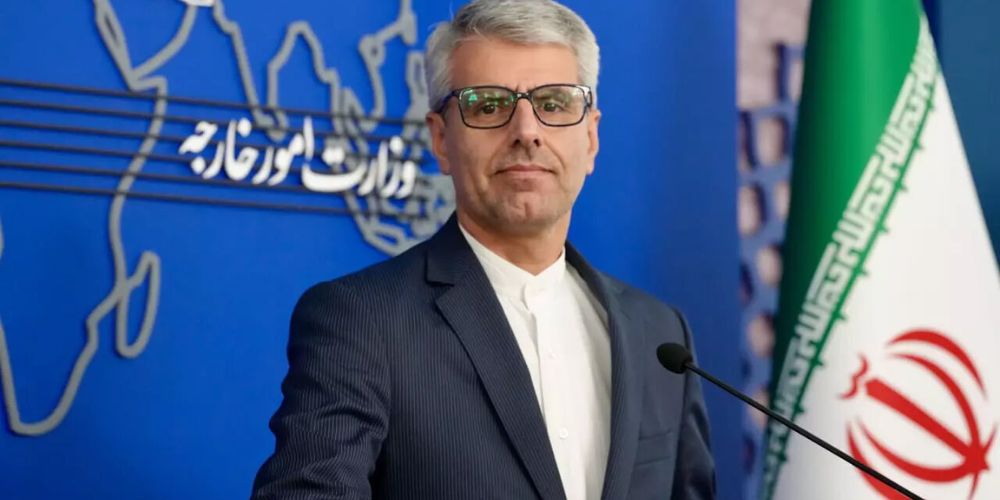
    Iran’s Foreign Ministry spokesperson Esmail Baghaei acknowledged the development in remarks carried by state media but did not confirm any commitment to renewed talks.

    “Diplomacy is a tool for securing national interests and security, and whenever we reach the conclusion that the necessary and reasonable conditions exist to use this tool to achieve national interests… we will take action,” he said.

    The statement reflected Tehran’s cautious stance, with officials appearing divided over how to proceed.

    Some Iranian figures adopted a more critical tone. Mahdi Mohammadi, an adviser to Parliament Speaker Mohammad Bagher Ghalibaf, dismissed the extension, describing it as “meaningless” and accusing Washington of attempting to dictate terms while delaying possible military action.

    Iranian media reports also indicated that Tehran has informed mediators it may not participate in the proposed talks in Islamabad, though no formal government announcement has confirmed a final withdrawal.

    On the U.S. side, planned discussions also appeared uncertain, with officials citing ongoing policy consultations as negotiations faced delays.

    The proposed talks were expected to address major sticking points, including U.S. demands that Iran halt its nuclear programme and Iranian calls for the lifting of economic and maritime restrictions. U.S. officials have maintained that preventing Iran from acquiring nuclear weapons remains a central objective.

    Tehran, meanwhile, has insisted that sanctions relief and the easing of pressure measures would be necessary conditions for meaningful engagement.

    The disagreement underscores broader divisions between both sides, with each maintaining firm positions despite mediation efforts led by Pakistan.

    While Islamabad had been positioned as a venue for renewed dialogue, the latest developments suggest the diplomatic track remains fragile, with both sides yet to bridge key gaps.

    The ceasefire extension has therefore created temporary breathing space, but the prospects for sustained negotiations remain uncertain.

    Iran Acknowledges Ceasefire Extension, Signals Reluctance Over Talks is first published on The Whistler Newspaper

  • BREAKING: ADC leadership battle: Mark, Bala await fate as Supreme Court reserves judgment

    BREAKING: ADC leadership battle: Mark, Bala await fate as Supreme Court reserves judgment

    The Supreme Court on Wednesday reserved judgment in the appeal filed by the National Chairman of the African Democratic Congress, ADC, David Mark, challenging the jurisdiction of court to intervene in the internal affairs of the party.

    A five-member panel of the apex court led by Justice Garba Mohammed reserved its verdict shortly after lawyers representing parties adopted their briefs of argument for and against the appeal.

    Jibrin Okutepa, SAN, who represented David Mark, in urging the court to allow the appeal, submitted that the apex court had in a judgment on March 21, 2025 put an end to the issue before the court when it held that “no court has jurisdiction to entertain cases bordering on internal affairs of political parties”.

    Okutepa therefore urged the apex court to allow the appeal and hold that the Abuja Federal High Court lacked the jurisdiction to entertain a suit bordering on the ADC’s internal matters.

    Robert Emukpero, SAN, who represented the 1st respondent, Nafiu Gombe however, urged the apex court to reject the appeal and affirm the judgment of the lower court, which held that the case of the appellant was premature and dismissed it.

    It will be recalled that a three-member panel of the appellate court had dismissed Mark’s appeal, challenging the jurisdiction of the Abuja Federal High Court presided by Justice Emeka Nwite, to entertain the suit filed by Bala against the leadership of the ADC.

    The appellate court in its decision held that the appeal was not only premature but was brought without leave of the trial court.

    The appellate court subsequently ordered that the matter be returned to the trial court for expeditious hearing, adding that parties should maintain status quo.

    Following the order for status quo, the electoral umpire subsequently de-recognized the ADC leadership headed by Mark, pending the resolution of the matter by the court.

    Dissatisfied, Mark approached the Supreme Court to challenge the ruling of the appellate court as well as an order staying the order for maintenance of status quo.

    Rather than taking the motions filed in the appeal, the apex court directed parties to file their briefs for and against the appeal.

    After taking arguments from the parties, Justice Garba announced that judgment is reserved to a date that would be communicated to parties.

    BREAKING: ADC leadership battle: Mark, Bala await fate as Supreme Court reserves judgment