Category: Uncategorized

  • Kano Builders Turning To Donkeys To Cut Haulage Cost

    Kano Builders Turning To Donkeys To Cut Haulage Cost

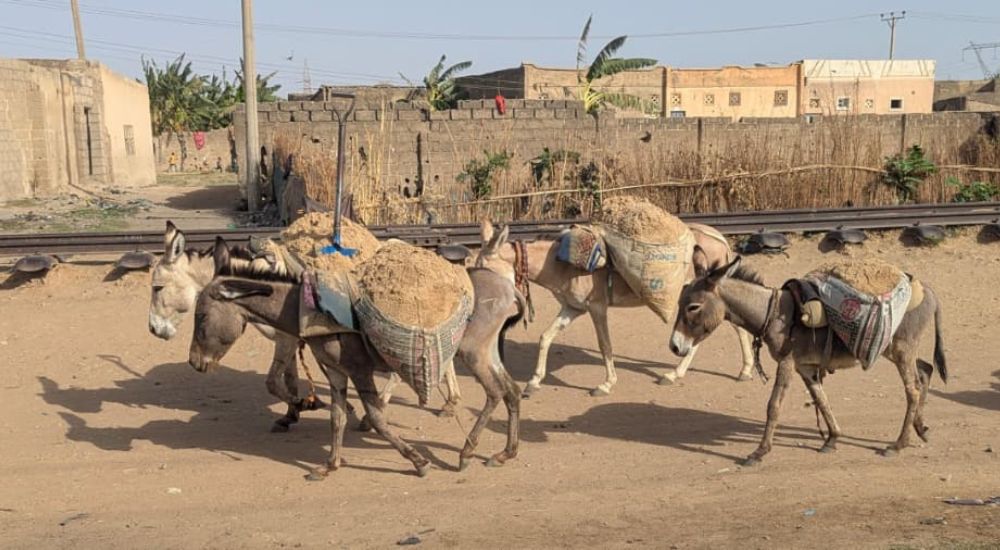
    On a sun-baked morning along the sand-laden tracks of Gaida, Kumbosto LGA, on the rural fringe of Kano State, Musa Isyaku loads the last of four woven sacks onto the back of his donkey, cinches the rope tight, and clicks his tongue.

    The animal lumbers forward without protest, carrying what little hope its owner has of making a living in an economy that has made every litre of petrol a luxury.

    Isyaku, 22, has been a donkey handler for nearly two decades, but nothing in those years prepared him for the surge in demand he is now experiencing.

    Where he once competed quietly at the margins of a market dominated by trucks, he is today the preferred haulier for dozens of households across his community seeking sand for building construction.

    “Before, they would laugh at us,” he says, pausing to wipe sweat from his brow.

    “They would say, ‘Why are you using a donkey when there are trucks?’ Now those same people are calling my number first.”

    The familiar rumble of Parker, MAN, and HOWO trucks that once dominated the dusty tracks leading into remote communities across Kano State is growing quieter.

    In their place, an older, slower but far cheaper alternative has reclaimed the landscape — the donkey, now the unlikely backbone of sand haulage for builders priced out of motorised transport by the unrelenting surge in the cost of petrol.

    Across rural communities in Kano State, residents sourcing sharp sand for construction are increasingly turning to donkey handlers, paying between N2,000 and N5,000 per trip depending on distance — a fraction of what it now costs to hire a truck.

    A Parker truck, the smallest of the common commercial haulage vehicles, now goes for N35,000 per load, while a MAN truck commands N50,000 and the larger HOWO trucks charge as much as N80,000, with prices climbing further when the distance is considerable.

    For low-income residents in remote areas where roads are poor and incomes are thin, the mathematics are brutal and the choice is clear.

    The Truck Drivers Left Behind

    Abdullahi Garba, 51, has operated a MAN diesel truck on the Kano corridors for eleven years.

    He does not begrudge the donkey handlers their new customers.

    He understands, he says, because he is losing his own livelihood at the same rate his customers are losing theirs.

    “When diesel was cheap, I would make four or five trips a week easily,” Garba said, leaning against the chassis of his stationary truck outside a fuel station along Kano’s Ring Road.

    “Now I am lucky to make two. And those two trips, by the time I buy fuel and pay for maintenance, what is left for me and my family?”

    Garba says the customers who remain are almost exclusively contractors on government or commercial projects.

    The ordinary man building a personal home in a village — his original customer base — has all but disappeared from his call log.

    “They don’t even call to negotiate anymore,” he says. “They have just quietly moved on.”

    The Builder’s Calculation

    For Hajiya Rakiya Suleiman, a 38-year-old trader in Dambare, Ungogo LGA, building the two-room house she has planned for years has become an exercise in painful arithmetic.

    She began sourcing materials eighteen months ago, setting aside small sums from her market stall income.

    When she priced trucks last year, she was quoted N40,000 for a MAN load. She waited, hoping prices would ease. They did not.

    “Now they are telling me N50,000 for the same truck,” she says, seated outside the half-completed block foundation of her home.

    “Where will I find N50,000 at once? I am using the donkeys. It takes more trips, yes, but I pay N3,000 at a time. That I can manage.”

    She estimates she has sourced sand through more than fifteen separate donkey trips over four months — a process that has slowed her construction significantly but kept it alive.

    “If I waited for a truck, I would still be waiting,” she says.

    The Dealers’ Dilemma

    At the Hayi sand depot on the outskirts of Kano, Alhaji Sani Danladi has watched the composition of his clientele shift sharply.

    Danladi, who has dealt in building aggregates for over two decades, said bulk truck purchases — once the standard — now account for a shrinking share of his transactions.

    “The donkey people now come every day,” he says.

    “Small quantities, many times. It is more work for me to manage, but what can I do? That is where the market has gone.”

    He adds that the shift has affected not just how materials are transported but how they are sold. Customers who once bought in bulk to take advantage of truck loads are now buying incrementally, often disrupting the stock levels he maintains for larger orders.

    “The whole value chain has changed,” Danladi says. “And not for the better.”

    What the Experts Say

    Economists and development watchers say the donkey-for-sand phenomenon is not merely a curiosity — it is a measurable signal of economic regression with serious implications for housing access and rural development.

    Dr. Abubakar Nura, a development economist at Bayero University, Kano, who studies informal economy dynamics in Northern Nigeria, said the return to animal-powered haulage reflects a broader pattern of de-modernisation driven by fuel cost inflation.

    “What we are seeing is a reversal of decades of progress in rural logistics.

    “When communities can no longer afford mechanised transport for basic construction inputs, it affects not just the speed of building but the cost and quality of what gets built.

    Shelter becomes even more unaffordable for those at the bottom of the income ladder.”

    Eng. Sani Diso, a housing policy analyst, added that the indirect consequences extend further — delayed housing completion increases household exposure to poor living conditions and can compound health and productivity challenges in already-vulnerable communities.

    “Governments need to understand that fuel pricing is not just a macroeconomic variable,” he says. “It reaches all the way down to a man deciding whether he can afford to put sand under his foundation this month.”

    A Resilient, If Reluctant, Return

    Back in Gaida, Musa Isyaku has completed his morning’s first delivery and is already loading up for a second run. He is grateful for the work, but he does not romanticise it.

    “This is not what progress looks like,” he says quietly.

    “Progress is when people can afford the trucks. What we have now is people surviving. That is different.”

    As his donkey steadies itself under a fresh load and turns back toward the distant haze of sand dunes, the image captures something essential about Kano’s rural economy in this moment — resilient, resourceful, and straining under a weight that neither the animal nor its handler should have to carry alone.

    Kano Builders Turning To Donkeys To Cut Haulage Cost is first published on The Whistler Newspaper

  • 30-Year-Old APC Aspirant Sparks Reactions After Kaduna Reps Screening

    30-Year-Old APC Aspirant Sparks Reactions After Kaduna Reps Screening

    A 30-year-old aspirant vying for the Sabon Gari Federal Constituency seat in the House of Representatives, Mahmud Sadis Buba, has stirred conversations online following his screening by the All Progressives Congress in Kaduna State.

    Buba, widely known as Abin Al-Ajabin Zazzau, became the subject of social media discussions after a video showing his interaction with party screening officials surfaced online on Sunday.

    Dressed in traditional attire, the aspirant responded to questions about his age, educational qualifications and reasons for seeking elective office.

    However, it was his youthful appearance that drew the attention of many Nigerians online, with some expressing surprise that he had attained the constitutional minimum age of 30 required to contest for a seat in the House of Representatives.

    During the screening, Buba stated that he is 30 years old and the eldest among nine children.

    Explaining the motivation behind his ambition, he said members of his constituency encouraged him to step forward and represent them.

    “Help to pass the screening, having passed the requirements, because people called me to serve them, and I will serve. I am not doing this for myself,” he said while addressing the panel.

    The aspirant also revealed that he is contesting the APC ticket against the incumbent lawmaker representing the constituency.

    When asked why he intended to challenge the serving representative, Buba replied, “It is not from me. It is from the people.”

    Buba currently serves as chairman of the ‘Tinubu–Uba Sani Agenda ’27’ support group and recently purchased the party’s expression of interest and nomination forms.

    The development has generated mixed reactions online. While some users praised his composure and confidence during the exercise, others criticised the nature of some questions directed at him, describing them as dismissive and unnecessarily focused on his youthful looks.

    Supporters of the aspirant have described him as a grassroots politician whose emergence reflects increasing youth participation in Nigeria’s political process.

    Buba, who holds a NECO certificate, has also reignited conversations around age, merit and inclusiveness in the country’s political landscape.

    30-Year-Old APC Aspirant Sparks Reactions After Kaduna Reps Screening is first published on The Whistler Newspaper

  • 12 killed as militants attack police checkpoint in Pakistan

    12 killed as militants attack police checkpoint in Pakistan

    At least 12 people have been killed and five others injured after militants carried out a coordinated attack involving a car bomb at a police checkpoint in northwestern Pakistan.

    Police officials confirmed that the incident occurred late Saturday night in the Fateh Khel area of Bannu in Khyber Pakhtunkhwa.

    According to a senior police official, Muhammad Sajjad Khan, the attackers used a suicide vehicle-borne explosive device, ramming it into the checkpoint before armed militants moved in and opened fire on security personnel stationed there.

    He said the assault did not end with gunfire, as the attackers also deployed small drones, commonly referred to as quadcopters, to intensify the attack on the police position.

    Authorities further disclosed that after the initial assault, the militants retreated with some police personnel and seized weapons from the checkpoint.

    Security sources confirmed that at least 12 police officers were killed in the attack, while one officer remains missing, with search efforts currently underway.

    The incident is the latest in a series of militant operations reported in the region, which has witnessed a resurgence of violence in recent months.

    Security analysts note that the broader Khyber Pakhtunkhwa region has experienced increased instability, contributing to growing tensions between Pakistan and Afghanistan.

    The government in Kabul, led by the Taliban administration, has repeatedly rejected allegations that Afghan territory is being used as a safe haven for militants operating across the border.

    Authorities in Pakistan say investigations into the attack are ongoing as security operations intensify in the area.

    12 killed as militants attack police checkpoint in Pakistan

  • ‘It’s dangerous to import 70 per cent of medicines’ – Pharmacists tell Tinubu

    ‘It’s dangerous to import 70 per cent of medicines’ – Pharmacists tell Tinubu

    Pharmacists under the auspices of Association of Industrial Pharmacists of Nigeria (NAIP), have declared that is it very dangerous for Nigeria to import 70 per cent of its medicines. 

    The association, while describing the situation as unfortunate and worrisome, appealed to the federal government under the leadership of President Bola Ahmed Tinubu to find ways to support local production of drugs and other items in the country.

    The pharmacists explained that this will help to reduce Nigeria’s dependence on imported medicines and position the country as the pharmaceutical hub of Africa.

    National Chairman of NAIP, Pharmacist Bankole Ezebuilo, made these declarations during the 29th annual national conference and training of NAIP members held in Ilorin, Kwara State with the theme “Collaboration and Innovation to Build Local Solutions for the Future of Nigeria’s Pharmaceutical Industry”. 

    The event was attended by Commissioner for Finance in Kwara State, Dr Hauwa Nuru, Commissioner for Social Welfare Dr Mariam Nana Fatima Imam, Commissioner for Communication, Hon. Bolanle Olukoju, and Executive Secretary of the Hospital Management Board, Abdulraheem Abdulmalik.

    Others are past Presidents of Pharmaceutical Society of Nigeria (PSN), such as Mohammed Yaro Budah, Azubike Okwor, Olumide Akintayo, Ahmed Iyakassai, and Mazi Sam Ohuabunwa, PSN President, Ayuba Tanko Ibrahim who was represented by Gafar Lanre Madehin, Registrar, Pharmacists Council of Nigeria, Ibrahim Babashehu Ahmed. 

    Ezebuilo, in a statement made available to DAILY POST on Sunday at the end of the programme, insisted that Nigeria is now at a critical crossroads because of over dependence on imported drugs. 

    He said that a nation that cannot produce its own medicines is a nation negotiating with its health. 

    He explained that Nigeria must choose between continued dependence on imported medicines or the pursuit of pharmaceutical sovereignty through aggressive local production of drugs and other related items. 

    Ezebuilo also advised the federal government to declare a national emergency on pharmaceutical manufacturing. 

    He said “No nation can outsource its health security. Nigeria currently imports more than 70 percent of its medicines, a situation dangerous to national healthcare stability and economic sustainability.

    “Nigeria is now at a critical crossroads where it must choose between continued dependence on imported medicines or the pursuit of pharmaceutical sovereignty through aggressive local production.

    “Federal Government to declare a national emergency on pharmaceutical manufacturing and implement policies capable of transforming Nigeria into the definitive pharmaceutical manufacturing hub in Africa.

    “A nation that cannot produce its own medicines is a nation negotiating with its health, and negotiation is not where you want to be when lives are at stake”. 

    ‘It’s dangerous to import 70 per cent of medicines’ – Pharmacists tell Tinubu

  • ‘My gov is aware’ – Stunted man, Buba concludes APC screening for House of Reps [VIDEO]

    ‘My gov is aware’ – Stunted man, Buba concludes APC screening for House of Reps [VIDEO]

    Mohammed Sadis Buba of Kaduna State has concluded the All Progressives Congress, APC, screening to contest for the Sabon Gari Zaria Federal Constituency primary election.

    The stunted man told the screening committee that the Kaduna State Governor, Uba Sani was aware of his intention.

    Asked what inspired him to join the race, Baba said “it not about me, it my people that called me to serve”.

    The 30-year-old aspirant noted that he is contesting the party’s ticket against an incumbent, who would not want to step down for him.

    “My people called my to come and serve and I am ready to serve. We are only two running for the APC ticket. My opponent is a serving member”, he said.

    Video

    ‘My gov is aware’ – Stunted man, Buba concludes APC screening for House of Reps [VIDEO]

  • Militia Attack Kills At Least 69 In DR Congo

    Militia Attack Kills At Least 69 In DR Congo

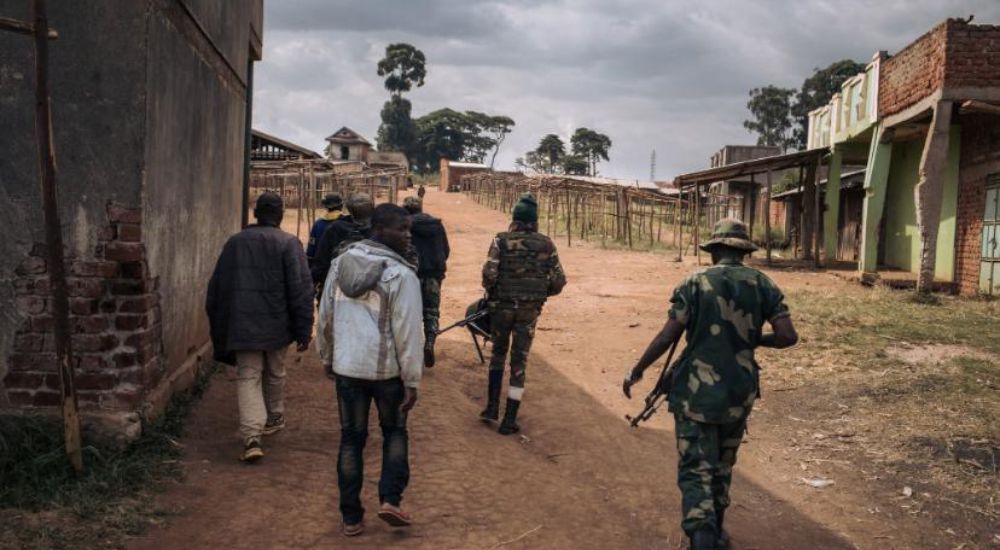
    A militia attack in the Democratic Republic of Congo’s Ituri province has killed at least 69 people, local and security sources told AFP on Saturday, with the full scale of the killings only emerging days after the assault due to an ongoing security lockdown in the affected area.

    Armed men affiliated with the Codeco militia carried out attacks in several villages on April 28, following an earlier assault by another armed group, the Convention for the Popular Revolution (CRP), on positions held by the Congolese army near the locality of Pimbo.

    The continued presence of Codeco fighters in the zone delayed the recovery of bodies for several days.

    Civil society leader Dieudonne Losa told AFP that more than 70 people had been killed, while two security sources who spoke on condition of anonymity confirmed a toll of at least 69, including 19 militia members and soldiers. Only 25 bodies had been buried as of Saturday, with several sets of remains yet to be recovered.

    A humanitarian source described bodies strewn on the ground near the village of Bassa, one of the areas targeted.

    The UN mission in DR Congo, MONUSCO, warned on Saturday of a deadly wave of attacks targeting civilians in the country’s restive east, saying dozens of civilians had been killed in recent days across the provinces of Ituri, North Kivu and South Kivu.

    The Codeco militia claims to defend the rights of the mainly farming Lendu community against the mainly pastoral Hema community, while the CRP says it fights for the Hema.

    They are just two of several armed groups active in the area, which also include the Allied Democratic Forces, a group formed by former Ugandan rebels that has pledged allegiance to the Islamic State.

    Since early 2025, Ituri has seen a resurgence of the CRP, a group founded by convicted Congolese warlord Thomas Lubanga, who was found guilty in 2012 by the International Criminal Court for recruiting child soldiers and released in 2020 after completing his sentence.

    Eastern DRC has been a battleground for various armed groups for more than three decades, with the province of Ituri plunged into a humanitarian crisis affecting nearly one million internally displaced people, according to the United Nations.

    Militia Attack Kills At Least 69 In DR Congo is first published on The Whistler Newspaper

  •  BUK announces fresh window for NELFUND applications

     BUK announces fresh window for NELFUND applications

    Bayero University, Kano (BUK) has announced a fresh window for students to apply for the Nigerian Education Loan Fund (NELFUND) for the 2025/2026 academic session.

    The development was made known in a special bulletin issued on Saturday in Kano and signed on behalf of the Registrar by the university’s Director of Public Affairs, Lamara Garba.

    Garba explained that the decision to reopen the application portal followed a request by the university management, giving eligible students another opportunity to benefit from the scheme.

    According to him, “the reopening of the NELFUND portal provides a final opportunity for eligible students who have completed their screening to commence and complete their applications.”

    He said the application window will run from May 8 to May 29, urging students to take the process seriously.

    “This reopening provides the final opportunity for eligible students who have completed their screening to visit the official NELFUND portal to commence and complete applications for both institutional charges and upkeep,” he said.

    Garba stressed that applicants must follow all instructions carefully and upload the required documents to avoid delays or disqualification.

    “Applications for institutional charges and upkeep must be submitted simultaneously, as separate applications may not be processed,” he added.

    He also warned students against using microfinance wallet accounts.

    “Applicants should ensure their email addresses are accurate and accessible. Passwords must be securely kept and remembered, as they will be needed to access the portal and track application status,” he said.

    The university urged all eligible students to take advantage of the fresh window and complete their applications before the May 29 deadline.

     BUK announces fresh window for NELFUND applications

  • LAWMA arrests three for illegal waste dumping in Lagos

    LAWMA arrests three for illegal waste dumping in Lagos

    The Lagos Waste Management Authority has arrested three individuals for allegedly engaging in illegal waste disposal during an overnight enforcement operation carried out in the Ketu-Alapere area of Lagos State.

    The development was disclosed in a statement released on Sunday by the Commissioner for Environment and Water Resources, Tokunbo Wahab, through his verified X handle.

    According to the statement, the operation was conducted by the LAWMA Waste Infractions Surveillance and Investigation Team between May 8 and May 9, 2026, as part of ongoing efforts by the state government to curb indiscriminate waste dumping across Lagos.

    The commissioner stated that the suspects were apprehended while illegally disposing of refuse at unauthorised locations within the Ketu-Alapere axis.

    “As part of ongoing efforts to eliminate illegal waste dumping within the state, the LAWMA Waste Infractions Surveillance and Investigation Team conducted an overnight surveillance operation from May 8 to 9, 2026, in the Ketu Alapere axis,” the statement read.

    Wahab added that the suspects were traced to their residences during investigations aimed at identifying the reasons behind their actions and preventing further environmental violations.

    According to him, findings from the investigation revealed that the affected properties lacked proper waste storage facilities and had not been registered with approved Private Sector Participant operators responsible for waste collection.

    He further disclosed that all affected properties had been documented and forwarded to the LAWMA legal department for necessary legal action.

    The commissioner also stated that blackspots identified during the operation were cleared as part of efforts to maintain environmental cleanliness within the area.


    LAWMA arrests three for illegal waste dumping in Lagos

  • AMVCA 2026: Sola Sobowale, Kanayo O. Kanayo wins Industry Merit Awards

    AMVCA 2026: Sola Sobowale, Kanayo O. Kanayo wins Industry Merit Awards

    Veteran Nigerian movie stars, Kanayo O. Kanayo and Sola Sobowale, have won Industry Merit Award at the 2026 Africa Magic Viewers’ Choice Awards, AMVCA.

    The duo were honored with the awards on Saturday night during the 12th edition of the AMVCA awards ceremony held at Eko Hotel and Suites in Lagos state.

    The awards recognised their decades-long contributions to the Nigerian movie industry and their impact as two of Nollywood’s most respected screen icons.

    Receiving the award, Shola Shobowale, who appreciated the organisers and her fans, specially appreciated her children for making motherhood an easy journey for her and her career.

    “I want to specially thank God Almighty for keeping till this day to have this. I thank my children. Thank you to all my colleagues. I thank my fans because without you ‘Ko si Shola’ (there’s no Shola) It truly is an honour”, she said

    On his part, Kanayo O. Kanayo used the moment to speak against xenophobic attacks in South Africa.

    AMVCA 2026: Sola Sobowale, Kanayo O. Kanayo wins Industry Merit Awards

  • Chad Declares Three Days Of National Mourning , As Boko Haram Kill 2 Generals , 24 Soldiers

    Chad Declares Three Days Of National Mourning , As Boko Haram Kill 2 Generals , 24 Soldiers

    Chad declared three days of national mourning after a new attack by Boko Haram jihadists Wednesday killed two generals in the volatile Lake Chad Basin.

    On Monday evening, an attack on the Barka Tolorom military base on the Chadian shore of Lake Chad left at least 24 soldiers dead and several wounded, according to a military source.

    On Wednesday afternoon, security and defence force boats patrolling the lake’s island area “fell into a Boko Haram ambush,” an officer from the General Staff told AFP, adding that two generals were killed.

    The government in a statement declared national mourning “from Wednesday, May 6 at midnight to Saturday, May 9 at midnight…in memory of the martyrs who fell in the field of honour during the attacks by terrorist groups that occurred on May 4 and 6.”

    During this period, flags will be flown at half-mast and all festive activities are banned throughout the country, it said.

    “We will continue the fight with renewed determination until this threat is completely eradicated,” Chadian President Mahamat Idriss Deby Itno said after Monday’s attack.

    Chadian soldiers are frequently targeted by Boko Haram in the Lake Chad region, a vast expanse of water and marshland dotted with islands, located between Nigeria, Cameroon, Niger, and Chad.

    Since 2009, it has become a jihadist stronghold sheltering both Boko Haram fighters and its rival, the Islamic State West Africa Province (ISWAP).

    Recent months have seen a resurgence in attacks by JAS, one of the Boko Haram factions, involving kidnappings and assaults on forward security positions.

    In October 2024, a deadly Boko Haram attack on a military base in the Lake Chad basin left around 40 Chadian soldiers dead.

    In response, President Deby launched Operation Haskanite to “destroy Boko Haram’s capacity to cause harm.”

    The Chadian army completed its counteroffensive in February 2025, asserting that the jihadist group no longer had “any sanctuary on Chadian territory.”