Category: Uncategorized

  • Nigeria, Germany sign €65m development cooperation agreement

    Nigeria, Germany sign €65m development cooperation agreement

    The Minister of Budget and Economic Planning, Senator Abubakar Bagudu, and the Minister of State, Dr Doris Uzoka-Anite, joined senior officials of the German Government…

    The post Nigeria, Germany sign €65m development cooperation agreement appeared first on Tribune Online.

  • Ex-Sokoto deputy gov, Dan’iya, emerges ADC governorship candidate

    Ex-Sokoto deputy gov, Dan’iya, emerges ADC governorship candidate

    Former Deputy Governor of Sokoto State, Manir Muhammad Dan’iya, has emerged as the governorship flagbearer of the African Democratic Congress (ADC)…

    The post Ex-Sokoto deputy gov, Dan’iya, emerges ADC governorship candidate appeared first on Tribune Online.

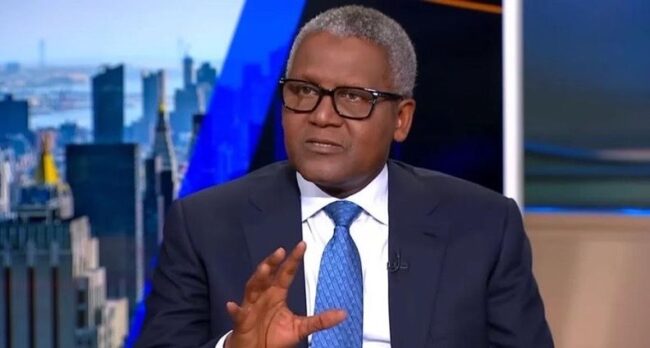
  • How some powerful ‘mafia’ fought hard to stop my refinery — Dangote

    How some powerful ‘mafia’ fought hard to stop my refinery — Dangote

    Africa’s richest man, Aliko Dangote, has disclosed how powerful interests within Nigeria’s oil sector allegedly fought to stop the construction of his $20 billion refinery project. Speaking during an interview with Nicolai Tangen, Dangote described the opposition as an oil “mafia” made up of traders, shippers and beneficiaries of Nigeria’s long-standing fuel subsidy regime who […]

    The post How some powerful ‘mafia’ fought hard to stop my refinery — Dangote appeared first on Tribune Online.

  • 2027: Populism no longer enough — Sowunmi

    2027: Populism no longer enough — Sowunmi

    A chieftain of the Peoples Democratic Party, PDP, Segun Showunmi, has said that Nigeria is at a point where populism is no longer enough to elect a president.

    Showunmi made this statement during an interview on ‘Prime Time’, a programme on Arise Television on Thursday.

    He said Nigerians would have to examine what they are told.

    His remark is coming as various political parties gear up for their primary election ahead of the next year’s general elections in the country.

    “We have tried running a populist agenda for former president Muhammadu Buhari, and the result is that we have complained a lot.

    “We are at a point where populism is no longer enough. What is your track record? Not boastfully saying you’re competent.

    “If we say our problem is the economy and how to make the economy work for the people, then we have to look at the economic credentials of the aspirant,” he said.

    2027: Populism no longer enough — Sowunmi

  • OPay supports over 1,000 Osun students through Play4aChild Initiative

    OPay supports over 1,000 Osun students through Play4aChild Initiative

    OPay, a leading fintech company in Nigeria, has donated educational materials to over 1,000 students, including 40 students with disabilities, in Osun State through its Play4aChild Initiative, in collaboration with Do Good Charity Back-To-School project, reaffirming its commitment to education, youth development, and community empowerment.

    The outreach saw students across Osogbo Grammar School, Oloofa Grammar School, St. Georges’ Primary School, Special Needs Secondary School, Salvation Army Grammar School, and Union Baptist Primary School receive essential learning materials to support their academic journey and improve access to quality education.

    Play4aChild is a unique social impact initiative integrated within the OPay app that enables users to contribute to charitable causes through their everyday activities on the platform. By engaging in activities such as playing games, paying utility bills, making payments for goods and services, and using other services available on the OPay app, users earn points that are converted into donations for community-focused projects.

    Speaking on the initiative, Itoro Udo, the Corporate Social Responsibility (CSR) Manager, said: “Education remains one of the strongest tools for shaping the future of young people and communities. We are proud that, through the Play4aChild initiative, everyday activities carried out by our users on the app are having a meaningful impact on students who need support the most. Seeing over 1,000 students, including 40 students with disabilities in Osun State, benefit from this intervention in partnership with Do Good Charity Back-To-School project is deeply encouraging for us, and it reinforces our commitment to creating opportunities that improve lives beyond financial services.”

    Representatives from beneficiary schools expressed appreciation for the intervention, describing it as timely and impactful for students and families.

    Users can navigate to the Rewards section on the OPay app and engage with Play4aChild activities, turning their everyday transactions and in-app activities into support for charitable projects and communities in need.

    For more information on OPay’s community impact initiatives, please visit www.opayweb.com and follow OPay on LinkedIn, @OPay_NG on X, and @opay.ng on Instagram to stay updated.

    About OPay

    OPay was established in 2018 as a leading fintech company in Nigeria with the mission to make financial services more inclusive through technology. The company offers a wide range of payment services, including money transfer, bill payment, card service, airtime and data purchase, and merchant payments, among others. Renowned for its fast and reliable network and strong security features that protect customer’s funds, OPay is licensed by the CBN and insured by the NDIC with the same insurance coverage as commercial banks.

    OPay supports over 1,000 Osun students through Play4aChild Initiative

  • Police Arrest ,Parade Officers Engaging In Kidnappings , Armed Robbery In Port Harcourt

    Police Arrest ,Parade Officers Engaging In Kidnappings , Armed Robbery In Port Harcourt

    The Nigeria Police Force has reaffirmed its commitment to discipline, accountability, and institutional reform with the dismissal, arrest, and prosecution of police personnel found involved in cases of conspiracy, armed robbery, kidnapping, extortion, stealing, and abuse of office in Rivers State and its environs.

    The Force notes that the actions of the affected officers represent a gross betrayal of the ethics, standards, and professional values of the Nigeria Police Force. The leadership of the Force under the Inspector-General of Police, IGP Olatunji Rilwan Disu, psc (+), NPM, remains resolute in its determination to identify, expose, and remove criminal elements from within the institution, irrespective of rank or position.

    Investigations into one of the cases uncovered a criminal syndicate involving serving police officers attached to Zone 16 Headquarters, Yenagoa, namely Inspector Ayanniyi Jelili, Inspector Durojaye Francis, and Inspector Olayemi Titus, who allegedly engaged in armed robbery, kidnapping, and extortion while operating illegal patrols within Port Harcourt. The officers reportedly abducted victims during unlawful stop-and-search operations, forcefully gained access to their banking and cryptocurrency applications, and extorted millions of naira from them.

    The investigation led to the arrest of the three officers, while three other accomplices identified as Inspector Awele Ogbogu, Inspector Prosper Aghotor, and Corporal Favour Onwuchekwa are currently at large. Exhibits recovered include three Toyota Sienna buses used for the illegal operations and the sum of ₦7,338,800.00 traced to the criminal activities. Findings further revealed that the suspects operated with firearms and had allegedly carried out similar operations against unsuspecting members of the public within Rivers State.

    In a separate investigation, the Force uncovered another criminal syndicate involving officers formerly attached to the Department of Operations, Rivers State Command, namely Inspector John Okoi, Inspector Eyibo Asuquo, Inspector Udo Ndipmong, Inspector Bright Nwachukwu, and Inspector Anele Ikechukwu, who engaged in organised acts of kidnapping, extortion, stealing, and official corruption. The dismissed officers were found to have routinely abducted citizens, extorted money through unlawful transfers from victims’ bank and cryptocurrency accounts, and dispossessed them of valuables while operating under the guise of official patrol duties.

    Consequently, the five implicated officers were subjected to orderly room proceedings and dismissed from the Nigeria Police Force, while the case file has been forwarded for prosecution on charges bordering on conspiracy, armed robbery, kidnapping, extortion, official corruption, and related offences.

    Members of the public are encouraged to continue reporting cases of police misconduct, abuse of office, extortion, and human rights violations through established complaint channels for prompt investigation and action.

    The Nigeria Police Force remains committed to a professional, transparent, accountable, and service-driven policing system firmly rooted in the rule of law and the protection of citizens’ rights.

  • CJN, NCC seek stronger judicial role in telecoms, online safety

    CJN, NCC seek stronger judicial role in telecoms, online safety

    The Chief Justice of Nigeria, Kudirat Motonmori Olatokunbo Kekere-Ekun, and the Nigerian Communications Commission’s Executive Vice Chairman and Chief Executive Officer of the NCC, Aminu Maida, have called for a more technologically informed judiciary to tackle professionally the emerging legal challenges in Nigeria’s rapidly growing digital economy.

    They both spoke at the Workshop for Judges on Legal Issues in Telecommunications held in Lagos and organised by the National Judicial Institute in collaboration with the NCC.

    The workshop was themed “Adjudicating in the Digital Era: The Judiciary’s Imperative in Connectivity, Infrastructure Protection and Online Safety.” It assembled justices, judges, regulators, industry stakeholders, and security agencies to scrutinize and analyze the growing intersection between law, telecommunications, cybersecurity, and digital governance.

    Represented by Hon. Justice I.M.M. Saulawa, the CJN said the emergence of digital technology had fundamentally transformed governance, commerce, education, financial systems, and social interaction, hence the judiciary cannot be left out.

    “The Judiciary cannot remain detached from these developments. The law must respond to changing realities while preserving the principles that sustain justice and social order,” she said.

    She noted that courts are increasingly being called upon over cases on digital communications, cyber-related crimes, online conduct, data governance, privacy violations, misinformation, and infrastructure protection.

    According to her, telecommunications infrastructure has become “an essential foundation for commerce, governance, education, financial systems, and social engagement,” warning that disruptions to communication systems carry serious consequences for both businesses and society.

    She insisted that regulatory institutions must work in sync with the judiciary, saying, “In a constitutional democracy governed by the Rule of Law, judgments of courts are not merely advisory opinions; they constitute authoritative statements of the law.”

    In his address, Executive Vice Chairman and Chief Executive Officer of the NCC, Aminu Maida, said Nigeria’s digital economy had witnessed significant expansion driven by increased internet penetration, digital payments, e-commerce, startups, and emerging technologies.

    “Nigerians are consuming data at unprecedented levels,” Maida said, disclosing that more than 1.42 million terabytes of data were consumed in March 2026 alone, compared to 995,000 terabytes recorded in the same month of 2025.

    He added that broadband penetration rose from 47.7 per cent to 54.3 per cent within the same period, while telecommunications operators invested over $1 billion in network expansion in 2025.

    “These demonstrate both the sector’s resilience as well as its critical contribution to Nigeria’s economic growth and social cohesion,” he said.

    Maida warned that despite the growth, the sector has remained vulnerable to vandalism, fibre cuts, theft of telecommunications equipment, cybercrime, identity fraud, and online artacks.

    “Telecommunications infrastructure has now been officially designated by President Bola Ahmed Tinubu as Critical National Information Infrastructure,” he stated, adding that the designation further stressed the sector’s importance to national security and economic stability.

    He disclosed that the NCC was collaborating with security agencies and the Office of the National Security Adviser to combat vandalism and cyber-related crimes, including disrupting syndicates involved in the theft and resale of telecom equipment.

    Maida also said the Commission had introduced the Telecommunications Identity Risk Management System to tackle SIM-related fraud and identity abuse, while partnering with the Central Bank of Nigeria to combat electronic fraud linked to phone numbers.

    Chairman of the NCC Board of Commissioners, Chief Idris Olorunnimbe, in his goodwill message, described the judiciary as critical to shaping a secure and innovation-driven digital future for Nigeria.

    According to him, the workshop provided, “a timely platform for constructive engagement between the judiciary, regulators, law enforcement institutions, policymakers, and industry operators on the legal and governance challenges arising within the digital ecosystem.”

    Olorunnimbe is hopeful the deliberations would “contribute meaningfully to the development of sound jurisprudence that supports innovation, protects citizens, safeguards critical infrastructure, and promotes a secure and resilient digital future for Nigeria.”

    Presentations and panel discussions on telecommunications infrastructure resilience, artificial intelligence, cybercrime prevention, subscriber identity management, online harms, and internet governance were all featured at the workshop. 

    CJN, NCC seek stronger judicial role in telecoms, online safety

  • SWDC secures rail licence to drive regional connectivity, economic transformation

    SWDC secures rail licence to drive regional connectivity, economic transformation

    THE South West Development Commission (SWDC) has secured a provisional rail operating and track access licence from the Nigerian Railway Corporation (NRC), paving the way for SWDC-led passenger and freight rail services across existing rail corridors in the South-West and marking a major step toward strengthening regional connectivity and driving economic transformation across the region. […]

    The post SWDC secures rail licence to drive regional connectivity, economic transformation appeared first on Tribune Online.

  •  NJC sends Omotosho, Nwite, 10 other judges to Tinubu for appointment as Appeal Court Justices

     NJC sends Omotosho, Nwite, 10 other judges to Tinubu for appointment as Appeal Court Justices

    The National Judicial Council, NJC, has forwarded 12 High Court Judges to President Bola Ahmed Tinubu for appointment as Justices of the Court of Appeal ahead of the litigations that may arise in the 2027 general elections. 

    The recommendations of the judges to the Presidency for elevation into the intermediary Appellate Court Bench was made by the NJC at its just concluded 111th meeting presided over by the Chief Justice of Nigeria CJN, Justice Kudirat Olatokunbo Motomori. 

    NJC in a statement on Friday by its Deputy Director of Information, Mrs Kemi Babalola Ogedengbe said that the Court of Appeal Justices, when appointed, would fill the vacancies at the Court occasioned by elevation of some to the Supreme Court bench and retirement of others upon attaining retirement age. 

    Prominent among the Federal High Court judges sought be moved to the Court of Appeal are Justices James Kolawole Omotosho and Emeka Nwite, who in recent times handled high profile political and criminal matters effectively at the Federal High Court bench. 

    Other High Court judges are Yakubu Mohammed, Abodunde Oluwatoyin, Ajuwa Raphael, Abua Ojie, Ijohor Jennifer, Shuaib Bala, Buba Njana, Kado Sanusi, Adeola Enikuomehin and Dandom Veronica. 

    They were recommended to President Tinubu after passing through rigorous interviews and found worthy of being diligent judicial of repute in character and performance. 

    In the same vein, Christine Clement Ende was recommended for appointment into Benue High Court bench while Ibrahim Yakubu and Bala Daura were recommended for appointment as Kadi of Katsina Sharia Court of Appeal. 

    Two other High Court Judges have, however, been penalized for various judicial misconduct in the discharge of their judicial functions. 

    They are Ibrahim Shekarau of the High Court of Benue state and Edward Okpe of the High Court of the Federal Capital Territory who were placed on one year suspension without pay. 

    They were found guilty for granting frivolous orders against litigants appearing before them and outright denial of fair hearing to favour an opposing party. 

    Similarly, eight other Imo State High Court Judges sent on compulsory retirement lost their battle to have their reviewed and recalled back into service. 

    The NJC refused their plea and they are B. C Iheka, K. A Leaweanya, Okereke Ngozi, Innocent Ibeawuchi, Ofoha Uchenna, Everyman Eleanya, Rosemond Ibe and T. N Nzeukwu. 

    The NJC had indicted them for fraud of falsifying their ages to enable them stay longer in service and were subsequently retired from the service. 

    The NJC statement just released by the Deputy Director indicates that 256 Judicial officers got queried for various offences especially poor performance in the discharge of their duties. 

    Also, the NJC dismissed 73 petitions filed against other judicial officers by some lawyers and litigants. 

    The petitions were found to be baseless and without merit to warrant issuing punishment against any of the judicial officers. 

     NJC sends Omotosho, Nwite, 10 other judges to Tinubu for appointment as Appeal Court Justices

  • MainPower: EERC downgrades 59 feeders in Enugu over poor power supply

    MainPower: EERC downgrades 59 feeders in Enugu over poor power supply

    Enugu Electricity Regulatory Commission, EERC, has announced the downgrade of 59 feeders under the franchise of the MainPower Electricity Distribution Company Limited.

    MainPower is a subsidiary of the Enugu Electricity Distribution Company, EEDC, which services customers in Enugu State.

    EERC attributed the action to MainPower’s failure to meet the threshold of minimum hours of power availability, especially for Band A customers, despite charging them Band A tariff.

    It could be recalled that the Nigeria Electricity Regulatory Commission, NERC, in November 1, 2020 categorized electricity users into Bands.

    It incldued: Band A: Minimum of 20 Hourss; Band B: Minimum of 16 Hours; Band C: Minimum of 12 Hours; Band D: Minimum of 8 Hours and Band E: Minimum of 4 Hours

    However, there has been an outcry by electricity users in Enugu over the inability of the Disco (Manpower) to meet the electricity supply target, necessitating the EERC’s intervention in line with its statutory powers.

    The public notice, signed by the Commission, said the downgrade would remain in place until power supply improved on such feeders.

    Providing background to the decision, EERC said it arose following persistent complaints from electricity consumers in Enugu State, particularly Band A customers.

    Their complaints were regarding the drastically reduced hours of supply.

    Consequently, the EERC said it conducted a technical and safety audit of major injection substations operated by MainPower.

    “In addition, the Commission continued its routine monitoring of MainPower’s feeder performance through its online platform, the Electronic Design and Manufacturing International (EDMI) Multidrive Manager.

    “The findings from the Commission’s field inspection and the online monitoring platform corroborated customers’ complaints that MainPower had failed to deliver the expected hours of supply as required under the Service-Based Tariff (SBT) regime.

    “The SBT framework was introduced to ensure that customers pay for electricity commensurate with the quality and hours of availability of the supply received.

    “The public is hereby notified that the Commission has directed MainPower to downgrade all fifty-nine (59) affected feeders, as listed in the Commission’s directive, to their appropriate service bands immediately,” it disclosed.

    EERC, however, hinted that upon request by MainPower, it may approve the upgrade of any of the downgraded feeders “once it is verified that the feeder met the threshold of minimum hours of availability in the preceding month in line with the SBT framework”.

    Some of the feeders downloaded include: 9th Mile Industrial 11KV, downgraded from Band A to Band C; Abakaliki Road 11KV, downgraded from Band A to Band C; Abakpa 1 11KV, downgraded from Band A to Band C; Abakpa 2 11KV, downgraded from Band A to Band C; Abakpa 3 11KV, downgraded from Band B to Band C; Amorji 11KV, downgraded from Band B to Band D; Nsukka Township, from Band B to D; Presidential, from A to C; UNEC from A to D; University of Nigeria Nsukka from A to D and Government House from A to E.

    Other affected areas included Emene, Topland, Ugwuoye, Chime Avenue, Achi, Amechi, Ibagwa, Ugwuogo, Ugwuaji, Okwe, NOWAS, Coca Cola, Coal Camp, Dhamija, among others.

    MainPower: EERC downgrades 59 feeders in Enugu over poor power supply