Category: Uncategorized

  • Ebola: WHO Urges Countries To Lift Travel Bans On Central Africa

    Ebola: WHO Urges Countries To Lift Travel Bans On Central Africa

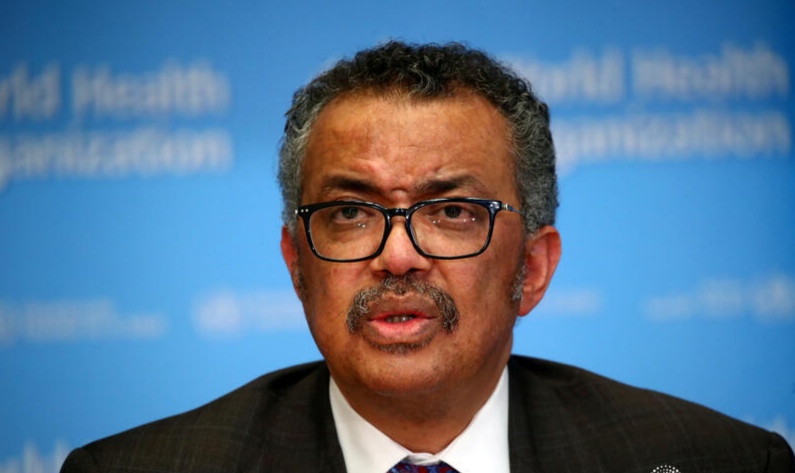
    The Director-General of the World Health Organisation (WHO), Tedros Adhanom Ghebreyesus, has called on countries to end broad travel restrictions linked to the Ebola outbreak in Central Africa, warning that such measures are counterproductive and are impeding the response effort.

    “There are ways to manage workers and to manage cases without having a strong, restricted travel ban and we do not encourage that as WHO,” Tedros said.

    The WHO has declared the ongoing Ebola outbreak in the Democratic Republic of the Congo and Uganda a Public Health Emergency of International Concern, citing rising cases, cross-border spread and significant uncertainties about the scale of the epidemic.

    The outbreak is believed to have been spreading for weeks before it was officially declared on 15 May, with the epicentre in Mongbwalu, a poor gold-mining town of 130,000 people in Ituri Province in eastern Congo.

    Tedros described the outbreak as a “catastrophic collision of disease and conflict”, saying the disease is outpacing the response.

    As of 27 May, a total of 906 suspected cases and 223 deaths among suspected cases have been reported in the DRC, with 134 confirmed cases, including nine in Uganda, and 18 deaths among confirmed cases across both countries.

    Several countries have imposed travel restrictions in response to the outbreak.

    Both Uganda and Rwanda have closed their borders with the DRC, while the United States has barred most travellers who have recently visited the DRC, Uganda or South Sudan. Canada has also announced a 90-day entry ban for residents from the DRC, Uganda and South Sudan.

    The WHO advises against such measures, with Tedros dismissing border closures as ineffective and arguing they discourage countries from reporting outbreaks openly.

    Health ministers from the Intergovernmental Authority on Development, an eight-nation East African bloc, met this week and agreed to redirect about $7m towards prevention across the region.

    The International Rescue Committee (IRC) has warned that the outbreak risks becoming the deadliest on record without urgent international action, as it is now spreading faster than responders can contain it.

    The virus has also reached North Kivu and South Kivu provinces, where the Rwanda-backed M23 rebel group controls major cities. Anger over strict rules for handling victims’ bodies, which clash with local burial customs, has fuelled at least three attacks on health centres.

    Ebola: WHO Urges Countries To Lift Travel Bans On Central Africa is first published on The Whistler Newspaper

  • African Integration Beyond Trade: When Africans Become Foreigners In Africa

    African Integration Beyond Trade: When Africans Become Foreigners In Africa

    In my earlier piece in February, Beyond Preferences and Rhetoric: What Africa’s 2025 Integration Moment Really Demanded, I argued that Africa’s long-term competitiveness would not be secured by waiting on external trade preferences, but by taking integration seriously as an economic project. I called for political will, industrial strategy, and a human-centred approach to the continental vision. I did not expect to be writing a follow-up so soon. But the events of April and May 2026 in South Africa have made this necessary.

    What is unfolding in the streets of Johannesburg, Durban, and Pretoria is a direct assault on Africa’s integration agenda and can’t be seen simply as a South Africa’s issue. African Union, the AfCFTA Secretariat, and every head of state who has ever signed a protocol on the free movement of persons must now answer a simple but devastating question: What exactly are we integrating, if not Africans?

    The burning streets and the broken promise

    In April and May 2026, a vigilante movement called March and March organised anti-immigration demonstrations across South Africa’s major cities, resulting in attacks on foreign-owned businesses, destruction of livelihoods, and at least one death. As reported by Human Rights Watch, a 43-year-old Cameroonian shopkeeper who had spent nearly two decades in Durban watched a group of men break down his doors during protests targeting foreign-owned shops. He had built a life there. He had become, in every meaningful sense, a resident of the country. It did not matter. He was African but the wrong kind.

    Human Rights Watch documented the violence and warned of a new wave of xenophobic attacks, noting that police response was insufficient and in some cases absent. The African Commission on Human and Peoples’ Rights issued a formal statement of grave concern, situating the 2026 violence within a long and shameful pattern the 1998 killings in Johannesburg, the Cape Town murders of 2000, the nationwide carnage of 2008 in which over 60 people died and 100,000 were displaced, the 2015 military deployment, and the ongoing harassment of migrants throughout the 2020s by groups such as Operation Dudula. This is not an aberration. This is a pattern. And a pattern demands a structural explanation, not a diplomatic one.

    The South African government’s response has been, at best, inadequate. President Ramaphosa, speaking on Freedom Day April 27, 2026 offered moving words: “We did not walk alone into freedom. We were carried by a tide of solidarity from the nations of Africa.” Yet noble sentiments alone do not rebuild the Cameroonian shopkeeper’s door. They do not compensate the Ghanaians who were evacuated on May 27, 2026 the first in what may become a steady retreat of African nationals from a country once celebrated as the continent’s economic anchor. South Africa’s government went further by publicly denying the xenophobic nature of the attacks, describing them as “isolated incidents.” African civil society groups and indeed the evidence rejected that denial outright.

    A continent that signs protocols by day and tolerates pogroms by night
    Here is the central contradiction that must be stated plainly: African heads of state have, under the architecture of the African Union and the AfCFTA, committed themselves to creating a single continental market one that includes the free movement of persons, not just goods. The AU’s Protocol on Free Movement of Persons, adopted in 2018, envisions an Africa where citizens can live and work anywhere on the continent. The AfCFTA, described as a $3.4 trillion economic integration project, cannot function if the people who are supposed to trade across borders are afraid to cross them.

    And yet, according to the latest GovDem Survey of the Inclusive Society Institute, 73 percent of South Africans report not trusting African immigrants “at all” or “not very much.” South Africa the country that accounts for over 40 percent of all intra-African trade, the continental powerhouse without whose participation AfCFTA loses much of its gravitational force is also the country where intra-African trade is least safe in human terms.

    The African Chamber of Content Producers put it with blunt precision: intra-African trade stands at just 14 percent of total African trade, compared to roughly 60 percent in Asia and Europe. Xenophobia is not merely a moral outrage in this context. It is a structural barrier to integration as consequential as any tariff wall or non-tariff barrier. You cannot have free trade without free movement. You cannot have free movement without safety. And you cannot have safety while your government denies that the attacks are even happening.

    The Centre for Global Affairs and Responsible Governance in Accra captured this contradiction sharply: “You cannot champion AfCFTA by day and allow mobs to lynch traders by night. Violence against Africans anywhere is violence against Africa.”

    What if this were Europe?

    It is worth pausing to ask an uncomfortable comparative question. If vigilante groups in Germany had, over three decades, periodically attacked French, Italian, or Polish shopkeepers burning their businesses, looting their goods, and driving them from their homes, with documented fatalities what would the European Union have done?

    The answer is not hypothetical. The EU has invoked Article 7 proceedings against member states for rule-of-law violations that were far less physically violent than what has transpired repeatedly in South Africa. The European Commission has financial tools the ability to withhold structural and cohesion funds to compel compliance with the bloc’s foundational norms. There are the European Court of Justice, the European Court of Human Rights, and a mature architecture of accountability that moves slowly but does move.

    The African Union, by contrast, is convening its Eighth Mid-Year Coordination Meeting in Cairo on June 24-27, 2026, partly at Ghana’s formal request that South Africa’s xenophobic attacks be placed on the agenda. That Ghana needed to petition for the matter to be discussed at all rather than it being treated as an automatic breach of continental obligations reveals a profound gap in the AU’s enforcement architecture. The AU’s aspiration for integration is real. Its mechanisms for holding member states accountable to that aspiration remain, in too many cases, aspirational themselves.

    This is not an argument for supranational punishment. It is about ensuring that the commitments we make as a continent are reflected in practice. The African Commission on Human and Peoples’ Rights has expressed concern, the UN Secretary-General raised his voice, civil society across the continent has demanded action. What has been missing is a commensurate, structural institutional response one that makes clear that a member state’s domestic policy of tolerance toward anti-foreigner violence is incompatible with its continental commitments.

    The petition filed in Accra on May 31, 2026, calling for the AU to review the continued suitability of the AfCFTA Secretary-General a South African national for his position is a symptom of this frustration. Whether or not one agrees with the petition’s remedy, its logic is instructive: when a country’s conduct fundamentally contradicts the values of a continental institution, the institution cannot appear indifferent. Indifference is its own statement.

    The Ubuntu paradox and the path forward

    There is a word that South Africa gave to the world: Ubuntu. The philosophy that a person is a person through other people, that humanity is constituted through relationship and mutual recognition. President Ramaphosa himself invoked it in his Freedom Day address.

    The paradox is almost too painful to articulate: a nation that exported Ubuntu to the world has struggled, across three decades of democracy, to extend basic dignity to African migrants within its own borders. But this is not ultimately a South African problem to solve alone, it is a continental governance failure that requires a continental governance response.

    The 2025 African Integration Report was clear: Africa’s integration is stalled not by lack of vision but by competing national interests, limited political accountability, and the absence of effective mechanisms to address asymmetries between member states. Xenophobia is the most violent expression of those competing national interests the zero-sum logic that says African solidarity ends at the border. If the AU and AfCFTA cannot name that logic and challenge it, then the integration project is building on sand.

    What is required is not more declarations. It is architecture. The AU must develop a binding monitoring and sanctions framework for xenophobic violence not as a punitive tool, but as a deterrent and accountability mechanism, the way the EU’s rule-of-law conditionality functions. AfCFTA’s implementation roadmap must explicitly address the free movement of persons as a trade-enabling condition, not a long-term aspiration starting by making the ratification of the AU Free Movement Protocol, which has been gathering dust since 2018, a prerequisite for full AfCFTA participation. And South Africa as the continent’s largest economy, as a country whose liberation was bankrolled by African solidarity, as a signatory to every relevant continental framework must be held, with respect and firmness, to its obligations.

    Ghana’s Foreign Affairs Minister Samuel Okudzeto Ablakwa was right to take the matter to the AU. But the question now is whether Cairo will produce accountability or choreography. Because Africans watching from Lagos, Nairobi, Accra, and Dakar are drawing their own conclusions. And the conclusion they are drawing is that the integrated Africa of Agenda 2063 is not yet a place where an African from Cameroon can build a shop, serve a community, and feel safe.

    That is the gap between our protocols and our reality. Until we close it, AfCFTA will remain what too much of Africa’s integration has been: a magnificent aspiration undermined by the failure of political will and in this case, the failure of basic human solidarity.

    -Gyabaah, a Development Practitioner, writes from Dakar, Senegal and can be reached at Rachelgyabaah@gmail.com

    African Integration Beyond Trade: When Africans Become Foreigners In Africa is first published on The Whistler Newspaper

  • Gospel Singer Yinka Apologises Over Oyo Schoolchildren Kidnap Comment

    Gospel Singer Yinka Apologises Over Oyo Schoolchildren Kidnap Comment

    Yinka Alaseyori has apologised following criticism over her remarks about the kidnapping of pupils and teachers in Oriire Local Government Area of Oyo State.

    Alaseyori, in a video shared on her Instagram on Wednesday, said she was sorry for any hurt caused by her remarks and stressed that she never intended to downplay public concerns over the abduction

    The singer explained that she became aware that many Nigerians were unhappy with her earlier video, believing her remarks suggested that public concerns about the abducted victims were not being taken seriously.

    “I did a video two days ago about the kidnapped children, touching on the government, parastatals, and every agency. But when I woke up yesterday, I found out that some well-meaning Nigerians were not happy about it, as I made them feel their voices are unheard,” she said.

    Alaseyori appealed for forgiveness from the public, particularly mothers and families affected by the incident, insisting that she would never intentionally disregard their pain.

    “You know me too well that I would never make you feel like that. Mothers, do not be offended. I am sorry. I beg in God’s name. Please, forgive me. I would never think like that. Pardon and forgive me,” she added.

    The apology comes after the gospel singer had urged Nigerians to continue praying over the country’s security challenges, while maintaining that the government was making efforts to restore peace.

    Meanwhile, the kidnapping of pupils and teachers in Oriire Local Government Area has continued to spark outrage and concern across the country, with many Nigerians calling on authorities to intensify efforts to secure the safe release of the victims.

    Gospel Singer Yinka Apologises Over Oyo Schoolchildren Kidnap Comment is first published on The Whistler Newspaper

  •  Community protests at Abia Govt House over alleged land grabbing, forged documents 

     Community protests at Abia Govt House over alleged land grabbing, forged documents 

    Youths and women of Umunenweze Okpuala community in Okaigu, Umuahia North LGA of Abia State on Wednesday, stormed the Abia State Government House to protest the alleged grabbing and sale of their farms and ancestral lands.

    The villagers who appealed for the immediate intervention of Governor Alex Otti, accused the traditional ruler of their community, Eze Paul Onuigbo Uzuegbu and other individuals of presenting forged letters to the Abia State government on behalf of the villagers.

    According to the Umunenweze natives, several plots of land belonging to the present and future generations have been forcefully sold off or donated to private estate developers, thereby stripping the people of their communal property.

    Speaking on behalf of the protesters, the Secretary of the Umuneweze community, Okechukwu Uzuegbu, alleged that bulldozers brought in by estate developers were allegedly used to destroy farms and economic trees belonging to indigenes, without their knowledge and consent.

    “Those grabbing and selling our lands are writing false letters and forged documents to the government, saying we have given up our rights to our land.

    “Any further trespass will be viewed as deliberate incitement to chaos,” the village Secretary, Uzuegbu warned.

    Addressing the protesters on behalf of Abia State government, the Senior Special Assistant to Governor Alex Otti on local government and chieftaincy affairs, Magdalene Ugoanusi, appealed to the Umunenweze indigenes not to use violence in their community or any part of Umuahia.

    Mrs Ugoanusi, who said a letter about the matter was brought to the office of Chief of Staff to the Governor some time ago, promised that the State government would revise the issue.

    She urged the villagers to itemise all their complaints and submit to the Abia State government for action, adding that the member representing Ikwuano/Umuahia Federal constituency, Obi Aguocha, would be engaged to work for the peaceful resolution of the land dispute.

     Community protests at Abia Govt House over alleged land grabbing, forged documents 

  • FG Extends Internet Access To Underserved Communities

    FG Extends Internet Access To Underserved Communities

    Nigeria’s Minister of Communications, Innovation and Digital Economy, Dr. Bosun Tijani, has revealed new backing from China Industrial Bank (CIB) for the Nigeria Universal Communication Access Project (NUCAP), aimed at expanding connectivity to over 20 million Nigerians in underserved areas.

    Tijani disclosed this in a post on X following a meeting with a delegation from CIB led by Peng Shuang, General Manager, Strategic Emerging Industries Business Headquarters.

    According to the minister, NUCAP will facilitate the deployment of 3,700 telecommunications towers nationwide, focusing on unserved and underserved areas, particularly rural and riverine communities lacking reliable access to communication services.

    He revealed that CIB has committed to supporting the delivery of at least 1,000 telecom tower sites before the end of the year.

    “I am particularly encouraged by the Bank’s commitment to supporting our ambition of delivering a minimum of 1,000 tower sites by the end of this year, helping to bring connectivity, opportunity, and economic inclusion closer to millions of Nigerians,” he stated.

    Tijani noted that the bank reaffirmed its commitment to supporting the implementation of NUCAP, a project expected to significantly advance digital inclusion and expand access to telecommunications infrastructure across the country.

    “NUCAP is a wholly green network of modern telecommunications towers that will extend connectivity to these previously unconnected communities, many of them in rural and riverine areas of Nigeria,” Tijani stated.

    According to the minister, CIB’s support for the initiative marks the bank’s first investment in Nigeria and reflects growing international confidence in the country’s digital economy agenda.

    He further disclosed that the Federal Executive Council (FEC) had already approved the project as part of broader government efforts to bridge the digital divide and ensure all Nigerians have meaningful access to quality telecommunications services.

    Tijani added that investing in rural communication infrastructure aligns with the administration’s goal of promoting digital inclusion and creating economic opportunities for citizens across the country.

    However, it remains unclear whether the 3,700 towers proposed under NUCAP form part of the 7,000 telecom towers announced by the government last year or represent a separate initiative.

    Meanwhile, the Nigerian Communications Commission (NCC) recently disclosed that telecom operators have committed to upgrading 12,000 sites in 2026 to improve service quality nationwide.

    The Executive Vice Chairman of the commission, Dr. Aminu Maida, said operators completed just over 3,000 site upgrades for coverage and capacity in 2025. He noted that the planned 12,000 upgrades this year signal an acceleration of infrastructure investments and network expansion efforts.

    Maida explained that the upgrades would include additional spectrum deployment on 4G sites, as well as the conversion of older 2G and 3G sites to 4G and 5G infrastructure.

    FG Extends Internet Access To Underserved Communities is first published on The Whistler Newspaper

  • Big Bull Rice fuels thrilling football season finale

    Big Bull Rice fuels thrilling football season finale

    As the final whistle of the global football season draws near, the energy across Nigeria is anything but quiet. From viewing centres in Surulere to living rooms in Abuja, the passion, the debates, the last-minute goals, everything peaks soon and when the tension rises and the cheers get louder, Big Bull Rice is right there on every match-day table.

    Because in Nigeria, football is watched, experienced, shouted, argued, celebrated… and most importantly, shared – shared in bowls passed between friends, in plates served during halftime, and in laughter that lingers long after the match is over.

    This season, Big Bull Rice has gone beyond being just a meal. Through its Fuel-the-Pitch campaign, the brand has stepped boldly into the rhythm of football culture, positioning itself as the Big Bull of Football, a title it has earned not only by showing up, but fully immersing itself in the game football fans love.

    Across the season, Big Bull Rice has transformed digital platforms into virtual viewing centres, where fans don’t just watch matches but participate. From scoreline predictions to mid-match banter, and heated rivalries to post-match analysis, the brand has kept conversations alive before, during, and after every game.

    Through its array of activities and Match-Day-Live content, the brand has created a two-way relationship with fans, one where every opinion counts, every goal sparks a reaction, and every fan feels seen. This consistent engagement has turned everyday supporters into an active community, sharing their voices, their humour, and their passion in real time. Big Bull Rice has tapped into youth culture, making football content more interactive, more entertaining, and deeply Nigerian. The campaign has blurred the line between brand and fan, making Big Bull Rice feel less like a sponsor and more like one of the guys in the room.

    Beyond just being a game, football in Nigeria is a shared language, a cultural pulse that unites people across backgrounds. And in the same way, rice remains a staple that brings people together, from everyday meals to celebratory gatherings.

    By seamlessly blending these two passion points, food and football, Big Bull Rice has not only fuelled matchdays, it has also served experiences. Moments of anticipation before kick-off, tension during close games, eruptions of joy after last-minute goals are all made richer with a plate of trusted, quality rice that Nigerians have come to rely on.

    At its core, Big Bull Rice recognises that what truly sustains a brand is not just the product it offers, but the relationships it nurtures. By leaning into the power of community through conversations, shared laughter, and collective experiences, the brand has shown that it values people beyond transactions. With every plate served, backed by its trusted quality, Big Bull Rice continues to reinforce its place not just in homes, but in the everyday lives and memories of Nigerians.

    According to Probal Bhattacharya, Chief Marketing Officer at TGI Group, “For us, quality is not a claim, it is our commitment. Across Nigeria, we have been intentional about our presence in the football space, not to disrupt the fan experience, but to become a meaningful part of it. By building platforms for predictions and real-time banter, we have seen fans move from being spectators to taking true ownership of the game. Big Bull Rice is the heartbeat of these gatherings, providing the quality nourishment Nigerians need to stay fit and active for the moments that truly count. We understand that football and food are the shared languages of our community, and Big Bull Rice is proud to fuel the energy and memories that bring us all together.”

    Big Bull Rice is Nigeria’s foremost parboiled rice. Big Bull Rice is premium milled, stone-free, with an excellent swelling index that retains the natural taste & texture of goodness from the Nigerian soil. An absolute cooking delight with the best texture, uniform size and shape; each grain is highly nutritious, rich in B-vitamins, Iron, Dietary Fibers and Protein, with low Glycemic Index for a healthy consumption. Big Bull is the ideal choice for a great tasting rice dish, be it jollof rice, fried rice, white rice, coconut rice and many more. Available in various consumer-friendly packs nationwide.

    Big Bull Rice fuels thrilling football season finale

  • The Number 10 Mindset: Setting the Highest Standards with TenTrade

    The Number 10 Mindset: Setting the Highest Standards with TenTrade

    United by the number 10: How TenTrade and Luís Figo meet the highest standards both in the sporting arena and the trading world.

    It is more than just two digits on the back of a shirt. Passed down from one generation to the next, it is a legacy that truly has a deeper meaning. The number 10 carries with it a greater level of expectation and responsibility. When the game is in the balance, when time is running out, and the pressure is on, it is the number everyone looks to for inspiration, for that match-winning moment.

    Meeting these demands requires a certain type of personality. Those with rare technical gifts wear the jersey well, but having that edge to mentally overcome adversity is the real game-changer. That ability to read a situation before it develops or turn an unfavorable outcome into a winning one is what separates a one-off performer from long-term excellence.

    A legendary player for both club and country, Luís Figo starred alongside some of the game’s most illustrious names. Now, in his role as Global Ambassador, he has teamed up with multi-asset broker TenTrade. United by the number 10, both reflect a mindset built on discipline, control, and consistently high standards.

    Embodying the Number 10 Philosophy

    Throughout a stellar career spanning more than 15 years at several of the world’s leading clubs, Figo stood out as an era-defining player, delivering elite-level consistency in those moments when it really mattered. In his time at Barcelona, Real Madrid, and Inter Milan, his performances inspired a whole new generation of fans who dreamed of emulating his success.

    Performing on the greatest of stages week-in, week-out, the Portuguese winger had the discipline and emotional control to make that all-important move at the right moment, even when under intense pressure. His legacy is etched in footballing folklore, and his story serves as an inspiration to many, symbolized by strength, resilience, and an intense willingness to succeed.

    That same philosophy is embedded in TenTrade’s approach to trading. It represents a shared philosophy centered on vision: the ability to see the wider picture before it unfolds. It is about creating opportunities, rather than waiting for them, and maintaining composure whether in the market or on the pitch. This ethos sits at the core of the film “What It Takes” because, at the highest level, whether in football or in trading, success is never accidental.

    Combining Innovation with Reliability

    Similar to the way Figo wore his jersey with pride, the number 10 holds a special meaning at TenTrade, representing excellence in trading. Building on this founding principle, the broker presents a comprehensive trading ecosystem, providing traders with access to advanced financial tools, state-of-the-art products, market insights, and a diverse range of trading instruments.

    As with decisive moments in football, where outcomes are determined by key margins, having 24/7 support in place for traders is an important part of TenTrade’s product offering. There are ample opportunities to grow as a trader with a wide array of learning resources available, including extensive educational guides, e-books, and regular expert-led webinars in English and Spanish.

    With modern-day trading defined by innovation, TenTrade sets the standard as a next-generation broker. Using the latest in trading technology, the firm delivers continuous improvement to help stay ahead of the market and better serve its client base. Through its commitment to complete transparency, traders receive clear pricing, honest reporting, and open communication, with transparency resting at the heart of the company’s operations.

    Trading YOUR way

    TenTrade offers trading flexibility, featuring both traditional retail trading and funded account options. Clients can trade with dynamic leverage of up to 1:2000 on more than 200 CFD trading instruments across multiple asset classes, including forex, indices, commodities, shares, and cryptocurrencies.

    The broker also provides a copy trading program, allowing traders to mirror the strategies of top-performing experts or become a leader for others to follow. Meanwhile, professional traders are able to manage pooled investor capital, set their own performance fees, and scale strategies via TenTrade’s regulated PAMM infrastructure.

    When it comes to funded trading accounts, the broker offers accessible entry with a low registration fee of $43 and 1:100 leverage, meaning traders can control up to $100,000 on its lower tier Micro account. There is also a 70% profit share across all account sizes, regular bi-weekly profit payouts, and the option to scale an account once a 10% gain is achieved.

    Take the Next Step with TenTrade

    When Figo made that career-defining decision to join Real Madrid from fierce rivals Barcelona in 2000, it was a bold move that paid off, silencing the critics who doubted him. It spoke volumes about his strength of character and determination to succeed even when times were tough. It is a mindset that TenTrade values, having the ability to think with clarity, take calculated risks, and act with conviction when it matters most.

    To find out more about trading with TenTrade, visit TenTrade.com or speak with a team member via live chat.

    The Number 10 Mindset: Setting the Highest Standards with TenTrade

  • Woman Jailed For Beating Landlady In Oyo

    Woman Jailed For Beating Landlady In Oyo

    A Mapo Chief Magistrates’ Court in Ibadan, on Wednesday, sentenced a woman, Peace Christopher, 45, to seven months in the correction centre for beating up her father’s landlady.

    The police arraigned Christopher on charges of breach of peace and assault.

    Delivering judgment, the Magistrate, Mrs O.O. Latunji, convicted and sentenced Christopher following her guilty plea and evidence tendered by the police prosecution.

    “I have carefully considered all the evidence tendered before the court and find Christopher guilty of both offences.

    “Therefore, the convict is sentenced to one month imprisonment for count one of breach of peace or an option of N10,000 fine and another six months on count two of assault or an option of N50,000 fine,”Latunji held.

    The Prosecution counsel, Insp Oluseye Akinola had earlier told the court that the convict committed the crime sometime in November 2025 behind KS Motel, Yemetu, Ibadan, Oyo State.

    Reviewing the facts of the case, Akinola stated that Christopher hit the landlady, Mrs Olubukola Ojomo on the right eyelid with a sharp object.

    In her own testimony, the convict said that she had warned Ojomo to stop assisting her aged father, who is also visually impaired to withdraw money sent to his bank account, but that she refused to listen.

    The offences, the prosecutor said, contravened the provisions of Sections 249 and 451 of the Criminal Code cap 38 vol. ii Law of Oyo State 2000.

    Woman Jailed For Beating Landlady In Oyo is first published on The Whistler Newspaper

  • Hojlund Joins Napoli From Manchester United

    Hojlund Joins Napoli From Manchester United

    Denmark forward Rasmus Hojlund has completed a permanent move to Napoli, the Italian club announced on Wednesday, following his loan spell from Manchester United last season.

    The 23-year-old scored 16 goals in 44 matches as Napoli finished second in Serie A, after failing to settle in two seasons in England.

    Napoli have reportedly spent 44 million euros ($51 million) to sign Hojlund. United paid Atalanta almost 80 million euros for him in 2023.

    “SSC Napoli announce the conditions have been met for the permanent acquisition of… Rasmus Hojlund from Manchester United,” Napoli said in a statement.

    Napoli are without a coach after Antonio Conte’s departure at the end of the season. Italian media are reporting that ex-AC Milan boss Massimiliano Allegri is the frontrunner for the job.

    Hojlund scored 26 goals in 95 appearances for United but struggled during the 2024-25 season after a promising debut campaign at Old Trafford.

    “Everyone at the club would like to wish Rasmus all the very best for the future,” United said in a statement.

    Hojlund Joins Napoli From Manchester United is first published on The Whistler Newspaper

  • Messi Wins 2026 Princess Of Asturias Award For Sports

    Messi Wins 2026 Princess Of Asturias Award For Sports

    Argentinian footballer, Lionel Messi, has won the 2026 Princess of Asturias Award for Sports.

    The award was announced on Wednesday by the jury responsible for conferring the award.

    A statement released by the convener, Princess of Asturias Foundation, said Messi was selected in recognition of a career defined by sustained excellence, sporting achievement and global impact.

    Born on June 24, 1987 in Rosario, Argentina, Messi rose from Newell’s Old Boys youth system before joining FC Barcelona’s La Masia academy at the age of 13.

    He made his first-team debut in 2004 and went on to establish himself as one of the most decorated footballers in history.

    During more than 15 years at Barcelona, he won 35 trophies, including four UEFA Champions League titles, 10 La Liga titles, seven Copa del Rey trophies, three FIFA Club World Cups, three UEFA Super Cups and eight Spanish Super Cups.

    The Argentine later joined Paris Saint-Germain before moving to Inter Miami CF in Major League Soccer, where he currently plays.

    On the international stage, he has won two Copa América titles and captained Argentina to victory at the FIFA World Cup Qatar 2022.

    Messi is widely regarded as one of the most successful footballers of all time, with 47 career titles and multiple individual honours.

    He has won the Ballon d’Or eight times, The Best FIFA Men’s Player award on three occasions, and the European Golden Boot six times.

    He also holds the Guinness World Record for most goals scored in a calendar year, with 91 goals in 2012, and is a two-time Laureus World Sportsman of the Year (2020 and 2023).

    The Foundation highlighted his role as a global sporting figure who overcame early health challenges linked to a growth condition in childhood and became a symbol of consistency, humility and team commitment.

    It also noted his philanthropic work through the Leo Messi Foundation and his role as a UNICEF Goodwill Ambassador.

    The Princess of Asturias Foundation stated that the award recognises “careers which, via the promotion, fostering and advancement of sport and social commitment, have become an example of the benefits that practising sports can bring to people.”

    A total of 27 candidates from 12 nationalities were considered for this year’s sports award.

    The sports category is the sixth of eight Princess of Asturias Awards to be announced in the foundation’s 46th edition.

    Earlier winners include Patti Smith (Arts), Studio Ghibli (Communication and Humanities), David Klenerman, Shankar Balasubramanian and Pascal Mayer (Technical and Scientific Research), the Svalbard Global Seed Vault (International Cooperation), and Timothy Garton Ash (Social Sciences).

    The Literature and Concord awards will be announced in the coming weeks.

    The awards ceremony will take place in October in Oviedo, Spain, and will be presided over by the King and Queen of Spain, alongside the Princess of Asturias and Infanta Sofía.

    Each award includes a Joan Miró sculpture, a diploma, an insignia and a cash prize of €50,000.

    Messi Wins 2026 Princess Of Asturias Award For Sports is first published on The Whistler Newspaper