Category: Uncategorized

  • US VP Vance arrives Islamabad ahead of peace talk with Iran

    US VP Vance arrives Islamabad ahead of peace talk with Iran

    The United States, US, Vice President JD Vance has arrived in Islamabad, Pakistan, for talks with Iran aimed at easing tensions.

    Vance, accompanied by a US delegation, departed Washington on Friday ahead of the negotiations.

    Before leaving Joint Base Andrews, he cautioned Tehran against undermining the process, while expressing readiness for constructive engagement.

    “We’re going to try to have a positive negotiation,” Vance told reporters.

    “If the Iranians are willing to negotiate in good faith, we’re certainly willing to extend the open hand.

    “If they’re going to try to play us, then they’re going to find the negotiating team is not that receptive,” he said.

    US VP Vance arrives Islamabad ahead of peace talk with Iran

  • ‘African thing by Obidient Movement caused my throat surgery’ – Bwala

    ‘African thing by Obidient Movement caused my throat surgery’ – Bwala

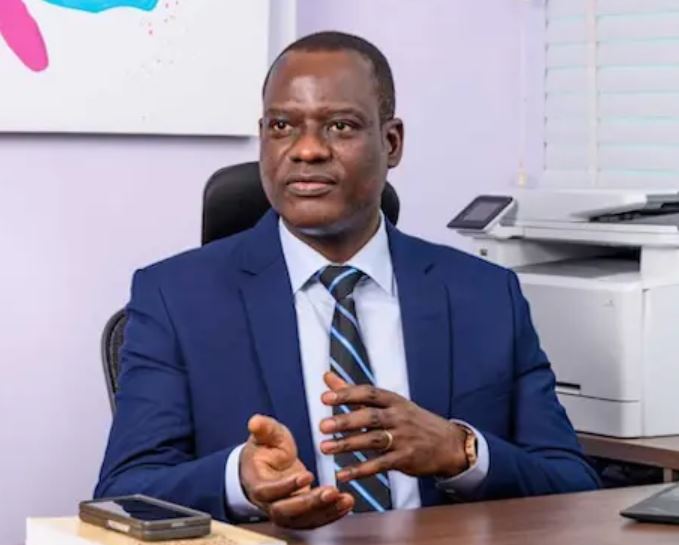
    Daniel Bwala, President Bola Tinubu’s Special Adviser on Policy Communication, has said the Obidient Movement may have thrown what he termed “African thing” that led to him having a throat surgery after the widely published interview with Al-Jazeera’s journalist, Mehdi Hasan.

    Bwala disclosed that he underwent a throat surgery eight days after the interview with Mehdi Hasan.

    He spoke in an interview on News Central’s programme, 60 Minutes with Mr Kay, on Friday.

    He said: “Eight days after the interview with Mehdi Hasan, I underwent surgery on my throat.

    “I don’t know whether it is the ‘Obidient’ people that threw that African thing, but in any case, I’m back and strong.”

    Bwala also accused members of Obidient Movement of placing political allegiance above national considerations.

    “I know the environment I come from; it’s an environment where there exists a species of ‘Trojans’ of social media called the ‘Obidient,’ who do not care about the national interest or the security of Nigeria and will do everything possible to achieve the aim of their hero, no matter the cost.

    “What Mehdi Hasan did was what we call opposition-style journalism, where you play the role of the opposition. In that interview, Mehdi sought to elicit information from me to discredit the government, but he could not,” he said.

    ‘African thing by Obidient Movement caused my throat surgery’ – Bwala

  • More Revelations On How Terrorists Overran Military Base, Killed Gen Braimah

    More Revelations On How Terrorists Overran Military Base, Killed Gen Braimah

    Fresh accounts have emerged on the circumstances surrounding the killing of the Commander of the 29 Task Force Brigade, Brigadier General Oseni Braimah, following a deadly midnight assault on a military base in Benisheikh, Borno State.

    Surviving soldiers described the incident as one of the most intense attacks in recent months.

    While the Nigerian Army insisted that the attack was successfully repelled and dismissed claims of heavy casualties and equipment failure, accounts from soldiers and residents painted the picture of a coordinated insurgent offensive that overwhelmed troops, leaving significant destruction in its wake.

    The attack, which occurred around 12.30am on Thursday, was carried out by suspected Boko Haram and Islamic State West Africa Province fighters, who launched simultaneous assaults on multiple military positions in Benisheikh, a strategic town in Kaga Local Government Area along the Maiduguri-Damaturu highway.

    According to multiple eyewitnesses, who spoke with Saturday PUNCH, the insurgents advanced in large numbers, attacking at least three military formations before pushing into civilian areas.

    A soldier who survived the attack but requested anonymity because he was not authorised to speak to the press, described the scale and coordination as unprecedented.

    “We are used to coordinated attacks, but this was different. They came in large numbers from different directions at the same time. It felt like they had studied our positions for weeks,” he said.

    Another survivor admitted that the attackers had a numerical advantage, which affected the outcome of the engagement.

    “We stood our ground at first, but they were too many. They attacked from different angles. It was like an ambush,” he said.

    According to him, the troops morale began to drop as rumours spread that other locations had fallen and some soldiers killed.

    “When we started hearing that our colleagues in other locations had been overrun, it shook us. Then someone shouted that the Brigade Commander was dead. That was when fear fully set in,” he added.

    The confusion and psychological impact of the attack, sources said, contributed to a breakdown in coordination among troops, forcing some to retreat towards the town.

    Saturday PUNCH gathered that the gun battle lasted over one hour and 30 minutes, with multiple explosions forcing both military personnel and civilians to flee for safety.

    Braimah’s death

    In the aftermath of the attack, claims emerged that Brigadier General Braimah was killed due to a malfunctioning Mine-Resistant Ambush Protected vehicle.

    However, military sources and individuals familiar with the late general disputed this.

    A highly placed source within the brigade described the claim as misleading.

    “The insurgents actually set the MRAP on fire during the attack. Saying he died because the vehicle didn’t start is not accurate. The situation was far more complex,” the source said.

    Another insider suggested that only those who were with the general at the exact moment of the attack could provide a definitive account, noting that many of them also died in the encounter.

    “I am aware that the insurgents closed in from various angles at the same time. It was like an ambush plan. But when the gun battle became intense, the terrorist formation scattered. What helped them was their numbers; there were too many of them,” the source added.

    Corroborating the account, a former frontline driver to the late general, who identified himself simply as Blacky, noted that Braimah’s attitude towards vehicle maintenance was exemplary.

    “If you talk about maintenance, General Braimah doesn’t play with repairs. Ask anyone under the 29 Task Force,” he said.

    Recounting his experience working with the late general, he said, “I was General Braimah’s driver. One day, he asked me, ‘Blacky, have you not spent two years already?’ I told him I had done four years and six months. He was shocked and asked why I had not applied for rotation. That was how he put my name forward. It is not up to one week that I left the North-East.”

    “If you met him with a complaint about money, pass, or anything, he would listen. I am not covering him because I was his former driver. What I am saying is fact,” he added.

    However, another source within the formation pointed to possible systemic lapses, alleging weaknesses in vehicle maintenance culture within the unit.

    “If there was any failure, attention should go to those responsible for maintaining operational vehicles. There have been complaints before,” the source claimed.

    Civilian toll, destruction

    A resident, Mustapha Abu, who spoke to Saturday PUNCH, said the intensity of the attack triggered panic across the town, with many residents abandoning their homes in the dead of night.

    “We heard loud explosions and continuous gunshots. It was terrifying. People were running in all directions. Even soldiers ran into the town for cover,” he said.

    Beyond military losses, residents reported significant destruction within Benisheikh, including the burning of shops, vehicles, and other civilian properties.

    “Many of them came to town, and they stayed with us, offering protection and directing our movements. I think that space gave the terrorists enough time to burn the facilities and loot available military resources. When I got to the camp after the attack, it was an eyesore.

    “Shops and vehicles close to the major roads belonging to civilians were set ablaze. Travellers who were resting in the community near the Bensheikh secretariat due to the routine closure of the Maiduguri–Damaturu road in the evening were also affected, as both drivers and passengers abandoned their vehicles and fled for safety,” Abu added.

    “When I got to the camp after the attack, it was devastating. Vehicles were burned, buildings destroyed. Even civilian shops were not spared,” another resident, who requested anonymity, said.

    The temporary withdrawal of troops into the town, sources said, created a security gap that allowed insurgents to loot military facilities and inflict further damage.

    Army pushes back

    Reacting to widespread reports, the Headquarters of Operation Hadin Kai dismissed claims that the attack resulted in the death of 17 soldiers, including the brigade commander.

    In a statement on Friday, the Media Information Officer, Northeast Joint Task Force, Operation Hadin Kai, Lt.-Col. Sani Uba, noted that the narratives, often amplified with unrelated pictures and videos, constituted a deliberate attempt to distort facts and undermine ongoing military operations.

    On the casualty figures, Uba said, “The official and verified report, as earlier released through Defence Headquarters, clearly stated that two officers and two soldiers paid the supreme price in the course of the engagement. Any contrary figure being circulated is entirely false, misleading, and devoid of credibility.”

    According to him, the insinuation that the brigade commander’s vehicle was unserviceable was equally incorrect.

    “The commander was mounted on a high-grade Mine-Resistant Ambush Protected (MRAP) vehicle, which was temporarily immobilised in the heat of combat while he was actively coordinating the counter-assault,” he noted.

    Uba said the incident reflected the intensity of the engagement and the presence of leadership at the decisive point, not any equipment failure.

    The spokesperson said the military strongly frowned on the distortion of facts and the use of such incidents for personal or political gains or propaganda.

    Uba, however, maintained that troops of Operation Hadin Kai successfully repelled the attack, maintained control of their location and forced the terrorists into a disorganised retreat.

    A troubling pattern

    The killing of Brigadier General Braimah adds to a growing list of senior Nigerian military officers who have lost their lives in the ongoing insurgency in the North-East.

    Security analysts say such incidents raise critical questions about operational strategy, intelligence gathering, and force protection in the war against Boko Haram and ISWAP.

    In recent years, several high-ranking officers have been killed in similar circumstances, often during ambushes or coordinated attacks on military formations.

    Brigadier General Musa Uba was the commander of the 25 Brigade of the Nigerian Army when he was killed in 2025.

    Another high-ranking officer killed was Brigadier General Dzarma Zirkusu

    Also killed was another high-ranking officer, Brigadier General Dzarma Zirkusu.

    He died alongside three other soldiers when ISWAP fighters ambushed them in Askira-Uba in November 2021.

    Zirkusu, who was from Adamawa State, had earlier in the year been appointed Commander of the 28 Task Force Brigade in Chibok.

    In September 2020, Boko Haram fighters ambushed Colonel Dahiru Chiroma Bako near Wajiroko town.

    He later died from injuries sustained in the attack.

    Lieutenant Colonel Muhammad Abu Ali also died in November 2016, one year after he was promoted from the rank of Major.

    Another senior officer, Lieutenant Colonel Ibrahim Sakaba, was killed in November 2018 during an attack on a military base in northern Borno, where several soldiers were also killed.

    Before his death, he was the Commander of the 157 Task Force Battalion in Metele.

    In August 2021, the Nigerian Army denied allegations made by his wife that he was killed by fellow soldiers after he reportedly refused to participate in corruption.

    Tinubu consoles military

    Meanwhile, President Bola Tinubu has expressed sorrow over the killing of the military officers.

    The President’s message was conveyed in a statement issued on Thursday night by his Special Adviser on Information and Strategy, Bayo Onanuga.

    Tinubu commended the bravery and resilience of the troops, noting that they fought gallantly to repel the attackers and prevent insurgents from overrunning communities under their protection.

    He also called on Nigerians and the media to rally behind the Armed Forces in the ongoing fight against insecurity.

    “From the reports I have received, our armed forces have been conducting sustained and intense land and air offensives against insurgents, neutralising many of their fighters and commanders. The insurgents’ counterattack is a sign of desperation,” the President said.

    He urged the military leadership and frontline personnel not to be discouraged by the death of Braimah, as he condoled with the families of the soldiers who lost their lives in the attack.

    The President assured that the Federal Government would honour the fallen soldiers and remained committed to defeating terrorism and restoring peace across the country.

  • I have killed over 100 people – Repentant Boko Haram member

    I have killed over 100 people – Repentant Boko Haram member

    A repentant member of Boko Haram has admitted to killing more than 100 people during his time with the insurgent group.

    This revelation was contained in a video shared on X, where the former fighter spoke during an interaction with a foreign vlogger at a rehabilitation camp with other Boko Haram repentants.

    In the video, the repentant Boko Haram while speaking through an interpreter, said he carried out numerous killings while operating in the bush.

    “I have killed over 100 people,” he admitted.

    He explained that he joined the group at a very young age and was forced by older members to take part in violent activities.

    According to him, “I started when I was about 10 years old. The elders gave instructions, and we followed them.”

    The former fighter said most of the killings happened in remote areas.

    He added that members of the group were often ordered to attack villages.

    He also revealed that women captured during attacks were not always killed but were forced into marriage with fighters.

    “If they capture women, they marry them, because there are few women in the camp,” he said.

    I have killed over 100 people – Repentant Boko Haram member

  • Oyedele admits errors in new tax laws, assures swift correction

    Oyedele admits errors in new tax laws, assures swift correction

    The Minister of State for Finance, Taiwo Oyedele, has acknowledged that Nigeria’s newly introduced tax reform laws contain errors, assuring that steps are already underway to address the identified issues.

    Oyedele made this known while speaking at a fireside chat during the 2026 annual conference of the Nigerian Bar Association (NBA) Section on Legal Practice. The event, themed “From Policy to Practice: Making Sense of Nigeria’s New Tax Reforms,” focused on clarifying concerns surrounding the country’s evolving tax framework.

    His remarks come amid controversy over discrepancies in the tax laws. On December 17, 2025, Abdussamad Dasuki, a member of the House of Representatives, alleged that the versions of the tax laws available to the public differed from those passed by the National Assembly. The claim prompted the lower chamber to set up a seven-member panel to investigate the issue.

    Addressing the concerns, Oyedele admitted that lapses occurred during the legislative process. According to a statement by the fiscal reforms committee, the minister acknowledged “that errors occurred due to manual processes and multiple stages of review” involved in drafting and finalising the laws.

    He, however, reassured stakeholders that corrective measures are already in motion through a proposed finance bill.

    “What we need is a more transparent and reliable legislative process where every version of a law is publicly available,” Oyedele said.

    The minister also sought to allay fears about the implementation of the reforms, noting that enforcement would not be arbitrary. He explained that the new tax regime is grounded in “clear policy intent, transparency, and fairness.”

    Oyedele emphasised that understanding the underlying objectives of tax policies is crucial, urging stakeholders to look beyond the text of the laws to their broader purpose.

    Highlighting past challenges, he pointed to inconsistencies in Nigeria’s tax system, particularly the imbalance between personal and corporate taxation, which he said discouraged business formalisation.

    He added that the reforms are designed to promote consistency, reduce discretion in tax administration, and encourage businesses to formalise operations.

    Reflecting on investor confidence, Oyedele warned against policy unpredictability, noting, “If policies can change overnight, it sends the wrong signal to investors. Consistency is critical.”

    The post Oyedele admits errors in new tax laws, assures swift correction appeared first on Vanguard News.

  • 10 tricks tokunbo car dealers use to rip off customers

    10 tricks tokunbo car dealers use to rip off customers

    By Theodore Opara

    The used car business in Nigeria is booming—especially at a time when brand-new vehicles are far beyond the reach of many citizens.

    Read Also: Stealing of catalytic converters: China-made alternatives offer relief

    To cope with the harsh economic reality, civil servants, traders and professionals have increasingly turned to used vehicles, popularly known as Tokunbo, for their daily transportation needs.

    Currently, Nigeria’s annual new car market is estimated at fewer than 30,000 units, while the used vehicle market exceeds one million units. This stark contrast underscores the dominance—and rapid growth—of the pre-owned vehicle segment.

    Rising inflation, currency pressures and the high cost of vehicles have worsened the situation. Today, the cheapest brand-new cars sell for upwards of N30 million, placing them out of reach for most Nigerians. Compounding this is the high cost of auto financing, which remains largely inaccessible.

    However, prospective buyers must be cautious. Many of the shiny vehicles displayed for sale are not always what they appear. Beneath the polished exterior often lies a series of manipulations designed to make them more attractive—and more profitable—for dealers.

    Below are 10 common tricks used car dealers deploy to conceal defects and maximise profits:

    1. Mileage manipulation

    Some dealers tamper with vehicle odometers to reduce mileage readings. Cars that have travelled over 200,000 kilometres are often reset to below 100,000 to appear less used and command higher prices.

    2. Engine and gearbox patchwork

    Vehicles with faulty engines or gearboxes are hastily repaired—sometimes with substandard parts—before being sold. Buyers often face costly repairs within months of purchase.

    3. Poor accident repairs

    Accident-damaged vehicles are refurbished, but often without proper equipment or expertise. Structural damage, especially to the chassis, may be poorly handled, posing safety risks.

    4. Flood-damaged vehicles

    Some imported vehicles have been severely damaged by floods in their countries of origin. Though cleaned and polished, underlying electrical and engine issues often emerge shortly after purchase.

    5. Cosmetic repainting

    Cars are resprayed to look new, but beneath the paint may lie rust, filler and poorly repaired bodywork. In some cases, minor impacts can cause panels to fall apart.

    6. Tyre substitution

    Dealers sometimes remove quality tyres that come with imported vehicles and replace them with worn-out ones, selling the originals separately for profit.

    7. Steering conversion risks

    Right-hand drive vehicles are illegally converted to left-hand drive. These conversions are often poorly executed, with telltale signs such as abnormal wiper configurations.

    8. Removal of catalytic converters

    The catalytic converter—an expensive component attached to the exhaust—is often removed and replaced with a plain pipe. This reduces engine efficiency and increases emissions.

    9. Battery swaps

    Original batteries are replaced with weak or nearly dead ones. Buyers are forced to replace them within weeks, incurring additional costs.

    10. Fault masking through battery disconnection

    Some dealers disconnect the battery to temporarily reset dashboard warning lights such as the check engine or ABS indicators. These faults typically reappear after the vehicle has been driven away.

    Buyer beware

    Prospective buyers are strongly advised to conduct thorough inspections, preferably with trusted mechanics, before purchasing any used vehicle. A careful check today can prevent costly regrets tomorrow.

    Vanguard News

    The post 10 tricks tokunbo car dealers use to rip off customers appeared first on Vanguard News.

  • NNPC monthly profit drops 64% as revenue hits N2.68trn

    NNPC monthly profit drops 64% as revenue hits N2.68trn

    By Obas Esiedesa

    The Nigerian National Petroleum Company Limited (NNPC Ltd.) on Saturday reported a 4.2 per cent increase in revenue for its February 2026 operations, rising to N2.68 trillion from N2.57 trillion recorded in January.

    However, the company’s profit after tax plunged by 64.67 per cent to N136 billion in February, down from N385 billion posted in the previous month.

    The sharp decline in profit comes amid increased remittances to the Federation following a presidential directive removing the 30 per cent retention on profit from oil and gas. As a result, NNPC’s remittance surged by 148.48 per cent, climbing from N726 billion in January to N1.8 trillion in February.

    Operational data in the monthly report showed that crude oil and condensate sales dropped during the period, with total volumes falling by 10.36 per cent to 23.08 million barrels, compared to 25.75 million barrels sold in January.

    Similarly, average daily oil production declined to 1.51 million barrels per day in February, down from 1.64 million barrels per day recorded in the preceding month.

    In contrast, gas production recorded a modest increase of 2.4 per cent, rising to 7,458 million standard cubic feet per day (mmscfd) from 7,283 mmscfd in January.

    The post NNPC monthly profit drops 64% as revenue hits N2.68trn appeared first on Vanguard News.

  • Youth Talent Takes Centre Stage At Abia Soccer Fest Finals

    Youth Talent Takes Centre Stage At Abia Soccer Fest Finals

    The State Finals of the Abia Soccer Fest tournament have commenced, with matches taking place across three centres in Abia State.
    In Umuahia, the opening fixture featured Isuikwuato against Arochukwu.

    While carrying out the ceremonial kick-off at Ubakala Mini Stadium on Friday, the Commissioner for Local Government and Chieftaincy Affairs, Prince Uzor Nwachukwu, urged the players to remain disciplined as they strive for victory.

    Prince Nwachukwu stated that the Abia Soccer Fest was created to discover football talents at the grassroots level and bring out players from local communities.

    “The essence of this entire competition is, first and foremost, to draw out talent from the various communities.

    “And I am happy to say that some of the players I am seeing here, some of them are 17, 18, so we are happy that they are coming out,” Prince Nwachukwu stated.

    He further revealed that 57 outstanding players were identified during the local government phase, adding that many of them are expected to remain in contention as the tournament progresses.

    “We will pick up all these players and then have them compete amongst themselves so that they can have opportunities in bigger clubs and showcase their talents.

    “So apart from drawing out the talent, we also want to use it as a bonding strategy for communities to interact through the medium of sports,” Nwachukwu stated.

    Also speaking, the Commissioner for Youth and Sports Development, Nwaobilor Ananaba, noted that the competition has already produced over fifty exceptional players and disclosed that international scouts would be invited for possible recruitment.

    Nwaobilor encouraged the teams to adhere strictly to the rules, approach every game with seriousness, and remain hopeful of being selected alongside other discovered talents.
    He also commended the State Governor, Alex Otti, for his consistent dedication to advancing sports development.

    The Vice Chairman of the Abia State Soccer Fest Local Organising Committee, Captain Eric Asomugha, explained that the kick-off signals the beginning of the tournament’s second phase, which will see the 17 local government champions compete in four groups.

    Captain Asomugha added that the initiative has provided youths with a platform to showcase their abilities globally and advised participants to maintain discipline throughout the competition.

    According to him, “the whole idea of Abia Soccer Fest is for community engagement, youth empowerment, and talent hunt.

    “We want to give opportunities to our great footballers who are in the grassroots.
    “So, we’ve gone deep into the villages. And mind you, this competition is being played by 184 wards in the state from the 17 Local Government Areas.

    “So, we have two phases. Phase 1, we played 166 matches across the 17 Local Government Areas. And today, we are kicking off the second phase, which we call the State Finals, where the 17 Local Government champions will be competing against each other for the state championship,” Asomugha explained.

    In her remarks, the Secretary of the Local Organising Committee and Permanent Secretary, Ministry of Local Government and Chieftaincy Affairs, Lady Oge Maduka, applauded Governor Alex Otti for his support toward youth development and urged all participating local governments to observe the rules of the game.

    At the end of the encounter, Isuikwuato secured a narrow 1–0 victory over Arochukwu.

    Youth Talent Takes Centre Stage At Abia Soccer Fest Finals is first published on The Whistler Newspaper

  • Expert rejects Hepatitis B vaccine infection claims, urges wider immunisation

    Expert rejects Hepatitis B vaccine infection claims, urges wider immunisation

    By Matilda Ikediobi

    The Chief Executive Officer of Inocul8, Dr. Emmanuel Egbroko, has dismissed claims circulating among some members of the public that the hepatitis B vaccine can cause infection, describing the belief as misinformation that continues to hinder public health efforts.

    Dr. Egbroko made the clarification while speaking on hepatitis B awareness, urging Nigerians to embrace vaccination as a safe and effective way to prevent the disease. He also warned that many people could already be living with the virus without knowing it, increasing the risk of late diagnosis and complications.

    Hepatitis B is a viral infection that attacks the liver and is transmitted through contact with infected blood, unprotected sexual contact, sharing of sharp objects, and from mother to child during childbirth. Health experts note that many infected individuals may not show symptoms in the early stages, allowing the virus to silently damage the liver over time and potentially lead to liver cirrhosis, liver failure, or liver cancer.

    According to Dr. Egbroko, fears that the vaccine can transmit the disease are unfounded. He explained that the Hepatitis B vaccine does not contain a live virus, but rather a harmless viral protein that trains the immune system to recognize and fight future infections.

    “The vaccine cannot cause hepatitis B infection because it does not contain the virus itself,” he said, adding that reported mild side effects such as soreness at the injection site or slight fever are normal immune responses and not signs of illness.

    The Chief Medical Director of Inocul8, Dr. Paul Ogboji, also noted that misinformation, particularly on social media, has contributed significantly to vaccine hesitancy. He said many people wrongly associate normal post-vaccination reactions with infection, leading to fear and avoidance of immunisation.

    The organisation, Inocul8, said it is intensifying public awareness campaigns to address misconceptions and improve understanding of infectious diseases.

    Health experts continue to stress that hepatitis B remains a significant public health concern in many parts of Africa, including Nigeria, where undiagnosed cases are common. They maintain that vaccination remains one of the most effective preventive measures against the disease.

    Dr. Egbroko urged Nigerians to seek accurate medical information and to prioritise vaccination as part of long-term protection against hepatitis B infection.

    The post Expert rejects Hepatitis B vaccine infection claims, urges wider immunisation appeared first on Vanguard News.

  • FG Moves To Tackle Identity Fraud At Nigeria’s Airports

    FG Moves To Tackle Identity Fraud At Nigeria’s Airports

    The Federal Government has signed a concession agreement with VERXID Technologies Limited for the deployment of a contactless biometric passenger verification system, known as VPASS, across Nigeria’s domestic airports.

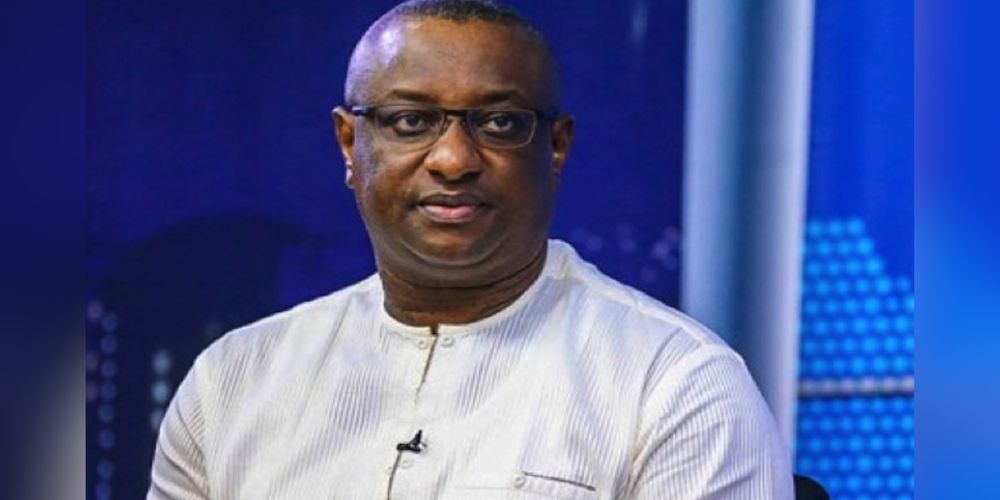
    According to a statement issued by Chindaya Adamu, Director of Press and Public Affairs at the Ministry of Information and National Orientation, the agreement was signed by the Minister of Aviation and Aerospace Development, Festus Keyamo.

    The statement noted that the initiative is aimed at strengthening aviation security, improving data integrity, and boosting revenue generation across the sector.

    Keyamo said the introduction of VPASS would eliminate discrepancies in passenger data caused by inconsistent airline records and tackle cases of unauthorised boarding.

    According to the minister, the system will ensure that all passengers on domestic flights are properly identified, closing existing gaps that allow individuals to bypass standard identification procedures.

    He noted that while strict identity verification measures are already in place for international travel, the VPASS system will extend similar standards to domestic operations.

    “The system will subsequently be expanded to cover private aviation, to further strengthen security oversight across the sector,” Keyamo added.

    The minister described the project as a comprehensive reform that will promote transparency, accountability, and safety in the aviation industry.

    He said implementation will begin with infrastructure deployment by the concessionaire, followed by a nationwide sensitisation campaign to drive public awareness and compliance.

    Keyamo also commended key stakeholders, including the Infrastructure Concession Regulatory Commission and the Federal Airports Authority of Nigeria, for their roles in advancing the initiative.

    In his remarks, Mahmud Kambari, Permanent Secretary of the ministry, said the government remains committed to modernising the aviation sector through technology-driven solutions aimed at improving efficiency, security, and passenger experience.

    Also speaking, Adebola Agunbiade, Director of Commercial and Business Development at FAAN, said the VPASS system would reduce reliance on physical identification at airports.

    She added that the deployment of facial recognition technology will enable seamless passenger processing in line with global best practices.

    Johnson Ewalefoh, Director-General of the ICRC, said public-private partnerships remain critical to strengthening infrastructure, improving airport standards, and enhancing national security.

    Meanwhile, the Managing Director of VERXID Technologies Limited, Adebayo Bankole, assured that the company would deploy a secure and integrated identity management system across airports nationwide.

    Bankole said the solution will enhance passenger verification, curb unauthorised movement within airport facilities, and support revenue assurance through accurate data analytics.

    FG Moves To Tackle Identity Fraud At Nigeria’s Airports is first published on The Whistler Newspaper