Category: Uncategorized

  • How Job interview Turned Into Robbery in Lagos

    How Job interview Turned Into Robbery in Lagos

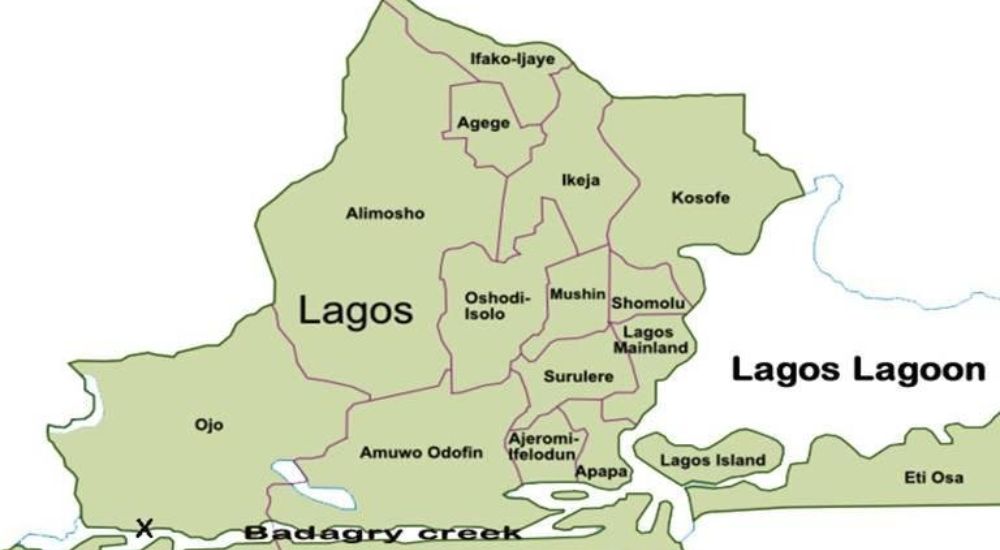
    The Lagos State Police Command has arrested a suspect in connection with a robbery in which job seekers were lured to a fake interview in the Magodo area of Lagos and stripped of their valuables.

    The arrest follows a viral video posted by X user @General_Somto on April 10 that sparked widespread concern over sophisticated scams targeting job applicants.

    In the video, victims could be seen visibly distressed, with one recounting the ordeal in a direct warning to the public.

    “Nigerians, let’s be careful out there. Not all job offers are legit. We went for a job interview in Magodo, Lagos only to be robbed.

    “They took our phones, money, and everything we had on us,” she said.

    According to victims, the setup appeared professional and credible at first, with the interview conducted in an organised environment that raised no initial suspicion. They were subsequently asked to briefly step out, only to return and find their mobile phones, cash and other personal belongings gone.

    The police confirmed the incident in a statement on Sunday, saying it was reported at about 11 p.m. on April 9.

    “One suspect is currently in police custody, while efforts are ongoing to arrest other fleeing suspects and bring all those involved to justice,” the command said.

    The police urged job seekers to verify the authenticity of job offers before attending interviews, particularly those advertised online. They advised applicants to confirm company details through official channels, avoid isolated or unverified venues, and notify trusted contacts before attending any interview.

    How Job interview Turned Into Robbery in Lagos is first published on The Whistler Newspaper
  • ‘Jilli airstrike a devastating failure’ — Atiku condemns bombing of traders

    ‘Jilli airstrike a devastating failure’ — Atiku condemns bombing of traders

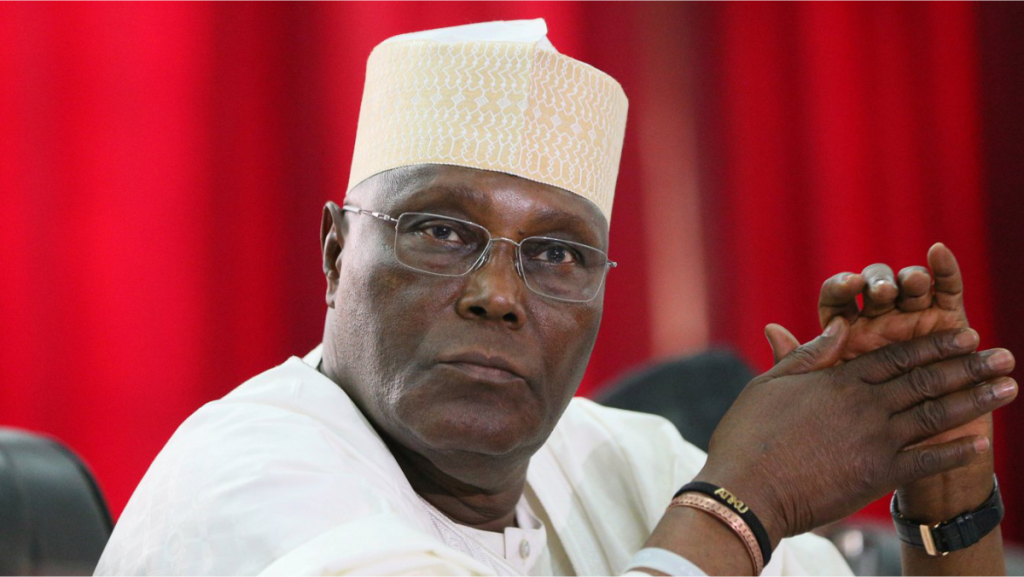
    Former Vice-President Atiku Abubakar has condemned the reported airstrike by the Nigerian Air Force (NAF) on a market along the Borno–Yobe border, describing the incident as a “devastating failure” that demands urgent accountability.

    No fewer than 56 people, mostly traders, are feared dead, while 14 others have reportedly been hospitalised following the strike at Jilli market.

    Reacting in a statement posted on X on Sunday, Atiku expressed outrage over the loss of civilian lives, warning that such incidents continue to undermine public confidence in security operations.

    “The Jilli market airstrike that killed scores of innocent traders is not just tragic, but a devastating failure that must outrage every conscience,” he said.

    He criticised the recurring pattern of civilians being affected during counter-insurgency operations, noting that those meant to be protected are often caught in the crossfire.

    “While targeting insurgents, innocent Nigerians were once again reduced to collateral damage. How long will citizens remain unsafe both from terrorists and from the very operations meant to protect them?” he asked.

    Atiku drew a comparison with international military standards, citing a recent United States operation to emphasise the value placed on human life.

    “Just a few days ago, the United States deployed over 150 aircraft and spent an estimated $300 million to rescue just one pilot in Iran, even destroying equipment worth over $100 million each to protect a single life,” he said.

    “That is the value they place on one citizen. Here at home, we must ask: what is the value of Nigerian lives?”

    He called for a comprehensive review of military operations and stronger safeguards to prevent similar tragedies in the future.

    “This demands urgent review, accountability, and decisive action to prevent a recurrence,” he added.

    The former vice-president also extended condolences to families of the victims and affected communities.

    “My heartfelt condolences go to the bereaved families and affected communities. Nigeria must uphold its duty to protect its citizen. That is the ultimate essence of National Security,” he said.

    Meanwhile, the Nigerian Air Force has confirmed that it carried out air operations in the area but did not state whether civilians were affected.

    In a statement signed by its Director of Public Relations and Information, Air Commodore Ehimen Ejodame, the NAF said it conducted “precision follow-up mop-up airstrikes on identified terrorist locations within the Jilli axis of Borno State on April 11, 2026.”

    According to the statement, the strikes were part of a coordinated air and ground offensive with the Nigerian Army under Operation HADIN KAI.

    The post ‘Jilli airstrike a devastating failure’ — Atiku condemns bombing of traders appeared first on Vanguard News.

  • Kogi: Ododo commissions rebuilt Ibaji secretariat

    Kogi: Ododo commissions rebuilt Ibaji secretariat

    Kogi State Governor, Alhaji Ahmed Ododo, has commissioned and handed over the newly renovated Old Ibaji Local Government Secretariat in Onyedega, Ibaji Local Government Area…

  • Sanwo-Olu urges grassroots mobilisation as RTIFN backs Tinubu’s agenda

    Sanwo-Olu urges grassroots mobilisation as RTIFN backs Tinubu’s agenda

    Lagos State Governor, Babajide Sanwo-Olu, has called for increased grassroots mobilisation to deepen public understanding of government policies and their long-term benefits….

  • DisCos Generate N2.32tn As Abuja, Others Dominate Revenue Surge

    DisCos Generate N2.32tn As Abuja, Others Dominate Revenue Surge

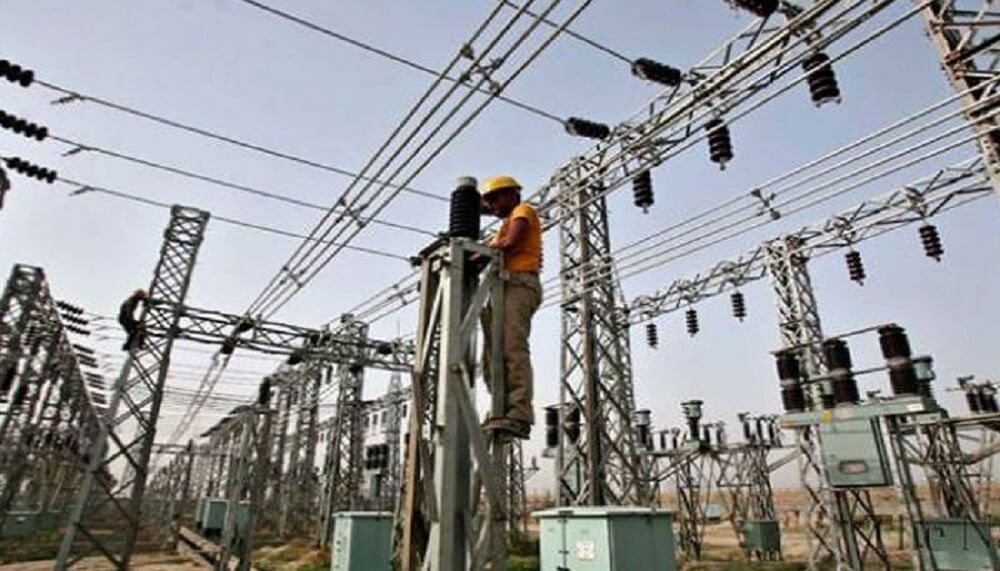
    Nigeria’s electricity distribution companies (DisCos) generated a combined N2.32tn revenue in 2025, data from the Nigerian Electricity Regulatory Commission (NERC), has disclosed.

    An analysis of the figures shows that all 11 DisCos recorded revenue growth compared to 2024, when they raked in approximately
    N1.66tn.

    The breaking of the data, shows that Ikeja DisCo posted the highest revenue of N440.86bn in 2025, up from N309.48bn in 2024.

    This marks a remarkable 131 per cent increase; while Eko DisCo followed closely with N423.99bn, representing a 118 per cent rise from the previous year.

    Also, the Abuja DisCo delivered a strong performance, generating N376.96bn, up 101 per cent year-on-year.

    This cemented its position among the top-performing utilities.

    However, Ibadan, Benin and Enugu DisCos were Mid-tier performers in 2025.

    A further analysis of the data reveals that Ibadan DisCo generated N250.45bn in the year under review, while
    Benin DisCo revenue stood at N202.68bn, Enugu DisCo ended the year with N187.69bn revenue generation.

    The three DisCos recorded growth rates above 50 per cent last year.

    The Port Harcourt DisCo closely followed the trio of Ibadan, Benin and Enugu Discos in revenue generation.

    It raked in N170.37bn in 2025, making it a 60 per cent increase.

    According to the data, the Kano DisCo generated N111.63bn, while Jos, Kaduna, and Yola DisCos posted N67.77bn, N51.38bn, and N36.68bn respectively.

    Kaduna and Jos Discos showed single-digit and near-flat improvements during the year under review.

    THE WHISTLER had previously reported that the electricity distribution companies (DisCos) collected a total of N204.74bn in January 2026, just as Eko and Ikeja DisCos led the industry across key efficiency metrics.

    Data from NERC’s January 2026 factsheet on the commercial performance of DisCos showed that the total revenue collection, derived from N268.20bn billed to customers.

    This translates to a 76.34 per cent collection efficiency, reflecting a decline from the previous month.

    Despite the dip, Eko DisCo and Ikeja DisCo stood out as the strongest performers.

    According to the report, Eko Discos posted a collection efficiency of 87.55 per cent and the highest revenue recovery rate of 87.92 per cent, while Ikeja DisCos followed closely with 87.77 per cent collection efficiency and 81.64 per cent recovery efficiency.

    In terms of billing efficiency, Eko also led with 91.26 per cent, pointing to its strong operational performance across the value chain.

    DisCos Generate N2.32tn As Abuja, Others Dominate Revenue Surge is first published on The Whistler Newspaper
  • Gov Yusuf empowers 6,680 Kano women with N50,000 each

    Gov Yusuf empowers 6,680 Kano women with N50,000 each

    Kano State Governor, Abba Kabir Yusuf, has disbursed ₦338 million to 6,680 women across the state as part of his administration’s ongoing efforts to promote economic empowermen….

  • NDLEA arrests 21 suspects in Kano drug crackdown

    NDLEA arrests 21 suspects in Kano drug crackdown

    The National Drug Law Enforcement Agency (NDLEA) in Kano has arrested 21 suspects and seized various illicit drugs during a major operation carried out across the state.

    A statement signed by Sadiq Muhammad Maigatari, the agency’s Public Relations Officer, said the raids were conducted on April 11, 2026 under the leadership of Commander D. Y. Lawal.

    Officers targeted several drug hotspots, including Filin Idi, Hotoro, Mariri, Fagge, and Farm Center along Zaria Road.

    During the operation, officials recovered different types of illicit substances, including cannabis, pregabalin, codeine-based cough syrup, and rubber solution used as an inhalant. Locally made weapons were also seized.

    “Suspects who attempted to attack officers with locally-made weapons were tactically disarmed and taken into custody. Investigations are ongoing to identify principal drug dealers and to build cases for prosecution,” he said.

    Speaking on the development, Commander D. Y. Lawal said the support from the Kano State government has strengthened the agency’s operations.

    “The timely donation of vehicles by the Kano State Government has enabled our command to extend coverage and respond swiftly to intelligence.

    “We will continue to use these assets for sustained, visible operations to rid our communities of illicit drugs. Those still engaged in this illicit business should repent now before it is too late,” he said.

    The NDLEA assured residents that it remains committed to combating drug-related crimes and protecting young people in the state.

    It also urged the public to support its efforts by sharing useful information and cooperating with law enforcement agencies.

    NDLEA arrests 21 suspects in Kano drug crackdown

  • Makinde plotting to remove Olubadan over allegations – Fayose alleges

    Makinde plotting to remove Olubadan over allegations – Fayose alleges

    Former governor of Ekiti State, Ayo Fayose, has alleged plot by the Oyo State Governor, Seyi Makinde, to remove the Olubadan of Ibadanland, Oba Rahidi Adewolu Ladoja.

    Fayose claimed in a post on his official X handle on Sunday that the plot is to kick off this week, stating that a query would be issued to the king.

    According to the former governor, the query would contain several allegations against the monarch.

    He wrote, “I heard reliably that Governor Seyi Makinde of Oyo State is plotting the removal of the Olubadan of Ibadanland, Oba Rahidi Adewolu Ladoja.

    “The plot is to commence this week, with Government Query to be issued against Olubadan, citing his absence at the failed coronation of High Chiefs in Ibadanland two weeks ago, and other allegations.

    “As for us, we will be watching the Sìgìdì of Seyi Makinde tó fẹ́ se eré ẹ̀tẹ́”.

    Makinde plotting to remove Olubadan over allegations – Fayose alleges

  • Kano APC stakeholders nominate Sule Garo as deputy

    Kano APC stakeholders nominate Sule Garo as deputy

    Stakeholders of the All Progressives Congress (APC) Legacy Group in Kano State have nominated Murtala Sule Garo as the preferred candidate for the position of deputy governor, following a marathon meeting…

  • CPPE Rejects World Bank Call For Increased Fuel, Food Imports

    CPPE Rejects World Bank Call For Increased Fuel, Food Imports

    The Centre for the Promotion of Private Enterprise (CPPE), has strongly rejected recent recommendations by the World Bank advocating increased importation of petroleum products and food as a response to Nigeria’s supply-side constraints, warning that such a strategy could derail the country’s industrialisation agenda and weaken macroeconomic stability.

    CPPE described the proposal as “deeply troubling” and misaligned with Nigeria’s current economic reform trajectory, stressing that the country is beginning to record measurable gains in macroeconomic stability, including improving foreign reserves, moderating inflation, and a more stable exchange rate regime.

    The organisation argued that encouraging higher imports at this stage risks reversing these gains by intensifying pressure on foreign exchange, discouraging domestic investment, and increasing vulnerability to global shocks, particularly amid ongoing geopolitical tensions and volatility in international energy markets.

    According to the CPPE, Nigeria is gradually transitioning towards self-sufficiency in petroleum products, driven by significant private investments in domestic refining capacity.

    It noted that this progress should be consolidated through policies that support local production, enhance value addition, and strengthen industrial linkages, rather than resorting to import-dependent solutions.

    “Import-driven strategies at this stage would undermine investor confidence in the domestic refining sector and reverse progress towards energy security,” the statement said, adding that priority should instead be placed on ensuring adequate crude supply to local refineries and creating an enabling environment for downstream investments.

    The think tank further emphasised that sustainable economic transformation must be anchored on industrialisation, not import dependence.

    It warned that increased reliance on imports could accelerate de-industrialisation, weaken the manufacturing sector, and limit job creation in an economy with a rapidly expanding labour force.

    Highlighting structural constraints facing domestic producers, CPPE noted that Nigerian firms operate under significantly higher costs due to poor infrastructure, elevated energy prices, high lending rates, often exceeding 25 to 30 percent, and multiple taxation.

    It argued that under such conditions, competition between imports and local production is inherently uneven.

    “What is presented as competition is, in reality, structural asymmetry,” the group stated, pointing out that many foreign producers benefit from subsidies, efficient logistics systems, and lower financing costs in their home countries.

    It warned that exposing domestic industries to such imbalances could discourage investment and entrench import dependence.

    The CPPE also raised concerns about the potential influx of substandard petroleum products and the risk of dumping in the absence of strong regulatory safeguards, noting that this could undermine consumer protection, environmental standards, and the viability of local refining operations.

    On energy security, the organisation recalled Nigeria’s historical dependence on imported petroleum products, which it said contributed to the collapse of local refineries, created a rent-seeking import regime, and imposed an annual import burden estimated at between $10bn and $15bn at its peak.

    It noted that recent progress in domestic refining demonstrates Nigeria’s capacity to meet its own fuel needs, stressing that expanding local refining capacity remains the most sustainable path to energy security and economic resilience.

    The CPPE similarly cautioned against increased food imports, arguing that such a move would depress farmgate prices, discourage agricultural investment, and weaken rural livelihoods.

    It maintained that Nigeria’s food security strategy should prioritise boosting domestic productivity, strengthening value chains, and improving market access.

    Beyond sectoral concerns, the think tank warned of broader macroeconomic risks associated with heavy import dependence, including pressure on the naira, depletion of external reserves, and increased exposure to global commodity shocks.

    It also pointed to a growing global shift towards strategic protectionism, noting that many advanced economies are prioritising domestic production, supply chain resilience, and local content development.

    Against this backdrop, CPPE described the World Bank’s recommendation as inconsistent with emerging global policy trends.

    The organisation called on the World Bank to recalibrate its policy advisory towards supporting industrialisation-driven reforms in Nigeria.

    It outlined key priorities to include expanding domestic refining capacity, reducing production costs, strengthening manufacturing ecosystems, enhancing agricultural productivity, and addressing structural bottlenecks affecting private sector growth.

    Chief Executive Officer of CPPE, Muda Yusuf, reiterated that Nigeria’s long-term development must be anchored on a production-driven growth model characterised by strong domestic industries, competitive manufacturing, and robust agricultural systems.

    He stressed that import liberalisation is not a sustainable solution to supply-side challenges, warning that it could deepen structural vulnerabilities and undermine the country’s economic sovereignty.

    “The focus should be on building a resilient, self-reliant and industrialised economy, not a return to import dependence,” he said.

    CPPE Rejects World Bank Call For Increased Fuel, Food Imports is first published on The Whistler Newspaper