Category: Uncategorized

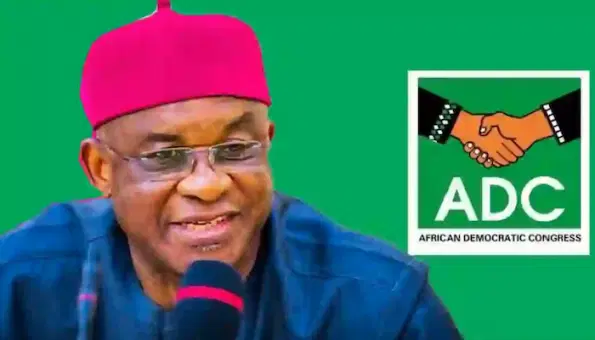
  • ADC fixes May 12 inauguration as Mark camp tightens grip on state excos

    ADC fixes May 12 inauguration as Mark camp tightens grip on state excos

    By Luminous Jannamike

    ABUJA—African Democratic Congress, ADC, has fixed May 12, 2026, for the inauguration of its newly elected state executives, as the David Mark-led leadership pushes ahead to consolidate its hold on the party, despite ongoing internal crisis.
    By proceeding with the inauguration, the Mark camp is moving to formalise its authority across the states, even as disputes, court cases and rival claims continue to trail the congresses in parts of the country.
    The announcement was contained in a statement by the party’s National Publicity Secretary, Bolaji Abdullahi, who spoke on behalf of the leadership yesterday.
    “African Democratic Congress, ADC, congratulates all newly elected state executives and state chairmen across the federation on the successful and peaceful conduct of their congresses.
    “These elections, carried out in line with the provisions of the law and the party’s constitution, reflect the ADC’s enduring commitment to internal democracy, transparency and the rule of law.
    “We commend all party members and stakeholders for exercising their democratic rights with maturity, discipline, and a shared sense of purpose,” Abdullahi said.
    The party also said the inauguration would go ahead as scheduled, with changes to be communicated by its National Working Committee, NWC.
    Speaking further, Abdullahi said: “The party is pleased to announce that the formal inauguration of the newly elected State Executives is scheduled to take place on May 12, 2026, or on a later date to be duly communicated by the National Working Committee.
    “As you prepare to assume office, we urge all elected officials to remain steadfast in their dedication to the ideals and vision of the party.”
    The task ahead requires unity, discipline and a continued commitment to building a strong, credible alternative for the Nigerian people.
    “The ADC remains confident that under your leadership at the state level, the party will continue to grow, deepen its structures, and strengthen its connection with citizens across the country.’’
    The move comes against the backdrop of a deepening leadership dispute within the party, with parallel congresses, court interventions and suspensions reported in several states, raising questions about the uniformity of the process nationwide.
    Despite this, the Mark-led leadership has insisted the congresses conducted under its watch were valid, pressing ahead with the inauguration as it seeks to stabilise the party and position it ahead of future elections.

    The post ADC fixes May 12 inauguration as Mark camp tightens grip on state excos appeared first on Vanguard News.

  • Conviction of terrorists ‘ll give hope to victims — US, CSOs, lawyer

    Conviction of terrorists ‘ll give hope to victims — US, CSOs, lawyer

    By Gabriel Ewepu

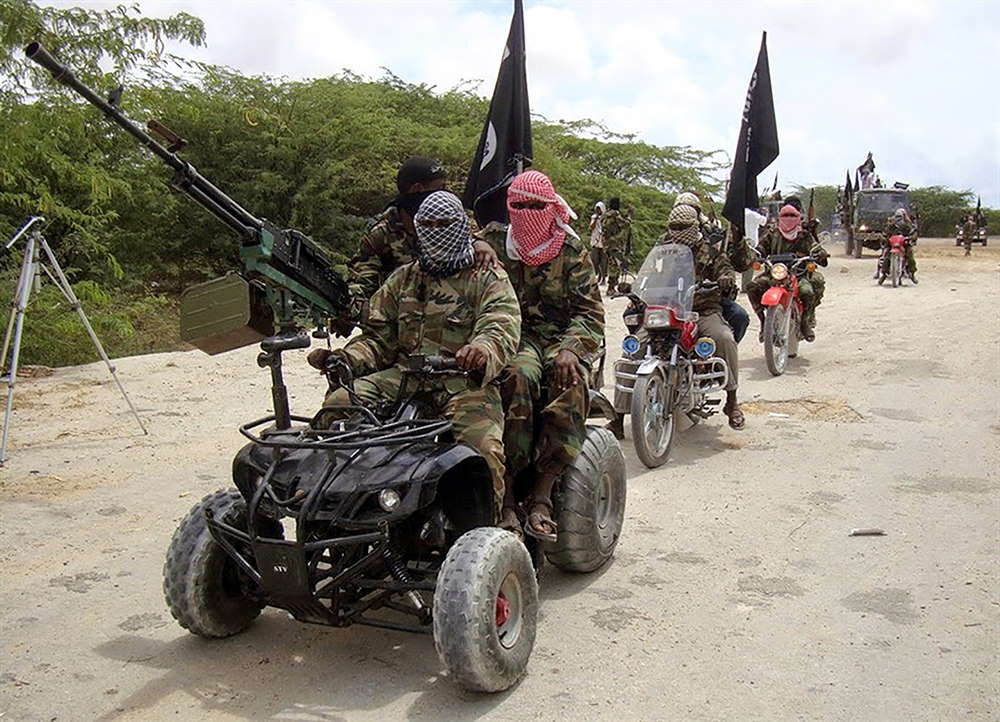
    ABUJA—AMID rising insecurity across the country, the United States, civil society organizations, CSOs, and a senior lawyer have hailed the conviction and sentencing of Boko Haram terrorists to life imprisonment by the Federal High Court in Abuja.

    They described the landmark judgment by Justice James Omotosho as a step in the right direction.

    US commends Nigeria over 386 terrorism convictions

    On its part, the United States commended the federal government for securing 386 convictions in terrorism-related cases, describing the development as a significant step towards justice and accountability.

    U.S. Senior Advisor for Arab and African Affairs, Massad Boulosin, a statement he shared via X yesterday, said: “The United States commends the Nigerian government for its strong commitment to expediting trials addressing terrorism and related crimes.

    “We welcome the convictions of 386 Islamist militants in cases that had previously faced significant delays in the courts, and we recognise this as an important step toward accountability and justice.’’

    The U.S. further stressed the importance of transparent legal processes in tackling extremism, saying: “we believe that timely and transparent legal processes are critical in confronting extremism and reinforcing public trust in judicial institutions.

    ‘’Upholding the rule of law remains essential to ensuring the safety, stability, and long-term security of all Nigerians.’’

    Judgment will restore Nigerians’ faith in justice system – Global Rights

    The Executive Director, Global Rights Nigeria, Abiodun Baiyewu, said the judgment would give more confidence in the nation’s justice system.

    Baiyewu said: “This is certainly a move in the right direction. This will help restore the public’s faith in the justice system. Prior rhetoric of amnesty and rehabilitation have been very detrimental to the psyche of communities that have borne the brunt of terrorism for the past 15 years. Hopefully, it would deter other would-be criminals’ intent on chaos.”

    We don’t need special courts to prosecute terrorism cases

    According to her, “terrorists should be prosecuted by regular courts. These are internal security/criminal matters, and should be treated as such. You could have a special investigations unit, but the regular courts are equipped to manage them once charged with a crime.

    “The one thing they can do differently is to ensure that the justice system is overhauled to ensure criminal matters are adjudicated on time.”

    Judgment reaffirms no one is above the law – ActionAid

    In his reaction to the judgments, the Country Director, ActionAid Nigeria, AAN, Dr Andrew Mamedu, said: “ActionAid Nigeria believes this is a significant step in the right direction. Holding individuals accountable for acts of terrorism reinforces the principle that no one is above the law, and that the state remains committed to protecting citizens from violent extremism.

    “We strongly support the idea that it is better for terrorists to serve the right and commensurate punishment within the framework of the law, while simultaneously participating in rehabilitation programmes.

    “Such rehabilitation ensures that convicted individuals have the opportunity to reintegrate into society safely where applicable and reduces the likelihood of re-offending.

    “At the same time, we recognise that justice is not only about convictions. Sustainable impact requires a holistic approach that addresses the structural drivers of terrorism, including poverty, social exclusion, lack of education and weak governance.

    “Convictions should, therefore, complement community-based interventions, psychosocial support for victims, and long-term prevention strategies. In this sense, the court’s decision is a positive signal but it must be embedded in a broader framework that ensures lasting security and societal healing.”

    We’ve confidence in conventional courts

    Speaking further, Mamedu said: “ActionAid Nigeria recognises that conventional courts are an important avenue for handling terrorism cases. They demonstrate confidence in civilian judicial institutions, reinforce the rule of law, and allow for open and transparent proceedings, which promote public accountability and adherence to human rights standards.

    “Conventional courts ensure that terrorism cases are treated like any other criminal matter under the law, maintaining procedural fairness and due process.’’

    Sound judgment, step in right direction – Lawyer

    Lawyer and Principal Counsel, Idris Faro & CO, Idris Faro, described the judgment as sound and a step in the right direction.

    He said: “The judgment of Hon. Justice Omotoso of the Federal High Court, convicting and sentencing some defendants who pleaded guilty to terrorism and other offences, is a sound judgment. It is a step in the right direction. There must be punishment for those who commit crimes, especially heinous crimes.

    “Administration of Criminal Justice is nothing without the imposition of custodial sentence on violent criminals. They must be taken to the penitentiary for punishment and correction as necessary.

    “There has been a recurrence of violent crimes in the country because criminals get away with their crimes. When criminals are jailed or sentenced to death as the law still provides, it sends a strong message to would-be criminals or the lucky ones who escaped arrest that crime does not pay.

    ‘’By diligently prosecuting terrorists, the the level of insecurity will drastically reduce. There should be no sacred cows at all. Terrorists and their financiers or those who abet them must have their day in court.”

    The post Conviction of terrorists ‘ll give hope to victims — US, CSOs, lawyer appeared first on Vanguard News.

  • Minister cannot interfere in individual tax enforcement, says NRS

    Minister cannot interfere in individual tax enforcement, says NRS

    THE Nigeria Revenue Service (NRS) has clarified that the Minister of Finance does not have the authority to interfere in specific tax enforcement actions, stressing the agency’s operational independence under the Nigeria Revenue Service (Establishment) Act No. 4. In its recently released “100 Frequently Asked Questions” on the new tax framework, the NRS explained that […]

  • Sultan of Sokoto debunks AI image on Benue crisis

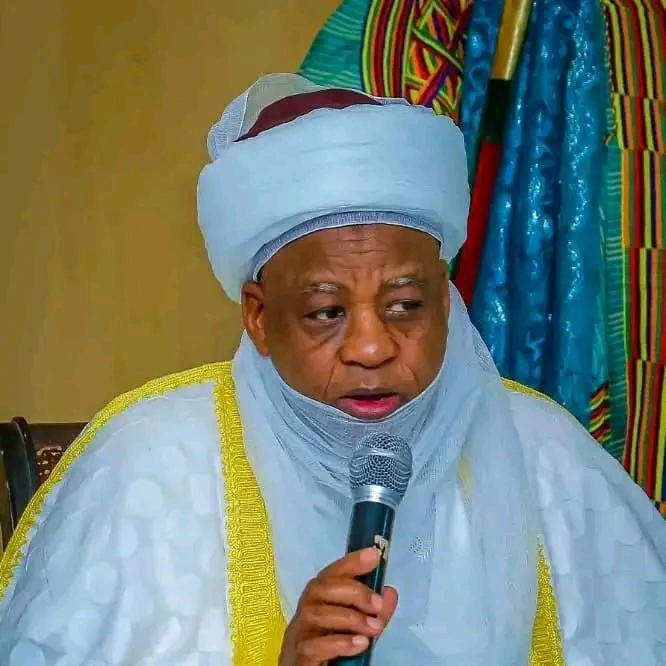
    Sultan of Sokoto debunks AI image on Benue crisis

    •Warns against fake news
    By Dapo Akinrefon

    The media team of the Sultan of Sokoto, yesterday, debunked a misleading post circulating on social media platforms linking the Sultan to the crisis in Benue State.

    The team in a statement by Prince Bashir Adefaka, titled ‘Re: False and misleading claims circulating on social media,’’ said the misleading content attempted to introduce a divisive religious and ethnic narrative.

    It stated that the Sultan had consistently promoted peace, interfaith harmony and national cohesion, noting that efforts to tarnish his legacy through fabricated content must be rejected.

    The statement read: “The Media Team of the Sultan of Sokoto has been alerted to a misleading post circulating across WhatsApp groups and other social media platforms, titled ‘leaked photo of Governor Hyacinth Alia worshipping the Sultan of Sokoto.’

    ‘’The content attempts to introduce a divisive religious and ethnic narrative into the ongoing security challenges in Benue State.

    “We wish to categorically state that the image in question is fake, likely AI-generated, and deliberately crafted to misinform the public. It is also a mischievous and dangerous attempt to associate the revered leadership of Muslims in Nigeria, particularly the Sultan of Sokoto, with issues unrelated to his office or person.

    “The accompanying commentary falsely alleges religious bias and attempts to inflame tensions by linking the Sultan to the crisis in Benue State. Such claims are not only baseless but also constitute a serious threat to national unity and security.

    ‘’These actions reflect a pattern of disinformation designed to incite division and undermine peaceful coexistence among Nigerians.

    “As custodians of the image and public communication of the Sultan of Sokoto, who also serves as President-General of the Nigerian Supreme Council for Islamic Affairs, NSCIA, Chairman of the National Traditional Rulers Council of Nigeria, Co-Chairman of the Nigerian Inter-Religious Council and Co-President of the World Religions for Peace, New York, we condemn these acts in the strongest terms.

    ‘’For nearly two decades, the Sultan has consistently promoted peace, interfaith harmony, and national cohesion. Efforts to tarnish this legacy through fabricated content must be rejected by all well-meaning Nigerians.

    “We also note with concern that similar false narratives have been propagated over time by identifiable individuals on social media. Such activities risk exacerbating existing tensions and destabilising the fragile security environment in parts of the country.

    “For the avoidance of doubt, the Sultan of Sokoto does not appear in the manner depicted in the circulated image whatsoever. Furthermore, Islamic teachings clearly establish that prostration is an act of worship reserved solely for Almighty Allah, making the claims in the post not only false but also fundamentally inconsistent with the Sultan’s faith and principles.

    “We call on the federal government and relevant security agencies to take decisive action against the spread of disinformation and those responsible for inciting division through such harmful content, some of whom we shall start profiling for actions any time soon.

    “We also urge religious and community leaders across all faiths to promote responsible communication among their followers, particularly on social media platforms. ‘’Safeguarding Nigeria’s unity and stability is a shared responsibility that transcends religious and ethnic boundaries.”

    The post Sultan of Sokoto debunks AI image on Benue crisis appeared first on Vanguard News.

  • Killings under-reported, security crisis deepening —Gbenga Hashim

    Killings under-reported, security crisis deepening —Gbenga Hashim

    By Luminous Jannamike

    ABUJA—Former presidential candidate, Dr Gbenga Hashim, has raised fresh alarm over the wave of killings spreading across parts of Nigeria, warning that many of the deaths were not being fully reported and that the country’s security crisis was worsening.
    According to him, attacks are spreading across more states, happening more frequently, and barely making it beyond local headlines, leaving victims unseen and the scale of the violence poorly understood.
    In a statement issued yesterday, Hashim said more than 40 people were reportedly killed in the past week in Shanga Local Government Area, with homes destroyed and the death toll still rising as new casualties were recorded.
    Recall that the same community had earlier suffered another attack that left seven people dead, amid repeated assaults by terrorists without any meaningful security response.
    He also pointed to Kwara State where coordinated attacks in Kaiama, Baruten and Ifelodun had left between 20 and 50 people dead in recent weeks, including five forest guards.
    According to him, many of these incidents received little attention beyond local reports.
    He said across the north central region, the pattern appeared even more severe, noting that in Benue State, between 50 and over 100 people were reportedly killed within weeks.
    Hashim also noted that in Plateau State, coordinated night attacks left 30 to 80 people dead, while Niger State recorded 20 to 50 deaths, with Nasarawa State seeing between 10 and 20 people killed in related violence.
    “Taken together, these reports suggest that between 130 and 300 people may have been killed within weeks across a single region, a scale of mass casualty that is being met with selective attention and dangerous silence,” he said.
    Beyond the figures, he warned that the real danger was how quickly the killings were becoming routine, absorbed into daily news cycles with little, sustained outrage or action.
    He also highlighted the continued presence of armed groups, such as Boko Haram and Islamic State West Africa Province, ISWAP, as well as expanding bandit networks taking advantage of weak security presence, difficult terrain and slow response times.
    According to him, the repeated attacks across multiple states point to a deeper problem in how security is being coordinated at the national level.
    “The true scale of killings is being dangerously under-reported and increasingly normalised,” Hashim said.
    He also criticised what he described as a subdued reaction from global bodies, saying both the United Nations and African Union had not matched their response to the scale of the violence.
    He added that, apart from Donald Trump, who he said had shown consistent concern, most countries appeared to have grown indifferent, despite Nigeria’s long-standing role in international peacekeeping.
    He expressed particular concern about the silence of African countries that had benefited from Nigeria’s support in the past.
    “There is now a growing perception that Nigerian lives have been so devalued in global consciousness that even routine expressions of condolence are no longer made.
    “Why has the world become de-sensitised to mass killings in Nigeria? Why do Nigerian deaths no longer trigger sustained global outrage or urgency? And how many more must die before silence itself is treated as complicity?
    “These questions are no longer rhetorical, but reflect what appears to be a global system increasingly selective in its moral attention,” Gbenga Hashim said.
    He warned that the trend risked normalising mass death, with urgency fading, even as lives continue to be lost.
    “For now, the reality remains unchanged: the killings continue, the numbers rise, and too many victims remain unseen and uncounted,” Hashim said.

    The post Killings under-reported, security crisis deepening —Gbenga Hashim appeared first on Vanguard News.

  • The size of economy bequeathed to Tinubu

    The size of economy bequeathed to Tinubu

    On May 29, 2023, there was a change of guard in Abuja as Bola Ahmed Tinubu took over from Muhammadu Buhari, now late. After the latter completed the constitutionally approved two terms of eight years. Tinubu has been managing the economy for about three years now. His economic policies are a mixture of love and […]

  • Power sector: Not yet Uhuru

    Power sector: Not yet Uhuru

    By NICK DAZANG 

    On Sunday, April 5, 2026, the Special Adviser on Information, Bayo Onanuga, said, through a statement, that President Bola Ahmed Tinubu, had approved a payment plan to settle N3.3 trillion outstanding debt in the power sector under the presidential power sector financial reforms programme.

    Mr. Onanuga further said: ”The long-standing debts accumulated between February 2015 and March 2025. Following verification, N3.3 trillion has been agreed as a full and final settlement, ensuring a fair and transparent resolution”.

    To reinforce and shed more light on Mr. Onanuga’s statement, the Special Adviser to the President on Energy, Olu Arowolo-Verheijen, said the programme would go beyond settling legacy debts to restoring confidence in the power sector.

    The announcement was a huge relief to Nigerians. Before then the power sector was in comatose mode. For more than six months, the country, from one expanse to the other, was in pitch darkness. Big and small businesses ground to a halt. Coinciding with the heat that ushers in the rainy season, Nigerians were thrown into untold misery.

    The Minister of Power, Chief Adebayo Adelabu, who ought to be, front and centre, addressing the challenges of this crucially important sector, was simply overwhelmed. His incompetence and helplessness were defined by an in-eloquence only reminiscent of the incoherent Oracle at Delphi. A picture, which trended on social media, showed the Minister speaking on a handset which was connected to a power bank.

    If the N3.3 trillion settlement is viewed as a victory of sorts, and one that is fair, available data not only knock the bottom out of this early triumph, they render it Phyrric and transient. This is because as at 2026, the debt owed Generating Companies, GenCos, which stemmed from unpaid invoices by the Nigerian Bulk Electricity Trading Company, NBET, had stood at N6.8 trillion.

    And contrary to the government’s claim that the payment of the N3.3 trillion debt followed “verification” and that the figure was “agreed as a full and final settlement”, the last reconciliation between government and key stakeholders in the power sector agreed at N4 trillion.

    The Chief Executive Officer of the Association Power Generation Companies, APGC, Joy Ogaji, not only attests to this, she disclaims the latest figure(of N3.3 trillion) being bandied in these clear and unmistakable terms: ”We are not aware of any such verification outside the last reconciliation concluded in March 2025”.

    Government has also not been forthcoming as to how the N3.3 trillion will be disbursed to the GenCos. Neither has it issued any timelines to undergird payment.

    Even though government had earlier issued bonds to the tune of N501 billion to the GenCos, the payment is insignificant when viewed against the debts they owe gas suppliers. Besides, the conditions of disbursements are said to be stringent. These have failed to impress or incentivise gas suppliers to increase their supplies to thermal plants being run by the GenCos.

    The payment of N3.3 trillion thus comes short of addressing the challenges of the power sector which cuts across generation, transmission and distribution. It also fails woefully to address concerns being voiced on the privatisation process that had informed the atomisation of the sector.

    Like the privatisation exercise that took place on the watch of former Military President Ibrahim Babangida, best practices were observed only in the breach. Patronage, rather than technical expertise and capacity to deliver, governed and suffused the process.

    Until now, and due to the huge debts owed GenCos, they faced severe liquidity challenges. They also suffered from acute operational and maintenance difficulties.

    The transmission companies are equally hamstrung. They have difficulty transmitting the paltry electricity being generated by thermal and hydroelectric plants. Grid collapse has since become a monthly affair.

    As at 2020, electricity distribution companies, DisCos, owed the Federal Government N2.6 trillion. The debt was due to unpaid remittances to NBET. The DisCos have had other issues spanning foreign exchange and operational inefficiency. For instance, in spite of a 76.34 per cent collection efficiency in January 2026, they nonetheless, suffered a revenue shortfall of N63.46 billion.

    Several of the DisCos are under receivership either of the Asset Management Corporation of Nigeria, AMCON, or the banks. This is on account of debt-related insolvencies. Key DisCos reportedly under management receivership include those of Ibadan, Kano, Kaduna, and Port Harcourt. Due to their massive debts and insolvencies, DisCos have been subjected to legislative summonses.

    To put the power sector in good stead, the government must adopt a holistic and comprehensive approach. Generation, transmission and distribution must work optimally and in sync. Government must engage and agree with critical stakeholders in the generating sector as to what it owes and how it intends to pay. It cannot foist a figure on them by presidential fiat.

    Additionally, alternative forms of power generation, other than thermal and hydro-electricity, should be aggressively invested in. Solar power, which is clean, cheap and available, should be harnessed. It should then be put on a separate grid to power homes and offices. Thermal and hydro power should thereafter be dedicated to manufacturing, the Organized Private Sector, hospitals and schools.

    The N3.3 trillion payment, no doubt, is a shot in the arm. But it is a short term measure and it is not all-encompassing. It is probably calibrated to save face, especially for a president who once vowed that Nigerians should not re-elect him if he did not provide electricity.

    We must go the whole hog. We must address the challenges that ail all facets of the power sector. As it is, it is not yet Uhuru for the power sector.

    •Dazang, a public affairs analyst, wrote from Abuja. 

    The post Power sector: Not yet Uhuru appeared first on Vanguard News.

  • Making governance more accountable

    Making governance more accountable

    Nigeria’s governance suffers from a profound defect: the absence of accountability. Leaders announce multi-trillion-naira budgets with great ceremony, governors flag-off infrastructure projects amid public acclaim, and grandiloquent policies are initiated. Yet, when delivery fails—as it routinely does—no real consequences follow.

    This gap between authority and responsibility has persisted since independence in 1960, undermining 66 years of nation-building efforts. The issue originates in a system where public office is treated as personal entitlement rather than public trust. The 2023 report of the Auditor-General documented N12 trillion in unaccounted public funds, including budgeted roads that never materialised and schools left in disrepair.

    Oversight institutions falter. The National Assembly, with its N200 billion annual budget for members’ perks, conducts investigations selectively to protect one another and allies. The Economic and Financial Crimes Commission, EFCC, and the Independent Corrupt Practices Commission, ICPC, have been compromised by executive interference and internal corruption. They prosecute minor offenders while major culprits evade justice.

    Citizens endure the direct impact. In Lagos State, despite trillions of naira in allocations and internal revenues, about 70 per cent of residents lack access to potable water, according to BudgIT data. Northern states proclaim free education, yet UNICEF reports 70 per cent of Nigeria’s out-of-school children are from there. These shortcomings reflect systemic opacity. The Freedom of Information Act of 2011 is largely ignored, with only 12 per cent of ministries disclosing records, per YIAGA Africa. Without transparency, misconduct proliferates.

    Corruption represents one facet; the broader malaise is the erosion of institutional legitimacy. This is against a backdrop of gradually lowering but still moderately high inflation rate of about 15 per cent and 50 million unemployed youths, according to National Bureau of Statistics, NBS, 2026.

    Progress is possible. Organisations like BudgIT, through initiatives such as #FollowTheMoney, expose contract inflation. SERAP’s litigations have compelled some asset declarations. Digital platforms like Tracka enable public monitoring. Judicial interventions offer glimmers of hope.

    Structural reforms are essential. First, the relevant laws should be amended to grant anti-corruption agencies independent funding, fixed tenures, and prosecutorial autonomy. There should be mandatory, real-time implementation of budget portals with AI-driven procurement audits. The National Assembly’s emoluments should be reduced by up to 50 per cent, with pay linked to measurable oversight performance.

    Performance bonds should also be introduced for elected officials, requiring verifiable deliverables with financial penalties for non-compliance, enforced by an independent tribunal. Citizen-led audit programmes, incentivised by tax credits, should verify projects at the community level. Nigerians must demand these changes through sustained civic actions—petitions, litigations, and voter accountability. The #EndSARS movement demonstrated the power of collective resolve.

    Governance without accountability lacks legitimacy. It breeds distrust, entrenches inequality, and stalls development. Nigeria cannot advance until leaders are held to account—consistently and without exception.

    The responsibility rests with the people.

    The post Making governance more accountable appeared first on Vanguard News.

  • As Iran targets the world’s hidden digital spine

    As Iran targets the world’s hidden digital spine

    IRAN’s threat to cut undersea cables is a serious concern, as these cables carry around 95-99 per cent of global internet traffic, including critical financial transactions. The Strait of Hormuz, where many of these cables are located, is a key chokepoint, handling around 30 per cent of the world’s internet traffic. Iran-backed Houthi rebels in […]

  • Why civilizations reproduce war despite knowledge

    Why civilizations reproduce war despite knowledge

    Why civilizations reproduce war despite knowledge

    The persistence of war in the modern world, despite an unprecedented accumulation of historical knowledge, reveals a fundamental contradiction within human civilization. This article advances the thesis that contemporary conflicts are not primarily the result of ignorance, but of a deeper systemic failure: the collapse of historical intelligence.

    Historical intelligence is defined as the institutional and cognitive capacity of societies to retain, interpret, and apply lessons from past conflicts to present decision-making. Drawing on the classical insights of Plato and Aristotle, alongside the empirical realism of Thucydides and the strategic framework of Carl von Clausewitz, this study demonstrates that the causes of war are historically stable and analytically well understood. However, the repeated failure to institutionalise these insights results in cyclical patterns of conflict. Modern wars are not anomalies, but predictable outcomes of systemic historical neglect.

    Introduction

    Human civilization possesses an extensive archive of historical experience on war—its causes, dynamics, and consequences. From ancient chronicles to modern strategic theory, the lessons of conflict are neither obscure nor inaccessible. Yet, wars continue to emerge with striking regularity, often reproducing patterns long documented and widely understood.

    This paradox suggests that the problem is not a lack of knowledge, but a failure in its application. This article introduces the concept of historical intelligence to explain this failure. It argues that when societies lose the capacity to systematically integrate historical insight into governance and decision-making, they become structurally predisposed to repeat past conflicts. War, therefore, is not merely a political or economic event, but an epistemic failure rooted in the collapse of civilizational memory.

    Classical Foundations: Knowledge Without Application

    The roots of this problem are evident in classical political philosophy. In The Republic, Plato identifies the expansion of unnecessary desires and the ignorance of rulers as primary causes of war. For Plato, knowledge of justice and the good exists in principle, yet its absence in governance leads to disorder and conflict. This distinction between knowledge and applied knowledge is central: societies may possess insight, yet fail to operationalise it.

    Similarly, Aristotle, in Politics, links war to inequality, injustice, and the pursuit of domination. He argues that internal instability often manifests externally, making war an extension of unresolved domestic tensions. Like Plato, Aristotle does not attribute conflict to ignorance alone, but to failures in implementation and governance.

    Together, these thinkers establish a foundational principle: the causes of war are known, but not consistently acted upon.

    Historical Continuity and the Logic of Repetition

    The recurrence of war across time is empirically demonstrated by Thucydides in his analysis of the Peloponnesian War. His identification of fear, honour and interest as enduring drivers of conflict reveals a stable structure of human motivation. These forces continue to shape modern geopolitics, underscoring the continuity of conflict dynamics.

    In the modern era, Carl von Clausewitz reinforces this continuity by defining war as “the continuation of politics by other means”. War, in this formulation, is not an anomaly but a systemic outcome when political processes fail.

    Despite these enduring insights, societies repeatedly engage in conflicts that replicate patterns observed in past historical conflicts. This repetition cannot be attributed to ignorance; rather, it indicates a breakdown in the mechanisms that translate knowledge into action. Historical intelligence, therefore, is not cumulative but fragile, subject to erosion and collapse across generations.

    The Collapse of Historical Intelligence

    The collapse of historical intelligence occurs when the connection between past experience and present decision-making is weakened or severed. This collapse manifests through several mechanisms.

    First, selective interpretation of history allows political actors to construct narratives that justify present actions while disregarding contradictory lessons. Second, institutional fragmentation prevents the systematic integration of historical analysis into governance structures. Third, short-term political incentives prioritise immediate gains over long-term stability, discouraging historically informed decision-making.

    Additionally, the instrumentalisation of history, its use as a tool for ideological or strategic purposes, distorts understanding and undermines objective analysis. In such conditions, history ceases to function as a guide and becomes a resource for manipulation.

    This results in a condition of functional historical amnesia, where knowledge exists but is not meaningfully applied. As George Santayana famously observed: “Those who cannot remember the past are condemned to repeat it”. The issue, however, is not merely forgetting, but the systemic inability to operationalise memory.

    Contemporary Implications

    The consequences of this collapse are evident in the persistence of conflict patterns in the contemporary world. Miscalculation, overconfidence, escalation dynamics and failure of diplomacy, features present in ancient wars, continue to characterise modern conflicts.

    This continuity suggests that technological advancement and institutional development have not been matched by progress in historical reasoning. Global governance systems often lack structured mechanisms for integrating historical insight into policy formulation. As a result, responses to conflict remain reactive rather than preventive.

    Without the institutionalisation of historical intelligence, societies remain vulnerable to repeating the same strategic and moral errors. War, in this context, becomes not an exception, but an expected outcome of systemic neglect.

    Conclusion

    My argument is that the persistence of war is best understood not as a failure of knowledge, but as a failure of its application. The insights of Plato and Aristotle demonstrate that the structural causes of conflict: excessive desire, injustice and governance failure, have long been identified. The analyses of Thucydides and Carl von Clausewitz further confirm the continuity of these dynamics.

    Yet, the recurrence of war reveals a deeper systemic issue: the collapse of historical intelligence. When societies fail to retain and apply the lessons of the past, history loses its function as a guide and becomes a passive archive. Under such conditions, conflict is not only possible but predictable.

    The implication is both clear and profound: peace is not merely a political objective, but an intellectual achievement. It depends on the capacity of civilizations to transform historical knowledge into operational wisdom. Until this capacity is restored and institutionalised, humanity will remain trapped in a cycle where each generation confronts crises that previous generations had already understood, but failed to prevent.

    •Dr Dada, FRSA, Nigerian Systems Thinker,

    CEO, DESI Consultants Ltd, wrote via: desicoin@gmail.com

    The post Why civilizations reproduce war despite knowledge appeared first on Vanguard News.