Category: Uncategorized

  • OPINION: Interrogating The Narrative About Women Disinheritance In Igbo Custom

    OPINION: Interrogating The Narrative About Women Disinheritance In Igbo Custom

    …The Facts, The Fiction And The Law

    You have often heard it said that “women are not allowed to own property among Igbos” or “women cannot inherit property in Igbo custom”

    But these narratives are incorrect.

    Why is it important that we interrogate this narrative ? Firstly, because the wrong narrative emboldens exploitation. Where people think the law gives them the right to exploit another they are more emboldened to do so. Secondly, it weakens the resolve to protect a right, where one thinks the right is absent in the first place. Thirdly, it is simply misleading and largely false and people need to know the true position on the issue, especially in this information age

    There is really no Igbo custom that stipulates that women CANNOT inherit or own property.

    When we talk about property it includes intangible personal property (e.g. shares) chattels (movable property e.g. like money, vehicles, livestock, business assets), land & houses (immovable property).

    When discussing the issue most commenters and writers often limit the discourse to landed property and then further erroneously extrapolate the already wrong narrative to cover every other type of property. That is a defective way to approach academic discourse.

    Firstly, on acquisition or ownership: Among Igbos anyone can OWN property and can acquire property, including land, chattels and intangible property. Research data published by Statisense [see reproduced below] shows that women ownership of landed property is highest in the South East when compared to other regions of Nigeria.

    This sounds ironical considering the popular but erroneous narrative in the public space. If women among a certain group own more property than their counterparts elsewhere, it certainly cannot be the correct narrative that the same group prohibit women ownership.

    Having dealt with acquisition and ownership, let’s now talk about inheritance rights

    First, Igbo customs on inheritance is not uniform. It differs from community to community. For instance among certain Igbo subgroups – such as parts of Afikpo and Ohafia women could hold land through lineage structures or as part of dual-gender (matrilineal and patrilineal) systems.

    In some communities the restrictive custom that applied was limited to land “ownership”. The ownership of every other property (like movable property) could devolve to anyone regardless of gender and such movable property was generally meant to be shared equally. Where the deceased is a woman her personal property devolves to her female children or the last child.

    Traditionally, especially in the olden days and even until now in some communities, most land were held communally and an individuals (male or female) only took lease of land for use e.g. for farming only for a period and with the consent of the community and after then it reverts back to the community. This communal land is called “ancestral land.” The woman typically is entitled to this lease from her birth place and her matrimonial place, unlike the males who are entitled to such only in their birthplace.

    The only land most people individually owned personally was the land that housed the family homestead (the Ani Obi). Upon the demise of a man the “Ani Obi” goes to the first son “Okpara” not even to his other male siblings.

    In the era when this applied, it was for a good reason – the homestead was to be held in trust by the first son for the entire family, including other males and the women, who might sometimes need to be home because they were not married or got divorced. Notably also any landed property a man acquired during his lifetime outside his immediate community could also be inherited by his wife or any of his children, regardless of gender.

    But even the custom relating to restrictive ownership of ancestral land and Ani Obi has been abolished by court decisions in communities where it applied. Even if for good reason historically, these restrictions which I have argued are not as extensive and also not general in application as often touted and sometimes misapplied, have now been removed. In a long line of cases including MOJEKWU Vs MOJEKWU these restrictions has been put to rest. So women can now inherit any kind of property including land and the Ani Obi (homestead) even in communities that had restrictive custom to inheritance.

    So if anyone tells you that she is disinherited, it is not a question of custom, but either her own family issue or her inability to utilise the law to protect her right.

    Today many people leave a Will and in it devolve assets to women. Using publicly known examples: the late Chief Emmanuel Iwuanyanwu willed choice properties to his wife and daughters. The late Emeka Odumegwu Ojukwu willed a house to his adopted daughter. Many Igbo men also do gift major property intervivos (during their lifetime) sometimes at the wedding of their daughter, or at other times during their lifetime. We have seen several videos of families doing this, for the avoidance of doubt.

    Even in intestate succession (where one dies without a Will) the probate registry does not restrict the rights of women to apply for letters of administration to administer property. Thus, legally women can be beneficiaries, executors, administrators or trustees of an estate.

    Again, succession is generally interpreted according to a deceased man’s personal law, particularly in matters of intestate succession (dying without a will) and for movable property. Personal law refers to the law and custom governing family relations, inheritance, and marriage to which an individual was subject at the time of death. Most Igbos get married under the Marriage Act this their personal law will be interpreted with regard to this, and this also preserves equal right of women to property.

    It is necessary that people understand their rights under the law and where necessary utilise the right channels to address them rather than blame it on what the customs do not stipulate or on non existent or abolished customs.

    When it comes to property fights it is often a question of the balance of power, not custom or law, not even about gender in many cases – just a stronger surviving person in the family (or even outside the family) trying to oppress the weaker person who either doesn’t know his rights or is incapable of enforcing it, and it happens in every clime. Even the males are not left out of the possibility of becoming victims, especially if they were too young or naive or impecunious.

    We have even seen instances among non Igbo groups where male and female members of a family complained of another taking the lion share of inheritance assets and preventing other family members including males from either getting or getting as much as himself.

    For instance, Kola Abiola’s male siblings have publicly alleged such regarding their fathers properties. We have also seen a case like that of the late legal icons F.R.A Williams where the brothers made such allegations against each other, leading to a protracted court case. We have also seen Mohbads father fighting late Mohbads widow over his assets.

    So it is important that we note again that women Igbo women are not legally debarred from acquiring, owning, or inheriting property. If a woman is being disinherited today, let’s be honest it is not about custom. It is either:
    a family issue, or a situation where she is unable (or unwilling) to enforce her legal rights, because the law is already on her side. Also, let’s stop pretending property disputes are about gender alone. In many cases, it’s about power – who is stronger, louder, more connected, or more aggressive. Men also get pushed aside, and this is also not limited to Igbos.

    The real issue with property rights is power vs vulnerability. Let’s stop misrepresenting culture and start focusing on enforcing rights and addressing injustice where it actually exists.

    -ABIA, a lawyer, writes from Lagos (abiajimmy@yahoo.com)

    OPINION: Interrogating The Narrative About Women Disinheritance In Igbo Custom is first published on The Whistler Newspaper

  • Adeleke approves ASUU agreement implementation, orders arrears payment

    Adeleke approves ASUU agreement implementation, orders arrears payment

    Osun State Governor Ademola Adeleke has approved the implementation of the 2025 agreement between the Academic Staff Union of Universities, ASUU, and the Federal Government in Osun State University.

    DAILY POST gathered that the implementation began with payment of arrears dating back to January 2026.

    The development was disclosed in a statement issued by the university’s Public Relations Officer, Ademola Adesoji, who confirmed that the approval covered key components of the agreement.

    According to the statement, the implementation includes the Consolidated Academic Allowance, the newly introduced tax-free Consolidated Tools Allowance, and Professorial Allowances.

    The university said the initiative is expected to enhance staff welfare, strengthen institutional stability, and promote industrial harmony within the institution.

    Reacting to the development, Chairman of ASUU, UNIOSUN Chapter, Dr Wende Olaosebikan, described the approval as significant and timely.

    “On behalf of Congress and the entire ASUU-UNIOSUN, we sincerely appreciate His Excellency for this life-impacting decision.

    “This is a clear demonstration of responsive leadership and commitment to workers’ welfare,” he said.

    Olaosebikan also commended the Pro-Chancellor and Chairman of Council, Prof. Wale Oladipo, alongside members of the University Council, for their roles in facilitating the implementation.

    He praised the Vice-Chancellor, Prof. Odunayo Clement Adebooye, stating that the university management demonstrated proactive leadership in securing approvals and ensuring execution of the agreement.

    The ASUU Ibadan Zone also reacted, describing the development as a triumph of dialogue and justice in university, labour relations, while stressing the need for sustained engagement between government and unions.

    Adeleke approves ASUU agreement implementation, orders arrears payment

  • Build on your predecessor’s legacy – Labour Minister tells new NUPENG President

    Build on your predecessor’s legacy – Labour Minister tells new NUPENG President

    The Minister of Labour and Employment, the Honourable Muhammad Maigari Dangyadi, has urged the newly elected President of the Nigeria Union of Petroleum and Natural Gas Workers, NUPENG, Salimon Oladiti, to build on the legacies of his immediate predecessor, Comrade Williams Akporeha.

    Dangyadi gave the admonition at the weekend in his goodwill message at the 6th Quadrennial Delegates Conference of NUPENG, held in Lagos.

    This comes after Oladiti and 15 others
    were elected unopposed executives for a term of 4 years at NUPENG.

    Speaking at the conference, Dangyadi, represented by the Director of Trade Union Services and Industrial Relations (TUSIR), Falonipe Amos, recalled the harmonious relationship in the industry between NUPENG and players in the midstream, downstream and upstream sectors.

    He urged the new President of NUPENG and his team to sustain the template of cordial industrial relations.

    He maintained that while pushing for the interest of their members, particularly in the area of better welfare, dialogue should not be disregarded for confrontation.

    He said, “The Federal Government values NUPENG’s contributions to national development.

    “Comrade Akporeha’s commitment to constructive dialogue while agitating for workers’ welfare is exemplary.

    “He contributed meaningfully to industrial harmony. We urge the executive that will succeed him to take a cue from this.”

    In his acceptance speech, Oladiti, who commended his predecessor for his achievements which included better remuneration, construction of a national secretariat for the union, health and life insurance for union staff, and an insurance scheme for tanker drivers, amongst others, assured the members that his leadership will take the union to greater heights.

    He said, “Your dedication, sacrifices, and steadfast leadership have laid a strong and admirable foundation upon which we shall continue to build.

    “We want to assure you that the new leadership under my watch will not disappoint. We are committed to building on the solid progress established by Prince Akporeha’s administration.

    “We shall work tirelessly to strengthen our union and uphold the dignity of labor.

    “We will collaborate with the government and labor-friendly employers and other social partners for the betterment of the Nigerian economy and also to improve the welfare and working conditions of our members across the country.

    “At the same time, let me assure you that we will not relent in our efforts in using all necessary diplomacy in dialoguing with all anti-union employers in the industry to secure a better condition of service for our members. The rights and welfare of our members will always remain our top priority.”

    Earlier the outgoing President, Akporeha, advised that promoting industry harmony through robust engagements, better remuneration, and welfare should be the focus of the new administration.

    He said, “When we arrived, the secretariat was staffed by a demoralized, aging workforce. Today, many have retired meritoriously, with their entitlements paid promptly. Others left voluntarily for educational pursuits abroad. We recruited new, capable hands; rewarded stagnation with well-deserved promotions; reviewed salaries under a revitalized staff CBA; and provided modern equipment. The crowning achievement is NUPENG Towers—a brand-new, conducive workspace commissioned in December 2024.”

    Similarly, in his goodwill message, President of Trade Union Congress (TUC), who also doubles as President of Petroleum and Natural Gas Senior Staff Association of Nigeria (PENGASSAN), Comrade Festus Osifo, paid tribute to Comrade Akporeha, whom he described as a trusted ally in the agitation for the welfare of members in the oil industry.

    He said, “PENGASSAN and NUPENG have never had it so good in the last 8 years that Comrade Akporeha held sway.

    “The two unions became inseparable.” Remuneration of our members has quadrupled in the last 4 years in the International Oil Companies (IOCs). Our members in the NNPCL will also tell you.

    “It wasn’t by trial and error but concerted efforts between NUPENG and PENGASSAN.”

    Build on your predecessor’s legacy – Labour Minister tells new NUPENG President

  • Lagos Steps Up COVID-19 Vigilance After C/River Case

    Lagos Steps Up COVID-19 Vigilance After C/River Case

    The Lagos State Primary Health Care Board (LSPHCB) says infection prevention and control (IPC) measures remain firmly in place across the state’s primary healthcare centres.

    Its Permanent Secretary, Dr Ibrahim Mustafa, gave the assurance following reports of a new COVID-19 case in Cross River State.

    Mustafa emphasised that Lagos had not relaxed its guard, noting that protocols introduced before and during the COVID-19 pandemic had continued to be enforced in all primary health facilities to curb the spread of infectious diseases.

    “We cannot say COVID-19 has completely left us. What has changed is that vaccination has improved immunity, making most infections milder and less likely to result in severe outcomes.”

    He credited widespread vaccination and booster doses for strengthening herd immunity, significantly reducing transmission and severity of the virus in the community.

    “Many residents received multiple doses during the peak of the pandemic, contributing to increased population-level protection.”

    However, he disclosed that COVID-19 vaccines were currently out of stock nationwide, stressing that efforts were underway by the Federal Government to secure additional supplies.

    “We had vaccines before, but they have been exhausted. The government is working to replenish stock, and once available, the public will again have access,” he said.

    Mustafa emphasised that IPC protocols, originally intensified during the pandemic are now a routine part of healthcare delivery and extend beyond COVID-19 to cover a wide range of infectious diseases.

    Core measures being enforced in PHCs include regular hand hygiene, use of alcohol-based sanitisers where running water is unavailable, and mandatory mask use for individuals showing symptoms of respiratory infections.

    Healthcare workers are also required to adhere to strict clinical hygiene practices, including the use of gloves on a per-patient basis and proper disposal after each use to prevent cross-contamination.

    “Handwashing before and after patient contact is critical. These are simple but effective measures that protect both health workers and patients,” he said.

    While infrastructure and supplies for IPC are largely in place, he acknowledged the need to strengthen compliance and awareness among both healthcare workers and the general public.

    He warned that lapses in basic infection control practices could increase vulnerability not only to COVID-19 but also to other communicable diseases, including bacterial and viral infections.

    “COVID-19 brought IPC into the spotlight, but these measures are for all infections. We must continue to reinforce them to safeguard public health.”

    Mustafa also pointed to Nigeria’s high level of internal and cross-border movement as a persistent risk factor for disease transmission, noting that Lagos, as a major economic hub, remains particularly exposed.

    With continued population movement and the possibility of new cases emerging, he emphasised that sustained vigilance and improved public awareness were critical to preventing future outbreaks.

    He reiterated the state’s commitment to maintaining strict infection control standards, underscoring that preparedness remains crucial to protecting residents’ health.

    The Cross River State Government on Tuesday confirmed a fresh COVID-19 case, years after the World Health Organisation (WHO) declared an end to the global emergency phase of the virus.

    Its Commissioner for Health, Dr Henry Ayuk, said the index case, a 53-year-old Chinese national who worked in Akamkpa Local Government Area of the state, arrived in Nigeria on March 17.

    He later developed symptoms of the disease and tested positive for it.

    The Nigeria Centre for Disease Control and Prevention (NCDC) confirmed the case, saying it had been isolated and managed according to standard protocols.

    “The patient is in stable condition and responding to care,” NCDC D-G, Dr Jide Idris said.

    NCDC further moved to douse public anxiety following the confirmation of the case, maintaining that there are currently no signs of widespread transmission.

    “All identified contacts are being followed up appropriately, and there is no evidence at this time of widespread transmission,” Idris said.

    Lagos Steps Up COVID-19 Vigilance After C/River Case is first published on The Whistler Newspaper

  • US Embassy in Mali issues security alert to Americans amid attacks

    US Embassy in Mali issues security alert to Americans amid attacks

    The United States Embassy in Mali has issued a security alert to US citizens in the country, warning them to take shelter.

    The Embassy issued the alert in a series of posts via its official X handle.

    One of the posts read: “On the morning of Saturday, April 25, there have been reports of explosions and gunfire near Kati and the Modibo Keita International Airport in Bamako.

    “US citizens should shelter in place and avoid travel to these destinations until further information becomes available.”

    Another post read: “The US Embassy continues to closely monitor the security situation in Mali following reported terrorist attacks.

    “US citizens should continue to shelter in place, remain alert, follow local news for updates, and avoid areas where security operations may be underway. For information about flight status or possible disruptions, travelers should contact their airlines directly.”

    DAILY POST reports that in the morning hours on Saturday, two loud explosions followed by sustained gunfire erupted near Mali’s main military base in Kati as well as in areas near Bamako International Airport and other barracks in and around the capital.

    US Embassy in Mali issues security alert to Americans amid attacks

  • Kano Police Set Up Special Unit To Combat Violent Crimes

    Kano Police Set Up Special Unit To Combat Violent Crimes

    The Kano State Police Command has established a specialised Violent Crime Response Unit (VCRU) to tackle rising cases of armed robbery, kidnapping, and other violent crimes.

    The command assured that the unit’s operations will be guided by discipline, integrity, and respect for human rights.

    The Kano Commissioner of Police, Ibrahim Adamu-Bakori, gave the assurance as the command formally announced the creation of the unit in compliance with the directive of the Inspector-General of Police and in line with the provisions of the Nigeria Police Act 2020.

    This was disclosed in a statement issued on Sunday in Kano by the Command’s Public Relations Officer, Abdullahi Haruna-Kiyawa.

    According to the statement, the VCRU is a specialised, intelligence-driven tactical unit designed to address violent crimes across the state decisively.

    “The VCRU is established to respond to, suppress, investigate, and prosecute all cases of armed robbery, kidnapping, and related violent crimes through strictly intelligence-driven approaches,” the PPRO said.

    He noted that the formation of the unit underscores the commitment of the Nigeria Police Force to professional, effective, and accountable policing capable of earning public trust.

    Haruna-Kiyawa further revealed that officers deployed to the unit underwent rigorous vetting processes, alongside mandatory training in human rights and professional conduct, in line with global best practices.

    The Command also appointed a VCRU State Media Liaison Officer, while also making provisions for a dedicated public complaints hotline and a physical complaints desk at the unit’s operational base. These channels, he said, will be publicised for easy access.

    “All complaints will be acknowledged and responded to within 24 hours,” he assured.

    The PPRO called on residents to support the initiative by providing timely and credible information on criminal activities, stressing that community cooperation remains vital to the success of the unit.

    He added that the Command would provide regular updates on the activities and achievements of the VCRU as part of its transparency drive.

    “The VCRU represents our renewed commitment to intelligence-led, professional policing that respects the rights of all citizens. It is indeed a new dawn in crime prevention, management, and control,” Adamu-Bakori stated.

    He further pledged personal oversight of the unit’s operations, saying, “I take personal responsibility for its conduct, performance, and public image. I call on all residents of Kano State to cooperate with and support the VCRU. Together, we will make Kano safer.”

    Kano Police Set Up Special Unit To Combat Violent Crimes is first published on The Whistler Newspaper

  • Troops, NDLEA destroy illegal cannabis farm in Cross River

    Troops, NDLEA destroy illegal cannabis farm in Cross River

    Troops of 13 Brigade, working alongside operatives of the National Drug Law Enforcement Agency (NDLEA), have destroyed a large illegal cannabis farm in Cross River State.

    In a post shared on X, security analyst Zagazola Makama cited security sources who said the joint operation was carried out at about 10:30 a.m. on April 25 during a routine patrol under Operation UDO KA.

    The farm, located in Uwét community in Akamkpa Local Government Area of the state, was estimated to cover about three hectares of land.

    “Security sources said the operation was conducted at about 10:30 a.m. on April 25 during a routine patrol under Operation UDO KA,” Makama said.

    According to the sources, the troops and NDLEA operatives came across the plantation during the patrol and immediately moved to destroy it.

    “The illicit farm, located in Uwét community in Akamkpa Local Government Area, was estimated to cover about three hectares,” Makama added.

    The sources further noted that the discovery was followed by the destruction of the entire cannabis plantation at the site.

    “According to the sources, the troops and NDLEA operatives discovered the plantation during the patrol and subsequently destroyed it,” Makama noted.

    However, no arrest was made in connection with the illegal cultivation.

    The operation, authorities said, forms part of ongoing efforts by security agencies to clamp down on drug-related crimes and dismantle illegal networks operating within the region.

    Troops, NDLEA destroy illegal cannabis farm in Cross River

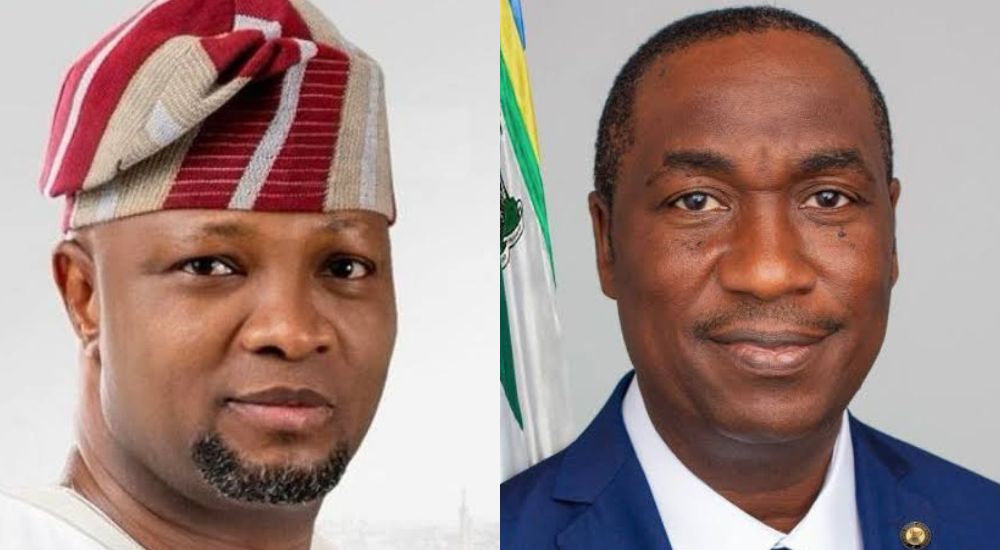
  • Lagos 2027 Race Heats Up As Hamzat, Jandor Court Power Brokers

    Lagos 2027 Race Heats Up As Hamzat, Jandor Court Power Brokers

    Lagos State Deputy Governor, Obafemi Hamzat, has intensified high-level consultations with key political stakeholders, former officeholders, and members of the Governance Advisory Council (GAC) ahead of the All Progressives Congress (APC) governorship primary for the 2027 general elections.

    THE WHISTLER understands that he held separate meetings with key party figures between April 13 and April 25. These meetings are understood to be part of a strategic push by Hamzat, who is widely seen as a contender to succeed Governor Babajide Sanwo-Olu, to consolidate support among influential party figures.

    He said discussions with GAC members focused on “honest, thoughtful conversations” about the state’s direction and the leadership required to sustain its growth, stressing that the engagements are anchored on listening, learning, and collaboration.

    “This is about listening, learning and working with others to build a stronger Lagos,” he wrote on X.

    As part of the outreach, Hamzat met with former deputy governors Femi Pedro and Sarah Adebisi Sosan, as well as former governor and ex-minister Babatunde Fashola. He also consulted prominent figures including Olajumoke Okoya-Thomas, Shakiru Akanni Seriki, Senator Tokunbo Abiru representing Lagos East, immediate past Minister of Finance, Wale Edun and elder statesman Femi Okunnu, alongside former deputy governor Adejoke Orelope-Adefulire. Within the GAC, he engaged its chairman, Prince Tajudeen Olusi, and other leaders such as Adeseye Ogunlewe and Biodun Ogunleye. He also met with the Lagos APC leadership, including state chairman Cornelius Ojelabi, and held talks with Lagos Assembly Speaker Mudashiru Obasa on his policy direction.

    Meanwhile, APC aspirant and former Peoples Democratic Party (PDP) governorship candidate, Abdul’Azeez Adediran, popularly known as Jandor, has also stepped up consultations and grassroots mobilisation ahead of the party’s anticipated direct primaries.

    On April 15, he addressed ward and local government executives across the 377 wards in Lagos, urging them to begin rallying support at the grassroots. He subsequently met with GAC chairman Olusi and other influential figures, including Adeyemi Ikuforiji, and also held separate meetings with Speaker Obasa and GAC member Abayomi Finnih.

    In a statement, Adediran emphasised grassroots strength as the backbone of his ambition.

    “As I continue consultations with respected elders across our great state, I am reminded of a fundamental truth: a movement that is deeply rooted in the grassroots is one that cannot be shaken. Our strength does not lie in noise or momentary momentum, but in the enduring support of the people across every ward in Lagos State.

    “These engagements reinforce the importance of wisdom, experience, and responsibility in shaping a path forward that is inclusive and people-centered,” he said in a statement on X.

    To reinforce his structure, Adediran recently approved a 2,690-member grassroots committee drawn from wards, local governments, and the state level to drive mobilisation, voter education, and compliance with party processes.

    The committee is designed to ensure operational efficiency, message consistency, and voter engagement across all strata of the party, with members assigned roles ranging from media and communications to security coordination and grassroots canvassing.

    Endorsements have also begun to shape the emerging contest. A key APC bloc, Justice Forum, has reportedly endorsed Hamzat, directing members to support his candidacy, while a member of the House of Representatives, James Faleke, publicly backed his ambition and urged party faithful to rally behind him.

    The endorsement, however, drew criticism from Ibile Parapo, which described the move as provocative and questioned Faleke’s neutrality over his alleged role in an APC screening committee.

    On his part, Adediran has secured backing from Team Jagaban-Jandor 2027, which also endorsed President Bola Tinubu for the 2027 election.

    Other figures reportedly eyeing the Lagos governorship race include Sanwo-Olu’s Chief of Staff Tayo Ayinde, Senator Abiru, and Commissioner for Environment Tokunbo Wahab, although they have yet to match the level of visible stakeholder engagement by Hamzat and Adediran.

    Amid the growing political activity, the Lagos chapter of the APC has warned against premature endorsements. In a statement on April 19, state chairman Cornelius Ojelabi described such actions as unauthorised and a violation of internal democratic principles, stressing that the party had not released any guidelines or timetable for the primaries.

    He warned that disciplinary measures could be taken against erring officials, while assuring all aspirants of a level playing field.

    Meanwhile, early political alignments are also emerging beyond the governorship race, as council chairmen in Ikorodu Division, led by Ameen Apanisile, endorsed lawmaker Babajimi Benson for another term in the House of Representatives, citing his performance and impact across the constituency.

    Lagos 2027 Race Heats Up As Hamzat, Jandor Court Power Brokers is first published on The Whistler Newspaper

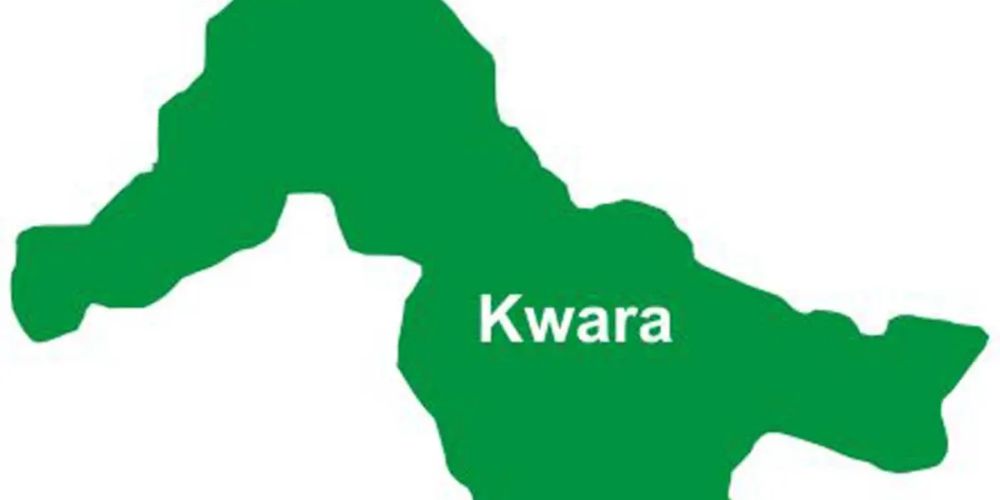
  • Kwara LGA Seeks Direct Allocation Of Security Votes

    Kwara LGA Seeks Direct Allocation Of Security Votes

    The Offa Security Committee in Kwara has called for direct allocation of security votes to local governments, saying the current structure has left communities overstretched amid rising security threats.

    A member of the committee, retired AVM Abdul-Ganiyu Olabisi, made the call on Sunday.

    He spoke against the backdrop of renewed attacks in some parts of Kwara North and Kwara South.

    Olabisi said several communities had come under severe attacks in recent times, resulting in loss of lives and displacement of residents, thereby putting pressure on locals to resort to self help.

    He noted that while many communities had stepped up efforts to support security agencies, lack of government funding remained a major constraint.

    “As first responders to any breach of security, communities have a critical role to play.

    “However, this responsibility cannot be sustained without government support,” he said.

    The retired senior officer disclosed that Offa community had established a vigilance structure to complement security agencies through intelligence gathering and patrol operations, using limited arms permitted by law.

    According to him, the initiative funded entirely by contributions from well-meaning individuals, takes care of salaries, vehicles, motorcycles, fueling and other logistics.

    “Monthly, the community spends over N10 million on security operations without any form of government support.

    “This is not sustainable,” he told NAN.

    Olabisi stressed that the primary responsibility of government remained the protection of lives and property, urging the authorities to match calls for community participation with concrete financial backing.

    He explained that such a framework would enhance transparency and accountability in the use of security funds, while also improving the capacity of local communities to respond to threats.

    “There is an urgent need for government to allocate security votes directly to local governments to support community-based security initiatives.

    “If security votes are channelled directly to local governments, it will strengthen grassroots security and ensure timely response to incidents within communities,” he said.

    Olabisi also expressed concern over the slow pace of efforts to establish state police, noting that while the initiative was commendable, it could take years to fully implement.

    He added that empowering communities financially would not only improve their defensive capacity but also deter criminal elements from exploiting vulnerable areas.

    “We cannot wait for years while communities are under attack.

    “Immediate intervention through direct funding is necessary.

    “Once communities are better equipped and organised, it will significantly reduce the ease with which attackers operate,” he said.

    Kwara LGA Seeks Direct Allocation Of Security Votes is first published on The Whistler Newspaper

  • Mali defense minister Sadio Camara killed as insurgents intensify attacks

    Mali defense minister Sadio Camara killed as insurgents intensify attacks

    Mali’s Defence Minister General Sadio Camara has been killed amid coordinated attacks on military sites across the West African country, sources told Al Jazeera.

    The news on Sunday came a day after Camara’s house in the garrison town of Kati came under attack.

    Brant Philip, a security analyst, disclosed this is his X handle.

    “Malian Defense Minister Sadio Camara and some of his relatives were killed by the JNIM SVBIED (some say a truck was used) that struck his house yesterday morning according to Le Figaro and Jeune Afrique,” Philip wrote.

    The blast is said to have destroyed much of Sadio Camara’s residence in Kati.

    DAILY POST gathers that this was not the first attempt on his life.

    On April 25th jihadists from Jama’at Nusrat al-Islam wal-Muslimin (JNIM) and Tuareg rebels launched a coordinated assault on the capital and several other cities.

    Mali defense minister Sadio Camara killed as insurgents intensify attacks