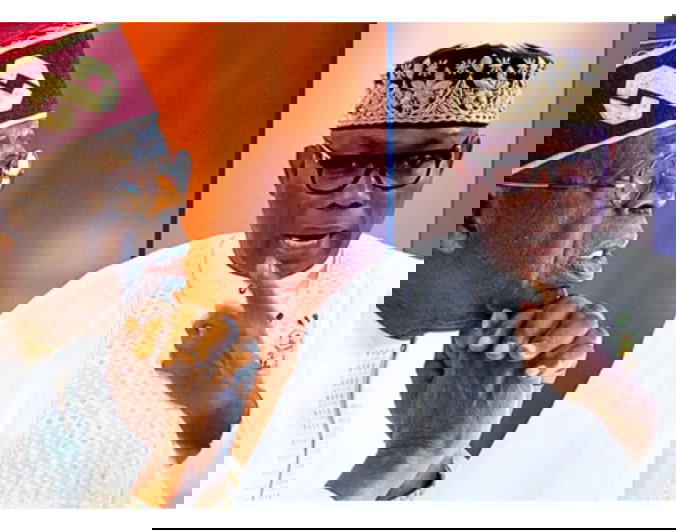
Author: Vanguard News

  • Lagos 2027 heats up as Hamzat, Ambode’s supporters claim Tinubu’s endorsement 

    Lagos 2027 heats up as Hamzat, Ambode’s supporters claim Tinubu’s endorsement 

    By Olasunkanmi Akoni

    Barely  nine  months  to  the governorship election, the race for the successor of Lagos State Governor, Babajide Sanwo-Olu, has begun to take shape as aspirants emerge across party lines.

    As President Bola Tinubu’s home base, the riveting attention is on who will get his backing among prospective candidates to succeed Sanwo-Olu. Tinubu, as the undisputed leader of the Lagos political family,   must have a say in who governs the state that he administered during his tenure from 1999 to 2007.    As suspense is deepening over who will emerge as the next governor, Tinubu, it was gathered recently, directed the leadership of All Progressives Congress, APC, particularly the Governor’s Advisory Council, GAC, led by Pa Tajudeen Olusi, to work for the Deputy Governor, Dr. Obafemi Hamzat, to succeed Sanwo-Olu in 2027. 

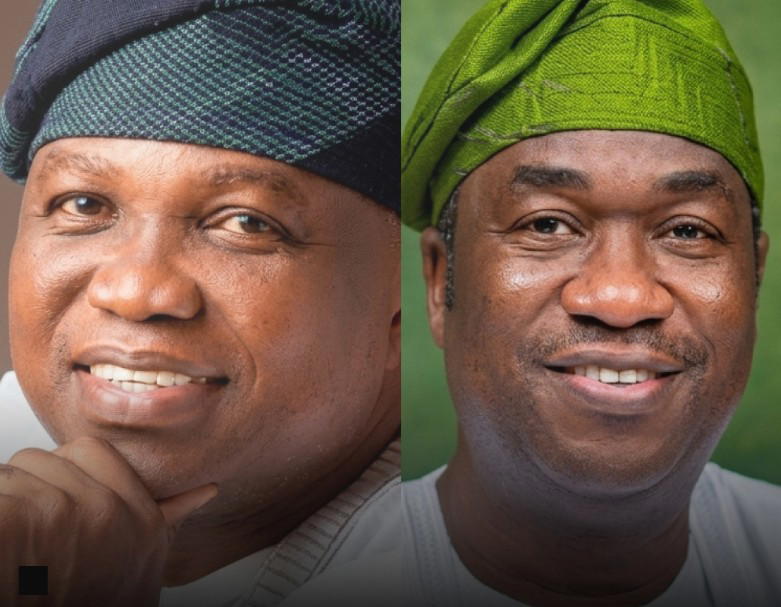
    Meanwhile, leading the governorship contenders’ pack under the  APC  platform are Hamzat,  Akinwunmi Ambode, a former Lagos governor who spent just one term in office between 2015 and 2019, the Lead Visioner of the Lagos4Lagos Movement and former Peoples Democratic Party, PDP, governorship candidate in Lagos State, Dr. Olajide Adediran, popularly called Jandor, and Seyi Tinubu, the son of  Mr.  President,”

    Mr Femi Gbajabiamila, the Chief of Staff to Tinubu, Mr Tunji Alausa, Minister of Education, and Hakeem Muri-Okunola, a former Head of Service and currently Principal Secretary to the president, said to be interested in the governorship race, have apparently dropped out.

    On March 25, APC South-West Zonal Convention, held at at Mobolaji Johnson Arena, formerly known as Onikan Stadium, produced officers, setting the pace towards the preparations for the 2027 general polls.

    Earlier, on March 6,  the Lagos State chapter  of APC sworn-in newly elected executive committee members across its local government and ward structures.

    Speaking during the inauguration ceremony, held at the party Secretariat, Acme, Ogba, Ikeja, Lagos, the Chairman,  Pastor Cornelius Ojelabi, urged the executives to demonstrate diligence and commitment to the ideals of the party.

    He called on members to be united and shun divisive tendencies ahead of the 2027 general elections, stressing that the inauguration marked a critical step in strengthening the party’s organisational framework ahead of future electoral engagements.

    APC Lagos chapter subsequently declared that no aspirant had been anointed ahead of the 2027 general elections. The declaration came amid heightened political intrigue following the arrival of Tinubu in Lagos for the Easter holidays, a visit widely seen within political circles as a decisive moment in shaping the succession battle to succeed Sanwo-Olu.

    For weeks, speculation was rife that Tinubu could use the visit to signal his preferred choice of next governor of the state. Party insiders and observers alike believed that any subtle endorsement from the President could instantly tilt the balance in what is shaping up to be a high-stakes contest.

    Following   the Tinubu’s alleged  endorsement of Hamzat, the public, particularly workers within the Alausa Secretariat, received the development with great excitement and expectation.

    It was also gathered that most aspirants touted for the governorship race have silently withdrawn their interest and collapsed their support structures for the alleged consensus candidate.

    Party chieftains and loyalists supporting Hamzat for the job described the choice as a pay back time for loyalty, resilience.  

    Hamzat had, in the build-up to the 2018 gubernatorial primary, stepped down for Sanwo-Olu   as  the consensus candidate of the APC.

    GAC meets Tinubu, as Faleke rallies support for Hamzat

    Supporters of Hamzat and Ambode, in the meantime, are laying claim to political endorsement following a high-level meeting between the GAC and Tinubu.

    Both camps interpreted the outcome of the meeting as favourable to them, sparking parallel celebrations among the supporters.

    Amid the speculation,   James Faleke, the lawmaker representing Ikeja Federal Constituency, has publicly thrown his weight behind Hamzat, urging supporters across Ikeja Federal Constituency and Lagos State to rally behind Hamzat ahead of the party primaries.

    In a Facebook post, on Thursday, Faleke urged party loyalists to back the Deputy Governor in his bid to succeed Sanwo-Olu. Ambode and Hamzat are widely seen as the leading contenders for the APC governorship ticket as preparations intensify for the next general elections.

    Ambode, who governed Lagos from 2015 to 2019, was denied a second term, paving the way for Sanwo-Olu’s emergence. Hamzat is currently serving his second term as Deputy Governor after eight years as Commissioner for Works under then – Governor Babatunde Fashola.

    Badagry groups kick

    Meanwhile, stakeholders, traditional rulers, and youth groups in the Badagry Division of   the state have intensified calls for APC to zone the 2027 governorship ticket to their area, asserting that it is their turn to produce the state’s next governor.  

    Under the ‘Badagry Ló Kàn’ (It’s Badagry’s Turn), the movement argues that since the creation of Lagos State in 1967, Badagry is the only one of the state’s five traditional divisions (Ikeja, Ikorodu, Epe, Lagos Island, and Badagry) that has not produced a governor.

    Proponents described the demand as a matter of justice, fairness, and inclusion rather than confrontation.

    However, the groups, including the ‘Concerned People of Badagry Forum,’ highlight their consistent electoral support for the APC and Tinubu, arguing that this loyalty deserves recognition.

    A 93-year-old elder statesman, Pa Andu Liadi Adio, and traditional rulers led by the Aholu of Kweme Kingdom, Oba Olalekan Sejiro, had formally requested that the party leadership, especially Tinubu, consider a candidate from their axis.  

    Dr. Samuel Mawuyon Ajose, popularly called SMA Gold, is being championed by various groups in the division to lead the state.

    The Badagry Federation Youth and Women groups pledged to mobilize massive votes for the APC if the seat is zoned to them.

    As development unfolds,  political watchers believe   the real contest ultimately depends   on the signals from Tinubu.

    The post Lagos 2027 heats up as Hamzat, Ambode’s supporters claim Tinubu’s endorsement  appeared first on Vanguard News.

  • Where is the light? Nigerians knock Adelabu as two weeks’ promise on electricity fails

    Where is the light? Nigerians knock Adelabu as two weeks’ promise on electricity fails

    •Why N3.3trn won’t give you power supply — Experts

    …Cite failed promises, disagreement over size of debt

    By Nnamdi Ojiego and Ediri Ejoh 

    Two weeks after Minister of Power, Mr Adebayo Adelabu, assured citizens of imminent 

    relief from persistent outages, a cross-country check suggests that for many households and businesses, the reality has barely changed.

    This came as recent announcement by President Bola Tinubu of the approval of N3.3 trillion for the settlement of outstanding debt in the nation’s power sector has been received with mixed feelings.

    While some experts believe the statement in its entirety, others question its authenticity, describing it as a recurring narrative that has become a trend.

    Adelabu had, on March 24, while addressing the media in Abuja, publicly apologised for the wave of blackouts that swept across the country, admitting that the situation had worsened living conditions at a time of intense heat.

    He acknowledged the strain on homes, schools and industries, attributing the disruption largely to gas supply constraints and technical issues beyond the government’s immediate control.

    “I want to apologise to Nigerians… for this temporary issue that is leading to hardship being experienced,” the Minister said, while promising that “two weeks from now, we should start seeing improvements in supply.”

    That deadline expired on Friday.

    But from Abuja to Lagos, and across several states, many Nigerians say the promised improvement has yet to materialise.

     Worsening situation

     In Utako, a district in Abuja, residents described a pattern of prolonged outages and brief, inconsistent supply.

    Ekwa Mbuk, one of the affected residents, expressed frustration over what he called a worsening situation.

    “So why are we at Utako District subjected to darkness for another night? The heat is sickening. This constant power outage is messing up the quality of life of your customers. Do you care? Please give us light,” he said, in a complaint directed at the Abuja Electricity Distribution Company.

    He added that the power supply in the area had been erratic, with entire days passing without electricity, followed by only a short period of restoration.

    “Since last night, no light… we’ve had only an hour of light. Are we getting what we’re paying for?” he asked.

     Classifications

     Similar sentiments echoed in Lagos, where Iyke Oscar questioned the rationale behind tariff classifications that promised extended supply.

    “Why are we still paying as Band A, if we can’t have light up to 24 hours?” he asked, pointing to the growing disconnect between billing structures and actual service delivery.

     Familiar pattern

     Across the states, the accounts follow a familiar pattern.

    In Delta, Abednego Emonena dismissed the situation bluntly: “Electricity in Nigeria is still a joke.”

    In Ondo, Akin Muyiwa said residents in Akure had all but given up on the expectation of stable supply. “We don’t know what’s called electricity,” he remarked.

    From Imo, Mary Blossom reported that parts of Owerri had experienced a near-total blackout for weeks. “For the past four weeks, no light,” she said.

    In Edo State, Diana Efe described outages stretching into days. “This is the fifth day we haven’t seen electricity since rain fell,” she noted, while another resident, Aino, said communities were left with barely two hours of supply daily.

    Elsewhere, the frustration is tinged with resignation. In Ekiti, Mr. Awo Adekunle summed it up: “No light, we just dey pay bill.”

    Cynthia in Ogun State pointed to a pattern tied to weather conditions. “Once rain falls, no light for the next 12 hours, sometimes 24 hours,” she said, suggesting that infrastructure fragility continues to worsen outages.

    For some, the situation has become almost surreal.

    Abolanle Ajirowo wondered aloud whether official assurances referred to a different reality. “Maybe there’s another Nigeria we don’t know about,” she said.

     Structural problem

     Behind these reactions lies a deeper structural problem. Nigeria’s electricity generation has continued to hover around 4,000 megawatts, far below what is required for a population of over 200 million. Per capita electricity consumption remains between 144 and 165 kilowatt-hours, according to data from the International Energy Agency, placing the country well below the African average of 617 kWh.

    The implications are visible in daily life. With grid supply unreliable, households and businesses are forced to rely on alternatives such as generators, inverters and solar systems. These come at significant cost, effectively creating a parallel, self-funded energy system.

     Power bank rental 

     “Electricity remains unreliable, forcing people to depend on generators, inverters, or solar setups,” said Obinna Eze. “So you pay for electricity, even when it’s not consistent.”

    In a sign of how deeply the crisis has reshaped everyday economics, new micro-businesses have emerged to fill the gap.

    Power bank rentals, for instance, are now available in parts of Kaduna, Sokoto, Kano, Plateau, Niger, Nasarawa, Delta, Edo, Anambra, Imo and Lagos, offering temporary relief for phone charging and small devices at daily or weekly rates.

    For now, the Federal Government maintains that improvements are on the way, tied to the repair of critical gas infrastructure and enforcement of supply obligations among producers.

    Adelabu had expressed confidence that restored gas flow, particularly from facilities linked to major operators, would stabilise generation.

    Yet, as the deadline he set passed without clear nationwide improvement, public patience appears to be thinning.

    What remains is a familiar cycle of promise and delay, with millions of Nigerians still waiting, often in the dark, for a power sector turnaround that has long been anticipated but remains elusive.

    Experts speak on N3.3trillion for power sector

     Meanwhile, the announcement by Tinubu of the approval of N3.3 trillion for the settlement of outstanding debt in the power sector has been received with mixed feelings.

    While some experts believe the statement in its entirety, others question its authenticity, describing it as a recurring narrative that has become a trend.

    Sunday Vanguard findings reveal that prior to the latest declaration by the President, Adelabu, the Minister of Power, had announced the disbursement of the same amount in 2024, while the Debt Management Office (DMO) had already securitised about N4.5 trillion for the settlement of the same power sector debt.

    Thus, some analysts view statements from the Presidency as mere sound bites aimed at scoring political points at the expense of Nigerian citizens, their businesses, and the economy at large.

    While Nigerians suffer epileptic power supply, an estimated N40 trillion is lost annually due to poor electricity supply.

    The Nigerian Independent System Operator, an agency of the Federal Government, had, a couple of weeks ago in a report, stated that persistent outages continue to impose high costs on businesses and households, many of which are forced to generate their own electricity.

    According to the report, reliable electricity remains one of Nigeria’s most important economic priorities, stressing that power outages cost the country up to $29 billion annually.

    Converted at the prevailing exchange rate of N1,385 to a dollar, this translates to roughly N40.1 trillion in yearly losses to the economy.

    The operator added that the burden extends across all sectors, noting that businesses, manufacturers, and households spend billions each year generating their own electricity.

    The shortfall in supply has continued to deepen electricity shortages, pushing homes and businesses to rely increasingly on alternative energy sources amid rising operating costs and harsh weather conditions.

    The trajectories

     Adelabu, on March 29, 2024, was quoted as saying on his Facebook page: “During my recent visit to the Egbin Power Plant, I reiterated that we have conducted a thorough diagnosis of the challenges currently facing our power sector in Nigeria. These challenges range from infrastructure limitations to supply chain constraints, and we are taking urgent action to address them and enhance power supply across the country.

    “To this end, the Federal Government is fully committed to implementing proactive measures. Starting in April, we will prioritise the settlement of outstanding debts owed to power plants like Egbin Power. By doing so, our goal is to provide incentives for the continuous operation of these crucial facilities and to enhance their overall efficiency.”

    Also, on October 7, 2025, the Minister was quoted as saying, “To stabilise the market, Mr. President has approved a N4 trillion bond to clear verified GenCo and gas supply debts.”

    However, the Presidential Power Sector Financial Reforms Programme follows Tinubu’s approval of a N3.3 trillion payment plan to settle legacy debts accumulated between February 2015 and March 2025.

    According to a release last Sunday, implementation has begun, with 15 power plants signing settlement agreements totalling N2.3 trillion.

    The Federal Government said it had already raised N501 billion to fund these payments.

    Of the amount, N223 billion was said to have been disbursed, with further payments underway.

    Stakeholders, in the meantime, have questioned whether earlier approvals were effectively implemented or merely political statements, noting that three years down the line, no significant actions have been taken, while records of grid collapses continue to plague the country’s national grid.

    Presidency report

     A document tagged, ‘A Financial Reset for Nigeria’s Power Sector: The Presidential Financial Reforms Programme (2015-2026) – a chronological overview of efforts to resolve the power sector’s liquidity crisis and transition to a sustainable market-based framework,’ shows the origins of the N4.7 trillion debt, outlining a decade of tariff shortfalls, liquidity constraints, and structural inefficiencies which led to massive outstanding obligations across the power value chain.

    It states: “The vicious cycle of liquidity shortfall—unpaid debts to GENCOs leading to arrears for gas suppliers—has constrained generation and rendered the sector non-bankable, culminating in a N4.7 trillion deficit.”

    It notes that in 2024–2025, despite the N4.7 trillion claimed by GENCOs, the Federal Executive Council (FEC) established a N4 trillion cap, stating: “The FEC approved a settlement framework with a prudential ceiling of N4 trillion to ensure fiscal discipline.”

    However, on its verification and negotiated settlement deal, the report said: “N3.3 trillion: The final negotiated figure, after rigorous verification, reduced the initial N4.7 trillion claim by 30 per cent through the removal of inflated, unsupported, or non-compliant charges.

    “The market-based settlement mechanism includes cost-reflective tariffs, accelerated metering, and improved operational efficiency to prevent future debt accumulation.”

    GENCOs reality, denial

     While some GENCOs expressed confidence in the programme, others argued otherwise, noting that past experiences may have eroded trust in the system.

    Speaking on the development and the impact of the N3.3 trillion on the power sector, Executive Director of the Association of Power Generation Companies (APGC), Dr. Joy Ogaji, said: “We only have it on paper.

    “Yes, N3.3 trillion is what the government said it has approved, but we do not have details of what it covers or whether it includes the period from 2015 to 2024.

    “The news we all have is political. Claims that it is up to date are questionable because reconciliation of invoices from 2015 to March 2025 has not been completed.

    “The invoice for March 2025 was not included, and possibly February 2025 was also excluded due to the 45-day billing cycle.”

    On solutions, another operator who spoke anonymously said: “Power sector issues need to be categorised.

    “Yes, this is a pre-election period, so it is easy for the government to push liquidity solutions for compiled debts.

    “But we must not deny that the debt claimed by GENCOs exists.

    “All contractual terms, including interest on delayed payments, must be honoured.

    “The GENCOs took loans when the exchange rate was about N155 to the dollar, but today it is over N1, 300. Who bears the difference?”

    The source also pointed to a lack of transparency in billing and collection systems, calling for reforms and stronger oversight.

    Others see things differently

     Another source said: “I believe the government is sincere. The money will be paid, and fidelity to contracts is important. Government-imposed haircuts should not become the norm.”

    Also reacting, energy economist and Executive Director, Emmanuel Egbigah Foundation, Prof. Wumi Iledare, said: “The power sector is not just underperforming—it is financially strained.

    “Over N4 trillion in legacy debt continues to choke the entire value chain.

    “What’s worse is that past solutions have been mostly stopgaps, addressing liquidity issues without fixing structural problems.

    “At the core are non-cost-reflective tariffs, weak contract enforcement, and poor institutional coordination.

    “The result is a cycle of debt recycling, not resolution.”

    Electricity becoming a campaign issue – CPPE

     For his part, Dr. Muda Yusuf, Chief Executive Officer of the Centre for the Promotion of Private Enterprise (CPPE), said: “This is a pre-election period, and electricity is becoming a campaign issue. The government will likely make strong efforts to fulfill its promises.

    “However, unless structural challenges are addressed, the sector may relapse. The key is ensuring the sector generates its own liquidity and attracts capable investors. Tariff reform is inevitable, though it must be gradual to avoid undue hardship.”

    A step in the right direction – Independent Power

     However, reacting, Managing Director of First Independent Power Limited, Mr. Seyi Sobogun, described the development as a critical step toward restoring stability.

    “We welcome the progress made so far. Addressing legacy debts is crucial to improving system performance,” he said.

    He noted that the N501 billion bond issuance, which was fully subscribed, reflects growing market confidence.

    “We remain committed to working with stakeholders to strengthen the sector and improve electricity supply nationwide,” he added.

    The post Where is the light? Nigerians knock Adelabu as two weeks’ promise on electricity fails appeared first on Vanguard News.
  • Nigeria facing one-man rule, not one-party rule — Adewole Adebayo, ex-SDP presidential candidate

    Nigeria facing one-man rule, not one-party rule — Adewole Adebayo, ex-SDP presidential candidate

    By Olalekan Bilesanmi

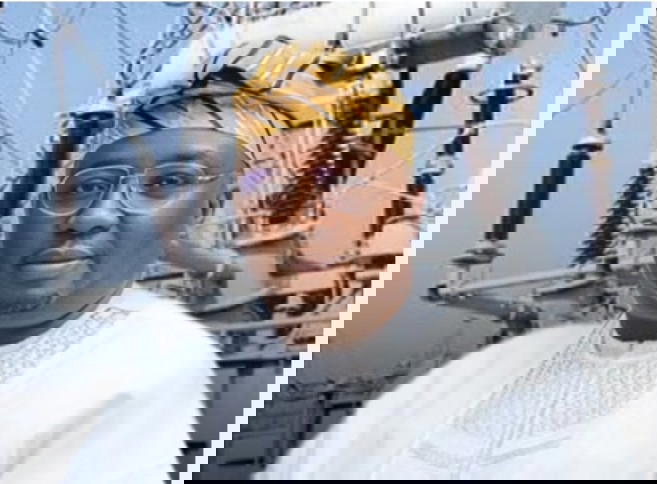
    As insecurity deepens across Nigeria and political tensions begin to shape the road to 2027, former presidential candidate and Social Democratic Party (SDP) leader, Prince Adewole Adebayo, offers a candid and wide-ranging perspective on the state of the nation. Fresh from a visit to crisis-hit communities in Plateau State, Adebayo speaks on the humanitarian realities often ignored beyond media headlines, raising concerns about what he describes as widespread but under-reported violence across the country.

    He reflects on leadership failures, the weakening trust between citizens and government, and the urgent need to rebuild national confidence. In this interview, he also addresses speculations about his political ambitions ahead of 2027, weighs in on the fragility of opposition parties, and warns against what he calls a growing drift toward “one-man rule” rather than a one-party state under President Bola Ahmed Tinubu. From electoral participation to the collapse of political ideology, Adebayo argues that Nigeria’s biggest challenge is not just structural, but deeply rooted in leadership and values.

    You have been travelling round the country. You visited Jos. What were you hoping to find out when you visited Plateau State?

     I visited Plateau to find out the plight, particularly of the people of Angua and Rubuka, who were meted out with the worst kind of humanitarian crisis you can think of. For invaders to visit a community like that and, in a flash, render many families bereaved, kill many people, disturb the peace of the community, injure many people, and traumatise the entire community — it was devastating. So, I thought that we needed to go there and restore the hope of the people in the country, for them not to lose hope, as they were already feeling like stateless people — people unprotected by any government. People were beginning to question the humanity of fellow human beings. They were wondering if they were left alone, and I thought it was good to be with them, to restore their faith and confidence in Nigeria — to know that Nigeria is an ongoing project that has good prospects, as it is the greatest country anybody can be born in. Despite all the problems we are facing, the failure of our government does not mean the bankruptcy of the country as a whole, and I think we did a bit of that. I also wanted to know from the first responders, the security personnel, if they thought they could deal with these issues — if they were abreast of them. I wanted to know why they couldn’t respond to the killings and disaster, and what they were doing to engage with the community and the youths; what they thought could have been done differently, and their views about law enforcement. I met with the community leaders and heard their views and perceptions about government, both at the state and federal levels. I then met with families of the victims. Since leaving the town, other people have been calling and mentioning their own issues. I essentially learnt that, apart from the publicly known, notorious, and sensational killings, there are several low-key killings going on in every part of the country that people have taken for granted. They feel: “What’s the point of talking? Let’s find local solutions, as nobody will listen to us.” So they have been calling us and giving different instances that can make one ashamed.

     Is this act of yours for optics, especially for the office you want to contest in 2027, or just as an ordinary Nigerian?

     Politics is not on my mind at this stage; it’s just about the survival of the country. I was thoroughly embarrassed that the president failed in his leadership by going to the airport and complaining that there was no electricity, looking at his watch as if it was an ordeal, instead of taking the 18-minute drive to the epicentre and using that opportunity to talk to the families one-on-one and survey the area where the people are living. I thought we needed to show the people that we are not all like that. Not only did I go there, I spoke with many of the faith leaders and realised that people are beginning to lose that sense of solidarity. The opportunity afforded me a way to see how to be a better commander-in-chief — to know how to gather intelligence, how to work with communities, and to realise that Nigerians can actually live up to their responsibilities if they have just a little support. Speaking with the law enforcement agents there, I gained more knowledge and more confidence in them, even as I sympathised with them that they are under poor leadership.

    You could see the governor, who appears not to be part of the community in a way. If he were to be a good commander-in-chief whose priority is the safety and protection of communities, our law enforcement agents have the capacity to do it. Unfortunately, they are not being supported. When I went there, even after the event had occurred, I first understood why the police station in Agbarukuba couldn’t respond — nobody could respond in the kind of situation they found themselves in. Since then, not much has been done to increase capacity. I see that the intelligence is there; however, I don’t know why it failed. I think we need to take advantage of these experiences to craft our community protection system, and I have learnt a lot from that.

     Are you running for president in 2027?

     Yes, of course. But you can be a politician and still be a decent human being who genuinely wants to mourn with those who are mourning. You can be a politician and be a decent Christian and family member. I went there as a brother to the community. That, of course, is not the loudest podium for politicians at that time, but I needed to be with them. That job has been done, and I will continue to be with them even behind the cameras. The point is, it is a political season, and I am running for president under the SDP. I ran last time with the slogan “Farewell to poverty and insecurity.” It is all linked together. Poverty has increased and insecurity has worsened. One must speak about it from time to time, develop better solutions than those presently available, and get the community to buy into those solutions.

     The opposition parties appear to be in shambles, especially with the crisis rocking the ADC, where different factions have emerged.

     I am a politician, but primarily I am a lawyer. As a lawyer, I have professional ethics. When a matter is before the court, whether it affects my party, my interest, or other people, I usually pay attention to what goes on in court, because when you get newspaper reports or third-party renditions, they often do not align with what actually happens in court. What I understand in the case of the ADC is that they changed leadership, and there is a tussle as to who is the leader or whether the leadership was properly transitioned, and the matter is in court. INEC is a party to the suit, and INEC has an interpretation of the court order that says they should observe the status quo. It is legitimate for leaders of the ADC to disagree with INEC’s interpretation. It is their right to protest, but in reality, it is much easier if all the parties go back to court and clarify the actual meaning of ante bellum. In politics, you don’t teach the other person how to play politics. If the matter is in court, and INEC is a party to the proceedings, and the ADC — including Nafiu Bala — is part of the same proceedings before a judge, then if the interpretation of the order is the only issue, that can be resolved in court. However, it does not mean that leaders of the ADC do not have the right to express their frustration. If they think INEC is their problem, they can go there to protest, but in reality, until the matter is defined by the court, none of the parties can claim finality.

     With what is happening, people think Nigeria may not have a formidable opposition in the country.

     All of these concerns are valid. You can address the overbearing nature of the government and the fact that it is using its incumbency to gain advantage over other contestants in an electoral situation. You can see how they misuse their majority to pass unpopular, unfair, and restrictive electoral acts.

    You can also be concerned about political parties taking care of their internal systems. People join political parties knowing they are in opposition, so they should try as much as possible to minimise errors, reduce internal wrangling, and remain united. Every party has one or two elements that act like saboteurs, but with wisdom and proper management, these issues can be controlled. If you don’t have internal crises, it is easier to stand and challenge effectively. There is also a misconception people often express — the fear that Nigeria is moving towards a one-party state under the APC. In my candid observation, based on evidence, Nigeria is not moving towards a one-party state. What Nigeria is at risk of is one-man rule. If anyone in the APC thinks that Bola Ahmed Tinubu is trying to build a dominant one-party state, that is not the agenda. The real danger is a concentration of power in one individual. The first victim of such a system would be the APC itself, because as they get used to not having internal democracy and being dictated to by their leader — who is the president — they will lose institutional strength. They will not be like parties such as the ANC, where internal processes are strong and members are stronger than those in government. So, the APC itself becomes the first casualty. It is not going to be a one-party state, but rather a one-man rule, and the APC will struggle to function properly under such a system. Looking at the 2023 elections, none of the presidential candidates secured a dominant share of the vote. Out of about 89 million registered voters, the largest bloc did not vote at all. This shows that our politics has become that of a self-interested elite, leaving the electorate behind. No country can continue holding presidential elections with such low turnout and remain satisfied. It shows that the issues dominating media narratives and political agendas are not addressing the real concerns of the people. That is why people are effectively boycotting the process. Nigerians should not abandon democracy to politicians or the ruling party. Democracy remains the best means to ensure that issues like security, social welfare, infrastructure, employment, rule of law, and accountability are addressed. Citizens must remain active — watching those in power, holding them accountable, rewarding good performance, and voting out failure. If the electorate withdraws and focuses only on personal survival, then the system deteriorates further. We need a reset. More people must join politics with better character, and those who cannot change will eventually be pushed out.

     Talking about one-man rule, cross-carpeting in this republic is quite rampant. This is a big challenge. Why is the judiciary always the solution to party internal wrangling?

     I think it is about leadership recruitment. The difference between now and the past is that we used to have politicians in politics. As Aminu Kano noted during the transition to the Second Republic, we began to see businessmen entering politics. During military rule, contractors, apologists, and agents of the military realised that politics had become the most profitable business, so they entered it. That is how money politics took over.

    Today, many politicians behave like merchants. There is no ideology or guiding principle. Like traders, they go where the price is lowest to buy and where it is highest to sell. There is no principle involved anymore. The mistake people make is assuming that anyone who dresses like a politician is actually one. That is not the case. We need to reinvent the political class.

    Today, many in the political class are not leaders. They do not represent anyone, they are not leading anyone, and they have no direction. They simply struggle for positions.

    If the system does not change, whenever power shifts, the same people will migrate to the new ruling party. Those who followed previous leaders now follow Bola Ahmed Tinubu. Tomorrow, they will follow someone else.

    Even if — hypothetically — a deeply unfit person comes to power but controls resources, contracts, and patronage, people will still align with that person. That is the reality. What we need to do is return to the people and build a new political class. The current one is unlikely to change.

     In light of the recent killings in some states, do you think the state police initiative can address insecurity?

     Anything that is sincerely implemented will work. Even the current system can work if there is sincere leadership — a good commander-in-chief and security officers who are not motivated by money or politics. State police can also work, but only if the same principles are applied. If state police operates under the same style of leadership we currently see in some states, it will fail. The problem is not the structure — it is leadership. There is a leadership deficit at the federal, state, and local government levels, and even at the community level, leaders lack support. If you change the system, you must also change the leadership. Otherwise, nothing will improve.

    The post Nigeria facing one-man rule, not one-party rule — Adewole Adebayo, ex-SDP presidential candidate appeared first on Vanguard News.

  • Loyalty to godfathers now common in Nigeria —Ganiat Olawore

    Loyalty to godfathers now common in Nigeria —Ganiat Olawore

    Hon. Ganiat Olawore is a Nigerian politician and businesswoman with a strong footprint in grassroots mobilisation and community engagement. In this interview with Yetunde Ajanaku, she discusses her role in political coordination, campaign strategy, and community relations, particularly among market groups and women-focused initiatives. She is known for her practical understanding of grassroots realities and […]

  • Easter: Christ’s Resurrection Remains Humanity’s Timeless Hope —CAC President

    Easter: Christ’s Resurrection Remains Humanity’s Timeless Hope —CAC President

    The President of the Christ Apostolic Church, Pastor S.O. Oladele, has reaffirmed that the resurrection of Jesus Christ remains the ultimate and enduring source of hope for humanity in a troubled world. Speaking during the “Easter Service with CAC President” held at CAC All Saints’ Chapel, Oladele delivered a powerful message themed “The Gospel of […]

  • Our lives in danger, Kehinde Adegbodu cries out after suspected armed men stormed his residence

    Our lives in danger, Kehinde Adegbodu cries out after suspected armed men stormed his residence

    Kehinde Adegbodu has raised the alarm following a distressing attack on his family home by suspected armed men, further deepening the family’s grief after a recent loss. Adegbodu, who spoke with R, recounted how the assailants invaded their residence and demanded valuables, including money, phones, and other personal belongings. According to him, it is very […]

  • Capital budget failures mean unfinished roads, poorly equipped hospitals for ordinary Nigerians —Akinbode, BudgIT’s Head of Research

    Capital budget failures mean unfinished roads, poorly equipped hospitals for ordinary Nigerians —Akinbode, BudgIT’s Head of Research

    The National Assembly recently approved another extension of the 2025 capital budget implementation to June 2026, raising fresh concerns about Nigeria’s persistent budget implementation failures and weak fiscal execution. In this interview with PHILIP IBITOYE, Adejoke N. Akinbode, Acting Head of Research at BudgIT, explains the structural and fiscal challenges behind the trend and what […]

  • I will love to date Wizkid, Omah Lay — SwizzyBellaNaija

    I will love to date Wizkid, Omah Lay — SwizzyBellaNaija

    By Ayo Onikoyi
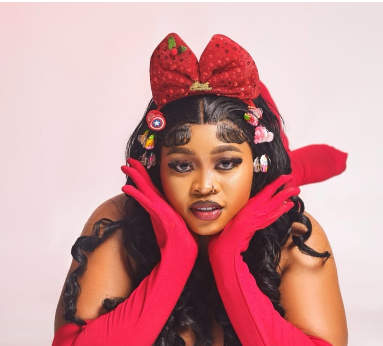
    Nollywood actress and content creator Ogieva Bella Osas, popularly known as SwizzyBellaNaija, has sparked widespread reactions following a candid interview where she opened up on her personal life, career, and experiences in the entertainment industry.
    Speaking during a no-holds-barred chat with Instagram personality Egungun of Lagos, the actress shared her admiration for some of Nigeria’s biggest music stars, revealing her interest in dating Wizkid and Omah Lay.
    “I will love to date Wizkid and Omah Lay,” she said, adding that she doubts the Grammy-winning star would be easily overwhelmed by her presence. “I don’t know if Wizkid will shake if he sees me because he is mature — things like this don’t shake him.”
    SwizzyBellaNaija also made striking claims about the attention she receives, attributing it partly to her physical appearance. According to her, she has been told her body has caused tension in relationships, revealing that an admirer once sent her N2 million because of her looks.
    Beyond the headlines, the actress emphasized her growing footprint in Nollywood, noting that she is not only an actress but also a producer. Her latest project, My Last Hope, is a true-life inspired drama she believes will resonate strongly with audiences. The film features comedian Destalker among its cast.
    On relationships, SwizzyBellaNaija described herself as deliberate and cautious, stating that she does not easily give out her contact details unless certain standards, including financial stability, are met.
    She also expressed concerns about the country’s trajectory, voicing a sentiment shared by many young Nigerians. “The way Nigeria is, I can’t see a future in it,” she said.
    Her remarks have since fueled conversations online, highlighting the intersection of fame, personal branding, and societal pressures within Nigeria’s evolving entertainment landscape.

    The post I will love to date Wizkid, Omah Lay — SwizzyBellaNaija appeared first on Vanguard News.
  • Bukky Wright, Femi Adebayo, Mercy Aigbe, others to speak at Emiralty Connect 1.0

    Bukky Wright, Femi Adebayo, Mercy Aigbe, others to speak at Emiralty Connect 1.0

    Lagos is about to witness a high-octane convergence of grit and greatness as Emiralty Africa prepares to host its flagship summit, Emiralty Connect 1.0, at the prestigious Radisson Blu, Ikeja. Scheduled for May 14, the conference is themed ‘From Scar to Shine: Reflections on Struggles, Breakthrough and Impacts’, and is designed to pull back the […]

  • Pope Leo heads to Africa on ambitious tour to urge help for continent

    Pope Leo heads to Africa on ambitious tour to urge help for continent

    Pope Leo leaves the Vatican tomorrow for a visit to four countries in Africa in an ambitious tour to urge global leaders to address the needs of the continent, where more than a fifth of the world’s Catholics live on his first major overseas trip of 2026. Over 10 days from April 13-23, the pope […]