
•Grief, anger as residents allege exclusion, coercion, and opaque compensation process MOSES IDAHOSA reports the situation in Egbetua-Ososo, Edo State, where the hope for economic transformation expected from siting a cement plant in the community has given way to suspicion and unrest, as residents question a controversial compensation process linked to the project. Allegations of […]
Author: Tribune Online
-

Young grassroots football players require right mentorship, structure to grow —Ojo
Founder of HTT Academy, a grassroots football organisation dedicated to developing young talent and creating opportunities for the next generation of footballers, Samuel Ojo, speaks with YETUNDE AJANAKU about the challenges and opportunities shaping football development across Africa. WHY do many talented young players struggle to reach the highest level? In my opinion, the biggest […]
-

Enthroning integrity in public procurement practice in Nigeria
IN facilitating service delivery, the government is involved in series of current and recurrent expenditures to pursue public projects and programs that are meant to activate government’s plans, policies and purposes for her citizens. In this whole dynamic, public procurement acts as veritable instrument for translating budgets into goods, services and works for driving economic […]
-
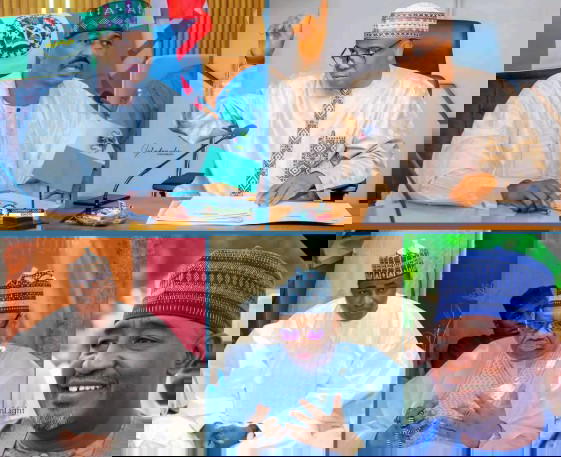
Sokoto 2027: Aliyu, Wamakko, Tambuwal, others shaping governorship race
By Musa Ubandawaki, Sokoto
SOKOTO: As preparations for the 2027 governorship election begin to gather pace across Nigeria, Sokoto State is shaping up as a key political arena where influence, alliances and ambition are already driving early permutations.
The ruling All Progressives Congress (APC), the emerging African Democratic Congress (ADC) and a divided Peoples Democratic Party (PDP) are positioning for what is expected to be a closely watched contest in the North-West.
At the centre of the race is incumbent governor Ahmed Aliyu, who is widely expected to seek a second term on the APC platform.
His administration, which came to power after a competitive election, now faces the dual task of consolidating its record while preparing for another electoral test.
Aliyu enters the race with the advantage of incumbency, including control of state structures, access to resources and the backing of political appointees.
He is also expected to benefit from the continued support of his political mentor, former governor and senator Aliyu Magatakarda Wamakko, whose grassroots network remains a major asset for the APC.
Analysts say the alliance between the governor and the Wamakko structure could provide a strong mobilisation base across the state.
Despite this, opposition parties are exploring ways to challenge the APC’s dominance ahead of 2027.
The ADC, in particular, has stepped up grassroots mobilisation through membership drives, community engagement and strategic outreach aimed at positioning the party as a credible alternative.
Several prominent figures are reportedly considering the ADC platform, including former Minister of Transport Yusuf Suleiman, former Deputy Governor Manir Muhammad Dan Iya, former Commissioner and diplomat Faruku Malami Yabo, and Islamic scholar Sheikh Bashir Dan Fili.
Supporters of these potential aspirants point to insecurity in the North-West as a likely defining campaign issue.
Within the ADC, there is criticism of what is seen as inadequate response to banditry, kidnapping and killings in parts of the region.
The party is also seeking to tap into dissatisfaction with the pace of federal efforts to address security challenges.
ADC strategists are focusing on rural communities, where voting patterns can significantly influence election outcomes.
Meanwhile, the PDP continues to struggle with internal divisions that have weakened its position in Sokoto.
The party remains split into factions at both national and state levels, raising concerns about its ability to present a united front.
One faction aligned with FCT Minister Nyesom Wike recently organised a training exercise in Sokoto ahead of electronic membership registration across the state’s 244 wards.
Another faction, led by Bello Aliyu Goronyo and aligned with former minister Kabiru Tanimu Turaki, is also working to maintain its structure.
The Wike-aligned exercise was monitored by former Commissioner for Water Resources Dahiru Yusuf Yabo, reflecting ongoing efforts to strengthen grassroots influence.
However, the PDP has yet to produce a clear governorship aspirant capable of unifying the party and rebuilding momentum.
The influence of former governor and ex-Speaker Aminu Waziri Tambuwal also remains a factor, as political actors continue consultations and realignments.
While Tambuwal retains loyal supporters, critics argue that his administration did not deliver enough infrastructure, while others view him as more focused on national politics.
This perception has fuelled debate among voters, with some expressing preference for leaders with stronger grassroots engagement.
As consultations deepen and alliances evolve, the 2027 governorship race in Sokoto is shaping into a contest between incumbency, a growing opposition and a former ruling party seeking to regain relevance.
For now, the APC maintains a strong position, but with opposition activity increasing and public sentiment shifting, the race remains open.
The post Sokoto 2027: Aliyu, Wamakko, Tambuwal, others shaping governorship race appeared first on Vanguard News.
-

How those early lessons, as Yoruba boy, shaped my life —Shonde
Adetokunbo Samuel Shonde is the founder and chief executive officer of SA Elizabeth Solar Integrated Nigeria. In this interview, he shared his life story with TUNDE ADELEKE. YOU were recently announced as Yoruba Man of the Year by Irohin Oodua Global Media. How does that make you feel? I feel deeply honoured and grateful. Being […]
-
How terrorists wreaked havoc in Kwara again, killing 5 Forest Guards
•Attackers sent voice note ahead of invasion
By Demola Akinyemi, Ilorin
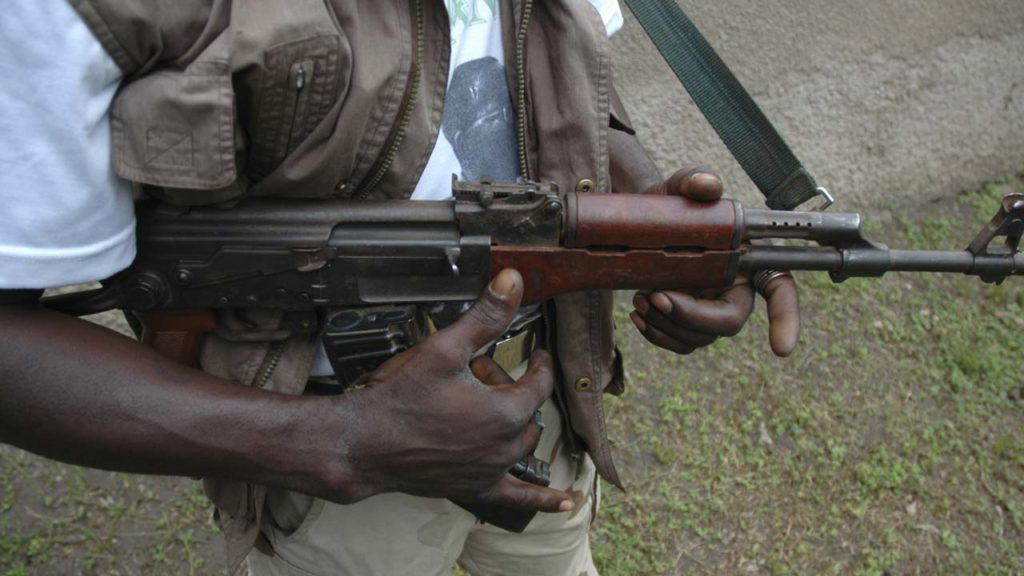
Tragedy again struck in Nuku community, Kaiama local government area of Kwara State as terrorists invaded the community on Friday killing six Forest Guards, including the commander.
Sunday Vanguard reliably gathered that five Forest Guards died during the exchange of gun shots that also killed two of the terrorists.
While the shootout, which lasted about an hour ended, the terrorists reportedly went away with the corpses of their two colleagues despite the spirited efforts of the army who pursued them.
It was gathered that the terrorists had earlier sent a voice note that went viral that they were coming to attack the base of the Forest Guards on Thursday.
It was also gathered that the Forest Guards who didn’t want to take any chances were at alert awaiting the possible arrival of the terrorists.
Sunday Vanguard further gathered that the Forest Guards base, situated at the entry point of Nuku, had almost believed that the terrorists were not striking again when no fewer than 40 of them suddenly emerged from the bush around 3.45am on Friday.
Subsequently, exchange of gunfight ensued between the terrorists and Forest Guards during which five of the Forest Guards were killed, while two of the terrorists were also shot dead .
Also, patrol vehicles of the police in the area were set ablaze by the terrorists.
At press time, normalcy has returned to the community as soldiers have taken over strategic areas to prevent further possible attack by the terrorists while a dusk to dawn curfew has been imposed by the local government.
A local, who preferred anonymity in an interview with Sunday Vanguard, narrated the attack: “Loud sounds of gunshots woke us, but we couldn’t run out of our houses so as not to be killed because it was very early in the morning.
“I peeped through my window and,from what I saw, the terrorists were not less than 40, firing gun shots at the Forest Guards, while the Forest Guards were also shooting at them.
“They didn’t target residents of the community,so they didn’t come to town.It was clear that they came to attack the Forest Guards. It is not true that residents were killed.
“We learnt that during the exchange of gun shots, two of the terrorists also died but they went away with their corpses.
“The army went after them when they received signals but couldn’t recover the terrorists corpses.”
Governor AbdulRahman AbdulRazaq mourned the sad development in a statement issued on Friday by his Special Adviser on Communication and Strategy, Alhaji Bashir Adigun.
AbdulRahman AbdulRazaq said he received with heavy heart the death of five Forest Guards as they repelled a midnight attack on their position in Nuku community of Kaiama Local Government Area of the state.
The governor has, meanwhile, constituted the Kwara State Security Strategy Committee, comprising Kwara-born retired military generals and top security officers.
The committee consists of retired Major General GA Wahab (chairman); Maj. Gen. Yemi Abidoye; Maj-Gen. Abubakar Ndalolo; Rear Admiral Aliyu Lawal; Air Commodore ASA Buhari; AIG Aderemi Opadokun; and Lt. Col. WA Lawal.
Permanent Secretary (General Services) Shuaib Abdulganiyu (fcia) will serve as the Secretary of the Committee.
AbdulRazaq met the committee, Friday, for their inaugural meeting.
Similarly, Kwara State Police Command confirmed the latest attack in a statement issued by the spokesperson Ejire Adetoun Adeyemi
“ýAt about 03:45hrs, bandits launched a coordinated attack on the PMF Camp at Nuku village where five members of the National Forest Guard were fatally shot by armed bandits and an extensive damage done on a patrol vehicle belonging to police operatives before the PMF personnel in the camp repelled the bandits,” the statement said.
ý”ýThe Commissioner of Police, Kwara State Command, CP OJO ADEKIMI psc, mnips, has expressed deep sympathy to the families of the deceased and condemns the attack in the strongest terms.
“The Command assures residents that tactical and intelligence-driven operations have commenced to track down the perpetrators while continuous monitoring of the situation is ongoing to ensure the safety of residents and prevent further security breaches.
ý”ýMembers of the public are urged to cooperate with security agencies by providing any useful information that could aid the investigation.”
The post How terrorists wreaked havoc in Kwara again, killing 5 Forest Guards appeared first on Vanguard News.
-
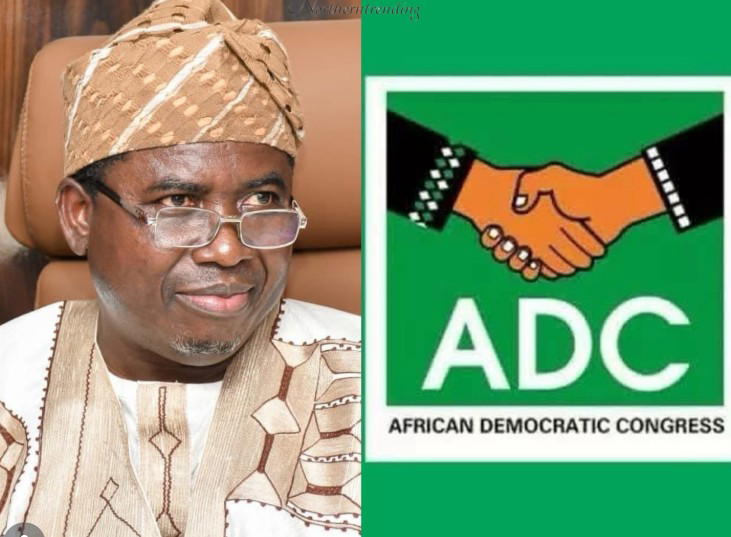
Chaos ahead of 2027 as ADC, INEC rift rages, SDP frets
By Gabriel Ewepu & Luminous Jannamike
Nigeria’s political space is hurtling toward a high-stakes confrontation ahead of the 2027 elections, as a deepening clash between the African Democratic Congress (ADC) and the Independent National Electoral Commission (INEC) raises fresh fears about the integrity of the ballot and the future of opposition politics.
INEC’s decision to withdraw recognition of the ADC’s leadership, citing a Court of Appeal directive to maintain the status quo in an ongoing case has triggered outrage within the party and intensified political tension nationwide.
The ADC says it sometimes records over 50,000 new members in just 24 hours, a surge it believes is fuelling the current standoff.
What began as a routine legal matter is now a major political test, one that could shape trust in institutions, the strength of opposition parties, and the credibility of the 2027 polls.
Flashpoint: ADC VS INEC
For the ADC, INEC’s action goes beyond a procedural decision, it is seen as a serious misstep.
Party leaders argue that the electoral body has misunderstood the court’s position and gone too far by intervening in what they describe as an internal matter.
Dr Babatunde Oke, the party’s National Director of Communication and Programmes, expressed concern over how events have unfolded.
Speaking with Sunday Vanguard, he said: “We believe some senior officials of the commission were coerced to make such press release and subsequently the decision to de-recognise the party’s leadership.
“We also believe the court’s position was largely misinterpreted. The status quo in this contest referred to David Mark National Working Committee. INEC embarked on a journey capable of creating anarchy in the country all in the name of playing the ‘script’ of an administration that is allergic to strong opposition, whose agenda is to ensure that only dominant party is on the ballot,” he alleged.
He questioned the legal basis of INEC’s move.
INEC has, however, maintains that it acted in line with the appellate court directive and is not taking sides in the dispute. But the ADC is unmoved.
Defiance: ‘We Will Go Ahead’
If INEC expected restraint, it got the opposite. The ADC has proceeded with its congresses in some states and is planning for its national convention on Tuesday, April 14, regardless of the commission’s position.
According to Oke, the party has fulfilled all statutory requirements.
“ADC has written to the commission in compliance with the 21 days notice and they have accepted the letter. Whether they come or not is inconsequential, there’s no law making it mandatory for them to come. We are going ahead with our congresses and convention as stipulated,” he added.
He reaffirmed the party’s stance on its leadership.
“As far as the ADC is concerned, as far as the law is concerned, there’s no leadership vacuum in our great party,” he said.
The message is clear: the party is pushing forward, legal risks or not.
Hard Facts: Numbers That Frame the Stakes
The unfolding crisis is not happening in a vacuum. The numbers tell a deeper story about Nigeria’s electoral system and why the stakes are so high.
Nigeria has over 93 million registered voters, according to the last nationwide register released by INEC ahead of the 2023 general elections.
Yet, voter turnout has been declining, dropping to about 27 per cent in the 2023 presidential election, one of the lowest in the country’s democratic history.
In that election, the ruling All Progressives Congress (APC) candidate, Bola Ahmed Tinubu, secured the presidency with 8,794,726 votes.
His closest rival, Atiku Abubakar of the Peoples Democratic Party (PDP), polled 6,984,520 votes, while Peter Obi of the Labour Party garnered 6,101,533 votes. Rabiu Musa Kwankwaso of the New Nigeria Peoples Party (NNPP) recorded 1,496,687 votes.
Combined, these major opposition candidates secured 14,582,740 votes; far exceeding the APC’s total, but split across multiple platforms.
The figures underline a critical political reality: fragmentation within the opposition can decisively shape electoral outcomes, even when the total opposition vote is significantly higher.
Historically, opposition coalitions have played decisive roles. The merger that produced the APC in 2013 brought together major blocs and ultimately unseated an incumbent government in 2015, Nigeria’s first such democratic transfer of power.
Against that backdrop, current talks of alliances between the ADC and a faction of the PDP take on added significance.
On party expansion, the ADC’s claim of 50,000 new entrants within 24 hours, if sustained, signals a rapid mobilisation effort at a time when political realignments are intensifying nationwide.
At the same time, INEC relies on hundreds of thousands of ad-hoc staff, many of them members of the National Youth Service Corps (NYSC), to conduct elections across more than 176,000 polling units nationwide; highlighting how logistics, security and institutional trust all intersect.
These figures highlight a simple reality: small shifts in organisation, voter turnout or alliances can have practical effects on electoral outcomes.
Opposition Under Pressure
Beyond the ADC, the crisis exposes a deeper weakness. The Peoples Democratic Party (PDP) continues to grapple with internal divisions and defections, while the Labour Party faces its own factional disputes.
Together, these challenges have weakened the opposition’s ability to present a united front against the ruling All Progressives Congress (APC).
Within the ADC, however, there is a different reading of events. The party believes its rising profile is drawing pushback.
“Check out our registration status in the past 24 hours, we have recorded over 50,000 new entrants regardless of the antics of those in power. The momentum is what the desperate characters in the ruling party are afraid of,” Oke told Sunday Vanguard.
CISLAC Raises Alarm Over ‘One-Party Plot’
The concerns are no longer confined to political parties. Civil society groups are now sounding the alarm.
At the Civil Society Legislative Advocacy Centre (CISLAC), Executive Director Auwal Ibrahim Musa (Rafsanjani) warned that Nigeria could be edging toward a one-party system.
“Clearly, the attempts to push Nigeria to a one-party system has been well planned and is brutally being implemented by those who hold political power today,” Rafsanjani told Sunday Vanguard.
He described the trend as dangerous.
“It is very disturbing to see that the democracy which Nigerians fought so hard for is being bastardised by some political class today,” he added.
The implications are no longer theoretical, they are immediate, political, and potentially explosive.
SDP Writes INEC, Warns Against ‘Dangerous Precedent’
The Social Democratic Party (SDP) has formally written to INEC, warning that the commission’s handling of the ADC leadership dispute could set a troubling precedent for Nigeria’s democracy.
In a letter signed by its National Chairman, Shehu Musa Gabam, the party cautioned the electoral body against actions that could be interpreted as interference in the internal affairs of political parties.
“INEC must be very cautious not to create a dangerous precedent where it begins to determine or appear to determine the leadership of political parties,” the letter stated.
The SDP stressed that any step not clearly backed by law risks eroding public confidence in the commission ahead of the 2027 elections.
“There is a thin line between regulation and interference, and once that line is crossed, it becomes difficult to restore credibility,” the party added.
IPC: Insecurity Could Cripple Elections
While political tensions rise, practical concerns such as insecurity are also mounting.
The International Press Centre (IPC) has warned that insecurity could disrupt the recruitment of ad-hoc electoral staff, particularly members of the National Youth Service Corps (NYSC), who play a key role in election logistics.
IPC Executive Director, Lanre Arogundade, said this could become a major challenge during the 2027 elections.
“The issue that would really threaten the elections is the engagement of ad-hoc staff who are usually NYSC members and who, due to parental or peer pressure, could decline deployment to insecurity hotbeds like Plateau, Kwara and Benue,” he said.
If that happens, the impact on election day operations could be significant.
Global Rights: ‘2027 Polls in Danger’
At Global Rights Nigeria, the warning is even sharper. Executive Director, Abiodun Baiyewu, said the current political climate is already affecting the credibility of the 2027 elections.
“The 2027 polls are clearly in danger. For one, the strangulation of any form of opposition has already compromised the elections even before the flag off of election season,” she said.
Baiyewu stressed a basic democratic principle.
“Without authentic opposition, there can be no credible elections,” she added.
NBA Warns: Courts Risk Politicisation
The Nigerian Bar Association (NBA) has also raised concerns. Its President, Afam Osigwe, warned that increasing court involvement in internal party matters could blur the line between law and politics.
“We particularly deprecate the disturbing involvement by lawyers and courts in the internal affairs of political parties,” he said.
According to the NBA, this trend risks weakening public confidence in the justice system.
Adeyanju Calls for Restraint at the Top
Pressure is now building for intervention at the highest level. Human rights lawyer Deji Adeyanju urged President Bola Tinubu to act.
“The sustained efforts to weaken opposition parties, first the PDP and now the ADC, raise serious concerns about an emerging attempt to impose a one-party state. These actions are fundamentally undemocratic and must be halted,” Adeyanju told Sunday Vanguard.
Political Realignments Gather Pace
Even as tensions rise, political alliances are beginning to take shape. Some elements within the Peoples Redemption Party (PRP) have also expressed support for the ADC, describing recent developments as troubling.
Within the ADC, discussions around collaboration with the PRP are already gaining traction. Party officials point to these ongoing efforts, saying that expectations are high.
”Nigerians, home and abroad, are looking up to these political families (PDP, ADC, and PRP) to close ranks, bury their differences and work harmoniously to rescue Nigeria,” Oke said.
A System Under Strain
Taken together, the signals are troubling. Legal disputes are mounting, political divisions are deepening, and trust in institutions is under strain.
Even INEC, once widely seen as a stabilising force, is now facing intense scrutiny. With the elections drawing closer, the stakes are rising, and the opposition insists it will not back down.
As things stand, this is no longer just a dispute between a political party and an electoral body. It is a stress test for Nigeria’s democracy.
Will institutions hold under pressure, or bend to it? For now, tensions are rising, and the countdown to 2027 has already begun.
The post Chaos ahead of 2027 as ADC, INEC rift rages, SDP frets appeared first on Vanguard News.
-

My journey as a content creator will inspire new generation of storytellers —Motell
Content creator, Motell has revealed that he wants his content creation journey to inspire new generation of digital storytellers and content creators. Reflecting on the beginning, the creator while speaking on Beat FM, he admitted that, “When I started, I honestly didn’t know what I was doing. I was just posting and hoping something would […]
-
After 48-name terror list, FG moves against Mamu, Ekpa with extradition plans
…set to initiate extradition proceedings
By Ikechukwu Nnochiri
The Federal Government, on Saturday, released a list of 48 individuals and groups it alleged were involved in financing terrorist activities in the country.
The list, published by the Nigeria Sanctions Committee (NIGSAC), came barely 24 hours after the Office of the Attorney General of the Federation and Minister of Justice concluded the ninth phase of the mass trial of over 500 persons linked to the Boko Haram terrorist sect.
The four-day trial sessions were conducted by 10 judges of the Federal High Court in Abuja, where a total of 386 convictions were secured by the FG.
While the AGF, Prince Lateef Fagbemi, SAN, led the FG’s legal team alongside the Director of Public Prosecutions of the Federation (DPPF), Mr. Rotimi Oyedepo, SAN, most of the convicts were represented by a team of lawyers from the National Legal Aid Council of Nigeria (NLACON).
Aside from imposing various sentences that included life imprisonment, the courts issued consequential orders recommending that the convicts undergo rehabilitation and deradicalisation programmes.
The AGF expressed satisfaction with the outcome of the cases, insisting that the punishments meted out to the defendants were intended to send a clear signal to those involved in terrorism and terrorism financing.
“There is no space for them here in Nigeria. We cannot stop them from going elsewhere, but as far as Nigeria is concerned, we cannot accommodate them.
“We have been able to bring justice to them—or rather, bring them to justice. This is the clear signal we are sending,” he stated.
A few hours after the declaration, the NIGSAC made public the list of those it alleged were complicit in sponsoring terrorism across the federation.
Biafra
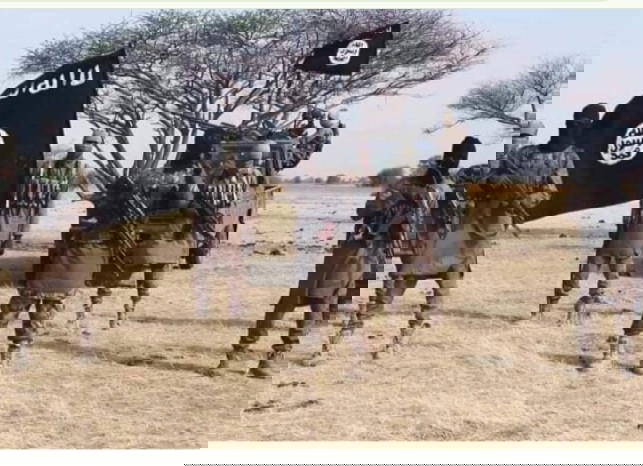
Among the names on the list were three groups—Indigenous People of Biafra (IPOB), Ansaru, and the Islamic State West Africa Province (ISWAP)—which had already been proscribed as terrorist organisations
Equally on the list is the self-styled Prime Minister of Biafra, Mr. Simon Ekpa, who was convicted in September 2025 by the Päijät-Häme District Court in Finland.
Ekpa was found guilty of terrorism-related charges and sentenced to six years in prison by the Finnish court.
The court ruled that Ekpa had, between August 2021 and November 2024, supplied weapons, explosives, and ammunition to armed separatist groups in the southeastern part of the country, as well as exploited his online influence to promote violence.
Mamu
Another notable name on the list is the alleged Abuja-Kaduna train kidnapping negotiator, Mr. Tukur Mamu, who is billed to open his defence to a 10-count terrorism charge filed by the FG on April 23.
Trial Justice Mohammed Umar of the Federal High Court in Abuja okayed the matter for defence after the FG closed its case with evidence from six witnesses.
Mamu was arraigned before the court on March 21, 2023, for allegedly aiding terrorist operations in the country.
The Kaduna-based Islamic scholar was further accused of collecting various sums of money in different currencies from families of victims of the train attack on behalf of the Boko Haram terrorist sect.
The FG told the court that investigations revealed the defendant collected an aggregate sum of $420,000 from families of the victims, as well as N21 million from another set of families of the train attack victims.
It further alleged that Mamu concealed funds he earned from services rendered to the terrorist organisation in his residence in Kaduna State.
The prosecution added that the defendant had, sometime in 2022 in Kaduna State, received ransom payments in the sum of N500,000 on behalf of the Boko Haram terrorist group from families of the train attack hostages.
More so, the prosecution stated that the defendant exchanged voice note communications with one Baba Adamu, identified as spokesperson of Boko Haram, in relation to acts of terrorism.
It alleged that the defendant acted in breach of the Terrorism (Prevention and Prohibition) Act, 2022.
Mamu was arrested on September 6, 2022, at Cairo Airport, Egypt, while on his way to Saudi Arabia for Lesser Hajj with his family members.
He was subsequently brought back to the country and immediately taken into custody by the DSS, which obtained a detention order against him.
Affidavit
In an affidavit deposed to by one of its operatives, Hamza Pandogari, the DSS told the court that Mamu, publisher of Desert Herald, used the cover of journalism to perpetrate his deeds.
It stated that the detained publisher was on his way to attend a clandestine meeting with top terrorist commanders when he was intercepted in Egypt through the help of the International Police (Interpol).
It alleged that preliminary investigations revealed Mamu’s involvement in terrorism financing.
Meanwhile, other alleged terrorism financiers on the list published by the FG on Saturday are: Abdulsamat Ohida; Mohammed Sani; Abdurrahaman Abdurrahaman; Fatima Ishaq; Yusuf Ghazali; Muhammad Sani; Abubakar Muhammad; Sallamudeen Hassan; Adamu Ishak; Hassana Isah; Abdulkareem Musa; Umar Abdullahi; and Abdurrahaman Ado.
Others include: Bashir Yusuf; Ibrahim Alhassan; Muhammad Isah; Salihu Adamu; Surajo Mohammad; Fannami Bukar; Muhammed Musa; Sahabi Ismail; Mohammed Buba; Jama’atu Wal-Jihad; Yan Group; Yan Group NLBDG; Adamu Hassan; Hassan Mohammed; Usman Abubakar; Kubara Salawu; and Rabiu Suleiman.
As well as: Godstime Iyare; Francis Mmadubuchi; John Onwumere; Chikwuka Eze; Edwin Chukwuedo; Chiwendu Owoh; Ginika Orji; Awo Uchechukwu; Mercy Ali; Ohagwu Juliana; Eze Okpoto; Nwaobi Chimezie; and Ogumu Kewe.
There are indications that the FG would initiate extradition proceedings to ensure the repatriation of some of them currently
The post After 48-name terror list, FG moves against Mamu, Ekpa with extradition plans appeared first on Vanguard News.
-
The new federal capital in Abuja and the old city of Lagos
From Chief Obafemi Awolowo’s press release of 18th August, 1975. CONTINUED FROM LAST WEEK The deficiencies of Lagos as Federal Capital have been stated and commented upon in the newspapers almost ad nauseam, and I do not want to repeat or contradict them. But there are some salient points to which I wish to direct […]