Author: CKN

  • Court Sentence Four Owo Church Attackers To Death

    Court Sentence Four Owo Church Attackers To Death

    The Federal High Court in Abuja has sentenced four members of the Al-Shabaab terrorist group to death by hanging for their involvement in the June 5, 2022, attack on St. Francis Catholic Church in Owo, Ondo State.

    The convicted individuals — Idris Abdulmalik Omeiza (25), Al Qasim Idris (20), Jamiu Abdulmalik (26), and Abdulhaleem Idris (25) — were found guilty on a nine-count terrorism charge filed by the Department of State Services (DSS) on behalf of the Federal Government.

    A fifth defendant, Momoh Otuho Abubakar (47), was acquitted and discharged after the court found insufficient evidence.

    Those sentenced to death are:

    * Idris Abdulmalik Omeiza (25)

    * Al Qasim Idris (20)

    * Jamiu Abdulmalik (26)

    * Abdulhaleem Idris (25)

  • Fresh Investments Underway As NUPRC Begins 2026 Licensing Round Q3

    Fresh Investments Underway As NUPRC Begins 2026 Licensing Round Q3

    …Commercial Bids To Take Place In July

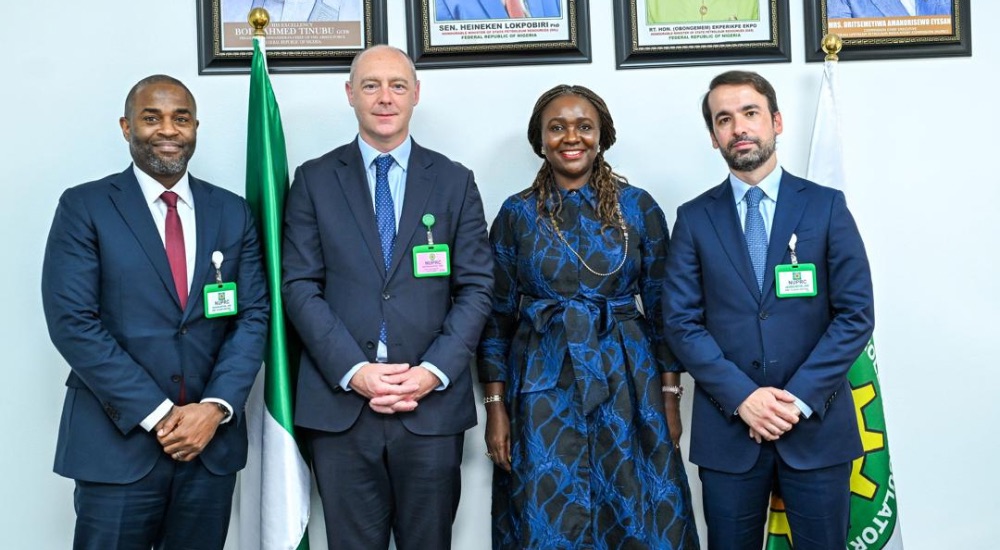
    The Nigerian Upstream Petroleum Regulatory Commission (NUPRC) says the 2026 Licensing Round will commence latest by Q3 2026 having received the approval of the Minister of Petroleum Resources in line with the Petroleum Industry Act.

    The Commission Chief Executive, Mrs. Oritsemeyiwa Eyesan, stated this when Meren Energy (formerly Africa Oil), visited the corporate headquarters of the NUPRC in Abuja on Wednesday.

    Eyesan, who expressed satisfaction with the conduct of the 2025 Licensing Round so far, stated that the commercial bid would take place in July after which the next licensing round would commence.

    The NUPRC boss said the heightened participation in the 2025 Licensing Round was a testament to the fact that Nigeria was headed in the right direction.

    She said the rise in investments coupled with the upswing in production was evidence that Nigeria’s oil and gas sector under the leadership of President Bola Tinubu had become attractive.

    Eyesan stated, “We are also fortunate that the President and Minister of Petroleum Resources has approved the 2026 Licensing Round.

    “So, we are in the process of finalising the 2026 launch which will happen latest by the third quarter. So, this is the make or break point and we want to make sure we make it.”

    In his remarks, the Group CEO, Meren Energy, Dr. Oliver Quinn, stated that the current reforms had inspired the company to increase its investments in Nigeria hence its interest in asset divestments and licensing rounds.

    Quinn revealed that Meren Energy’s investment priority is Africa of which Nigeria ranks is number one.

    “We have operated in Agbami, Akpo and Egina world class fields. I think till date, in 20 years about $11bn in capital from our side has gone into these assets and about $4bn has gone to tax and royalties,” he said, adding, “Nigeria remains the core of our business today because of the quality of these assets.”

    According to Quinn, Meren Energy is pressuring its partners on these assets to deepen their investments and then increase overall production.

    He said Meren Energy was the first company in Nigeria to sell crude oil to the Dangote refinery and the firm will continue to fulfil its Domestic Crude Supply Obligation so long as the price remains right.
    Nigeria has conducted several licensing rounds since the 1990s, including the 2000 Licensing Round; 2005 Licensing Round; 2006 Mini-Round; 2007 Licensing Round; 2020 Marginal Field Bid Round, which offered 57 marginal fields to indigenous companies; 2022–2024 Licensing Rounds, which included deep offshore, onshore and gas-focused acreages.

    The enactment of the Petroleum Industry Act (PIA) in 2021 introduced a more transparent and competitive framework for awarding oil and gas assets. Under the Act, licensing rounds must be conducted openly, with clear criteria and regulatory oversight.

    Fresh Investments Underway As NUPRC Begins 2026 Licensing Round Q3 is first published on The Whistler Newspaper

  • Lagos Arrests 144 Street Beggars In Statewide Crackdown

    Lagos Arrests 144 Street Beggars In Statewide Crackdown

    The Lagos State Government says a total of 144 street beggars have been arrested across different parts of the state as enforcement operations against street begging and related environmental infractions continue.

    The Commissioner for Environment and Water Resources, Tokunbo Wahab, disclosed this in a post on X on Wednesday, noting that the arrests were carried out across multiple locations, including Agege, CMS, Oshodi, and other areas within the state.

    According to him, earlier in the day, enforcement teams arrested 22 beggars during operations in Agege and Oshodi, comprising adults and a few teenagers. In a separate operation at CMS, 14 adults and 9 children were also apprehended.

    He added that clearance operations were still ongoing in other parts of the state, including Admiralty Way in Lekki and Addo Road in Ajah.

    “Clearance operations are also ongoing at Admiralty Way, Lekki, and Addo Road in Ajah,” Wahab stated in an earlier post, and later disclosed that a total of 144 beggars were arrested during the operations.

    “A total of 144 beggars across Lagos State had been arrested as of 1400hrs today.”

    The latest operation comes amid renewed efforts by the state government to address the growing presence of street beggars across major traffic corridors and public spaces in Lagos.

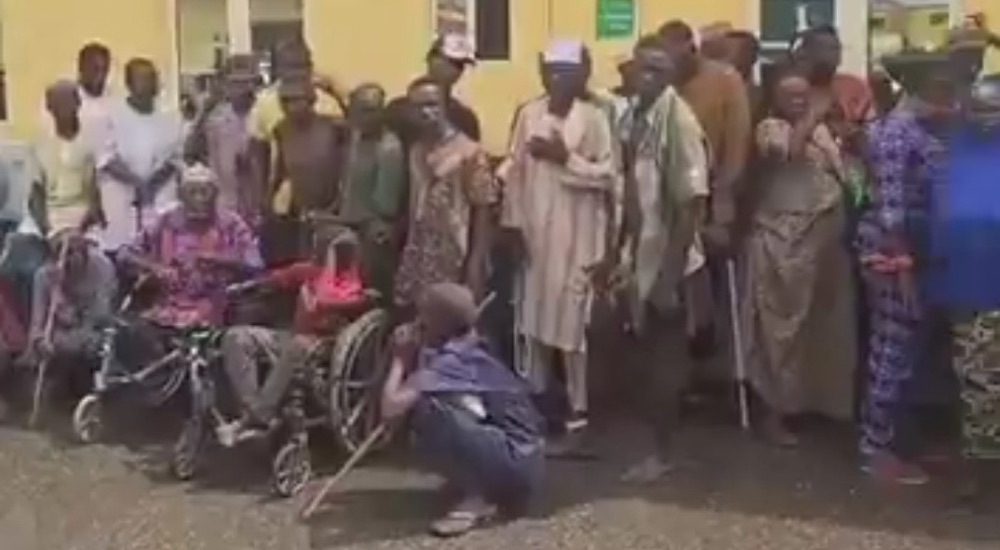
    In November 2025, THE WHISTLER had reported on rising concerns over the increasing visibility of beggars across the metropolis, from Abule-Egba to Lekki and Oshodi to Ajah, where vulnerable individuals—including children, the elderly, teenagers, and persons with disabilities—are frequently seen soliciting alms along roadsides, under bridges, and at bus stops.

    At locations such as the Abule-Egba underbridge, several destitute individuals have taken refuge, with many relying on public generosity for food and basic survival.

    Lagos Arrests 144 Street Beggars In Statewide Crackdown is first published on The Whistler Newspaper

  • Women Receive Only 26% Of Banks Credit- Report

    Women Receive Only 26% Of Banks Credit- Report

    Nigeria’s formal credit market continues to show a persistent gender imbalance, with women receiving just 26 per cent of total loans despite demonstrating stronger repayment performance and lower default rates than men, according to Nigeria Credit Landscape Report.

    The report, which analysed loan-level data from about 300,000 active borrowers, found that male borrowers account for 74 per cent of total disbursements, underscoring a wide structural gap in access to credit even as women consistently emerge as lower-risk customers.

    It revealed that women not only borrow less frequently but also outperform men on key credit quality indicators.

    Average loan size for female borrowers stood at N478,117, compared with N430,962 for men.

    However, women recorded a delinquency rate of 7.8 per cent, significantly lower than the 10.9 per cent observed among male borrowers.

    The report noted that this pattern challenges conventional lending assumptions that associate larger loan sizes with higher credit risk. Instead, Nigerian female borrowers were found to manage larger loan amounts more efficiently while maintaining stronger repayment discipline.

    A similar trend was observed among married borrowers, who account for 91.9 per cent of total loans disbursed.

    Within this group, married women borrowed an average of about N500,000, compared with N450,000 for married men, yet still recorded lower default rates.

    Married men, however, were found to have a delinquency rate 2.63 percentage points higher than their female counterparts.

    Credit Direct said the findings highlight a significant mispricing of risk within Nigeria’s lending ecosystem, where lower-risk borrowers, particularly women, remain underrepresented in credit allocation.

    “The data is telling us something the market hasn’t fully priced in. For a growing number of Nigerians, credit is no longer a convenience; it’s how households manage essential costs from one month to the next,” said Head of Research and Business Intelligence at Credit Direct, Emeka Ucheaga.

    He added that some of the most reliable borrowers in the country are often those least served by the formal financial system, stressing that addressing the gap represents both a commercial opportunity and a structural necessity for lenders adopting data-driven models.

    Beyond gender disparities, the report also highlights the growing role of credit in household survival.

    Rent, medical expenses and school fees were identified as the primary drivers of borrowing, indicating that credit is increasingly being used to meet essential living costs rather than discretionary spending.

    The report further showed that more than 90 per cent of borrowers earn below N200,000 monthly, with the largest segment, 36 per cent, earning between N50,000 and N99,999.

    It also found that households earning below ₦50,000 monthly often take loans amounting to between 25 and 50 per cent of their annual income, reflecting rising financial pressure amid inflation and currency depreciation.

    On the emerging buy-now-pay-later (BNPL) segment, the report found that self-employed Nigerians account for 45 per cent of transactions, compared to 29 per cent among salaried workers, reversing the traditional credit profile.

    Self-employed borrowers also recorded higher average spending at N276,213, compared with N230,900 for salaried users, largely driven by purchases of productive assets such as smartphones and work tools.

    Smartphones accounted for 70 per cent of BNPL gadget purchases, with mid-range Android devices dominating the category.

    Repayment data showed that 61.5 per cent of customers opted for five- to six-month repayment tenors, with 42.7 per cent selecting the maximum six-month term, indicating widespread preference for extended repayment schedules amid income constraints.

    Overall, the report points to a structurally shallow credit market in Nigeria, where financial inclusion remains relatively broad but access to formal borrowing is limited.

    While over 64 per cent of adults are financially included, only about 6 per cent access formal credit, and private sector credit stands at just 13.1 per cent of GDP.

    Within this constrained environment, Credit Direct argues that women represent an underutilised, lower-risk borrower segment with strong repayment behaviour but limited access to financing.

    The company said it is responding to this gap through its Micro Trader Loan product, a bundled credit offering that integrates micro-loans with pension contributions, health insurance, and micro-investment options.

    According to the firm, women make up about 80 per cent of users of the product, reflecting both demand and the underserved nature of the segment.

    Women Receive Only 26% Of Banks Credit- Report is first published on The Whistler Newspaper

  • Ondo Church Attack: Charges against convicted terrorists in Owo attack revealed 

    Ondo Church Attack: Charges against convicted terrorists in Owo attack revealed 

    The Federal High Court in Abuja has sentenced to death four out of the five terrorists who attacked the Saint Francis Catholic Church, Owo, in Ondo state in 2022, in which 43 worshipers were killed. 

    The four that will die by hanging are Idris Abdulmalik Omeiza (25 years), Al Qasim Idris (20 years), Jamiu Abdulmalik (26 years), and Abdulhaleem Idris (25 years, while Momoh Otuho Abubakar (47 years) was discharged and acquitted of all the charges.

    Justice Emeka Nwite pronounced the four terrorists guilty in the entire 9 count charges brought against them by the Department of State Service, DSS, and ordered that they be hanged until they are dead.

    The pronouncement of a death sentence was in a judgment delivered by the Judge on Wednesday.

    Five accused persons were arraigned in 2025 before the state court following their arrest in some parts of Ebiraland in Kogi State and other areas of Ondo State. 

    During the arraignment, they pleaded not guilty to the terrorism charges, prompting the DSS to open their full-blown trial, having secured an accelerated trial order from the court. 

    At the trial, the DSS called a total of 11 witnesses, comprising both eyewitnesses during the attack and security operatives who used call locations and network towers to fish out the convicts. 

    The secret police also tendered 23 exhibits, including confessional extra-judicial statements made by the convicts during interrogation that were witnessed by a Legal Aid Council lawyer, Mr Daniel Hassan. 

    At the close of the DSS case, the convicts elected to defend themselves without calling any witnesses to support their defence. 

    However, while reviewing the DSS case, Justice Nwite found that the four convicted persons in 2021 joined a proscribed Al-Shabab terrorist group through one Odoba and held a meeting at Government High School in Ogaminana in Adavi local government area of Kogi, where the decision to launch an attack against the Catholic Church was hatched. 

    The court also found as a fact that the final onslaught against the church was perfected at a place near Owo in Ondo State. 

    Similarly, the Judge held that the DSS established beyond a reasonable doubt that the four convicted persons detonated an improvised explosive device that killed 43 people instantly and caused bodily harm to 163 other worshippers. 

    Besides, the Judge said that the evidence against the convicted persons was credible, cogent, positive, verifiable and compelling to warrant their convictions. 

    Justice Nwite dismissed the claims of the convicted persons that their extrajudicial statements were made under duress and inducement, adding that their signatures and thumbprints on the statements cannot support their denIal. 

    He therefore sentenced the four convicted persons to life imprisonment in count one, 20 years in counts two and three and sentenced them to death in counts 7 to 9 upon being found guilty of detonating improvised explosive devices that killed the worshippers. 

    The Judge ordered that they be hanged by the neck until they are dead. 

    However, the 5th defendant, Momoh Otuho Abubakar, was exonerated in the 9-count charges and was subsequently discharged and acquitted of the charges.

    Some counts in the charge read: “That you, Idris Abdulmalik Omeiza, Al Qasim Idris, Jamiu Abdulmalik, Abdulhaleem Idris and Momoh Otuho Abubakar adults, males, with others still at large, sometime in 2021, did join and became members of AL Shabab Terrorist Group, with cell in Kogi State and thereby committed an offence contrary to and punishable under Section 25(1) of Terrorism (Prevention and Prohibition) Act, 2022.

    “That you, Idris Abdulmalik Omeiza, Al Qasim Idris, Jamiu Abdulmalik, Abdulhaleem Idris and Momoh Otuho Abubakar, adults, males, with others still at large, on 30th May, 2022; 37 June, 2022 and 4 June, 2022, at Government Secondary School, Ogamirana, Adavi LGA, Kogi State and behind Omialafa Central Mosque, Ose LGA, Ondo State, respectively, attended and held meetings, where you agreed to and planned for the terrorist attack, which you carried out on 5™ June, 2022, at St. Francs Catholic Church, Owo, Ondo State and thereby committed an offence contrary to and punishable under Section 12(a) of Terrorism (Prevention and Prohibition) Act, 2022.

    “That you, Idris Abdulmalik Omeiza, Al Qasim Idris, Jamiu Abdulmalik, Abdulhaleem Idris and Momoh Otuho Abubakar, adults, males, with others still at large, on 05/06/2022, at St. Francis Catholic Church, Owo, Ondo State, with intent to further your religious ideology and while armed with IEDs and AK 47 rifles, did attack worshippers, held them hostage and in the process, caused grievous bodily harm to over 100 persons, including Onileke Ayodele, John Blessing, Nselu Esther and Ogungbade Peter and thereby committed an offence contrary to Section 24 Terrorism (Prevention and Prohibition) Act, 2022 and punishable under Section 24(2)(a) of the same Act.

    “That you, Idris Abdulmalik Omeiza, Al Qasim Idris, Jamiu Abdulmalik, Abdulhaleem Idris and Momoh Otuho Abubakar, adults, males, with others still at large, on 05/06/2022, had in your possession IEDs and AK 47 rifles, with which you attacked worshippers at St. Francis Catholic Church, held them hostage, killed over 40 persons and caused grievous bodily harm to over 100 persons and thereby committed an offence contrary to Section 2(1)(2) and (3)(v) and punishable under Section 24(1) and (2) of TPPA, 2022.

    “That you, Idris Abdulmalik Omeiza, Al Qasim Idris, Jamiu Abdulmalik, Abdulhaleem Idris and Momoh Otuho Abubakar, adults, males, with others still at large, on 05/06/2022, at St. Francis Catholic Church, Owo, Ondo State, with intent to cause death, did detonate Improvised explosive devices (IEDs), which led to the death of over 40 persons, including: Ajanaku John; Onuoha Deborah; Onileke Esther and John Bosede and thereby committed an offence contrary to and punishable under Section 42 (a)(ii) of Terrorism (Prevention and Prohibition) Act, 2022.

    “That you, Idris Abdulmalik Omeiza, Al Qasim Idris, Jamiu Abdulmalik, Abdulhaleem Idris and Momoh Otuho Abubakar, adults, males, with others still at large, on 05/06/2022, at St. Francis Catholic Church, Owo, Ondo State, with intent to cause grievous bodily harm, did detonate Improvised explosive devices (IEDs) which caused grievous bodily harm to over 100 persons, including: Onuchukwu Happiness, Ogungbade Vivan and Nnakwe Paschaline Ugochinyerem and thereby committed an offence contrary to and punishable under Section 42(a)(i) of Terrorism (Prevention and Prohibition) Act, 2022.”

    Ondo Church Attack: Charges against convicted terrorists in Owo attack revealed 

  • Ebola: WHO Urges Countries To Lift Travel Bans On Central Africa

    Ebola: WHO Urges Countries To Lift Travel Bans On Central Africa

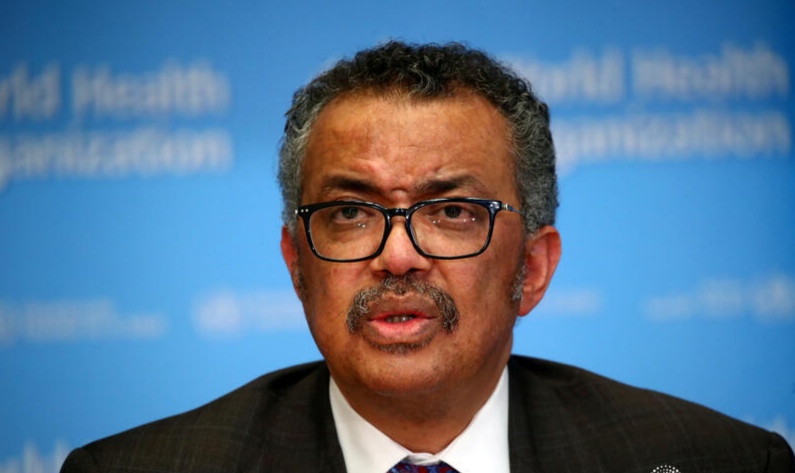
    The Director-General of the World Health Organisation (WHO), Tedros Adhanom Ghebreyesus, has called on countries to end broad travel restrictions linked to the Ebola outbreak in Central Africa, warning that such measures are counterproductive and are impeding the response effort.

    “There are ways to manage workers and to manage cases without having a strong, restricted travel ban and we do not encourage that as WHO,” Tedros said.

    The WHO has declared the ongoing Ebola outbreak in the Democratic Republic of the Congo and Uganda a Public Health Emergency of International Concern, citing rising cases, cross-border spread and significant uncertainties about the scale of the epidemic.

    The outbreak is believed to have been spreading for weeks before it was officially declared on 15 May, with the epicentre in Mongbwalu, a poor gold-mining town of 130,000 people in Ituri Province in eastern Congo.

    Tedros described the outbreak as a “catastrophic collision of disease and conflict”, saying the disease is outpacing the response.

    As of 27 May, a total of 906 suspected cases and 223 deaths among suspected cases have been reported in the DRC, with 134 confirmed cases, including nine in Uganda, and 18 deaths among confirmed cases across both countries.

    Several countries have imposed travel restrictions in response to the outbreak.

    Both Uganda and Rwanda have closed their borders with the DRC, while the United States has barred most travellers who have recently visited the DRC, Uganda or South Sudan. Canada has also announced a 90-day entry ban for residents from the DRC, Uganda and South Sudan.

    The WHO advises against such measures, with Tedros dismissing border closures as ineffective and arguing they discourage countries from reporting outbreaks openly.

    Health ministers from the Intergovernmental Authority on Development, an eight-nation East African bloc, met this week and agreed to redirect about $7m towards prevention across the region.

    The International Rescue Committee (IRC) has warned that the outbreak risks becoming the deadliest on record without urgent international action, as it is now spreading faster than responders can contain it.

    The virus has also reached North Kivu and South Kivu provinces, where the Rwanda-backed M23 rebel group controls major cities. Anger over strict rules for handling victims’ bodies, which clash with local burial customs, has fuelled at least three attacks on health centres.

    Ebola: WHO Urges Countries To Lift Travel Bans On Central Africa is first published on The Whistler Newspaper

  • African Integration Beyond Trade: When Africans Become Foreigners In Africa

    African Integration Beyond Trade: When Africans Become Foreigners In Africa

    In my earlier piece in February, Beyond Preferences and Rhetoric: What Africa’s 2025 Integration Moment Really Demanded, I argued that Africa’s long-term competitiveness would not be secured by waiting on external trade preferences, but by taking integration seriously as an economic project. I called for political will, industrial strategy, and a human-centred approach to the continental vision. I did not expect to be writing a follow-up so soon. But the events of April and May 2026 in South Africa have made this necessary.

    What is unfolding in the streets of Johannesburg, Durban, and Pretoria is a direct assault on Africa’s integration agenda and can’t be seen simply as a South Africa’s issue. African Union, the AfCFTA Secretariat, and every head of state who has ever signed a protocol on the free movement of persons must now answer a simple but devastating question: What exactly are we integrating, if not Africans?

    The burning streets and the broken promise

    In April and May 2026, a vigilante movement called March and March organised anti-immigration demonstrations across South Africa’s major cities, resulting in attacks on foreign-owned businesses, destruction of livelihoods, and at least one death. As reported by Human Rights Watch, a 43-year-old Cameroonian shopkeeper who had spent nearly two decades in Durban watched a group of men break down his doors during protests targeting foreign-owned shops. He had built a life there. He had become, in every meaningful sense, a resident of the country. It did not matter. He was African but the wrong kind.

    Human Rights Watch documented the violence and warned of a new wave of xenophobic attacks, noting that police response was insufficient and in some cases absent. The African Commission on Human and Peoples’ Rights issued a formal statement of grave concern, situating the 2026 violence within a long and shameful pattern the 1998 killings in Johannesburg, the Cape Town murders of 2000, the nationwide carnage of 2008 in which over 60 people died and 100,000 were displaced, the 2015 military deployment, and the ongoing harassment of migrants throughout the 2020s by groups such as Operation Dudula. This is not an aberration. This is a pattern. And a pattern demands a structural explanation, not a diplomatic one.

    The South African government’s response has been, at best, inadequate. President Ramaphosa, speaking on Freedom Day April 27, 2026 offered moving words: “We did not walk alone into freedom. We were carried by a tide of solidarity from the nations of Africa.” Yet noble sentiments alone do not rebuild the Cameroonian shopkeeper’s door. They do not compensate the Ghanaians who were evacuated on May 27, 2026 the first in what may become a steady retreat of African nationals from a country once celebrated as the continent’s economic anchor. South Africa’s government went further by publicly denying the xenophobic nature of the attacks, describing them as “isolated incidents.” African civil society groups and indeed the evidence rejected that denial outright.

    A continent that signs protocols by day and tolerates pogroms by night
    Here is the central contradiction that must be stated plainly: African heads of state have, under the architecture of the African Union and the AfCFTA, committed themselves to creating a single continental market one that includes the free movement of persons, not just goods. The AU’s Protocol on Free Movement of Persons, adopted in 2018, envisions an Africa where citizens can live and work anywhere on the continent. The AfCFTA, described as a $3.4 trillion economic integration project, cannot function if the people who are supposed to trade across borders are afraid to cross them.

    And yet, according to the latest GovDem Survey of the Inclusive Society Institute, 73 percent of South Africans report not trusting African immigrants “at all” or “not very much.” South Africa the country that accounts for over 40 percent of all intra-African trade, the continental powerhouse without whose participation AfCFTA loses much of its gravitational force is also the country where intra-African trade is least safe in human terms.

    The African Chamber of Content Producers put it with blunt precision: intra-African trade stands at just 14 percent of total African trade, compared to roughly 60 percent in Asia and Europe. Xenophobia is not merely a moral outrage in this context. It is a structural barrier to integration as consequential as any tariff wall or non-tariff barrier. You cannot have free trade without free movement. You cannot have free movement without safety. And you cannot have safety while your government denies that the attacks are even happening.

    The Centre for Global Affairs and Responsible Governance in Accra captured this contradiction sharply: “You cannot champion AfCFTA by day and allow mobs to lynch traders by night. Violence against Africans anywhere is violence against Africa.”

    What if this were Europe?

    It is worth pausing to ask an uncomfortable comparative question. If vigilante groups in Germany had, over three decades, periodically attacked French, Italian, or Polish shopkeepers burning their businesses, looting their goods, and driving them from their homes, with documented fatalities what would the European Union have done?

    The answer is not hypothetical. The EU has invoked Article 7 proceedings against member states for rule-of-law violations that were far less physically violent than what has transpired repeatedly in South Africa. The European Commission has financial tools the ability to withhold structural and cohesion funds to compel compliance with the bloc’s foundational norms. There are the European Court of Justice, the European Court of Human Rights, and a mature architecture of accountability that moves slowly but does move.

    The African Union, by contrast, is convening its Eighth Mid-Year Coordination Meeting in Cairo on June 24-27, 2026, partly at Ghana’s formal request that South Africa’s xenophobic attacks be placed on the agenda. That Ghana needed to petition for the matter to be discussed at all rather than it being treated as an automatic breach of continental obligations reveals a profound gap in the AU’s enforcement architecture. The AU’s aspiration for integration is real. Its mechanisms for holding member states accountable to that aspiration remain, in too many cases, aspirational themselves.

    This is not an argument for supranational punishment. It is about ensuring that the commitments we make as a continent are reflected in practice. The African Commission on Human and Peoples’ Rights has expressed concern, the UN Secretary-General raised his voice, civil society across the continent has demanded action. What has been missing is a commensurate, structural institutional response one that makes clear that a member state’s domestic policy of tolerance toward anti-foreigner violence is incompatible with its continental commitments.

    The petition filed in Accra on May 31, 2026, calling for the AU to review the continued suitability of the AfCFTA Secretary-General a South African national for his position is a symptom of this frustration. Whether or not one agrees with the petition’s remedy, its logic is instructive: when a country’s conduct fundamentally contradicts the values of a continental institution, the institution cannot appear indifferent. Indifference is its own statement.

    The Ubuntu paradox and the path forward

    There is a word that South Africa gave to the world: Ubuntu. The philosophy that a person is a person through other people, that humanity is constituted through relationship and mutual recognition. President Ramaphosa himself invoked it in his Freedom Day address.

    The paradox is almost too painful to articulate: a nation that exported Ubuntu to the world has struggled, across three decades of democracy, to extend basic dignity to African migrants within its own borders. But this is not ultimately a South African problem to solve alone, it is a continental governance failure that requires a continental governance response.

    The 2025 African Integration Report was clear: Africa’s integration is stalled not by lack of vision but by competing national interests, limited political accountability, and the absence of effective mechanisms to address asymmetries between member states. Xenophobia is the most violent expression of those competing national interests the zero-sum logic that says African solidarity ends at the border. If the AU and AfCFTA cannot name that logic and challenge it, then the integration project is building on sand.

    What is required is not more declarations. It is architecture. The AU must develop a binding monitoring and sanctions framework for xenophobic violence not as a punitive tool, but as a deterrent and accountability mechanism, the way the EU’s rule-of-law conditionality functions. AfCFTA’s implementation roadmap must explicitly address the free movement of persons as a trade-enabling condition, not a long-term aspiration starting by making the ratification of the AU Free Movement Protocol, which has been gathering dust since 2018, a prerequisite for full AfCFTA participation. And South Africa as the continent’s largest economy, as a country whose liberation was bankrolled by African solidarity, as a signatory to every relevant continental framework must be held, with respect and firmness, to its obligations.

    Ghana’s Foreign Affairs Minister Samuel Okudzeto Ablakwa was right to take the matter to the AU. But the question now is whether Cairo will produce accountability or choreography. Because Africans watching from Lagos, Nairobi, Accra, and Dakar are drawing their own conclusions. And the conclusion they are drawing is that the integrated Africa of Agenda 2063 is not yet a place where an African from Cameroon can build a shop, serve a community, and feel safe.

    That is the gap between our protocols and our reality. Until we close it, AfCFTA will remain what too much of Africa’s integration has been: a magnificent aspiration undermined by the failure of political will and in this case, the failure of basic human solidarity.

    -Gyabaah, a Development Practitioner, writes from Dakar, Senegal and can be reached at Rachelgyabaah@gmail.com

    African Integration Beyond Trade: When Africans Become Foreigners In Africa is first published on The Whistler Newspaper

  • Gospel Singer Yinka Apologises Over Oyo Schoolchildren Kidnap Comment

    Gospel Singer Yinka Apologises Over Oyo Schoolchildren Kidnap Comment

    Yinka Alaseyori has apologised following criticism over her remarks about the kidnapping of pupils and teachers in Oriire Local Government Area of Oyo State.

    Alaseyori, in a video shared on her Instagram on Wednesday, said she was sorry for any hurt caused by her remarks and stressed that she never intended to downplay public concerns over the abduction

    The singer explained that she became aware that many Nigerians were unhappy with her earlier video, believing her remarks suggested that public concerns about the abducted victims were not being taken seriously.

    “I did a video two days ago about the kidnapped children, touching on the government, parastatals, and every agency. But when I woke up yesterday, I found out that some well-meaning Nigerians were not happy about it, as I made them feel their voices are unheard,” she said.

    Alaseyori appealed for forgiveness from the public, particularly mothers and families affected by the incident, insisting that she would never intentionally disregard their pain.

    “You know me too well that I would never make you feel like that. Mothers, do not be offended. I am sorry. I beg in God’s name. Please, forgive me. I would never think like that. Pardon and forgive me,” she added.

    The apology comes after the gospel singer had urged Nigerians to continue praying over the country’s security challenges, while maintaining that the government was making efforts to restore peace.

    Meanwhile, the kidnapping of pupils and teachers in Oriire Local Government Area has continued to spark outrage and concern across the country, with many Nigerians calling on authorities to intensify efforts to secure the safe release of the victims.

    Gospel Singer Yinka Apologises Over Oyo Schoolchildren Kidnap Comment is first published on The Whistler Newspaper

  •  Community protests at Abia Govt House over alleged land grabbing, forged documents 

     Community protests at Abia Govt House over alleged land grabbing, forged documents 

    Youths and women of Umunenweze Okpuala community in Okaigu, Umuahia North LGA of Abia State on Wednesday, stormed the Abia State Government House to protest the alleged grabbing and sale of their farms and ancestral lands.

    The villagers who appealed for the immediate intervention of Governor Alex Otti, accused the traditional ruler of their community, Eze Paul Onuigbo Uzuegbu and other individuals of presenting forged letters to the Abia State government on behalf of the villagers.

    According to the Umunenweze natives, several plots of land belonging to the present and future generations have been forcefully sold off or donated to private estate developers, thereby stripping the people of their communal property.

    Speaking on behalf of the protesters, the Secretary of the Umuneweze community, Okechukwu Uzuegbu, alleged that bulldozers brought in by estate developers were allegedly used to destroy farms and economic trees belonging to indigenes, without their knowledge and consent.

    “Those grabbing and selling our lands are writing false letters and forged documents to the government, saying we have given up our rights to our land.

    “Any further trespass will be viewed as deliberate incitement to chaos,” the village Secretary, Uzuegbu warned.

    Addressing the protesters on behalf of Abia State government, the Senior Special Assistant to Governor Alex Otti on local government and chieftaincy affairs, Magdalene Ugoanusi, appealed to the Umunenweze indigenes not to use violence in their community or any part of Umuahia.

    Mrs Ugoanusi, who said a letter about the matter was brought to the office of Chief of Staff to the Governor some time ago, promised that the State government would revise the issue.

    She urged the villagers to itemise all their complaints and submit to the Abia State government for action, adding that the member representing Ikwuano/Umuahia Federal constituency, Obi Aguocha, would be engaged to work for the peaceful resolution of the land dispute.

     Community protests at Abia Govt House over alleged land grabbing, forged documents 

  • FG Extends Internet Access To Underserved Communities

    FG Extends Internet Access To Underserved Communities

    Nigeria’s Minister of Communications, Innovation and Digital Economy, Dr. Bosun Tijani, has revealed new backing from China Industrial Bank (CIB) for the Nigeria Universal Communication Access Project (NUCAP), aimed at expanding connectivity to over 20 million Nigerians in underserved areas.

    Tijani disclosed this in a post on X following a meeting with a delegation from CIB led by Peng Shuang, General Manager, Strategic Emerging Industries Business Headquarters.

    According to the minister, NUCAP will facilitate the deployment of 3,700 telecommunications towers nationwide, focusing on unserved and underserved areas, particularly rural and riverine communities lacking reliable access to communication services.

    He revealed that CIB has committed to supporting the delivery of at least 1,000 telecom tower sites before the end of the year.

    “I am particularly encouraged by the Bank’s commitment to supporting our ambition of delivering a minimum of 1,000 tower sites by the end of this year, helping to bring connectivity, opportunity, and economic inclusion closer to millions of Nigerians,” he stated.

    Tijani noted that the bank reaffirmed its commitment to supporting the implementation of NUCAP, a project expected to significantly advance digital inclusion and expand access to telecommunications infrastructure across the country.

    “NUCAP is a wholly green network of modern telecommunications towers that will extend connectivity to these previously unconnected communities, many of them in rural and riverine areas of Nigeria,” Tijani stated.

    According to the minister, CIB’s support for the initiative marks the bank’s first investment in Nigeria and reflects growing international confidence in the country’s digital economy agenda.

    He further disclosed that the Federal Executive Council (FEC) had already approved the project as part of broader government efforts to bridge the digital divide and ensure all Nigerians have meaningful access to quality telecommunications services.

    Tijani added that investing in rural communication infrastructure aligns with the administration’s goal of promoting digital inclusion and creating economic opportunities for citizens across the country.

    However, it remains unclear whether the 3,700 towers proposed under NUCAP form part of the 7,000 telecom towers announced by the government last year or represent a separate initiative.

    Meanwhile, the Nigerian Communications Commission (NCC) recently disclosed that telecom operators have committed to upgrading 12,000 sites in 2026 to improve service quality nationwide.

    The Executive Vice Chairman of the commission, Dr. Aminu Maida, said operators completed just over 3,000 site upgrades for coverage and capacity in 2025. He noted that the planned 12,000 upgrades this year signal an acceleration of infrastructure investments and network expansion efforts.

    Maida explained that the upgrades would include additional spectrum deployment on 4G sites, as well as the conversion of older 2G and 3G sites to 4G and 5G infrastructure.

    FG Extends Internet Access To Underserved Communities is first published on The Whistler Newspaper