Author: Daily Post Nigeria

  • Coroner’s Court halts inquest into Chimamanda son’s death

    Coroner’s Court halts inquest into Chimamanda son’s death

    The Coroner’s Court, located at the Igbosere Magistrate Court on Lagos Island, has postponed further proceedings in the inquest concerning the death of 21-month-old Master Nkanu Adichie-Esege, son of Chimamanda Ngozi Adichie and Dr. Ivara Esege.

    The decision follows a High Court order that stays the proceedings until a judicial review application is resolved.

    On Wednesday, Coroner Magistrate Atinuke Adetunji scheduled October 8, 2026, for the next mention of the case after being notified that the Lagos State High Court had issued an order to suspend the inquest.

    The inquest, which was set to begin hearings, was interrupted after Professor Taiwo Osipitan, SAN, representing Euracare Multi-Specialist Hospital, informed the court that the hospital had secured permission from the High Court to contest the jurisdiction of the Coroner’s Court in conducting the inquiry.

    Osipitan explained to the court that a significant issue raised in the judicial review proceedings is whether the Coroner’s Court rightfully assumed jurisdiction to investigate the child’s death, given that the remains had reportedly been cremated prior to the commencement of the inquest.

    He further stated that the main application also questions whether a coroner is legally permitted to investigate the cause of death when the body is no longer available for examination.

    “There is also a consequential order that pending the determination of our substantive suit, this Coroner’s Court be stayed,” Osipitan informed the court.

    In response to the situation, Lagos Governor Sanwo-Olu has ordered an investigation into the death of Chimamanda Adichie’s son.

    “We have a return date of June 8, 2026. We have served all parties, and our request is that this court should postpone the proceedings until we return, in compliance with the order,” he added.

    However, Adebola Araba, counsel from the Lagos State Attorney-General’s Office, informed the court that he had not personally reviewed the enrolled order.

    In response, Osipitan asserted that the Attorney-General’s office had been properly served.

    “We submitted our filing on Monday and served the Attorney-General’s office on Wednesday. While he may not have personally received it, the office has indeed been served,” he stated.

    On behalf of the family of the deceased, Kemi Pinheiro, SAN, notified the court that four witness statements under oath had already been filed and distributed to all involved parties.

    He indicated that the proposed witnesses consist of the child’s father, Dr. Ivara Esege; Dr. Chinwe Ego from Arizona, United States; another medical expert from Minnesota, United States; and Prof. Adekola from the Lagos University Teaching Hospital.

    Pinheiro noted that although the family would comply with the High Court’s stay order, they remained dedicated to pursuing the inquest.

    “He who has nothing to conceal should not fear an open inquest. An innocent individual has nothing to dread. It is the darkness that fears the light,” he remarked.

    The senior advocate requested that the Coroner’s Court postpone the matter until after the court vacation instead of indefinitely.

    Counsel for Atlantis Paediatric Hospital, Efe Ize-Iyamu, informed the court that his client, who is listed as the sixth respondent in the judicial review proceedings, had been served with both the originating motion and the enrolled order.

    He aligned himself with the arguments presented by Pinheiro, asserting that although the parties were obligated to adhere to the High Court’s order, Atlantis Paediatric Hospital had already submitted its response to the application.

    Osipitan maintained that the primary concern remained the legal ramifications of the purported cremation of the child’s remains prior to the activation of the Coroner’s Court’s jurisdiction.

    “Regardless of whether one is fearful or fearless, there was intentional destruction,” he contended.

    He stated, “You cannot assume jurisdiction. What they did is subject to a penalty of 15 years’ imprisonment. The question is whether an individual who has committed an offense under the law can advocate for an inquest.”

    Pinheiro, on the other hand, disagreed, arguing that the submissions constituted an affront to the stipulations of the Coroner’s Law.

    “We will provide examples where inquests have been carried out even in the absence of the body,” he informed the court.

    After considering the counsel’s arguments, Magistrate Adetunji postponed the matter until October 8, 2026.

    The development followed an order issued on May 26, 2026, by Justice Aishat Opesanwo of the Lagos State High Court, Osborne Foreshore, which granted Eurapharma Care Services Nigeria Limited permission to contest the proceedings of the Coroner’s Court and mandated that the grant of leave should function as a stay of the inquest until the substantive suit is resolved.

    The parties involved in the judicial review proceedings include the Coroner, Mrs. A.A. Adetunji; the Chief Coroner of Lagos State; the Attorney-General and Commissioner for Justice of Lagos State; Dr. Ivara Esege; Chimamanda Ngozi Adichie; and Atlantis Paediatric Hospital Limited.

    The hospital is contesting the decisions made by the Coroner’s Court on January 21, February 25, and April 14, 2026, concerning the ongoing investigation into the circumstances surrounding the death of Master Nkanu Adichie-Esege, who passed away on January 7, 2026, at Euracare Multi-Specialist Hospital in Victoria Island, Lagos.

    Among other requests, the hospital is pursuing orders of certiorari and prohibition to annul and prevent the Coroner’s Court from proceeding with the inquest.

    It contended that the body of the deceased had been cremated prior to the activation of the Coroner’s Court’s jurisdiction, rendering it unavailable for any post-mortem examination.

    The applicant also contested the Coroner’s Court’s ruling that required it to present its defense and call witnesses first during the inquest, despite the allegations of gross negligence and medical misconduct made against it by the family of the deceased.

    In granting leave, Opesanwo determined that the application was neither frivolous nor vexatious and raised matters warranting judicial review.

    “The Court is satisfied that the Applicant has met the threshold for the grant of leave. The application is, after all, not frivolous or vexatious. It raises issues of procedure and fairness that ought to be ventilated at the substantive stage,” the judge stated.

    As a result, the court granted leave to pursue judicial review through orders of certiorari and prohibition aimed at quashing the decisions and orders of the Coroner’s Court in Suit No. MCL/1/CONA/2026.

    The judge additionally mandated, in accordance with Order 44 Rule 3(6)(a) of the High Court of Lagos State (Civil Procedure) Rules 2019, that the granting of leave shall function as a stay on all further proceedings in the coroner’s inquest until the hearing and resolution of the substantive application.

    Opesanwo instructed Eurapharma Care Services Nigeria Limited to submit its substantive documents within 14 days and to serve all respondents appropriately.

    The adjournment is coming months after the proceedings in the Coroner’s Court were temporarily halted on May 5, 2026, due to an intervention by the Lagos State Attorney-General and Commissioner for Justice, Lawal Pedro, SAN, who sought consultations among all parties involved in the case.

    At that time, representatives from the Attorney-General’s office informed the court that a meeting had been arranged between the Attorney-General and all legal counsel engaged in the matter.

    Coroner’s Court halts inquest into Chimamanda son’s death

  • Accountant nabbed at Lagos airport over alleged N150m theft after year-long manhunt

    Accountant nabbed at Lagos airport over alleged N150m theft after year-long manhunt

    The collaboration between the Nigeria Police Force Zone 2 Command and the International Criminal Police Organisation, INTERPOL, has resulted in the arrest of a 50-year-old accountant, Olusola Ajayi Joshua, nearly a year after he allegedly left the country while under investigation for a high-profile burglary case.

    Joshua was apprehended following investigations into a petition dated July 11, 2025, submitted to the Office of the Assistant Inspector-General of Police, Zone 2 Headquarters, Onikan, Lagos, by a woman who reported a burglary at her residence on Sesayon Street in the Government Reserved Area, GRA, Ikeja.

    The petitioner alleged that unknown persons broke into the property and made away with household items and other valuables estimated at over N150 million.

    She reportedly suspected Joshua, who had worked as an accountant in her late father’s company for more than 17 years, along with six other individuals, of having links to the incident.

    According to the complainant, she had entrusted Joshua with a spare key to the apartment in 2022 to enable him gain access to the property when necessary, particularly during the rainy season, to assist in clearing water caused by roof leakages.

    She stated that upon visiting the apartment in July 2025, she discovered that it had been broken into and several valuable items were missing.

    Following the complaint, detectives attached to the Zonal Servicom Team, formerly known as the Zonal Strike Force Team, launched an investigation that led to the arrest of six suspects who allegedly had access to the residence.

    The six suspects were later arraigned in court after investigations were concluded.

    Police, however, said further inquiries revealed that Joshua, who also had access to the property, had travelled to Canada in July 2025 shortly after the alleged burglary and was subsequently declared wanted.

    Speaking while parading the suspect, the Assistant Inspector-General of Police in charge of Zone 2, AIG Olohundare Jimoh, said repeated efforts to secure Joshua’s cooperation during the investigation were unsuccessful.

    According to Jimoh, the command subsequently sought the assistance of INTERPOL on July 16, 2025, leading to the suspect’s international travel documents being placed on a watchlist.

    The police chief disclosed that INTERPOL operatives in Lagos arrested Joshua at the Murtala Muhammed International Airport, Ikeja, at about 9:30 p.m. on June 1, 2026, immediately after he arrived in Nigeria.

    He added that the suspect was formally handed over to the Zone 2 Headquarters on June 2, 2026, and is currently undergoing further investigation ahead of possible prosecution.

    Accountant nabbed at Lagos airport over alleged N150m theft after year-long manhunt

  • US Govt Deports 110 Nigerians

    US Govt Deports 110 Nigerians


    The United States Department of Homeland Security (DHS) has confirmed the deportation of 355 West Africans under its “WOW” (West Africa Operations Watch) initiative, with Nigeria accounting for 110 deportees—the highest number among the region’s countries. 

    Liberia follows with 94, while Ghana and Senegal have 30 and 19, respectively. The list also includes nationals from Cameroon, Gambia, Côte d’Ivoire, Mauritania, Cape Verde, Burkina Faso, Niger, Guinea, Togo, Mali, Benin, and Guinea-Bissau. 

    Although specific charges were not disclosed, the program typically targets individuals convicted of serious crimes such as fraud, money laundering, drug trafficking, and violent offenses.#DWAfrica

  • Police arrest suspect over false security alert, fake news in Ogun

    Police arrest suspect over false security alert, fake news in Ogun

    One Johnson Elleh has been arrested by the Ogun State Police Command for circulating a misleading video and raising a false alarm about alleged kidnapping and banditry activities along the Owode-Idiroko axis of the state. The Police Public Relations Officer (PPRO), DSP Babaseyi Oluseyi, said the command, upon receiving the video, which had gone viral […]

    The post Police arrest suspect over false security alert, fake news in Ogun appeared first on Tribune Online.

  • Why Kano Cannot Cash In On Its Tomatoes

    Why Kano Cannot Cash In On Its Tomatoes

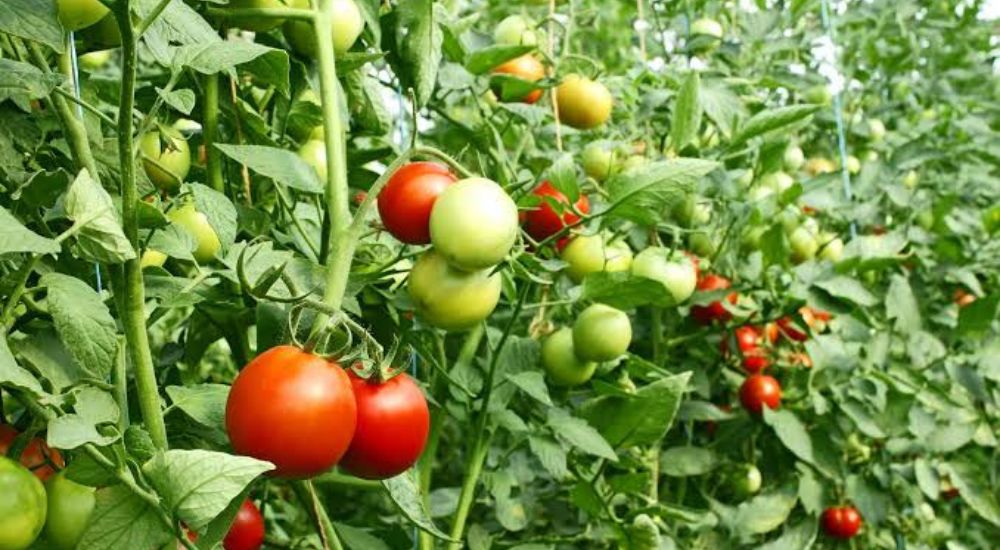
    Every year, Kano State produces some of the finest tomatoes in West Africa. Every year, most of those tomatoes rot.

    The state earns nothing from export, hosts a flagship processing factory that has spent more time dormant than running, and watches hundreds of millions of dollars flow out of Nigeria to pay for tomato paste that its own farms could have supplied.

    The economics of this paradox now sit at the heart of a growing debate about what Kano is leaving on the table and what it would mean for the state’s revenue if it ever got it right.

    Nigeria is the second-largest producer of tomatoes in Africa and 14th in the world, with an average annual yield of 2.3 million metric tonnes accounting for roughly 65 per cent of all tomatoes grown in West Africa. Kano, alongside Kaduna and Katsina, anchors that production.

    Yet in 2025, Nigeria spent over $350m importing tomato paste from China and the United States, despite holding a crop that, properly processed and packaged, could supply a significant share of that demand and more.

    The Nigerian Export Promotion Council (NEPC) put the figure even higher in April 2026, disclosing at a technical workshop on tomato value chain development in Kano that the country spends over $400m annually on tomato paste importation.

    Speaking on tomato value chain development in Kano under the One State One Product initiative, the NEPC’s North-West Regional Coordinator, Amina Abdulmalik, told THE WHISTLER that Nigeria’s production strength is not the real problem; value addition is.

    She said the global processed tomato market is valued at over $12bn annually, yet Nigeria participates minimally, and Kano sitting at the centre of northern tomato cultivation is missing its share entirely.

    She added that the Nigeria’s production strength is not the real problem but value addition is. With the right quality and consistency, Kano can supply both domestic industries and export markets.

    A Senior Research Officer at the Nigerian Stored Products Research Institute (NSPRI) Kano Zonal Office, Adamu Ahmad Abubakar, pointed to the same structural gap: poor road networks, lack of cold-chain storage, weak processing systems and limited access to funding remain the principal reasons tomatoes continue to go to waste. “Ideally, processing plants should be located close to farms, and farmers should be supported with incentives to reduce losses,” he said.

    For small-scale processors like Adaora Akojuru, founder of Bera Tomatoes in Kano, the shortage is acutely personal.

    She has noted that Nigeria loses almost 700,000 metric tons of tomatoes every year primarily because adequate storage facilities and reliable markets are absent, especially during harvest periods.

    A system that cannot store surplus production in good times will always be defenceless when the pest arrives, the rains fail, or transport costs spike.

    Why the tomatoes rot

    The most immediate reason Kano cannot export what it grows is that it cannot hold what it harvests long enough to do anything with it. Fifty per cent of fresh tomatoes produced in Nigeria each year are lost to post-harvest challenges, including poor supply chain management, inefficient storage, and poor transportation systems.

    In Kano, farmers have described how tomato glut occurs annually, a recurring tradition where bumper harvests collapse prices and produce rots in the open, which they say can be addressed through better storage facilities across tomato markets.

    Kano has no functional large-scale cold storage network to speak of. Farmers in the state have appealed to the government to establish modern storage facilities to address rising costs and reduce post-harvest losses, noting that while Plateau state has some cold storage infrastructure that preserves perishables for short periods, no equivalent exists in Kano. Without refrigerated storage, the window between harvest and spoilage is too narrow for any serious export logistics to operate.

    Beyond storage, the crop faces a biological threat that no storage facility can cure. Tuta absoluta, a leaf-mining moth that attacks both the fruits and foliage of tomato plants, has repeatedly devastated farms across Kano, Jigawa, Katsina, Kaduna and Plateau states.

    THE WHISTLER observed that a 2025 outbreak in Kano saw 4,621 hectares of tomato farms put at risk, with the All Farmers Association of Nigeria warning that inaction could result in losses of between N10bn and N20bn.

    Farmers in Kadawa village and other key growing areas have described losing entire two-hectare plots worth millions of naira in production costs and projected earnings to single infestations, with over 700 growers affected in one outbreak alone.

    These twin failures pests and post-harvest losses mean that even in bumper years, the supply of tomatoes reaching any potential processor is unpredictable, seasonal, and insufficient for the kind of continuous output that export contracts demand.

    The Kaduna State chairman of the Tomato Growers Association, Rabiu Zuntu, said the intervention from the Federal Ministry of Agriculture and Food Security came too late, as most farmers had already lost their crops by the time chemicals arrived. In Kano, farmers report the same pattern of delayed response. Pesticides that could have protected standing crops arrive when the moths have already completed their cycle.

    The national president of the Tomato Out-growers Association of Nigeria (TOGAN), Alhaji Abdullahi Ringim, estimated that farmers lost more than N1.7bn in 2023 to the pest. In Kano State specifically, the TOGAN chairman estimated that Tuta Absoluta attacked and damaged more than N1.5bn worth of tomato plants in that same year

    The cautionary tale of Kadawa

    The consequences of building processing capacity on top of these unresolved supply problems are best illustrated by the story of Nigeria’s largest tomato processing factory, located in Kadawa on the outskirts of Kano.

    Aliko Dangote launched the $20m facility in March 2016 with the stated goal of supplanting Nigeria’s reliance on imported tomato paste. The factory was designed to process 1,200 tonnes of tomatoes a day and required approximately 40 truckloads of fresh tomatoes daily each carrying 30 tonnes to run at capacity.

    Dangote Farms Limited, Tomato Processing Factory.

    It never consistently ran at capacity. The factory shut down in late 2017, barely a year and a half after launch, due to lack of raw materials and a price dispute between the company and farmers.

    It remained idle for over two years before resuming in March 2019, and then shut down again by September of that year when farmers abandoned tomato cultivation at the onset of the rainy season for crops with more reliable returns.

    The managing director of Dangote Farms, Abdulkareem Kaita, said the company was losing at least N30m every month it remained closed. By 2025, the factory’s situation had deteriorated further. Kaita, speaking as former managing director, said the plant had been shut for four years, citing the impossibility of competing with Chinese imports that contain starch, flour, and as little as 10 percent tomato content, sold at prices far below what locally sourced, 100 per cent tomato production can match.

    He said the high cost of energy and fresh tomatoes made operations commercially unviable. The Kadawa factory, once described as a beacon for Nigeria’s agricultural transformation, now stands dormant and unable to compete with cheap substandard imports and crippling operational costs. The Dangote experience has had a chilling effect on private investment in Kano’s tomato processing sector.

    No comparable investor has moved to fill the gap. Only about 20 per cent of Nigeria’s vegetable production is processed at all, largely because of inadequate processing infrastructure nationwide. In Kano specifically, what little processing exists is artisanal and serves only the domestic market.

    Why Kano is behind other states

    The contrast with Kaduna is instructive. In February 2025, the Food and Agriculture Organisation of the United Nations and the Kaduna State Government signed a formal partnership agreement to address critical challenges in the tomato value chain, targeting improved production techniques, storage and processing infrastructure, reduced post-harvest losses, and stronger farmer cooperatives.

    Kano has no comparable agreement with FAO or any international agricultural body. Under the NEPC’s OSOP initiative, Kano State’s designated export products are hibiscus and sesame not tomato, suggesting that official export development strategy has not yet fully incorporated the crop that defines the state’s agricultural identity.

    The NEPC coordinator, Amina, attributed Kano’s failure to participate meaningfully in global tomato markets to quality gaps, inadequate processing capacity, and weak compliance with international sanitary and phytosanitary standards.

    She added that issues including poor quality control, pesticide residue concerns, weak packaging standards, and limited processing facilities are blocking Nigeria and by extension Kano from competing globally.

    These are not just production failures; they are regulatory and infrastructure failures that successive administrations in Kano have not adequately funded or addressed. Research published in 2025 on Kano tomato farmers found that the major marketing challenges remain rapid quality deterioration and unstable prices problems familiar to every stakeholder in the sector for over a decade.

    What export would mean for Kano’s revenue

    The fiscal stakes are significant. Kano State generated N102bn in internally generated revenue in 2025, a figure the state’s revenue service described as a significant increase over the previous year. The Kano State Internal Revenue Service has since set a target of N15bn monthly or N18bbn for the year 2026.

    Agriculture-derived revenue currently contributes minimally to those figures; most IGR comes from taxes and levies on commerce, transport, and payroll. A functional tomato export sector would change that calculus through multiple revenue channels.

    Export levies on certified fresh tomatoes and processed paste, licensing fees for processing facilities, agricultural produce taxes, and the multiplier effect of agro-industrial employment on the income tax base would all expand the revenue envelope. At the farm level, tomato production in Kano already generates a gross margin of approximately N302,832 per farming cycle under current conditions without export premiums, reliable processing offtake, or improved logistics.

    If even a fraction of the state’s annual output was channeled into processed exports capturing a share of the $12bn global market, the income flowing through the Kano economy and taxable by the state would be substantially larger.

    The NEPC put it plainly: “When farmers earn more, Nigeria earns more.” For a state the size of Kano, with the agricultural base it holds, that sentence carries a very specific price tag, one measured in hundreds of millions of dollars the state is currently not collecting.

    The NEPC’s was billed as the beginning of a remediation effort, focused on improving farming practices, reducing losses, and preparing farmers to meet international export standards.

    Whether it translates into the cold storage networks, phytosanitary compliance systems, sustained pest management, and investor-friendly processing policy that Kano’s tomato sector actually needs remains to be seen.

    The infrastructure deficits are years old. The Dangote factory in Kadawa rusts as evidence of what happens when those deficits are left unaddressed.

    Why Kano Cannot Cash In On Its Tomatoes is first published on The Whistler Newspaper

  • Nigerian govt relocates Great Green Wall agency headquarters to Kano

    Nigerian govt relocates Great Green Wall agency headquarters to Kano

    The Federal Government has approved the relocation of the Operational Headquarters of the National Agency for the Great Green Wall (NAGGW) from Abuja to Kano State as part of efforts to improve the agency’s effectiveness in addressing desertification, land degradation and climate change in northern Nigeria.
    Minister of Environment, Balarabe Abbas Lawal, announced the decision on Wednesday, describing it as a strategic move under the Renewed Hope Agenda of President Bola Ahmed Tinubu aimed at bringing government institutions closer to their areas of operation.

    According to the minister, the agency’s new operational headquarters will be located at the Afforestation Programme Coordinating Unit (APCU) office in Kano, a Federal Government facility established in 1988.

    Lawal said the relocation is expected to improve coordination, monitoring and implementation of projects across the agency’s operational zone.

    “The strategic move is aimed at significantly improving the Agency’s effectiveness in implementing the Great Green Wall Programme across Nigeria’s frontline states,” he said.

    The Great Green Wall Programme is an initiative of the African Union involving more than 11 countries and designed to combat desertification, land degradation and the effects of climate change across the Sahel-Sahara region.

    In Nigeria, the programme covers 11 frontline states: Adamawa, Bauchi, Borno, Gombe, Jigawa, Kano, Katsina, Kebbi, Sokoto, Yobe and Zamfara.

    The minister noted that operating from Abuja had posed challenges because the agency’s core activities are concentrated in northern states where the programme is being implemented.

    “By moving to a permanent location in Kano, a central hub within the operational zone, the Agency will achieve better monitoring, stronger coordination with state governments, local authorities and communities, and more efficient service delivery,” Lawal stated.

    He explained that the APCU complex in Kano provides a permanent base for the agency and would help address challenges associated with operating from a temporary rented office in Abuja.

    Lawal added that the decision reflects the Federal Government’s policy of positioning agencies closer to their operational areas to enhance efficiency and bring governance nearer to the people.

    He expressed confidence that the relocation would strengthen implementation of the Great Green Wall Programme and improve service delivery to communities across northern Nigeria.

    Nigerian govt relocates Great Green Wall agency headquarters to Kano

  • Tanzania’s Hassan meets Putin in Moscow amid Western isolation

    Tanzania’s Hassan meets Putin in Moscow amid Western isolation

    President Samia Suluhu Hassan and President Vladimir Putin discussed strengthening economic and political ties between Tanzania and Russia on Wednesday in Moscow.

    The conversations, which involved a restricted‑attendance meeting and an expanded format, were held after an official welcoming ceremony at the Grand Kremlin Palace.

    The talks covered multiple topics and included an exchange of views on international and regional matters. This year marks the 65th anniversary of Russia-Tanzania diplomatic relations.

    Putin, in his remarks, described Hassan’s visit as “a very positive sign,” noting that she chose Russia for her first official trip since her inauguration for a second term in office.

    The President commended his counterpart for consistently working to deepen bilateral links over the years, citing Hassan’s tenure as Minister and later as Vice President.

    Putin said trade between both nations in 2025 grew by 20–25 percent, across sectors such as energy, geological exploration, transport and logistics, healthcare, and education.

    The premier emphasized that Russia and Tanzania “maintain close and active cooperation,” and expects Tanzania’s participation at the high-level third Russia–Africa Summit in October.

    President Hassan, accompanied by senior government officials, told his host she’s in Moscow for a dialogue on mutual partnership and sustainable development for Tanzanians.

    Hassan thanked Russia for its “great contribution” during the African liberation in the 1960s, saying the continued assistance impacted “the development we are seeing in my country.”

    The state visit to Russia by 66-year-old Hassan is historic, being the first by the President of Tanzania since its founding father, Julius Nyerere, traveled there in October 1969.

    The incumbent leader, however, faces Western isolation following the killing of hundreds of people during riots triggered by the disputed October 2025 elections, in which Hassan won 97% of the vote.

    The violent crackdown drew outrage and condemnation by United Nations human rights experts, international organizations and activists, several Western countries, and the European Union.

    The United States also announced a review of its partnership with Tanzania, while a coalition petitioned the Prosecutor’s Office at the International Criminal Court to investigate President Hassan.

    Tanzania’s Hassan meets Putin in Moscow amid Western isolation

  • ‘It’s difficult to thrive in music industry without belonging to any gang’ – Rapper, CDQ claims 

    ‘It’s difficult to thrive in music industry without belonging to any gang’ – Rapper, CDQ claims 

    Popular rapper, CDQ has claimed that the Nigerian music industry is controlled by powerful cabals and gangs.

    Speaking in a recent interview with content creator, JBrandy, the ‘Nowo Soke’ crooner also claimed that it is difficult for artists who don’t belong to any gang or cult group to thrive in the music industry. 

    He said artistes, who made it in the music industry without associating with any gang or cult group, were lucky.

    “The music industry has turned to a game of belonging to a particular caucus, gang or cult before anyone could actually help you. 

    “So, if you are able to achieve success in the music industry without associating with any cabal or cult group, you should be grateful to God,” he said. 

    CDQ added, “If you don’t belong to a particular cult group, you might probably spend a lot of money and not see anything in return,”

    The rapper called on artists, record label executives and other stakeholders in the music industry to change the trend of associating gangsterism with music business. 

    ‘It’s difficult to thrive in music industry without belonging to any gang’ – Rapper, CDQ claims 

  • 5 Reasons you need to buy the realme C100

    5 Reasons you need to buy the realme C100

    For many smartphone users, the biggest frustrations are surprisingly simple: a battery that dies before the day ends, a phone that slows down during gaming, a cracked screen after an accidental drop, or a device that struggles when exposed to dust and water.

    The realme C100 was built to eliminate these compromises.

    Instead of focusing on a single standout feature, realme has engineered the C100 as a complete everyday performer—combining industry-leading battery endurance, rugged durability, smooth performance, intelligent imaging, and fast charging technology in a device designed to keep up with modern lifestyles.

    Here Are 5 reasons Why The realme C100 Deserves Serious Consideration

    1. Industry-Leading Battery Performance

    Battery life is often the deciding factor when purchasing a smartphone, and the realme C100 raises the standard significantly.

    At the heart of the device is a massive 8000mAh battery, designed to support extended gaming sessions, video streaming, navigation, social media use, and multitasking without constant charging interruptions.

    Its performance has already earned global recognition, claiming the No.1 position in AnTuTu’s All-Day Heavy Usage Ranking with an impressive 11 hours and 33 minutes of continuous heavy use.

    The battery system is further enhanced by 45W fast charging technology. Even when power runs low, a short charging session can quickly get users back on track. The inclusion of 10W reverse charging also transforms the device into a portable power source for compatible accessories and devices.

    2. Military-Grade Shock Resistance

    Smartphones are expected to survive everyday accidents, but not all devices are built equally.

    The realme C100 features military-grade shock resistance and up to 2-meter drop protection, providing enhanced durability against accidental falls and impacts.

    Whether it’s a slip from a pocket, a drop from a desk, or an unexpected knock during daily activities, the reinforced construction helps protect the device and maintain long-term reliability.

    3. Premium IP69 Pro Dust and Water Resistance

    Environmental protection is becoming increasingly important for smartphone users.

    The realme C100 comes equipped with IP69 Pro rated dust and water resistance, one of the highest levels of protection available in consumer electronics.

    This means that the device is designed to withstand challenging environments, helping to protect internal components from dust intrusion and water exposure. For users who work outdoors, travel frequently, or simply want added peace of mind, this feature delivers a significant advantage.

    4. Optimized for Smooth Gaming

    Mobile gaming continues to push smartphones harder than ever, demanding sustained performance, responsive controls, and efficient power management.

    The realme C100 is engineered to deliver a smooth gaming experience by balancing performance with battery efficiency. Combined with its large battery capacity, users can enjoy longer gaming sessions without worrying about excessive power consumption or frequent charging breaks.

    For gamers who value consistency and reliability, the C100 offers a practical solution.

    5. AI-Powered Photography

    Modern smartphone photography relies on more than camera hardware alone.

    The realme C100 integrates AI-powered imaging technology that intelligently analyzes scenes and adjusts settings to optimize image quality. From portraits and landscapes to everyday snapshots, the AI system helps improve color accuracy, exposure balance, and overall clarity.

    The result is a smarter camera experience that makes it easier to capture high-quality photos in a wide range of conditions.

    CONCLUSION

    The best smartphones aren’t always the ones with the longest list of specifications—they’re the ones that reliably deliver where it matters most.

    The realme C100 Series is built with exactly that philosophy.

    From its massive 8000mAh battery and 45W fast charging to its military-grade durabilityIP69 Pro water and dust resistance, smooth everyday performance, and AI-powered camera capabilities, the realme C100 Series is designed to keep up with the demands of modern life without compromise.

    Whether you’re working, gaming, creating content, or simply staying connected, the realme C100 Series offers the durability, endurance, and performance needed to power through your day with confidence.

    Recommended Retail Prices (RRP)

    • realme C100 (8GB + 256GB) – ₦362,700
    • realme C100i (4GB + 64GB) – ₦194,800
    • realme C100i (4GB + 128GB) – ₦255,100
    • realme C100i (4GB + 256GB) – ₦249,100

    Where to Buy

    The realme C100 Series is available through authorized realme retail partners nationwide. View the complete list of stores here: https://docs.google.com/spreadsheets/d/1LFMOAMRClI3UifB9Yll_W585wZFghJxo/edit?gid=6038307#gid=6038307

    If you’re looking for a smartphone that combines exceptional battery life, rugged durability, and reliable performance, the realme C100 Series is one of the strongest value propositions in its segment.

    5 Reasons you need to buy the realme C100

  • NERC Approves Compensation For Shortchanged Band A Customers

    NERC Approves Compensation For Shortchanged Band A Customers

    Thousands of Band A electricity customers across the country will receive compensation for service disruptions suffered between February and March 2026 following a directive issued by the Nigerian Electricity Regulatory Commission (NERC).

    The commission in an Order No. NERC/2026/002, released on Thursday, announced the approval of a special compensation framework for eligible Band A customers affected by widespread generation constraints that prevented Distribution Companies (DisCos) from delivering the minimum service levels promised under the electricity tariff regime.

    According to NERC, the generation shortfalls were largely caused by inadequate gas supply as well as vandalism of critical gas and transmission infrastructure, factors it said were beyond the direct control of the DisCos.

    According to the Order, customers connected to Band A feeders that recorded less than 18 hours of average daily electricity supply during the affected period will receive special compensation without any downgrade of their feeder classification.

    It stated that the compensation package provides that non-maximum demand (Non-MD) customers will receive credits equivalent to 20 per cent of the approved February 2026 energy cap applicable to their feeder.

    NERC stated further that maximum demand (MD) customers will receive credits equivalent to 20 per cent of the average energy billed per MD customer in February 2026.

    The Commission said Band A feeders that delivered between 18 and 20 hours of average daily supply would continue to be treated under the existing compensation framework established in Addendum No. NERC/2024/003 for both MD and Non-MD customers.

    The regulator directed that prepaid customers be compensated through electricity token credits, while postpaid customers would receive bill adjustments.

    It also set deadlines for implementation, requiring DisCos to complete compensation for February 2026 by May 31, 2026, and for March 2026 by June 30, 2026.

    To protect consumers, NERC prohibited DisCos from using compensation credits to offset outstanding customer debts and directed them to clearly communicate the value and period of compensation provided to beneficiaries.

    The commission stated that the intervention was necessary to mitigate the impact of prolonged power generation shortages on customers who pay premium tariffs in exchange for improved power supply.

    NERC reaffirmed its commitment to consumer protection and pledged to monitor compliance by electricity distribution companies to ensure all eligible customers receive the compensation due to them.

    NERC Approves Compensation For Shortchanged Band A Customers is first published on The Whistler Newspaper