Borno State Governor, Professor Babagana Umara Zulum, has commended the Nigerian military…
The post Zulum commends military for rescuing 360 Ngoshe abductees appeared first on Tribune Online.

Borno State Governor, Professor Babagana Umara Zulum, has commended the Nigerian military…
The post Zulum commends military for rescuing 360 Ngoshe abductees appeared first on Tribune Online.

Portugal defender, Nélson Semedo, is of the opinion that the friendly match against Nigeria on Wednesday will serve as an opportunity for manager Roberto Martínez to explore new strategies and tactical methods in preparation for their 2026 World Cup journey.
Semedo participated in the first half during Portugal’s 2-1 victory over South American rivals Chile on Saturday evening, with Gonçalo Guedes and Bruno Fernandes contributing to the scoreline.
Portugal is refining their preparations for the 2026 World Cup, as Martínez is eager to evaluate various combinations and tactical modifications prior to their opening match against the Democratic Republic of Congo.
The upcoming friendly against the Super Eagles is anticipated to provide another significant challenge for the European team, enabling Martínez to assess players in diverse positions.
“Certainly, that is the purpose of these matches. We have a game against Nigeria now, and this presents a chance to develop new dynamics,” Semedo stated to RTP, as reported by Record.
“We are professionals, and I am confident that we can adhere to the coach’s concepts, regardless of what they entail.”
The friendly encounter between Portugal and Nigeria is scheduled to occur at Estádio Dr. Magalhães Pessoa in Leiria, with kickoff set for 2045 hours.
The Super Eagles have demonstrated remarkable form, remaining unbeaten in their last 11 matches in regulation time, achieving eight wins and three draws.
What our match with Nigeria will do for us – Portugal star, Nélson Semedo

A Federal High Court sitting in Lagos has declared the National Assembly’s controversial ₦110 billion vehicle and allowance schemes unlawful.
The court ruled that the planned spending of ₦40 billion on 465 vehicles for lawmakers and ₦70 billion as support allowances for newly elected members breached procurement laws, constitutional obligations and public trust.
Justice Yellim Bogoro delivered the judgment in a suit filed by the Socio-Economic Rights and Accountability Project against Senate President Godswill Akpabio, Speaker Tajudeen Abbas and members of the National Assembly.
The court held that the scale of the expenditure, combined with the absence of clear due process, made the procurement arbitrary, disproportionate and inconsistent with statutory procurement standards.
Justice Bogoro also described the arrangement as a case of self-dealing and conflict of interest, noting that the lawmakers approving the spending were also the direct beneficiaries.
The court ordered Akpabio and Abbas to ensure that all future procurement and public fund expenditure by the National Assembly comply strictly with due process, transparency, accountability and value-for-money principles.
SERAP described the judgment as a major victory for transparency and responsible management of public resources.
The ruling comes amid public anger over the cost of governance, economic hardship and demands for greater accountability in the use of public funds.

MTN Nigeria Chief Executive Officer, Karl Toriola, has said mobile data in Nigeria ranks among the four cheapest in the world, dismissing complaints that telecom operators charge excessive rates for internet services. The MTN boss made the assertion on Saturday during the MTN Data Trial conference held in Lagos, amid growing concerns from subscribers over […]
The post Nigerian mobile data among top four cheapest globally — MTN Nigeria CEO appeared first on Tribune Online.

Veteran Nollywood actor, Nkem Owoh, popularly known as Osuofia, has revealed that his journey into acting was accidental, noting that he initially preferred working behind the scenes as a scriptwriter.
Speaking during a recent episode of the Selah Meditate podcast, Owoh explained that his colleagues encouraged him to appear on camera after discovering his talent for making people laugh.
According to the actor, he was content with scriptwriting until persistent pressure from colleagues led him to explore performing.
“My coming in front of the camera was an accident. I was a scriptwriter behind the scenes and people started telling me to start performing in front of the camera,” he said.
Owoh recalled that in the 1980s, the Anambra Television (ATV) created a seven-minute stand-up comedy programme specifically for him after recognising his comic abilities.
He said the positive reception from audiences convinced him to pursue acting, a decision that eventually launched one of the most successful careers in Nollywood.
Reflecting on the challenges of stardom, the veteran actor noted that fame has come at a personal cost, particularly the loss of privacy and freedom.
“Fame took away my freedom. A lot of people want to be celebrities; they only know the benefits but not the downsides. When you become famous, you can’t do a lot of the things you were doing freely before. You become restricted in a lot of ways,” he said.
Owoh remains one of Nigeria’s most celebrated comic actors, known for his memorable performances and significant contributions to the growth of the country’s film industry.
Nkem Owoh Says Acting Career Began By Accident is first published on The Whistler Newspaper

Rising Brazilian fighter Gabriel Bonfim put his name among the mix of title contenders in the UFC’s welterweight division this weekend by claiming a unanimous decision win over former champion Belal Muhammad in the main event at the Meta Apex in Nevada, USA.
After refusing to touch gloves at the start of the fight, Bonfim was the more progressive fighter in the first couple of rounds as he found a home for short punches while Muhammad replied with repeated kicks and takedown feints.
It was in the second-round where Bonfim gained crucial momentum as he bothered his opponent with stinging kicks before landing a swift combo that left Muhammad busted up.
Muhammad came out on the front foot at the start of the third round and attempted a takedown that was expertly defended. At this stage of the fight, Bonfim seemed to have been unfazed by Muhammad’s pressure as he continued to jab his opposite number with great success.
Bonfim closed the fight by picking Muhammad apart in the fourth and the fifth rounds, while he smiled at the ex-champion after being on the end of a kick to the body. With Muhammed slowing down, the 37-year-old often resorted to wild exchanges that yielded no success.
Nonetheless, the Brazilian convinced the judges of a clean sweep on the cards, particularly with crisp jabs and leg kicks as Muhammad constantly found himself on the back foot even when he attempted to attack.
Elsewhere, Iwo Baraniewski continued his rise in the light heavyweight division with a first-round knockout win over Junior Tafa.
Also, Bryce Mitchell made it two wins on the trot in the bantamweight division after he submitted Santiago Luna in the third round.
In the other results of UFC Night, Brendan Allen defeated Edmen Shahbazyan by unanimous decision (30-27, 30-27, and 29-28), while Tom Nolan defeated Farès Ziam by unanimous decision (29-28, 29-28, and 29-28).
Bonfim Outclasses Muhammad, Strengthens UFC Welterweight Title Credentials is first published on The Whistler Newspaper

The Peoples Democratic Party, PDP, deputy governorship candidate in Ekiti State, Deji Ogunsakin, has advised Governor Biodun Oyebanji to prepare for defeat at the polls and stop what he described as the harassment of opposition members, saying he would not be the first incumbent governor to lose an election.
Ogunsakin made the remark while addressing journalists on Saturday at the Wole Oluyede Campaign Office in Ajilosun, Ado-Ekiti.
He urged Governor Oyebanji to desist from acts of intimidation and harassment against PDP members and accept what he described as the verdict of the electorate, attributing it to the alleged poor performance of the administration.
He told Oyebanji: “Stop intimidation and harassment of PDP members and accept defeat as your fate caused by abysmal performance of your administration, and this overwhelming defeat on June 20 cannot be reversed.”
Ogunsakin alleged that armed men operating under the guise of security agencies invaded homes of party members loyal to the PDP candidate in Ikere Ekiti and other communities, arrested and whisked them away to unknown locations.
Ogunsakin claimed that some of the victims were taken from their homes in the early hours of this morning while their families were left in distress and unaware of their whereabouts.
“We have contacted various security agencies, including the police and commanders of different units, but nobody has been able to tell us where these people are or who authorized their arrest,” he said.
The PDP chieftain described the situation as disturbing, worrisome and embarrassing, insisting that those arrested were neither informed of any offence nor officially charged before being taken away.
According to him, one of the affected persons is the chairman of the party in the ward of the PDP governorship candidate, Dr. Oluwole Oluyede.
Ogunsakin further alleged that a former commander of the Rapid Response Squad, RRS, is currently coordinating an illegal security outfit known as “H-Squad”, which he accused of operating in police uniforms and carrying out unlawful arrests across the state.
He alleged that members of the outfit invade homes, intimidate political opponents, and create fear among residents under the cover of security operations.
The PDP deputy governorship candidate warned that continued harassment of opposition members could heighten political tension in the state, urging security agencies to investigate the alleged activities and immediately account for the whereabouts of those arrested.
He also appealed to President Bola Tinubu to intervene and ensure the protection of lives, property, and democratic rights in Ekiti State.
“The President owes every Nigerian the responsibility of protecting lives and ensuring that democracy thrives. Political opposition should not be treated as criminals,” Ogunsakin stated.
He maintained that the PDP remained confident of victory in the forthcoming governorship election and accused the state government of attempting to suppress dissenting voices through intimidation.
Also speaking, a PDP leader, Chief Sanya Atofarati, condemned the alleged arrests, arguing that government should focus on addressing insecurity and kidnapping rather than targeting opposition members.
He said several kidnapped victims remain in captivity across the state and questioned why attention was being diverted to political opponents instead of tackling pressing security challenges.
Atofarati insisted that Ekiti people were yearning for good governance and change, expressing confidence that the PDP candidate, Dr. Oluwole Oluyede, enjoys widespread support across the state.
The PDP leaders called on security agencies and relevant authorities to investigate the allegations and ensure that democratic freedoms are protected ahead of the governorship election.
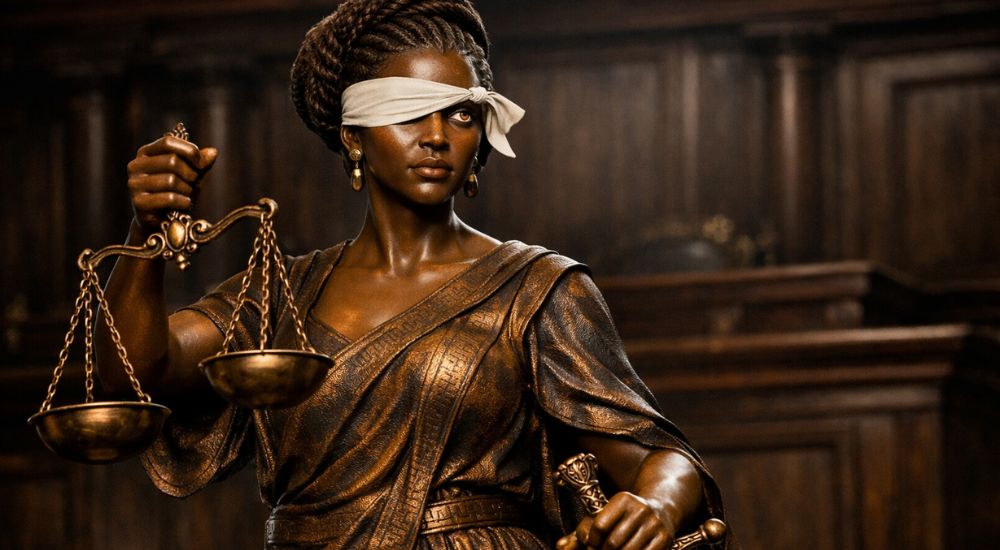
I have followed Nigerian politics and public affairs long enough to know that no country survives when its citizens begin to believe that justice depends on who you are, where you come from, or whose side you are on. Once people start feeling that the law has favourites, trust in the state begins to die quietly.
Lately, I have found myself asking a troubling question: are we truly operating one justice system in Nigeria, or have we settled into an arrangement where there is one law for some people and another for others?
The recent debate around the treatment of former Kaduna State Governor Nasir El Rufai and political aide Lere Olayinka once again brings this question to the surface.
Many Nigerians are asking why similar actions seem to attract different reactions from the authorities, depending on who is involved. Whether one agrees with either man politically is not even the issue. The real issue is consistency. A country cannot survive on selective outrage and selective justice.
This feeling is not new. We have seen it before.
I still remember how the cases of Nnamdi Kanu and Sunday Igboho opened a deep wound in the national conversation. Many Nigerians looked at both men and wondered why the state appeared to respond so differently.
Kanu was extraordinarily extradited to Nigeria under controversial circumstances and has been sentenced to life in prison. Igboho, on the other hand, after fleeing the country and facing legal troubles in the Benin Republic, eventually regained freedom of movement.
Yes, there are legal differences between the two cases. Government supporters will argue that Kanu was already facing charges and had jumped bail, while Igboho’s circumstances involved another country’s legal system. But perception matters in governance.
Millions of Nigerians saw one man treated with relentless force while another appeared to have a softer landing. In politics, perception can be as powerful as reality.
I recently watched the controversy around the AI-generated fake audio of President Bola Tinubu with deep concern. What troubled me was not only the fake content itself but also the state’s response to it.
Bayo Onanuga, the presidential spokesman, told Nigerians publicly that Ifechukwu Dennis had been arrested as the “originator” of the fake voice. Yet online discussions and independent reviews around the case appeared to suggest a more complicated story about who created the content, who merely shared it, and how investigators arrived at their conclusions. Instead of clarity, Nigerians were left with confusion and unanswered questions.
In a country already struggling with trust deficits, selective transparency only deepens suspicion. If the government wants citizens to trust law enforcement, then investigations must be thorough, evidence-based, and transparently explained. Justice cannot look hurried when politics are involved and careful only when ordinary citizens are in the dock.
Then there is the question that many people are afraid to discuss openly. How exactly does the Nigerian state treat suspected IPOB or ESN members compared to bandits and Boko Haram fighters?
I ask this question carefully because security matters are serious. But I also ask it honestly.
For years, we watched political leaders and negotiators describe armed bandits as “our brothers” and urge dialogue with them. We watched government programmes rehabilitate so-called ‘repentant’ Boko Haram fighters under deradicalisation schemes. Some were reintegrated into society after counselling and vocational training.
Meanwhile, many communities in the North East that suffered terrible violence from these same groups struggled to understand why people linked to mass killings appeared to be receiving second chances.
At the same time, the language used for suspected IPOB or ESN members has mostly been forceful and uncompromising. Military operations intensified in the South East. Arrests increased.
Entire communities often complain of raids and collective punishment. Whether these complaints are always true or exaggerated is another debate. But the perception remains that the Nigerian state negotiates with some armed groups while crushing others.
This is where the danger lies.
No nation can sustainably run a justice system that citizens believe is selective. It may survive for a while, but resentment quietly gathers underneath. People begin to retreat into ethnic and regional identities because they no longer trust national institutions to protect them fairly. Citizens stop seeing themselves as Nigerians first. They begin to think in terms of “our people” and “their people”.
That is a dangerous place for a fragile country.
The truth is simple. Justice must not only be done, but it must also be seen to be done. If bandits deserve rehabilitation after surrender, then there should be transparent standards for everyone.
If separatist agitators deserve prosecution, then the same seriousness should apply to politicians and powerful people accused of incitement or violence. If cybercrime laws are used against ordinary citizens and journalists, then politically connected figures should not suddenly become untouchable.
The law loses moral authority when it appears to bend for the powerful and harden for the weak.
I am not arguing that every case is the same. They are not. Different crimes require different legal responses. National security threats are complex. But equal justice does not mean identical treatment. It means fairness, consistency, and transparency in how decisions are made.
What Nigerians want is not perfection. We want confidence that the state is not playing favourites.
Because the day citizens finally conclude that justice in Nigeria depends on tribe, power, religion, or political usefulness is the day many will stop believing in the Nigerian project itself.
And once trust in justice collapses, rebuilding it becomes harder than fighting any insurgency.
– Young Ozogwu is an Abuja-based public commentator and media executive. You can contact him at young.ozogwu@gmail.com
OPINION: Nigeria’s Dangerous Slide Into Two Tier Justice System is first published on The Whistler Newspaper

The United States has announced the destruction of two Iranian drones over the Strait of Hormuz, marking a fresh escalation in the protracted conflict between Washington and Tehran as efforts to secure a lasting peace agreement remain deadlocked.
The latest military action comes nearly 100 days into the crisis, which has seen repeated exchanges of fire, diplomatic standoffs, and growing instability across the Middle East.
According to the US Central Command (CENTCOM), the drones were intercepted after being identified as a threat to international maritime traffic in the strategic Strait of Hormuz, a critical route for global oil and gas shipments.
The operation followed earlier strikes by US forces on four additional drones and several Iranian coastal surveillance facilities.
In response, Iran reportedly launched a barrage of ballistic missiles toward Bahrain and Kuwait, further intensifying tensions in the Gulf region. US officials said most of the missiles were intercepted before reaching their targets.
The attacks triggered strong reactions from Gulf states, with Bahrain and Kuwait condemning the strikes as a dangerous escalation capable of undermining regional security.
Residents in parts of Bahrain reported hearing explosions and air raid sirens as air defence systems responded to the threat, while similar scenes were reported in Kuwait.
Iran, however, accused the United States of violating existing ceasefire understandings through continued military operations and maintained that Washington’s actions were undermining ongoing diplomatic efforts.
The latest hostilities have cast further doubt on negotiations aimed at ending the conflict and restoring normal shipping activities through the Strait of Hormuz, a waterway vital to global energy markets.
Iranian officials insist that broader regional issues, including ongoing hostilities in Lebanon, must be addressed as part of any comprehensive peace arrangement.
DAILY POST reports that political analysts say the negotiations remain stalled over key demands, including sanctions relief, access to frozen Iranian assets, and the future of Tehran’s nuclear programme.
Meanwhile, the conflict has continued to spill beyond the Gulf. Lebanon remains a flashpoint, with renewed clashes involving Israeli forces and Hezbollah fighters despite previous ceasefire arrangements.
Lebanese authorities reported casualties following recent Israeli airstrikes in the country’s south, while the Israeli military also confirmed the deaths of two of its soldiers during ongoing operations.
The crisis has also triggered a diplomatic dispute ahead of the upcoming FIFA World Cup after reports emerged that some members of Iran’s football delegation were denied entry visas to the United States.
Iranian officials condemned the move, describing it as political interference, while US authorities cited security concerns as the basis for the decision.
With military confrontations continuing across multiple fronts and diplomatic negotiations showing little progress, fears are growing that the conflict could further destabilise the Middle East and disrupt global energy supplies in the coming weeks.
US downs Iranian drones as Gulf tensions deepen amid stalled peace talks

Dangote Salt has stepped up efforts to deepen consumer engagement and showcase the industrial uses of its products through a series of outreach activities targeting artisan communities and market centres in Kano State.
According to a statement from the company, the initiative formed part of its Eid celebration activities and was designed to highlight the importance of salt in traditional industries as well as everyday household consumption.
The campaign began at Yan Mota, one of Kano’s historic leather-processing communities, where artisans engaged in tanning and leather production and discussed the role of salt in preserving and treating animal hides before processing.
During the visit, Dangote Salt donated 50kg industrial bags of salt to members of the tanning community as part of its support for local industries.
The outreach team also visited the renowned Kofar Mata dye pits, where local craftsmen demonstrated traditional textile dyeing techniques and explained how salt contributes to fabric treatment and dye preparation, helping to improve quality and consistency. Members of the dyeing community also received 50kg industrial bags of Dangote Salt.
The company said the engagements were aimed at strengthening relationships with communities whose economic activities rely on salt and related products.
The campaign concluded with a consumer activation programme at Sabon Gari Market, where Dangote Salt and Dangote Seasoning interacted with traders, shoppers and residents through product exhibitions and educational sessions on nutrition, healthy eating and food preparation.
Speaking during the event, Sales Operations Manager at NASCON Allied Industries Plc, Salisu Balarabe, described traditional markets as critical platforms for connecting with consumers.
“Markets remain at the heart of our communities and everyday interactions. Bringing this experience directly to people allows us to engage beyond transactions and build stronger relationships with consumers and trade partners,” he said.
As part of the activation, medical practitioner Amina Sa’id Muhammad led a wellness session focusing on the benefits of refined and iodised salt, proper nutrition and healthy lifestyle choices.
Participants were given the opportunity to ask questions about iodine intake, salt consumption and other health-related concerns. Discussions also addressed the role of salt in hydration, muscle function and overall wellbeing, while clarifying common misconceptions about its use.
The Head of Marketing at NASCON Allied Industries Plc, Zainab Abbas, said the initiative was intended to strengthen the company’s connection with consumers at the community level.
“At Dangote, we believe brands become stronger when they become part of the communities they serve. This activation is not only about showcasing our products but also about creating meaningful connections with consumers,” she said.
The event featured an appearance by actor and musician Umar M Shareef, who engaged with traders and visitors before entertaining attendees with a live performance.
Field Sales Officer at NASCON Allied Industries Plc, Kamal Jibrin Yakubu, expressed appreciation to market participants for their enthusiastic response to the programme.
According to the company, the campaign reflects its ongoing commitment to engaging consumers across traditional industries, local communities and retail markets while promoting awareness of the diverse uses of its products.
Dangote Salt Promotes Industrial Use Through Kano Community Outreach is first published on The Whistler Newspaper