Author: Daily Post Nigeria

  • Israeli military eliminates three top Islamic Jihad commanders in Gaza

    Israeli military eliminates three top Islamic Jihad commanders in Gaza

    The Israeli military on Monday announced the killing of three senior commanders of the Palestinian Islamic Jihad in Gaza.

    In a statement posted on X, the Israel Defense Forces, IDF, said the operation targeted key figures involved in the group’s military activities and weapons development.

    According to the IDF, those killed include Muhammad Atiya Hassan Abu Afash, who headed the Engineering and Specializations Array and was responsible for advancing the organization’s engineering capabilities.

    The military also identified Farhat Zuhair Farhat Harara, the deputy head of the Engineering Array, as among those killed. The IDF described him as a close associate of Abu Afash who played a significant role in the unit’s operations.

    Also killed was Abdallah Allah Riyad Masoud Qadoum, head of the Anti-Tank Missile Array in northern Gaza. The IDF alleged that Qadoum was involved in planning and carrying out numerous anti-tank missile attacks against Israeli troops.

    The Israeli military said the operation was part of ongoing efforts to weaken the operational capabilities of armed groups in Gaza.

    Israeli military eliminates three top Islamic Jihad commanders in Gaza

  • Woman suffers fractures as hit-and-run driver escapes in Lagos — LASTMA

    Woman suffers fractures as hit-and-run driver escapes in Lagos — LASTMA

    A woman sustained serious injuries after she was knocked down by a hit-and-run driver along the Lekki-Epe Expressway in Lagos, with officials of the Lagos State Traffic Management Authority, LASTMA, rescuing and evacuating her for urgent medical treatment.

    The incident occurred at EFF Bus Stop inward Marwa on the Lekki-Epe Expressway on Monday, according to a statement issued by the Director of Public Affairs and Enlightenment Department of LASTMA, Adebayo Taofiq.

    The agency disclosed that the unidentified motorist fled the scene immediately after hitting the victim, leaving her lying helpless on the busy road with a fractured arm and leg.

    LASTMA officials, who were on duty monitoring and controlling traffic within the area, quickly swung into action after the incident.

    The traffic officers secured the victim from further danger, moved her away from the road, and contacted the Lagos State Ambulance Service, LASAMBUS, for emergency medical support.

    The officials also carried out traffic control measures around the scene to prevent another accident and ensure free movement of vehicles along the corridor.

    LASAMBUS officials later arrived at the scene and rushed the injured woman to the General Hospital, Odan, where she was admitted for urgent treatment and medical assessment.

    Reacting to the incident, the General Manager of LASTMA, Mr. Olalekan Bakare-Oki, expressed concern over the increasing number of hit-and-run cases recorded on Lagos roads.

    He described the act as both morally wrong and punishable under the law.

    “Every motorist bears an inherent civic and moral obligation to uphold the sanctity of human life. Fleeing the scene of an accident after causing injury to another road user is not only an abdication of responsibility but also a grievous affront to humanity and the rule of law,” Bakare-Oki said.  

    Bakare-Oki reaffirmed the commitment of the Agency to protecting lives and property through effective traffic management and rapid emergency response operations across the state.

    He also commended the collaboration between LASTMA officials and LASAMBUS personnel, noting that their quick intervention played a key role in rescuing the victim and restoring normal traffic flow along the expressway.

    The agency also advised motorists to be cautious while driving, comply with traffic laws, and quickly report road accidents or emergencies to the appropriate authorities for prompt intervention.

    Woman suffers fractures as hit-and-run driver escapes in Lagos — LASTMA

  • FIFA Announces New National Anthem Protocol For 2026 W/Cup

    FIFA Announces New National Anthem Protocol For 2026 W/Cup

    The 2026 World Cup is already gearing up to be a historic, groundbreaking event with barely three days left.

    Hosted across three nations – the United States, Mexico, and Canada, the tournament will feature an expanded field of 48 teams for the very first time, resulting in an unprecedented 104 matches.

    With North America setting the stage for significant structural changes, FIFA is also introducing fresh on-pitch regulations, alongside new rules.

    President Gianni Infantino officially confirmed to FIFA licensed agent and CEO Tabic Sports Agency that a completely redesigned protocol will be implemented during the traditional pre-match national anthems.

    Under the new guidelines, all players including the starting eleven and substitutes, alongside the match officials, will gather inside the center circle for a 360-degree ceremony, where the two teams and the referees will stand directly facing one another.

    Infantino is determined to make this edition of the World Cup entirely different from its predecessors. A core objective of the new layout is to integrate the fans in the stands directly into the pre-match spectacle, making them an active part of the stadium atmosphere.

    “We will have a redesigned 360-degree ceremony which engages every fan in the stadium, including country flag banners and on-pitch elements oriented to create a unique, immersive experience from every seat,” the FIFA President wrote.

    The fan experience will be further bolstered by a wave of new pre-game aesthetics on the turf. “As well as new visual elements from player entry arches to handheld flags, poised to heighten the sense of anticipation, with enhanced features for selected matches,” Infantino concluded.

    FIFA Announces New National Anthem Protocol For 2026 W/Cup is first published on The Whistler Newspaper

  • ‘We’re Worried Zulum, Kidnappers Are Silent’ — Parents Of Abducted Children

    ‘We’re Worried Zulum, Kidnappers Are Silent’ — Parents Of Abducted Children

    “I watched helplessly as kidnappers loaded our children on motorbikes and whisked them away,” Burka Buba, one of the parents of the children who were abducted in Borno State on May 15, 2026, told THE WHISTLER.

    On that day, suspected militants took about 42 children from Central Primary School and a junior secondary school in Mussa, Askira-Uba, Borno State during class hours. They also took toddlers from the nursery section.

    Buba said he knew for certain that his daughter, Alheri, was among those abducted when he saw her shoes along the route the kidnappers had followed to move out of the community.

    “Whenever insurgents come to our side, they usually come with motorcycles. We have a mountain close to our houses. So when they come, we all flee and hide at the mountain. Then we started seeing them from afar, loading children onto motorcycles.

    “We followed the route they took and picked up some of the shoes that had fallen off, and I saw my daughter’s shoes. That was when I knew that she was one of those kidnapped,” he explained.

    Buba expressed worry that, over 20 days after the kidnap of their children, there has been silence not just from the kidnappers but from the government saddled with the responsibility of keeping its citizenry safe.

    “There has been no call from the kidnappers to tell us what they want. It is just total silence. We don’t know if our children are alright or not,” he explained.

    The only words the parents had heard from the Borno State government was a message to meet him at the Emirate Council when he came on a visit.

    “The governor came down to ascertain and sympathise with us on what has happened but instead of coming to our community to see for himself how it happened, he went to the Emirate Council and sent word that we should meet him there. We did not appreciate that and we refused to go,” he narrated.

    The parents not only refused to go, but also rejected the N10m the governor had sent through their village head to give them.

    “What we want is for our children to be rescued. Even though we are poor, we do not want the money. We want our children back,” he said.

    Buba explained that though there are soldiers that patrol the area, whenever the insurgents hit, the security personnel run with them to the mountain to escape.

    “This is not the first time the bandits are attacking and the security agents know we have been attacked. We do not have a police post, which is very important. It is only soldiers that are here. The soldiers, we don’t know what is happening. When such bandits come, the soldiers run with us. As we are running to the mountains, they also run with us,” he said.

    He lamented that during earlier attacks, the bandits entered their houses freely, and took their cattle with no restriction.

    “The bandits entered house to house and took all our cattle and sheep. That was before this. The next time, they met a patrol team. They killed four soldiers and the others ran away. A stray bullet killed a girl. This one, where they took our children, is the third time that they attacked. They usually come on motorbikes,” he lamented.

    Another parent, Chinda Buba, told THE WHISTLER that in the recent attack, insurgents on about 17 bikes stormed the area.

    Chinda had taken his four-year-old daughter, Saratu, to school around 7:30 to 8am, and was on his way to his farm when he noticed the entrance of the insurgents.

    “When I saw them, I didn’t really know what to do. I brought out my phone to make some calls and in confusion, didn’t know what to do because I knew who they were. They started shooting. Before we could run to the village, they had taken the children. They didn’t take up to 20 minutes to do all these,” he narrated.

    Just like Buba, Chinda is worried about the absolute silence from the kidnappers who haven’t contacted the parents.

    He lamented that most of the children kidnapped were four to five years old, including toddlers, and lamented the fate of their children taken away so young.

    “What do they want from us? As I am telling you, most of the children were four to five years. Some are one year six months, some are one year eight months,” he lamented.

    Chinda stated that every day without their children, especially with the silence, has rendered them traumatised as they couldn’t even visit their farms again.

    “I can’t explain the condition we are in now. Now the farming is in progress. We can’t even go to farm. How do we go to the farm? It is because of the children we work to feed them. Now, we don’t even know the condition they are in. If your child dies, you know for certain what happened to him/her but now, we don’t know… which sin did they commit?,” Chinda lamented.

    The Borno kidnap happened the same day as another kidnap in Oyo State where bandits kidnapped 39 students from three schools in Ahoro-Esiele, Oriire, of the state.

    While there has been uproar, especially on social media, about the kidnap in Oyo State, there has been little talk about that in Borno State as many seem to have forgotten or did not know about the incident.

    Chinda explained that the silence from the kidnappers might have contributed, noting that while there have been pictures and videos released by the kidnappers in Oyo of their victims, there has been none about their children.

    “The Oyo State kidnap, at least the kidnappers displayed the pictures of the children. But in our own case, there was nothing. They didn’t call. It is just silence and we feel the government is not doing anything about it,” he lamented.

    He pleaded with the government to rescue their children, stating that every day that passes increases their anxiety for the wellbeing of the young ones.

    It has been exactly 24 days since the kidnap. During his visitation to the Emir of Uba, the Borno State Governor Babagana Zulum said that the Brigade Commander, Commanding Officer, Divisional Police Officer and other heads of security establishments had already been deployed to strengthen security and facilitate the safe return of the abducted children.

    Zulum also pledged to fortify security in Askira, Uba and adjoining communities to prevent a recurrence of similar incidents.

    “We have made frantic efforts to stabilize Askira, Uba and adjoining communities through reinforcing security in these areas,” he said.

    The governor had appealed to the abductors to release the innocent children, noting that they were minors who required the care and protection of their parents.

    He further called on residents of the Uba Emirate and the entire people of Borno State to intensify prayers.
    But the parents argue that only prayers cannot bring their children back and ask the governor to act now.

    ‘We’re Worried Zulum, Kidnappers Are Silent’ — Parents Of Abducted Children is first published on The Whistler Newspaper
  • Cross River Seals Maternity Clinic Over Patient’s Death 

    Cross River Seals Maternity Clinic Over Patient’s Death 

    The Government of Cross River State has s sealed the Safe Hands Maternity Clinic in Calabar Municipality of the state following the reported death of a patient after surgery.

    Speaking on Monday during an inspection, the chairman of the state Task Force on Health Quality and Anti-Quackery, Dr Dan Abubakar, said the facility was completely shut down after investigations revealed multiple violations of healthcare regulations, including performing surgical procedures in a substandard environment and operating without the requisite approvals.

    Abubakar said that the clinic, owned by Mrs Inyang Ekeng, a Community Health Extension Officer, was operating from a converted three-bedroom apartment that had been transformed into a six-bed maternity ward, with no licensed nurses on staff.

    He also expressed deep concern over the conditions observed at the facility, describing it as a serious threat to public health and safety.

    “What we found here is completely unacceptable. Facilities operating under these conditions are potential death traps and have no place in a healthcare system that prioritises patient safety and quality service delivery,” Abubakar said.

    He further disclosed that the team paid an unscheduled inspection of the facility based on a petition linking the clinic to the death of a patient who reportedly underwent surgery at the centre located at No. 21 Iyata Street, Calabar.

    According to him, the inspection uncovered alarming breaches of professional and operational standards.

    He also revealed that surgical procedures were being performed by Dr Sunday Abeng, a registrar at the University of Calabar Teaching Hospital (UCTH).

    “We found a clinic owned by Mrs. Inyang Ekeng, a Community Health Extension Officer operating from a converted three-bedroom apartment that had been transformed into a six-bed maternity ward without any licensed nurses on its staff and surgical procedures were being carried out by Dr. Sunday Abeng, a registrar with the University of Calabar Teaching Hospital.

    “Such an environment is poorly equipped and unsuitable for such medical interventions,” he lamented.

    The Taskforce Chairman further stated that the Force also discovered that the facility was operating beyond its approved scope of practice and had admitted an abandoned stroke patient despite lacking the capacity and infrastructure to manage such cases.

    The Force also listed other infractions identified during the inspection to include the absence of operational licences, inadequate consulting rooms for doctors, poor ventilation, lack of staff records and patient registers, absence of theatre records, unhygienic conditions, poor waste management systems, and the engagement of unqualified personnel.

    Abubakar reiterated that the state government’s administration remains committed to eliminating quackery and ensuring that residents have access to safe, professional, and regulated healthcare services.

    “The state government is making significant investments in the health sector through the renovation and construction of modern healthcare facilities across the state, and residents should patronise only accredited health centres,” he said.

    He urged residents to seek medical care in approved facilities rather than risk their lives in the hands of unqualified operators.

    Cross River Seals Maternity Clinic Over Patient’s Death  is first published on The Whistler Newspaper
  • Nigeria’s Future Competitiveness Depends On Digital Transformation — WATRA

    Nigeria’s Future Competitiveness Depends On Digital Transformation — WATRA

    The Executive Secretary of the West Africa Telecommunications Regulators Assembly (WATRA), Aliyu Yusuf Aboki, has called on Nigeria to build on the achievements of its telecommunications reforms by prioritising economy-wide digital transformation as the next phase of national development.

    Aboki made the call at the Policy Review Workshop on the National Telecommunications Policy 2000, organised by the Nigerian Communications Commission (NCC) on behalf of the Minister of Communications, Innovation and Digital Economy, Dr. Bosun Tijani.

    Speaking at the event, Aboki said Nigeria’s future competitiveness would depend on how effectively it converts connectivity into innovation, productivity, digital inclusion, and economic growth.

    The workshop brought together policymakers, regulators, telecommunications operators, and other industry stakeholders to assess the implementation of Nigeria’s telecommunications policy framework and chart a future direction for the sector.

    Aboki described the National Telecommunications Policy 2000 and the Nigerian Communications Act 2003 as landmark reforms that transformed Nigeria’s communications landscape.

    According to him, the sector has evolved from an era characterised by limited access, long waiting lists, and inadequate infrastructure into Africa’s largest telecommunications market by subscriber base.

    He revealed that the telecommunications sector has attracted more than $75bn in investments over the past two decades and has emerged as one of Africa’s most dynamic digital ecosystems.

    The WATRA chief noted that the Information and Communications Technology (ICT) sector now contributes significantly to Nigeria’s Gross Domestic Product (GDP) and plays a vital role in supporting financial services, commerce, education, healthcare, entrepreneurship, and public service delivery.

    While acknowledging the sector’s achievements, Aboki stressed the need to leverage connectivity to drive broader economic and social development.

    “The evidence of success is already clear. The more important question is how we use that foundation to drive the next phase of economic and social transformation,” he said.

    He added that future telecommunications policies should go beyond expanding network coverage and focus on creating an enabling environment for digital innovation, productivity growth, and wider digital participation.

    Aboki also urged policymakers to classify broadband infrastructure as critical national infrastructure, similar to sectors such as power and transportation.

    He observed that although Nigeria rapidly liberalised telecommunications services, infrastructure development has not kept pace with the growth in mobile adoption and data demand.

    According to him, investments in fibre backbone networks, metropolitan fibre systems, and rural broadband infrastructure have lagged, highlighting the need for policies that encourage long-term infrastructure investment, infrastructure sharing, right-of-way reforms, and resilient broadband networks.

    The WATRA Executive Secretary further stated that Nigeria’s telecommunications framework must evolve to accommodate emerging technologies and sectors, including cloud computing, artificial intelligence, cybersecurity, digital trade, digital manufacturing, and data governance.

    Meanwhile, the NCC has commenced a comprehensive review of Nigeria’s telecommunications policy, nearly three decades after its approval, citing rapid technological advancements and changing market realities.

    The Commission said the review aims to reposition the country’s telecommunications policy to reflect developments in digital services, internet governance, satellite communications, broadband expansion, and universal access while sustaining the sector’s contribution to economic growth.

    As part of the review process, the NCC has proposed a new chapter focusing on broadband objectives, protection of critical national communications infrastructure, harmonisation of right-of-way charges across all levels of government, and the introduction of a one-stop permitting process for telecommunications infrastructure deployment.

    Nigeria’s Future Competitiveness Depends On Digital Transformation — WATRA is first published on The Whistler Newspaper
  • Transfer: Arsenal identify Morgan Rogers’ alternative

    Transfer: Arsenal identify Morgan Rogers’ alternative

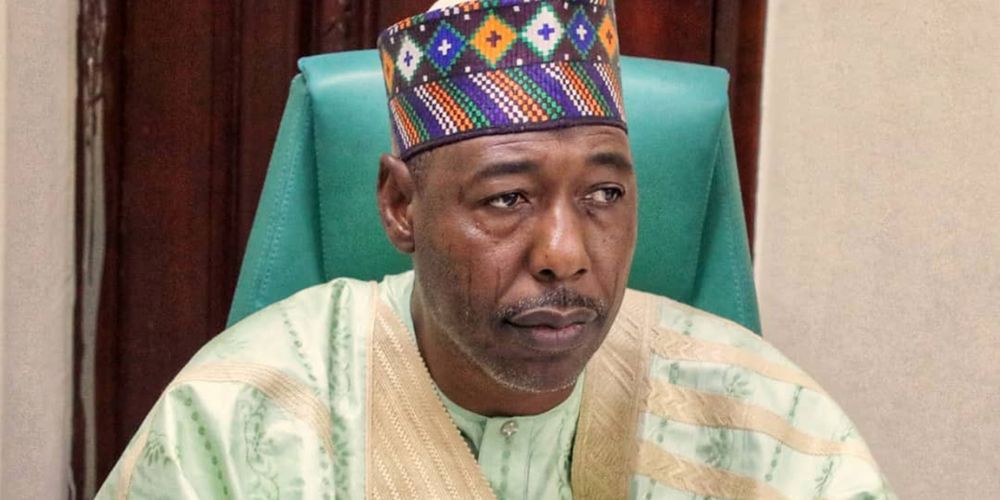
    Arsenal have identified Nottingham Forest’s Morgan Gibbs-White as a potential alternative for Aston Villa’s Morgan Rogers, according to The Sun.

    The Premier League champions are keen on Rogers, who helped Aston Villa win the UEFA Europa League last season.

    Arsenal manager, Mikel Arteta, had already told the club’s board to sign the England international from this summer

    Arteta is keen to bolster his squad in the summer transfer window after failing to win the UEFA Champions League last season.

    However, Arsenal will have to battle Paris Saint-Germain, who are interested in Rogers.

    It’s yet to be seen if Gibbs-White or Rogers will end up moving to Arsenal this summer.

    Transfer: Arsenal identify Morgan Rogers’ alternative

  • Power Debt Hits N7tn As GenCos Reject FG Settlement Plan

    Power Debt Hits N7tn As GenCos Reject FG Settlement Plan

    Nigeria’s electricity generation crisis may worsen as legacy debts owed to power generation companies (GenCos) have surged to about N7tn, THE WHISTLER can report.

    Also, the gas suppliers had reportedly rejected the Federal Government’s proposal for a 50 per cent debt write-off.

    THE WHISLTER recalls that the Federal Government had earlier approved a N3.3tn financial settlement plan to clear legacy debts accumulated within the Nigerian Electricity Supply Industry (NESI) between 2015 and early 2025.

    Under the arrangement, outstanding obligations to GenCos were to be settled through a combination of 10-year promissory notes and proceeds from a N501.02bn bond issued through the Nigerian Bulk Electricity Trading (NBET) Plc.

    The bond issuance marked the first phase of efforts to reduce the huge market shortfalls that have constrained investments across the power sector.

    However, disagreements over the reconciliation of claims between the government and GenCos have slowed implementation of the settlement framework, with industry operators insisting that the verified liabilities are significantly higher than the figures proposed by the government.

    However, the Executive Secretary and Chief Executive Officer of the Association of Power Generation Companies (APGC), Dr Joy Ogaji, has warned that the mounting liabilities threaten the sustainability of electricity generation and the stability of the nation’s power sector.

    Ogaji spoke virtually on Monday during the opening session of the three-day “Powering Nigeria’s Power Sector Leaders Training Series 2026 – Professional Track”.

    She stated that after the FG’s verified claims of the N3.3tn, the debt later rose to N3.8tn before the appointment of the Special Adviser on Power, Mr Rilwan Lanre Babalola.

    According to her, the debts have now ballooned to nearly N7tn as unpaid invoices continue to accumulate.

    She declared that power generation companies have yet to receive any fresh payment despite repeated assurances by the Federal Government.

    Ogaji also disclosed that the Federal Government has not completed the disbursement of the N500 billion raised through the bond market in December to offset part of the outstanding obligations owed to GenCos.

    She stressed that generation companies never agreed to forfeit half of the debt owed to them.

    “To date, we have not received any payment. We have not accepted the N3.3tn settlement proposal,” she said.

    Ogaji said attempts to persuade gas suppliers to accept a 50 per cent reduction in the debts failed.

    “When we told the gas suppliers that the Federal Government had agreed to take 50 per cent off the debts, the gas suppliers refused and told us that we are on our own,” she stated.

    Ogaji, however, urged the newly appointed Minister of Power, Mr Joseph Tegbe, to demonstrate strong political will and declare a state of emergency in the power sector.

    She also urged the minister to implement urgent reforms to halt the continuous accumulation of debts owed to generation companies.

    According to her, the government must establish a sustainable payment framework that prevents fresh debts from piling up.

    “His priority should be to stop the continuous growth of the debt profile while addressing the existing obligations,” she said.

    Power Debt Hits N7tn As GenCos Reject FG Settlement Plan is first published on The Whistler Newspaper

  • Sugar Tax Will Deepen Manufacturing Woes, LCCI Warns

    Sugar Tax Will Deepen Manufacturing Woes, LCCI Warns

    The Lagos Chamber of Commerce and Industry (LCCI) has expressed concern over the passage of the Sugar-Sweetened Beverage (SSB) Tax Bill by the Senate.

    The Director-General of the LCCI, Dr Chinyere Almona, in a statement on Monday in Lagos, said that the tax could worsen challenges facing Nigeria’s manufacturing sector.

    Almona said that though the chamber supported efforts to address public health concerns associated with excessive sugar consumption, such interventions should not impose undue burdens on businesses and consumers.

    She noted that manufacturers were already grappling with high energy costs, exchange rate volatility, elevated interest rates, logistics bottlenecks, multiple taxation and weak consumer purchasing power.

    According to her, the introduction of additional taxes on beverage manufacturers is likely to increase production costs, which can ultimately be passed on to consumers through higher prices.

    “This may further worsen inflationary pressures and reduce demand for locally manufactured products.”

    The LCCI boss also said that the tax could have unintended consequences across industrial value chains, affecting suppliers, distributors, transport operators, retailers, farmers and service providers linked to the beverage industry.
    She added that any decline in production volumes resulting from increased taxation could lead to lower investments, reduced capacity utilisation and potential job losses.

    Almona advocated a more balanced approach that combined public health education, voluntary product reformulation, improved product labeling, consumer awareness campaigns and broader stakeholder engagement.

    She noted that experiences from more advanced economies showed that similar policies were designed primarily to encourage manufacturers to reduce sugar content in products.

    According to her, Nigeria’s SSB tax framework should form part of a broader public health strategy and be carefully calibrated to minimise disruption to industry and employment.
    “We want to see manufacturers reformulate their products over a transition period rather than simply raise prices due to SSB taxes.

    “A reformulation-focused tax may be more effective than a revenue-focused tax as it can achieve health objectives while preserving industrial activity,”
    Almona also stressed the need for policymakers to assess the likely impact of the tax on agriculture, manufacturing and supply chains before implementation, especially in sectors that supported large numbers of jobs.

    She urged the Federal Government and the National Assembly to undertake a redesign of the policy through wider consultations with manufacturers, health experts, organised private sector groups, consumer associations and other stakeholders.

    ”Such engagement will help develop a tax framework that promotes product reformulation while preserving sales, jobs and industrial competitiveness,” she said.

    She added that this would ensure that public health objectives were pursued in a manner that supports sustainable industrial development and economic growth.

    “We urge the Federal Government and the National Assembly to undertake a redesign exercise through more technical engagement with manufacturers, health experts, organised private-sector groups, consumer associations, and other stakeholders to birth a tax policy that drives product reformulation and preserves sales and jobs.

    “This will help ensure that public health objectives are pursued in a manner that preserves economic competitiveness, jobs, and supports sustainable industrial development,” she added.

    Sugar Tax Will Deepen Manufacturing Woes, LCCI Warns is first published on The Whistler Newspaper
  • How Pistol Reached Mena Ogidi After Three Transactions – Delta Police

    How Pistol Reached Mena Ogidi After Three Transactions – Delta Police

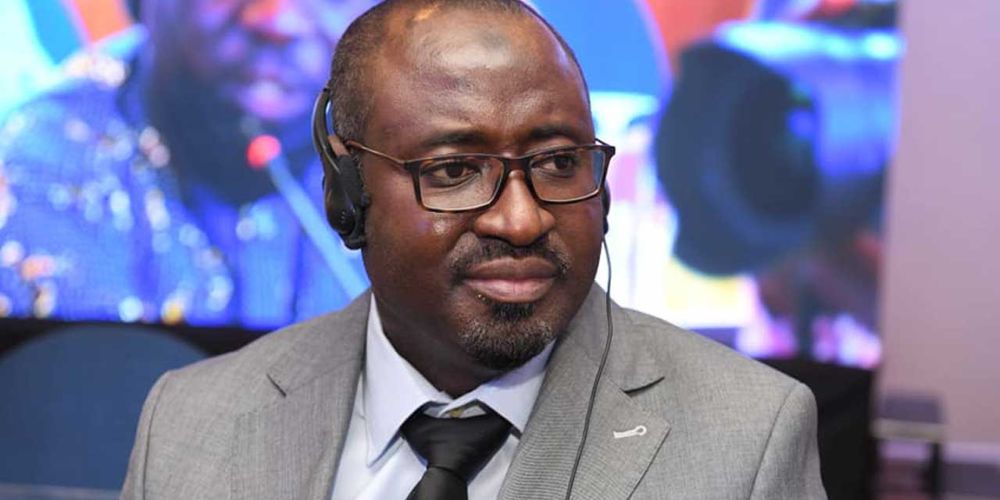
    Forty-four days after an Assistant Superintendent of Police (ASP), Usman Nuhu, fatally shot 28-year-old Oghenemine “Mena” Ogidi in Delta State, the Nigeria Police Force says it has uncovered a gun-running syndicate linked to the Beretta pistol at the centre of the incident.

    Investigators traced the firearm through a chain of transactions involving four suspected syndicate members.

    The investigation revealed that it was sold for N200,000, resold for N290,000, and later sold again for N380,000 before being transported to Delta State, bringing the cumulative value of the deals involving the weapon to N870,000.

    Ogidi was killed on April 26, 2026, while attempting to deliver a parcel containing a Beretta pistol and four rounds of live ammunition through a commercial motor park in Effurun, Delta State.

    A viral video of the incident showed Ogidi pleading with ASP Nuhu to help identify the sender of the package before the officer opened fire on him. The killing sparked widespread outrage, renewed concerns over extrajudicial killings, and raised questions about the circulation of illegal firearms in the state.

    Providing an update on Monday, the Delta State Commissioner of Police, CP Olufemi Abaniwonda Oyeniyi, announced the arrest of four suspected members of a gun-running syndicate linked to the recovered firearm.

    He said, “As a follow-up on the case of unlawful possession of a Beretta pistol recovered at a park in Effurun, Uvwie LGA on 1st May 2026, four suspects who are part of the gun running syndicate namely, Emmanuel Chukwuemeka, Clifford Boleyelefa.

    “Amadi Princewill and Amadi Felix Chibuike have been arrested. The suspects were arrested in Bayelsa and Imo states, respectively, after painstaking investigations and intelligence-led operations carried out by operatives of the command.

    “The first suspect Emmanuel Chukwuemeka was arrested in Bayelsa on the 4th of May 2026 alongside his friend and roommate whose phone he used as a means of communication to purchase the gun.”

    Oyeniyi said investigators subsequently reconstructed the movement of the firearm through multiple transactions.

    According to him, “Emmanuel revealed that he bought the gun from one Amadi Princewill for the sum of N290,000 and sold the gun to one Desmond (at large) for the sum of N380,000.

    “Who, in turn, billed it to Effurun and contacted Oghenemine Ogidi (now deceased) to collect it and send it to Sapele. Following the confession of Emmanuel Chukwuemeka, the second suspect Amadi Princewill, was trailed and arrested in Imo State on the 15th of May 2026.

    “Upon the arrest of Amadi Princewill, and on interrogation, he stated that he bought the gun from one Amadi Felix for the sum of N200,000. Consequently, Amadi Felix was trailed and arrested in Owerri Imo State on 16th May 2026.”

    The commissioner further disclosed that all four suspects are members of the Black Axe confraternity.

    He added that the suspects would be charged to court upon the conclusion of investigations, while efforts are ongoing to arrest other members of the syndicate, including Desmond, who remains at large.

    How Pistol Reached Mena Ogidi After Three Transactions – Delta Police is first published on The Whistler Newspaper