Author: Tribune Online

  • Lagos APC Reps aspirant pledges massive skills development

    Lagos APC Reps aspirant pledges massive skills development

    Remi Odunsi, an aspirant for the House of Representatives seat in the Kosofe Federal Constituency under the ruling All Progressives Congress (APC), has vowed to tackle poverty, illiteracy, and unemployment in the constituency if elected in the 2027 general elections. In a statement released by her media office on Monday, Oluwalogbon announced her candidacy during […]

    The post Lagos APC Reps aspirant pledges massive skills development appeared first on Tribune Online.

  • More Girls Registering For UTME, WASSCE As Experts Explain Shift

    More Girls Registering For UTME, WASSCE As Experts Explain Shift

    “It is like it is time for men to start shouting affirmative action,” the Registrar of the Joint Admissions and Matriculation Board (JAMB), Prof. Ish-aq Oloyede, said jokingly on Monday during the annual JAMB Policy Meeting.

    His statement stemmed from the fact that females were taking over in the registration for the Unified Tertiary Matriculation Examination (UTME).

    Revealing the statistics, Oloyede stated that more female candidates had registered for the examination compared to their male counterparts.

    He stated that more female candidates from 23 states registered for the UTME in 2026.

    “All states of South West, South East, and South South, Kwara, Kogi and Plateau in North Central and Kaduna and Kano on North West,” he said.

    Oloyede’s comment was reinforced when the West African Examinations Council (WAEC) revealed the same trend later that day.

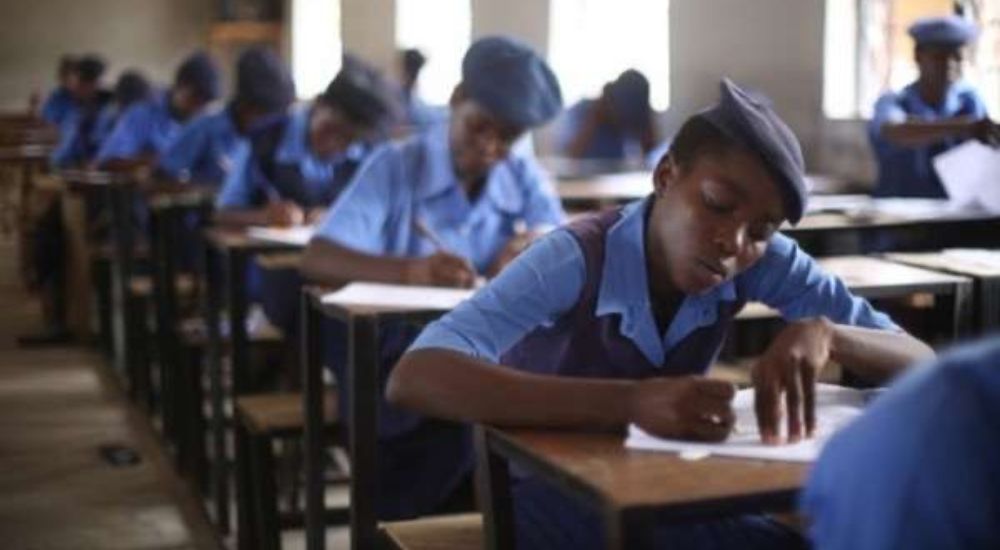
    According to WAEC, female candidates registered for the 2026 West African Senior School Certificate Examination (WASSCE) outnumbered their male counterparts, marking a shift in enrolment figures compared to the previous year.

    The council’s head of the Nigeria national office, Amos Dangut, said a total of 1,959,636 candidates from 24,207 schools enrolled for the examination.

    Of this number, 1,001,072 candidates, representing 51.08 percent, are female, while 958,564 candidates, representing 48.92 percent, are male.

    Dangut said the figures reflected an increase in female participation and a decline in male participation compared to the 2025 examination cycle.

    Women’s World Just About To Be Unveiled In Nigeria

    Speaking to THE WHISTLER on the issue, former Director of Press, Federal Ministry of Education, Bem Goong, said the trend aligns with demographic and socio-economic factors.

    “First, the number of females, even by the National Population Commission, is higher than the number of males,” he said.

    Goong who worked in the sector for over seven years, also listed other factors:
    “Number two, in the Southeast, it’s a historical factor. The war several years ago led to the depletion of the male population.
    Number three, as we speak, you find more and more boys going into apprenticeship in the skills sector. Even government policies have been emphasising skills acquisition, and more boys are going into that. People are beginning to realise that it’s not really about university degrees.”

    Goong added that for many girls, the path still leans toward formal education. “If you look at professions like medicine, law, mass communication, the dominant gender there is also girls. So I’m not surprised. The position is correct, and it’s backed by the National Population Commission.”

    He said the development has no immediate negative implication.

    “It’s not. The women’s world is just about to be unveiled in Nigeria. If you attend an assignment and have 20 journalists, 14 would be women. The women’s world is coming up in Nigeria.”

    A Disturbing News…

    However, for Nkechi Macaulay, Founder of Boys Lives Matter, the trend should raise concern about boys’ engagement with education.

    “It’s quite disturbing news, and I’m troubled by it because it shows boys are spiralling down when it comes to education. If we don’t pay attention, we’ll have more boys out of school,” she said.

    Macaulay argued that the education system has been structured in ways that favour girls.

    “Over the years, in a bid to boost girl-child education, we have tweaked the curriculum to attract more girls. We’ve abandoned the needs of the boy. Boys and girls are not alike, and our school system is designed to make girls enjoy school while it’s boring for the boy child,” she said.

    She pointed to the lack of male teachers and teaching methods that don’t account for how boys learn.

    “You can’t ask a boy to sit down for two or three hours and keep talking. Boys are restless. The novels, the books they read, are tailored to impress girls. A boy will say, ‘This is boring, there is no action,” she explained.

    For Macaulay, the solution is balance. “Until we get back to a point where we understand that boys and girls see things differently, and tailor education to impress both, we’ll keep seeing this gap. I’m not happy that we’re in a time where more and more boys are not thinking about going to school.”

    The JAMB and WAEC data suggest a measurable shift in who is registering for key national exams. While experts disagree on whether this is a concern, both agree the trend reflects deeper changes in population demographics, career choices, and how education is perceived across genders.

    More Girls Registering For UTME, WASSCE As Experts Explain Shift is first published on The Whistler Newspaper

  • OPINION: The Dangerous Politics Of Lowered Education Standards In Nigeria

    OPINION: The Dangerous Politics Of Lowered Education Standards In Nigeria

    Nigeria has developed a dangerous habit of responding to structural failure by lowering standards instead of fixing the structure itself. It is a pattern that now cuts across education, governance and even national leadership recruitment. Every few years, another policy emerges that appears compassionate on the surface but quietly deepens the culture of mediocrity underneath.

    The latest decision by the Joint Admissions and Matriculation Board (JAMB) to lower admission benchmarks and exempt some candidates from UTME is only the newest example of an old national reflex.

    The argument behind such policies is usually emotional and politically attractive. Some regions are disadvantaged. Some students lack opportunity. Some sectors suffer low enrollment. Therefore, the state responds by reducing the threshold.

    But after decades of doing this in different sectors, Nigeria must ask itself an uncomfortable question: has lowering standards actually solved the problems it was designed to solve?

    Take the Unity School admission system. For years, Nigerians have debated the huge disparity in cut-off marks between states. In some cases, a child from Anambra State or Imo State needed extraordinarily high scores to gain admission into the same federal school where another child from a different state could enter with single-digit marks.

    The original intention may have been noble. Policymakers wanted inclusion and national balance. But policies should ultimately be judged by outcomes, not intentions.

    Several decades later, have those lowered benchmarks eliminated the educational gap? Have they produced competitive parity? Or have they simply normalized lower expectations?

    That is not a tribal question. It is a policy question.
    In my days growing up in Nigeria, education was seen as a serious ladder out of poverty. Parents sacrificed everything for their children to compete. Children studied under lanterns during blackouts and paraffin oil in the absence of electricity. Admission into federal schools carried prestige because people believed merit still mattered.

    Today, the message increasingly seems different. Instead of helping weak systems become stronger, we keep adjusting the benchmark downward.
    There is an Igbo proverb that says when a child washes his hands clean, he dines with elders. The wisdom is simple. You do not lower the dining table for the child. You help the child rise to the table.

    That is where many Nigerian policies fail.
    Countries that transformed their education sectors did not primarily do so by permanently reducing standards. South Korea invested heavily in public education after their civil war. Singapore strengthened teacher quality and technical competence. Rwanda rebuilt educational infrastructure after national tragedy.

    They focused on building capacity, not institutionalizing weakness.

    Unfortunately, Nigeria often prefers shortcuts.
    Instead of improving teacher quality, we reduce cut-off marks.
    Instead of rebuilding public schools, we weaken admission barriers.

    Instead of confronting learning poverty, we redesign the grading scale.
    What irritates me the more is that we started this lowering of standards from the political leadership recruitment itself.
    Under Nigeria’s constitutional framework, a person can aspire to become governor or president with merely a secondary school certificate or its equivalent, and the courts have even interpreted this to mean merely attending secondary school, not necessarily passing.

    In practical terms, the minimum qualification for managing one of the most complex countries on earth is astonishingly low.
    Think about that carefully.
    A bank will hardly employ someone with such qualifications to manage a branch. Major companies conduct rigorous recruitment processes before appointing middle managers.

    Yet the “CEO” of the Nigerian state can emerge under standards far lower than what many private organizations require for ordinary office assistant role.

    And then we wonder why governance often reflects poor preparation, weak intellectual depth and shallow policy thinking.
    A nation cannot continuously lower the standard for leadership and still expect excellence in national outcomes.

    This does not mean certificates alone automatically produce wisdom or competence. Nigeria has had educated leaders who still failed. But serious societies generally understand that leadership recruitment should encourage preparedness, intellectual discipline and capacity.

    What Nigeria increasingly promotes is something else: accommodation without transformation.

    There is a thin line between inclusion and the soft bigotry of low expectations. Sometimes, policies designed to help disadvantaged groups quietly communicate something dangerous: that excellence is not expected from them.
    That mindset eventually weakens everybody.

    The real solution is not to abandon disadvantaged communities. Government should invest aggressively in rural schools, teacher training, digital access, nutrition programmes and remedial education. Build capacity before competition.
    But lowering standards indefinitely is not empowerment.

    In many cases, it merely postpones failure while weakening the culture of striving that serious nations depend upon.
    Nigeria must now decide whether it truly wants transformation or merely statistical inclusion. Because history shows that nations rise not by reducing the meaning of excellence, but by helping more citizens genuinely attain it.

    Young Ozogwu is an Abuja-based public commentator. You can contact him at young.ozogwu@gmail.com

    OPINION: The Dangerous Politics Of Lowered Education Standards In Nigeria is first published on The Whistler Newspaper

  • Atiku’s aide questions Tinubu’s absence from Nigeria amid insecurity, economic hardship

    Atiku’s aide questions Tinubu’s absence from Nigeria amid insecurity, economic hardship

    Paul Ibe, Media Adviser to former Vice President Atiku Abubakar, has questioned the whereabouts of President Bola Ahmed Tinubu following the

    The post Atiku’s aide questions Tinubu’s absence from Nigeria amid insecurity, economic hardship appeared first on Tribune Online.

  • VIDEO: ‘You’re not a goat,’ Pastor Ibiyeomie warns members against chewing gum in church

    VIDEO: ‘You’re not a goat,’ Pastor Ibiyeomie warns members against chewing gum in church

    Founder and presiding pastor David Ibiyeomie has generated reactions online after advising church members to avoid chewing gum, drinking water, and using mobile phones during worship services. The cleric made the remarks while addressing his congregation during a church service, stressing the importance of maintaining reverence and proper conduct inside the house of God. In […]

    The post VIDEO: ‘You’re not a goat,’ Pastor Ibiyeomie warns members against chewing gum in church appeared first on Tribune Online.

  • You failed my people – Adamawa South senator, Yaroe tells Tinubu, APC 

    You failed my people – Adamawa South senator, Yaroe tells Tinubu, APC 

    Senator Binos Dauda Yaroe who represents Adamawa South Zone in the National Assembly has refused to join the ruling All Progressives Congress, APC, saying the party has failed his people. 

    Dauda defected from the Peoples Democratic Party earlier. He insisted that it would have been a betrayal of trust if he had moved to the APC. 

    He said during an event that continued neglect of the Adamawa Southern zone by the Federal Government leaves him with nothing to campaign for the APC-led President Bola Ahmed Tinubu government. 

    Senator Yaroe who is now in the African Democrafic Congress, ADC, said he would have considered defecting to the APC if it would guarantee presidential assent to his proposed Federal University of Education, Numan bill.

    He said after investing years of legislative effort and resources into the bill, its rejection by the presidency became a painful setback for both him and his people.

    Speaking in Numan while making his declaration to seek re-election to the Senate under ADC, Yaroe said, “If they had told me that joining APC would guarantee the passage of the Federal University of Education Numan bill, I would have risked my political future for the interest of my people. 

    “But after everything we did at the Senate, the bill was denied assent. How then do I go to my people and campaign for APC? There is practically nothing to show them.”

    He charged that apart from the university issue, southern Adamawa has remained one of the most neglected regions in Nigeria despite comprising nine local government areas.

    He boasted that he was one of 15 senators who resisted pressure to join the APC.

    “Senatorial representation is a trust. I cannot betray the people who elected me simply to protect my political interest,” he said. 

    You failed my people – Adamawa South senator, Yaroe tells Tinubu, APC 

  • Brain drain: Lagos moves to improve welfare, attract doctors in diaspora

    Brain drain: Lagos moves to improve welfare, attract doctors in diaspora

    The Lagos State Government has reiterated its commitment to addressing brain drain and promoting brain gain through improved welfare, infrastructure, and living conditions for doctors and other healthcare workers in the state. This was disclosed by the Commissioner for Health, Prof. Akin Abayomi, on Tuesday during the 2026 Ministerial Press Briefing held in Alausa to […]

    The post Brain drain: Lagos moves to improve welfare, attract doctors in diaspora appeared first on Tribune Online.

  • 2027: Kano ex-LG chairmen rally support for Tinubu, Gov Yusuf

    2027: Kano ex-LG chairmen rally support for Tinubu, Gov Yusuf

    Twenty-one former local government chairmen in Kano State have expressed their satisfaction with the policies of President Bola Tinubu, particularly the implementation of the Renewed Hope Agenda. They believe this agenda is contributing to development in Northern Nigeria. The former council chairmen made their endorsement during a meeting in Kano, where they also pledged to […]

    The post 2027: Kano ex-LG chairmen rally support for Tinubu, Gov Yusuf appeared first on Tribune Online.

  • FULL LIST: Dozens of snacks recalled in US; FDA gives reason

    FULL LIST: Dozens of snacks recalled in US; FDA gives reason

    Dozens of popular snack products sold across the United States are being recalled over possible salmonella contamination linked to milk powder supplied by California Dairies, according to the U.S. Food and Drug Administration (FDA). The FDA said the recall stems from potentially contaminated powdered milk and buttermilk used in seasonings and other ingredients found in […]

    The post FULL LIST: Dozens of snacks recalled in US; FDA gives reason appeared first on Tribune Online.

  • BBNaija11: ‘I do not have powers to get you into Big Brother – Whitemoney to applicants

    BBNaija11: ‘I do not have powers to get you into Big Brother – Whitemoney to applicants

    Former Big Brother Naija Shine Ya Eye winner, Whitemoney has appealed to intending housemates of the reality show to stop asking him for assistance on how to go to the show.

    Whitemoney said many have reached out to him asking him to influence their admissions ahead of the eleventh edition of the show.

    Speaking in a video broadcast, Whitemoney urged the intending housemates to follow due process rather than seeking to cut corners.

    He said he lacks the power to influence anyone’s entry into the reality show.

    “My DM is filled up with messages from people asking me to influence their entries into BBNaija. Please, I do not have the power to put you into Big Brother house. Stop sending messages. Every year when the programme is approaching, I keep getting messages. This year’s own is too much.

    “I understand that the economy is hard and everyone wants to be famous by going to the Big Brother show. But please, go and audition. Follow the due process. I auditioned 4 times before I was picked. Keep auditioning even if they reject you. And don’t fall victim of scam by giving anyone money to give a BBNaija slot. Be wise about it,” he said. 

    BBNaija11: ‘I do not have powers to get you into Big Brother – Whitemoney to applicants