Blog

  • UBA equips over 700 young professionals under Graduate Programme

    UBA equips over 700 young professionals under Graduate Programme

    By Babajide Komolafe

    United Bank for Africa (UBA) Plc has reinforced its commitment towards tackling youth unemployment across the continent with the successful employment of over 700 young professionals under its Graduate Management Acceleration Programme (GMAP).

    Since inception, the bank’s GMAP initiative has empowered more than 5,000 young graduates across Africa, providing them with world-class training, hands-on experience, and a platform to thrive in the financial services industry.

    While welcoming and addressing the fresh intake yesterday in Lagos, UBA’s Group Chairman, Tony Elumelu, reiterated the importance of ambition, discipline, and institutional pride, describing the gathering as living proof that Africa’s future belongs to its youth.

    “I am so happy to see smiling, young faces. You know, they say the future of Africa belongs to our youth, and as I see all of you, I see that in action. Welcome to UBA Group. Congratulations on being part of our family,” he stated.

    Elumelu challenged the graduates, to take personal ownership of their performance and to exhibit the discipline that distinguishes great institutions from average ones.

    “Selecting the right people, training them, developing them, nurturing them, and getting them to align with the vision is not easy. But it is critical for sustained success. What we must do is institutionalise our approach, to build an organisation that can deliver and create systems that endure, so that perpetuity is achieved,” Elumelu said.

    The milestone induction, which welcomed Cohorts 19 and 20 into the bank’s dynamic workforce, underscores the bank’s strategic focus on nurturing Africa’s next generation of high-performing talent equipped to drive innovation and sustainable growth.

    Group Managing Director/CEO, Oliver Alawuba, who went down memory lane, took the youth on his personal journey from a young professional to Group CEO, and reminded the graduates that the path from entry-level to leadership is not reserved for a privileged few.

    “Our young Africans are equipped to drive Africa into excellence. Your current role is not your final destination. If we could rise, you can rise too, because the journey is not reserved for a special class of people. It is reserved for people who decide to grow and then do the work,” he said.

    Alawuba anchored his address in UBA’s corporate ethos, the 3Es of Excellence, Enterprise, and Execution, and the SRG persona of Simplicity, Responsiveness, and Goal-orientation, challenging each new hire to make these values visible in their daily conduct.

    With the new cohort of 720 trainees, 435 of whom are women and account for over 60% of the intake, this stands as a powerful testament to the bank’s unwavering commitment towards women’s empowerment.

    The post UBA equips over 700 young professionals under Graduate Programme appeared first on Vanguard News.

  • Why I’m not a big fan of Pope Leo — Trump

    Why I’m not a big fan of Pope Leo — Trump

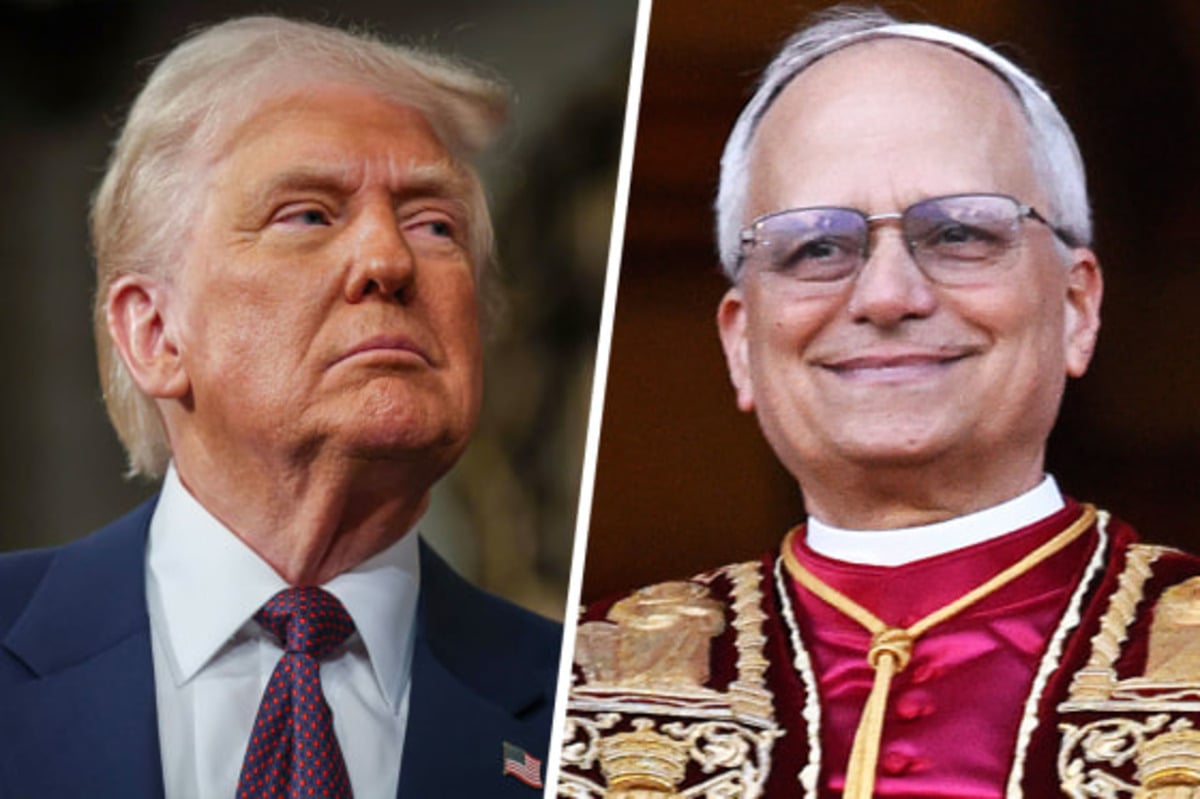
    US President Donald Trump has openly criticised Pope Leo XIV, saying he is “not a big fan” of

  • Sugar Production: FG tasks Dangote Group on 600,000MT target by 2030

    Sugar Production: FG tasks Dangote Group on 600,000MT target by 2030

    The Minister of State for Industry, Senator John Owan Enoh, has tasked the management of the Dangote Group of Companies on the need to expand the annual production capacity of its subsidiary, the Dangote Sugar Refinery (DSR), to 600,000 metric tonnes by the year 2030. 

      The Minister, accompanied by the Executive Secretary of the National Sugar Development Council (NSDC), Mr. Kamar Bakrin, gave the charge when he visited the DSR Complex in Numan, Adamawa state. 

      The visit was part of the ongoing strategic inspection of sugar projects across the country in line with President Bola Ahmed Tinubu’s directive to concerned officials for the acceleration of Nigeria’s attainment of self-suûciency in sugar production.

      The Minister noted that the current local sugar production is a far cry from the 1.8m metric tonnes that the country consumes annually, adding that as a leader in the sector, the DSR must contribute at least 600,000 metric tonnes in the year 2030 and sustain it.

      “DSR is a very big player in the industry, one of the three major operators. Our circumstances in this sector will continue to depend on what DSR does. It is very important. I mean since coming to this ministry, I found the NSDC Executive Secretary to be hardworking and passionate about sugar sector development. I have seen the commitment he has demonstrated. But that is the much he can give, he needs to get the cooperation of everyone to make sure that we achieve the laudable goals of the Nigeria Sugar Master Plan (NSMP). 

    “I have lost count of the number of times Mr. President has talked about developments in the sugar industry in Federal Executive Council (FEC) meetings and other sessions,” he said, adding that the 600,000 MT target must be delivered by DSR before 2031.

      While commending the NSDC for the great job it has done in motivating and monitoring the operators, the Minister noted that the scale of infrastructure, level of investment, and degree of project advancement – especially at the new 6000 TCD plant – observed at DSR reflect a tangible commitment to the objectives of the Backward Integration Programme (BIP).   

      He equally commended the DSR team for the commitment to improving recent performances, adding that the federal government is willing to work with them to eradicate all obstacles to increased local sugar production in the country. 

      “I am indeed very happy with what I have seen today but scaling up production to be able to meet Mr. President’s expectations is very important. My final comment would be to encourage you, just to let you know that my visit here is to show the government’s continuous seriousness and how important the government looks at our ability as a country to be self-sufficient in sugar production,” the Minister said.

     Also speaking, the Vice President of the Dangote Group, Mr. Olakunle Alake, assured the Minister of the company’s renewed commitment to invest more resources and scale up its production capacity, promising that the 600,000 MT target will be met in the year 2030. 

    The post Sugar Production: FG tasks Dangote Group on 600,000MT target by 2030 appeared first on Vanguard News.

  • Bauchi: Retired permanent secretary, Dankama, emerges ADC state chairman

    Bauchi: Retired permanent secretary, Dankama, emerges ADC state chairman

    The African Democratic Congress (ADC) has conducted its state congress in Bauchi, electing a state executive committee. A retired Parliamentary Secretary in the Bauchi State Civil Service, Alhaji Shu’aibu Abdullahi Dankama, has emerged as the State Chairman of the opposition African Democratic Congress (ADC) in Bauchi State. He, alongside 30 others, emerged during the party’s […]

  • Experts express concern as housing crisis deepens

    Experts express concern as housing crisis deepens

    Nigeria’s housing crisis is worsening as rental costs continue to surge across major cities, with experts attributing the trend to deep-rooted structural and macroeconomic challenges rather than arbitrary decisions by landlords. Recent data indicate that rents have risen by between 50 and 200 percent in the past two years, with some locations in Lagos, Abuja […]

  • Electricity: FG sets up committee to tackle gas to power challenge

    Electricity: FG sets up committee to tackle gas to power challenge

    By Obas Esiedesa

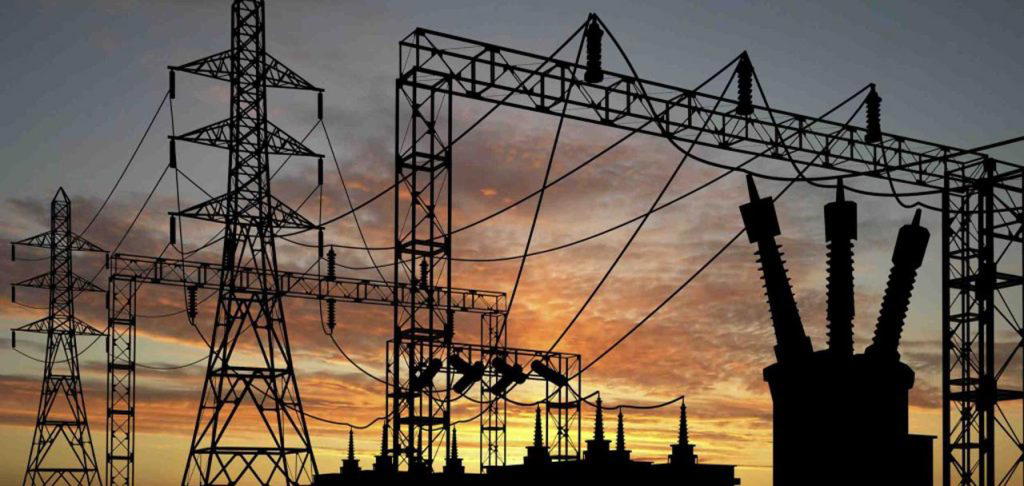
    The Federal Government has inaugurated a Gas-to-Power Monitoring Committee to address persistent gas supply challenges affecting electricity generation in the country.

    Speaking at the inauguration in Abuja, the Minister of Power, Chief Adebayo Adelabu, described the initiative as a decisive step towards resolving one of the most critical constraints in the Nigerian Electricity Supply Industry (NESI).

    In January, gas companies significantly reduced the volume of gas supplied to power generation companies over $1.3 billion debt which led to drastic drop in power generation to the national grid. 

    Adelabu, according to a statement by his media aide, Bolaji Tunji, noted that gas-fired power plants account for about 80 per cent of Nigeria’s electricity generation, but continue to face setbacks due to supply disruptions, pipeline vandalism, mounting debts to gas producers, and weak coordination across the value chain.

    He said the move underscores the Federal Government’s determination to end the longstanding issues limiting generation capacity and undermining reliable electricity supply.

    According to him, the committee was constituted following deliberations at the first quarter 2026 Ministerial Power Sector Working Group meeting, where key challenges such as infrastructure gaps, liquidity constraints, and pricing issues were identified.

    The minister explained that the committee would monitor and drive the resolution of critical bottlenecks, including the repair and maintenance of damaged gas pipelines, settlement of outstanding debts to suppliers, and other commercial and operational barriers affecting gas availability to power plants.

    Adelabu charged members of the committee to go beyond routine oversight and provide proactive, data-driven recommendations, particularly on mechanisms to guarantee payment for gas supplies and ensure sustainability in the sector.

    He stressed that the committee would be held accountable for measurable progress, with expectations for regular reporting, clear milestones, and timely escalation of issues requiring government intervention.

    The minister expressed confidence in the committee’s ability to deliver, noting that its membership reflects a broad representation of stakeholders across the gas-to-power value chain. The committee comprises representatives from the Ministry of Power, Nigerian Independent System Operator (NISO), Transmission Company of Nigeria (TCN), Association of Generation Companies, Niger Delta Power Holding Company (NDPHC), Nigerian Gas Association, and consumer advocacy groups.

    Earlier in his remarks, the Permanent Secretary in the Ministry of Power, Alhaji Mahmuda Mamman, represented by the Director of Distribution, said the inauguration aligns with the minister’s directive to urgently tackle challenges affecting gas supply to the power sector.

    He identified infrastructure deficits, pipeline vandalism, liquidity constraints, and coordination gaps as major issues hindering electricity generation and impacting economic growth. 

    The post Electricity: FG sets up committee to tackle gas to power challenge appeared first on Vanguard News.

  • Livestock Devt Minister leads discussion panel at Vanguard Economic Discourse

    Livestock Devt Minister leads discussion panel at Vanguard Economic Discourse

    By Emeka Anaeto, Business Editor

    In the run up to the 2026 edition of the Vanguard Economic Discourse, the Honorable Minister of Livestock Development, Idi Mukhtar Maiha, has been slated to lead the Panel discussion session. 

    The 2026 edition of the Vanguard Economic Discourse is scheduled to hold next week, Wednesday, April 22, 2026 at the Civic Centre, Victoria Island, Lagos starting by 9am.

    The theme of this year’s edition is Food Security and Socio-economic Stability: Options for Nigeria’s Agriculture Sector Rebound.

    In his position as the Lead Panelist the Honorable Minister is expected to engage the gathering of the public and private sector agro-food lead stakeholders on the developments in the Nigeria’s livestock segments.

    The event which parades an array of key sector leaders has the Honorable Minister of Agriculture and Food Security, Sen. Abubakar Kyari, as the chairman, while Dr. Hussein Gadain, ECOWAS/ Nigeria Resident Representative of the United Nations’ Food and Agriculture Organisation (UN/ FAO) is setting the stage for incisive discussion as the Keynote Speaker.

    A group of eminent stakeholders in the Nigeria’s agriculture and food value chain drawn from public and private sector as well as international organizations have been assembled as panelists.

    The Panel Session will feature Mrs Dede Ekoue, Country Director, International Fund for Agricultural Development, IFAD, in Nigeria; Dr Mrs Moji Davids, Managing Director, Xtralarge Farms & Resorts; Mohammed Magaji, President, All Farmers Association of Nigeria, AFAN; and Arc. Kabir Ibrahim, President of Nigeria Agribusiness Group, NABG.


    The eminent stakeholders would also include representatives of financial institutions with the Agric Desks of Commercial Banks in the formal and networking sessions. 

    The Honorable Minister of Livestock Development, Maiha, is an accomplished public sector executive, who graduated from Ahmadu Bello University with Bachelor’s and Masters Degrees and started his public service career as a lecturer at the Department of Arts and Social Science, College of Preliminary Studies, Yola, Gongola State in 1982. 

    before joining the Nigerian National Petroleum Corporation (NNPC) as a Personnel Officer in 1992.

    He had an illustrious career at the NNPC, where he rose through the ranks as a professional Human Resource Expert to become the Executive Director, Kaduna Refining and Petrochemical Company, Kaduna, from 2011 to 2016 and Managing Director of the same company from 2016 to 2017.

    He retired from the NNPC to pursue his passion for livestock development at the Zaidi Farms Limited, which he owns and served as Managing Director/Chief Executive Officer until his appointment as a Federal Minister. 

    He is credited with the successful transformation of the Zaidi Farms which holds over 250 exotic cattle breeds with a 19-year old legacy of profitable, safe and sustainable climate-smart livestock management. 

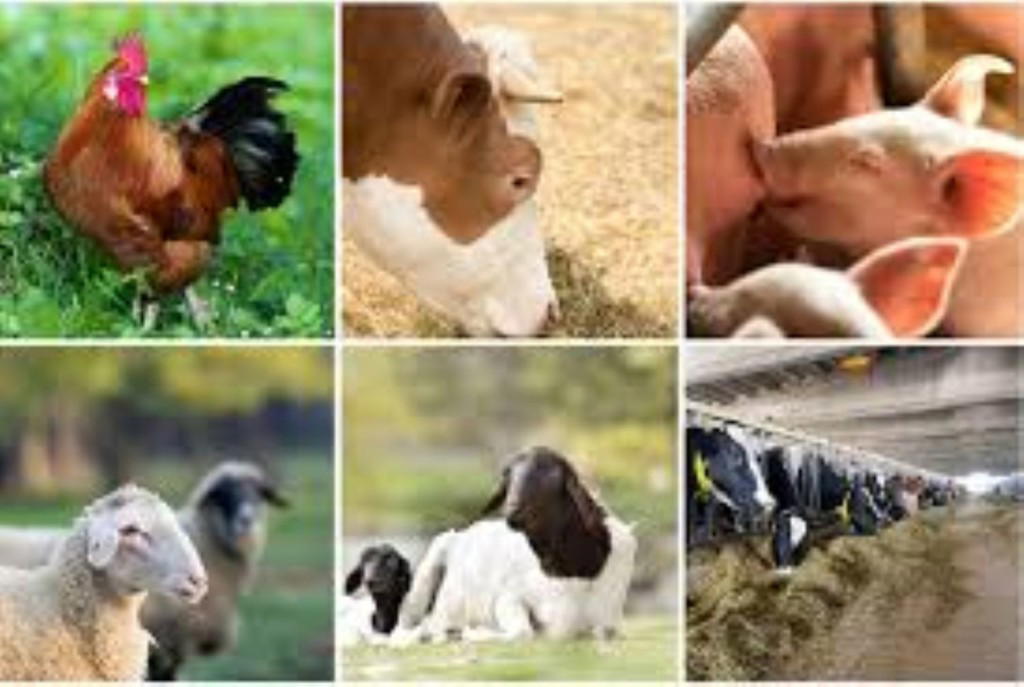
    The farm is known for the use of modern technologies to improve genetic diversity of exotic cattle breeds, goat and sheep with an orchard of 3000 assorted fruit trees, free-range pasture chickens, tilapia fish ponds and an apiary.

    He was also a member of the Kaduna State Steering Committee of Agro-Processing, Productivity Enhancement and Livelihood Improvement Support Project (APPEALS), a World Bank Assisted project from 2018 to 2023.

    The Vanguard Economic Summit has gained traction in the past eight years as a major public-private sector platform for reviews and cross-fertilization of economic development ideas by Nigeria’s public and private sector leaders.

    The post Livestock Devt Minister leads discussion panel at Vanguard Economic Discourse appeared first on Vanguard News.

  • Senate 2027: Okowa bows to Anioma leaders’ demand, accepts to seek ticket

    Senate 2027: Okowa bows to Anioma leaders’ demand, accepts to seek ticket

    Immediate past Governor of Delta, Senator Dr Ifeanyi Okowa, on Sunday declared interest to seek All Progressives Congress (APC) ticket to the Senate in the 2027 general elections.

    This was sequel to a demand by high-profile political leaders in Delta North Senatorial District, who besieged his residence in Asaba, to make the request.

    The leaders, who included former and serving National Assembly members and top government officials and politicians, were led by the Deputy Governor of the State, Sir Monday Onyeme.

    The group had earlier met at the deputy governor’s lodge before proceeding to Okowa’s residence to urge him to contest the the seat, following a resolution reached at the meeting.

    After deploring the quality of representation the district is currently getting at the Red Chamber, a motion moved by former Minority Leader of the House of Representatives, Mr Ndudi Elumelu, and seconded by a serving member of the Green Chamber, Hon. Nnamdi Ezechi, to ask Okowa to return to the Senate was approved.

    At his residence, Okowa who was surprised and overwhelmed with emotion on the visit and the demand of the people on him, said for the calibre of persons on the mission, “I heed your call. I feel very loved and honoured, and I have no choice than to accept.”

    He recalled how he was supported by Anioma people in the build-up to his election to the Senate in 2011, which he won, adding that he enjoyed the same measure from the people when he contested and won the governorship election in 2015.

    “As I accept your request for me to run for the Senate seat, we’ll run it together, and win together. I will not disappoint you.

    “The statement all of you have just made here is not for today; it’s a statement for the future of our people, and I thank you for being thoughtful and concerned for our people”, he said.

    In his remark, the deputy governor assured Okowa of the support of all the leaders and Anioma people, saying “it’s our collective project”.

    No fewer than 50 leaders from the nine local government areas that make up the senatorial district were in attendance.

    The post Senate 2027: Okowa bows to Anioma leaders’ demand, accepts to seek ticket appeared first on Vanguard News.

  • Debt pressure mounts as FG borrows N8.1trn in 2026 already

    Debt pressure mounts as FG borrows N8.1trn in 2026 already

    •Represents 7.4% YoY increase from Q1’25 •Analysts cite revenue gaps, fiscal indiscipline  •Urge FG to cut waste, boost revenue  •Rising debt crippling ability to fund infrastructure – World Bank“

    By Babajide Komolafe, Economy Editor & Peter Egwuatu, Assistant Business Editor

    At the backdrop of rising public debt pressure and concerns over the  impact on the economy, the Federal Government (FG) increased its domestic borrowing by N8.1 trillion in  the first quarter of 2026 (Q1’26), showing a 7.4 per cent rise from  N7.5 trillion in the same period of 2025.

    This upward trend, according to analysts, shows revenue gaps and spending indiscipline, urging the government to double down on revenue collection, cut waste and curb corruption.

    Meanwhile, the World Bank has warned that the rising amount of money the Federal Government is spending to service debt is reducing its ability to fund critical infrastructure, citing the sharp decline in capital spending to 1.0 percent of GDP from 1.3 percent of GDP in 2024.

    Domestic borrowing in Q1’26

    Data obtained by Financial Vanguard from the Central Bank of Nigeria, CBN, and the Debt Management Office, DMO, shows that the 7.4 per cent, year-on-year, YoY, increase in FG’s domestic borrowing in Q1’26 was driven by 63 per cent and 24 per cent YoY increase in borrowing through FGN Bonds and FGN Savings Bonds, respectively, which offset 12 per cent decline in borrowing through Treasury Bills.

    FG borrowed N4.86 trillion through Treasury Bills in Q1’26, representing a 12 per cent YoY decline from N5.54 trillion in Q1’25.

    However, borrowing from the monthly FGN Bond auctions rose by 63 per cent YoY to N3.182 trillion in Q1 ’26 from N1.953 trillion in Q1’25.

    Similarly, borrowing through the FGN Savings Bond rose by 24 per cent YoY to N16 billion in Q1’26 from N13 billion in Q1’25.

    Borrowing overshoots target

    Under the Appropriation Act 2026, the Federal Government plans to borrow N29.2 trillion, to fund the gap between the revenue of N68.32 trillion and expenditure of N36.87 trillion. This indicates a quarterly borrowing target of 7.3 trillion, including external debt.

    However, given the N8.1 trillion borrowed from domestic investors in Q1’26, and the $6 billion new external loans approved by the National Assembly two weeks ago, the Federal Government might again exceed its annual borrowing target in 2026.

    The above trend also indicates further increases in Nigeria’s debt stock which according to the DMO, stood at N153.29 trillion at end of Q3 ’25, representing 5.9 per cent YoY increase  from  N144.67 trillion at end of 2024.Given this development and expected increase in total debt, the Federal Government will spend more on debt services in coming years, and likely worsening of the debt service-to revenue ratio, a key debt sustainability indicator. 

    Debt service undermining infrastructure spending Consequently, the World Bank has said the nation’s massive debt-service burden was systematically crippling the nation’s ability to fund critical infrastructure, effectively reducing capital investment to a “primary adjustment margin” in the federal budget.In its latest Nigeria Development Update (NDU) for April 2026, released last week,  the World bank disclosed that while the debt-to-GDP ratio appears moderate, the cost of servicing that debt is suffocating.”Although Nigeria’s debt-to-GDP ratio remains low by international standards, the main source of vulnerability is the high debt service-to-revenue ratio, which is estimated to have stood at 49.5 percent in 2025,” the Bank stated.This fiscal “squeeze” has directly impacted the Federal Government’s (FGN) development goals. The report noted that: “With recurrent spending absorbing most of the available fiscal space, capital spending declined from 1.3 percent of GDP in 2024 to 1.0 percent in 2025”.The bank further revealed a staggering failure in project execution: “Capital execution was particularly weak, with only 24 percent of the prorated 2025 capital budget of MDAs implemented, leaving a significant portion of approved investment unspent and limiting the growth impact of public spending”.Warning of the long-term consequences for Nigeria’s economic future, the lender emphasised “The ratio continues to crowd out pro-growth spending, particularly on infrastructure and human capital”. Even with projected improvements, the bank cautioned that the burden will remain high: “The debt service-to-revenue ratio… will remain elevated at about 41 percent by 2028, constraining fiscal flexibility and limiting space for priority development spending”.

    Revenue gaps, structural constraints drive borrowingProviding insight into the factors behind the Q1 borrowing spike, Chief Investment Officer, VNL Capital Asset Management Company, Dr. Ifeanyi Ubah, reinforced concerns over persistent revenue weakness.He said: “The most fundamental reason is that government revenue continues to fall short of expectations. When actual receipts miss targets by a wide margin, borrowing becomes the default tool to keep the lights on and meet recurrent obligations. This is not a new problem; it is a pattern that has repeated itself year after year.”Ubah added that the expansion of the 2026 budget worsened the situation.”The budget was expanded significantly mid-cycle, widening the fiscal deficit beyond what was originally planned. A larger budget with the same weak revenue base simply means more borrowing,” he said.He further noted that a significant portion of new borrowing is being used to service existing obligations.”When debt service consumes such a large share of the budget, the government finds itself in a cycle where it borrows to repay what it already owes. The high interest rate environment only makes this more expensive,” he added.Similarly, Chief Executive Officer of HighCap Securities, Mr. David Adonri, attributed the development to the large fiscal deficit embedded in the 2026 budget.He said: “The huge deficit in the 2026 budget necessitates borrowing. For the government to overshoot its borrowing limit in Q1 may indicate revenue shortfalls or a deliberate decision to overtrade.”Also commenting, Head of Research at Quest Merchant Bank, Tunde Abidoye, pointed to underperformance in oil revenue.”The most likely factor is persistent revenue underperformance. Oil production averaged around 1.6 million barrels per day, below the budget benchmark of about 1.8mb/d,” he said.On his part, Chief Economist at  United Capital Plc, Ayodele Akinwunmi, explained that government borrowing is not always evenly distributed across the year.”For instance, the government may borrow more during the dry season to accelerate road construction projects, while borrowing tends to be lower during the rainy season when construction activities slow down,” he noted.

    Inflation, crowding-out risksOn the impact of rising borrowing on the economy, analysts warned of mixed outcomes for individuals and corporates.Adonri noted that “excessive domestic borrowing crowds out capital from the real sector and exacerbates inflation,” adding that rising credit to the government is already driving growth in money supply and destabilising asset markets.Abidoye, however, said the impact depends on how borrowed funds are utilised.”If the funds are well managed, it could have a positive impact on national infrastructure, and productivity. The key negative for Nigerians is a higher debt stock, which translates to a rise in debt service obligations – which ultimately have to be funded by taxpayers,” he said.In the same vein, Akinwunmi emphasised that borrowing is not inherently negative if channelled into productive investments.”Building up the nation’s stock of infrastructure is critical to accelerating economic growth and development. Borrowing, when directed toward well-chosen projects, can generate strong multiplier effects across the economy. Therefore, it is essential to continue encouraging the government to borrow responsibly to finance projects that deliver long-term benefits and stimulate sustainable growth in Nigeria.,” he added.

    More borrowing likelyLooking ahead, analysts expressed concerns that the borrowing trend may persist in the near term.Adonri warned that fiscal indiscipline could sustain elevated borrowing levels.”There is already evidence of budget indiscipline. This trend is likely to continue, and the government may be entering a debt trap where new borrowing is required to service existing obligations,” he said.Abidoye also noted that borrowing could exceed projections if revenue performance remains weak.”We take guidance from the budget, but borrowing may overshoot if there are revenue shortfalls in Q2,” he said.However, Akinwunmi expressed a relatively optimistic outlook, citing improving oil prices and tax reforms.”With higher crude oil prices and ongoing tax reforms, government revenue is expected to improve, which should reduce reliance on borrowing,” he stated.Similarly, Ubah warned that the borrowing trend is unlikely to ease in the near term.

    The borrowing trend is unlikely to ease in the coming quarters. With a wide fiscal deficit and revenue performance that continues to disappoint, the government has very little room to pull back.”The honest outlook is that total borrowing for the full year will likely exceed what was planned. The domestic bond market will remain the government’s primary financing tool, with issuance volumes staying elevated through Q4,” he said.Fiscal discipline, revenue mobilisation keyOn measures to curb the rising debt profile, analystsunanimously emphasised the need for stronger fiscal discipline and improved revenue generation.Afrinvest analysts called for tighter adherence to fiscal frameworks and greater policy credibility.Adonri advocated a fundamental shift in fiscal management.”The only way FGN can stop this financial recklessness is by rationalisation of the expenditure budget and pursuit of a disciplined balanced budget.

    The current budget does not reinforce the strategic imperatives of an economy that needs critical transformation,” he said.Abidoye highlighted the role of tax reforms in boosting revenue.”The implementation of the Tax Act should enhance revenue and reduce borrowing pressures going forward,” he noted.Akinwunmi also stressed the importance of efficient allocation of public funds.”Through disciplined execution of projects and careful allocation of public funds to sectors that directly and indirectly benefit the economy, Nigeria can strengthen its earning capacity. Prioritising investments in infrastructure, productive industries, and social services will not only enhance immediate economic activity but also build long-term resilience and growth potential for the country. Doing this will enable the country  generate revenue to repay both the principal loan and interest obligations,” he said.

    The post Debt pressure mounts as FG borrows N8.1trn in 2026 already appeared first on Vanguard News.
  • 2027: Peter Obi raised monsters in OBIdients — Abike Dabiri

    2027: Peter Obi raised monsters in OBIdients — Abike Dabiri

    “Peter Obi has actually raised monsters. By God’s grace, Bola Ahmed Tinubu will…”