lPolicy missteps in trade systems may hurt consumers —Experts
lSay naira stability comes at heavy cost as FX reserves decline
By Emma Ujah, Abuja Bureau Chief
ABUJA — The Federal government has taken concrete steps in responding to the current global economic uncertainties, Minister of Finance and Coordinating Minister of the Economy, Mr. Wale Edun, has said.
However, experts warn that policy missteps in trade and revenue systems could ultimately hurt consumers, as inefficiencies raise costs across the supply chain.
They also caution that the naira’s relative stability is being sustained at a significant cost, with declining foreign exchange reserves reflecting continued interventions to defend the currency amid global volatility.
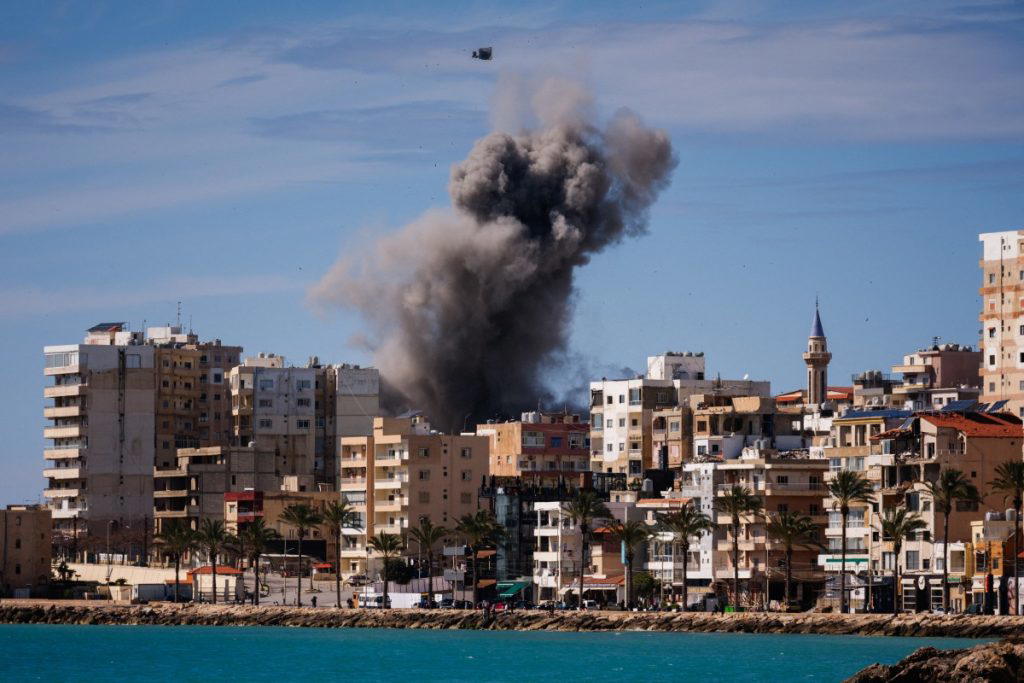
The ongoing US-Israel Iran war triggered sharp increase in crude oil price, disrupted supply of critical petro-chemical products, leading to apprehension over global economics with the World Bank and International Monetary Fund, IMF, projecting an upward trend in inflation and decline in global economic growth.
In a statement issued in Abuja, yesterday, the minister noted that the Middle East war had created volatility in the global energy sector which has affected Nigeria, like other countries of the world.
He said, however, that the Federal Government has ramped up crude production, maintained liberal foreign exchange market and sustained the Naira-crude policy to mitigate effects of the global economic shock on the Nigerian public.
The minister said: “The Federal Government emphasises that Nigeria enters this period of global uncertainty from a position of strengthened economic fundamentals compared to recent economic shocks such as the COVID-19 and the Russia/Ukraine war shocks, following a combination of macroeconomic reforms since May 2023.
“In the last few weeks, the government has strengthened the country’s economic position and in response to the crisis by continuously looking for ways to improve oil production, now 1.86 mbpd, according to recent data.
“This is to maximise Nigeria’s crude oil revenues, foreign exchange earnings, and fiscal revenues.
“Strengthening the Naira-for-Crude policy to safeguard domestic fuel production and supply to ensure no further strain to households and businesses due to fuel and diesel shortages.
“Continue to maintain a liberalised foreign exchange market to ensure continuous smooth capital flows. The policy has been validated by Nigeria’s reclassification as a Frontier Market by FTSE Russell, effect from September 2026.
“Improved and continuous close coordination across fiscal, monetary, and trade policies resulting in recent tariff changes that reduce tariffs on critical industrial inputs to support production and expand international trade.
“These actions reflect a government focused on stabilisation, resilience, and growth continuity.”
The steps became important, the minister said, noting uncertainties created by the war.
His words: “Crude oil prices have experienced significant volatility since start of the conflict, rising between 35% and over 50%, driven primarily by disruption in the Strait of Hormuz. Bonny Light, Nigeria’s kind of oil, jumped from around $70- $73 a barrel to highs exceeding $110 – $120.
“As an oil producer, the government recognises that a longer duration of the conflict means improvements in foreign earnings and fiscal revenues. However, the shock comes as Nigeria seeks to strengthen its macroeconomic stability and resilience,’’ he said.
Edun, who identified three key channels for which the crisis posed risks to the Nigerian economy, said: “Fuel, diesel, and gas prices: Volatility in global energy markets is already influencing domestic energy-related commodities, with direct implications for prices and the standard of living of Nigerians.
“Petrol prices rose by over 50%, from about N890 – N900 to N1260 – N1330. Diesel prices have surged by over 70%, from N1,100 per litre to about N1,550 at the peak.
“Capital flows and financial markets: Heightened geo-political risks often trigger shifts in global investment patterns, with investors moving toward safe-haven assets. These dynamics may affect capital flows into emerging markets, including Nigeria, as well as broader financial market conditions.
“Global logistics and supply costs: Disruptions to major shipping and energy supply routes could raise international freight and logistics costs, which may translate into higher import costs and increased pressures on domestic prices.”
Naira’s stability comes at heavy cost amid global crisis
— Otunuga
Commenting on the impact of the US/Israel and Iran conflict on oil in focus, Lukman Otunuga, Head of Market Research at FXTM, said: “The Naira is the second best performing African currency against the dollar Year-to-Date, YtD, only surpassed by the Zambian Kwacha.
“Its stability through conflict-induced volatility is commendable, but such has come at a heavy cost. Nigeria’s foreign-exchange reserves have fallen for 16 consecutive days through April 8, falling to its lowest since mid-Feb to $48.94 billion.
“The CBN followed its pledge to defend the local currency in March as deepening geo-political risk punished emerging market assets.
“On the data front, it’s a big week for Nigeria due to the incoming inflation report for March. Nigeria’s CPI is expected to have eased to 13.4% YoY from the 15.1% in February. Persistent signs of easing inflationary pressures may encourage the CBN to cut rates in an environment where other central banks are considering hiking to tame conflict-induced inflation.
‘’Over the weekend, US-Iran peace talks concluded without a resolution. Despite a marathon 21 hours of negotiations, both sides were unable to agree on key issues, including Iran’s nuclear programme and its control of the Strait of Hormuz. Hours after Trump threatened to block the Strait of Hormuz from Monday 10 am ET.
“This fresh uncertainty was reflected across markets this morning, with risk aversion affecting equities, while oil benchmarks surged amid rising geo-political risk premiums.
“Given how Iran has rejected US restrictions on shipping and threatened Gulf ports, sentiment remains fragile and highly sensitive with markets on high alert.
‘’It’s worth noting that the Strait of Hormuz has been effectively closed since late February, raising the risk of inflation and growth shocks that threaten the global economy.
“In the commodity space, oil benchmarks surged as the US vowed to blockade all vessels passing through the Strait of Hormuz. Brent rallied as much as 9% to roughly $104 a barrel as supply shock fears returned with a vengeance. Deepening conflict may keep oil prices elevated, with triple digits potentially becoming a new normal amid extreme supply tightness.
‘’Gold initially declined on rising inflation concerns as oil prices surged. Despite prices jumping back above $4700 bears remain in control amid rising inflationary risks. Given how expectations have basically diminished over lower rates in 2026, gold is likely to remain on the backfoot with a stronger dollar to keep bears in the game. Key levels of interest can be found at $4825, $4700 and $4600.”
Nigerian economy would likely have slipped into recession but for reforms —Farinto
Reacting to the development, the immediate past Vice President of the Association of Nigerian Licensed Customs Agents, ANLCA, Dr. Kayode Farinto said : “The Nigerian economy would likely have slipped into recession but for reforms undertaken by the current administration.”
Farinto however, warned that failure of the Nigeria Single Window (NSW) initiative could prove catastrophic if the system is not immediately suspended.
He noted: “The Federal Government is currently struggling to generate adequate revenue. Importers may be forced to bear demurrage and storage charges arising from inefficiencies associated with the newly introduced system.”
According to him, although the delays and additional costs will not be the fault of importers, such charges will ultimately be passed on to consumers.
Also reacting, David Adonri, Analyst and Executive Vice Chairman at Highcap Securities Limited, said: ”As stated by the minister, the global economy is reeling under an economic shock precipitated by global trade disruption originating from the Middle East.
“The impact of this external shock varies from country to country. While countries on the supply side of energy that are not in the Middle East are enjoying unexpected revenue windfall from the crisis, those on the demand side are facing economic damage.
‘’Paradoxically, Nigeria is on both the supply and demand sides as domestic refineries like Dangote Refinery still import crude oil due to inadequate domestic supply. This waters down the benefits of high crude oil price to Nigeria due to this crisis.
‘’Indirectly, the Nigerian economy is super vulnerable to damage by the global inflation emanating from this external shock because the country’s economy is almost totally dependent on imports for capital and consumer goods.
“Herein lies the market reforms undertaken by this government which brought economic flexibility to the fore. This has enabled the economy to automatically adjust to changing market conditions with minimal impact on financial stability.
“While the economy has adjusted quickly to the demand management policies in mitigating current external shock, this is a short term remedy which must be followed by a well calculated supply side programme to normalize prices.”
The post Middle East War: How FG is responding to global economic shock — Edun appeared first on Vanguard News.