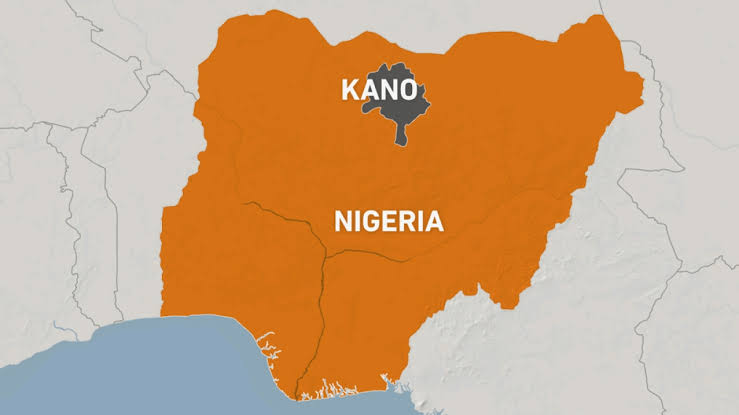
Dawn breaks over Nawala differently now. In this inter-border settlement tucked inside Ghari Local Government Area, formally Kunchi LGA, Kano State, the first light no longer falls on swaying millet-fields. It falls on a scarred earth: pits, makeshift camps, and anxious faces.
Ghari sits on Katsina’s doorstep, a border state already convulsed by insecurity which is traced to unregulated gold mining. The same fever has now reached Nawala and it is remaking everything.
Ibrahim Musa, 66, a farmer who inherited his farmland across generations, now watches his farmland transformed into a gold field.
“Where there was peace, there is now fear,” he said, “because every day strangers from within and outside the country are trooping into our community.”
The Spark Beneath the Soil
Around 2024, unknown prospectors first discovered gold along Ghari’s dry riverbeds.
Reports spread through informal channels, drawing small-scale miners from across northern Nigeria. By late 2025, outsiders had arrived in numbers, digging with crude tools, straining limited local services, and upending traditional farming routines that had sustained the community for generations.
The consequences for Ghari’s agricultural land have been devastating. Farmlands that once produced millet, sorghum, and groundnut which are the backbone of household food security in the area, have been rendered unusable by indiscriminate excavation.
Topsoil, stripped away to expose gold-bearing layers beneath, cannot be easily restored. Water channels that once irrigated crops have been redirected or blocked by mining debris, leaving neighbouring fields parched and unproductive.
Farmers who once cultivated several hectares now find their plots encircled by pits, with access tracks cut off by miners who answer to no local authority.
Some have simply abandoned their land rather than risk confrontation with armed strangers who regard the soil not as a source of food but as a store of hidden wealth. In a community where farming was not merely a livelihood but a way of life passed from father to son, the loss of productive land strikes at something deeper than income, it severs the bond between families and the earth they have tended for decades.
Musa’s story is representative. He has watched the farmland he inherited shrink not through drought or poor harvests, but through the calculated advance of miners who arrived overnight and drove stakes into soil his forebears cleared by hand.
“My father farmed here. His father farmed here, now I cannot even walk to my own field without being stopped.”
Musa who usually harvest over 600 bags of maize now can not harvest one bag.
Haruna Sule, 54, farmer, noted that last season, he harvested 40 bags of millet, 28 bags of sorghum, and 15 bags of groundnut from his two-hectare farm which enough to feed his household, pay school fees for four children, and save a modest sum for the dry season.
His annual yield fetched between ₦3,000,000 and ₦4,5000,000 at the Ghari market.
He narrated that when the miners came they camped at the edge of his plot. Then they moved inward, pit by pit, until his irrigation channel collapsed into an excavation trench.
By the 2025 planting season, over half his farmland was unreachable and surrounded by holes and occupied by strangers who recognized no boundary.
He planted on whatever remained and harvested nine bags of millet. Nothing else grew.
“I borrowed ₦60,000 to feed my family last dry season, I have never borrowed in my life,” he said.
Rakiya Musa, 47, farmer and market trader, cultivated a one-hectare plot she received from her late husband, growing cowpea, pepper, and tomatoes for both household use and sale. In a good season, she moved over 150 bags of cowpea and fresh produce worth over ₦500,000 through the local market as the income clothed her children and covered medical costs.
Miners arrived in late 2024 and stripped the topsoil from the southern end of her farm, chasing gold-bearing layers beneath. When she protested, she was threatened. She has not returned to that portion of land since.
Last season she harvested four bags of cowpea from what little remained intact. Her pepper and tomato beds, starved of water after the channels were blocked by mining debris, yielded almost nothing. She now buys the vegetables she once grew.
“I used to sell in the market, but now I struggle to buy there,” she said quietly.
Cash for Pebble Stones
The sun had barely risen when Musa “Dan-Kwaro” waded into a dry streambed where dozens of young men were already crouched over the dirt.
The air smelled of dust and sweat. Metal bowls scraped against gravel as miners scooped and sifted through soil.
Musa tapped the ground with a rusted hoe. “Here, the soil is softer,” he murmured, dropping to his knees and digging quickly until he found a cluster of stones with a faint shimmer.
He poured them into a nylon bag and tied it tightly. “Today go better,” he said, wiping mud from his palms.
A motorcycle suddenly revved behind them, the signal that security agents were patrolling the main track. The men stuffed their bags under their shirts and melted into the thorn bushes, moving in single file toward a footpath leading to the border.
Musa whispered as he walked: “This thing no be work, but hunger no dey hear grammar. If I find stones wey fit weigh two grams, buyer fit gimme ₦20,000. That one fit feed my family today,” he told THE WHISTLER.
When they reached a hidden clearing, a teenage boy with a cracked scale waited under a neem tree. He barely glanced at the stones before pronouncing a price. Musa nodded, snatched the cash, and disappeared back into the bush.
Behind Hajja Sa’adatu’s tent, the real business begins only after dusk. The front stall smells of soap, biscuits, and spices, but the back room is lit by a single flickering bulb, holds a wooden table, a worn digital scale, and zippered pouches full of unprocessed gold stones.
A soft knock. A skinny youth slipped in, glancing nervously at the door, and unrolled a strip of newspaper to reveal dusty brown stones flecked with yellow. Sa’adatu examined one with an acid-testing pen tucked inside her wrapper. The stone fizzed faintly. She smiled. “Wanan zai shiga kasuwa” i.e this one will enter the market.
She counted out ₦8,200. “Bring more tomorrow. The Niger people will come on Friday,” she whispered. Later, her phone buzzed. “Madam, we will reach the border by morning,” the caller said in Hausa with a French accent. “No wahala,” she replied. “Your goods are ready.”
Lives at Risk
THE WHISTLER observed that the gold rush has altered the social fabric of Ghari profoundly.
Men who once harvested crops now chase gold-pit earnings that frequently fail to materialise. Those who resist risk intimidation.
For Musa, the consequences were starkly real last November, when armed diggers torched part of his compound after he refused to relinquish his farm.
“They said if I did not hand over rights, my farm would feed no one,” he recalls, his voice tight with pain.
Women, once vendors at local markets, now trade in hushed tones, wary of strangers who patrol the foothills with phones and makeshift weapons.
Across the border, similar tensions have played out in neighbouring states where illegal mining has been linked to banditry and broader criminal networks. Nigeria’s informal gold sector is fertile ground for insecurity precisely because it operates outside structured governance.
When official scrutiny is weak, criminal intermediaries step in to broker deals, enforce protection arrangements, or seize resources by force.
The result in Ghari LGA has been fragmentation by rival groups claiming authority over pits, sporadic clashes among diggers over turf, and a growing sense that the rule of law holds little weight in these valleys of dust.
Kano State Commissioner for Solid Minerals and Natural Resources, Alhaji Safiyanu Hamza Kachako, has publicly championed the state’s mining potential.
He pledged that investors partnering with the state government would operate in a safe environment, stressing his commitment to “community development and safeguarding the environment” from destruction caused by mining activities.
The commissioner has also acknowledged a reality that communities like Nawala know all too well — that many miners operating in Kano are not from the state. Yet in Ghari LGA, that acknowledgement has not translated into protection for farming families watching their land disappear into excavation pits dug by those same outsiders.
Kachako has himself noted that artisanal mining in Kano has led to environmental degradation, expressing hope that formalised operations by major investors would transform the mining landscape and benefit host communities.
The commissioner’s vision of regulated, investor-driven mining has yet to reach Nawala — where unregulated diggers have already taken what the state promised to protect.
An Urgent Call for Reform
Suleiman Abubakar, village head, Nawala community, said “I have seen drought and failed harvests but nothing compares to what unregulated mining has done here in less than two years.
“Where farming households once collectively brought in over 300 bags of millet, sorghum, groundnut, and cowpea each season, last year’s total collapsed below 90.
“Irrigation channels lie buried under mining debris. Topsoil, stripped and compacted, may take years to recover.
“These people did not come to develop us, they came to take what is under our ground and leave us with nothing above it,” he said.
He has written to the local government three times. The responses, he said, have been polite and empty.
“Our young men have abandoned the hoe for the pit. Our women cannot farm. Our children are going hungry. And nobody is treating this as the emergency it is.”
He is now demanding that Kano State and federal authorities immediately halt all unlicensed mining in Ghari LGA, rehabilitate damaged farmlands, and establish compensation for affected families before the next planting season.
“If nothing is done before the rains come,” he warns, “there will be nothing left to plant and nothing left of this community worth saving.”
But in Ghari, the suffering is immediate. As dusk falls over the pits, abandoned shovels lie beside cattle tracks — reminders of what this borderland has surrendered in its scramble for buried treasure. Fields lie fallow, families live in fear, and the threat of violence shadows daily life.
How Gold Mining Is Changing Farmers’ Lives In Kano is first published on The Whistler Newspaper