
The Nigeria Data Protection Commission (NDPC) has commenced an investigation into a reported data breach at the Corporate Affairs Commission (CAC)…
Blog
-

Ajaokuta Steel will give Nigeria $14bn annually, 70,000 jobs — Prof Banji
Nigeria could unlock as much as $14 billion annually and create over 70,000 jobs if the long-abandoned Ajaokuta Steel Company is revived, a renowned development economist, Prof. Banji Oyelaran-Oyeyinka, has said…
-

COAS unveils 120 flats, solar boreholes for troops in Kaduna
The Chief of Army Staff (COAS), Lt.-Gen. Waidi Shu’aibu, on Friday inaugurated four blocks of 120 flats and a 60,000-litre solar-powered borehole for soldiers…
-
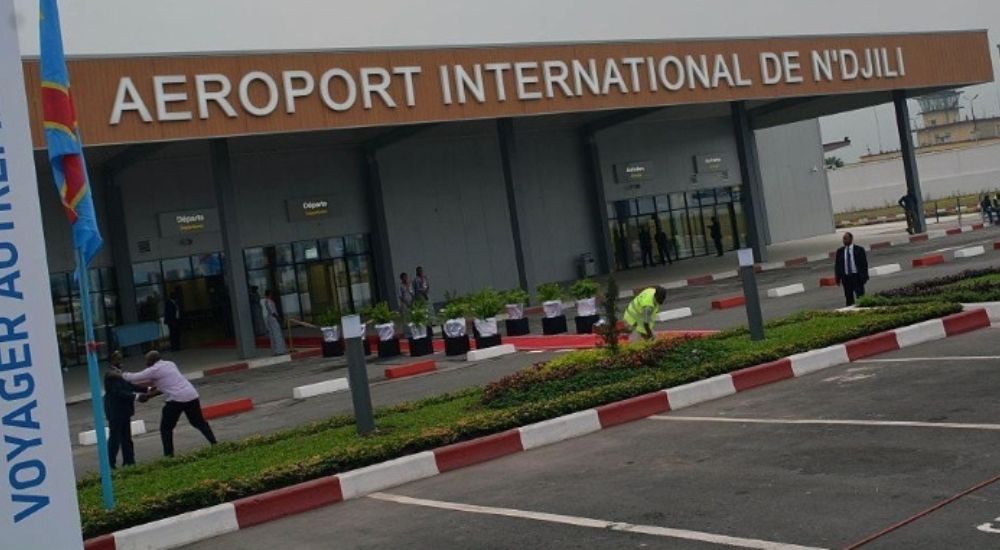
DR Congo Accepts First Batch Of U.S. Deportees
The Democratic Republic of Congo has received its first group of deportees from the United States, marking the start of a new deportation agreement between the two countries.
Fifteen people including seven women and eight men originally from Peru and Ecuador arrived in Kinshasa according to the Congolese government.
The U.S. under President Donald Trump’s administration, is stepping up its crackdown on illegal immigration.
DR Congo has agreed to temporarily accept migrants who are not Congolese nationals known as “third-country deportees” as part of this policy.
The government in Kinshasa stressed that the deportees’ stay is short-term only, and the US is fully funding their reception, support, and care.
In a statement on Friday, Congolese authorities said the decision aligns with the country’s commitment to “human dignity, the protection of the rights of migrants and international solidarity.” They made it clear the arrangement is not a permanent relocation programme or an outsourcing of U.S. migration policies.
The U.S. has already deported people to other African nations including Ghana, South Sudan and Eswatini under similar deals.
The Trump administration has described the policy as essential to “end illegal and mass immigration and bolster America’s border security.”
This latest development comes as the U.S. is also negotiating a minerals deal with DR Congo to gain access to the country’s vast reserves of cobalt, tantalum, lithium and copper.
At the same time, Washington has helped facilitate peace talks between DR Congo and Rwanda-backed M23 rebels in eastern Congo.
DR Congo Accepts First Batch Of U.S. Deportees is first published on The Whistler Newspaper
-
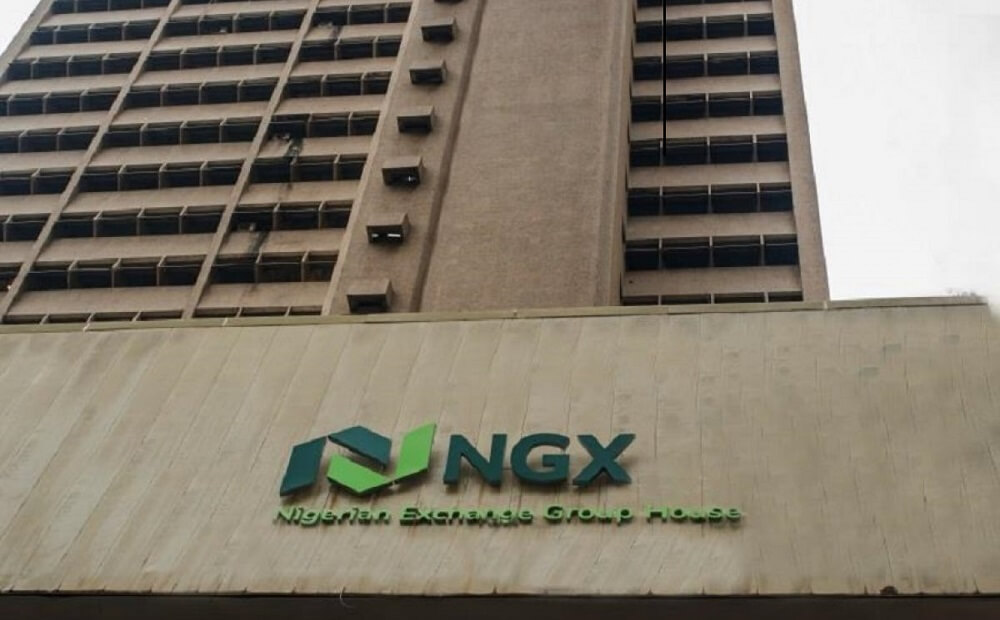
NGX Moves To Longer Trading Hours In Liquidity Push
The Nigerian Exchange Limited (NGX) has announced the expansion of its trading hours from 9:00 a.m. to 4:00 p.m. (WAT), effective Monday, 27 April 2026, in a move designed to deepen market liquidity, enhance price discovery, and broaden investor access.
Approved by the Securities and Exchange Commission (SEC) Nigeria, the expansion shifts the market opening earlier from 9:30 a.m. to 9:00 a.m. and extends the close from 2:30 p.m. to 4:00 p.m., marking a significant evolution in the Exchange’s market structure.
The extended trading window will provide greater flexibility for investors, improve responsiveness to market-moving information, and support broader participation across the market.
The development builds on the momentum of Nigeria’s recent reclassification to Frontier Market status by FTSE Russell, reinforcing NGX’s global positioning and enhancing its attractiveness to a broader pool of domestic and international investors.
The NGX said the reform reflects strong regulatory collaboration and underscores the Securities and Exchange Commission’s continued commitment to advancing market development initiatives.
Alongside Nigeria’s Frontier Market reclassification, it signals a deliberate shift towards a more accessible, liquid, and globally competitive market.
The implementation follows extensive stakeholder engagement, ensuring alignment and operational readiness ahead of the go-live date.
NGX Regulation Limited will continue to provide robust oversight to support a smooth and orderly transition, while maintaining high standards of transparency and investor protection.
With this development, the NGX said it has reinforced its position as a leading multi-asset exchange, deepening liquidity, improving market access, and supporting efficient capital formation within Nigeria’s financial markets.
NGX Moves To Longer Trading Hours In Liquidity Push is first published on The Whistler Newspaper
-

We will not negotiate with bandits — Zamfara govt
Zamfara State Government has reiterated its stance against negotiating with bandits, pledging to intensify efforts and adopt new strategies to tackle insecurity across the state.
Deputy Governor Mani Mumuni Masamar Mudi made this known during a condolence visit to Bunkasau village in Bukkuyum Local Government Area following a recent attack.
In a statement issued by his Chief Press Secretary, Shehu Adamu Gusau, the deputy governor expressed sorrow over the incident, which claimed the lives of at least 26 people, while several others sustained injuries.
He commended the courage of residents, noting that they resisted the attackers and reportedly neutralised some of the bandits.
Mudi, on behalf of the state government, extended condolences to the affected families and prayed for the repose of the victims, as well as the recovery of the injured.
Speaking during the visit, the Speaker of the Zamfara State House of Assembly, Bilyaminu Ismail Moriki, commended the community for defending itself and said the Assembly may consider legislation to allow communities to bear arms for self-defence within constitutional limits.
Also, the Chief Imam of Bunkasau, Malam Abubakar, appreciated the visit and said the community had endured repeated attacks but recently mounted resistance against the assailants.
He appealed to the government to provide additional support to strengthen local security.
The deputy governor was accompanied by other government officials, including the Commissioner for Local Government and Chieftaincy Affairs, Ahmad Garba Yandi, and the Special Adviser on Security Matters, Mannir Fura Girke.
-
FCCPC reacts to claims of airtime, data borrowing ban
The Federal Competition and Consumer Protection Commission (FCCPC) has dismissed widespread claims that it banned airtime borrowing and data advance services in Nigeria, describing the reports as false and misleading.
This was contained in a statement released via its official X handle and signed by the FCCPC Director of Corporate Affairs, Ondaje Ijagwu.
The Commission clarified that it “has not prohibited airtime borrowing or data advance services, and no directive was issued preventing consumers from accessing lawful telecom value-added services.”
The FCCPC explained that the confusion stems from its DEON Consumer Lending Regulations, introduced in July 2025 to address growing complaints from consumers.
These complaints included opaque charges, unexplained deductions, aggressive recovery methods, and poor disclosure practices among some service providers.
According to the Commission, the regulations were designed to ensure transparency, accountability, and fair competition in the digital lending and telecom sectors not to eliminate services.
“Those claims are incorrect. The Commission has not prohibited airtime borrowing or data advance services,” the FCCPC stated.
The agency added that its findings revealed certain telecom operators were operating exclusionary third-party arrangements in violation of the law.
The new framework was therefore introduced to open up the market, allowing both local and foreign participants to compete fairly.
The FCCPC noted that operators were given ample time to comply with the new regulations.
An initial 90-day compliance window was provided from July 2025 and later extended to January 5, 2026.
However, some operators reportedly failed to regularise their services within the stipulated period.
“Any temporary suspension, restriction, or operational change introduced by service providers should therefore be understood as a business or compliance decision by those operators, not a ban imposed by the FCCPC,” the statement added.
The Commission accused “vested interests and their foreign collaborators” of spreading misinformation to undermine regulatory efforts aimed at protecting consumers and ensuring fair market practices.
It urged Nigerians to disregard sensational claims and rely on verified information, reaffirming its commitment to consumer protection, transparency, and responsible innovation.
This clarification follows the recent suspension of airtime and data borrowing services by Nigeria’s two telecom operators, MTN and Airtel.
-

EPL: Why I snubbed England, France for Ghana – Semenyo
Manchester City forward, Antoine Semenyo, has admitted that his decision to represent Ghana in international football was “easy”.
The 26-year-old had the options of choosing England or France, but decided to join the Black Stars.
In an interview with The Mixer podcast, Semenyo said he never really considered other countries seriously.
He officially committed to Ghana in 2022.
“I was 20, 21 when Ghana came calling. I couldn’t say no to playing for the first team, so it was an easy choice,” Semenyo explained.
“No, it was never a hard decision. I wasn’t even in England’s top ranking like that anyway.”
-

Safe Exercises for Senior Citizens Living with Arthritis in Nigeria
Arthritis is a common condition among older adults in Nigeria, especially as people age and joint wear and tear increases. It causes pain, stiffness, swelling, and reduced movement in joints such as the knees, hips, hands, and spine.
-
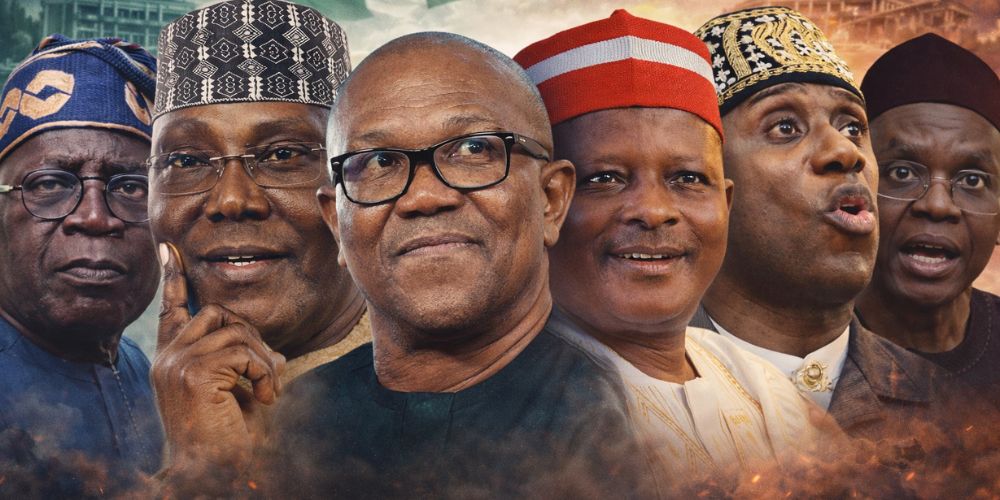
Scenarios That Could Shape Nigeria’s 2027 Presidential Race
Nigeria may still be months away from formal campaign season, yet the political atmosphere has already shifted from speculation to calculation. Alignments are forming, interests are consolidating and early signals suggest that the 2027 presidential election could be one of the most structurally competitive contests since 2015.
At the center of emerging political realignments is the African Democratic Congress (ADC), which has increasingly positioned itself as a platform for coalition-building among prominent political actors. However, the broader landscape remains fluid, with multiple actors, including the incumbent administration, shaping the direction of the race.
In Nigeria’s political environment, electoral outcomes are rarely determined by popularity alone. They tend to reflect a combination of geography, political structure, elite coordination, INEC readiness, law enforcement neutrality and voter mobilization. The question, therefore, is less about individual ambition and more about whether any political configuration can assemble a coalition that is competitive across regions.
Understanding the Electoral Terrain
Nigeria’s presidential elections are not decided by uniform national swings. Rather, they are the cumulative result of outcomes across six geopolitical zones, each with distinct political dynamics.
- The North-West remains the largest voting bloc and often plays a decisive role in national outcomes.
- The South-West continues to function as a strategic base for the incumbent.
- The North-East and North-Central regions are typically more competitive, with outcomes shaped by shifting alliances.
- The South-East and South-South tend to exhibit more consolidated voting patterns, though turnout levels vary.
For any candidate or coalition, success depends on achieving a balance between dominance in core areas and competitiveness in swing regions. Weak performance in a major bloc can significantly affect the overall result.
2027: The Electoral Map As a Mathematical Problem
Key Political Figures and Their Electoral Profiles
BOLA AHMED TINUBU
As the incumbent, Bola Tinubu enters the 2027 electoral cycle with structural advantages that are difficult to overlook. His political influence, built over decades, is anchored in extensive party networks, particularly within the South-West, and reinforced by the governing reach of the All Progressives Congress across a majority of states.
Incumbency also provides national visibility and access to institutional platforms like INEC, the courts and law enforcement agencies, factors that have historically shaped electoral outcomes in Nigeria.
At the same time, incumbency carries exposure. Public perceptions of economic conditions, cost of living pressures, and security concerns may influence voter sentiment across regions. While such factors do not automatically translate into electoral outcomes, they can affect the competitiveness of the race if alternative coalitions are able to consolidate support.
ATIKU ABUBAKAR
Atiku Abubakar remains one of the most experienced political actors in the field, with longstanding networks across Northern Nigeria and established relationships within political and business circles. His capacity for coalition-building and resource mobilization is widely acknowledged.
However, repeated presidential bids have introduced questions around voter fatigue, particularly among younger demographics. His electoral prospects may therefore depend on how effectively he can expand beyond his traditional base.
PETER OBI
His 2023 performance remains the most significant disruption in Nigeria’s democratic history. Despite running on the platform of a previously minor party with no elected governors or officials at the time, he secured over 6.1 million votes, winning in 12 states that included Rivers, Lagos and the FCT. His influence was so potent that it didn’t just place him third; it pulled a wave of new leaders into power.
Under his “Obidient” mantle, the movement won one governorship seat (Abia State), 8 Senate seats, and 35 House of Representatives seats, a total of 43 National Assembly members; alongside numerous seats in state houses of assembly across the federation. His message of frugality resonates in an economy where inflation and hunger are the primary topics, but his hurdle remains the “sectional” tag in the far North.
Rabiu Kwankwaso
He is the master of Kano, but the recent realignment in the state has made his role even more critical. With the ADC securing Nasiru Yusuf Gawuna, the 2023 APC governorship candidate, Kwankwaso has effectively reunited the two most potent grassroots structures in Kano under one roof. This makes the “Kano-Kaduna-Katsina” corridor a nightmare for the APC to defend.
ROTIMI AMAECHI
Rotimi Amaechi brings extensive experience in governance and federal administration, with political roots in the South-South. His profile reflects institutional familiarity and policy exposure.
However, his current national electoral appeal appears more limited compared to other figures, suggesting that his role may be more complementary within a broader ticket. He also carries heavy APC baggage from his time in government and he does not have the same national excitement or Northern pull as the others.
NASIR EL-RUFAI
He is sharp with an unmatched intellect, a good organizer and respected in Northern elite circles for his work in Kaduna. He brings strategy and can help run a campaign. But his time as governor left some controversies, especially around religion and security, so he is better as a kingmaker or campaign director than as the man on the ballot.
Possible Ticket Configurations
Several potential combinations could emerge, each with distinct implications for electoral competitiveness.
One frequently discussed scenario involves a pairing of Peter Obi and Rabiu Kwankwaso. This configuration could combine urban voter mobilization with established grassroots structures in the North-West, potentially improving competitiveness across multiple regions if support bases are effectively consolidated.
Another possibility is a ticket involving Atiku Abubakar and a Southern running mate, which would reflect a more traditional coalition model anchored in Northern political networks, while seeking broader regional balance.
Other combinations, including those involving Rotimi Amaechi or Nasir El-Rufai, present alternative strategic pathways, though each carries trade-offs in terms of regional reach and voter perception.
Ultimately, the viability of any ticket will depend less on individual profiles and more on the ability to integrate complementary strengths into a cohesive national strategy.
Structural Factors Beyond Candidate Selection
While candidate selection is important, several broader dynamics are likely to influence the outcome of the 2027 election.
Coalition Cohesion
Sustained collaboration among political actors is very critical. Divergent ambitions and historical rivalries have, in previous election cycles, limited the effectiveness of opposition alignments.
Regional Vote Distribution
Electoral success will depend on achieving competitive margins in key regions, particularly the North-West and North-Central, while maintaining strong performance in supportive areas.
Voter Turnout
Turnout continues to play a decisive role. Many Nigerians are tired and will stay at home unless the opposition gives them real hope and organizes properly. Whereas, the ongoing grassroot mobilization by the ruling party using schemes like the “City Boys Movement” can also energies their base with lures of “stomach infrastructure”
Electoral Process and Administration
The management of results from polling units to collation centers is still a sensitive component of the electoral process. Public confidence in transparency and institutional integrity is likely to influence both participation and post-election acceptance.
The electoral body hasn’t really covered itself in glory in the previous general elections. There is already a raging debate on the discovery of past digital footprints of the INEC Chairman, Prof. Joash Amupitan clearly showing his preference and support for Asiwaju and APC in the past, though denies it.
The Incumbency Factor in Context
Despite emerging alignments, the incumbent retains several advantages, including established party networks, governance visibility, and institutional familiarity.
At the same time, evolving economic and social conditions may shape voter sentiment, creating a more competitive environment than incumbency alone might suggest.
Conclusion
The 2027 presidential election is shaping up to be a contest defined as much by structure as by sentiment.
The opposition has, for the first time in several cycles, the potential to assemble a coalition with meaningful geographic spread. However, this potential remains contingent on effective coordination, strategic compromise, and disciplined execution.
For the incumbent, the path to re-election is supported by existing structures, but not insulated from emerging political and economic pressures.
In the end, the outcome is unlikely to hinge on a single factor. It will reflect the interaction of coalition dynamics, regional performance, voter turnout and institutional processes.
At this stage, the race remains open, but increasingly shaped by decisions made well before the first vote is cast.
Editor’s Note
The projections in the article are not presented as fixed empirical data, but as a scenario-based analytical model. They are derived from publicly available electoral patterns, particularly the 2023 presidential results, combined with known structural factors such as regional voting behaviour, turnout trends, and the political strength of key actors across zones.
Scenarios That Could Shape Nigeria’s 2027 Presidential Race is first published on The Whistler Newspaper