Blog

  • Atiku demands El-Rufai’s release from detention before Eid al-Kabir

    Atiku demands El-Rufai’s release from detention before Eid al-Kabir

    Former Vice President Atiku Abubakar has asked relevant authorities to immediately release former Kaduna State Governor Mallam Nasir El-Rufai. Atiku, in a statement issued on Friday by his Senior Special Assistant on Public Communication, Phrank Shaibu, condemned his continued detention — especially at a time when Muslims across Nigeria are preparing for the sacred Eid […]

    The post Atiku demands El-Rufai’s release from detention before Eid al-Kabir appeared first on Tribune Online.

  • OPINION: A New Europe–Africa Relationship? France Signals Shift, Africa Awaits Proof

    OPINION: A New Europe–Africa Relationship? France Signals Shift, Africa Awaits Proof

    For decades, Africa’s relationship with external partners has been marked by a repetitive ritual: summits where leaders gather, exchange pleasantries, issue vague communiqués, and return home with little to show for it. These encounters often resemble diplomatic theatre more than engines of transformation.

    The partner hosting the summit seeks to appear friendlier than its competitors, while African leaders endure the ceremony, knowing that little will change. This cycle has bred cynicism, as Africa’s pressing needs—industrialisation, infrastructure, and job creation—remain unmet.

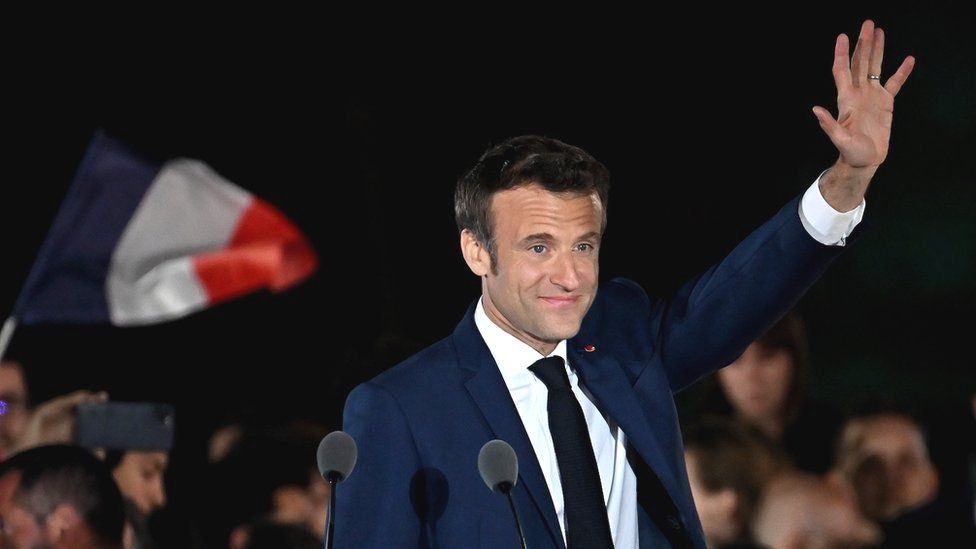
    Against this backdrop, the Africa Forward Summit in Nairobi, co‑chaired by Kenyan President William Ruto and French President Emmanuel Macron, stands out as a symbolic departure. For the first time, a major European power has chosen to share the stage with an African leader in Africa itself, signalling a shift from paternalistic diplomacy to genuine partnership. The announcement of $24 billion in new investments adds weight to the symbolism, suggesting that Europe, and France in particular, may finally be listening to Africa’s expectations.

    Unlike traditional summits, Africa Forward was presented as a business forum designed to facilitate concrete deals between African and European companies. This pragmatic approach is crucial. Africa does not need more declarations of friendship; it needs factories, roads, energy grids, and digital infrastructure. The most striking element was the emphasis on co‑investment and co‑production—European firms partnering with African companies to build industries on African soil. If implemented, this could mark the beginning of a scramble not for Africa’s resources, but for Africa’s development.

    Consider Nigeria, where French hospitality giant Accor and the Pan‑African Shoreline Group signed a letter of intent to create the country’s first national hotel platform, backed by a $300 million investment. This is not charity, nor is it extraction. It is a mutually beneficial venture: Nigeria gains jobs, infrastructure, and tourism capacity, while Accor secures access to a growing market. Such deals embody the principle that a good partner is not the one you like most, but the one who brings tangible advantages.

    France’s role in Africa cannot be understood without acknowledging its fraught history. Colonisation may be “old stories,” but its legacy lingers. Many francophone capitals leaned heavily on Paris for security, effectively sacrificing sovereignty in exchange for protection. France, in turn, enjoyed the role of suzerain, maintaining influence long after formal independence. This dependency produced relationships that were often melodramatic, even incestuous.

    Mali offers a vivid example. In 2013, French troops were hailed as saviours when they repelled jihadists threatening Bamako. Yet within a few years, successive juntas turned against Paris, portraying France as a plague rather than a protector. Such reversals highlight the dangers of relationships built on military dependence rather than economic partnership. Africa has grown weary of protectorates, mercenary abuses, and economic colonisation through the purchase of strategic assets such as ports and airports. What it seeks now are partners, not patrons.

    There are veritable lessons for the future. While Nigeria’s story is different from Mali’s, the lessons resonate across the continent: Extra‑African countries are neither saviours nor devils; they must be treated as partners, judged by the quality of the deals they offer. And Africa should expect nothing but fair negotiations and mutual benefit.

    This pragmatic lens is essential. Africa cannot afford illusions of benevolence, nor can it tolerate exploitation disguised as friendship. The continent’s leaders must negotiate with clear eyes, ensuring that every partnership advances Africa’s industrialisation and prosperity.

    France’s initiative is significant not only for Africa but for Europe. By positioning itself as a gateway to the European Union, France offers African businesses access to a vast market. Meanwhile, Europe, facing demographic stagnation and economic competition from Asia and the United States, desperately needs new markets. Africa, with its youthful population and untapped potential, is the natural partner.
    If Europe truly shifts toward facilitating business negotiations and co‑production, the benefits will be immense. Africa will gain the investments required to lift millions out of poverty, while Europe will secure growth opportunities. This is the essence of partnership: mutual advantage, not dependency.

    Yet Africa has learned to be cautious. Promises have been made before, only to evaporate in the heat of political expediency. As the saying goes, like Saint Thomas, Africans will believe only what they see. The test lies in implementation. Will the $24 billion materialise into factories, roads, and digital hubs? Will co‑investment projects proliferate across sectors such as artificial intelligence, agribusiness, and renewable energy? Or will this summit become another entry in the long ledger of unfulfilled declarations?

    The scrutiny will be relentless. Africans will be watching for progress in infrastructure, food industries, and technology. They will measure success not by speeches but by jobs created, industries built, and poverty reduced. Only then will Europe’s new approach be validated.

    The Africa Forward Summit may prove to be a turning point. By co‑chairing with Kenya, France acknowledged Africa’s agency. By emphasising co‑investment, it recognised Africa’s demand for industrial development. Pledging billions signalled seriousness. If these commitments are honoured, Europe and Africa could enter a new era of partnership—one defined not by dependency or paternalism but by shared prosperity.

    For Africa, the imperative is clear: negotiate hard, demand tangible benefits, and reject protectorates. For Europe, the opportunity is equally clear: embrace Africa as a partner, not a pupil, and invest in its future. The stakes are high, but the rewards are greater. A genuine partnership could unleash Africa’s development while revitalising Europe’s economy.

    The question remains: has Europe, and France in particular, finally understood what Africa expects? The answer will not be found in speeches or communiqués. It will be written in the factories rising across African skylines, in the hotels welcoming tourists, and in the digital hubs training young innovators. Until then, Africa will watch, negotiate, and demand proof. Only when promises become reality will Africa believe that Europe has truly understood.

    -Amajama, a social commentator, writes from Abuja via amajamaip@gmail.com

    OPINION: A New Europe–Africa Relationship? France Signals Shift, Africa Awaits Proof is first published on The Whistler Newspaper

  • Supreme Court upholds acquittal of General Hakeem Otiki

    Supreme Court upholds acquittal of General Hakeem Otiki

    The Supreme Court of Nigeria on Friday affirmed the judgment of the Court of Appeal, which nullified the conviction and sentencing of former General Officer Commanding (GOC) of the 8 Division of the Nigerian Army, Hakeem Oladapo Otiki. In a unanimous decision delivered by a five-member panel of justices, the apex court dismissed the Nigerian […]

    The post Supreme Court upholds acquittal of General Hakeem Otiki appeared first on Tribune Online.

  • Borrowing not Nigeria’s only option  – Economist

    Borrowing not Nigeria’s only option  – Economist

    An economist, Prof Akpan Ekpo, has said that Nigeria does not have to keep borrowing, noting that it is not the country’s only option.

    Prof Ekpo said this on Friday in an interview on Arise Television, monitored by DAILY POST.

    He said if Nigeria’s revenue is growing, the country can channel it into ventures that enhance the lives of every citizen.

    According to him, if the nation’s debts were sustainable, it would not need to borrow the way it is, stressing that Nigeria’s current borrowing is somewhat out of place.

    “Definitely, borrowing is not our only option. In fact, we don’t have to borrow. There other options. For example, you mentioned the public private partnership. And then the issue I raised was that, even if you have to borrow, have you done enough study to justify that borrowing?

    “The way we are borrowing is not the way we should go. There are other options. You have contractor finance, public partnership so on and so forth.

    “When you keep borrowing, who will pay? Out generations yet unborn. They won’t be happy with us when we have accumulation of debts waiting for them to pay,” he said.

    Borrowing not Nigeria’s only option  – Economist

  • Court fines plaintiff N1m over delayed suit seeking to bar Jonathan from 2027 election

    Court fines plaintiff N1m over delayed suit seeking to bar Jonathan from 2027 election

    Justice Peter Lifu of the Federal High Court in Abuja rebuked Johnmary Jideobi, the plaintiff, and his lawyer, Ndubuisi Ukpai, on Friday for their lack of diligence in pursuing a suit aimed at preventing former President Goodluck Jonathan from contesting in the 2027 presidential election. The judge described the attitude of both the plaintiff and […]

    The post Court fines plaintiff N1m over delayed suit seeking to bar Jonathan from 2027 election appeared first on Tribune Online.

  • World Cup 2026: FIFA drops referee after arrest over sexual assault involving teenage boy.

    World Cup 2026: FIFA drops referee after arrest over sexual assault involving teenage boy.

    Dutch referee Rob Dieperink has been removed from FIFA’s roster for the upcoming World Cup this summer following his arrest in the UK last month, although reports indicate that the case has now been closed.

    Dieperink was serving as a VAR official during Crystal Palace’s Conference League match against Fiorentina on April 9 and was taken into custody in his hotel room after the game on allegations of sexual assault involving a teenage boy.

    After an investigation, Dieperink was not charged with any crime, and the police have dropped the case due to insufficient evidence.

    Dieperink, who asserts that he ‘fully cooperated’ with the police inquiry, was included in FIFA’s list of VAR officials for the forthcoming World Cup, but the 38-year-old has now confirmed that he will not participate in the tournament, which commences on June 11.

    In an interview with the Dutch publication De Telegraaf, Dieperink expressed: ‘It deeply saddens me that I have been falsely accused.

    “From the outset, I have fully cooperated with the police investigation and have also provided complete transparency to FIFA, UEFA, and the KNVB.

    “The allegations have been disproven, and the case was dismissed within two weeks following a thorough and adequate investigation by the police.

    “I am thankful for the support I received from the KNVB and the manner in which they managed this situation. It is regrettable that FIFA has chosen not to appoint me for the World Cup any longer. Naturally, I am disappointed about this.”

    A representative for the Dutch Football Association, KNVB, stated, “We advocate for a safe and ethical football culture at all levels and take reports of inappropriate conduct seriously.

    “Of course, we believe that a Dutch referee must possess impeccable character, but we also find it essential that he has the opportunity to share his narrative and is not wrongfully accused.

    “In this particular instance, the police in the United Kingdom conducted an investigation and subsequently dropped the case.

    “Rob Dieperink has provided full cooperation and been completely open with the KNVB from the very beginning, and based on all available information, we see no reason not to appoint him for matches in the Dutch league.”

    World Cup 2026: FIFA drops referee after arrest over sexual assault involving teenage boy.

  • N-HYPPADEC doles out 130 power tillers to farmers in Kebbi

    N-HYPPADEC doles out 130 power tillers to farmers in Kebbi

    National Hydroelectric Power Producing Areas Development Commission (N-HYPPADEC) has given out no fewer than 130 units of horsepower tillers to farmers in Kebbi as part of efforts to strengthen mechanised farming and enhance food security. The equipment was handed over to beneficiaries in Birnin Kebbi on Friday during a ceremony attended by officials of the […]

    The post N-HYPPADEC doles out 130 power tillers to farmers in Kebbi appeared first on Tribune Online.

  • Terrorism: Court Sentences Woman To 20 Years In Prison

    Terrorism: Court Sentences Woman To 20 Years In Prison

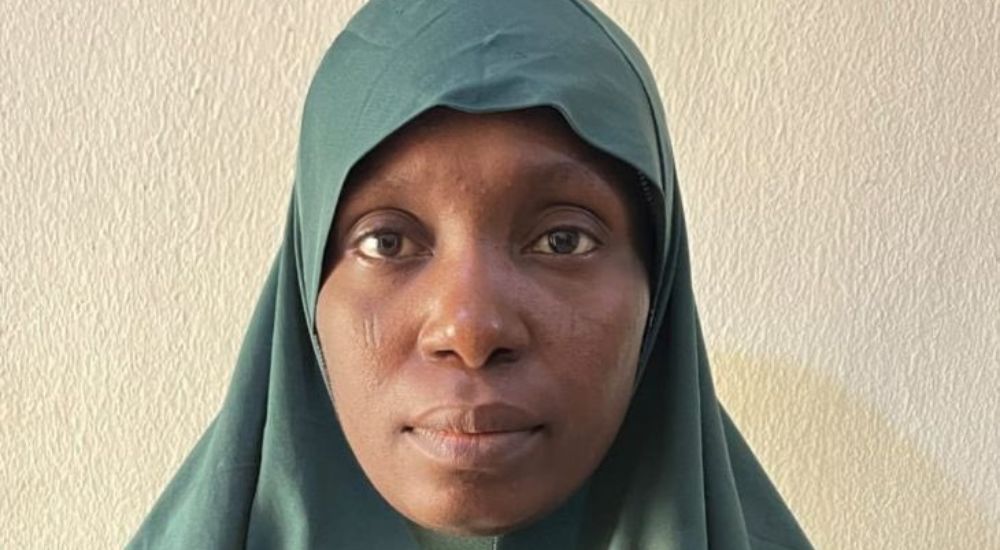
    A Federal High Court in Abuja has sentenced a housewife, Halima Umar, to 20 years imprisonment after she was found guilty of unlawful possession of 302 rounds of AK-47 ammunition and providing support for terrorism-related activities.

    Justice Hauwa Joseph Yilwa delivered the judgment on Friday after the defendant pleaded guilty to two out of a four-count charge filed against her by the Department of State Services (DSS).

    The court noted that although the convict expressed remorse and pleaded for leniency, offences relating to terrorism and illegal arms movement posed serious threats to national security and could not attract a light sentence.

    According to court proceedings, Umar admitted acting as a courier to transport ammunition meant for bandits operating in Plateau State.

    A DSS operative, Fahad Tahir, who testified as the first prosecution witness, told the court that the defendant was arrested on July 6, 2025, while allegedly conveying 302 rounds of AK-47 ammunition alongside N57,100 in cash.

    He said investigations revealed that she was instructed by one Alhaji Sani to travel to Zaria in Kaduna State to collect the ammunition from another contact before transporting it onward.

    The witness added that the defendant was later moved to the DSS National Headquarters in Abuja on August 11, 2025, where she further confessed to the offences in the presence of a Legal Aid Council lawyer.

    The prosecution counsel, Dr. Callistus Samson Ezeh, tendered the ammunition, cash, and confessional statements as exhibits, which were admitted without objection from the defence.

    In court, Umar also personally admitted possession of the ammunition and cash at the time of her arrest.

    The charges included providing support for terrorism under the Terrorism (Prevention and Prohibition) Act, 2022, and unlawful possession of ammunition under the Firearms Act, 2004.

    After reviewing the evidence and her guilty plea, Justice Yilwa convicted and sentenced her to 20 years imprisonment.

    Terrorism: Court Sentences Woman To 20 Years In Prison is first published on The Whistler Newspaper

  • Former London Imam, Abdul Khan Jailed For Life Over Serial Sexual Abuses Of Women, Girls

    Former London Imam, Abdul Khan Jailed For Life Over Serial Sexual Abuses Of Women, Girls

    A former Imam has been jailed for life after a court heard he sexually abused women and girls over more than 10 years while exploiting his position as a religious leader in east London.

    Abdul Halim Khan, 54, of Old Ford Road, Tower Hamlets, was sentenced on Friday at Snaresbrook Crown Court in London and ordered to serve a minimum term of 20 years, according to GBI.

    He was found guilty on February 13 of 21 offences, including nine counts of rape, four counts of sexual assault, two counts of sexual assault of a child under 13, five counts of rape of a child under 13, and one count of assault by penetration.

    The court heard that Khan targeted seven women and girls while working as an imam at a mosque in east London, using his position of trust to gain access to them and exert control.

    He arranged meetings in secluded places and sometimes in victims’ homes, where he carried out sexual abuse while claiming he was a jinn (a supernatural spirit).

    Prosecutors said he also used threats linked to “black magic” to frighten victims into silence, making them believe harm would come to them or their families if they reported him.

    Police said the abuse came to light in February 2018 after his youngest victim disclosed what had happened to a teacher at school, prompting a wider investigation.

    Officers went on to interview more than 50 witnesses and examine 10 mobile phones as part of the case.

    Following sentencing, one survivor said: “Taking the difficult step to come forward and speak about the abuse and trauma I suffered has been painful and one of the hardest things I have ever done.

  • Sanwo-Olu, UNDP, others parley to address rising unemployment

    Sanwo-Olu, UNDP, others parley to address rising unemployment

    Governor of Lagos, Mr Babajide Sanwo-Olu, the United Nations Development Programme, and others have discussed and addressed the menace of rising unemployment and underemployment in Nigeria. They discuss the Nigeria Jubilee Fellows Programme (NJFP), where leading private sector organisations, government representatives, and development partners at the NJFP 2.0 Employers’ Forum in Lagos, catalysing renewed commitments […]

    The post Sanwo-Olu, UNDP, others parley to address rising unemployment appeared first on Tribune Online.