The Kogi State Governor, Alhaji Ahmed Ododo, has appointed the immediate past Speaker of the Kogi State House of Assembly, Prince Matthew Kolawole…
The post Ododo appoints ex-Kogi speaker as legislative adviser appeared first on Tribune Online.
The Kogi State Governor, Alhaji Ahmed Ododo, has appointed the immediate past Speaker of the Kogi State House of Assembly, Prince Matthew Kolawole…
The post Ododo appoints ex-Kogi speaker as legislative adviser appeared first on Tribune Online.
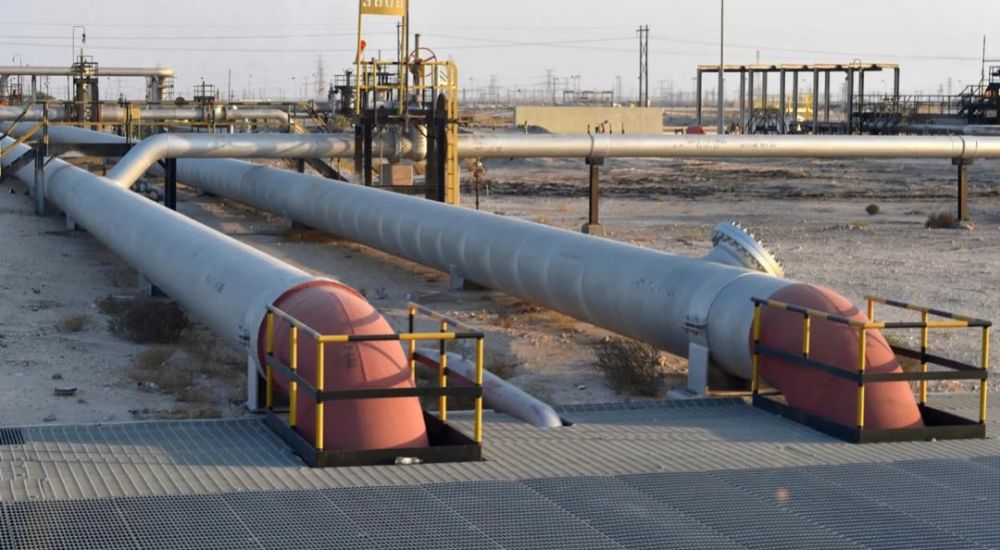
In recent weeks, series of open letters and opinion pieces have sought to cast doubt on Nigeria’s energy sector reforms, questioning the direction of the energy sector and the policies of the Bola Ahmed Tinubu administration. While constructive criticism is always welcomed, these largely non-factual commentaries with blatant disregard for research reveal a troubling disconnect from the facts on the ground.
This article therefore seeks to provide a balanced perspective by highlighting the facts, achievements and strategic initiatives currently shaping Nigeria’s future. The objective is not to defend any entity or institution but to ensure that public discourse is anchored on validated facts rather than speculations or deliberately engineered misinformation.
Over the past three years, the Tinubu administration has pursued a deliberate and coordinated strategy to transform Nigeria from a Nation dependent on imported petroleum products into an integrated energy hub capable of powering its own industrialisation and that of the wider West African region.
Beyond any rhetoric, this is a matter of public record
We have so far witnessed a comprehensive overhaul of the gas sector, supported by the decade of gas initiative, the Presidential CNG and E-vehicle initiative, the Presidential Executive Order & Directive on gas development targeting to 10 billion cubic feet per day by 2027 and 12 billion cubic feet per day by 2030, while catalysing over $60bn in new investments across the oil and gas value chain.
To ensure the realization of the Presidential mandate, NNPC Limited, in collaboration with its Joint Venture (JV) partners and key industry stakeholders, launched the NNPC Gas Master Plan on 31 January 2026 as the strategic framework for accelerating gas sector development and delivering Nigeria’s long-term energy ambitions. Recognizing that strategy without execution add little or no value, NNPC Limited subsequently established a dedicated Gas Master Plan Implementation Assurance Team to drive deliver, track milestones, remove bottlenecks, and provide disciplined performance assurance across the portfolio of gas initiatives. Though its early stages yet- over 50 per cent of the gas development target for 2026 has already been achieved. A major objective of the NNPC Gas Master Plan is ensuring that all serious in-country gas utilisation projects secure the gas they require.
These are not abstract ambitions. In May 2026, NNPC reported crude oil and condensate output of 1.73 million barrels per day, alongside natural gas production of 7.774 billion standard cubic feet per day. These are the results of deliberate strategy, not chance.
One of the most significant developments of recent years has been the growing collaboration between NNPC and other industry partners, demonstrating that progress is being made through partnership, not conflict.
The Dangote Group, one of the very important symbol of Nigerian private sector ambition, has expanded its gas supply agreements with NNPC subsidiaries to support its refinery, fertiliser, and cement operations. These significant deals, signed during the NNPC Gas Master Plan 2026 event, underscore the critical role of a stable energy supply in supporting industrial expansion across Africa’s largest economy.
Currently, NNPC – as part of its broader strategy to ensure NNPC becomes a global top ten hub of gas-based industries by the year 2031- is championing gas supply to strategic projects such as Dangote Fertiliser, Indorama, Notore, etc. The integrated gas value chain approach is not just being put to practice but being ramped up.
The International Oil Companies (IOCs) and energy independents are also playing their part. In August 2025, NNPC Limited, leading upstream gas suppliers, and Nigeria LNG (NLNG) signed landmark 20-year Gas Supply Agreements for the supply of 1.29 billion standard cubic feet per day of feed gas. This deal, which involves nine upstream suppliers including Shell, TotalEnergies, and Eni, addresses the prolonged shortfall in upstream gas supply and marks a significant boost for Nigeria’s energy transition agenda.
The Group CEO of NNPC, Engr. Bashir Bayo Ojulari, praised President Tinubu for creating the enabling environment for such investment, noting that recent executive orders on gas development have provided critical support to the sector. This is showing up in the significant gas supply and LNG production performance improvements by NLNG, with NLNG having the best overall performance since 2019.
The critics of the African Atlantic Gas Pipeline (AAGP) appear oblivious to the fact that this ambitious project is riding on the back of the hugely successful West African Gas Pipeline (WAGP) project. The WAGP, an NNPC-led project, has already transported over 613 million MMBtu of natural gas, with Nigeria contributing more than 68 percent of the total supply to neighbouring countries. Recent data shows a 22 percent gas supply increase in 2025 compared to previous years.
Discussions are underway to boost pipeline capacity utilisation by up to 45 percent in 2026. Indeed its a verifiable fact that 2025 was the best year in terms of financial performance for the West African Gas Pipeline Company (WAPCO) since commencement of operations in 2011. This is a proven model of regional energy integration that the AAGP will build upon and expand.
Just last Sunday, July 19, 2026, the Heads of State of ECOWAS member countries signed the Intergovernmental Agreement for the AAGP at the ECOWAS Summit in Freetown, Sierra Leone. This is not a “memorandum of misunderstanding”; it is a binding international treaty that provides the sovereign foundation required to move the AAGP project from vision to delivery. The project, jointly led by NNPC Ltd and Morocco’s ONHYM, will span nearly 6,900 kilometres along the Atlantic coast, delivering up to 30 billion cubic metres of gas per year to power plants, factories, and European markets. It has sovereign backing from Nigeria, Morocco, ECOWAS member countries, and Mauritania. The AAGP will establish a strategic development corridor linking West Africa, the Sahel, Morocco, and Europe.
The fact must be reiterated that the AAGP is primarily an economic project structured to deliver significant value to its shareholders, gas suppliers and Nigeria primarily. The focus from the outset has been getting gas to market on a more competitive basis when compared to a typical LNG Plant or a Floating LNG Project. Critically, the African market demand is growing and geared to grow even more exponentially (driven by population spikes) so the AAGP has been structured to deliver 1billion standard cubic feet of gas per day from offshore to the Lekki industrial corridor, 500million standard cubic feet per day of gas to Badagry, while also delivering gas to 15 other African countries and economies. This is a major “gap to potential” project that will make important contributions in moving Nigeria from a 215tcf validated reserves Nation to a 600tcf gas reserves position.
Consequently, its disingenous to state that this project is resting on a ceremony. The feasibility study has been completed and the Front-End Engineering Design concluded. Route reconnaissance surveys have been finalised, environmental and social studies are well advanced, and the key legal, regulatory and commercial frameworks have been established. These are completed technical deliverables, not aspirations, and they were reported publicly at the time of the Freetown signing. Coordination of the Countries also leverages on the vastly successful WAGP (WAGPA) model, which has been consistently effective. ECOWAS is also visible supporting and the regulatory entity- the Pipeline Higher Authority will shortly be established ans located in Abuja Nigeria.
The project now enters its implementation phase: a Project Company to be established in Casablanca and a Pipeline Higher Authority in Abuja, which together will drive investor mobilisation and the preparation of the Final Investment Decision.
Based on publicly available information, work remains. However, the remaining work is consistent with the Project’s current stage of development. Assessed against international standards, the African Atlantic Gas Pipeline is a credible, well-structured and maturing regional infrastructure project.
Let’s be clear: Nigeria’s gas future cannot be built on a false choice between domestic and export markets. Rather, it is driven by a strategy that supports growth in both, underpinned by accelerated gas development, infrastructure expansion, and market diversification.
The Nigeria LNG (NLNG) joint venture, in which NNPC owns a 49 percent stake alongside Shell, TotalEnergies, and Eni, is another example of how collaboration is delivering results for Nigerians. NLNG has committed 100 percent of its LPG volumes to the domestic market and currently accounts for about 40 percent of what goes into the domestic LPG market.
This is a significant contribution to reducing Nigeria’s dependence on imported LPG and ensuring that more Nigerian households have access to cleaner cooking fuel. The recent Gas Supply Agreements signed in August 2025 will restore supply reliability to the Bonny Island plant and support NLNG’s expansion drive bearing in mind that Train 7 is scheduled to be commissioned around mid-year 2027. Praises are coming from far and near, with investments being pledged in the billions. NNPC is applying consistent focus in driving an lpg expansion programme geared at significantly expanding LPG production in-country as well as a pipeline gas for cooking initiative to ensure that the generality of Nigerians have access to clean cooking.
The recent NNPC approach to revitalising Nigeria’s refineries, another target of misinformation, demonstrates that the government is learning from past mistakes. The Technical Equity Partnership (TEP) model, as articulated by NNPC leadership, represents a fundamental shift from treating refinery rehabilitation as a project to treating the refinery as a business.
The Turnaround Maintenance (TAM) model that failed in the past was essentially an engineering intervention where contractors were paid to repair equipment but had no long-term stake in operational success. The TEP model is fundamentally different. NNPC is seeking partners who have demonstrated capability in refinery operations, maintenance, reliability, process optimisation, and commercial management.
Their responsibility extends beyond commissioning to ensuring that the refineries operate safely, reliably, efficiently, and profitably over the long term.
Crucially, the incentives are fundamentally aligned. Under the TEP model, the partner’s success is tied to the operational and commercial performance of the refinery. This creates a strong incentive to improve reliability, maximise throughput, optimise costs, and ensure sustainable profitability rather than simply completing a maintenance scope.
The Memorandum of Understanding signed with Sanjiang Chemical and Xinganchen in April 2026 is the first step in this direction. Unlike previous contractors who came in, collected fees, and left when things fell apart, these partners would have a financial stake in the refineries’ performance. Their returns would be tied to the plants running profitably. This is a prudent pathway to avoid the mistakes and inefficiencies of the past.
Nigeria’s energy sector is undergoing a transformation that is both real and measurable. The policies of the Tinubu administration, implemented through NNPC and in collaboration with private sector partners like Dangote, IOCs, and energy independents, are delivering results. Gas production is increasing, infrastructure is being built, regional partnerships are being strengthened, and domestic LPG supply is improving.
Those who continue to spread misinformation about these developments are not serving the National interest but that of their known paymaster. I find it difficult to conclude that informed observers of the Energy industry are unaware of these developments given that the many milestones, achievements, investments and reforms highlighted are matters of public records and have been discussed extensively within the industry circles.
This raises the question of whether the recent commentaries are caused by genuine misunderstandings or from a selective misinterpretation of facts intended to support a pre-determined narrative.
Any objective review or analysis will acknowledge that bold, necessary and important reforms are being implemented, and strategic partnerships are being strengthened while major gas infrastructure projects like OB3, ELPS Midline Compressor and AKK are being completed. Nigeria energy still has areas of improvement, but the direction of travel is certainly positive and on the right track.
Adegbola is an energy analyst, with over two decades in the oil and gas industry. He writes from Abuja.
OPINION: Beyond Open Letters: The Facts Fuelling Nigeria’s Energy Sector Growth is first published on The Whistler Newspaper
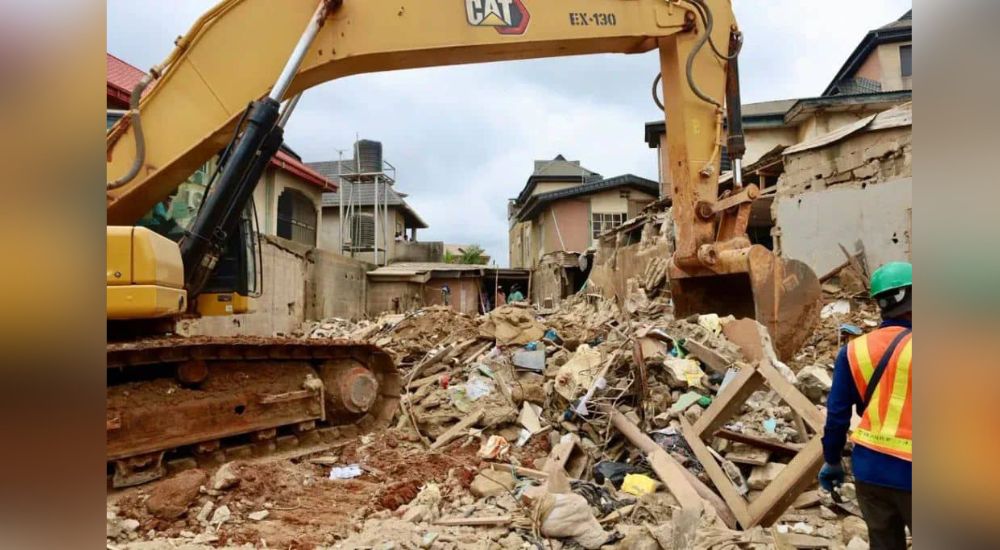
Ogun State Governor Dapo Abiodun has ordered a comprehensive investigation into the collapse of a two-storey building in Ajuwon, Ifo Local Government Area, that killed one person, warning that anyone found to have violated building regulations would face prosecution.
The building on Baale Road collapsed on Monday afternoon during a severe thunderstorm, trapping occupants beneath the rubble. While several residents escaped, emergency responders later recovered one body after hours of rescue efforts.
The Ogun State Government said preliminary findings by a multi-agency investigation team showed the building suffered a catastrophic structural failure, with the lower floors sinking into the ground and only parts of the upper slab remaining visible above the debris.
Eyewitnesses said the building collapsed at about 3:00 p.m., shortly after a heavy downpour accompanied by intense thunderstorms and a reported lightning strike. Two women and their children reportedly escaped after noticing signs of structural distress, while a young man sustained minor injuries as he fled the building moments before the collapse.
Emergency responders, including officials of the Ogun State Safety Office, State Fire Service, the Ministries of Environment, Physical Planning and Urban Development, Works and Infrastructure, the Nigeria Police Force, and the Ifo Local Government Water and Environmental Sanitation Department, were mobilised to the scene.
Contractors working within the Akute-Alagbole and Agbado axis also deployed heavy equipment to support rescue efforts less than 10 minutes after the incident.
Although initial searches found no victims, rescue teams intensified excavation after discovering traces of blood and footprints beneath the debris. The operation later led to the recovery of one body, whose identity had yet to be confirmed.
The government said the exact cause of the collapse remains unknown, adding that structural, geotechnical and forensic engineering investigations would determine whether it resulted from foundation failure, soil instability, construction defects, the use of substandard materials or other factors.
In a statement issued by the Governor’s Special Adviser on Information and Strategy, Kayode Akinmade, Abiodun directed specialists from the Ministry of Physical Planning and Urban Development, the Ogun State Building Control Agency, the Building Production Management and Material Testing Agency, and other relevant agencies to conduct comprehensive assessments of the collapsed structure, examine soil conditions, inspect construction materials, and evaluate neighbouring buildings for possible structural compromise.
The governor expressed condolences to the family of the deceased and sympathised with other victims. He also commended emergency responders, volunteers, and residents for helping to rescue several occupants and minimise further casualties.
He assured affected residents of government support and warned that anyone found to have deviated from approved building plans, violated construction regulations or compromised building standards would be prosecuted.
The Ogun State Government also acknowledged the Lagos State Government for supporting the emergency response, describing the collaboration as evidence of the strong partnership between both states in protecting lives and property.
Reaffirming its commitment to stricter enforcement of physical planning regulations, the government urged developers, builders, and property owners to obtain all necessary approvals before embarking on construction projects and to comply with approved building plans.
It warned that unauthorised alterations, the use of substandard materials, and disregard for established construction standards continue to pose serious risks to lives and property, stressing that strict compliance with building regulations remains the best safeguard against avoidable building collapses.
Abiodun Orders Probe As Ogun Building Collapse Kills One is first published on The Whistler Newspaper

Yobe State Road Traffic Management Agency (YOROTA) has commenced enforcement of the ban on illegal motor parks and unauthorised roadside business structures within the Damaturu metropolitan area.
The exercise began on Monday, shortly after the agency’s weekly general staff parade and polling exercise.
According to YOROTA, the operation is aimed at restoring order, enhancing road safety, reducing traffic congestion, and ensuring the free movement of vehicles and pedestrians across the state capital.
In a statement signed by its Public Relations Officer, DSY Musa Ali Maigari, the agency reminded transport operators, commercial drivers, tricycle riders, and roadside traders that operating illegal motor parks and carrying out unauthorised business activities along public roads contravene existing traffic regulations.
“Anyone found contravening the directive will be sanctioned in accordance with the provisions of the law,” the statement warned.
YOROTA appealed to transport unions, stakeholders, community leaders, and residents to cooperate with the enforcement team to ensure the success of the exercise.
The agency said public support was critical to promoting environmental sanitation, maintaining public order, improving traffic management, and creating a safer road network for all users in Damaturu.
“YOROTA remains committed to its mandate of ensuring safety, orderliness, and efficient traffic management throughout Yobe State,” the statement added.
Yobe agency launches crackdown on illegal motor parks, unauthorised roadside businesses

The Coalition of South East Youth Leaders (COSEYL), the apex sociopolitical youth group in the South East geopolitical zone…
The post South-East has not endorsed any presidential candidate for 2027 — COSEYL appeared first on Tribune Online.

The Sokoto State Police Command has rescued 32 kidnapped victims after repelling a bandit attack in Maikujera village, Rabah Local Government Area, in a joint operation with the Nigerian Army. The operation, carried out on Tuesday, followed a distress call to the Divisional Police Officer (DPO) in Rabah, reporting that a large group of armed […]
The post Police, Army rescue 32 kidnap victims in Sokoto appeared first on Tribune Online.
The Securities and Exchange Commission (SEC) has secured a grant from the African Development Bank (AfDB) to deploy a state-of-the-art market surveillance system aimed at strengthening oversight of Nigeria’s capital market, while also retaining a 20 per cent revenue waiver approved by the Federal Government to sustain its regulatory operations.
Director-General of the SEC, Dr. Emomotimi Agama, disclosed this on Tuesday during the 2026 Revenue Monitoring Exercise conducted by the House of Representatives Committee on Finance in Abuja, where he also reaffirmed the Commission’s commitment to maintaining an efficient, transparent, and globally competitive capital market.
Agama said the new surveillance system, funded through the AfDB grant, is expected to become operational this year and will significantly enhance the Commission’s ability to monitor trading activities, detect market abuses, and strengthen investor protection in line with international best practices.
According to him, the initiative forms part of the SEC’s broader strategy to modernize market regulation and align Nigeria’s capital market with global standards.
“The Commission has secured a grant from the African Development Bank to acquire a modern market surveillance system, which will be deployed this year.
This will strengthen oversight of the capital market and ensure that our regulatory framework meets international standards,” Agama said.
The SEC boss also revealed that the Commission continues to operate without any budgetary allocation from the Federal Government, relying entirely on internally generated revenue from activities within the capital market to fund its operations while still making statutory remittances to the government.
He explained that although the International Organization of Securities Commissions (IOSCO) recommends that securities regulators operate independently with governments providing financial support where necessary, Nigeria’s SEC currently finances its activities from market-generated income.
“Going by IOSCO principles, the SEC is expected to be financially independent. The government is supposed to provide support for the running of the Commission.
However, due to the paucity of funds, all the money used to fund the Commission comes from the market.
The SEC does not receive any funding from the government; rather, it pays money to the government,” Agama stated.
He further explained that once the Commission’s revenues are lodged into its account with the Central Bank of Nigeria (CBN), statutory deductions are automatically effected before the SEC can access the remaining balance.
According to Agama, the arrangement has made it necessary for the Commission to adopt prudent financial management measures while ensuring that regulatory activities are not compromised.
To cushion the impact of the deductions, he disclosed that the SEC obtained approval from the Minister of Finance to retain 20 per cent of its internally generated revenue through a waiver.
He noted that the waiver has become critical to sustaining the Commission’s operations without imposing additional financial burdens on capital market operators through increased regulatory fees.
“We are regulators and are not expected to ask the market for money.
With the kind permission of the Honourable Minister of Finance, we obtained a 20 per cent waiver on deductions to ensure our operations are not hindered,” he said.
Agama emphasized that the Commission remains committed to improving operational efficiency while safeguarding market integrity, investor confidence, and sustainable growth of Nigeria’s capital market.
Meanwhile, the National Assembly commended the SEC for improving its fiscal sustainability through prudent cost management and enhanced revenue generation.
Deputy Chairman of the House Committee on Finance, Hon. Saeed Musa Abdullahi, praised the Commission’s leadership for strengthening its financial position despite operating without direct government funding.
“DG, you have done significantly well. We have followed the progress of the SEC over the years and urge you to keep the flag flying.
We will continue to celebrate you when you do well. This exercise is not to witch-hunt any agency; it is aimed at ensuring better performance, especially at a time when the country is facing serious fiscal challenges,” Abdullahi said.
The lawmaker also challenged the Commission to outperform its 2026 revenue projection by at least 20 per cent, expressing confidence in its capacity to generate higher revenue through improved efficiency and continued reforms.
The Revenue Monitoring Exercise forms part of the National Assembly’s oversight responsibility to assess the revenue performance of government agencies, promote fiscal accountability, and encourage institutions to improve revenue generation amid Nigeria’s prevailing fiscal challenges.
SEC Secures AfDB Grant To Strengthen Nigeria’s Capital Market Surveillance is first published on The Whistler Newspaper

Gallant troops of Sector 2, Joint Task Force North West, Operation FANSAN YAMMA (JTF NW OPFY), have rescued a kidnapped victim…
The post Insecurity: Troops rescue kidnap victim, recover 126 rustled livestock in Katsina appeared first on Tribune Online.

The Minister of the Federal Capital Territory (FCT), Mr Nyesom Wike has promised to deliver Inner Southern Expressway (Goodluck Jonathan Way) awarded in December 2014, and abandoned for 12 years in December.
Wike gave the promise in Abuja on Tuesday, after inspecting the project, along with the ongoing construction of the service carriageways of the Southern Parkway in Gaduwa District.
He said that the 10-kilometre road project, awarded in 2014, began from the Southern Parkway to Ring Road II at Galadimawa, with five bridges.
According to him, the road was the only project, apart from the Apo-Karshi Road, awarded by previous administration that has not been completed by President Bola Tinubu administration.
He said that the contractor would complete the remaining six out of the 10-kilometre road and hand it over by end of December, subject to availability of funds.
The minister described the road as a “major road” that would change the landscape of the FCT, if completed, adding that talks were ongoing with Ministry of Finance to make the needed funds available.
“So we’ll continue to dialogue with the Minister of Finance to see how we’ll be able to access the funds and pay off the contractor for it to finish that project.
“It is very, very key to us and that of course will change the entire landscape of the FCT.
“Apo-Karshi Road awarded in 2010 is almost completed. We were there yesterday,” he said.
Wike said that completing the projects would fulfill Tinubu’s promise to complete all projects awarded by precious administrations from 2010 to 2023.
“It will be a remarkable achievement for this administration to finish all projects awarded by previous administration so that we don’t have abandoned projects everywhere.
“So, it’s a good development for us, continuity. So we’re happy with what we’ve done,” Wike said.
The minister also inspected the ongoing construction of two service carriageways of the Southern Parkway, spanning from Arterial Road S20 (Oladipo Diya Way) in Gaduwa District to Ring Road II.
The Southern Parkway serves as one of the most essential transportation corridors within Abuja’s southern development axis, linking multiple dense residential districts across Phases I to IV of the Federal Capital City.
“You know, this road was flagged-off during the inauguration of projexts to celebrate Tinubu’s third year in office. We have to come and see what they’ve done.
“The contractor promised to hand over the project by end of December and I believe them,” he said.
Reacting to Siminalayi Fubara of Rivers recent declaration that he has returned to the Rainbow Coalition and pledged complete loyalty to Tinubu’s re-election, Wike said “there is no sin in politics.
“If someone realises he made a mistake and decides to correct it, there is nothing wrong with that. What matters is recognising that you were on the wrong path and make the right decision”.
The minister said he has welcomed Fubara back into the political fold, insisting that the governor had “no other choice” than to return to the political family that brought him to power.
Wike said Fubara’s decision to publicly align with his political camp was a step in the right direction, adding that the reconciliation would strengthen support for Tinubu ahead of the 2027 general election.
“I said during my last media chat that he had no other choice but to return to the same political family that produced him,” he said.
Wike promises to deliver abandoned Goodluck Jonathan Way, other new roads in December

Kaduna State Governor, Uba Sani has nominated Jerry Adams, the Executive Chairman of the Kaduna State Internal Revenue Service (KADIRS), as his running mate for the 2027 governorship election.
Adams, who was appointed to lead KADIRS in 2023 hails from Southern Kaduna.
In his announcement, Sani said the decision followed consultations and was intended to reflect principles of inclusion, fairness and equitable representation.
He described Adams as an experienced public servant and tax administrator whose tenure at the revenue agency had supported the state’s fiscal capacity.
The current Deputy Governor, Hadiza Sabuwa Balarabe, is ineligible to seek a third consecutive term under constitutional term limits.
Governor Sani stated that the choice aligns with his administration’s focus on merit, competence and broader representation across the state.
2027: Kaduna Gov, Uba Sani nominates Jerry Adams as running mate