Blog

  • NPFL: Enyimba beat Katsina Utd 3-0, climb to 12th position

    NPFL: Enyimba beat Katsina Utd 3-0, climb to 12th position

    Enyimba Football Club of Aba, on Sunday, defeated Katsina United Football Club of Katsina in Week 34 of the Nigerian Premier Football League game at Aba Stadium.

    Enyimba took the lead in the 23rd minutes with Stanley Dimgba scoring the first goal.

    In-form player, Chidera Michael doubled the lead for the host team in the 31st minutes, sending the home fans into jubilation.

    In the second half, Katsina United players upped the ante in their quest to equalize the score line and the pressure resulted in Enyimba conceding a penalty in the 72nd minutes.

    Uche Collins stepped up to take the spot kick for Katsina United but the penalty was saved by Enyimba Goal Keeper, Kelvin Ogunga.

    In the 79th minutes, Enyimba extended its lead courtesy of third goal scored by Wonah Williams.

    With the 3-0 victory, Enyimba has now accumulated 43 points and climbed to 12 the position of the NPFL table.

    NPFL: Enyimba beat Katsina Utd 3-0, climb to 12th position

  • Police arrest five suspects, recover bus, 450 motorcycles in Imo

    Police arrest five suspects, recover bus, 450 motorcycles in Imo

    By Emmanuel Iheaka | Owerri

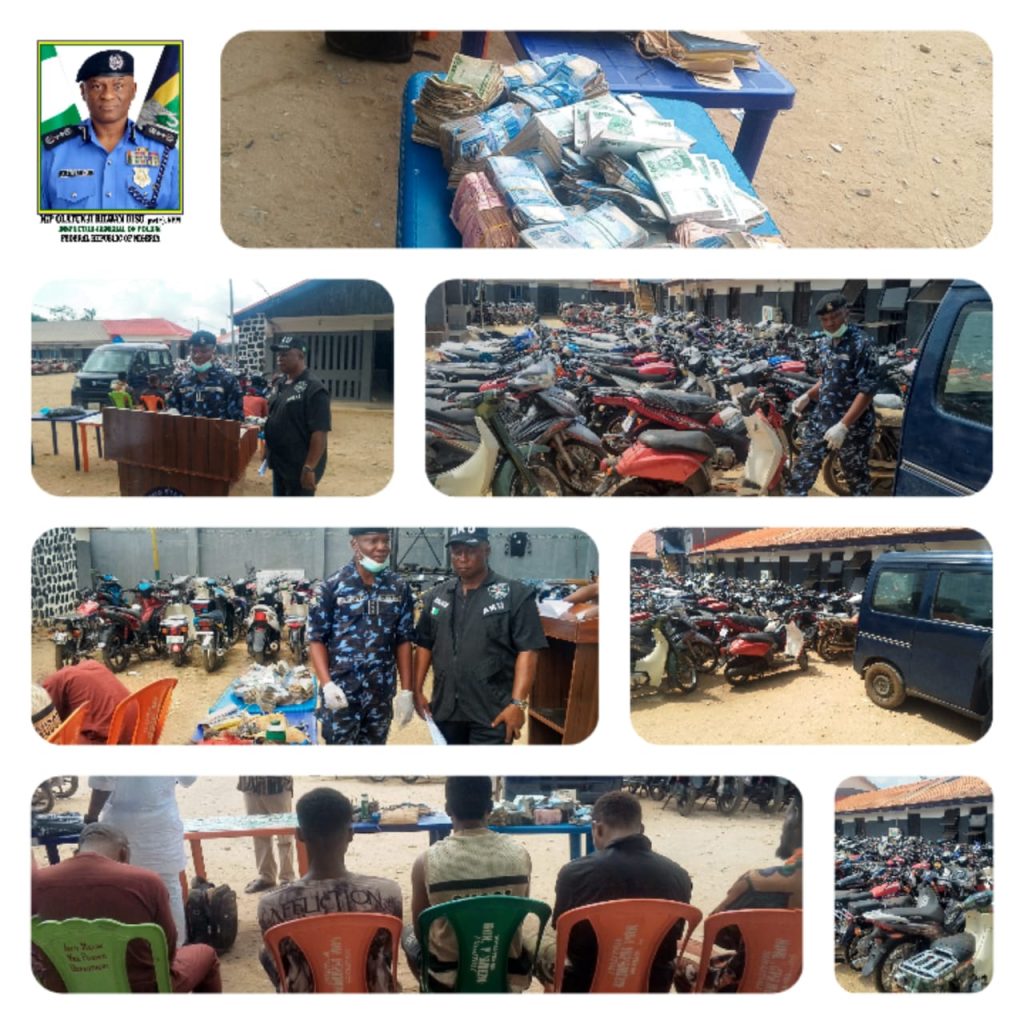
    The Imo State Police Command has arrested five suspected armed robbers and recovered a bus, 450 motorcycles, and over ₦6 million in cash in a major crackdown on criminal activities in the state.

    In a statement, the Police Public Relations Officer, DSP Henry Okoye, said the operation followed credible intelligence and was carried out by operatives of the Anti-Kidnapping Unit led by ACP Oladimeji Odeyeyiwa.

    According to the statement, the operation led to the recovery of one snatched shuttle bus, four hundred and fifty suspected stolen motorcycles, ₦6,495,900 in cash, several vehicle plate numbers, and other incriminating items, including criminal charms.

    The police also revealed that the suspects allegedly attempted to bribe the operatives with ₦5 million, an offer which was rejected in line with the Command’s zero-tolerance policy on corruption.

    The case began on April 6, 2026, after a distress call from Chimeze Christian of Urata, Owerri North LGA, owner of Wonder Shuttle, who reported that his driver, Paul Ejike Ohaka, had gone missing with a bus registered KPU 26 XA.

    The driver was later found unconscious at Irete along the Onitsha Road and was rushed to Vadan Hospital, New Owerri, where he is receiving treatment.

    Acting on the report, police operatives traced the stolen vehicle to a workshop in Orlu, where it was allegedly being repainted to conceal its identity. Two suspects, Olagoke Jelili and Godday Ezike, were arrested at the scene.

    Further investigations led to the arrest of Okechukwu Prince and Raymond Odinaka, who allegedly confessed to working under a fleeing suspect identified as Osita Chigbo, also known as “Barr. Oguta.” Another suspect, Paul Martins Anya, was arrested as a suspected receiver of stolen vehicles.

    A search of the premises reportedly uncovered 13 motorcycles, while follow-up operations led to additional recoveries, bringing the total to 450 suspected stolen motorcycles.

    The police said the suspects could not provide proof of ownership for the motorcycles and allegedly attempted to move them to nearby bush paths to avoid detection before being intercepted by operatives acting on intelligence.

    Investigations are ongoing, and efforts are underway to apprehend other members of the syndicate.

    The post Police arrest five suspects, recover bus, 450 motorcycles in Imo appeared first on Vanguard News.

  • How Digital Finance Is Driving CBN Inclusion Strategy

    How Digital Finance Is Driving CBN Inclusion Strategy

    The Central Bank of Nigeria (CBN) is taking new steps to strengthen trust in Nigeria’s financial system as it moves to tighten oversight of virtual asset operators and digital financial platforms.

    The development could shape the future of banking, payments, and investment in the country. With more young people embracing digital finance, CBN’s move under its Governor, Olayemi Cardoso aligns with broader strategy to strengthen financial system stability and bring more people to the financial services network.

    Digital finance is growing rapidly across Nigeria, with millions of people now relying on mobile apps, online platforms, and digital currencies for everyday transactions. From sending money to paying for goods and services, the use of financial technology has expanded access to financial services, especially for young people and small businesses.

    For instance, virtual assets, including cryptocurrencies and digital payment platforms, have become increasingly popular in Nigeria, especially among young people, freelancers, and small businesses looking for faster and more flexible ways to manage money.

    Unlike traditional banking, where transactions are processed through banks and regulated institutions, virtual asset platforms allow users to send and receive money directly using mobile apps and online systems. Many Nigerians now use these platforms for cross-border payments, online purchases, savings, and even investment.

    A small business owner in Lagos can receive payments from a customer abroad within minutes using digital platforms, without going through the delays often associated with traditional banking channels. Similarly, freelancers and remote workers increasingly rely on these systems to receive income from clients outside the country.

    However, because many of these transactions take place online and often across different countries, they can be harder for regulators to track if proper monitoring systems are not in place. This creates a risk that such platforms could be used to move illegal funds, avoid taxes, or finance criminal activities.

    It is this mix of opportunity and risk that has made virtual assets an important focus for regulators in Nigeria and across the world.

    For now, the message from the CBN is clear: innovation will continue to be supported, but it must be backed by strong systems that protect the financial system and the wider economy.

    As Nigeria continues to navigate the challenges and opportunities of a digital economy, initiatives like this are expected to play a key role in building a financial system that is not only modern and inclusive but also secure and resilient.

    CBN Governor, Olayemi Cardoso noted, that maintaining strong oversight is not just about meeting global standards, but about creating a stable foundation for long-term growth.

    Industry watchers say the insights gathered from the CBN’s pilot programme are likely to shape the next phase of regulation for virtual assets in Nigeria, as authorities work towards building a more structured and transparent digital financial system.

    They expect that the engagement with selected companies could lead to the introduction of clearer operational guidelines and possibly a formal licensing framework for virtual asset service providers in the near future. Such a framework would define how these companies operate, the standards they must meet, and the level of oversight required to ensure compliance.

    Analysts also believe that the pilot could pave the way for broader regulations covering cryptocurrency transactions, cross-border digital payments, and the integration of virtual asset platforms into the mainstream banking system.

    As digital finance continues to grow, there are increasing expectations that traditional banks and fintech companies will collaborate more closely, creating a more connected financial ecosystem that combines innovation with stability.

    There are also indications that regulators may adopt more advanced digital monitoring tools to track transactions in real time, improve reporting systems, and strengthen cooperation with international partners.

    The rapid growth has also raised concerns among regulators about the risk of abuse. Because many of these transactions happen online and across borders, they can be difficult to track if proper systems are not in place. This creates opportunities for money laundering, terrorism financing, and other illegal financial activities.

    To address these risks, the apex bank has introduced a new Anti-Money Laundering, Counter-Financing of Terrorism, and Counter-Proliferation Financing supervision pilot programme focused on Virtual Asset Service Providers, also known as VASPs.

    According to the CBN, the programme is part of a broader strategy to improve financial system stability and ensure that innovation in digital finance does not weaken regulatory control.

    “This pilot forms part of the Bank’s risk-based supervisory programme and supports ongoing efforts to strengthen financial system stability and market integrity,” the bank said.

    The regulator explained that the initiative is not a new law or a replacement for existing rules governing virtual assets in Nigeria. Instead, it is a structured engagement between the CBN and selected companies to better understand how the sector operates and where risks may exist.

    “This pilot does not alter, replace or supersede the existing regulatory framework governing virtual assets in Nigeria,” the bank added.

    At its core, the programme is designed to give regulators a clearer understanding of how digital finance companies operate, including their business models, customer management processes, and transaction systems.

    Virtual asset service providers include companies that offer services related to digital payments, cryptocurrency trading, and other technology-driven financial solutions. In Nigeria, these platforms have become an important part of the financial ecosystem, helping to bridge gaps left by traditional banking systems.

    For many Nigerians, especially those in underserved areas, fintech platforms provide easier access to financial services without the need to visit physical bank branches. They also support businesses by enabling faster payments and expanding access to global markets.

    But experts say that without proper oversight, these same platforms can be misused. Financial analysts say digital transactions, particularly those involving cryptocurrencies, can be attractive to criminals because they may offer a degree of anonymity and can be transferred quickly across borders.

    This is why regulators around the world are paying closer attention to virtual assets, introducing stricter monitoring systems while trying to support innovation.

    Nigeria’s latest move aligns with global efforts led by the Financial Action Task Force, which sets international standards for combating financial crimes.

    One of the key areas of focus under the CBN pilot is compliance with the FATF “Travel Rule,” a global requirement that ensures important information about the sender and receiver of funds is captured and shared during transactions.

    The rule is designed to make it easier for authorities to trace suspicious transactions and prevent the movement of illegal funds across borders.

    “The Pilot also supports VASPs in strengthening their AML/CFT/CPF frameworks in line with emerging supervisory expectations, including requirements under FATF Recommendations,” the CBN said.

    Participation in the programme is by invitation, with selected companies required to engage closely with the regulator in a structured environment.

    The companies are expected to submit monthly reports on key compliance indicators, participate in supervisory meetings, and undergo detailed reviews of their operations.

    These reviews will cover areas such as governance structures, customer onboarding processes, sanctions screening, transaction monitoring, and cross-border activities.

    They are also required to present clear plans for implementing the FATF Travel Rule and improving their internal systems.

    Despite this close engagement, the CBN made it clear that participation in the pilot does not amount to regulatory approval or licensing.

    “Participation in the Pilot is strictly supervisory and does not confer any regulatory status, approval, licensing right, or authorisation,” the bank said.

    The first group of companies selected for the pilot includes cNGN, Flutterwave, Juicyway, KoinKoin, KuCoin, and Paystack.

    The selected companies represent key segments of Nigeria’s growing digital finance ecosystem, each playing a different role in how money moves within and outside the country.

    Flutterwave and Paystack are widely known for providing payment solutions that allow businesses to accept payments online and across borders, supporting thousands of small and medium-sized enterprises.

    KuCoin operates as a global cryptocurrency exchange, enabling users to buy, sell, and trade digital currencies, while also facilitating cross-border transfers that are often faster than traditional banking channels.

    Other participants such as cNGN, Juicyway, and KoinKoin are involved in different aspects of digital finance, including payment processing, liquidity solutions, and virtual asset services, reflecting the diversity of Nigeria’s fintech space.

    On one hand, stronger oversight by the Central Bank of Nigeria could make digital transactions safer by reducing the chances of fraud, scams, and unauthorised transfers. With companies required to improve how they monitor transactions and verify users, customers may benefit from better protection of their funds.

    Four months ago, the Governor of the Central Bank of Nigeria, Olayemi Cardoso, described the development as one of the country’s most important economic achievements.

    According to him, remaining on the list could have cost Nigeria more than $30 billion in potential investment within a single year.

    “Countries placed on the FATF grey list typically experience a sharp drop in capital inflows, about 7.6 percent of GDP in the first year. For Nigeria, that translates to over $30bn in potential investment,” Cardoso said.

    He explained that Nigeria’s removal from the list has already improved investor confidence and made it easier for banks to carry out international transactions.

    “Exiting the list restores investor confidence and eases compliance challenges for correspondent banks,” he added.

    The success was the result of coordinated efforts involving several agencies, including the Nigerian Financial Intelligence Unit and the Economic and Financial Crimes Commission.

    These institutions worked together to strengthen reporting systems, improve intelligence sharing, and deploy digital tools to track financial activities more effectively.

    Cardoso noted that the global financial community has responded positively to these reforms, with improvements already seen in cross-border transactions and access to international finance.

    Global rating agencies such as Fitch Ratings, Moody’s, and Standard & Poor’s have also issued favourable assessments, citing improved economic management and transparency.

    These positive signals have translated into better borrowing conditions and stronger investor interest, as seen in Nigeria’s recent Eurobond issuance, which attracted significant demand from global investors.

    The CBN’s new pilot programme is therefore seen as a continuation of these reforms, aimed at ensuring that Nigeria maintains strong financial oversight and does not fall back into practices that could weaken confidence.

    At the same time, experts say the regulator must strike a careful balance. Some stakeholders in the financial technology industry have raised concerns that excessive regulation could slow down innovation in Nigeria’s fast-growing fintech sector, which has become one of the most active in Africa.

    They argue that while stronger oversight is necessary to protect the financial system, policies must be carefully designed to avoid discouraging investment and entrepreneurship. Many startups operate in highly competitive environments and rely on speed, flexibility, and lower operating costs to survive.

    Industry players note that overly strict compliance requirements could increase operational costs, making it more difficult for smaller firms to compete or scale their services. This could, in turn, reduce the pace of innovation and limit the expansion of financial inclusion efforts driven by technology.

    Nigeria’s fintech sector has become one of the most dynamic parts of the economy, creating jobs, attracting investment, and expanding financial inclusion.

    By adopting a pilot approach, the CBN appears to be taking a gradual path, engaging directly with industry players to better understand their operations before introducing broader measures.

    This approach allows regulators to learn from real-world data while giving companies time to adjust to new expectations.

    How Digital Finance Is Driving CBN Inclusion Strategy is first published on The Whistler Newspaper

  • Factional Adamawa ADC secures congress victories despite court order

    Factional Adamawa ADC secures congress victories despite court order

    Members of the deeply factionalised Adamawa State chapter of the African Democratic Congress (ADC), loyal to former Secretary to the Government of the Federation, Babachir Lawal, have secured victories in state, local government and ward congresses conducted over the weekend.

    The new leaders were elected in congresses completed in defiance of a court order that had suspended the exercise.

    A legal practitioner, Sadiq Ibrahim Dasin, emerged as the new State Chairman of the ADC in Adamawa, heading the executive council reportedly elected across the state.

    The congresses took place with organisers claiming they were unaware of the court order halting the exercise, amid intense intra-party rivalry, chiefly between Babachir Lawal and former Vice President Atiku Abubakar and their respective loyalists.

    The state chairman of the ADC, Yohana Shehu, aligned with the Atiku camp, had approached the court earlier in the week, arguing that the committee sent to organise the congresses—reportedly aligned with the Babachir Lawal faction—failed to consult him or his executive.

    The High Court sitting in Yola subsequently ordered the suspension of the congresses.

    However, the exercise proceeded, producing a state executive committee that includes Sadiq Ibrahim Dasin as State Chairman; Muhammad Arabi Mustapha as State Organising Secretary; and Muhammad Umar U.J. Jada as State Youth Leader.

    Other members of the State Executive Council include Hyellagiziya Fakuta Naiwa as Treasurer; Mohammed Alhaji Adamu as Assistant Financial Secretary; Teneke Atimo Medan as State Assistant Youth Leader (South); Anas Muhammad (Yawudima) as Deputy Youth Leader; Hon. Rahab Nyayeba Audi as Woman Leader; Sani Hassan as Deputy Chief Whip; and Zainab Abubakar as Deputy Women Leader.

    Factional Adamawa ADC secures congress victories despite court order

  • 2027: ADC ready to battle for Imo State, says Ihedioha

    2027: ADC ready to battle for Imo State, says Ihedioha

    By Emmanuel Iheaka | Owerri

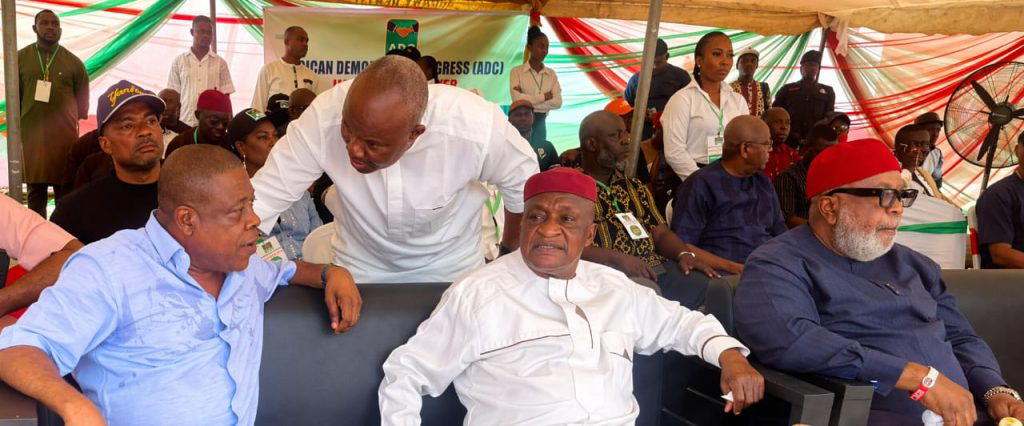
    Former Imo State Governor, Emeka Ihedioha, has declared that the African Democratic Congress (ADC) is preparing for a door-to-door mobilisation ahead of the 2027 general elections, with the aim of taking over Imo State.

    Ihedioha made the declaration on Saturday during the party’s state congress held at the Kanu Nwankwo Sports Complex, Owerri.

    He said more than 200,000 people have already registered with the party in the state, expressing optimism that newly elected party officials would work toward achieving its electoral goals.

    Also speaking, former governor and state party leader, Achike Udenwa, described Imo State as one of the strongest ADC chapters in the country, noting that the ward and local government congresses were conducted peacefully and without rancour.

    He urged party members to remain committed to the party’s ideals and its ambition to reposition the state.

    The National Vice Chairman of ADC (South East), Bon Unachukwu, also commended the smooth conduct of the congresses, saying they have laid a strong foundation for future electoral success in the state.

    During the congress, delegates unanimously re-elected Prof. James Okoroma as State Chairman.

    Other elected officials include Barr. Gregory Ihejirika as State Secretary and MacDonald Amadi as Publicity Secretary, among others.

    The post 2027: ADC ready to battle for Imo State, says Ihedioha appeared first on Vanguard News.

  • Bundesliga: ‘His belly is unbelievable’ – Da Silva laments Boniface’s fitness

    Bundesliga: ‘His belly is unbelievable’ – Da Silva laments Boniface’s fitness

    Werder Bremen icon, Aílton Gonçalves da Silva has provided a pointed critique of Victor Boniface.

    The former Bundesliga leading scorer did not shy away from expressing his views on Boniface’s current state, emphasizing that the forward must urgently enhance his fitness.

    “His belly is unbelievable. He absolutely needs to shed some weight. I do not foresee him scoring any more goals for Werder this season,” Aílton remarked.

    Boniface’s difficulties have gone beyond just fitness issues.

    Since joining Werder Bremen in the summer, the Nigerian international has faced a challenging period, recording only two assists in 11 league matches and failing to score a goal.

    In spite of these obstacles, Werder Bremen remains keen to have the forward available as they strive to avoid relegation from the Bundesliga.

    Werder Bremen’s head coach, Daniel Thioune provided insight into the player’s situation, indicating that the striker will only return to play once he is considered fully fit after his recent injury recovery.

    Boniface has been out of action due to a knee issue and has only recently started training with the Bundesliga team.

    Nevertheless, worries regarding his physical condition have taken center stage, especially following reports that the Nigerian forward returned to training above his ideal weight.

    Even with his return to training, the 25-year-old has missed Werder Bremen’s last two league matches against RB Leipzig and FC Köln, raising doubts about his readiness to assist as the club endeavors to maintain its top-flight status.

    In addressing the matter, Daniel Thioune emphasized that Boniface will be gradually reintegrated into the team, particularly in games against opponents of a similar caliber to Werder Bremen.

    “As soon as I believe he is prepared, he will receive playing time,” he disclosed to Bild.

    “However, when I consider matches against teams of equal strength, it is a way to pose a threat to the opponent again with him,” he added.

    Bundesliga: ‘His belly is unbelievable’ – Da Silva laments Boniface’s fitness

  • Nigeria woos diaspora investors at Silicon Valley summit

    Nigeria woos diaspora investors at Silicon Valley summit

    By Folarin Kehinde

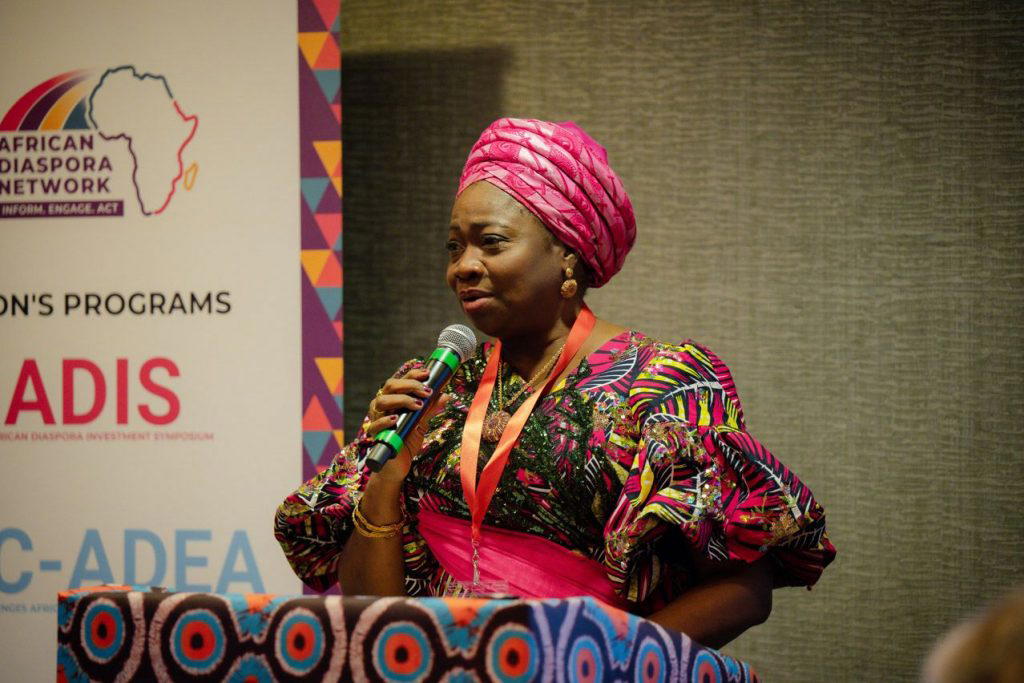
    Nigeria has intensified efforts to attract diaspora investment, as Chairman/CEO of the Nigerians in Diaspora Commission (NiDCOM), Abike Dabiri-Erewa, declared the country open for business at a high-level gathering in the United States.

    Speaking as the keynote speaker at the pre-event dinner of the African Diaspora Investment Symposium 2026 held in Silicon Valley, Dabiri-Erewa assured Nigerian professionals and global investors that the country possesses vast opportunities across multiple sectors.

    The dinner, which preceded the main summit hosted at Santa Clara University, brought together top African and international investors, innovators, and policymakers under the theme: “Bridging Africa & Silicon Valley: Shaping the Future of Innovation, Investment, and Inclusive Growth.”

    In a press release by NIDCOM’s Director of Media, Public Relations, and Protocols, Abdur-Rahman Balogun, Dabiri-Erewa highlighted Nigeria’s commitment to leveraging the expertise, networks, and capital of its diaspora community to drive economic diversification and technological advancement.

    She pointed to ongoing reforms under President Bola Ahmed Tinubu’s Renewed Hope Agenda, aimed at improving the investment climate and strengthening diaspora participation.

    According to her, the Federal Government is putting in place policies to create an enabling environment for sustainable investments, noting that Nigerians abroad remain critical partners in national development.

    She commended the collaborative spirit of Nigerians in the United States and acknowledged the role of the African Diaspora Network, led by its founder Almaz Negash, for fostering impactful engagement between Africa and its global diaspora.

    At a separate working lunch with Nigerian professionals, participants expressed readiness to partner with NiDCOM to contribute to Nigeria’s growth through innovation, investment, and knowledge transfer.

    The events collectively underscored a shift from traditional remittances to structured, long-term investments, as stakeholders explored ways to deepen partnerships between Africa and the global technology ecosystem.

    The summit, which attracted a diverse mix of leaders from Africa and the United States, provided a platform for dialogue on sustainable development and diaspora-driven economic transformation.

    The post Nigeria woos diaspora investors at Silicon Valley summit appeared first on Vanguard News.

  • Nollywood actor, Patrick Doyle loses newborn baby daughter

    Nollywood actor, Patrick Doyle loses newborn baby daughter

    Veteran Nollywood actor, Patrick Doyle has announced the heartbreaking loss of his newborn daughter, Omayinuwa Harriet.

    In a post shared on his Facebook page on Sunday, Doyle revealed that the baby passed away on Saturday at about 4:15 p.m just a day after her birth.

    “Omayinuwa visited us briefly at about 10:40 am on Friday 10th April and returned to heaven on Saturday 11th of April at about 4:15 pm,” he wrote.

    “Her stay was short but it brought great joy with it. We would have wished for a longer stay, but alas, heaven thought otherwise.

    “This much we know though, God still rules in the affairs of men. Our faith in the goodness of God remains resolute regardless. Sibe’ sibe’ Oluwa n’be’. It is well with our soul,” he said.

    DAILY POST gathered that the child was Doyle’s daughter with his third wife, Funmilayo.

    The actor had earlier shared news of her birth

    on Friday, noting that both mother and child were in good health at the time.

    Nollywood actor, Patrick Doyle loses newborn baby daughter

  • ‘No other way’: Middle East prepares for more fighting as talks fail

    ‘No other way’: Middle East prepares for more fighting as talks fail

    A sense of dread spread across the Middle East after talks between the US and Iran collapsed, as fears of renewed fighting rattled an already tense region with Donald Trump ordering a naval blockade of the Strait of Hormuz.

    Following more than 20 hours of talks in the Pakistani capital Islamabad, US Vice President JD Vance admitted the yawning differences between the US and Iran proved to be insurmountable for the moment.

    What could come next and whether the two sides will continue to respect a two-week ceasefire was anybody’s guess as both the Iranian and American delegations departed Pakistan without a deal.

    “Things could change at any moment,” said Aishah, a 32-year-old economic consultant based in Doha.

    “It’s more about taking each day as it comes.”

    The failure of the talks, however, did not surprise many in the region.

    “I didn’t have a lot of hope for them going in, because the two sides want completely opposite things,” Laura Kaufman, a 38-year-old school teacher in Tel Aviv, told AFP.

    “There didn’t seem to be anyone willing to actually negotiate.”

    A recent poll found that only 10 percent of the Israeli public believe the war against Iran had constituted a “significant success, compared to 32 percent who view it as a failure”.

    In Iran, a brief spell of hope that talks would end the hostilities between the long-time foes was quickly dashed.

    “I really wanted them to make peace,” said Mahsa, a 30-year-old employee of an export company in the Iranian capital.

    “It’s been almost 45 days now that I’ve seen everyone stressed. It’s a bad situation.”

    – ‘Worried’ –

    Elsewhere in the Middle East, the negotiations’ failure only seemed to guarantee more uncertainty.

    “I am worried about the continuation of the situation and the return of attacks again, because they were causing me tension,” said Imam, an Egyptian housewife living in the UAE capital of Abu Dhabi.

    “I was making a great effort not to pass my tension on to the children.”

    With nerves already battered, President Trump on Sunday ordered an immediate naval blockade of the Strait of Hormuz, vowing to intercept any ship that pays tolls to Tehran while also preventing Iran from earning future oil revenues.

    “Any Iranian who fires at us, or at peaceful vessels, will be BLOWN TO HELL!” he wrote.

    The news came as many in the region were hoping for a return to normality.

    Earlier Sunday, Saudi Arabia’s energy ministry said its key east-west oil pipeline and other major energy facilities had been restored following attacks by Iran on targets across the Gulf.

    “Of course I am worried that the war will return again,” said Amin, a pharmacist living in Saudi Arabia’s eastern province, who asked to use a pseudonym for security reasons.

    Back in Iran, a sense of the inevitable had begun to sink in for many people.

    “I would have preferred peace, but I think there is no other way but war and confrontation,” said Hamed, 37.

    “Based on what I see and hear, unfortunately we are going to war again and it seems like we will have a long war.”

    In Lebanon, meanwhile, the ceasefire never started in the first place, with the warring sides disputing whether it was included under the deal as Israel stepped up its strikes there.

    Dentist Kamal Qutaish called Lebanon “an arena where the whole world fights”, adding much depended on how efforts towards peace progressed.

    “If (negotiations) collapse, it will affect not just us, but the whole world,” he said. “Only a madman wouldn’t be afraid.”

    burs-ds/ser/smw/jfx

    The post ‘No other way’: Middle East prepares for more fighting as talks fail appeared first on Vanguard News.

  • World leaders urge more negotiation after US-Iran talks end without deal

    World leaders urge more negotiation after US-Iran talks end without deal

    World figures urged the United States and Iran to keep negotiating after marathon Washington-Tehran talks in Islamabad ended on Sunday without a deal to end the war in the Middle East.

    – Pakistan urges ceasefire –

    “It is imperative that the parties continue to uphold their commitment to cease fire,” said Pakistan’s foreign minister Ishaq Dar, whose government hosted the talks and acted as a mediator.

    “Pakistan has been and will continue to play its role to facilitate engagement and dialogue between the Islamic Republic of Iran and the United States of America in the days to come,” he said in a brief statement broadcast by state media.

    – EU urges diplomacy –

    Diplomacy is “essential” to resolve the war in the Middle East, a European Union spokesman said.

    Noting failed US-Iranian talks hosted by Pakistan, EU foreign affairs spokesman Anouar El Anouni said “we salute Pakistan for its mediation efforts” and added Brussels would contribute to further efforts to reach a settlement in coordination with its partners

    – Putin offers mediation –

    Russian President Vladimir Putin told his Iranian counterpart Masoud Pezeshkian that he was ready to help mediate efforts to achieve peace in the Middle East, the Kremlin said.

    “Vladimir Putin emphasised his readiness to further facilitate the search for a political and diplomatic settlement to the conflict, and to mediate efforts to achieve a just and lasting peace in the Middle East,” the Kremlin said in its readout of the call.

    – UK disappointed –

    “It’s obviously disappointing that we haven’t yet seen a breakthrough in negotiations and an end to this war in Iran that is a sustainable one,” UK health minister Wes Streeting told Sky News.

    “As ever in diplomacy, you’re failing, until you succeed. So while these talks may not have ended in success, (it) doesn’t mean there isn’t merit in continuing to try,” he added.

    – Australia urges more talks –

    “The priority now must be to continue the ceasefire and return to negotiations,” Australian Foreign Minister Penny Wong said in a statement, adding it was “disappointing that the Islamabad talks between the United States and Iran have ended without agreement”.

    The post World leaders urge more negotiation after US-Iran talks end without deal appeared first on Vanguard News.