Blog

  • The big boost for Anioma State

    The big boost for Anioma State

    By EMMANUEL ONWUBIKO

    A psychologist whose publication on will power and psychological science of self-control I came across on the internet affirmed that with more self-control we would all eat right, exercise regularly, avoid drugs and alcohol, save for retirement, stop procrastinating and achieve all sorts of noble goals.

    Determined to provide charity, this our beloved scientist said: “Take, for example, the results of the American Psychological Association’s annual Stress in America Survey. The survey asks, among other things, about participants’ abilities to make healthy lifestyle changes. Survey participants regularly cite lack of willpower as the number one reason for not following through with such changes.”

    Lack of willpower isn’t the only reason you might fail to reach your goals. Willpower researcher and psychologist at Florida State University, Dr Roy Baumeister, describes three necessary components for achieving objectives: First, he says, you need to establish the motivation for change and set a clear goal. Second, you need to monitor your behaviour toward that goal. The third component is willpower. Whether your goal is to lose weight, kick a smoking habit, study more, or spend less time on Facebook, willpower is a critical step to achieving that outcome”.

    There are moments in the life of a nation when a single political pronouncement carries the weight of history, justice and long-suppressed identity. The recent remark by the Senate President, Godswill Akpabio, during a public function in Asaba, that the long-awaited creation of a new state for the South-East will culminate in Anioma State (with Asaba as its capital) represents one of such defining moments. It is not merely a political development, it is a profound statement of recognition, restitution and national recalibration.

    For decades, the agitation for Anioma State has endured as one of Nigeria’s most consistent yet under-appreciated demands for state creation. Now, with the indication that deliberations have reached a conclusive stage and only await formal proclamation, the agitation has received its most significant boost yet. It signals not just administrative restructuring but a moral response to history and a strategic rebalancing of Nigeria’s federal character.

    At the heart of this development lies the relentless advocacy of Ned Nwoko, whose persistence, clarity of thought and principled engagement have elevated the Anioma question from regional agitation to national discourse. While it is historically accurate to state that the demand for Anioma State did not begin with him, it is equally undeniable that he has emerged as the most coherent and influential contemporary voice driving its realisation. His ability to align historical justice with political pragmatism has proven decisive.

    To fully appreciate the significance of this moment, one must return to the deep historical roots of the Anioma identity and the painful episodes that have shaped it. The Anioma people, largely of Igbo extraction, occupy a unique geographical and political space within Delta State. Despite their linguistic, cultural, and historical affinity with the South-East, they have remained administratively located in the South-South geopolitical zone, a situation that has, over time, fostered a lingering identity dilemma.

    This identity crisis is not a trivial matter of nomenclature or regional alignment; it is a profound question of belonging. For a people whose historical experience is intertwined with that of the broader Igbo nation, the absence of formal recognition within the South-East framework has created a sense of political and cultural displacement. The creation of Anioma State, therefore, is not merely about drawing new boundaries; it is about restoring coherence to a people’s identity.

    The urgency of this restoration is underscored by one of the darkest chapters in Nigeria’s history: the Asaba Massacre during the Nigerian Civil War. In October 1967, in the early phase of the war, federal troops entered Asaba and carried out a brutal massacre of unarmed civilians. Eyewitness accounts and historical records recount how young men and boys were assembled and systematically executed in what remains one of the most harrowing instances of mass killing in Nigeria’s history.

    This atrocity was not only a loss of lives but a deep psychological scar that has endured across generations. It symbolised the vulnerability of a people caught in the cross-currents of war, their identity both a marker of belonging and a trigger for victimisation. Yet, decades after the war, the wounds of that tragedy remain insufficiently acknowledged within Nigeria’s national narrative. 

    It is within this context that the call for Anioma State acquires a deeper moral dimension. The creation of the state becomes an act of historical recognition; a way of affirming that the lives lost were not forgotten and that the survivors and their descendants are not condemned to perpetual marginality. It is a means of giving back a sense of belonging to a people whose history has been marked by both resilience and neglect.

    The argument for Anioma State is further strengthened by considerations of equity within Nigeria’s federal structure. The South-East geopolitical zone currently comprises five states, unlike other zones that have six or more. This imbalance has long been a source of political disadvantage, particularly in the distribution of federal resources and representation. By integrating Anioma State into the South-East, Nigeria would be taking a concrete step toward correcting this structural inequity.

    What makes this approach particularly compelling is that it does not involve fragmenting existing South-Eastern states, which could trigger fresh tensions and rivalries. Instead, it represents an additive solution; expanding the region in a manner that strengthens its collective voice without undermining internal cohesion. It is, in essence, a win-win proposition that enhances both regional balance and national stability.

    This strategic clarity has been a hallmark of Ned Nwoko’s advocacy. His articulation of the Anioma cause has consistently emphasized that the creation of the state is not a parochial demand but a national imperative. By framing Anioma as both a historical necessity and a pragmatic solution to existing imbalances, he has succeeded in building a broad coalition of support that transcends ethnic and regional divides.

    Moreover, his political positioning within the ruling establishment has provided the advocacy with a level of access and influence that previous efforts lacked. In Nigeria’s complex political landscape, where state creation is as much a matter of negotiation as it is of principle, such proximity to the levers of power has proven invaluable. It has enabled the Anioma question to move from the margins of policy discussions to the centre of legislative consideration.

    Yet, it would be reductive to attribute the current momentum solely to individual effort. The Anioma movement is the culmination of decades of collective struggle by community leaders, intellectuals, and grassroots organisations who have kept the vision alive through successive administrations. From early memoranda to constitutional conferences, the demand for Anioma State has been consistently articulated, even when it seemed politically unattainable.

    This historical continuity is important because it underscores the legitimacy of the demand. Anioma State is not a sudden invention or a politically expedient idea; it is the product of sustained advocacy rooted in a clear understanding of identity, history, and governance. What has changed is not the validity of the argument but the political will to act on it.

    An often-overlooked dimension of the Anioma project is its potential to unify Igbo communities beyond the current boundaries of the South-East. Notably, Igbo-speaking populations in Edo State have also expressed interest in being part of the proposed Anioma State. During public hearings in places such as Enugu and Akwa Ibom, representatives from these communities presented memoranda advocating their inclusion, citing shared cultural heritage and historical ties.

    The communities, which are Igbanke, Iru, Ogbagie, Igbo-Giri, Owa Ri Uzo, Otobaye, Oghada, Ute-Oha-Eze, Ekpon and other neighbouring Ika Igbo aboriginal communities within Edo State, said their position reflects years of accumulated frustration, neglect and marginalisation they experienced.

    Speaking on the platform of The Voice of the Indigenous Ika Igbo Initiative in Edo State, the people lamented that despite their cultural, linguistic and historical affinity with Anioma communities in Delta State and the wider Igbo nation in the South-East, they have remained politically stranded and administratively neglected within Edo State.

    This broader vision transforms Anioma from a state creation exercise into a unifying project for dispersed Igbo populations. It offers a platform for reintegration, enabling communities that have long existed on the periphery of regional politics to find a common administrative and cultural home. In doing so, it strengthens the fabric of Igbo identity while contributing to Nigeria’s diversity.

    The significance of the Senate President’s statement, therefore, cannot be overstated. As the third-ranking official in the country, his words carry both symbolic and practical weight. They signal that the Anioma proposal has moved beyond speculation into the realm of actionable policy. For advocates who have long battled skepticism and political inertia, this is a moment of validation.

    It is also a moment that calls for unity and strategic engagement. The realisation of Anioma State will require not only formal proclamation but also careful implementation, including boundary delineation, resource allocation, and administrative setup. Stakeholders must therefore approach this phase with the same clarity and commitment that have characterized the advocacy thus far.

    For the broader Igbo nation, this development represents a significant gain. It is an expansion of political space, an enhancement of representation and a reaffirmation of identity. It demonstrates that constructive engagement within the Nigerian framework can yield tangible results, even for demands that have long been considered difficult.

    At a time when national cohesion is often tested by competing interests and historical grievances, the Anioma initiative offers a model of how such challenges can be addressed. It shows that recognition, fairness and inclusion are not abstract ideals but practical tools for building a more stable and equitable federation.

    Ultimately, the creation of Anioma State is about more than geography. It is about dignity, memory, and belonging. It is about acknowledging the past while shaping a more inclusive future. It is about ensuring that people who have long stood at the crossroads of identity can finally find clarity and recognition within the Nigerian union.

    As the nation awaits the formal pronouncement, one thing is clear: the journey of Anioma State has entered its decisive phase. And in that journey, the convergence of historical justice, political will, and principled advocacy has created a moment that may well redefine the contours of Nigeria’s federal landscape.

    *Onwubiko is the founder of Human Rights Writers Association of Nigeri, HURIWA, and was National Commissioner of the National Human Rights Commission of Nigeria

    The post The big boost for Anioma State appeared first on Vanguard News.
  • The ABC, ADC and APC of Nigerian politics, by Owei Lakemfa

    The ABC, ADC and APC of Nigerian politics, by Owei Lakemfa

    In as much as many have undertaken to speak on the ongoing political crises in the country centering on the future of electoral politics, I have decided to make basic clarifications. My preferred surgical tools are the Antecedent, Behaviour and Consequence, ABC,  of what might, on the long run, endanger us all and, of course, condemn some to the dust bin of history.

    Regrettably, some of those who have written on the issue, trying to mislead the populace, are my friends with whom we set out as young people to build a new country and world order based on peace, progress, development and social justice. These are otherwise intelligent people educated with the resources of the country but have for what appears to me as pecuniary reasons, decided to side with backwardness and retrogression. But I digress. Let me address the Nigerian populace, laying down basic facts so that their choices can be made in the collective interests of our country and the African people.

    At the centre of the current political crisis is the African Democratic Congress, ADC, whose leadership was delisted in an April Fool move by the ‘Independent’ National Electoral Commission, INEC. The Commission, which was established as a non-partisan body, was not expected to be a tragi-comic organisation guilty of acts of commission and omission by an otherwise knowledgeable bunch of directors, parading an assortment of degrees, including PhD in Law.

    Some have blamed the ADC leaders for not registering an entirely new political party rather than adopting an existing one. My simple answer is: you do not admonish a hunch back to straighten up; if he could, he would have done so before you encounter him. The leaders of what turned out to be the ADC coalition tried to register a brand new party but were denied. So, adopting the ADC was a fallback position. In doing so, as we now know, they were meticulous. They obeyed all the constitutional rules of the party and those of INEC, including inviting the latter to observe the processes which INEC fully endorsed.

    The basic summary of the processes was that the ADC National Working Committee, NWC, had series of meetings, ending with a trinity of proposals to its National Executive Council, NEC. The first was to accept a wider coalition in which new members would be infused and the ADC would become the central opposition party. Secondly, that the NWC be dissolved and a new Caretaker Committee established to run the party. Thirdly, that the NEC, using its constitutional powers, should waive the provision that the new entrants should spend two years as members before being eligible to be officers of the party. All three proposals were put without any counter motion, and adopted by the party NEC meeting of July 29, 2025 at the New Chelsea Hotel, Abuja. The INEC, which was procedurally invited to the NEC meeting, attended, was satisfied that all known constitutional and electoral rules were complied with. On that basis, INEC granted institutional recognition to the new ADC leadership which comprised Senator David Mark as Chairman, Ogbeni Rauf Aregbesola as National Secretary and a fusion of the old leadership and new leaders as the NWC Caretaker Committee.

    So, when a former official of the party later claimed he did not resign his position and that since other officials, including the former Chairman Ralph Okey Nwosu had resigned, he should be recognised as the authentic Chairman of the party, any educated person, least of all, a law Professor like Joash Amupitan who heads the INEC, should, but for mischief, know that the character is delusional. The process the INEC observed and endorsed was not that of individual resignations, but the constitutional dissolution of the entire ADC leadership and its replacement. So, except for non-legal or mischievous reasons, no member of a constitutionally dissolved executive can later claim he remains an officer of the party and should be the new leader. A court in response to this individual’s case, directed that the status quo should be maintained. Anyone with a modicum of intelligence should know that the status quo is as at the time the court case was initiated or at worse, before the dissolution of the old executive. But the Amupitan INEC intentionally misinterpreted this to mean the removal of the ADC leadership, leaving an organisation without any leadership. Even amongst anarchists, there must be leaders.

    The obvious beneficiary of this conscious illogicality is the ruling All Progressives Congress, APC. I have read praises of the APC leaders as “political strategists” for trying to destroy the opposition before the January 2027 general elections.

    But I think such people are not well informed because, the ultimate “political strategist’ in our history, the tyrant, General Sani Abacha, ended up in the dustbin of history. He had deceived the political class that his November 17, 1993 coup was to merely restore the June 12, 1993 presidential victory of Chief Moshood Kashimawo Abiola. Rather than do so, Abacha imprisoned Abiola. He promised that with his coup, civilian adminstrators would be appointed to run the states. Instead, he appointed military administrators. Then he said the Deputy State Administrators would be civilians. He never appointed a single one. He then promised a democratic transition and established five political parties. He ended up being the sole candidate of all the parties. But his coronation never took place; he died unsung.

    The lesson for us all is to allow political plurality and freedom of choice. For our collective good and the future of our country, we must preserve and make institutions functional. These should include the legislature, judiciary and electoral commission.

    There must be functional opposition. When the United Kingdom provides public funding, called “Short Money” for opposition parties to take care of their administrative and research costs, it is not because it is insane. When that country pays opposition parties 22,853 pounds for each seat they occupy and additional funds per 200 votes, it is conscious that without strong opposition, its democracy is doomed.

    If the ADC is endangered just because it is an opposition party, our democracy is endangered. Our fundamental right to freedom of association will be endangered.

    As a former labour leader both in Nigeria and Africa, I am painfully aware that the establishment of trade unions and workers organisations and their well-being is based on the right to associate. Section 40 of the Nigeria Constitution states explicitly: “Every person shall be entitled to assemble freely and associate with other persons, and in particular he may form or belong to any political party, trade union or any other association for the protection of his interests”.  If this is compromised, we are all compromised.

    The post The ABC, ADC and APC of Nigerian politics, by Owei Lakemfa appeared first on Vanguard News.
  • Inter close in on Serie A title after comeback triumph at Como

    Inter close in on Serie A title after comeback triumph at Como

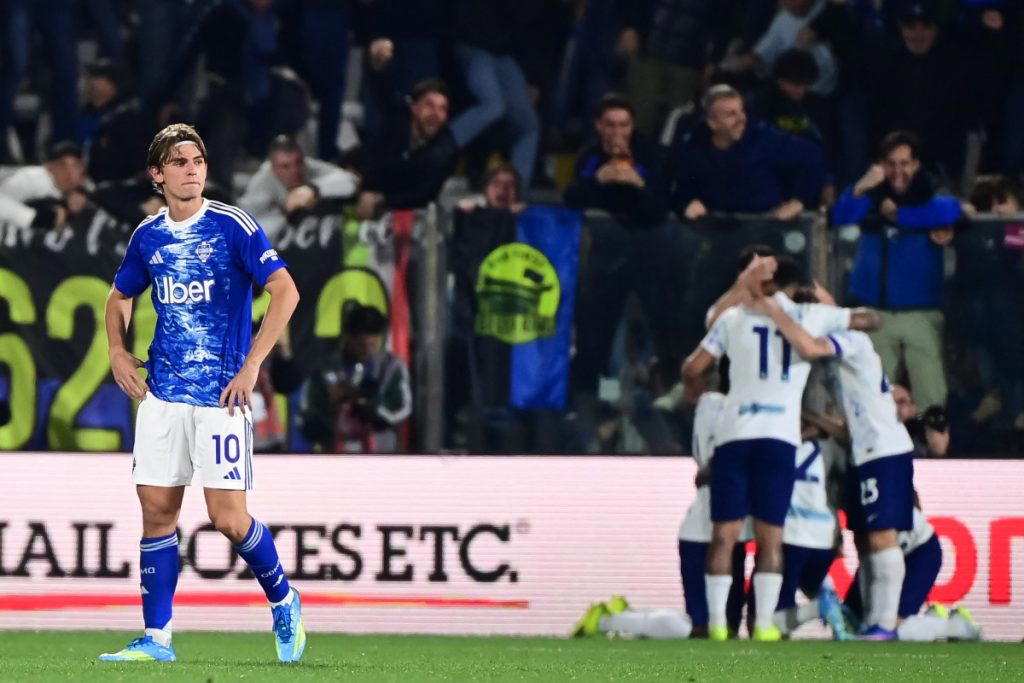
    Inter Milan put one hand on the Serie A title on Sunday after coming back from two goals down to win 4-3 in a thrilling match at Como and move nine points clear of Napoli, who could only draw 1-1 at Parma.

    Trailing by two in the dying moments of the first half due to goals from Alex Valle and youthful virtuoso Nico Paz, Inter looked set to give champions Napoli hope their Scudetto defence might still be alive.

    But Marcus Thuram brilliantly poked home Nicolo Barella’s cross in stoppage time at the end of the opening half before the France forward pounced on a mix-up between Como goalkeeper Jean Butez and defender Marc-Oliver Kempf to loop home the leveller moments after the break.

    Denzel Dumfries bulleted home Hakan Calhanoglu’s perfectly-delivered free-kick in the 58th minute and then completed the turnaround at the Stadio Giuseppe Sinigaglia by coolly guiding home Manuel Akanji’s knock-down 14 minutes later.

    With six matches remaining in the season Inter now have a near-unassailable lead at the top of the table, while Como’s first defeat in two months left them outside the Champions League positions.

    Pressed by DAZN into declaring that the title was already sewn up, Inter midfielder Barella simply said “let’s wait a little while”, and Dumfries was equally evasive.

    “Today was a great win but every match counts and we have to stay focussed,” said Dumfries, who has missed a huge chunk of this season with injuries.

    Como battled to the end with Lucas Da Cunha’s late penalty, for a soft foul on Paz by Ange-Yoan Bonny, nearly being followed up by a last-gasp leveller when Alberto Moreno smashed the crossbar from close range.

    “Today my team showed me that we’re capable of and played with desire and courage,” said Como coach Cesc Fabregas.

    “Yes we made mistakes. We’re a young team, and when you do, these teams will punish you. That’s the way it is.”

    Juventus have taken Como’s place in the top four of Italy’s top flight, a disappointment after a superb first half in which Paz was the star of the show with a brilliant 11th goal of the season and the saved shot which led to Valle’s opener.

    Como have never played European football and were in Italy’s third tier when acquired by tobacco giant Djarum seven years ago.

    – Napoli slip –

    Scott McTominay’s drilled finish on the hour mark gave Napoli a draw at Parma which now looks almost certain not to be enough for a third league crown in four seasons.

    Antonio Conte’s team were on the back foot within 36 seconds, which was how long it took for Gabriel Strefezza to race on to Nesta Elphege’s knock-on and beautifully curl home Parma’s opener.

    Napoli struggled to break down the hosts who were content to sit deep and soak up the pressure and deny the away team a sixth straight league win even after McTominay’s equaliser.

    Last weekend’s win over AC Milan had reopened the prospect of retaining the title but Sunday’s results mean Inter would have to completely collapse to allow Napoli a sniff of the title.

    “If you concede a goal after 30 seconds it’s inevitable that a match which was already going to be against a deep-lying team was going to become even more like that,” said Conte.

    “They rightly put up the barricades and tried to hit us on the counter… in the end I can’t really criticise the team for their desire and commitment.”

    Parma are level on 36 points with Genoa, who also took a step towards safety with a tumultuous 2-1 win over Sassuolo in the day’s early fixture.

    Both teams were down to 10 men for the second half following a tunnel bust-up between Genoa midfielder Mikael Ellertsson and Italy international Domenico Berardi.

    Caleb Ekuban tapped home Genoa’s winner with six minutes remaining in front of a typically passionate crowd at the Stadio Luigi Ferraris, who watched their team move nine points away from the relegation zone in 13th.

    The post Inter close in on Serie A title after comeback triumph at Como appeared first on Vanguard News.
  • Hungary votes out prime minister Viktor Orbán after 16 years in power

    Hungary votes out prime minister Viktor Orbán after 16 years in power

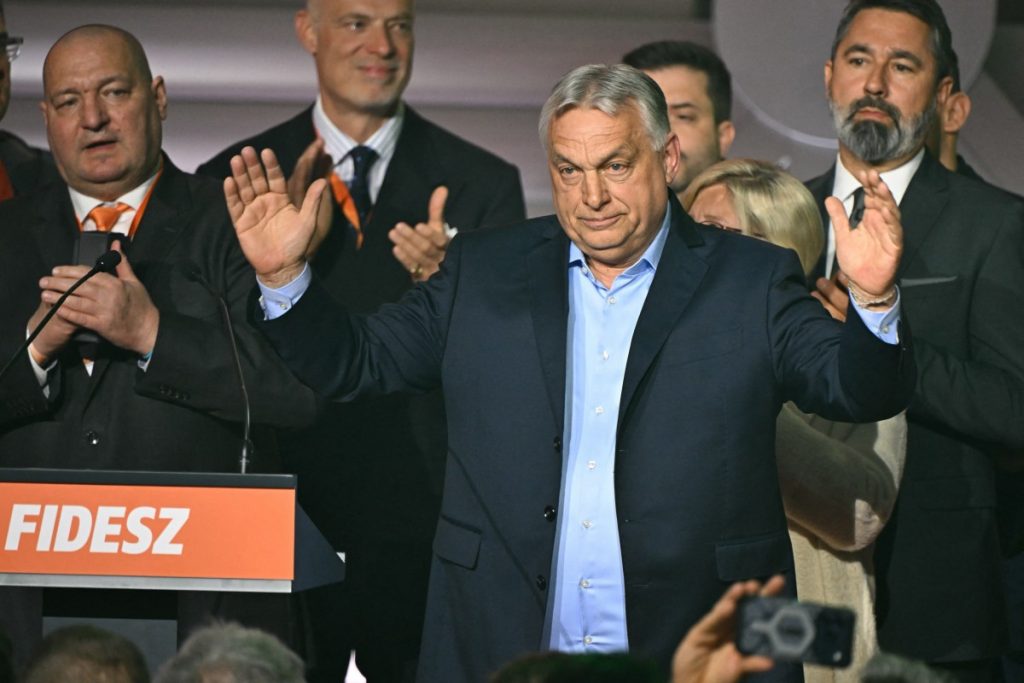
    Hungary’s Viktor Orban, who conceded defeat to his rival in parliamentary elections on Sunday, was for 16 years a dominant and divisive figure who constantly tweaked his country’s political system during his time in power.

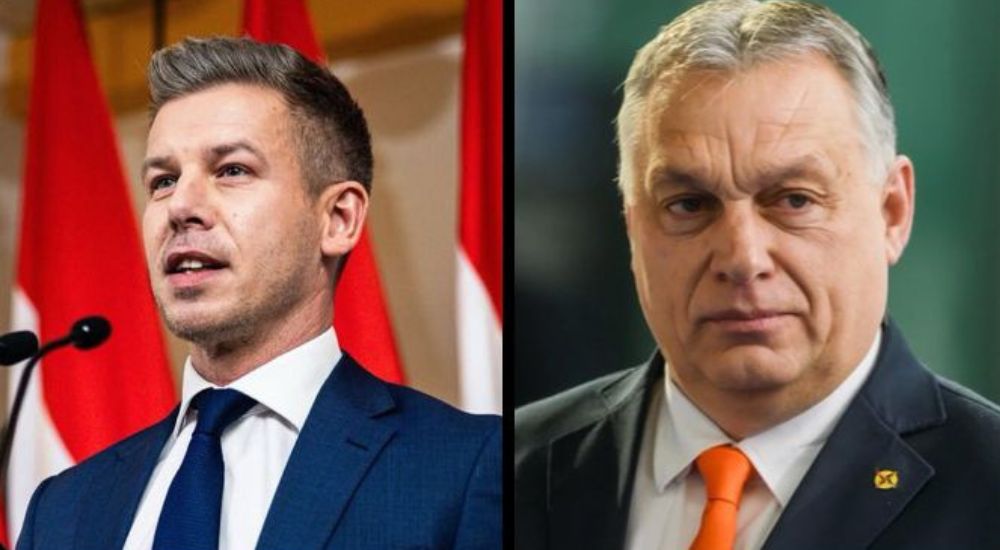
    But the self-styled “illiberal” politician saw his tight grip on power gradually weaken from 2024 when Peter Magyar, 45, a former government insider burst on to the scene.

    The 62-year-old nationalist was a close ally of US President Donald Trump, China and Russia, but a thorn in the side of the European Union establishment.

    Leading a central European country of just 9.5 million people, Orban cultivated an international reputation as a staunch opponent of immigration, LGBTQ rights and the West’s support for Ukraine against Russia’s invasion.

    He stood out among European political leaders “as someone different,” Emilia Palonen, associate professor at the University of Helsinki told AFP.

    “Illiberal political leaders look up to him as a role model, who has made it, managed to take power,” she added.

    – Learning from his mistakes –

    Orban became a household name during the dying days of communism in 1989 with a fiery speech demanding democracy and the withdrawal of Soviet troops.

    He was one of “new” Europe’s brightest stars, becoming a lawmaker in freshly democratic and optimistic Hungary in 1990.

    But he soon shed his image as a radical liberal and began moulding the Fidesz party he co-founded into a new conservative force preaching family and Christian values.

    The move paid off, and with Orban developing a rare knack for connecting with ordinary voters, he became prime minister in 1998 at just 35.

    His first period in office was rocky, resulting in a humiliating loss against the Socialists in 2002 and again in 2006.

    He bounced back, older and savvier in 2010.

    “The left was deeply unpopular back then, and, combined with the global economic downturn, this gave him a really fertile ground for a political shift,” Palonen said.

    Armed with a two-thirds majority in parliament, Orban implemented a root-and-branch reform of Hungarian state institutions and introduced a new constitution steeped in conservative values.

    “He has learned from his first term mistakes. He was able to push through sweeping changes rapidly, cementing his power,” Palonen added.

    – Orban system –

    Orban began remaking Hungary’s institutions, building a system he dubbed the “illiberal state” in 2014.

    “He managed to build up the political system around himself,” political scientist Attila Gyulai from the ELTE University’s Centre for Social Sciences told AFP.

    “All policy issues, ideological preferences, socio-cultural perceptions culminate in one referendum-like question: do you want Viktor Orban? Yes or no?”

    Orban’s detractors repeatedly accused him of undercutting the independence of the judiciary and academic freedom, muzzling the press and curtailing civil rights, generating clashes with the European Union.

    Orban turned this to his advantage, running multimedia campaigns around his tussles with “Brussels”, portraying himself as the protector of national interests.

    His governing Fidesz-KDNP coalition was re-elected with thumping majorities in the past three elections.

    Long part of the EU’s largest political family, the European People’s Party (EPP) and Fidesz split in 2021.

    The following year, the EU suspended billions of euros of funding earmarked for Hungary over corruption and rule of law concerns.

    Although Orban’s government undertook reforms that allowed some funds to be unblocked, billions of euros remain frozen.

    – Wearing out –

    After his 2022 electoral victory, Orban positioned himself as a geopolitical player, nurturing close ties with Trump, hard-right leaders and eastern autocracies.

    Just last week, US Vice President JD Vance visited Hungary to rally together with Orban, who Trump  described as a “truly strong and powerful leader”.

    Orban’s government also spent taxpayers’ money lavishly to promote his political model.

    He used Hungary’s six-month EU presidency in 2024 to undertake a self-styled peace mission to Moscow, infuriating fellow European leaders.

    But even as similar leaders rose to power around the globe, Orban’s domestic authority waned against a backdrop of economic stagnation, scandal and the emergence of the charismatic Peter Magyar.

    His authority also took a hit as record numbers attended the Budapest Pride march he sought to ban.

    “All of Orban’s domestic and foreign policy since 2010 were about changing the prevailing liberal values and political logic in Hungary, and beyond,” political scientist Gyulai said.

    “He certainly succeeded on leaving his mark,” he added, pointing to the EU’s hardening line on migration.

    “But he acted as a battering ram” so he could be the one who “wears out first,” he said.

    In the end, his focus on foreign policy and networks at the expense of domestic affairs cost him dearly.

    “Orban’s focus on external alliances, particularly his ostentatious closeness to Trump and Vance” was “less effective,” according to Bulcsu Hunyadi, an anayst with Political Capital.

    Vanguard News

    The post Hungary votes out prime minister Viktor Orbán after 16 years in power appeared first on Vanguard News.

  • Police begin investigation into killing of Agali in Lagos

    Police begin investigation into killing of Agali in Lagos

    By Efe Onodjae

    The Lagos State Police have begun an investigation into the shooting of Adedipe Adeyinkan, popularly known as “Agali,” which occurred on April 11, 2026, at about 11:30 p.m. on National Stadium Bridge, inward Iponri.

    In a late-night post on its official X page, the Lagos State Police Command stated that investigations had commenced following the reported shooting.

    The post read: “The Command is aware of the shooting incident involving Adedipe Adeyinkan, popularly known as ‘Agali,’ which occurred on April 11, 2026, at about 11:30 p.m. on National Stadium Bridge inward Iponri. The victim was rushed to Mainland General Hospital, Yaba, where he was confirmed dead.
    “Investigation is ongoing to ascertain the circumstances surrounding the incident.”
    Earlier on Saturday, our correspondent witnessed a white car and a black car at the scene, which appeared to be surrounded by uniformed police officers, although the scene initially suggested an accident. This was at about 11:52 p.m.
    While the police did not provide further details, reports circulating on social media platforms alleged that the deceased was a prominent figure within the Buccaneers confraternity in the Surulere axis.

    The post Police begin investigation into killing of Agali in Lagos appeared first on Vanguard News.

  • Magyar Wins Hungary Election, Ending Orbán’s 16-Year Rule

    Magyar Wins Hungary Election, Ending Orbán’s 16-Year Rule

    Orbán, leader of the ruling Fidesz, announced his concession on Sunday evening in Budapest, where he congratulated opposition leader Péter Magyar following the release of early results.

    “I acknowledge the decision of the Hungarian voters and congratulate the winner of the election,” Orbán said in remarks reported after the vote count began to indicate a lead for the opposition.

    Voting in the parliamentary election took place nationwide on Sunday, with polling stations opening in the morning and closing in the evening, according to election authorities. The vote determined all seats in Hungary’s National Assembly.

    Preliminary results released after polls closed showed Magyar’s Tisza Party leading with the highest share of votes, positioning the party to form a government pending final certification.

    Magyar said following the release of early counts: “We have won the trust of the Hungarian people and we are ready to govern,” according to local media reports.

    Hungary’s National Election Office has not yet released final certified results.

    Officials said the formal validation process will continue in the coming days before the results are confirmed.

    Magyar, a former member of Fidesz, entered politics after breaking with the ruling party and formed the Tisza Party, which campaigned on governance reforms, anti-corruption measures, and institutional restructuring.

    Orbán has served as prime minister since 2010, and previously held the office from 1998 to 2002. During his tenure, his government introduced constitutional and legislative reforms that were repeatedly criticised by the European Union over concerns including rule-of-law compliance, judicial independence, and media regulation.

    The election took place amid economic pressures, including inflation and rising living costs, which featured prominently in the campaign period.

    Election officials reported high voter turnout, reflecting strong public participation in a closely contested race.

    Under Hungary’s constitutional framework, coalition talks or government formation procedures are expected to begin once results are formally certified by the election authority.

    Orbán’s concession marks a political transition in Hungary after more than a decade of continuous rule, with the outcome expected to reshape the country’s domestic policy direction and its engagement with the European Union.

    Magyar Wins Hungary Election, Ending Orbán’s 16-Year Rule is first published on The Whistler Newspaper

  • Fayose Accuses Makinde Of Plot To Remove Olubadan

    Fayose Accuses Makinde Of Plot To Remove Olubadan

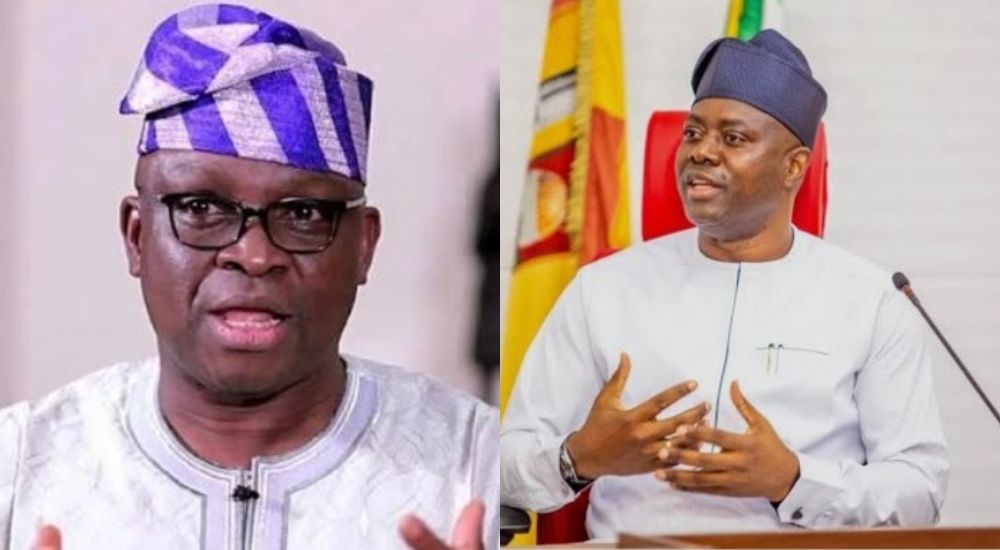
    Former Ekiti State Governor, Ayo Fayose, has alleged that Oyo State Governor, Seyi Makinde, is plotting the removal of the Olubadan of Ibadanland, Oba Rahidi Ladoja.

    The allegation comes amid recent speculation about a possible disagreement between the monarch and the state government.

    Recently, the Olubadan Palace dismissed claims of any rift between the traditional ruler and the governor, describing such reports as unfounded.

    In a statement, the palace said, “We wish to make it abundantly clear that there is no rift between Kabiyesi and Olori omo oba of Ibadanland.”

    It also addressed reports regarding the monarch’s absence at the coronation event, clarifying that the Olubadan did not deliberately avoid the ceremony.

    “In addition, the Olubadan did not travel out of Ibadan to avoid the coronation ceremony. Kabiyesi is hale and hearty in Ibadan and performing the role expected of him as Olubadan,” the statement added.

    The palace urged the public to disregard unverified claims and rely on official sources for accurate information.

    However, in a post on X on Sunday, Fayose claimed that the alleged plot by Makinde would begin with official queries against the monarch over his absence at a recent coronation ceremony.

    “ The plot is to commence this week, with Government Query to be issued against the Olubadan, citing his absence at the failed coronation of High Chiefs in Ibadanland two weeks ago, and other allegations,” Fayose wrote.

    Describing the governor as a ‘sigidi’, a statuette, Fayose said he would continue to watch his ignominious machinations.

    “As for us, we will be watching the Sìgìdì of Seyi Makinde tó fẹ́ se eré ẹ̀tẹ́,” he added.

    Fayose Accuses Makinde Of Plot To Remove Olubadan is first published on The Whistler Newspaper

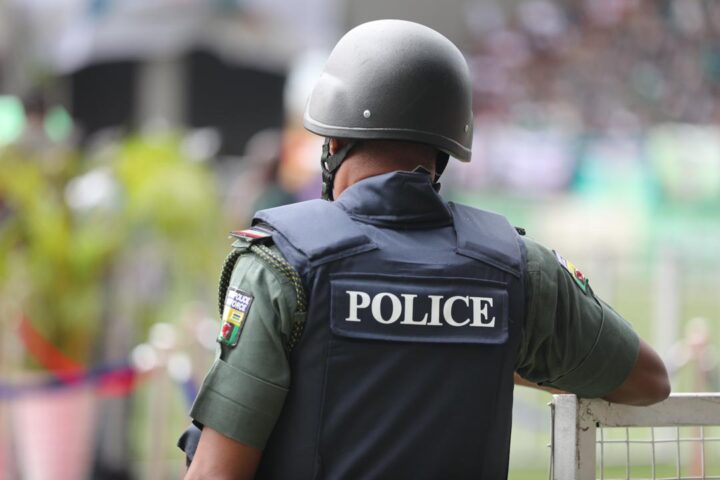
  • Police smash robbery syndicate, recover 450 motorcycles in Imo

    Police smash robbery syndicate, recover 450 motorcycles in Imo

    The Imo Police Command says it has dismantled a notorious robbery syndicate in a successful operation that led to the detention of five suspects and the recovery of 450 allegedly stolen motorcycles.

    The command’s Police Public Relations Officer (PPRO), DSP Henry Okoye, disclosed this at a news briefing in Owerri, on Sunday.

    Okoye said “the breakthrough followed a successful operation” that targeted armed robbery, attempted murder, and vehicle snatching across the state.

    He paraded the suspects before newsmen on behalf of the Commissioner of Police, Mr Audu Bosso.

    He said that the operatives also recovered N6.4 million cash and different number plates.

    Okoye said that the operation was conducted by operatives of the Anti-Kidnapping Unit, led by ACP Oladimeji Odeyeyiwa.

    “The investigation began on April 6, after a commercial shuttle bus driver, Mr Paul Ohaka, who left home for work on April 5, was declared missing.

    “Subsequently, the driver was found abandoned unconscious at Irete on the Onitsha Road axis, while the vehicle had been forcefully taken by unknown assailants.

    “The assailants had attacked him on April 5, assumed he was dead and fled with his vehicle,” Okoye said.

    He said the victim was immediately evacuated to a hospital, where he was said to be currently receiving medical attention.

    He said that detectives tracked the stolen bus to a workshop in Orlu.

    “During a coordinated operation, the vehicle was recovered just as the suspects were allegedly preparing to repaint it to hide its original identity,” Okoye said.

    He said that two suspects, identified as Olagoke Jelili and Godday Ezike, were apprehended at the workshop.

    He said that their detention provided “the lead needed to capture three additional members of the criminal gang”.

    According to the PPRO, the suspects reportedly tried to bribe the police with N5 million to escape justice.

    “However, the operatives rejected the cash, upholding the command’s zero-tolerance stance on corruption,” he said.

    He said that charms and other incriminating exhibits were also seized from the gang’s various hideouts.

    Okoye further said that the suspects were unable to provide valid proof of ownership of the recovered motorcycles.

    He said that the syndicate attempted to hide the bikes in bushes, where they were recovered.

    He said: “The Commissioner of Police has ordered a full-scale prosecution of all individuals involved.

    “The command remains committed to ensuring that criminal elements found no safe haven within the state,” Okoye said.

    The post Police smash robbery syndicate, recover 450 motorcycles in Imo appeared first on Vanguard News.

  • Air Force Investigates Reported Civilian Deaths In Jilli Operation

    Air Force Investigates Reported Civilian Deaths In Jilli Operation

    The Nigerian Air Force has launched an investigation into reports of alleged civilian casualties following an air strike in Jilli.

    In a statement issued on Sunday, the Air Force said it had received claims that a strike conducted on Saturday, may have impacted a local market, resulting in possible harm to civilians.

    The service states that it treats all reports of civilian casualties with “utmost seriousness and empathy,” noting that the protection of innocent lives remains a core priority of its operations.

    According to the statement, the Chief of the Air Staff has ordered the “immediate deployment of the Civilian Harm Accident and Investigation Cell (CHAI-Cell) to the affected area to carry out a fact-finding mission.”

    The Air Force reaffirmed its commitment to professionalism, accountability, and transparency, adding that it would collaborate with relevant authorities and community representatives to establish the facts surrounding the incident.

    While the investigation is ongoing, the service urged the public and media to avoid speculation and allow due process to take its course.

    It also reassured citizens of its resolve to balance national security objectives with the protection of civilian lives, stressing that all credible concerns would be addressed with diligence.

    Air Force Investigates Reported Civilian Deaths In Jilli Operation is first published on The Whistler Newspaper

  • Fire ravages residential building, shop in Ibadan

    Fire ravages residential building, shop in Ibadan

    Properties worth millions of naira have been destroyed as a result of fire that ravaged a residential building and shop in Oyo State.

    The two incidents occurred in Ibadan on Sunday.

    The residential building is located beside C.A.C Oke- Ayo, Idi- Obi Junction, Agugu Area in Ibadan.

    Properties worth millions of naira were affected.

    No casualty was recorded during the incident.

    Chairman of Oyo State Fire Service, Hon Maroof Akinwande, when contacted, confirmed the incident.

    Akinwande in a statement made available to DAILY POST on Sunday said, “On getting there, it was a five-bedroom flat at the upper floor of a storey-residential building well alighted and covered with thick smoke.

    “We swiftly got into action and the fire was restricted from gaining momentum.”

    Akinwande also confirmed the second incident.

    He said that the shop located at No C12, Ajomole Compound Olukoyi Street, Oja Oba in Ibadan was ravaged by fire on Sunday.

    He said, “Upon arrival, we met a prefabricated shop well alighted and covered with thick smoke.

    “Our officers quickly launched a coordinated attack and restricted the fire from spreading to the other nearby shops”.

    Fire ravages residential building, shop in Ibadan