Blog

  • FG Amends Charges Against Malami, Removes Terrorism Financing Allegation

    FG Amends Charges Against Malami, Removes Terrorism Financing Allegation

    The Federal Government has amended the charge against former Attorney-General of the Federation, Abubakar Malami, SAN, and his son, Abdulaziz Malami, removing the terrorism financing allegation, according to TheCable.

    At the Federal High Court in Abuja, counsel to the Department of State Services (DSS), Akinlolu Kehinde, SAN, informed Justice Joyce Abdulmalik of the amendment and applied for substitution of the original charge.

    Counsel to the defendants, Shaibu Aruwa, SAN, confirmed service of the amended charge and raised no objection. Both defendants pleaded not guilty.

    Justice Abdulmalik allowed them to continue on their existing bail conditions and adjourned the case to May 26 and June 15 for trial.

    According to the amended charge, arms and live cartridges were allegedly recovered from the Malami family residence in Birnin Kebbi.

    Malami and his son were initially arraigned on February 3 on a five-count charge that included terrorism financing and unlawful possession of firearms.

    The former Attorney-General, who served under President Muhammadu Buhari from 2015 to 2023, is also facing separate proceedings involving alleged money laundering and asset forfeiture linked to the Economic and Financial Crimes Commission (EFCC). He has denied all allegations.

    FG Amends Charges Against Malami, Removes Terrorism Financing Allegation is first published on The Whistler Newspaper

  • NELFund intervention has revolutionised tertiary education — FUTI’s acting VC

    NELFund intervention has revolutionised tertiary education — FUTI’s acting VC

    The Acting Vice Chancellor, Federal University of Technology, Ilaro (FUTI), Dr Mikhail Akindele, has said that the Nigerian Education Loan Fund (NELFund) intervention has removed financial barriers of indigent students to have access to tertiary education. Akinde stated this while speaking with newsmen at a media chat on the activities of the institution’s 23rd convocation […]

  • IMF Backs Nigeria’s Banking Sector Recapitalisation, Urges Fiscal Nigeria

    IMF Backs Nigeria’s Banking Sector Recapitalisation, Urges Fiscal Nigeria

    The International Monetary Fund (IMF) has backed Nigeria’s ongoing bank recapitalisation programme, saying it is key to strengthening the country’s financial system.

    The endorsement came from Tobias Adrian, IMF’s Financial Counsellor and Director of the Monetary and Capital Markets Department, during the presentation of the Global Financial Stability Report at the IMF/World Bank Spring Meetings in Washington, D.C.

    Adrian noted that strengthening capital buffers in the banking sector has enhanced resilience against global financial shocks and economic uncertainties.

    He explained that well-capitalised banks are better equipped to absorb economic disruptions, sustain lending activities, and support overall financial stability.

    According to him, the importance of recapitalisation becomes more evident during periods of financial stress, when strong capital positions help safeguard the banking system.

    The International Monetary Fund also stressed the need for sound fiscal management, particularly for emerging economies like Nigeria.

    Adrian said maintaining strong fiscal buffers would help countries manage volatile capital flows and reduce vulnerability to sudden market shifts. He added that stable fiscal conditions are essential for sustaining macroeconomic growth and investor confidence.

    The IMF official further highlighted the impact of global developments on financial markets, noting that ongoing tensions in the Middle East have significantly influenced capital movements.

    He observed that capital flow reactions in emerging markets, including those in Sub-Saharan Africa, have been more pronounced than during earlier global crises. Despite these shifts, Adrian said market price reactions have remained relatively stable, reflecting continued investor confidence.

    Also speaking, Jason Wu pointed out that capital inflows to emerging markets are increasingly driven by debt rather than foreign direct investment.

    He warned that this trend could pose risks to long-term financial stability if not properly managed.

    Wu emphasised that countries with stronger fiscal frameworks tend to benefit from lower borrowing costs and improved access to international capital markets. He urged governments to sustain fiscal reforms to mitigate risks associated with capital flow volatility.

    The IMF reiterated that maintaining financial discipline and strengthening economic policies remain critical for long-term stability, particularly in developing economies.

    IMF Backs Nigeria’s Banking Sector Recapitalisation, Urges Fiscal Nigeria is first published on The Whistler Newspaper

  • FULL LIST: 226 LGAs in 33 states, FCT at high flood risk — FG

    FULL LIST: 226 LGAs in 33 states, FCT at high flood risk — FG

    The Minister of Water Resources and Sanitation, Professor Joseph Utsev, has said that 226 local government areas across 33 states and the Federal Capital Territory have been identified as high flood-risk areas for this year. He made this known on Wednesday during the public presentation of the 2026 Annual Flood Outlook by the Nigeria Hydrological […]

  • FG re-arraigns ex AGF, Malami, son on amended alleged terrorism charge

    FG re-arraigns ex AGF, Malami, son on amended alleged terrorism charge

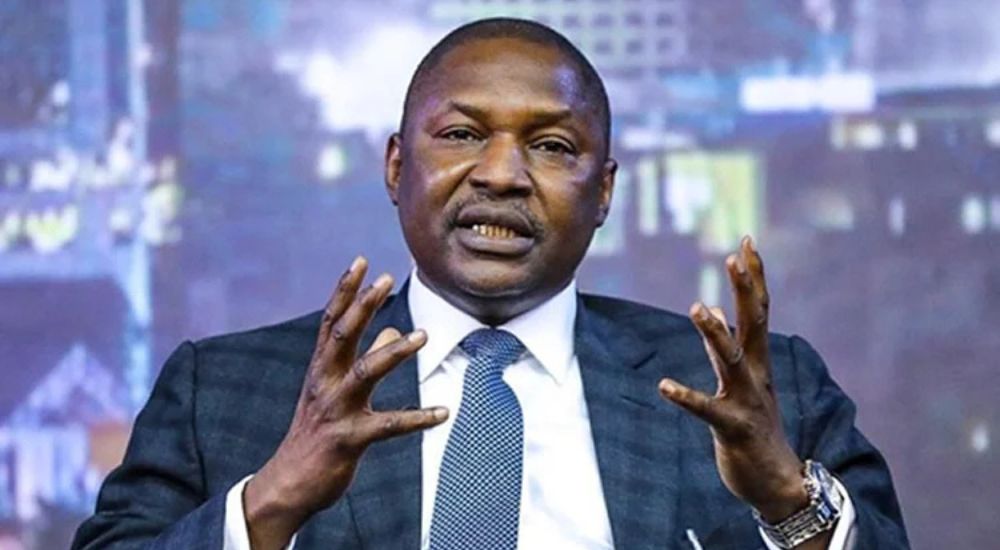
    The federal government on Wednesday re-arrianged a former Attorney-General of the Federation, AGF, and Minister of Justice, Abubakar Malami and his son, Abdulaziz Abubakar Malami, on a five-count amended charge.

    The new charge read against them before Justice Joyce Abdulmalik of the Federal High Court, Abuja, borders on alleged terrorism and unlawful possession of firearms.

    At Wednesday’s proceedings, which was supposed to be the commencement of trial, Mr Akinlolu Kehinde, SAN, who announced appearance for the prosecution, informed the court of a new charge which he intended to substitute with the earlier one, adding that the amended charge has already been served on the defendants.

    Counsel to Malami and his son, Mr Shuaibu Arua, SAN, who confirmed service, told the court that the defendants are not in objection.

    Following the non opposition to the amended charge, Justice Abdulmalik struck out the former charge and ordered that the new charge be read against the defendants.

    They pleaded not guilty to all the counts and their lawyer prayed the court to permit them to enjoy the earlier bail granted them.

    The request was granted by the court since the prosecution did not object.

    Recall that the court had on February 27, granted them bail in the sum of N200 million each with two sureties in like sum.

    The court subsequently fixed May 26, for the prosecution to call witnesses and tender exhibits to prove its case against the defendants.

    It will be recalled that the former AGF and his son were arraigned on February 3, on a five-count criminal charge, bordering on abetting terrorism financing and unlawful possession of arms and ammunition.

    However, in the amended charge, the defendants were in count one alleged to have sometime in December, 2025, at Geeze Phase II Area, Birnin Kebbi LGA, Kebbi State ….”did engage in preparation to commit acts of terrorism by having in your possession and without license, a Sturm Magnum 17 – 0101 firearm, Sixteen (16) Redstar AAA 5’20 live rounds of Cartridges and Twenty-Seven (27) expended Redstar and thereby committed an offence contrary to and punishable under Section 29 of the Terrorism (Prevention and Prohibition) Act, 2022″.

    In count two they were alleged to have conspire amongst themselves in preparation to commit acts of terrorism by having in their possession and without a license a Sturm Magnum 17 – 0101 firearm, Sixteen (16) Redstar AAA 5’20 live rounds of Cartridges and Twenty-Seven (27) expended Redstar, contrary to Section 26 (1) of the Terrorism (Prevention and Prohibition Act) 2022 and punishable under Section 26 (3) (a) and (b) of the Terrorism (Prevention and Prohibition Act) 2022.

    Count three reads: That you, Abubakar Malami, Adult, Male, and Abdulaziz Abubakar Malami, Adult, Male, sometime in December, 2025, at Geeze Phase II Area, Birnin Kebbi LGA, Kebbi State within the jurisdiction of this Honourable Court, without a license, did have in your possession a Sturm Magnum 17 – 0101 firearm and thereby committed an offence contrary to Section 3 of the Firearms Act, CAP F28, Laws of the Federation of Nigeria, 2004 and punishable under Section 27 (1) (a) (i) of the Firearms Act, CAP F28, Laws of the Federation of Nigeria, 2004.

    Count four reads, “That you, Abubakar Malami, Adult, Male, and Abdulaziz Abubakar Malami, Adult, Male, sometime in December, 2025, at Geeze Phase II Area, Birnin Kebbi LGA, Kebbi State within the jurisdiction of this Honourable Court, without a license, did have in your possession Sixteen (16) Redstar AAA 5’20 live rounds of Cartridges and thereby committed an offence contrary to Section 8 (1) (b) (ii) of the Firearms Act, CAP F28, Laws of the Federation of Nigeria, 2004 and punishable under Section 27 (1) (a) (i) of the Firearms Act, CAP F28, Laws of the Federation of Nigeria, 2004.

    Count five, “That you, Abubakar Malami, Adult, Male, and Abdulaziz Abubakar Malami, Adult, Male, sometime in December, 2025, at Geeze Phase II Area, Birnin Kebbi LGA, Kebbi State within the jurisdiction of this Honourable Court, without a license, did have in your possession Twenty-Seven (27) expended Redstar AAA 5’20 live rounds of Cartridges and thereby committed an offence contrary to Section 8 (1) (b) (ii) of the Firearms Act, CAP F28, Laws of the Federation of Nigeria, 2004 and punishable under Section 27 (1) (a) (i) of the Firearms Act, CAP F28, Laws of the Federation of Nigeria, 2004.

    FG re-arraigns ex AGF, Malami, son on amended alleged terrorism charge
  • Oil Disruption Drives Japan To Expand Crude Purchases From Nigeria

    Oil Disruption Drives Japan To Expand Crude Purchases From Nigeria

    Japan has increased its crude oil imports from Nigeria as refiners scramble to offset supply disruptions from the Middle East following the outbreak of the Iran war, signalling a notable shift in global oil trade flows and creating new export opportunities for Nigeria and other non-Middle Eastern producers.

    Industry data released by the Petroleum Association of Japan showed that refinery utilisation rates remained subdued at 67.8 per cent for the week ended April 11, largely unchanged from 67.7 per cent in the preceding week.

    The figures remain significantly below the over 80 per cent levels recorded prior to the escalation of hostilities in late February, underscoring the operational strain on Japanese refiners amid constrained crude availability.

    The disruption has been particularly impactful given Japan’s heavy reliance on Middle Eastern crude, which typically accounts for about 95 per cent of its total imports.

    The ongoing conflict has complicated shipments through the Strait of Hormuz, a critical chokepoint for global oil supplies, forcing Japanese buyers to urgently diversify their sourcing strategy.

    Officials indicated that the supply outlook could improve marginally in the coming weeks, supported by the release of crude from Japan’s strategic petroleum reserves and efforts to secure alternative supplies.

    So far, the country has managed to replace more than half of the volumes it imported via the Strait of Hormuz in May last year.

    Nigeria has emerged as one of the key beneficiaries of this shift, alongside other oil-producing nations such as Malaysia, Azerbaijan, Brazil and Angola.

    The increased demand for Nigerian crude reflects its compatibility with certain refining configurations and its availability in the spot market, even as logistical and technical constraints limit the pace of substitution.

    Despite the diversification push, analysts caution that Japan’s ability to fully replace Middle Eastern crude remains limited. Many of the country’s refineries are specifically configured to process medium-sour grades typical of the Middle East, making large-scale substitution with alternative crude types operationally challenging.

    According to an analyst at Rystad Energy, Nithin Prakash, , Japan could increase the share of non-Middle Eastern crude in its import mix to between 30 and 50 per cent in the short term.

    However, he noted that a complete transition away from Middle Eastern supply is unlikely due to structural refinery constraints and feedstock optimisation requirements.

    To navigate these limitations, refiners are expected to adopt blending strategies, combining residual Middle Eastern crude with light-sweet grades from the United States and West Africa, including Nigeria, as well as medium grades from the Caspian region and parts of Latin America.

    This shift in crude slate composition is also expected to influence product yields. Analysts project higher output of gasoline and naphtha, while production of diesel and jet fuel could decline, reflecting the lighter nature of the substitute crude grades.

    For Nigeria, the development presents a short-term boost to crude export demand amid ongoing efforts to stabilise oil production and improve foreign exchange earnings.

    However, the sustainability of this demand will depend on the duration of the Middle Eastern disruption and Japan’s longer-term energy sourcing strategy.

    Oil Disruption Drives Japan To Expand Crude Purchases From Nigeria is first published on The Whistler Newspaper

  • 2027: Kwara South parades most qualified guber aspirants — APC stakeholders

    2027: Kwara South parades most qualified guber aspirants — APC stakeholders

    In the build up to the 2027 governorship election in Kwara state, members of the All Progressives Congress (APC) in

  • Moniepoint Shifts Fraud Risk To POS Operators

    Moniepoint Shifts Fraud Risk To POS Operators

    … New Terms Allow Debits Without Notice

    Thousands of POS operators across Nigeria may be unknowingly exposed to sweeping financial and legal risks under the latest agency banking terms issued by Moniepoint Microfinance Bank Limited.

    A review of the agreement reveals that agents, many of them small business owners, bear near-total liability for fraudulent transactions, even in cases involving staff errors or suspected customer scams.

    The contract, which was made available to THE WHISTLER, empowers the bank to debit agents’ accounts directly to recover losses, legal costs, or disputed transactions, often without prior notice.

    “In the event of the occurrence of an event that leads to any damage, loss, liability or expense to Moniepoint MFB as stated in this clause 19, the Agent hereby agrees and authorises Moniepoint MFB to immediately debit its Account without recourse to the Agent,” the contract read.

    Even more concerning, the bank reserves the right to suspend or terminate an agent’s account based on “reasonable suspicion”, poor performance, or failure to meet transaction targets, leaving operators vulnerable to sudden business shutdowns.

    “You hereby authorizes Moniepoint MFB to place a restriction on Your Account if there is reasonable suspicion of fraud in connection with Your Account, and/or the provision of the Agent Service, if You fail to meet agreed targets communicated by Moniepoint MFB from time to time, or if You
    breach any provision of these Terms of Use,” they added.

    Under the terms, agents must also comply with strict regulatory obligations aligned with Central Bank of Nigeria guidelines, including collecting customer identification, enforcing transaction limits, and maintaining records for up to five years, effectively operating as frontline financial institutions.

    “You shall ensure that KYC documents (i.e. national card, driving license, voter’s card or
    international passport) are sighted from Customers before performing Transactions and on their behalf.

    “Additionally, for all instant transfers conducted by Customers, you shall collect
    and store a copy of their government issued means of identification prior to consummating Transactions instituted by such Customers.

    “The name and photo identification of Customers
    must at all times match the name on the payment card presented,” Moniepoint added in the contract.

    Liability on the bank’s side is capped, while agents face broad indemnity obligations covering fraud, customer disputes, and regulatory penalties.

    Industry observers say the terms reflect a growing trend in Nigeria’s agency banking sector, where fintech platforms expand rapidly by outsourcing operational risk to independent agents.

    For many POS operators, the opportunity remains profitable, but experts warn that without strict internal controls, proper staff training, and fraud awareness, the business could quickly turn from a source of income into a significant financial liability.

    Moniepoint Shifts Fraud Risk To POS Operators is first published on The Whistler Newspaper

  • Lots of Nigerian artists reduce their age for record labels, deals’ – Odumodublvck claims

    Lots of Nigerian artists reduce their age for record labels, deals’ – Odumodublvck claims

    Rapper Tochukwu Ojogwu, popularly known as Odumodublvck, has alleged age-cheating in the Nigerian music industry.
    Speaking during a recent livestream with streamer Enzo, Odumodublvck alleged that a lot of Nigerian artists lied about their ages by reducing it to appeal to record labels and brands that cater for particular age grades.

    He claimed that a lot of investors in the music industry shy away from investing in older artists.

    “I am 32 and I don’t bother myself for getting things right at this age. A lot of artists reduce their age because of record labels and partnership deals. You know a lot of investors in the music industry wouldn’t want to invest in older artists,” he expressed.

    Lots of Nigerian artists reduce their age for record labels, deals’ – Odumodublvck claims

  • Kwara North leaders back Tinubu’s reelection bid, beg for APC guber ticket

    Kwara North leaders back Tinubu’s reelection bid, beg for APC guber ticket

    The constituents of the Kwara North Senatorial District of Kwara State have thrown their weight behind the second-term bid of President Bola Ahmed Tinubu. At a mega rally organised in Ilorin, they noted that Tinubu has performed well to deserve a second term in office. The former Speaker of the State House of Assembly and […]