Blog

  • World Athletics Blocks Ofili’s Switch To Turkey

    World Athletics Blocks Ofili’s Switch To Turkey

    World Athletics has rejected an application by Turkey to switch the allegiance of Nigerian sprinter Favour Ofili, dealing a significant blow to the athlete’s proposed nationality change ahead of the 2028 Olympic Games.

    The decision was contained in a document made available to journalists on Thursday.

    According to the document, the World Athletics Nationality Review Panel ruled that the application submitted by the Türkiye Athletics Federation would not be approved after reviewing the circumstances surrounding the request.

    The panel, comprising Donna Raynor, Cydonie Motherskill and Susanne van Waert, said granting the request would undermine key regulatory principles guiding international athletics.

    It noted that the application was part of a wider recruitment drive involving multiple athletes and raised concerns about its implications for the integrity of global competitions.

    It added that the panel reviewed submissions from all parties, including the athlete and the Turkish federation, before reaching its conclusion.

    “The Application by the TAF for Favour OFILI (the ‘Athlete’) to transfer allegiance from NGR to TUR is not approved,” the World Athletics panel stated.

    World Athletics further explained that under its eligibility rules, it retains discretionary powers to reject nationality switches where broader institutional objectives are threatened.

    The panel concluded that approving the move would compromise those objectives, particularly those aimed at maintaining fair competition and encouraging nations to develop homegrown talent.

    They also highlighted that Turkey’s application was one of 11 submitted as part of what it described as a government-backed recruitment drive targeting foreign athletes with lucrative contracts in a bid to bolster its international competitiveness ahead of the Los Angeles 2028 Olympic Games.

    According to the panel’s findings, such a strategy risks weakening the credibility of national representation by encouraging athletes to switch allegiance primarily for financial or competitive advantage rather than genuine national ties.

    Despite reviewing Ofili’s grievances with Nigerian athletics authorities, the panel said the issues did not outweigh the broader regulatory concerns.

    It noted that the sprinter last represented Nigeria at the Paris 2024 Olympic Games and had since acquired Turkish citizenship, signed a long-term contract and indicated plans to relocate.

    However, those developments were not sufficient to justify approval under the existing rules.

    The document added, “Because the Application is not approved, the Athlete is not entitled to transfer allegiance to TAF and is not eligible to represent TUR in National Representative Competitions.”

    However, the ruling clarified that Ofili remains free to compete in international meetings in a personal or club capacity and can continue to live and train in Turkey if she chooses.

    Ofili had announced her intention to switch allegiance in September 2025, citing dissatisfaction with the handling of her career by Nigerian athletics authorities.

    The 23-year-old is one of Nigeria’s top sprinters and set a world record in the 150m in 2025.

    Agency report

    World Athletics Blocks Ofili’s Switch To Turkey is first published on The Whistler Newspaper

  • 2027: If Peter Obi leaves ADC then he’s working for Tinubu – Kenneth Okonkwo

    2027: If Peter Obi leaves ADC then he’s working for Tinubu – Kenneth Okonkwo

    Veteran Nollywood actor, lawyer and politician, Kenneth Okonkwo, has said any move by Peter Obi to leave the African Democratic Congress, ADC, would be a confirmation that the former Anambra State Governor is working for President Bola Tinubu.

    Speaking in an interview on Channels Television, the former Labour Party chieftain was asked about the whispers of Obi leaving the ADC should he fail to grab the single presidential ticket of the party.

    Okonkwo said ‘any of the aspirants who leaves the party must have been secretly working for Tinubu.’

    Peter Obi, who was the presidential candidate of the Labour Party in 2023 is one of the leading contenders for the ADC ticket and the list also has the likes of former vice president, Atiku Abubakar, former Rivers State governor, Chibuike Amaechi amongst others.

    “If he[Obi] leaves, will he now be a mobile squadron? Anybody, any presidential, aspirant in ADC, seeing what everybody is going through in ADC, that leaves ADC for another party is a mobile squatter. That’s one” Okonkwo said.

    “Then two, he is working for Tinubu. Because if all the coalition leaders are facing through all this crisis, even with unity, then what do you think one person can do going out?

    “Anybody that goes out of the coalition is compromised and is working for Tinubu, whoever that person is.”

    Recall that Atiku had while speaking in an interview on Arise News on Wednesday, promised to work with and support whoever emerges as the party’s presidential candidate through a consensus or elected to through the primaries.

    2027: If Peter Obi leaves ADC then he’s working for Tinubu – Kenneth Okonkwo

  • Why El-Rufai Cannot Go Home Despite Bail

    Why El-Rufai Cannot Go Home Despite Bail

    On the morning of Tuesday, April 14, 2026, a Federal High Court in Kaduna delivered a ruling that should, in ordinary circumstances, have set Nasir Ahmad El-Rufai free.

    Justice Rilwanu Aikawa granted the former Kaduna State governor bail in the sum of N200 million, ending weeks of anticipation since his arraignment by the Independent Corrupt Practices and Other Related Offences Commission on a sweeping nine-count charge of fraud and abuse of office.

    But El-Rufai did not walk out of custody. He could not. And the reasons why illuminate, with uncomfortable clarity, the labyrinthine nature of Nigeria’s criminal justice architecture — and the extraordinary legal jeopardy facing a man who, not long ago, was among the most powerful governors in the country.

    Two Courts, One Man, No Exit

    The arithmetic of El-Rufai’s predicament is straightforward even if its legal mechanics are not. The former governor faces two separate criminal cases in two separate courts. The Federal High Court has granted him bail. The Kaduna State High Court, before which another criminal matter is pending, has not. Justice Darius Khobo of the state court adjourned ruling on a bail application in that case to April 21.

    Until both courts grant bail and El-Rufai satisfies the conditions attached to each, he stays in custody.

    “There are two cases against the former governor in two different courts,” explained Kaduna-based legal practitioner Barrister El Zubair Abubakar, who followed the proceedings closely.

    “The Federal High Court has granted him bail, and he can only be released after meeting those conditions, but that is limited to that court. In reality, he will not be released yet because he is facing another trial in a different court that has not granted bail.”

    Abubakar expressed cautious optimism that the state court would likely grant bail when it rules on April 21, noting that the offences charged are generally bailable under Nigerian law. But optimism is not certainty, and El-Rufai’s freedom remains suspended between two judicial calendars.

    The Federal High Court’s bail, when he does qualify for it, comes with approximately ten conditions, according to Hayatudeen Lawal Makarfi, an associate who spoke to journalists after Tuesday’s ruling.

    Among them: El-Rufai must provide a surety with landed property and a traditional title, is barred from making any public comments on the case, and must attend every court sitting. The conditions are stringent — befitting, the court apparently determined, the gravity of the allegations before it.

    The Long Road to the Dock

    El-Rufai’s current legal ordeal did not begin in Kaduna in 2026. Its roots stretch back to the final months of his governorship and the turbulent transition that followed the 2023 elections, when he left office amid controversy and growing calls for accountability over his administration’s financial conduct.

    The former governor — once celebrated in technocratic circles for his earlier stint as Minister of the Federal Capital Territory under President Olusegun Obasanjo, and later feared for his iron-fisted style in Kaduna — spent years after leaving office navigating a rapidly shifting political landscape. His public break with the ruling All Progressives Congress, and his alignment with opposition voices, preceded his eventual arrest.

    He was first taken into custody by the Economic and Financial Crimes Commission on February 19, 2026.

    After a period in EFCC detention, he was transferred to the ICPC. He was briefly released on March 27 on compassionate grounds to attend the burial of his mother — a moment of humanising pause in an otherwise relentless legal onslaught — before returning to custody.

    The ICPC formally arraigned him on an amended nine-count charge on Monday, April 13, the day before the bail ruling.

    The Weight of the Charges

    The charges the ICPC has laid at El-Rufai’s feet are, by any measure, serious. They paint a picture of alleged systematic abuse of executive power across multiple domains — public finance, procurement, land administration, and personal enrichment.

    The most financially significant allegation concerns a light rail project. The ICPC alleges that El-Rufai induced the Kaduna State Government to release approximately N11 billion to an unregistered entity for the project — a project that was never executed. If proven, it would represent one of the most brazen instances of public fund diversion in recent Nigerian state governance.

    A second count targets what the commission describes as a grossly inflated severance allowance. The ICPC alleges that El-Rufai approved and received about N289.8 million as severance — nearly fifteen times the legally entitled sum of approximately N20 million — thereby, in the commission’s words, conferring a corrupt advantage on himself.

    A third allegation strikes at Nigeria’s relationship with international development finance.

    The commission accuses the former governor of mismanaging over $1.08 million drawn from a World Bank loan to Kaduna State, in violation of the terms of the loan agreement. Such an allegation, if established, carries implications beyond domestic law, touching on Nigeria’s credibility with multilateral lenders.

    Other counts are equally pointed. El-Rufai allegedly conspired with an associate — said to be at large — to offer monetary inducements to federal investigators seeking to compromise an ongoing probe involving a private firm.

    He is also accused of unlawfully awarding a N4.6 billion CCTV contract in the Kaduna metropolis in breach of procurement laws, and of using the same contract to confer undue advantage on a connected associate.

    The land-related charges round out the indictment. The ICPC accuses the former governor of abusing his office in the revocation and reallocation of a parcel of land along the Kaduna–Zaria bypass, allegedly to benefit an associate and related companies — and of criminal breach of trust in relation to the same property.

    El-Rufai has denied all the allegations.

    A co-defendant, Amadu Sule, was dropped from the amended charge, narrowing the dock to El-Rufai alone.

    Son Speaks, Lawyers Stay Silent

    The courtroom gallery on Tuesday included the former governor’s son, Bello El-Rufai, who represents Kaduna North in the House of Representatives. When the ruling came, it was Bello who stepped forward to address waiting journalists — his father’s lead counsel, Ubong Akpan, declining to comment.

    Bello El-Rufai’s remarks struck a careful balance between relief, restraint, and a pointed message to the media.

    “We are, of course, happy that he has been granted bail today,” he said, before adding a caution that echoed inside the court itself.

    “Let me make it clear once again that there is media opinion and there is legal opinion. It is wrong to speculate on what happens in a court of law.”

    He was emphatic that he spoke as a son, not as a legal voice. “The lawyers are best placed to address those questions,” he said, while expressing pride in his father and confidence in Nigeria’s institutions.

    “We are proud of Malam, we are proud of this country, and we are proud of the rule of law.”

    He urged the press to cover the unfolding trial objectively — a request that, given the national profile of the accused and the scale of the allegations, will be tested at every sitting.

    The Bigger Picture

    El-Rufai’s case is not unfolding in isolation. It is one of several high-profile prosecutions of former Nigerian governors and federal officials that have accelerated under the current administration — a pattern that critics describe as selective justice and supporters frame as long-overdue accountability.

    The charges against him also arrive at a moment of intense scrutiny of Nigeria’s fiscal management, as fresh data from the World Bank and the Debt Management Office lay bare the structural problems that accumulated across years of governance at both federal and state levels.

    The N11 billion light rail allegation, in particular, resonates against a backdrop of infrastructure projects nationwide that gulped public funds and delivered little.

    For now, the trial is scheduled to commence in earnest, with dates fixed for May 26 and June 15. The Kaduna State High Court will deliver its bail ruling on April 21.

    Between those dates, El-Rufai — once the man who demolished structures and moved markets as FCT minister, who governed Kaduna with a combination of policy boldness and executive force — remains in custody, his freedom contingent on the simultaneous satisfaction of two courts.

    It is, as Barrister Abubakar put it with clinical precision, “technically” not yet time to go home.

    Why El-Rufai Cannot Go Home Despite Bail is first published on The Whistler Newspaper

  • APC Sure Of Winning Kano, Kaduna, Sokoto – Yilwatda

    APC Sure Of Winning Kano, Kaduna, Sokoto – Yilwatda

    The ruling All Progressives Congress APC has expressed strong confidence in its chances ahead of the 2027 general elections, saying the APC has consolidated its hold on key swing states in the Northwest and is well positioned to dominate the polls.

    Speaking during a media chat monitored in Abuja on Wednesday, national chairman of the party, Prof. Nentawe Yilwatda, conducted a state-by-state breakdown of the party’s political standing, starting with Kano, which he described as already secured.

    “I can assure you that Kano is a given to us as APC, and it is a swing state in the Northwest,” he said.

    The chairman identified three major political blocs in Kano which includes the Ganduje bloc, the Kwankwaso bloc, and the Shekarau bloc arguing that the APC has significantly weakened opposition structures while reinforcing its own.

    On the Senator Rabiu Kwankwaso threat, he said most of the votes the former governor attracted in 2023 came not from his own base but from disgruntled APC members who temporarily defected.

    He said those members have since returned.

    “It wasn’t Kwankwaso alone who delivered those votes. It was mostly aggrieved members of APC who moved to Kwankwaso and strengthened him. The two senators are back to APC. The House of Representatives, except one, have all moved to APC.

    “The entire House of Assembly, only one remains. All the local government chairmen and councillors have all defected to APC. It leaves Kwankwaso vulnerable and weakened. We are strengthened,” said Yilwatda.

    He also revealed that he personally travelled to Kano to court the Shekarau and Gwarzo blocs, spending two days in the state in ongoing negotiations.

    “I sat down with them, I engaged them, and we met with them. From all the exco of PDP, the structure of both Gwarzo and Shekarau, they were all with me,” he said.

    Turning to Kaduna, the second major swing state in the Northwest, Prof. Yilwatda said the APC has resolved longstanding grievances that had previously cost the party significant votes, particularly in Southern Kaduna.

    “The entire Southern Kaduna that used to go against us, they have all returned to APC. What was their grievance? Their grievance was with former Governor Nasir El-Rufai. El-Rufai is now in ADC. So the entire structure of Southern Kaduna is with us,” he said.

    He also dismissed concerns about the APC’s standing in Zaria, El-Rufai’s home base, saying very few people had followed the former governor out of the party.

    “We had an election in Zaria. He campaigned; he was on top of vehicles; he was everywhere campaigning. But how many people moved out of APC from there? Numbers are very few. Zaria is intact. Kaduna is intact. We are about to have more votes in Kaduna than before,” he said.

    On Sokoto, the third swing state he assessed, Prof. Yilwatda said the APC controls three out of four major political structures in the state.

    “The governor’s structure is intact. We have three out of four,” he said, expressing confidence that the state would deliver for the party.

    Across all three states, the APC chairman painted a picture of a party that has not only held its ground but grown stronger since the 2023 elections, absorbing defectors from opposition ranks while shoring up its own structures ahead of what promises to be a fiercely contested 2027 race.

    APC Sure Of Winning Kano, Kaduna, Sokoto – Yilwatda is first published on The Whistler Newspaper

  • Police officer arrested over killing of fuel attendant in robbery

    Police officer arrested over killing of fuel attendant in robbery

    The Niger State Police Command has arrested a serving Mobile Police officer over his alleged role in a deadly armed robbery that led to the killing of a fuel attendant in Kontagora Local Government Area.

    Security analyst Zagazola Makama, in a post on X, said the incident happened on April 15, 2026, at about 2:40 p.m., after a distress call reported an armed robbery at Garun Mallam Filling Station, behind BCG Garage, Kontagora.

    Security sources told Makama that two armed men, one dressed in a mobile police uniform and riding a motorcycle, stormed the station after buying fuel and demanded money from the attendant.

    When the attendant, 22-year-old Jibrin Inuwa of Garun Mallam, resisted, he was shot in the chest and the suspects fled with an undisclosed sum.

    He was rushed to the General Hospital, Kontagora, where he was confirmed dead and later released to his family for burial according to Islamic rites.

    Police patrol teams from ‘A’ Division Kontagora, led by the Divisional Police Officer, later trailed the suspects to the Dadinkowa area behind a vigilante office, where a gun duel ensued.

    “The suspect was later identified as a serving Mobile Police officer, Insp. Jido Ahmed, attached to 61 PMF Kontagora but currently on special duty in Agwara,” the sources said.

    The injured officer was treated at the General Hospital, Kontagora, before being referred to the Police Clinic in Minna.

    An AK-47 rifle (No. 38262) and 12 rounds of 7.62mm ammunition were recovered from him.

    Sources said efforts are ongoing to arrest the fleeing suspect as the investigation continues.

    Police officer arrested over killing of fuel attendant in robbery

  • INTERVIEW: Why I Chose Nigeria Over The U.S – American Activist

    INTERVIEW: Why I Chose Nigeria Over The U.S – American Activist

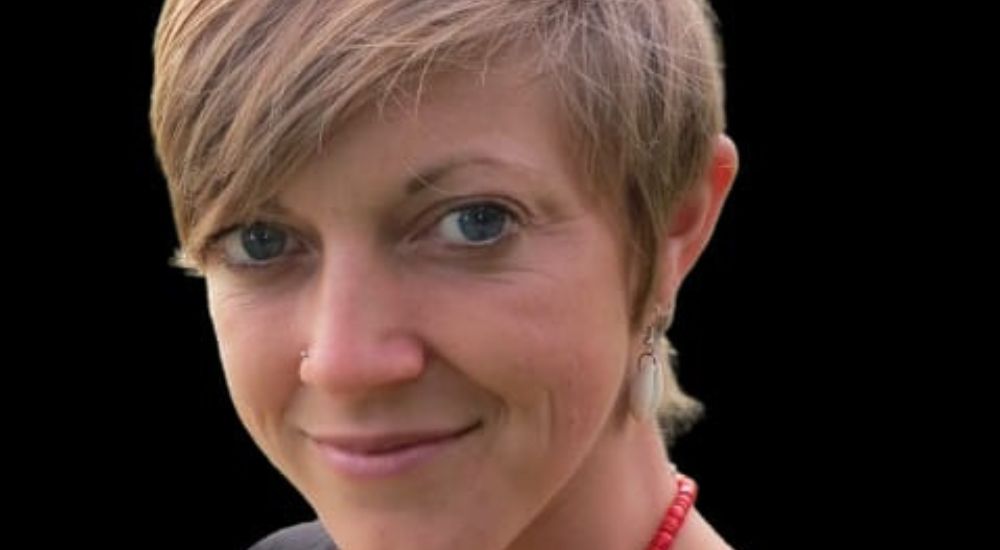
    At a time when many Nigerians are leaving the country in search of safety, opportunity and a better life abroad, American rights activist and Co-Executive Director of Justice & Empowerment Initiatives, Megan Chapman, has chosen a different path. For about 15 years, Chapman has made Nigeria her home, drawn by the resilience, creativity and strength of its people.

    In this interview with THE WHISTLER’s Ikenna OMEJE, she speaks on her journey to Nigeria, her passion for human rights advocacy, and why she remains committed to working with vulnerable communities. She also talks about her favourite Nigerian foods and what keeps her going despite the challenges.

    Chapman, who has consistently spoken out against forced evictions in Lagos waterfront communities, also offers a scathing assessment of the repeated demolitions by the Lagos State Government, including the recent exercise in Makoko. Excerpts:

    You have been working in Nigeria for quite a long time. Do you eat Nigerian food? If yes, what is your favourite Nigerian delicacy and why?

    Well, I have a challenge, which is that I don’t eat meat. I’m a vegetarian. So, there’s so many things I can’t eat, but I do enjoy the things that I do eat.

    One of my favorites is Akara (kose in Hausa). So, I always take kose everywhere I go and dundun (Yoruba dish made from egg coated fried yams) also. So, those are some of my favorites.

    And we use mostly the local ingredients as well, but we do our own cooking. So, I eat ugu leaf. We prepare it every day.

    So, that one is very good for health to make sure you have green vegetables. So, I make sure I take ugu every single day.

    Aside from food, what do you enjoy most about Nigeria?

    I love the people. That’s why I came. That’s why I’m still here.

    The people have an amazing resilience, creativity, ingenuity, capacity to survive the most challenging circumstances and still have fun, still find a way to laugh, still find a way to smile. And so, that is what keeps me going every single day because I look at the people around me that I’m working with and I say, if they can keep going, I can also keep going.

    Which country are you originally from?

    I’m from (the) U.S (United States).

    Could you briefly tell us about your upbringing and educational background?

    I was born and raised in the United States. I studied history at the University of Chicago and then I went on to work in immigration law in the United States and got to see that so many people were leaving their countries to come to U.S., not necessarily because they didn’t want to be where they came from, but because of the condition where they were coming from.

    Economic hardship, violence, lack of respect for rights. And I said, let me see how to go and work with people where they are and to see how they can support people to better their conditions and fight for a better life for everyone around the world. And so, I started that journey by traveling across West Africa, about 13 different countries.

    And eventually, I passed through Nigeria and I saw something that I really wanted to come back to. So, I went back, I studied law. I got my law degree in the United States.

    I was called to bar in New York and I specialized in human rights law. And just shortly after that, I came to Nigeria and started working with many of the communities that I’ve been working with for about 15 years, here in Lagos, also in Port Harcourt. And we do also work in Benin Republic.

    Your work largely focuses on the defence of human rights.

    That’s right.

    What influenced your decision to pursue a career along this path?

    I am a strong believer that no one should be sitting back and enjoying the quote-unquote good life while other people are suffering and struggling. I think that the only way we can build a sustainable world for everyone is for things to be shared equally and for people to always look at what another person is going through and stand in solidarity with them and see how we can have the same respect for rights, the same access to basic needs for everyone around the world. So, that’s my major mission.

    I don’t believe that we achieve that by putting up borders, doing apartheid system, because what I see is we have a sort of global apartheid where the rich are kept from the poor. And there’s also local systems of apartheid where the wealthy are living inside of estates with big walls and the poor masses are outside. It’s not sustainable.

    It’s not the way we need to live our life. So, I also learn from the communities that I work with. When I go to the communities, I see how people are managing.

    People can innovate and find solutions to every problem. So, we need to tap into that resourcefulness. That’s how we can actually do development that works for people.

    Tap into the resourcefulness of people to do with little, a lot. And I believe that that’s how we can build a sustainable future and break down the systems of apartheid, the huge gap between the haves and the have-nots.

    You have been a critic of forced evictions in waterfront communities in Lagos. In your view, what is the motive behind the constant demolition of waterfront communities by the Lagos State Government?

    I think the facts speak for themselves. The facts are that when you get to a place that was demolished some years ago, there’s been a transfer of that land from the less privileged who are living there. Usually, in a very efficient way, where people are making efficient use of the resources, living there sustainably, living in harmony.

    And there’s been a transfer of that land to the wealthy, to private interests, or sometimes to government projects that are not even completed. We have so many of these examples. If you get to the land at Lekki Phase 1, where Otodo-Gbame community was located, demolished from 2016 to 2017 in violation of court orders.

    You go there now, there’s something called Periwinkle Estate. It’s a wealthy development. There was no legal process for the transfer of the land to the people who have developed that Periwinkle Estate.

    It’s just like that. We’re seeing the same thing at Ilaje Otumara. When you get to the place, there were years of engagement between the community, the 13,000 people that were living there, and the government, planning for win-win partnership regeneration that should benefit the people.

    When you get there now, you see a huge expanse open, sand filling ongoing, and an estate that’s coming up called Metroview Estate. The land was sold to a private company, Zenko Properties, and is being developed, sold 200m per plot. And the people are under bridges.

    It’s clear. I usually tell people, you know, you can call it forced eviction, you can call it so many things. What it is, is theft.

    You’re stealing something that belongs to somebody, belongs to a particular community. They’re living there, they’re making use of it, they’re living in harmony, and you’re transferring it to the wealthy. We call it land grab, but it’s theft.

    How would you describe the recent demolitions in Makoko?

    It’s also a forced eviction. It’s a violation of fundamental rights. It’s one thing parading as another.

    It’s a land grab with the justification that they’re living close to the power line, that there’s a building control reason that we need to come there. But if you go to the building control regulations of Lagos State, it says 30 meters from the power line. The community actually cooperated with the first 30 meters setback.

    They marked it themselves. They made sure the people cooperated with the process. The next thing you know, the government said, OK, now we need 100 meters.

    And they started demolishing. Next thing you know, it has gone up to 522 meters from the power line. What is that? And now they invited them to come to meet with the House of Assembly.

    People went to meet there. They had different discussions. And the next thing you know, they’re now saying that all the people there, (this is the latest press conference from Lagos State government), they’re illegal.

    So we can’t do anything for them. But the people who are still in Makoko, the remaining part, we’re going to relocate them to Agbowa. It’s not possible.

    You have 80,000 people who are living in Makoko, and you want to take them to a very small piece of land at Agbowa, where it’s just open land. There’s no building there. How is it possible? And the space they’ve already demolished is 35.7 hectares.

    That’s over 90 acres. And the place at Agbowa is about seven (7) acres. So it’s not possible to relocate this community to that place.

    So it’s a kind of game that they’re playing, trying to deceive people. And the community has seen it for what it is, and they’re standing up and they’re resisting. And they have so much solidarity. I’m sure they can win.

    With all the work that you do, how do you relax when you’re not working?

    I’m blessed to have two children. They’re five and eight. So I can say that there’s not much rest. But the time I have that’s free, I always spend with them.

    Just reading books, you know, going for swimming, different things like that, you know, whatever you can do to just relax and getting exercise as much as you can. I love to run in the railway compound. If you know the railway compound, that’s a nice place to go for exercise.

    So I’ve been doing that for many, many years there.

    INTERVIEW: Why I Chose Nigeria Over The U.S – American Activist is first published on The Whistler Newspaper

  • Turkey: Galatasaray to sign players Osimhen wants

    Turkey: Galatasaray to sign players Osimhen wants

    Galatasaray will sign the players that their striker Victor Osimhen wants at the end of the season.

    This was disclosed by Turkish football expert Serdar Ali Çelikler on the Neo Spor YouTube channel.

    According to him, Osimhen’s team is being formed at Galatasaray, and the players the Nigerian international wants will be transferred.

    “Latin dance is over at Galatasaray, the African folk dance era is beginning. Osimhen’s team is being formed. That’s why Okan Buruk has lost the Latin dancers since the day he broke up with Icardi,” Ali Çelikler said as quoted by Habersarikirmizi.

    “Lemina isn’t Latino either, but he’s part of this team. Lemina, Torreira, Icardi, Davinson Sanchez, Aspirilla… This team will disband at the end of the season. The players Osimhen wants will be transferred,” he said.

    Osimhen has returned to training ahead of Galatasaray’s Turkish Super Lig tie with Gençlerbirliği on Saturday after sustaining a hand injury against Liverpool.

    Turkey: Galatasaray to sign players Osimhen wants

  • Police deploy operatives for smooth UTME exams in Jigawa

    Police deploy operatives for smooth UTME exams in Jigawa

    The Jigawa State Police Command has deployed adequate security personnel across approved examination centres to ensure smooth and hitch-free conduct of the ongoing 2026 Unified Tertiary Matriculation Examination (UTME) Computer-Based Test examinations in the state.

    This was contained in a statement issued by the Police Public Relations Officer, SP Shiisu Lawan Adam, who said the deployment followed directives from the Commissioner of Police, CP Haruna A. Yahaya.

    According to the statement, the security arrangement is in line with the directive of the Inspector General of Police, IGP Olatunji Rilwan Disu, and forms part of the command’s commitment to protecting lives and property as well as supporting educational development.

    The statement explained that personnel deployed include uniformed officers, plainclothes operatives and intelligence teams stationed at various centres to maintain law and order, prevent any form of compromise and respond quickly to security concerns during the exercise.

    It added that patrols, surveillance and access control measures had also been intensified around examination venues and surrounding areas to deter criminal activities and ensure the free movement of candidates and officials.

    The command advised parents, guardians and candidates to cooperate with security personnel, comply with examination guidelines and report suspicious activities to the nearest police station.

    The Commissioner of Police reassured residents of the command’s commitment to maintaining peace and security across the state and wished all candidates success in their examinations.

    Police deploy operatives for smooth UTME exams in Jigawa

  • OPINION: Paul Obi’s Philippic And Mischaracterisation Of Otu’s People First Agenda

    OPINION: Paul Obi’s Philippic And Mischaracterisation Of Otu’s People First Agenda

    Facts are sacred, and opinions free remains a core mantra, if not the first, in journalism and factual reporting. It is for this reason that serious news outlets pay heed to facts to maintain their integrity like a woman’s honour, which once lost, is hard to regain. This is the case with the seeming intervention of my brother and colleague, Mr Paul Obi, in situating the development agenda of Governor Bassey Edet Otu housed in his People First Agenda.

    When the Governor took office on May 29, 2023 he was clear in his vision that safety, peaceful co-existence, repositioning an aged civil service and review obnoxious judgments against the state with the aim of creating relief in the pains accruing to the loss of Bakassi and the ceding of our 76 Oil wells as well as streamline our boundaries to minimize communal crisis. He also emphasized addressing infrastructural decay as well as other areas of development.

    Three years plus after, it is welcomed to ask the pertinent question; how far? But in doing so, it should be without mischief. Dwelling in the realm of conjectures and scorning at the incredible strides of Governor Otu that are evident for the unbiased, as faultfinders like Mr. Obi indulged in in his piece, C’river, Otu and the Crisis of Governance, in Thisday Newspaper of Friday, April 10, 2026, is unacceptably petite.

    It is true that there has been significant increase in accruals to state governments, but it is simplistic and misses the point to assume that there is “stupendous flow of resources and the abysmal outcomes that bestrode the state.” It is important that the “stupendous flow” has largely been gulped by wage increase and inflationary trends which are beyond the control of any governor, Senator Otu inclusive. What was the exchange rate of the Naira against the Dollar a few years ago? Owing to the fact that the Naira is benchmarked against the Dollar and most procurements are weighed in the same parameters, it is poor economics to lose sight of this important parameter. But beyond that, evidence on ground still points to positive outcomes on what Cross River State has attained and is attaining in the past 3 years plus of the Otu administration.

    It is a wonder that Obi hyped other states on industrialisation and did not situate one of such bourgeoning industries those states have. Industries don’t just spring up overnight, they require careful planning and must align with the immediate, medium and long term objectives of the state. When Governor Otu took over office, he made the point to complete abandoned or ongoing projects left by previous administrations and that bargain he has kept. The Ayade Industrial Park in the state capital has gone through evaluations and works are ongoing to reposition them for productivity. To just jump into the fray of cosmetic production will be all shadows and mirrors of which the Governor is not known for.

    Today, agriculture has taken centerpiece right from soil testing to determine the suitability of each soil type to crop production across the three senatorial districts and this has attracted the attention of the Foreign and Commonwealth Development Office that is partnering with the state government on smart climate agricultural practices. Also, together with Ng-Cares, thousands of Cross Riverians have been empowered with agricultural implements and grants to boost production and engage the youths meaningfully.

    If Mr. Obi were attuned to the descript nature of the state capital, Calabar, the squalor that was the Governor’s Office and other infrastructures including the famed State Library, he will appreciate the laudable transformations that have taken place there. A state once renowned for cleanliness was a cesspit post-2023, but is on track to regain its status as a state of splendour and spick and span. Should that not count for something?

    It beggars belief that Mr. Obi will gloss over the sacrifice of our heroes past who were trapped in pension liabilities running into billions and dating back to nearly 16 years. To commit over N10 billion to offset part of the liability and with more in the offing certainly is from that “stupendous flow.” Also, fresh recruitments into the state civil service do not come in pennies. What can an aging civil service offer? Aware of this, the Governor has offered a chance to qualified young Cross Riveriens to be part of the People First Agenda. That too, should count for something.

    Two issues that are confounding in his piece is the suggestion that the fight to reclaim our heirloom and delegating authority to the Deputy Governor, Dr. Peter Odey, are not enough is surprising and disturbing. First, the state had no reason to be denuded of its God-given resources not to another country or another state like Cross River State was made to bear. To therefore find a Governor who has demonstrated courage and deployed all energy and time to enhance the prosperity of the state for posterity should be applauded by all true sons and daughters of the state. Even if the governor were not to do any other thing but that in his first four years, it will be a historic reclaiming for the ages. But we know he has done more than that. Cross River has seen a remarkable drop in crime rate. This is not happenstance. Carnival Calabar has grown bigger and more attractive. That is deliberate and by vision.

    On the delegation of authority, the Governor runs a team and not a one-man show. So, if he delegates Dr. Odey to state functions to the North Central even Abuja, it shows he understands that achieving more, requires entrusting his deputy and other state functionaries’ with responsibility and he trusts them to deliver. Cross River beckons on her sons and daughters to be part of the Season of Sweetness by not just supporting every endeavour of the government, but being constructive in their criticisms.

    -Ogbeche, Special Adviser to the Governor on Media, Abuja, writes from Abuja (emmaogbeche@yahoo.com)

    OPINION: Paul Obi’s Philippic And Mischaracterisation Of Otu’s People First Agenda is first published on The Whistler Newspaper
  • 2027: Election will be over by 12 noon with Obi-Kwankwaso ticket – Tanko

    2027: Election will be over by 12 noon with Obi-Kwankwaso ticket – Tanko

    The National Coordinator of the Obidient Movement, Yunusa Tanko, says the 2027 presidential election will be over by 12 noon with Obi-Kwankwaso ticket.

    Tanko expressed this optimism on Wednesday during an interview on ‘Politics Today’, a programme on Channels Television.

    He was reacting to Dele Momodu’s preference for an Atiku-Obi ticket.

    DAILY POST reports that Momodu had said a presidential ticket that has Atiku Abubakar and Peter Obi will be a formidable choice for the African Democratic Congress, ADC.

    Airing his own opinion, Tanko said, “Do you want to choose someone who’ll win the primary and lose the election?

    “If the ADC doesn’t zone the presidency to the South, the party will lose the election. With an Obi-Kwankwaso ticket, the election will be over by 12 pm.”

    2027: Election will be over by 12 noon with Obi-Kwankwaso ticket – Tanko