Blog

  • West Africa’s healthcare investment momentum builds as WHX returns to Nigeria 

    West Africa’s healthcare investment momentum builds as WHX returns to Nigeria 

    Nigeria’s healthcare sector is undergoing rapid transformation, with forecasts predicting a 7.1% expansion and an anticipated market value of US$161.7 million by 2027. This growth is fuelled by a US$1.2 billion Federal Ministry investment in infrastructure and workforce, major oncology and diagnostic expansions by the Nigeria Sovereign Investment Authority, and increased imports under the African Continental Free Trade Area (AfCFTA). Despite progress, 70% of patients continue to pay out-of-pocket, underscoring substantial opportunities for private sector innovation and investment.

    Statista data shows Nigeria leads West Africa’s medical device sector, with the market projected to surge from US$414.8 million in 2025 to US$632.48 million by 2030 (8.56% CAGR). High-growth peers Ivory Coast (9.24% CAGR), Cameroon (9.3% CAGR), Senegal (8.21% CAGR), and Ghana (6.6% CAGR) are also experiencing hospital modernisation, digital diagnostics expansion, and progress toward universal health coverage.

    Nigeria is building more accessible, affordable, and high-quality healthcare systems through strategic investment, technology, regulatory reform, and an emphasis on preventive care. However, It is important to recognise that Nigeria’s large and youthful population, projected by the Organisation for Economic Co operation and Development to reach 250 million by 2025, has widened gaps in both primary and specialist care. At the same time, the government’s encouragement of investment has opened opportunities for growth at every level of healthcare service provision.

    For healthcare professionals and business leaders, World Health Expo (WHX) in Lagos is West Africa’s premier B2B platform for turning market potential into partnerships and impact. Returning to the Landmark Centre from 2 – 4 June 2026, WHX unites more than 500 exhibitors, over 8,000 professional visitors from more than 40 countries and 30 speakers to discover new insights and explore emerging trends, network with top healthcare innovators, source new business opportunities and accelerate professional growth.

    “As partners with WHX, we are excited to drive market access dialogue that aligns with national health goals and promotes regional trade,” notes Njide Ndili, President, Healthcare Federation of Nigeria.  “Leadership lies at the heart of healthcare transformation. The shift from care to capability is key to the long-term success of healthcare institutions, with leadership development at its core. But to truly transform healthcare in Nigeria and across Africa, these efforts need to be scaled and replicated across all levels of the system and WHX is designed to make that possible by connecting stakeholders, surfacing best practice models, and supporting the practical deployment of proven solutions.”                                   

    This year’s three-day agenda positions WHX as a dynamic trade-focused platform with concise, partner-led Leadership Forums. The Healthcare Market Access & Policy Leadership Forum on 2 June, in partnership with the Healthcare Federation of Nigeria, spotlights market access and policy leadership through keynotes, panels, and Q&A sessions on regulatory harmonisation and AfCFTA opportunities under the theme “Enabling Market-Ready Health Systems: The Role of Diagnostics, Digital Infrastructure, and Human Capital”. The Hospital Investment & Buyer Leadership Forum, held in collaboration with ABCHealth on 3 June, highlights investment and strategic partnerships for hospitals and buyers, covering financing and procurement. Meanwhile, the Heads of Laboratory Forum on 4 June, held in partnership with the Medical Laboratory Science Council of Nigeria, serves as a dedicated platform for lab leaders and decision-makers to address key priorities in advancing diagnostics across West African region.               

    “WHX is more than dialogue: it is where policy ambition becomes impactful collaboration, accelerating West Africa’s emergence as a healthcare leader under the African Continental Free Trade Area,” said Tom Coleman, Portfolio Director – Healthcare, Informa Markets. “With Nigeria’s young population approaching 250 million and dynamic neighbouring markets like Ghana, WHX stands at the epicentre for investors and visionaries to drive transformative growth in infrastructure, technology, and healthcare services in West Africa.”      

    This landmark event brings together top exhibitors showcasing cutting-edge medical solutions, alongside world-renowned speakers who share insights that matter, creating opportunities for market expansion and strategic partnerships. Sectors represented at the exhibition include medical devices and equipment, disposables and consumer goods, orthopaedics & physiotherapy, imaging & diagnostics, healthcare & general services, healthcare infrastructure, wellness & prevention, laboratory as well as IT & solutions.                 

    New features at WHX include an integrated Lab Zone, showcasing diagnostics, equipment, and consumables with live demonstrations, a networking lounge for business connections, as well as hands-on workshops, expert insights and buyer matchmaking to drive commercial outcomes.                

    The WHX portfolio includes three key healthcare events in Africa, held in Johannesburg, Nairobi, and Lagos. These events form a unified platform that connects global brands with regional distributors.  

    The post West Africa’s healthcare investment momentum builds as WHX returns to Nigeria  appeared first on Vanguard News.
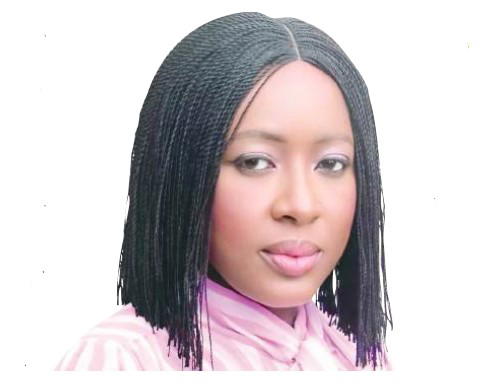
  • If good people stay out of politics, we shouldn’t be surprised by poor outcomes — Constance Ikokwu

    If good people stay out of politics, we shouldn’t be surprised by poor outcomes — Constance Ikokwu

    By Prisca Sam-Duru

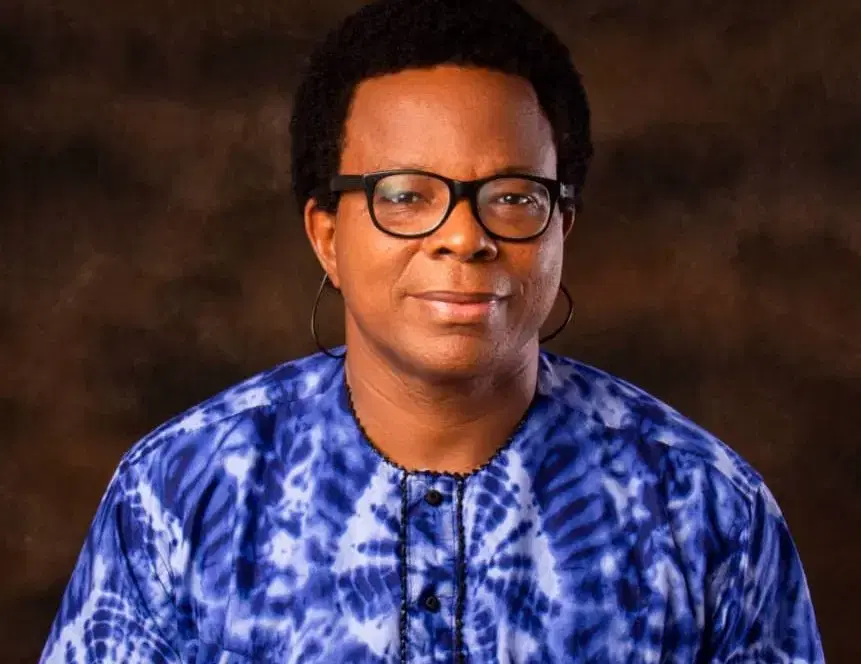
    Dr. Constance Ikokwu is a journalist, political analyst, media strategist, and deep thinker, with a PhD in Journalism and Communications.

    Her doctoral thesis which was on the intersection of media and politics, specifically examining the concept of mediatization, and the role of media during elections, could well be one of the reasons she finds herself venturing into politics.

    Her vast experience in the field includes teaching media courses at the Institute for American Universities (IAU), Barcelona, Spain, and at the Universitat Autonoma de Barcelona Department of Journalism and Communication Sciences. Interestingly, her work has taken her across Nigeria, Africa, Europe and the Americas. She was Washington, D.C. Bureau Chief for THISDAY Newspapers in 2007, and as such interviewed global personalities, and covered the world’s leading economic and political institutions such as the World Bank, IMF, US Congress, White House, United Nations, think-thanks, etc.

    In the course of her career, Ikokwu who’s from Idemili North and South Federal Constituency has been Foreign Editor, Deputy Editor, Abuja Bureau Chief, Enugu Bureau Chief, Editorial Page Editor, member of the Editorial Board, Secretary to the Editorial Board, Online Editor, Strategic Communications Adviser, Radio host, and Television anchor.

    Ikokwu whose rich profile speaks volume about her readiness to make additional impact on her people , spoke to Saturday Vanguard about her reason for joining politics, and much more. Read on.

    Why did you decide to contest for a chance to represent Idemili North and South Federal Constituency in the House of Representatives on the platform of African Democratic Congress (ADC)?

     Well, a couple of realities informed my decision. The South East has traditionally been a stronghold of the Peoples Democratic Party (PDP), but in recent years the party has struggled to maintain its dominance in the region. Meanwhile, the All Progressives Grand Alliance (APGA), despite its deep roots and influence in Anambra State, has found it difficult to expand its footprint beyond that base.

    In contrast, the African Democratic Congress (ADC) is beginning to appear as a promising platform, attracting a diverse range of voices and perspectives from across the country, and positioning itself as a broader, more inclusive alternative. Having said that, Nigerian politics is very dynamic and always changing. I’ve made this decision with a view to handle whatever comes next.

     You spent years holding power to account as a journalist, what was the specific tipping point that made you decide to stop reporting on the gaps in governance and start trying to close them yourself?

    I’ve had a flourishing and rewarding career in journalism. But, this is not a sudden decision. I’ve been reflecting on the idea of participating more directly in politics for some time now. Given the scale of the challenges facing our country, and the fact that women are underrepresented, I have come to a point where it feels like a now-or-never moment. This feels like the right time to step forward and contribute in a more direct and meaningful way.

    What are some of the urgent everyday realities facing your community that you plan to prioritize in the House of Representatives?

    Some of the biggest worries of our constituency range from the severe threat of gully erosion, flooding, poor road networks that affect quality of life in many towns, security, jobs, among others.

    Could you share how your background as a high-profile journalist and analyst will influence the way you approach lawmaking and the typical horse-trading of Nigerian politics, while ensuring the interest of your constituents are top priority?

    It’s a lot of work but some of the ways I hope to do well in politics include building a strong grassroots base. This is not a one-time event. It’s continuous and I’m in it for the long haul. Secondly, leveraging credibility and visibility are essential. Thirdly, forming strategic alliances with relevant groups, and staying resilient, among others.

     Nigeria’s political landscape is notoriously difficult for genuine and patriotic citizens, and much worse for women to navigate. What is your strategy for breaking through these systemic barriers and securing a seat at the House?

    Finding like minds will be one of the most important weapons in this journey of service. One person cannot do it alone. We need a collective and I’ll be looking for that. Using investigative skills, public engagement, and data to shape bills around real citizen needs is another approach to law-making that I will employ.  All these, while openly communicating positions to my constituents.

     You mentioned earlier that politics shouldn’t be left only to career politicians. How do you plan to convince voters that a professional or outsider is better equipped to deliver results than a career politician?

    Politics shapes everything, our schools, jobs, security, so it cannot be left to a small circle of career politicians. We need people with real-world experience from teachers to journalists, entrepreneurs, and other professionals who understand problems from the ground up and can bring fresh thinking into governance. Talking to people, advocating about how important it is when more citizens step in. Politics becomes less about survival and more about solutions. In short, my talking point is; if good people stay out of politics, we shouldn’t be surprised by poor outcomes.

    Your move will likely inspire other female journalists and most competent Nigerians to step up. What is your direct message to professionals who are currently afraid or hesitant to enter the political trenches?

    Message to people afraid to join politics – To every capable Nigerian, especially women, who are hesitant about politics. I understand the fear, the doubts, and the barriers. But the truth is, the cost of staying away is far greater than the risk of stepping in. If those with competence and integrity hold back, we leave the future in the hands of those who may not have either. Your voice, your experience, and your courage are needed now more than ever. Politics may not look inviting, but it will not change unless people like you step into it. You don’t have to be perfect, you just have to be committed. Our country needs your ideas, your values, and your leadership. 

    This is the moment to move from concern to action. If you are competent and care about Nigeria, this is your call to step forward. Don’t wait for the system to fix itself; be part of the people who fix it.

    Finally, my mantra is Politics for Public Good. Take Back Your Government!

    Vanguard News

    The post If good people stay out of politics, we shouldn’t be surprised by poor outcomes — Constance Ikokwu appeared first on Vanguard News.

  • APC Convention: Youth representative backs Tinubu’s agenda, calls for greater inclusion

    APC Convention: Youth representative backs Tinubu’s agenda, calls for greater inclusion

    Hails NELFUND, NiYA as Key Drivers of Youth Empowerment

    By Ibrahim Hassan-Wuyo

    ABUJA — A youth representative at the All Progressives Congress (APC) National Convention, Daniel Ogoloma, has expressed support for the policy direction of President Bola Ahmed Tinubu, describing recent initiatives as efforts to place young Nigerians at the centre of national development.

    Speaking at the convention held at Eagle Square, Ogoloma said Nigerian youths are increasingly becoming active contributors to the country’s growth rather than passive observers.

    “I stand before you today as a proud young member of the APC and as living proof that the future of Nigeria is already here, and that future is a young one,” he said.

    Aligning his remarks with the administration’s Renewed Hope Agenda, Ogoloma commended what he described as a shift toward tangible investments in the youth population.

    He highlighted the Nigerian Education Loan Fund as a major intervention expanding access to education, noting that it has created new opportunities for students and families across the country.

    Ogoloma also praised the Nigerian Youth Academy and its “one youth, two skills” initiative, which he said is equipping young Nigerians with practical and employable skills.

    According to him, digital and enterprise-driven programmes, including NiYA Gigs and initiatives by the National Information Technology Development Agency, are opening new pathways for innovation and income generation among youths.

    “This is not ordinary governance; it is a deliberate commitment to unlocking the potential of a generation,” he stated.

    His address drew attention from party stakeholders and younger participants, reflecting what he described as a growing emphasis on youth inclusion within the APC.

    Ogoloma urged young Nigerians to take advantage of emerging opportunities and actively participate in nation-building.

    “The door is open. Step in, skill up, rise up, and build,” he said.

    The post APC Convention: Youth representative backs Tinubu’s agenda, calls for greater inclusion appeared first on Vanguard News.

  • The global energy hypocrisy, African dilemma, and carbon contradiction

    The global energy hypocrisy, African dilemma, and carbon contradiction

    By Kizito Alakwe

    The United Nations Climate Change Conference published its executive report on the 30th UN Climate Change Conference of the Parties (COP 30) on March 26, 2026. The conference took place in Belém, Brazil. After two weeks of intense discussion, member nations made a series of decisions that are now known as the Belém Political Package. These decisions were made in light of rising expectations and the effects of climate change. One of the main results of the conference is the demand for a clear promise to stop using fossil fuels. This demand was opposed by countries that produce fossil fuels, with Nigeria among the concerned parties.

    The conference leaders promised to make a plan to move away from fossil fuels in a “just, orderly, and equitable manner” toward what they called “net zero” targets.

    Many African countries don’t like this stance because Africa’s energy shift is at a critical point. Africa has some of the world’s richest renewable energy resources, including solar, wind, and water. However, it relies heavily on fossil fuels for energy. More than 70% of Africa’s electricity still comes from coal, oil, and gas.

    Given the widely accepted notion that we need to protect the environment and use less fossil fuels, it is unsettling to see the sudden attention to oil and gas as the primary global source of energy, occasioned by the crises in Venezuela and the US/Israel-Iran war.

    On January 3, 2026, U.S. troops captured Venezuelan President Nicolás Maduro in a military operation and took him to New York to face long-standing federal drug trafficking and narco-terrorism charges. The Trump administration first called the operation a crackdown on a “criminal network” that was bringing cocaine into the U.S. This narrative, however, changed as the U.S. announced their desire to take over Venezuela’s state-owned oil industry, which has the world’s largest proven oil reserves. As of March 2026, the U.S. Strategic Petroleum Reserve (SPR) holds about 400 million barrels of crude oil. It also has 132 working oil refineries and can process 18.4 million barrels of oil per day. So, Africans are asking themselves why there is such a strong interest in oil when there is so much support for clean, green energy.

    On February 28, 2026, the US and Israeli air forces initiated a military attack on Tehran and other major Iranian cities. They destroyed military and other official targets and killed Ayatollah Ali Khamenei, the Supreme Leader of the Islamic Republic, and several high-ranking members of the clerical regime. The BBC says that the goal of this military attack was to stop Iran’s nuclear program, prevent it from making ballistic missiles, and dismantle its support for proxy groups in the region. The attacks were framed as a way to protect American and Israeli interests from a rogue regime and eliminate immediate threats to those interests.

    The president of the United States said that the war with Iran would likely raise petrol prices, at least for a short time. By the second week of the war, as oil prices were still going up, it was framed as a small price to pay to stop Iran’s nuclear program. However, it was promised that the flow of oil would not be affected.

    In response, Iran effectively blocked the Strait of Hormuz, one of the busiest oil shipping routes in the world and a hub for about 20% of the world’s oil and liquefied natural gas (LNG) trade. This has caused a global energy crisis because stopping all oil exports from the Gulf region would remove almost 20% of the world’s oil supply from the market. 80% of that oil goes to Asia. As a result, petrol prices have risen significantly globally. Right now, fuel prices have gone up by about 49% in Nigeria, 40% in Sierra Leone, 27% in Spain, 17% in Germany, 13% in the UK, 50% in the Philippines, 68% in Cambodia, 25% in the US, 2.5% in China, and 30% in Canada. As the fuel crisis worsens, people in countries such as Ecuador, Angola, Sri Lanka, and the Philippines have been protesting.

    By the third week of the Iranian war, oil had become a critical factor. The talks on regime change and nuclear weapons have waned, and people are concerned because the price of crude oil keeps rising. Oil has emerged as a strategic pressure point. Though prices have been rising steadily in the West, the most pronounced price swings are occurring in emerging markets such as the Philippines and Nigeria. These countries don’t have as much ‘padding’ in their budgets to absorb the shock, sending food and transport prices sky high. Countries like India and China are using up their strategic stockpiles right now to keep prices from going through the roof.

    This current scramble for oil shows that the world economy will fall apart without crude oil, despite the global hype over “green energy.”

    It’s strange that the West is still trying to get the oil it says should be phased out, while Africa is being told to skip oil and go straight to solar and wind energy.

    Nigeria and other African countries that produce oil do not see it as a pollutant. Rather, they see it as an important source of foreign exchange and as the base-load power the country needs to build a modern economy. If fossil fuels are really out of date, why are they still the cause of wars between nations?

    One can rightly say that this campaign for green and clean energy is more about protecting trade than protecting the environment. So, Africa should not support energy policies that blame Africans and make it look like they are the ones who are guilty. Any move toward clean and green energy must be fair, and Africans should be able to use their natural resources to pay for their own green future instead of waiting for permission from the West, which changes with every new conflict.

    •Dr Kizito Alakwe is a Development Communication Specialist and Senior Lecturer at the Pan-Atlantic University.

    The post The global energy hypocrisy, African dilemma, and carbon contradiction appeared first on Vanguard News.

  • Wole Soyinka: Has the man died? By Ugoji Egbujo

    Wole Soyinka: Has the man died? By Ugoji Egbujo

    At almost ninety two, Wole Soyinka remains strong and razor-sharp. The Obidients bear witness to his roar and linguistic agility. Yet three years into his bosom friend’s presidency, and for the first time since 1960, Soyinka appears comfortable with a president’s atrocities and sacrilege. Has the man died?

    During the 2023 elections he claimed he was out of the country and out of touch. Yet he noticed enough to eviscerate Peter Obi’s running mate and supporters. He apparently missed the thugs chasing Igbo voters from polling booths in Lagos. What he saw instead was a headless mob of nattering nitwits spitting venom at elders and institutions. He didnt see  youth frustration , ethnic  and political cleavages amplified  by social media. He spotted fascism when Datti Ahmed dared speak of a stolen election and urging defiance against a  captured judiciary. When Peter Obi tried to assuage him, the old man beheld only a Gbajue Peter. Peter was deemed a counterfeit  for failing to rein in his supporters whose fiery  passion didnt spare elders in the political street brawl on  social media.  Until that point, Soyinka’s sense of fairness and courage had never been publicly doubted. 

    When Tinubu assumed office and his drastic policies unleashed untold economic hardship, Nigerians urged Soyinka to speak. He replied that it was his custom to grant every new president a one-year honeymoon. So the public waited. Even if Tinubu broke the calabash of a deity, Soyinka would say nothing. When the president assembled the fattest, most morally flabby cabinet in memory, silence. When reforms squeezed the masses while profligacy and moral decadence reigned in public office, still silence. The honeymoon stretched on.

    Tinubu has now been in the saddle for three years. Hunger protesters have been brutally repressed  Some of them children detained for months without trial. Peaceful protest is now treated as subversion. An elected governor was temporarily yanked from office for political convenience. The largest road contract in Africa was awarded to the president’s friend without due process. Critical portfolios have been concentrated in Yoruba hands in a brazen escalation of the tribalism Tinubu inherited. Drug barons and a murderer received presidential pardons. A convicted money-launderer who helped Abacha fleece the nation has been awarded the country’s second-highest honour. Tinubu’s allies have waged a slow, judiciary-assisted liquidation of the major opposition parties. The country teeters on a precipice.

    While all this unfolded, Soyinka looked away.

    Yet he himself once wrote that a man dies in him who stays silent in the face of evil. Our ancestors advised that if fear or cowardice seals his lips, he should cover his head with a basket, shout, and run. But there is yet another option. As  Soyinka once prescribed, he could pin the oppressor’s picture in his toilet and spit at it every morning.  Such quiet revulsion can  salvage a dying  manhood.

    Soyinka is a deity. He is beyond reproach. He has paid his dues in full. The baton of resistance should long have passed to the young. But if the old lion still has breath to swat pesky mosquitoes, he should at least notice the elephant in the room. When a deity chases rats while his house burns, he must be called out with love. His selective silence now sounds like complicity.

    When he turned up to celebrate the Lagos-Calabar, a  road awarded promiscuously to the president’s friend, he called himself “a sucker for roads.” The old Soyinka would have gone nowhere near that road. It now seems that if Abacha had been sufficiently friendly to the sage , he might not have been such a villain after all. His sins might have been overlooked .Blood, it seems, is thicker than water. Who would have thought the activism of those days was not all altruism? It is sad to watch even the gods prove no better than Brother Jero.

    Mere mortals no longer deem it irreverent to discuss the metamorphosis of Kongi. The Interpreters of his silence have fallen speechless. A Climate of Fear has been enthroned. A Harmattan Haze has descended on what promised to be an African Spring. The youths are fleeing. Once a giant, Nigeria has become The Open Sore of a Continent, exporting economic refugees to every corner of the earth.  The “renewed hope” has become a ruse. A Season of Anomie is upon us. The nation is shuffling into the crypt of a one-party state. Is this the second  coming of King Baabu?

    For how long can Soyinka place friendship above country? We cannot allow him to  disavow his oracular status.  But it hurt that when he finally gathered the courage to speak, all he could muster was a complaint about Seyi Tinubu’s convoy of cars, soldiers and policemen. A president’s son protected by a battalion in a country ravaged by bandits. That should be outrageous. But when did  the great Soyinka begin ignoring the disease to fret over the most insignificant symptom? Seyi is not the problem. Has the oracle grown timid? Let him come into the open.  Perhaps he has not noticed Wike cruising in his Rolls-Royce with police outriders. Is there any arm of this government that pretends to probity and intergrity?  Obidients and Seyi  are  not good decoys. Does Soyinka owe Tinubu a duty of loyalty and secrecy? Or is this juju?

    A man who spent his life taking personal risks for freedom, justice and development cannot simply switch off. Soyinka must finish strong against corruption and  political banditry. Our people say when a man wakes can be his morning . Soyinka must therefore  Set Forth At this Dawn of looming one party state. . He is not expected to lead protests. But as an oracle he cannot stay home and mute and allow the country go into labour tethered. The same country that birthed The Chronicles From  the Land of the  Happiest People on Earth. The Lion cannot forsake his Jewel. That precious name must be protected at all cost.

    The post Wole Soyinka: Has the man died? By Ugoji Egbujo appeared first on Vanguard News.

  • Aguntan o paso esi da — Kwara can and should get newer

    Aguntan o paso esi da — Kwara can and should get newer

    Rafiu Ajakaye, PhD.

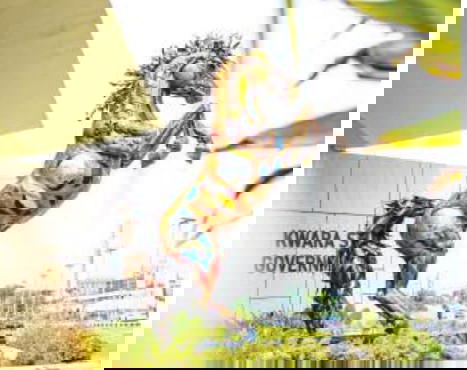
    As I walked by the Government House gate last Saturday morning for my exercise, a man and his two little children — a boy and a girl — sauntered on the other side of the road, just before the Office of the Deputy Governor. The little ones joyously gestured at the prancing horse. I wouldn’t know if they were passing by the gate for the first time, but my hunch tells me the children were seeing the horse for the first time. The father walked them across the road to the site of the prancing horse. A security officer told the man they could take pictures and I saw that the kids were grateful for it. I could see that it was fun for the kids.

    Humans are beautifully wired. Complex. Nuanced. Every day we traverse the earth to make new gains as a community, like the Artemis II mission just did in their near $100bn exploration of the Moon, what we see is the infinite wonders and beauty in the creation of God and man’s capability to conquer his world.  One of the peculiarities of man is that he is an emotional being. He is moved by many things. When he is sick, drugs alone may not always heal him. Sometimes, families and friends are asked to sit around him for emotional support. Medical psychologists are sometimes called upon to examine him for better outcomes.

    When humans suffer some trauma or are suspected of psychological (emotional) issues, they could be asked to change environment. Man’s pursuit of general wellbeing has led to many discoveries, including the roles that environment plays in calming the human spirit. People visit public gardens and many even plant trees and flowers to achieve the same purpose — aside the critical roles that trees and plants play to protect the ozone layer, ensure fresher air, and prevent diseases.

    Yet, research has established that exciting sights play important roles in our emotional balance. Against this background, the prancing horse (sculpture) that was newly installed at the Ahmadu Bello House, Ilorin, offers an exciting view as people drive or walk by. And this means something different to different people.

    The height, the beauty, and the novelty of it in that axis are an important addition to the state’s landmarks, especially for lovers of art and craft. But that isn’t just a prancing horse; the sculpture has security features carefully built into it.

    Some opposition figures have taken up arms against the new addition, as a statement showed this week. They want the ‘N22.8m or N250m spent on it’ deployed to feed the poor instead. That’s an interesting take; and it gets one curiouser about the nature of this opposition talk: is N22.8m or N250m all that is needed to end poverty or fight insecurity? 

    The government spends on safety net and security the same way it expands health coverage and infrastructure across the state. From the multilayered KWASSIP to the many other safety net programmes, this administration has institutionalised anti-poverty spending more than any other Kwara government in the Fourth Republic. Just recently, the government made multimillion cash transfers to support struggling families. This has been a culture. Between 2020 and now, several billions of naira have been committed to support small businesses, smallholder farmers, and the elderly. 

    Fighting poverty and other spendings that support overall human wellbeing are not mutually exclusive. The two can coexist. The government spends more than N500m to support security operations every other month, apart from any other special operations. 

    The PDP should understand that Kwara cannot always remain the same. We are not aguntan (sheep) whose outlook never gets better or newer year in, year out. We need to evolve. That is why the infrastructural transformation that the state has recorded over the last six years is clearly unrivalled in its chequered history.

    The post Aguntan o paso esi da — Kwara can and should get newer appeared first on Vanguard News.

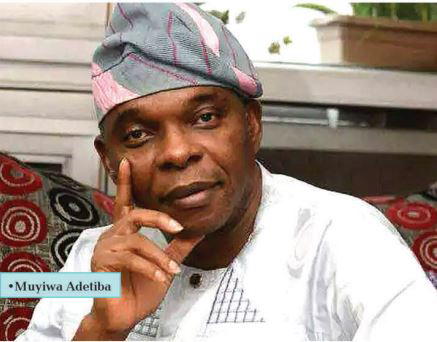
  • Religious activism as sign of a failing state? By Muyiwa Adetiba

    Religious activism as sign of a failing state? By Muyiwa Adetiba

    When people describe Nigeria as the giant of Africa, they speak more to its potential than to its reality. And the potential is enormous by most standards. A land mass that is the envy of most, a land that is rich in mineral resources of all kinds, an access to the sea that is denied many countries, a climate that is varied but mostly accommodating leading to an ecology and wild life that very few countries possess. To cap it all, Nigeria is endowed with a population that is large enough to be self-sufficient but not too large to be unwieldy. And more importantly, a people that is intelligent, industrious, resilient and warm. In other words, whatever the ingredients that have made America great, Nigeria has them in its own proportions.

    So why would a country with so much potential end up being the poverty capital of the world? And why should Nigeria even be in the conversation when failed States are mentioned? Several books can be written on this. Several seminars will raise up different explanations. My own explanation is simple. We lacked visionary leadership at the critical period of our history. Leaders who couldn’t see beyond the present. And the present for them showed a country with enormous resources.

    Some of the resources were so obvious that Nigeria didn’t have to work hard to discover them. A few of them became manifest so early that the leadership rested on its oars and stopped providing leadership.  It is the reason people with enormous talents hardly amount to much in life because everything comes easy to them making them to lack discipline and staying power. Besides, when bounties come ‘too much, too soon’ there is the tendency not to appreciate them and to fritter them away. The examples of young, successful athletes and entertainers who become bankrupt in later years after making tons of money are all over the place.

    This ‘Giant of Africa’ had so much going for it that it made a few nations uncomfortable. Unfortunately, Nigeria didn’t try to earn the sobriquet let alone protect it. The hubris and grandstanding of the 70s became the face of the country. We were the ‘Big Brother’ to poor African nations and we played that role to the hilt dispensing funds and dispersing skirmishes in small, neighboring countries. The Western world tolerated our growing influence as long as it didn’t get out of hand. After all, a benign regional power is supposed to make their world safer. Then our frontline role in apartheid made the West to sit up. Our belligerent and confrontational posture towards apartheid sympathizers, made them realise that a stronger Nigeria was not in their best interest. Nigeria had to be cut to size. Our gradual, economic leaning towards the East didn’t help matters.

    It is standard in warfare that enemies attack through the weakest flank. For most developing countries, this is through the greed of their leaders. In addition to greed, Nigeria has religion as its weak flank. For years, the northern elite had used religion to achieve its goals. It had been a tool to control peasant minds.  And an arsenal to fight the enemy, real or perceived. The less educated the people, the more potent the weapon. Unfortunately, it is a two-edged sword. Political and religious infiltrators have found these same illiterate but fertile minds as tools for destabilizing the country.

    There are enough articles and conspiracy theories online which suggest that there is more to the current carnage in the country. And that foreign countries, some of them friends by day and enemies by night, are behind the happenings in the country. They have used religion, poor infrastructure, poverty and general discontentment as tools in achieving their nefarious goals. And we are playing into their hands. Our religious leaders, those to whom we entrusted the moral compass of the people, are not only rich, they are very powerful. And insensitive. They have become mini-gods manipulating the minds and controlling the purses of their worshipers.

    Rather than tone down on religious rhetoric during these delicate times, they have instead, increased the decibel. So they do the talking and religious/political infiltrators do the killing. The people do the moaning while those in Aso Rock do the wringing of hands. On and on, it goes. The country is in tumult because leaders have not learnt to give unto Caesar – education, good infrastructure, religious freedom – what is Caesar’s. A secular country has become a multi-religious country where brothers are being made to kill brothers ostensibly in the name of God.

    The Yoruba nation has always been very accommodating. Of religions and of strangers. However, religious intolerance which has always been alien to these people, raised its ugly head some two years ago in Kwara State when religions that had been co-existing peacefully over the years, suddenly became hostile to each other. I knew then that the State was playing with fire. Neither the Governor nor the Emir did anything decisive to douse the flame at the time.

    Part of the results of that neglect is what we are witnessing in the State today. It is said that if there are no cracks in the wall, reptiles would not enter. They, by their actions, allowed religious/political infiltrators into their territory. Recently in Osun State, a State I knew in my growing up years to be religiously blind, a ‘white garment’ church decided to stir the hornet’s nest when some of its members ‘visited’ the shrines and groves of traditional worshipers in order to exorcise perceived ‘demons’. That was religious intolerance at its height. And if unchecked, it is opening cracks for religious/political infiltrators.

     State and Federal authorities have to do something urgently about this growing religious activism.   Many think they can do or say anything in the name of God and get away with it. In fact, many think they are the State itself. They have to be told in no uncertain terms that they are not. Except that of a failed State.  Indeed, there seems to be a nexus between religious activism and State chaos.

    Religious activists – these include fiery, self-righteous preachers and enforcers of religious laws and doctrines through violence – should be described and treated as purveyors of violence. And an excuse – or smokescreen – for those who want to destabilize the country. That someone as high in the hierarchy as the Vice President of the country had to come out recently to state publicly that Nigeria is not on the verge of collapsing says a lot about the state we are in. And that something has to be done urgently to save the country.

    The post Religious activism as sign of a failing state? By Muyiwa Adetiba appeared first on Vanguard News.
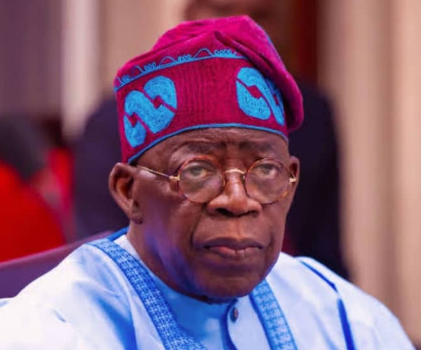
  • Tinubu in a fix over next Lagos governor, by Emmanuel Aziken

    Tinubu in a fix over next Lagos governor, by Emmanuel Aziken

    The rumour mill has continued to churn over the conspicuous absence of President Bola Ahmed Tinubu from several high-profile commissioning ceremonies during his recent visit to Lagos. What should ordinarily have been a triumphant return to his political base, the very platform that launched him to national power, has instead opened the floodgates of speculation.

     Observers have offered varying explanations: physical exhaustion, competing engagements, or even emotional strain from the burdens of governing a complex nation like Nigeria. Yet, beneath these surface narratives lies a deeper and more consequential reality. This Lagos visit is not just ceremonial, it is strategic. It is widely believed to be the final political window before the President makes the most critical subnational decision of his tenure: choosing who succeeds Governor Babajide Sanwo-Olu.

     Since leaving office as governor in 2007, Tinubu has maintained an extraordinary grip on Lagos politics. His influence has shaped every succession cycle. Babatunde Fashola, his former Chief of Staff, was his direct protégé. Akinwunmi Ambode, who succeeded Fashola, had served as Accountant-General under him. Sanwo-Olu, in turn, was elevated to office in a dramatic political recalibration that truncated Ambode’s second-term ambition. In all instances, Tinubu did not just endorse candidates, he determined outcomes.

     But today, that once predictable system appears to be under strain.

     The political environment has evolved. A new generation of actors, less beholden to the old order and more assertive in their ambitions, is emerging ahead of the 2027 elections. This shift introduces a level of uncertainty that Tinubu has not had to contend with in previous cycles.

    At the forefront of the succession debate is Dr. Femi Hamzat, the incumbent deputy governor. His credentials are formidable. A technocrat with deep administrative experience, Hamzat has been a consistent figure in Lagos governance and is the longest-serving deputy governor in the Fourth Republic. For the records, he is the only deputy governor to have been inaugurated twice since 1999. He is, indeed, in many respects, a natural successor.

     Yet, his candidacy is not without complications. The political arithmetic of Lagos is delicate, and symbolism matters. His late father, Oba Mufutau Olatunji Hamzat, held the traditional title of Olu of Afowowa in neighbouring Ogun State. In the hyper-sensitive identity politics of Lagos, this raises uncomfortable questions among stakeholders. Can the son of a monarch from Ogun State be entrusted with governing Lagos? It may seem trivial, but in politics, perception often outweighs logic.

     Moreover, the elder Hamzat was no ordinary figure. A former member of the Lagos State House of Assembly in the Second Republic and a key player in the Oshodi/Mushin political axis, he was part of the Justice Forum, the powerful bloc that helped propel Tinubu to power. That legacy, while prestigious, also reinforces concerns about the concentration of influence within a single political lineage.

     Another name that continues to surface is Akinwunmi Ambode. His abrupt political downfall in 2019 remains one of the most controversial episodes in Lagos history. Some now frame a potential return as an act of political restitution, an opportunity to correct what they describe as an elite-driven injustice. It is widely believed that Ambode’s removal was less about personal betrayal of Tinubu and more about dissatisfaction among influential Lagos stakeholders who felt alienated by his leadership style. He was largely famed for not answering phone calls of the elite class.

     However, politics is rarely driven by sentiment. Trust and loyalty are the currencies that sustain Tinubu’s political structure. Even if Ambode did not directly offend the President, the events of 2019 created fractures that may not be easily repaired. The question remains: can a leader once deemed unreliable be trusted again with the keys to Lagos?

     Hakeem Muri-Okunola presents a different kind of candidacy. As the Principal Private Secretary to the President and a former Head of Service in Lagos, he represents a technocratic and administrative pathway to power. His rapid rise within the system has been attributed to longstanding family relationships. There are suggestions of a deeper, almost generational connection between Tinubu and the Muri-Okunola family, which could weigh in his favour.

    Then there are aspirants like Abdul-Azeez Adediran, popularly known as Jandor, and other emerging figures. Their challenge is not ambition but independence. Lagos politics, under Tinubu’s watch, has never favoured candidates with autonomous political structures. The fear, often expressed by critics, is that such individuals could eventually dismantle the very system that brought them to power.

     This brings us to the core of Tinubu’s dilemma.

     The President must choose between competence and control, between loyalty and independence, between continuity and evolution. A strong, independent governor could assert authority in ways that diminish Tinubu’s long-standing influence, especially if the President secures a second term and approaches the final phase of his national leadership.

     Adding another layer of complexity is the whispered possibility of Seyi Tinubu. The President’s son has grown in visibility and influence, particularly among younger political actors. While still speculative, the idea of a dynastic transition cannot be entirely dismissed. However, such a move would be fraught with controversy. Supporters would say that Oloye Olusola Saraki did it in Kwara. But Lagos is not Kwara.

     Timing is also crucial. Even if such an option were to be considered, it may be more strategically viable in a post-presidential context rather than during Tinubu’s active tenure in office. For now, it remains a delicate and potentially explosive proposition.

     Ultimately, Tinubu’s challenge is unprecedented in his political career. The man once celebrated as Nigeria’s ultimate kingmaker now faces a succession puzzle with no easy answers. Every option carries risks. Every decision has consequences.

     Perhaps this explains his apparent withdrawal from public ceremonies during the Lagos visit. The real work is not in cutting ribbons or commissioning projects, it is in making a choice that will define not just the future of Lagos, but the enduring strength of his political empire.

     For the Jagaban, this is not just another decision. It is a defining moment. And this time, the path forward is anything but clear.

    NB: The hypotheses above are grounded in prevailing electoral dynamics that place greater weight on the preferences of political godfathers, while giving less influence to the electorate, who, if allowed a freer choice, might act independently of what Asiwaju decides.

    The post Tinubu in a fix over next Lagos governor, by Emmanuel Aziken appeared first on Vanguard News.
  • EPL: West Ham beat Wolves to send Spurs into relegation zone

    EPL: West Ham beat Wolves to send Spurs into relegation zone

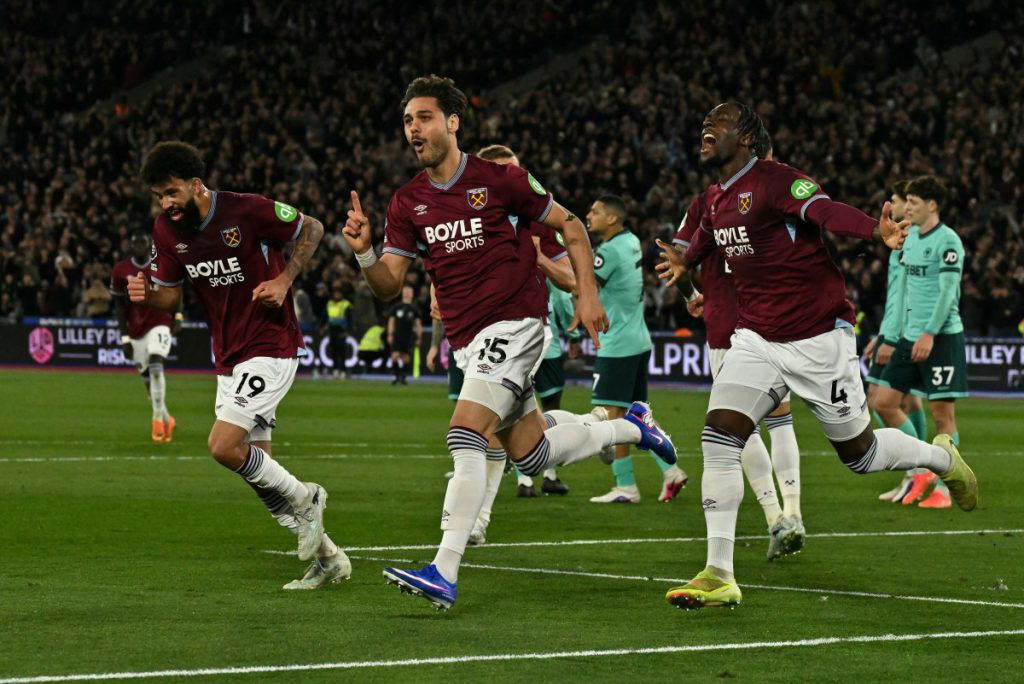
    West Ham climbed out of the Premier League relegation zone with a 4-0 win against Wolves on Friday that dumped Tottenham into the bottom three.

    Nuno Espirito Santo’s side took the lead through Konstantinos Mavropanos’ first-half header at the London Stadium.

    Valentin Castellanos netted twice in the second-half to ensure fourth-bottom West Ham, who started the evening in the relegation zone, moved two points above third-bottom Tottenham.

    Mavropanos completed the rout with his second goal in the closing stages in an ironic twist as the former Arsenal defender helped to push his old club’s bitter rivals closer to the drop.

    It is the first time Tottenham have been in the bottom three at the end of a Premier League match-day since August 2015, when they lost 1-0 to Manchester United.

    Tottenham can climb back out of the relegation zone if they win at Sunderland in Roberto De Zerbi’s first game in charge on Sunday.

    The north Londoners have seven games to save themselves from playing in the second tier for the first time since 1977-78.

    Beaten on penalties by Leeds in the FA Cup quarter-finals last weekend, West Ham bounced back with a vital victory in their own fight for survival.

    “All of us deserve this kind of evening, especially our fans. London Stadium today was amazing, bouncing with energy,” Nuno said.

    “The first half was tough. We didn’t find spaces, the game didn’t flow. Then after the break we really improved.

    West Ham United’s English striker #20 Jarrod Bowen applauds the fans following the English Premier League football match between West Ham United and Wolverhampton Wanderers at the London Stadium, in east London on April 10, 2026. (Photo by Ben STANSALL / AFP)

    “The way we did it proved to ourselves that we cannot give up. That was the team spirit from the beginning.

    “We are in the fight. I realise we have a lot of work to do yet. We made a big step today, important for us, but nothing has changed.”

    Bottom of the table Wolves are 15 points from safety and, with only six matches left, they are destined for relegation to the Championship.

    – Knockout blow –

    Wolves looked rusty in their first game for 25 days due to the international break and their exit from the FA Cup.

    El Hadji Malick Diouf’s poor pass gave Adam Armstrong a sight of goal, but the Wolves striker couldn’t keep his effort on target.

    Armstrong wasted a better chance moments later when his close-range header was saved by Mads Hermansen.

    West Ham took advantage of those escapes to steal the lead in the 42nd minute.

    Replays showed West Ham were lucky to be awarded a corner when the final touch came off Jarrod Bowen and the England forward quickly rubbed salt into Wolves’ wound.

    When Bowen’s corner was headed back to the forward, he produced a far better cross with his second attempt and Mavropanos rose to thump his header past Wolves keeper Jose Sa.

    Bowen hit the post with a dipping curler early in the second half and Castellanos delivered the knockout blow in the 66th minute.

    Playing a one-two with Pablo, the Argentine striker surged through the Wolves defence but his tame shot should have been saved by Sa before it trickled over the line.

    Castellanos struck again two minutes later with a deflected shot that squirmed past the hapless Sa.

    Mavropanos volleyed home at the far post from an 83rd minute corner to compound Wolves’ misery.

    The post EPL: West Ham beat Wolves to send Spurs into relegation zone appeared first on Vanguard News.
  • Five things to know about the planned Iran-US talks in Islamabad

    Five things to know about the planned Iran-US talks in Islamabad

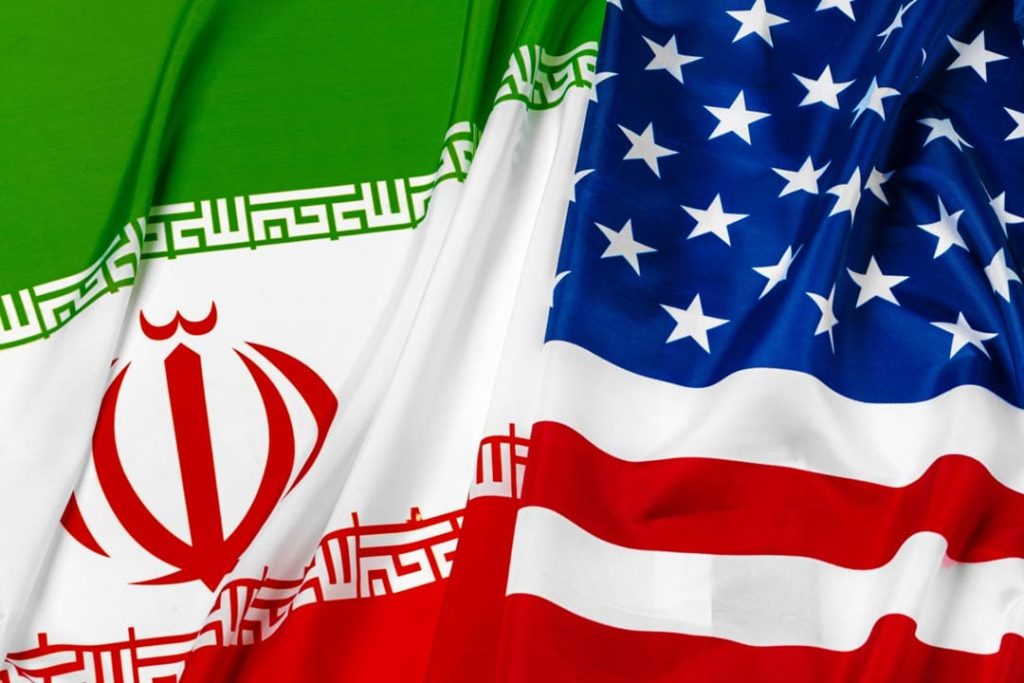
    Pakistan is set to host talks between Iran and the United States in a bid to turn a fragile two-week ceasefire into a lasting end to a war that has left thousands dead and roiled global energy markets.

    Here are five things to know about the Islamabad talks:

    – The war behind the talks –

    On February 28, the United States and Israel launched deadly coordinated strikes that killed supreme leader Ali Khamenei and struck Iran’s military and nuclear infrastructure.

    More than 3,000 people were killed in Iran in five weeks, according to Iranian media and US-based Human Rights Activists News Agency (HRANA).

    Tehran responded by effectively closing the Strait of Hormuz, the Gulf waterway through which about a fifth of global oil and gas passes, sending energy prices soaring and disrupting trade worldwide.

    On April 8, Washington and Tehran agreed to a two-week ceasefire brokered by Pakistan. The ceasefire is expected to expire April 22.

    – Pakistan’s unlikely starring role –

    Pakistan’s value as a mediator rests on an unusually broad diplomatic network.

    Iran was the first country to recognise Pakistan’s statehood following independence in 1947, with the two neighbours sharing a 900-kilometre (560-mile) border and deep historical, cultural and religious ties.

    Pakistan is also home to more than 20 million Shia Muslims, the second-largest such population in the world after Iran.

    Islamabad has cultivated strong ties with Washington, Riyadh and Beijing.

    Pakistani Foreign Minister Ishaq Dar visited Beijing at the end of March for talks with Chinese Foreign Minister Wang Yi, who backed Islamabad’s mediation efforts as “in keeping with the common interests of all parties”.

    Trump himself told AFP that China helped bring Iran to the negotiating table, an account backed by Pakistani officials.

    “On ceasefire night, hopes were fading, but China stepped in and convinced Iran to agree to a preliminary ceasefire,” a senior Pakistani official familiar with the negotiations told AFP on condition of anonymity.

    – What’s on the table? –

    The gap between the two sides remains vast.

    Washington’s reported 15-point proposal centres on Iran’s enriched uranium and the reopening of the Strait of Hormuz.

    Tehran has countered with a 10-point plan demanding control over the strait, a toll for vessels crossing the strait, an end to all regional military operations and the lifting of all sanctions.

    Lebanon is also a major sticking point.

    Israel has continued its strikes in the country targeting Hezbollah — after the ceasefire came into force — with Israeli Prime Minister Benjamin Netanyahu rejecting Prime Minister Shehbaz Sharif’s assertion that the truce included Lebanon.

    US Vice President JD Vance appeared to take a softer tone, saying there may have been a “legitimate misunderstanding” from Iran that Lebanon would be included.

    Iran’s President Masoud Pezeshkian warned on X that Israel’s strikes on Lebanon rendered the negotiations “meaningless”.

    Iran has also long refused to concede to Washington’s demands on its nuclear programme.

    Iranian sources have also told Iranian media that Tehran won’t attend the talks unless a ceasefire is in place in Lebanon.

    – Who are the negotiators? –

    Vance will lead the American team, joined by special envoy Steve Witkoff and presidential son-in-law Jared Kushner.

    It marks the most senior US engagement with Iran since Secretary of State John Kerry negotiated the 2015 nuclear deal.

    Witkoff held multiple rounds of Oman-mediated talks with Iranian Foreign Minister Abbas Araghchi before the war cut the process short.

    Araghchi and Iranian parliamentary speaker Mohammad Bagher Ghalibaf, along with other security and economic officials, have arrived in Pakistan, Iranian state television and the Pakistani government confirmed.

    Reporting their arrival, state broadcaster IRIB reiterated Tehran’s position that talks will not begin unless its conditions are met, including a ceasefire in Lebanon.

    – Islamabad on lockdown –

    The talks are being held in the Pakistani capital, Islamabad.

    The government has kept its cards close to its chest, not confirming the venue, but the Serena Hotel — located next to the foreign ministry in the capital’s high-security Red Zone — asked its guests to clear out on Wednesday.

    Authorities in the capital announced a two-day public holiday on Thursday and Friday.

    The streets of Islamabad are flooded with armed security personnel in military fatigues, traffic diversions are in place and police checkpoints are set up.

    The talks are expected to be indirect: the two delegations sitting in separate rooms with Pakistani officials shuttling proposals between them, mirroring the format used in earlier Oman-mediated rounds.

    The post Five things to know about the planned Iran-US talks in Islamabad appeared first on Vanguard News.