Author: The Whistler Newspaper

  • INEC Postpones Voter Revalidation Until After 2027 Polls

    INEC Postpones Voter Revalidation Until After 2027 Polls

    The Independent National Electoral Commission (INEC) has postponed the proposed nationwide voter revalidation exercise until after the 2027 general election.

    Mr Mohammed Haruna, INEC National Commissioner and Chairman, Information and Voter Education Committee, disclosed this in a statement on Friday.

    Haruna, who did not state reasons for the postponement, said the decision was taken at the commission’s meeting in Abuja.

    “Following deliberations, the commission resolved to postpone the exercise until after the 2027 general election,” he said.

    He described voter revalidation as a critical component of INEC’s mandate to maintain a credible and up-to-date National Register of Voters.

    According to him, the exercise is designed to verify and review existing voter records, ensure the accuracy of personal data, eliminate duplicate and ineligible entries, and strengthen the integrity of the voter register.

    He added that it would also provide registered voters the opportunity to confirm their details and make necessary corrections where required.

    Haruna reaffirmed INEC’s commitment to conducting free, fair, credible and inclusive elections.

    INEC Postpones Voter Revalidation Until After 2027 Polls is first published on The Whistler Newspaper

  • Enjoy Football Predictions Smartly: Best Odds, Correct Selections, Responsible Gaming on PunterClash.

    Enjoy Football Predictions Smartly: Best Odds, Correct Selections, Responsible Gaming on PunterClash.

    Every day, thousands of football fans watch the same matches and back the same teams. But only a handful consistently get it right. The difference is not luck, it is strategy.

    The punters who last longest in the game are the ones who think before they select. When it comes to football predictions and sports betting, instinct alone won’t carry you far. The smartest punters know that beyond the obvious, there are deliberate habits that separate consistent winners from everyone else.

    What Makes a Good Football Prediction?

    In the world of football predictions, the difference between getting it right and getting it wrong often comes down to one thing: Information.

    A guess is built on instinct or bias. A correct prediction is built on patterns, context, and understanding. If you want better outcomes and more wins, these three factors will sharpen your approach.

    1. Form: Bet on What’s Happening Now

    Forget reputation, informed predictions focus on the present. Are they winning consistently? Scoring freely? Conceding late? Form reflects a team’s current rhythm and momentum. Ignoring it means betting on history instead of reality.

    2. Head-to-Head: Let the Records Speak

    Some fixtures carry patterns beyond current form. Records reveal how teams have historically matched up. Psychological advantage and style matchups often matter more than league position. Always check the history before you pick.

    3. Odds Value: Think Beyond the Favourite

    Most punters back the obvious choice. Smart football predictions go further by identifying value, assessing whether the best odds truly reflect the likely outcome. The smartest move is rarely the most popular one.

    Sports Betting vs PunterClash: A Smarter Way to Play

    Traditional sports betting puts you up against the house. Bookmakers set the odds and no matter how sharp your football knowledge is, the structure works against you.

    PunterClash changes this entirely.

    Instead of betting against a bookie, you compete directly against other punters in structured OddScore contests.

    Your football knowledge becomes your edge.
    This is a smarter, skill-based alternative to traditional sports betting, one where strategy and insight are genuinely rewarded.

    How OddScore Works: Why Best Odds Matter More Than You Think

    OddScore is PunterClash’s contest system built to reward smart, strategic punters, not just safe pickers.

    Correct predictions matter, but picking only obvious outcomes won’t move you up the leaderboard.

    What really counts is finding value in the Best odds. Higher odds mean higher points.
    The real challenge is balancing accuracy with bold, well-calculated football predictions.
    On OddScore, it is not just about getting it right. It is about getting it right strategically.

    There are three types of OddScore contests available:

    ● Regular: Prize pool is determined by the number of participants

    ● Guaranteed: Prize pool is fixed regardless of participant numbers

    ● Sponsored: Free to enter, backed by PunterClash or third-party brands with a specified prize amount

    How to Enter Soccer Contests on PunterClash

    Getting started takes less than a minute:

    Sign up or log in to your PunterClash account
    Look through available OddScore contests
    Make your football predictions before kickoff
    Submit your entry early
    Track your position on the live leaderboard
    Once matches begin, predictions are locked. From there it is purely about how your selections perform against every other punter in the contest.

    Responsible Gaming: How to Keep It Fun and Stay in Control

    The best punters are not just smart, they are disciplined.

    PunterClash promotes responsible gaming by moving away from endless wagering and toward structured competition. Entering defined soccer contests rather than placing unlimited bets naturally reduces the urge to chase losses or bet impulsively.

    Set your limits. Play within your means. Treat it as entertainment, not financial pressure. Responsible gaming is not just a rule on PunterClash, it is part of the culture.

    Turn Your Football Knowledge Into Real Results

    Football fans already do the work watching today’s football, analysing teams, making football predictions with friends. PunterClash simply gives that knowledge a competitive platform.

    Whether you are a seasoned punter or just getting started with soccer contests, the opportunity to compete, win, and grow is right here.

    Sign up, join a contest, and start clashing on www.punterclash.com

    Enjoy Football Predictions Smartly: Best Odds, Correct Selections, Responsible Gaming on PunterClash.

  • Ex-Senatorial Candidate Jailed For Supplying Fuel To Boko Haram

    Ex-Senatorial Candidate Jailed For Supplying Fuel To Boko Haram

    A former senatorial candidate in Borno State, Babagana Habeeb, was on Friday sentenced to 10 years in prison for selling petrol to Boko Haram terrorists.

    Habeeb, who contested the 2015 election, was convicted by the Federal High Court in Abuja on a one-count charge of aiding and abetting terrorism.

    Trial Justice Peter Lifu held that the Federal Government had successfully established its case against him.

    The convict, a fuel dealer in Maiduguri, Borno State, admitted in open court that insurgents had obtained fuel from his station. However, he claimed his attendants had carried out the sales.

    He knelt before the court throughout the proceedings, pleading for leniency.

    According to Habeeb, he has two wives and six children who depend on him. He added that he had been unable to see or communicate with any family members for over 10 years while in detention.

    The prosecution counsel, Mr. David Kaswe, from the Federal Ministry of Justice, opposed the convict’s plea for leniency.

    Kaswe insisted that the logistical support Habeeb rendered to terrorists had led to the deaths of several people and the destruction of homes and properties.

    While acknowledging that Habeeb had been in detention for over 10 years, the government lawyer urged the court to impose a 20-year jail term.

    He maintained that Boko Haram would not have been able to use their motorcycles to launch attacks on innocent people and escape into the bush without fuel supplies.

    In delivering judgment, Justice Lifu held that there was no evidence Habeeb was a Boko Haram member or had received weapons training. The judge added that the sole accusation against him was the sale of fuel to the terrorists.

    Justice Lifu further noted that the Federal Government did not refute Habeeb’s claim of having spent 10 years in pre-trial detention.

    Consequently, he sentenced Habeeb to 10 years’ imprisonment, to run from the date of his arrest and detention.

    The court ordered Habeeb’s release upon the signing of his release warrant, to enable him to undergo extensive rehabilitation.

    Ex-Senatorial Candidate Jailed For Supplying Fuel To Boko Haram is first published on The Whistler Newspaper

  • Teenager charged with murder over shooting of 14-yr-old Eghosa Ogbebor in London

    Teenager charged with murder over shooting of 14-yr-old Eghosa Ogbebor in London

    A 16‑year‑old boy has been charged with murder following the fatal shooting of 14‑year‑old Eghosa Ogbebor in Woolwich, southeast London.

    Police said the teenager was first arrested on Saturday, 4 April, and released on bail before being re‑arrested on Thursday, 9 April.

    According to Sky News, officers were called to Lord Warwick Street, near the Woolwich Ferry and Woolwich Dockyard train station, at around 3.40pm on 2 April after reports of gunfire. Eghosa was pronounced dead at the scene.

    The accused, from Romford, is scheduled to appear at Thames Magistrates’ Court tomorrow.

    The 16-year-old was first arrested, along with a 19-year-old man, on suspicion of murder. A 46-year-old man was also arrested on suspicion of assisting an offender.

    All three were subsequently released on bail, police said.

    The day before, a 14-year-old boy, 16-year-old boy and 18-year-old man were arrested in connection with Eghosa’s death.

    They have also been bailed while inquiries continue.

    On 10 April, a further 16-year-old boy was also arrested on suspicion of murder and remains in custody.

    The post Teenager charged with murder over shooting of 14-yr-old Eghosa Ogbebor in London appeared first on Vanguard News.

  • Nigeria Deploys Digital Learner IDs To Build Central Education Database

    Nigeria Deploys Digital Learner IDs To Build Central Education Database

    The Federal Government has launched the Learner Identification Number (LIN), a digital system designed to assign every student a permanent and traceable academic identity.

    The initiative, introduced by the Federal Ministry of Education, is aimed at improving education planning, ensuring learning continuity, and enabling timely interventions across the sector.

    The Minister of Education, Maruf Alausa, in a statement by the ministry’s Director of Press and Public Relations, Boriowo Folasade, on Friday, described the move as a major milestone aligned with the Renewed Hope Agenda of President Bola Tinubu.

    “This initiative marks a turning point in our education system. By assigning every learner a unique number, we are building a structure that supports each child’s journey from classroom to career,” the minister said in the statement.

    The ministry said over 1.9 million candidates who registered for the 2026 examinations conducted by the West African Examinations Council and the National Examinations Council have already been issued LINs in the first phase of the rollout.

    The system is expected to provide each learner with a unique and permanent identity, and enable seamless tracking of academic progression across all levels, even when students change schools or relocate.

    According to the ministry, the initiative builds on the Digitised National Education Management Information System (DNEMIS), which has created a comprehensive national register of schools. Each school has been assigned with a unique ten-digit identification number, that provides a reliable foundation for a fully integrated national education database

    It added that linking learners to verified identities and schools would strengthen examination processes, curb impersonation, and enhance the credibility of public examinations nationwide.

    The Ministry further stated that beyond examination integrity, the LIN is expected to help track out-of-school children, monitor student progression, identify dropouts, and address learning gaps through targeted interventions.

    It also stated that the next phase of the programme would extend coverage to all learners in public and private schools nationwide, using national data platforms and the Annual School Census.

    It urged stakeholders, including schools, examination bodies, parents, and students, to support the initiative and comply with its processes.

    Nigeria Deploys Digital Learner IDs To Build Central Education Database is first published on The Whistler Newspaper

  • Dabiri-Erewa Raises Alarm Over Hacked Email Account

    Dabiri-Erewa Raises Alarm Over Hacked Email Account

    The Chairman/CEO of the Nigerians in Diaspora Commission (NiDCOM), Abike Dabiri-Erewa, has raised an alarm over the compromise of her personal email account by hackers, warning members of the public to disregard any messages sent from the address.

    The disclosure was made in a statement shared via her official X (formerly Twitter) handle.

    Dabiri-Erewa revealed that her email account, aodabiri@yahoo.com, had been breached by unknown cyber actors, prompting concerns over potential misuse.

    She cautioned that any correspondence purportedly originating from her email or any other address should be ignored pending the restoration of full control of the account.

    In her tweet, she said: “Please be informed that my email account (aodabiri@yahoo.com) has been compromised by hackers.

    “Kindly ignore any emails purportedly sent from me using this or any other address until I regain full control of the account. I will unfortunately not be able to respond to the thousands of emails that must have accumulated during this period.”

    The NiDCOM boss also appealed for patience and understanding from associates, noting that the breach has disrupted her ability to attend to official and personal communications.

    She assured that efforts are underway to secure the account and restore normal operations.

    Dabiri-Erewa Raises Alarm Over Hacked Email Account is first published on The Whistler Newspaper

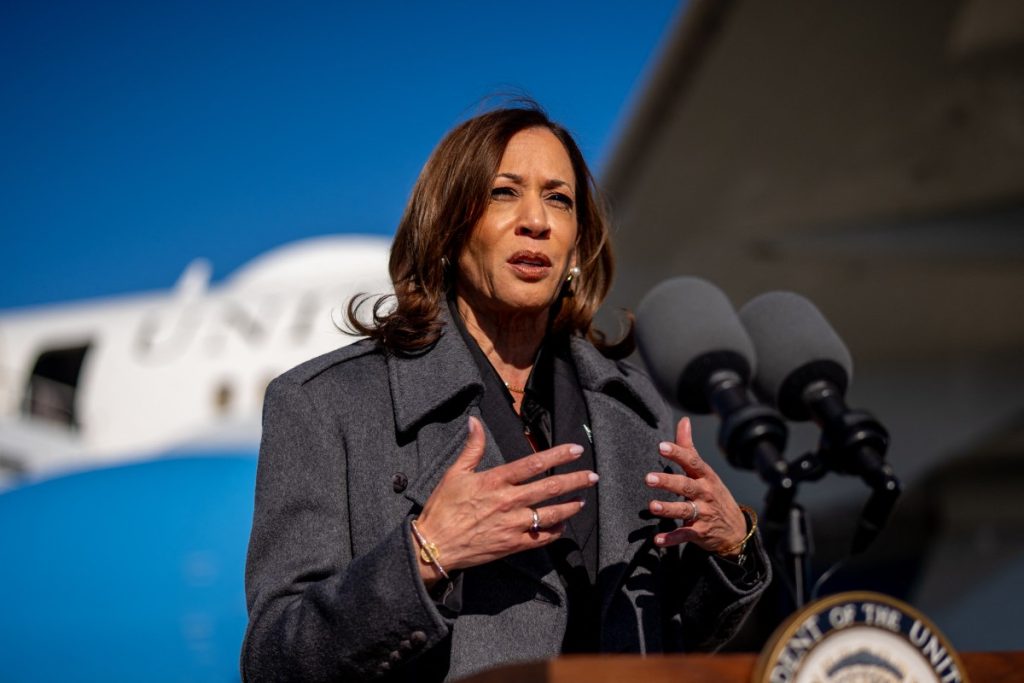
  • Kamala Harris teases comeback as Democrats eye 2028 US election

    Kamala Harris teases comeback as Democrats eye 2028 US election

    Former US vice president Kamala Harris on Friday delivered her clearest signal yet that she may mount another bid for the White House, telling a Democratic audience she is thinking about running in 2028.

    Speaking at a convention hosted by civil rights leader Al Sharpton’s National Action Network, the 61-year-old stopped short of a formal declaration but left little doubt she is weighing a third campaign.

    The Democrat — defeated in 2024 by Donald Trump in a tumultuous presidential election — was asked if she would run again in 2028 and electrified the crowd of party activists in New York when she replied: “I might, I might — I’m thinking about it.”

    Having served four years a “heartbeat away” from the presidency under Joe Biden, Harris said she understands the demands of the job — and argued that the current political and economic landscape is failing many Americans.

    “I spent countless hours in my West Wing office, footsteps away from the Oval Office. I spent countless hours in the Oval Office, in the Situation Room. I know what the job is. And I know what it requires,” she said.

    Harris has maintained a relatively low profile since her 2024 defeat, but has been easing back into the spotlight with a series of appearances and trips across southern states.

    Allies say she remains undecided but is taking steps to preserve the option of a campaign.

    The National Action Network event has emerged as an early proving ground for 2028 hopefuls, with Black voters — a cornerstone of the Democratic base — expected to play a decisive role in choosing the party’s nominee.

    Harris used the platform to launch a broad critique of Trump’s leadership, telling the crowd: “The status quo is not working, and hasn’t been working for a lot of people for a long time.”

    Early polling suggests that she begins the shadow 2028 race with a significant advantage in name recognition. But with several prominent Democrats testing the waters, her path to the nomination — if she runs — is far from guaranteed.

    “The American people have right to expect that anyone who wants to run for office and be a leader, that it can’t be about themselves and what they want for themselves,” Harris added.

    “It’s got to be about the American people, and that’s how I think of it.”

    The post Kamala Harris teases comeback as Democrats eye 2028 US election appeared first on Vanguard News.

  • ‘One Dangote not enough’ – Sujimoto’s open letter to President Tinubu

    ‘One Dangote not enough’ – Sujimoto’s open letter to President Tinubu

    In 1961, the government of South Korea, led by the disciplined and strategic leadership of Park Chung-hee, took control of its economic destiny and made a deliberate decision to create new billionaires. A small group of competent, ambitious local businessmen, the vanguard of visionaries, were handpicked, shielded from foreign competition, and given cheap credit within a system structured for scale. The state concentrated capital, reduced external pressure, and aligned policy with production, ensuring these firms were not constrained by the limits that prevent most businesses from scaling.

    The state did not wait for wealth to trickle down. It engineered it upward. It concentrated national credit in a narrow cadre of roughly seven industrial families and protected them until they could compete globally. This was not favoritism; it was deliberate economic design that intentionally created billionaires. From that system emerged firms that would come to define industrial power, including LG, Hyundai, SK Group, and Kia, names now recognized across the world. One of those early state-backed enterprises, a modest trading firm once obsessed with dried fish and noodles, was pushed through that system until it became the global institution now known as Samsung.

    The “Chaebol” Strategy: Targeted Incubation

    South Korea’s stellar performance is widely praised as a model for emulation, but what is often admired is rarely understood. It was built on discipline, structure, and a culture of entrepreneurship that relies on audacity, improvisation, and experimentation.

    History, when examined without sentiment, reveals this pattern again and again. In China, under Deng Xiaoping, the state did not simply open markets; it engineered outcomes. Since the turning point of 1979, millions have been lifted out of poverty, and alongside that transformation emerged a class of billionaires, not by accident, but by design.

    China did not stop at creation; it sustains its enterprises through intentional investment and consistently favorable policy frameworks.

    The state understands that when its companies succeed, the returns multiply—through employment, industrial depth, and significantly higher tax revenues.

    Your Excellency, the lesson for Nigeria’s salvation is written in the steel of Seoul and the silicon of Suwon. This approach is not new to Nigeria.

    In 2000, President Olusegun Obasanjo recognized the necessity of a “National Champion” strategy. He understood that if Nigeria was to reduce its dependence on imported cement and fuel, the state had to deliberately develop industrialists. He cleared the path for a select few, creating the policy conditions that enabled the rise of Aliko Dangote and others.

    Today, a single entity like the Dangote Group pays over N900 billion in taxes annually, employs tens of thousands, and has become a critical anchor for Nigeria’s industrial stability. It is not far-fetched to say that, without the Dangote Refinery, Nigerians would likely be buying diesel at nearly N3,000 per litre Today.

    The tragedy is not that we lack capacity; it is that we stopped at one. No single industrial anchor, no matter how powerful, can carry the weight of a nation.

    One Dangote can stabilize a sector; ten can stabilize an economy.

    Who says the price of rice cannot move from N80,000 to N40,000? Who says the price of cement cannot fall drastically? When you deliberately develop industrial leaders and align them with national priorities, scale begins to work in the interest of the people, driving down costs, expanding access, and strengthening the economy.

    What we have is proof of concept. What we lack is replication at scale.
    Proof of Untapped Capacity
    I will not quickly forget when Sunday Dare brought me to you in 2015. I spoke then of a gigantic vision, the Lorenzo by Sujimoto, conceived as the tallest residential building in Lagos and a monument of architectural ambition envisioned for 16 Bourdillon Road.

    Since then, my ambitions have extended far beyond luxury real estate, from 50,000 hectares of rice cultivation to the production of 500,000 tonnes of vegetable oil annually.

    At Sujimoto, 2025 has been a gift to us. Over the past five years, we have evolved beyond luxury real estate, recognizing that while we have mastered the sector, luxury alone cannot deliver the level of impact required for a nation of over 240 million resilient and enterprising people.

    Today, that evolution is being translated into execution at scale through large-scale, middle-income housing, industrial production, and agriculture. Through our proposed Sujimoto Smart City model, we aim to deliver over 5,000 homes annually across Nigeria’s six geopolitical zones.

    In agriculture, it is our ambition to build from an initial 50,000 hectares, with a clear path to scale to one million hectares of production within the next decade. Beyond this, we bring proven capacity in cost-efficient infrastructure development, including road construction, with the advantage of not being dependent on the dollar.

    Nigeria does not lack capable builders; it lacks a system that deliberately identifies, supports, and scales them into national champions.

    When Hamid Joda, a renowned banker, set out to establish TAJBank, he moved from investor to investor, knocking on countless doors; many said “NO,” yet a decisive few said yes to his bold vision, and in that minority decision now sits one of Nigeria’s fastest-growing banks, employing over 5,000 people. What would have happened if the bank was never set up or never succeeded? Today, those jobs would not exist, and for many, the stability those opportunities created, the households they sustained, and the futures they quietly enabled would simply never have materialised.

    Yet, Nigeria remains a nation of brilliant but fragmented entrepreneurs, each fighting a lone battle against high interest rates, erratic power, and a volatile currency.

    Nigerians have talent, but they do not have the resources to scale it. Nigerians are great entrepreneurs, but they do not have access to capital.

    Nigerians have the capacity to build, but they do not have the financial backing required to sustain and expand it.

    Across Today’s economic climate, even high-capacity entrepreneurs face constrained access to capital and limited institutional support.

    Like many businesses operating in Today’s environment, we have faced significant financial strain. At one point, our debts exceeded N40 billion, of which we have successfully cleared over 80 percent. Our workforce, once over 1,000 strong, has had to adjust to fewer than 500 employees, an outcome shaped by crunching economic shifts, currency unification, and tightening financial conditions that constrained cash flow.

    Despite these challenges, we have not stepped back from Nigeria. We remain committed because we believe in this country, its leadership, and its greatest asset, its people.
    This reflects a structural gap within our financial system.

    Banks are typically positioned to fund short-term ventures, often within one to two years, while building sustainable industries requires patient capital over five to ten years.

    We have the raw material, Mr. President; we have the ambition. What we lack is the deliberate policy instrument. Building on that logic, Your Excellency, if your administration were to deliberately identify and support ten to twenty such industrial leaders, amongst whom I count myself, Dr. Sijibomi Ogundele, across manufacturing, food production, energy including refining, fintech and financial services, the deep-sea economy, semiconductor assembly, large-scale mechanized agriculture, pharmaceuticals, cement, and scalable housing for middle- and low-income households, Nigeria would not only expand its productive base but fundamentally transform its economic capacity.

    South Korea understood a fundamental law of economic development: you cannot redistribute wealth if you have not first mastered the art of creating it at scale. You cannot feed a nation of over 200 million people on the output of our most hardworking SMEs alone; you need industrial capacity capable of feeding a continent.

    The implication is clear: we cannot fight free-market wars with a stick while our neighbors use state-backed cannons. We must use targeted tariffs and strategic protection to shield our manufacturers from dumping, just as China has done in building and defending firms like Huawei.

    From China’s explosive growth to South Korea’s industrial miracle, and even in the early development of the United States, states have deliberately nurtured national champions: firms supported through targeted policies to dominate local markets and compete globally.

    But a million “SMEs” cannot build a deep-sea port or anchor a continental trade currency. To lead the African Continental Free Trade Area (AfCFTA), Nigeria must move from being a referee to being the ultimate Venture Capitalist.

    The “10 Industrialists” Strategy:
    This is not about favoritism; it is about strategic concentration in service of the collective. When the state deliberately develops industrial leaders in key sectors, it is not gifting wealth—it is creating national anchors.

    Your Excellency, it is time to identify ten to twenty industrial leaders and bring us into a room to debate and define how Nigeria will build its next generation of economic power. This is not a call for selective support; it is a call for “Value-Chain Capitalism.”

    The principle is simple.
    It is often said that a good tailor must use the fabric at hand to design a masterpiece. You have the entrepreneurs, Mr. President. You have the raw material. What is required is a deliberate policy instrument that says: “We will back you, but you must produce, employ, compete, and deliver affordable value to the economy.”

    The “ten to twenty billionaires” are not the goal; they are the tailors. They are the engine of wealth that will employ millions, pay trillions in taxes, and stabilize our currency through massive export revenue.

    The “Billionaire-Enabling Government”

    Your Excellency, your “Renewed Hope” agenda must now enter its most decisive phase. You must bring together the innovators, the industrialists, and the builders who have already demonstrated capacity, and define how Nigeria will produce its next generation of economic pillars.

    To catapult Nigeria into a $1 trillion economy, the Federal Government must pivot from being a regulator to becoming an active architect of domestic industrial power.

    This requires the deliberate development of national champions across strategic sectors.

    My dear President, you have done this before. The record of Lagos is clear: where deliberate policy met capable entrepreneurs, real outcomes followed. What was achieved between 1999 and 2007 was not accidental; it was the result of intentional choices, identifying builders and backing them to scale. That same clarity of execution can now be applied on a national scale, with far greater consequence.

    The lesson is consistent across every serious economy: nations that rise do not wait for wealth; they create it. They identify their strongest builders, back them deliberately, and hold them to results. That is how industrial power is built. That is how billionaires emerge, not by chance, but by design.

    Nigeria has already seen what one can do. The task now is to do it again, this time at scale.

    On a personal note, as I mark my birthday Today, I consider it an honour to present these reflections to the Presidency at such a defining moment for our dear nation.

    Thank you, Your Distinguished Excellency.

    God bless the Federal Republic of Nigeria.

    Dr. Sijibomi Ogundele is the Group Managing Director of Sujimoto, the Czar of Luxury Real Estate Development, and the mastermind developer behind the renowned Giuliano.

    Our other audacious projects, such as the most sophisticated building in Banana Island, LucreziaBySujimoto, the grandiose Sujimoto Twin Tower, the tallest twin towers in Africa; the regal Queen Amina by Sujimoto, a monument to royal affluence; the magnificent high-rise LeonardoBySujimoto; the Sujimoto Farm; an advanced farm estate system that incorporates housing, farm hospitals, hotels, and markets within an ecosystem, creating opportunities for agro-tourism and affordable housing, among other projects that have etched an indelible imprint on Nigeria’s _skylines, a testament to Sujimoto’s unrivalled mastery of modern-day engineering.

    ‘One Dangote not enough’ – Sujimoto’s open letter to President Tinubu

  • Tinubu Felicitates Dangote On Birthday

    Tinubu Felicitates Dangote On Birthday

    President Bola Tinubu has extended warm felicitations to Africa’s leading industrialist, and chairman of Dangote Group, Aliko Dangote, on his birthday on Friday.

    In a statement by presidential spokesperson, Bayo Onanuga, Tinubu praised Dangote’s contributions to Nigeria and Africa’s economic growth and industrial development.

    Tinubu commended the businessman’s entrepreneurial vision, resilience, and commitment to excellence, noting that his investments have transformed key sectors of the economy. He identified the Dangote Refinery, Petrochemical Company and cement factories across Africa as milestones that have positioned Nigeria as a major hub for petrochemical and cement production.

    He also lauded Dangote’s role in job creation, infrastructure development, and his sustained confidence in the Nigerian economy.

    “Aliko’s entrepreneurial vision, resilience, innovation, and commitment to excellence have transformed industries and positioned Nigeria as a hub for large-scale petrochemical and cement production through his establishment of the multi-billion-dollar Dangote Refinery and Petrochemical Company and cement factories across Africa.

    “I salute Aliko for his conglomerate’s role in job creation, infrastructure development, and unwavering belief in the Nigerian economy and its potential. Dangote remains a shining example of African enterprise, whose achievements continue to inspire a new generation of entrepreneurs across the continent,” the president said.

    He further commended the industrialist’s philanthropic interventions through the Dangote Foundation, particularly in the areas of health, education, and poverty alleviation.

    “I also applaud Aliko’s philanthropic efforts, particularly through the Dangote Foundation, which have significantly impacted lives in health, education, and poverty alleviation,” Tinubu said.

    He prayed for continued good health, wisdom, and greater accomplishments for the business mogul in the years ahead.

    Tinubu Felicitates Dangote On Birthday is first published on The Whistler Newspaper

  • Video: BBNaija star Phyna shares new look three days post-BBL surgery

    Video: BBNaija star Phyna shares new look three days post-BBL surgery

    Winner of Big Brother Naija Season 7, Phyna Otabor, has added a new chapter to her public image after revealing she has undergone cosmetic surgery.

    The reality star, who is also known as an actress, model, filmmaker and fashion enthusiast, shared her experience on social media, posting clips and comments after her first post-surgery massage.

    Her decision comes just weeks after the death of socialite Elena Jessica, who reportedly died from complications following a second Brazilian Butt Lift (BBL) procedure. The incident had sparked fresh conversations about the risks of cosmetic surgery in Nigeria.

    In her post, Phyna said she had no regrets about the procedure and described her experience with excitement, noting changes in her body after surgery.

    “First massage. Now I understand why people don’t shut up about it… Finally did it. No regrets,” she wrote.

    She also reacted to her new appearance, saying her body felt more “snatched” and joking about her flat stomach transformation.

    @unusual_phyna Day 3 — this recovery is not for the weak trusting the process. @cgehealthcare #virals #foryoupagе #trendin #fy #foryou ♬ Sunset Chill Vibes – Ausku Studio

    “This is my first massage… my belly snatched sha. Everybody should go and hide,” she said in one of the clips.

    Phyna, who had previously criticised fellow reality star Chichi over cosmetic procedures, also reflected on her gym experience, suggesting that workouts no longer deliver the same results compared to surgery.

    In another post, she described waking up after her first post-op massage as intense but worth it, saying she was happy with what she saw in the mirror.

    Cosmetic surgery, especially Brazilian Butt Lift procedures, has become increasingly popular in Nigeria.

    The procedure involves removing fat from parts of the body such as the stomach or thighs and transferring it to the buttocks for a fuller shape.

    The trend has continued to grow in the country’s entertainment industry, with several celebrities reportedly undergoing similar procedures.

    Vanguard News

    The post Video: BBNaija star Phyna shares new look three days post-BBL surgery appeared first on Vanguard News.