
The Nigerian Stored Products Research Institute (NSPRI) has called on the newly trained agripreneurs to be ambassadors of postharvest loss reduction. The call was made by the Executive Director of NSPRI, Professor Lateef Oladimeji Sanni, at the closing ceremony of a two-day capacity building on postharvest management of agricultural products organised by the Lagos Zonal […]
Author: Tribune Online
-
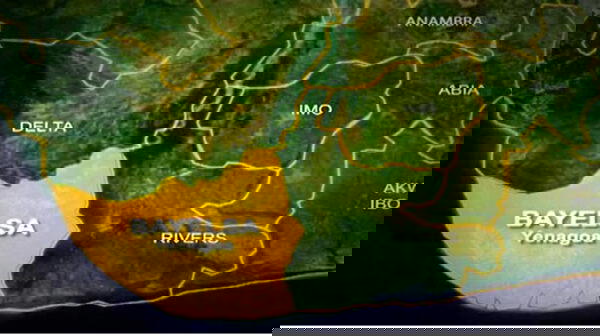
60 years of waiting ends as Bayelsa communities celebrate road inauguration
By Samuel Oyadongha
OPOROMA—For six decades, the people of Southern Ijaw Local Government Area, Bayelsa State’s largest council and one of Nigeria’s biggest waited in vain. Last Friday, their patience finally paid off.
President Bola Tinubu personally inaugurated the long-awaited Yenagoa-Oporoma road and also virtually, the Sagbama-Ekeremor road.
The projects link remote communities in Southern Ijaw and Ekeremor LGAs to the state capital, Yenagoa. Thousands of residents poured into the streets in frenzy.
The roads, which snake through vast swaths of wetland are part of the three senatorial corridors designed to access the Atlantic coast from three flanks: Yenagoa-Oporoma-Ukubie (Bayelsa Central), Sagbama-Ekeremor-Agge (Bayelsa West), and Nembe-Brass (Bayelsa East).
The long wait
Remarkably, these roads, intended to open up oil and gas hinterlands had sat on the Federal Government’s drawing board since the 1960s. This neglect fuelled deep resentment among locals who felt the government cared only about extracting their resources, not about their welfare.
However, the state government moved to shatter the myth of a “difficult terrain,” as Governor Douye Diri committed huge funds and deployed heavy-duty machinery to transform the landscape.
The Yenagoa-Oporoma road includes a 630-metre bridge across the Nun River to Oporoma, headquarters of Southern Ijaw LGA. A spur links to Otuan, with Ondewari on the horizon. This project promises to change the fortunes of oil-and-gas-rich but long-neglected communities in the Central Senatorial District, areas previously accessible only by water.
More than 60 communities and kingdoms in constituencies III and IV of Southern Ijaw, as well as Constituency III in Brass LGA, will enjoy drastically reduced travel times and lower transport costs. For one of Nigeria’s top oil-producing LGAs, the road corrects a historic injustice.
Meanwhile, the Sagbama-Ekeremor-Agge road will accelerate development in far-flung communities such as Beautiful Gate, Oweigbene, Ndoro, Peretorugbene, Aghoro and Agge on the Atlantic coast.
Bayelsa government officials say it completes a transformative corridor that will integrate formerly marginalised settlements into the state economy, raise living standards, and lay the foundation for sustained, inclusive growth.
Residents thrilled
It was no surprise that thousands turned out when Governor Diri led President Tinubu and his entourage into the heart of Southern Ijaw for the inauguration.
Southern Ijaw is historically significant, the area is host to the oil majors and several others. It also had the highest concentration of militant camps during the heyday of Niger-Delta militancy. Aggrieved Ijaw youths, protesting years of environmental despoliation and demanding economic restitution for the region, crippled the nation’s oil production. That struggle birthed the presidential amnesty programme under the late President Umaru Yar’ Adua’s administration.
“This is a dream come true. Today, we are happy to drive to our ancestral land. Thanks to the one fondly called the ‘Miracle Governor’, Senator Douye Diri, for making us witness this historic moment.
“The volume of traffic into Oporoma is amazing. For over 60 years we have waited. Our forebears will be thrilled wherever they are. Before now, only swamp buggies were ferried into communities to clear rights of way and lay crude oil and gas pipelines but the story is different now,” said Gabriel Owei, an elated resident.
Chief Douyi Douglas-Naingba, Bayelsa State chairman of the Pan Niger-Delta Forum (PANDEF) and an indigene of the council area, lauded Diri’s infrastructural revolution, declaring that the “Prosperity Administration” is quietly building a legacy that will redefine the state for decades.
“This road is a major score for this administration,” he said adding: “It ends decades of maritime dependency for entire kingdoms. Governor Diri has done very well. He has amplified previous initiatives and done them better. We cannot pretend otherwise. This development will boost our economy and fundamentally improve the lives of our people.”
Alagoa Morris, Deputy Executive Director of the Environmental Defenders Network (EDEN) and an indigene of the area, hailed the inauguration as a huge step forward that will positively impact the people’s socio-economic fortunes.
He said: “As we speak, we can drive to Oporoma and neighbouring Otuan community, and work is progressing towards Ondewari.
“We are excited. Communities in the Olodiama clan, Apoi clan, even down to Ukubie and Koluama are happy.”
Another resident, who simply gave his name as ThankGod, appreciated Diri for the achievement despite the difficult terrain.
“Most people can now drive straight from Yenagoa to their villages, reducing travel costs and man-hours,” he said.
Opuowei Jones, however, noted: “If this project had been executed several decades ago by the Federal Government, perhaps we could have hit Koluama on the Atlantic Ocean in the Central District, Agge on the western flank, and Brass in the eastern axis where work is also progressing simultaneously.
“We could have avoided the many boat mishaps and pirate attacks that have claimed lives on our waterways. Since these corridors are federal roads, and given the commitment of the present administration, the Federal Government should take over the remaining segments to ease the burden on the state and enable it to face other challenges.”
The post 60 years of waiting ends as Bayelsa communities celebrate road inauguration appeared first on Vanguard News.
-

Court refuses to stop NNPC from renewing pipeline surveillance contract awarded to Tantita, others
JUSTICE Bello Kawu of the High Court of the Federal Capital Territory (FCT) has declined the request of the Registered Trustees of Peoples Wellbeing Association to stop the renewal and restructure of the country’s pipeline surveillance contract awarded to Tantita Security Services Nigeria Ltd and others. Declining the request while ruling in an exparte motion, […]
-
Crossing the red line by the Opposition and Government(4), by Eric Teniola
From last week continues the narrative on the Saturday, December 12, 1959 Federal elections with the results thus: In the Northern Region—3,258,520 (votes cast) and 89.4% (percentage poll); Eastern Region-1,929,754(votes cast) and 75.3% (percentage poll); Western Region-1,887, 209 and 71.2% (percentage poll); Lagos-110,072 (votes cast) and 76.2% (percentage poll).
All prominent Nigerian political leaders were returned. These were Alhaji Tafawa Balewa, Dr. Nnamdi Azikiwe, Chief Obafemi Awolowo and all the members of the outgoing Federal Cabinet. The general election went so well that in the new year broadcast the Governor General admitted that the quiet and orderly way in which the election took place on the 12th of December was a major triumph for all those who had planned it.
The Northern People’s Congress was returned as the largest party. The final results announced on December 21 stated that Northern People’s Congress-142; National Council of Nigeria and the Cameroons and its ally NEPU- 89; Action Group- 72 and other Parties- 9.
There were some difficulties in forming the Federal Government when once the election was over; not one single party had won enough seats to form the government alone, nor was there desire to form another national government. As leader of the largest party, Alhaji Tafawa Balewa was invited by Sir James Robertson, Governor General, to form a new Federal Cabinet.
Sir Abubakar, the former Prime Minister accepted the invitation. On his arrival in Lagos, Alhaji Abubakar who was accompanied by the Sardauna of Sokoto, Sir Ahmadu Bello, Premier of the Northern Region, said that he had not ruled out the possibility of forming a coalition government but added that “we certainly cannot compromise” on the suggestion that a leader of another party might become Prime Minister.
After discussion between the NPC and the NCNC, officially described as friendly and cordial, a new Federal Government was formed on December 20, 1959. NPC had ten ministers and NCNC seven.
The Coalition Government members were Alhaji Tafawa Balewa (Prime Minister), Alhaji Muhammadu Ribadu (Lands and Lagos Affairs), Chief Festus Okotie-Eboh (Finance), Mr. Raymond Njoku (Transport and Aviation), Alhaji Inuwa Wada (Works and Survey), Mr. Z.B. Dipcharima (Commerce and Industries), Mr. Jospeh Johnson (Labour and Welfare and Mr. Aja Nwachukwu (Education).
Others were Mallam Maitama Sule (Mines and Power), Mallam Shehu Shagari (Economic Development and Natural Resources, Mr. Olu Akinfosile (Communications), Mallam Usman Sarki (Internal Affairs), Mr. Theophilus Benson (Information), Mallam Waziri Ibrahim (Health), Mallam Yisa Yar’adua (Pensions, Establishment and Nigerianisation), while Mr. Matthew Mbu and Mr. Olanrewaju were both Ministers of State.
By regional representation, ten of the Ministers came from the North, three from the East, three from the West and one from Lagos. Except for those belonging to the Action Group, which now formed the opposition to the NPC/NCNC coalition, all former Ministers in the Federal Government were reappointed, in most cases to their former portfolios; the only new Ministers were Mallam Maitama Sule, NPC Chief Whip in the former Federal Legislature and Mr. Olu Akinfosile, lately President of the Nigerian Students’ Union in the United Kingdom.
Chief Samuel Ladoke Akintola, deputy leader of the Action Group, was appointed Premier of the Western Region on December 15 in succession to Chief Obafemi Awolowo, who had become Leader of the opposition in the new Federal Legislature.
On January 12, 1960, the new Federal House of Representatives held its first meeting. On January 14, 1960, 1960, the Parliament passed a motion for Nigeria’s Independence. April 22, Prime Minister Abubakar left Nigeria for London to complete talks for final transfer of power to Nigeria on October 1, 1960.
In his remark after the election, Chief Obafemi Awolowo wrote “In 1959, during the election that was to usher in independence in 1960, I embarked on an elaborate campaign in the North. I was using helicopter to campaign in every nook and corner of the North. The most important aspect of the campaign of the Action Group was free education, life more abundant for the generality of the people etc, etc. Our manifesto was centred on the development of man. We worked so hard that the Sardauna of Sokoto, Ahmadu Bello, was forced to campaign, a thing he was never used to. My hope at that time was to liberate the North from illiteracy, ignorance and the ‘ranka dede’ mentality. If I had won the election, I would have put a lot of money educating the North in order to bridge the educational gap between that region and the Western and Eastern Regions. This was because I saw the lack of education as a stumbling block against political enlightenment of the whole region.
“But I think that the sooner than later the leaders of the North will see the repercussion of their selfishness and carelessness in their attitude towards Western education. But the time will not be too late, and if they don’t regret it or blame themselves for lack of foresight, the Northern youth may ask their leaders some questions when they see the rate of development that goes with education in many parts of Southern Nigeria. They may then wonder whether it was in their stars or in the selfishness, carelessness and lack of foresight of their leaders. If I had been given the chance in 1959 or 1979, I would have changed the fortunes of the North as a place that can be compared favourably with the South in terms of educational, social and economic developments.”
Yes, there was election in 1959, the first, before independence, but not much violence as we are witnessing now. If one observes, bombings, kidnappings and other violent incidents have heightened up in many parts of the country in the last few months, in fact some states are no go areas. We are going to witness more and more and more. These incidents are not isolated. They are related to the forthcoming elections. No doubt it appears that they are coordinated and organized by the opposition to discredit the ruling party as inoperative and a failure. It is the same method those in government now, used, when they were in opposition some years back. No doubt both the opposition and the government have crossed the red line and there seems to be no ceasefire and no going back. The sad aspect is that the innocent people are the victims of the senseless war, all in a bid for power and to loot the treasury.
A system that gives power to the ruling party a winner takes all approach will definitely bring chaos. When we adopted the Presidential System of government, we thought it would be participatory but as it looks now, it is winner takes all kind of government. If you are in opposition in Nigeria today, you are presumed dead or classified dead. The opposition are left out of the scheme of things. The executives have become monsters and greedy who do not want to share power with anyone. So, the opposition feel shut out of the system.
There must be a ceasefire between both sides. Or else things will continue to get worse and worse. Politicians must not be allowed to destroy this beautiful country.
•Teniola, a former Director at the Presidency, wrote from Lagos.
The post Crossing the red line by the Opposition and Government(4), by Eric Teniola appeared first on Vanguard News.
-

Olive Sulola Adejobi: A Life Lived in Faith, Forming Generations in Quiet Strength
By DAYO ADEJOBI
The passing of our mother, Reverend Mother Superior Olive Sulola Adejobi, marks the close of a life both remarkable and deeply influential, lived with quiet dignity over 98 years. She belonged to a rare generation of women whose strength was neither loudly proclaimed nor easily shaken but steadily revealed through a life anchored in faith, discipline and service.
To me and to those who knew her closely, she was far more than a matriarch or a spiritual leader, she was a constant, an enduring presence who shaped lives with intention and grace. In her I found guidance, conviction and an example of what it means to live purposefully. What she leaves behind is not just memory but a legacy that will continue to speak long after her voice has gone silent.
There are lives that unfold gently without spectacle, yet leave an imprint so enduring that their absence alters the texture of the world they once inhabited. The life of Reverend Mother Superior Adejobi was of this rare order. To have known her was to encounter a presence at once composed and commanding, tender yet exacting, deeply spiritual yet firmly grounded in the realities of daily life.
She did not announce herself. She did not need to. Her authority was not borrowed from position alone, though she held many, but from the steady integrity with which she lived. In an age increasingly drawn to noise, she remained resolutely anchored in substance.
Born into a generation that understood endurance as a necessity rather than a virtue, she came of age with a clarity of purpose that would define her nearly century-long journey. Her marriage in April 1948 to Primate Emmanuel Adeleke Adejobi marked the beginning of a partnership that would shape not only a family but a movement within the Christian faith. Together, they laboured in ministry with a shared conviction that faith was to be lived, not merely professed.
In those early years, the work was neither easy nor predictable. Mission fields stretched across West Africa and beyond, from Ghana and Sierra Leone to the United Kingdom and the United States. Churches were planted, communities nurtured, and lives transformed. Through it all, she stood not behind her husband, but beside him, a co-labourer in the truest sense. If he preached the message, she embodied it.
Her contribution to The Church of the Lord, Aladura Worldwide, was both visible and unseen. She helped establish institutions that would endure, seminaries, schools, and places of worship. Yet her more profound work lay in formation. As Provost of theological seminaries, she did not merely teach doctrine. She shaped character. Students came to her for instruction and left with something deeper, a disciplined understanding of faith as a lifelong commitment.
She possessed a rare ability to see beyond the surface. Those who studied under her often spoke not only of her intellectual rigour but of her personal investment in their lives. She noticed their struggles and intervened quietly when needed. And on more than one occasion, ensured that financial hardship did not derail a calling. For her, ministry was not abstract. It was personal.
At home, that same sense of responsibility defined her. The Adejobi household was not simply a residence; it was an institution of its own. Order was expected, not as an aesthetic preference but as a reflection of discipline. Cleanliness, punctuality, truthfulness, these were not negotiable ideals. They were daily practices.
Her children grew up within a structure that could at times feel exacting. Yet it was a structure rooted in care. She believed deeply that character was formed in the details of ordinary living. Homework was reviewed with precision, report cards scrutinised, and standards maintained with unwavering consistency. Education mattered but so did moral formation. Religious instruction was not confined to church; it was woven into the rhythm of the home.
Prayer stood at the centre of her life. It was not symbolic nor occasional. It was habitual, disciplined and deeply personal. Her nights often began where others ended. From midnight into the early hours, she prayed, naming each child, grandchild, and great grandchild; remembering friends, church members and even the wider world. Her intercessions were not hurried. They were deliberate, carried out with a seriousness that reflected her belief that prayer was both duty and privilege.
Even in advancing age, when physical strength began to wane, her commitment did not diminish. If anything, it deepened. Convincing her that posture did not define prayer required gentle persuasion. For most of her life, reverence meant kneeling, or even prostrating. Such was the depth of her devotion.
Yet she was never withdrawn from the world. On the contrary, she remained keenly attentive to it. She had a deep passion for radio listening—an enduring habit that connected her to the rhythms of a wider world beyond her immediate surroundings. News broadcasts from the BBC, Radio Lagos and the Voice of America were her steady companions. Through them, she followed global events with keen interest often initiating conversations that revealed a mind both curious and perceptive. For her faith was not a retreat from the world; it was the lens through which she engaged it, thoughtfully and with quiet conviction.
Within her extended family, she became something more than a matriarch. She became a point of reference. Generations grew under her watch, not always realising the extent of her influence until much later. Her home was a gathering place, particularly on Sundays and festive occasions, especially 26th December, where conversations, laughter, discipline and instruction coexisted in a delicate balance.
She had a remarkable memory. Names, stories, details, none were easily forgotten. To be known by her was to be remembered in full. This attentiveness extended beyond family into the wider community. Many who sought her counsel found not only guidance but a sense of being truly seen.
Her generousity was quiet, almost deliberate in its discretion. She gave without announcement, often from limited means, driven by a conviction that compassion was an obligation. Acts of kindness were not recorded or recounted. They were simply done.
In her later years, there was a noticeable softening. The firmness that had defined her earlier life did not disappear but it was tempered by a gentler expression of affection. Grandchildren and great grandchildren experienced a version of her that combined authority with warmth and discipline with indulgence. There were hugs, shared meals and small acts of thoughtfulness that revealed a deepening tenderness.
Even as her physical strength declined, her mind remained sharp. She recited Psalms with ease, her memory a testament to decades of immersion in scripture. Those final days offered a glimpse into the core of her being. As her body weakened, her spirit appeared undiminished. There was no fear, only a quiet confidence in what lay ahead.
On February 8, 2026, she was ‘Called To Rest’. It was a peaceful passing marked not by struggle, but by a sense of completion. She had in every meaningful sense finished her course.
What remains is not merely memory but legacy. It is found in the lives she shaped, the values she instilled and the faith she modelled. It is present in the discipline of her children, the convictions of her grandchildren and the quiet assurance that her prayers continue to echo beyond her lifetime.
To describe her fully is to accept a certain incompleteness. She was at once many things, a loving and devoted wife, a rigorous teacher, a spiritual leader, a mother of uncommon depth and a custodian of values that resist easy articulation. Yet the simplest truth is the most accurate.
She lived for others. Not in abstraction but in daily deliberate acts of service.
In an era that often measures success by visibility, her life offers a different standard. It reminds us that influence need not be loud to be lasting and that the most enduring legacies are often built quietly over time, in faithfulness to purpose.
Her presence is no longer visible but it is not absent. It endures in ways that cannot be easily measured, but are deeply felt.
And for those who knew her, that is more than enough.
And so, even in her passing, she does not recede into silence. She remains, present in the cadence of our prayers, in the discipline of our choices and in the quiet insistence on doing what is right even when it is difficult. Her life was not simply lived; it was invested, poured steadily into others until it became something larger than one woman’s journey. To have been shaped by her is to carry forward a sacred inheritance of faith, of character and of unwavering purpose.
Although we now speak of her in memory, the truth is more enduring. She continues in us and through us, a living testament to a life well and faithfully lived.
*Dayo is son of the late Reverend Mother Superior Olive Adejobi
The post Olive Sulola Adejobi: A Life Lived in Faith, Forming Generations in Quiet Strength appeared first on Vanguard News.
-

Justice for Okuama detainees
Two years have passed since the dark clouds of the Okuama tragedy gathered over the creeks of Delta State. The brutal ambush and killing of 17 Nigerian Army personnel in March 2024 was a national catastrophe that no civilised society should tolerate. It sparked a military reprisal that levelled Okuama, with many detained.
In the immediate aftermath, the Delta State Government, under Governor Sheriff Oborevwori, moved with commendable speed to douse the fires of military vengeance. By establishing an Internally Displaced Persons, IDPs, camp at Ewu and mediating between a wounded military and a shell-shocked community, the state government sought to bridge a chasm of blood and distrust.
We find it deeply troubling that we are still discussing the extra-judicial detention of Okuama’s leaders in 2026. Despite multiple orders from the Federal High Court for the military to produce these individuals for trial— Professor of Physics, Arthur Ekpekpo; Ewu Development Union President, Belvis Adogbo; Dennis Amalaka and Mabel Ohwemu—the Armed Forces have maintained a wall of silence. The reported death of James Oghoroko in custody is a sore that cannot heal.
Let us be clear: the Nigerian Armed Forces are an appendage of constitutional authority. Though the military operates its own justice subsystem, it is strictly for military personnel, not civilians. It is still under our Constitution. To detain citizens indefinitely, in defiance of court warrants, is an act of military impunity that belongs to a bygone era of khaki-clad dictators. It is a subversion of the very democracy these soldiers took an oath to protect.
We call on President Bola Tinubu, as the Commander-in-Chief, to intervene immediately. The “no election” ultimatum issued by the Okuama community has a deeper symbolism—a feeling that they have been treated as outcasts in their own country. We implore the president to direct the military to hand over these detainees to the Nigeria Police or the appropriate judicial authorities.
If there is evidence of their involvement in the 2024 killings, let it be tested in the hallowed chambers of a court, not in the darkness of a military dungeon. Continued detention will not bring back the fallen heroes; it only erodes the moral high ground of the state.
Finally, a word of caution to the citizenry: the ghosts of Odi and Zaki Biam still haunt our history. The Okuama experience is a harsh reminder that when the uniform is desecrated, the consequences are often indiscriminate and devastating for the innocent. We must respect those who stand in the gap for our security.
However, the state’s response to crime must always be measured by the yardstick of justice. Anything less is not a victory for security but a defeat for the law. Allow the law to take its course; it is the only way to achieve true closure.
The post Justice for Okuama detainees appeared first on Vanguard News.
-
On Oborevwori’s bold move to refocus Delta
By ‘TONYE TIMI
As Governor Sheriff Oborevwori prepares for re-election in 2027, his government will once again become the focus of critical discourse both as incumbent and as the most consequential player in a dramatically changed political environment in Delta State. Gone are the fist pumping slogans of PDP and welcome the chants of APC and the pivot to the federal centre. There will be a lot to talk about his tenure so far as governor and much more to engage discourse on the tumultuous political developments in the state.
The governor has obviously recorded some mountain of achievements to stand for him with pride.
First, he has managed the state finances far better than anyone expected and then the infrastructural growth in three years has surprised even the most ardent critic of his ascendancy to the governorship of the state in 2023.
All round, Gov. Sheriff has reasons to hold his head high when with the academic and professional class who expressed doubts about his capacity to hold the state economy and politics together considering the high borrowings prior to the handover to him in 2023. He should be proud of the new state he is working to create. A state which continues to record progress with his growing stamp of performance.
At the beginning of his tenure, the fear was palpable in economic cycle that Delta State has over borrowed -that the economy being handed over to Oborevwori was too leveraged and too exposed to banks. The fear of debt overhang on the state, raised the spectre of economic collapse during the tenure of the new governor, coupled with the political turmoil of the time. The prognosis was not very promising for the state.
Sheriff put a lie to the expectations of pessimists who expected that his government will be buried in debts -that he would spend his first tenure paying and settling conflicts with restless creditors.
The first pleasant surprise was his announcement barely six months of his taking office that he was contracting Julius Berger, the respected civil engineering company in the country to build flyover bridges in Warri metropolis which was eventually completed and paid for in record time. Those well laid out bridges created the image of Sheriff as a strongman governor with big ambitions, wrestling creditors to the ground while insisting on building enduring structures for the future of his state.
These big projects jolted the entire state to a new reality of great possibilities, big ideas and performances. Delta State had stayed too long in the mud, plodding along like a never-do-well, building roads that wash away with the rains and investing in power projects that never bring a watt of electricity to the people. Sheriff has shown himself to be unafraid to dream big for Delta State and pursue those dreams in time to achieve the rapid development of the entire state
He has deepened and expanded his impressive big project count to include four flyover bridges in Warri, Effurun, Ughelli and Agbor, covering the three development zones of the state. He made bold to hire the services of Julius Berger, by far the biggest and most consequential civil engineering company in the country. Unprecedented in the history of development in the state, the governor was able to bring this construction giant to Delta State to begin the implementation of lasting development projects in the state.
In many sectors, the man is trying to pursue the public good, easing the movement of goods and services necessary to improve commerce, stamping strong footprints in tertiary education by building a new impressive campus of Southern Delta University at Orerokpe. He is also expanding facilities and institutions in public health with the construction of a new College of Health Technology at Ovrode, Isoko North Local Government. He is also constructing a top of the class building of the Faculty of Medical Sciences at the Southern Delta University, Ozoro. The completion of the trans-Warri road has finally opened rural communities for trade and supplies with the urban communities in that sector of riverine Delta.
Sheriff has demonstrated boldness in the pursuit of development in the state, refusing to be restrained by doubts and delays or indecision. He has been able to set goals and demonstrated audacity in action not seen in previous governments in Delta State. The governor has demonstrated an independence of mind in actions which has made it impossible to circumscribe his rule as feared at the beginning of his tenure.
In these three years, Sheriff has proven himself to be a man of his own, untethered to anyone’s dominance. This has helped him to win the trust of both the creditors to the state as well as the people he governs and has not denied his people the benefits of democratic rule.
This is the sense in which Oborevwori shares a commonality with Ronald Reagan, the cowboy actor who became president of the USA in 1980. He was pivotal both for the dominance of the American economy and culture in the eighties; he was also crucially instrumental in America’s defeat of the Soviet bloc in the Cold War and the disintegration of the Soviet Union.
But Reagan was initially underrated by the pompous American establishment as a man of the streets and outdoors, not schooled in the language and traditions of the recondite political institutions.
Sheriff’s experience and knowledge of the streets and outdoors of Delta are no different from Reagan’s experiences with the everyday life of the working American people. Scoffed at initially by the technocratic class as was Reagan, Sheriff has gone ahead to prove that experience of the real world will always be relied upon for superlative performance in office.
Sheriff is building a new sense of pride in Delta State, creating superior structures across the state to foster pride in a new sense of belonging; also creating new standards of governing performance that reflects superiority of thoughts and willful actions. These willed actions do not rely on pouring asphalt on the roads and pretending to call it tarred but procuring the best engineering minds and working with technical and professional hands to deliver world class engineering projects.
Sheriff has just succeeded in pivoting Delta State to the federal centre, to the embrace of federalism and has moved the state away from the provincialism that dominated the thoughts and actions of the old PDP establishment in the state. The people watch to see how the courage reflected in this pivot will work for the state but Sheriff’s hope is to build a new federalist spirit into the political optics of the state as Delta State is so underrepresented in federal institutions in Nigeria.
Sheriff wants to correct the inherent underrepresentation of Delta State in the federal political space, a state that is so central to the nation’s economic survival with its massive oil revenue contributions to the national economy.
Delta State needs bold actions from its ruler, decisive and unequivocal actions, not the tentative grandstanding of pseudo intellectuals who have occupied the seats of power in the state. Who by the time they are done with showboating and intellectualising, projects are already abstracted and abandoned. We recall the Oghareki Power Project, the Warri Industrial Business Park, the many years of inaction on the Asaba-Ughelli Road, the many years of asphalt pouring on the Warri-Agbor Road, the Kwale Power Project and many others that liter the state. These abandoned projects have wasted scarce developmental resources and dissipated energy and focus.
Sheriff has demonstrated laser focus and speed in project conceptualisation, construction and delivery, dispensing with the abstraction of ideas and dissipation of energy, trusting on the men of expertise to draw up project works and execute action.
The boldness and confidence in contracting Julius Berger who everyone believes is the biggest and the best civil engineering firm in Nigeria to implement civil works in the state is an aspect of that boldness that is reflecting on the development strides in the state.
Sheriff is a welcome relief in restoring confidence to the grit and boldness in action in government. We can only hope that the people renew his mandate to continue to build the state and restore its pride of place in the comity of states in Nigeria.
•Dr. Timi is the Executive Director, Corporate Services of the South/South Development Commission.
The post On Oborevwori’s bold move to refocus Delta appeared first on Vanguard News.
-

Fish farming can save Nigeria $1bn annually, boost economy — AAUA Don
A Professor of Fisheries and Aquaculture, Dominic Odedeyi, has said that Nigeria could save over $1billion annually from fish importation and significantly boost its economy if the nation’s fisheries resources are properly maximised. He made this declaration while delivering the 58th Inaugural Lecture of Adekunle Ajasin University, Akungba Akoko, Ondo State. The lecture, titled: “From […]
-

OGITECH holds registry workshop on reskilling, upskilling
THE Ogun State Institute of Technology (OGITECH), Igbesa, has successfully hosted its 1st Annual Registry Workshop, marking a landmark in the institution’s commitment to administrative excellence and capacity development. The workshop, themed ‘Contemporary Higher Education Registry: The Imperatives of Reskilling and Upskilling’, held from March 31st to April 3rd, 2026, at the Prince Dapo Abiodun […]
-

At 40, Sasakawa Africa Association charts new course for Nigeria’s agric future
Recently, policymakers, development partners, diplomats, and agricultural experts convened to mark a milestone that few development institutions sustain: four decades of continuous engagement in Africa’s agricultural transformation. The Sasakawa Africa Association (SAA), celebrating its 40th anniversary globally and 34 years of work in Nigeria, used the moment not only to reflect on its legacy but […]