Author: Daily Post Nigeria

  • War: Trump, Iranian president Masoud Pezeshkian agree on peace

    War: Trump, Iranian president Masoud Pezeshkian agree on peace

    Iran’s president, Masoud Pezeshkian, and the US president, Donald Trump, have both said the war in Iran should end quickly.

    The Iranian president said his country wants to talk and not fight. Pezeshkian, however, warned that any attempt by the US to impose its will or force Tehran to give in is sure to fail.

    In comments shared by the official Islamic Republic News Agency (IRNA), he stated, “Iran does not want war or chaos and has always focused on talking and working together in a positive way with different countries.

    “However, trying to make someone else give in or force the country to give up is sure to fail, and the Iranian people will never go along with that.”

    In an interview on Sky News, Trump said the war with Iran might be coming to an end.

    When Sky asked if a deal could happen before King Charles visits the US at the end of the month, Trump said, “It’s possible.” Very possible. “They look really hurt.”

    In another interview with Fox News, the U.S. president said the war with Iran is “almost over, yeah, I mean I see it as very close to being over.”

    Another quick preview of the interview shared on social media last night showed Trump saying, “If I left right now, it would take them [Iran] 20 years to rebuild that country.” And we’re not finished. “We’ll see what happens. I think they really want to make a deal.”

    The clip came hours after he told the New York Post that another round of peace talks “could be happening over the next two days” in Pakistan.

    Trump once said that the war was coming to an end. On April 1st, Trump spoke to the country and stated that the war was “almost over” and might end in “two or three weeks.”

    War: Trump, Iranian president Masoud Pezeshkian agree on peace

  • Pastor Opens Rehab For Repentant Kidnappers, Cultists

    Pastor Opens Rehab For Repentant Kidnappers, Cultists

    Pastor Chibuzor Chinyere, founder of Omega Power Ministries, has said his church operates a free rehabilitation programme for repentant kidnappers, armed robbers and cultists as part of efforts to curb rising crime.

    Chinyere disclosed this in a statement shared on the church’s official Facebook page on Wednesday, noting that the initiative is fully funded through tithes and offerings.

    According to him, individuals rescued from criminal camps are disarmed and enrolled in a structured rehabilitation process that combines spiritual guidance with vocational training.

    “When I rescue them from camp, they surrender their guns, which I hand over to the police. They undergo spiritual and physical rehabilitation,” he said.

    Chinyere further explained that the beneficiaries get baptised and formally processed by law enforcement authorities for documentation.

    “They get water baptised. They are taken to police headquarters for documentation,” he said.

    He also stated that the programme equips the beneficiaries with practical skills to support their reintegration into society.

    “They are taught different skills in the OPM free school of skills like furniture making, welding, electrical and electronics training, scaffolding training, tailoring training, ICT training, oil and gas training, etc,” he said.

    According to him, the initiative has been sustained for over 15 years through church funding and has yielded positive results.

    “By the grace of God, for more than 15 years, God has used OPM to support the police in reducing crime. Many of these misled youths are no longer into crimes, but are now doing legal things,” he added.

    The pastor recently made headlines after organising a marriage between a non-verbal autistic man, popularly known as Aboy, and an older woman in a ceremony held on March 29.

    Pastor Opens Rehab For Repentant Kidnappers, Cultists is first published on The Whistler Newspaper

  • PTDF shortlists 6,000 applicants for overseas scholarship

    PTDF shortlists 6,000 applicants for overseas scholarship

    Petroleum Technology Development Fund (PTDF) has shortlisted 6,000 candidates out of the 38,000 applications received for

  • Oyebanji’s Continuity Key To Ekiti Growth, Says Commissioner

    Oyebanji’s Continuity Key To Ekiti Growth, Says Commissioner

    Ekiti State Commissioner for Youth Development, Adesola Adedayo, has said that sustaining the administration of Ekiti state governor, Biodun Oyebanji beyond its current tenure is critical to guaranteeing economic stability and sustained development in the state.

    Adedayo made the assertion on Wednesday in Ado Ekiti while hosting youth groups in his office, stressing that the governor’s continuity agenda remains the most viable pathway for consolidating ongoing reforms and achievements.

    According to him, extending Oyebanji’s leadership till 2030 would deepen economic growth, strengthen security, improve infrastructure, and expand youth-focused programmes already gaining traction across the state.

    “Continuity of the present government till 2030 will ensure economic stability, infrastructure facelift, security, and youth development that are gradually savouring a meteoric upswing in the policies of government,” he said.

    The commissioner described Oyebanji as a transformational leader who has redefined governance in Ekiti through peace-building initiatives, strategic partnerships, and prudent resource management.

    He added that the administration has fostered political harmony while driving economic and infrastructural progress.

    Adedayo, however, took a swipe at opposition figures seeking to unseat the governor, describing them as inexperienced and lacking the capacity to govern effectively.

    “Ekiti State can’t afford to fall back into a trial-and-error kind of leadership by ushering a neophyte to govern the state when the state already has a leader who is consolidating on the foundation laid by his predecessors,” he said.

    “Just take a look at the opposition candidates, none of them has professed having any master plan that is better than what Governor Biodun Oyebanji is offering,” he added.

    Highlighting Oyebanji’s political experience, Adedayo noted that the governor had previously served in multiple strategic roles, including Special Assistant, Chief of Staff, Commissioner, and Secretary to the State Government, which he said has equipped him with the expertise required to lead effectively.

    The commissioner listed key achievements of the administration to include the establishment of an airport linking Ekiti to global destinations, construction of the Ado Ekiti flyover, expansion of intra- and inter-city road networks, and improved rural accessibility.

    He added that the government’s commercial agriculture initiatives have created employment for over 4,500 youths, while more than 20,000 individuals have been engaged across formal and informal sectors. He also disclosed that over 2,000 youths have benefited from digital skills training programmes.

    On revenue generation, Adedayo said the state had recorded significant growth under Oyebanji’s leadership.

    “When Governor Oyebanji came into office, the internally generated revenue was between N700m and N800m monthly, but today, Ekiti rakes in between N2.5b and N3b monthly,” he said.

    He attributed the increase to reforms such as the establishment of a digitalised Revenue House, which he said has eliminated leakages and improved efficiency in tax collection.

    Adedayo urged residents of the state to support the continuity agenda, dismissing criticisms from opposition groups as unfounded.

    He maintained that sustaining the current administration is not about political favouritism but about securing long-term benefits for the state.

    “The continuity agenda is more of a favour to Ekiti people because of its inherent advantages than a favour to enhance the governor’s political prowess,” he said.

    Oyebanji’s Continuity Key To Ekiti Growth, Says Commissioner is first published on The Whistler Newspaper

  • FG Amends Charges Against Malami, Removes Terrorism Financing Allegation

    FG Amends Charges Against Malami, Removes Terrorism Financing Allegation

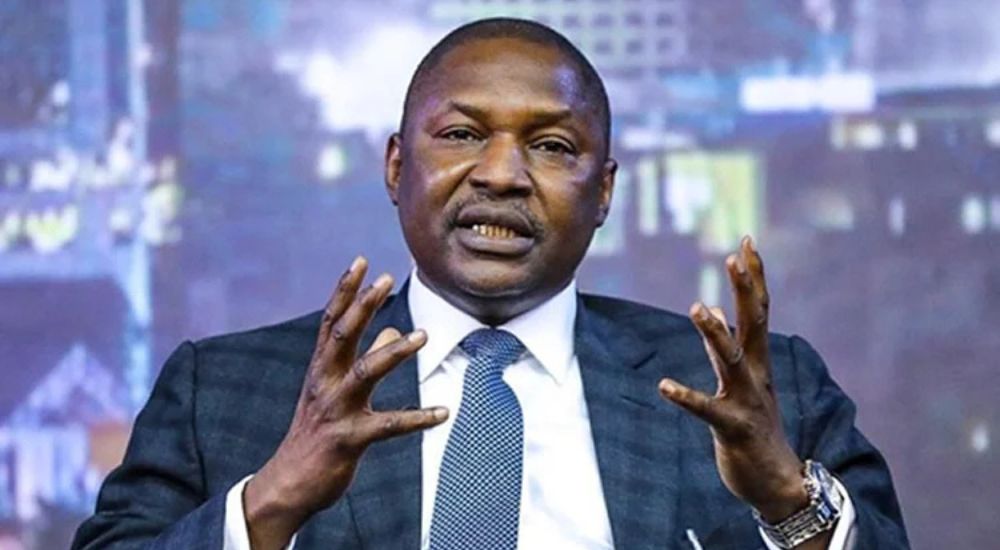
    The Federal Government has amended the charge against former Attorney-General of the Federation, Abubakar Malami, SAN, and his son, Abdulaziz Malami, removing the terrorism financing allegation, according to TheCable.

    At the Federal High Court in Abuja, counsel to the Department of State Services (DSS), Akinlolu Kehinde, SAN, informed Justice Joyce Abdulmalik of the amendment and applied for substitution of the original charge.

    Counsel to the defendants, Shaibu Aruwa, SAN, confirmed service of the amended charge and raised no objection. Both defendants pleaded not guilty.

    Justice Abdulmalik allowed them to continue on their existing bail conditions and adjourned the case to May 26 and June 15 for trial.

    According to the amended charge, arms and live cartridges were allegedly recovered from the Malami family residence in Birnin Kebbi.

    Malami and his son were initially arraigned on February 3 on a five-count charge that included terrorism financing and unlawful possession of firearms.

    The former Attorney-General, who served under President Muhammadu Buhari from 2015 to 2023, is also facing separate proceedings involving alleged money laundering and asset forfeiture linked to the Economic and Financial Crimes Commission (EFCC). He has denied all allegations.

    FG Amends Charges Against Malami, Removes Terrorism Financing Allegation is first published on The Whistler Newspaper

  • NELFund intervention has revolutionised tertiary education — FUTI’s acting VC

    NELFund intervention has revolutionised tertiary education — FUTI’s acting VC

    The Acting Vice Chancellor, Federal University of Technology, Ilaro (FUTI), Dr Mikhail Akindele, has said that the Nigerian Education Loan Fund (NELFund) intervention has removed financial barriers of indigent students to have access to tertiary education. Akinde stated this while speaking with newsmen at a media chat on the activities of the institution’s 23rd convocation […]

  • IMF Backs Nigeria’s Banking Sector Recapitalisation, Urges Fiscal Nigeria

    IMF Backs Nigeria’s Banking Sector Recapitalisation, Urges Fiscal Nigeria

    The International Monetary Fund (IMF) has backed Nigeria’s ongoing bank recapitalisation programme, saying it is key to strengthening the country’s financial system.

    The endorsement came from Tobias Adrian, IMF’s Financial Counsellor and Director of the Monetary and Capital Markets Department, during the presentation of the Global Financial Stability Report at the IMF/World Bank Spring Meetings in Washington, D.C.

    Adrian noted that strengthening capital buffers in the banking sector has enhanced resilience against global financial shocks and economic uncertainties.

    He explained that well-capitalised banks are better equipped to absorb economic disruptions, sustain lending activities, and support overall financial stability.

    According to him, the importance of recapitalisation becomes more evident during periods of financial stress, when strong capital positions help safeguard the banking system.

    The International Monetary Fund also stressed the need for sound fiscal management, particularly for emerging economies like Nigeria.

    Adrian said maintaining strong fiscal buffers would help countries manage volatile capital flows and reduce vulnerability to sudden market shifts. He added that stable fiscal conditions are essential for sustaining macroeconomic growth and investor confidence.

    The IMF official further highlighted the impact of global developments on financial markets, noting that ongoing tensions in the Middle East have significantly influenced capital movements.

    He observed that capital flow reactions in emerging markets, including those in Sub-Saharan Africa, have been more pronounced than during earlier global crises. Despite these shifts, Adrian said market price reactions have remained relatively stable, reflecting continued investor confidence.

    Also speaking, Jason Wu pointed out that capital inflows to emerging markets are increasingly driven by debt rather than foreign direct investment.

    He warned that this trend could pose risks to long-term financial stability if not properly managed.

    Wu emphasised that countries with stronger fiscal frameworks tend to benefit from lower borrowing costs and improved access to international capital markets. He urged governments to sustain fiscal reforms to mitigate risks associated with capital flow volatility.

    The IMF reiterated that maintaining financial discipline and strengthening economic policies remain critical for long-term stability, particularly in developing economies.

    IMF Backs Nigeria’s Banking Sector Recapitalisation, Urges Fiscal Nigeria is first published on The Whistler Newspaper

  • FULL LIST: 226 LGAs in 33 states, FCT at high flood risk — FG

    FULL LIST: 226 LGAs in 33 states, FCT at high flood risk — FG

    The Minister of Water Resources and Sanitation, Professor Joseph Utsev, has said that 226 local government areas across 33 states and the Federal Capital Territory have been identified as high flood-risk areas for this year. He made this known on Wednesday during the public presentation of the 2026 Annual Flood Outlook by the Nigeria Hydrological […]

  • FG re-arraigns ex AGF, Malami, son on amended alleged terrorism charge

    FG re-arraigns ex AGF, Malami, son on amended alleged terrorism charge

    The federal government on Wednesday re-arrianged a former Attorney-General of the Federation, AGF, and Minister of Justice, Abubakar Malami and his son, Abdulaziz Abubakar Malami, on a five-count amended charge.

    The new charge read against them before Justice Joyce Abdulmalik of the Federal High Court, Abuja, borders on alleged terrorism and unlawful possession of firearms.

    At Wednesday’s proceedings, which was supposed to be the commencement of trial, Mr Akinlolu Kehinde, SAN, who announced appearance for the prosecution, informed the court of a new charge which he intended to substitute with the earlier one, adding that the amended charge has already been served on the defendants.

    Counsel to Malami and his son, Mr Shuaibu Arua, SAN, who confirmed service, told the court that the defendants are not in objection.

    Following the non opposition to the amended charge, Justice Abdulmalik struck out the former charge and ordered that the new charge be read against the defendants.

    They pleaded not guilty to all the counts and their lawyer prayed the court to permit them to enjoy the earlier bail granted them.

    The request was granted by the court since the prosecution did not object.

    Recall that the court had on February 27, granted them bail in the sum of N200 million each with two sureties in like sum.

    The court subsequently fixed May 26, for the prosecution to call witnesses and tender exhibits to prove its case against the defendants.

    It will be recalled that the former AGF and his son were arraigned on February 3, on a five-count criminal charge, bordering on abetting terrorism financing and unlawful possession of arms and ammunition.

    However, in the amended charge, the defendants were in count one alleged to have sometime in December, 2025, at Geeze Phase II Area, Birnin Kebbi LGA, Kebbi State ….”did engage in preparation to commit acts of terrorism by having in your possession and without license, a Sturm Magnum 17 – 0101 firearm, Sixteen (16) Redstar AAA 5’20 live rounds of Cartridges and Twenty-Seven (27) expended Redstar and thereby committed an offence contrary to and punishable under Section 29 of the Terrorism (Prevention and Prohibition) Act, 2022″.

    In count two they were alleged to have conspire amongst themselves in preparation to commit acts of terrorism by having in their possession and without a license a Sturm Magnum 17 – 0101 firearm, Sixteen (16) Redstar AAA 5’20 live rounds of Cartridges and Twenty-Seven (27) expended Redstar, contrary to Section 26 (1) of the Terrorism (Prevention and Prohibition Act) 2022 and punishable under Section 26 (3) (a) and (b) of the Terrorism (Prevention and Prohibition Act) 2022.

    Count three reads: That you, Abubakar Malami, Adult, Male, and Abdulaziz Abubakar Malami, Adult, Male, sometime in December, 2025, at Geeze Phase II Area, Birnin Kebbi LGA, Kebbi State within the jurisdiction of this Honourable Court, without a license, did have in your possession a Sturm Magnum 17 – 0101 firearm and thereby committed an offence contrary to Section 3 of the Firearms Act, CAP F28, Laws of the Federation of Nigeria, 2004 and punishable under Section 27 (1) (a) (i) of the Firearms Act, CAP F28, Laws of the Federation of Nigeria, 2004.

    Count four reads, “That you, Abubakar Malami, Adult, Male, and Abdulaziz Abubakar Malami, Adult, Male, sometime in December, 2025, at Geeze Phase II Area, Birnin Kebbi LGA, Kebbi State within the jurisdiction of this Honourable Court, without a license, did have in your possession Sixteen (16) Redstar AAA 5’20 live rounds of Cartridges and thereby committed an offence contrary to Section 8 (1) (b) (ii) of the Firearms Act, CAP F28, Laws of the Federation of Nigeria, 2004 and punishable under Section 27 (1) (a) (i) of the Firearms Act, CAP F28, Laws of the Federation of Nigeria, 2004.

    Count five, “That you, Abubakar Malami, Adult, Male, and Abdulaziz Abubakar Malami, Adult, Male, sometime in December, 2025, at Geeze Phase II Area, Birnin Kebbi LGA, Kebbi State within the jurisdiction of this Honourable Court, without a license, did have in your possession Twenty-Seven (27) expended Redstar AAA 5’20 live rounds of Cartridges and thereby committed an offence contrary to Section 8 (1) (b) (ii) of the Firearms Act, CAP F28, Laws of the Federation of Nigeria, 2004 and punishable under Section 27 (1) (a) (i) of the Firearms Act, CAP F28, Laws of the Federation of Nigeria, 2004.

    FG re-arraigns ex AGF, Malami, son on amended alleged terrorism charge

  • Oil Disruption Drives Japan To Expand Crude Purchases From Nigeria

    Oil Disruption Drives Japan To Expand Crude Purchases From Nigeria

    Japan has increased its crude oil imports from Nigeria as refiners scramble to offset supply disruptions from the Middle East following the outbreak of the Iran war, signalling a notable shift in global oil trade flows and creating new export opportunities for Nigeria and other non-Middle Eastern producers.

    Industry data released by the Petroleum Association of Japan showed that refinery utilisation rates remained subdued at 67.8 per cent for the week ended April 11, largely unchanged from 67.7 per cent in the preceding week.

    The figures remain significantly below the over 80 per cent levels recorded prior to the escalation of hostilities in late February, underscoring the operational strain on Japanese refiners amid constrained crude availability.

    The disruption has been particularly impactful given Japan’s heavy reliance on Middle Eastern crude, which typically accounts for about 95 per cent of its total imports.

    The ongoing conflict has complicated shipments through the Strait of Hormuz, a critical chokepoint for global oil supplies, forcing Japanese buyers to urgently diversify their sourcing strategy.

    Officials indicated that the supply outlook could improve marginally in the coming weeks, supported by the release of crude from Japan’s strategic petroleum reserves and efforts to secure alternative supplies.

    So far, the country has managed to replace more than half of the volumes it imported via the Strait of Hormuz in May last year.

    Nigeria has emerged as one of the key beneficiaries of this shift, alongside other oil-producing nations such as Malaysia, Azerbaijan, Brazil and Angola.

    The increased demand for Nigerian crude reflects its compatibility with certain refining configurations and its availability in the spot market, even as logistical and technical constraints limit the pace of substitution.

    Despite the diversification push, analysts caution that Japan’s ability to fully replace Middle Eastern crude remains limited. Many of the country’s refineries are specifically configured to process medium-sour grades typical of the Middle East, making large-scale substitution with alternative crude types operationally challenging.

    According to an analyst at Rystad Energy, Nithin Prakash, , Japan could increase the share of non-Middle Eastern crude in its import mix to between 30 and 50 per cent in the short term.

    However, he noted that a complete transition away from Middle Eastern supply is unlikely due to structural refinery constraints and feedstock optimisation requirements.

    To navigate these limitations, refiners are expected to adopt blending strategies, combining residual Middle Eastern crude with light-sweet grades from the United States and West Africa, including Nigeria, as well as medium grades from the Caspian region and parts of Latin America.

    This shift in crude slate composition is also expected to influence product yields. Analysts project higher output of gasoline and naphtha, while production of diesel and jet fuel could decline, reflecting the lighter nature of the substitute crude grades.

    For Nigeria, the development presents a short-term boost to crude export demand amid ongoing efforts to stabilise oil production and improve foreign exchange earnings.

    However, the sustainability of this demand will depend on the duration of the Middle Eastern disruption and Japan’s longer-term energy sourcing strategy.

    Oil Disruption Drives Japan To Expand Crude Purchases From Nigeria is first published on The Whistler Newspaper