Author: The Whistler Newspaper

  • How Rising Heat Is Killing Wheat Farming In Kano

    How Rising Heat Is Killing Wheat Farming In Kano

    Musa Abdullahi stretches through the uneven fields of his wheat farm in Kura, running back and forth to rub his fingers against the rock.

    For more than three decades, he has been farming on his land, and recalled that the cold months turned these fields green and perfected into a rolling landscape, with harvest time devoted to stacking grain bags after finishing it.

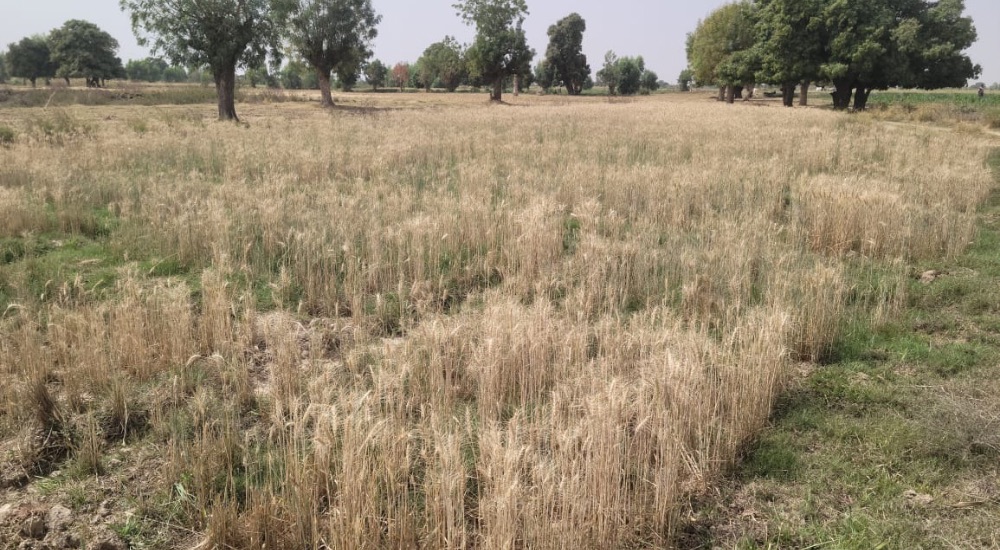
    That world feels distant now. Stunted, yellow and minuscule stalks appear before him but nothing seems to fix them.

    With his fingers, he tosses a fistfull of pale, powdery soil into his mouth and drops it.

    He whispered, “this crop requires cold weather,” but the temperature has risen.

    The situation in Kura, an agricultural area located on the southern edge of Kano, is not due to bad luck or poor technique.

    A visible manifestation of a slow-moving crisis is the assertion made by scientists and agricultural officers that climate change is slowly changing the conditions in northern Nigeria’s fragile wheat belt.

    A farm fashioned to endure extreme coldness.

    In tropical regions, wheat has never been a popular crop.

    Unlike maize or sorghum, it needs to be kept cool to develop properly, especially during germination and flowering.

    Dry Saharan winds that drop night temperatures below 15 degrees Celsius during the harmattan season in northern Nigeria resulted in a small window of opportunity for wheat farming to resume between November and February.

    Before the heat set in, wheat will be able to germinate easily with firm stems and fill out grain heads under those conditions.

    That window is shrinking.

    Throughout Nigeria, the Meteorological Agency has noted a steady increase in temperatures throughout the northern region over an extended period.

    The average minimum night temperature in Kano during the 1980s and 1990s was between 13 and 15 degrees Celsius, but it has now risen to over 18 degrees, which is devastating for crops that are sensitive to cold weather.

    This may seem like a small change. Wheat yields are estimated to decrease by approximately 6% for every one degree Celsius rise in average temperature, as per the Intergovernmental Panel on Climate Change.

    Ibrahim Shehu, an agronomist who has researched how temperature changes can affect small-scale agriculture across the Sahel said “the
    nights are warmer, the cold season is shorter. This is only thing that can disrupt wheat production in Kano.”

    “We Used to Harvest Bags, Now It’s Losses.”

    The seasonal decline has been observed by Zainab Bello, an agricultural extension officer who works with farmers in Kura and Bunkure.

    She said, “the harmattan is getting shorter. It takes a cold stress period for the heat to develop.”

    “If not there, you will have poor germination, weak stems, and low grain yield. The farmers are seeing exactly that.”

    The human cost is clearly visible to those who are dependent on the crop.

    At Garun Malam, Zainab Sani, 30, sits beside a modest wheat pile that is barely enough to load five sacks.

    The same plot of her family’s farm yielded more than 20 bags five years ago.

    She said: “Last year we harvested only 9 bags but this year it was just five.

    “We had the option of eating wheat during the dry season.”

    But Aisha and her husband are uncertain about whether to switch to rice or vegetables as a family.

    She disclosed that the issue is that the knowledge of climate from inherited calendars and seasonal cues has become unreliable, leading to farmers following traditional practices instead.

    This is unfortunate. “What has always been effective is no longer functional.”

    To adapt to the climate, Kabiru Aminu, 66, has been increasing his irrigation routine in Kura, with the aim of reducing the surface temperature of the soil.

    “It’s an imperfect solution. Water is scarce. The cost of diesel for the pumps is increasing and rising,” he said.

    The unpredictable nature of the harmattan’s arrival has led farmers to push earlier into their planting schedules to avoid colds. What changes? The effectiveness of this method is infrequent.

    According to Aminu, the timing has become unreliable. “If you plant a seed early, it may still experience heat.

    “Late planting is not an option, as the cold window has already passed.”

    Local soil: A national issue

    Kano’s farms are not the only ones affected by the implications.

    Among Africa’s largest wheat importers, Nigeria spends billions of dollars annually on the grain.

    THE WHISTLER documented that domestic production in northern states like Kano, Katsina and Jigawa has always met a fraction of the national demand, it still provides price stability and food security that millions of households depend on.

    If the production base is destroyed by climate, Nigeria’s vulnerability to the volatile wheat markets of the global market would be further weakened due to unstable global wheat prices, as demonstrated by the Russia-Ukraine war in 2022.

    Dr Shehu Musa, an agriculturalist in Bayero University Kano noted that “this is not a farming issue.”

    He asserted that the issue of national food security is a concern.

    “The lack of wheat production due to the climate has an adverse impact on bread prices and household stability.

    The majority of solutions are not accessible to smallholder farmers.”

    THE WHISTLER found out that the International Maize and Wheat Improvement Centre and other international research centers are actively engaged in breeding heat-tolerant wheat varieties that can withstand harsh climates.

    The challenge of delivering improved seeds from research stations to farmers like Musa at scale is still present.

    According to Zainab, the most pressing requirement for extension officers is access to information that can help farmers understand the changes and why their inherited seasons have disappeared.

    Musa, at the edge of his field in Kura’s rear, is seen brushing away dust from his hands. His job involves planting, irrigating, waiting and adapting; it’s the way farmers do it.

    As a farmer, he said: “I know this, gazing down at the field, praying for cold.

    “It is necessary for the wheat to remain alive, and neither will we.”

    -This report was published under HumanAngle’s SCOJA Fellowship.

    How Rising Heat Is Killing Wheat Farming In Kano is first published on The Whistler Newspaper

  • NNPP elects Bala Mohammed as new national chairman

    NNPP elects Bala Mohammed as new national chairman

    The National Working Committee (NWC) of the New Nigeria People’s Party (NNPP) has announced the election of Bala Yunusa Mohammed as its new National Chairman, signalling a leadership shift ahead of the 2027 general elections. In a statement issued by the party’s National Publicity Secretary, Bamofin Johnson, the NNPP described Mohammed as an experienced administrator […]

  • Houthis Threaten To Close Bab al-Mandeb Strait Over Trump Policies

    Houthis Threaten To Close Bab al-Mandeb Strait Over Trump Policies

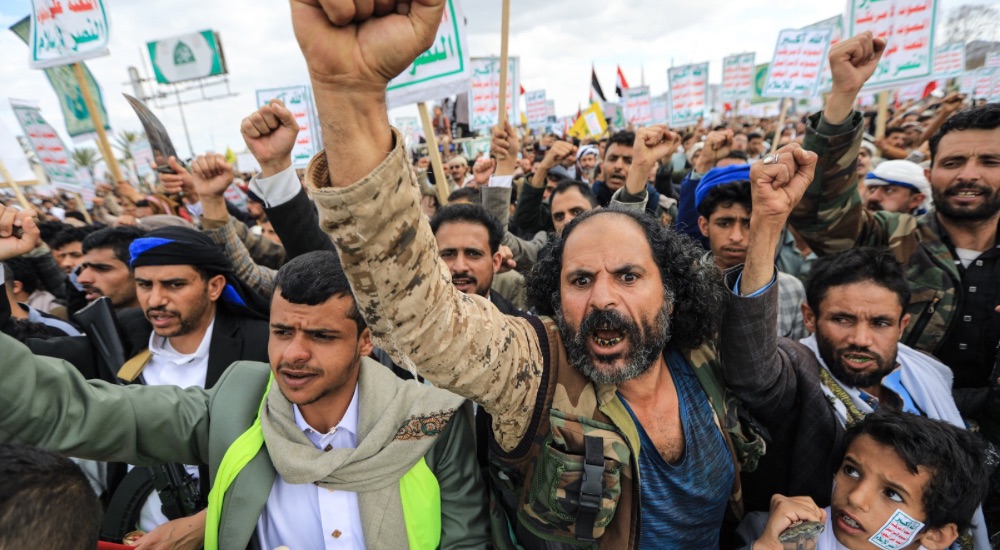
    A senior Houthi official has issued a stern warning that the Iran-backed group could shut down the strategically vital Bab al-Mandeb Strait if U.S. President Donald Trump persists with policies they describe as obstructing peace in the region.

    Hussein al-Ezzi, deputy foreign minister of the Houthi administration in Sanaa, made the statement on X.

    He declared: “If Sanaa decides to close the Bab al-Mandeb, then all of mankind and jinn will be utterly powerless to open it.”

    He added: “And therefore, it is best for Trump and the complicit world to immediately end all practices and policies that obstruct peace, and to show the respect required for the rights of our people and nation.”

    The Bab al-Mandeb Strait, which connects the Red Sea to the Gulf of Aden, is one of the world’s most critical maritime chokepoints. It handles a significant portion of global trade, including oil shipments from the Middle East to Europe and beyond.

    Any closure would likely cause major disruptions to international shipping routes, drive up energy prices, and exacerbate tensions in an already volatile region.

    This latest threat comes amid ongoing regional conflicts involving Iran, the United States, and their respective allies.

    The Houthis have previously targeted shipping in the Red Sea, forcing many vessels to reroute around Africa at considerable cost.

    As global attention remains fixed on maritime security in the Strait of Hormuz and the Red Sea, the possibility of the Bab al-Mandeb being weaponized raises fresh concerns about supply chain stability and energy markets.

    Whether the Houthis will follow through on the threat remains to be seen, but the warning underscores the fragile balance of power in the region and the potential for further escalation.

    Houthis Threaten To Close Bab al-Mandeb Strait Over Trump Policies is first published on The Whistler Newspaper
  • Sokoto receives UNICEF nutrition supplies, introduces new accountability measures

    Sokoto receives UNICEF nutrition supplies, introduces new accountability measures

    Sokoto State has moved to clamp down on the diversion of nutrition commodities as it received a major consignment of life-saving supplies from the United Nations Children’s Fund (UNICEF), backed by a joint N200 million funding arrangement. Health authorities say the new measures mark a turning point in how nutrition support is managed, with tighter […]

  • U-17 WWCQ: Guinea thrash Niger to book date with Flamingos

    U-17 WWCQ: Guinea thrash Niger to book date with Flamingos

    Nigeria’s Flamingos will face Guinea in the final qualifying round for the 2026 FIFA U-17 Women’s World Cup, DAILY POST reports.

    Guinea secured a date with the Flamingos after a 8-2 aggregate win over Niger Republic.

    The Guineans claimed a 5-2 victory over their neighbours in the first leg.

    They won the second leg 3-0 in Conakry on Saturday.

    Newly appointed Flamingos head coach, Akeem Busari has already summoned 36 players to camp to begin preparations for the clash with the Guineans.

    Guinea will host the first leg between May 22-24, while the second leg is slated for Nigeria on May 30.

    U-17 WWCQ: Guinea thrash Niger to book date with Flamingos

  • Bullying Of Guests : Issues Warning To TV , Radio Houses

    Bullying Of Guests : Issues Warning To TV , Radio Houses

    The National Broadcasting Commission (NBC) has warned that broadcast presenters who present personal opinions as facts or bully guests duing a live interview will face sanctions.

    In a statement issued Friday, April 17, the commission said it has recorded a rise in violations of the sixth edition of the Nigeria Broadcasting Code across news, current affairs and political programmes.

    “Broadcast platforms are increasingly being deployed in ways that depart from their core obligation to inform the public with accuracy, balance, and professionalism.”

    The NBC said some anchors and presenters are straying from professional standards by denying fair hearing to opposing views and compromising neutrality during broadcasts. It warned that such actions violate provisions of the code, which mandate impartiality and require that all sides of issues of public interest are fairly represented.

    “Henceforth, any anchor or presenter found to have expressed personal opinion as fact, b#llied or intimidated a guest, denied fair hearing to opposing views, or otherwise compromised neutrality, shall be deemed to have committed a Class B breach,” NBC said.

    The commission also expressed concern over the growing use of broadcast platforms by political actors to promote divisive, inflammatory and unverified content. It stressed that broadcasters retain full editorial responsibility for all material aired, including live programmes, and cannot shift that responsibility to guests.

    The NBC said it will enforce strict compliance with the broadcasting code, warning that violations involving hate speech, incitement and imbalance will attract sanctions.

  • Karimi expands education access with new CBT centers in Kogi

    Karimi expands education access with new CBT centers in Kogi

    In a move aimed at widening access to education across Kogi West Senatorial District, Senator Sunday Karimi has initiated plans for the establishment of additional Computer-Based Test (CBT) centres in key locations, namely Lokoja, Iyara, Odo-Eri and Mopa. The lawmaker revealed that the proposed centres are captured in the 2026 appropriation, following the successful hosting […]

  • Babcock University to host global AI, innovation commercialisation summit

    Babcock University to host global AI, innovation commercialisation summit

    The Vice Chancellor, Babcock University, Ilishan -Remo, Professor Afolarin Ojewole, has disclosed that the school is set to convene a high-level gathering of global technology leaders, innovators, and policymakers at the AI & Babcock Innovation Venture (BIV) Commercialisation Summit 2026. Professor Ojewole, while making this known on Saturday, hinted that the high-level gathering is to […]

  • Why dismissing African indigenous spirituality is wrong — Soyinka

    Why dismissing African indigenous spirituality is wrong — Soyinka

    Nobel Laureate, Professor Wole Soyinka, has explained why dismissing African indigenous spirituality is misguided, warning that such actions amount to blasphemy against global spirituality. Soyinka spoke in Uyo, Akwa Ibom State, on Saturday during the World Heritage Day celebration themed “Akwa Ibom Heritage Alive.” World Heritage Day is observed to promote awareness of the diversity […]

  • Shettima Bags Chieftaincy Title During Condolence Visit To Elumelu’s Family

    Shettima Bags Chieftaincy Title During Condolence Visit To Elumelu’s Family

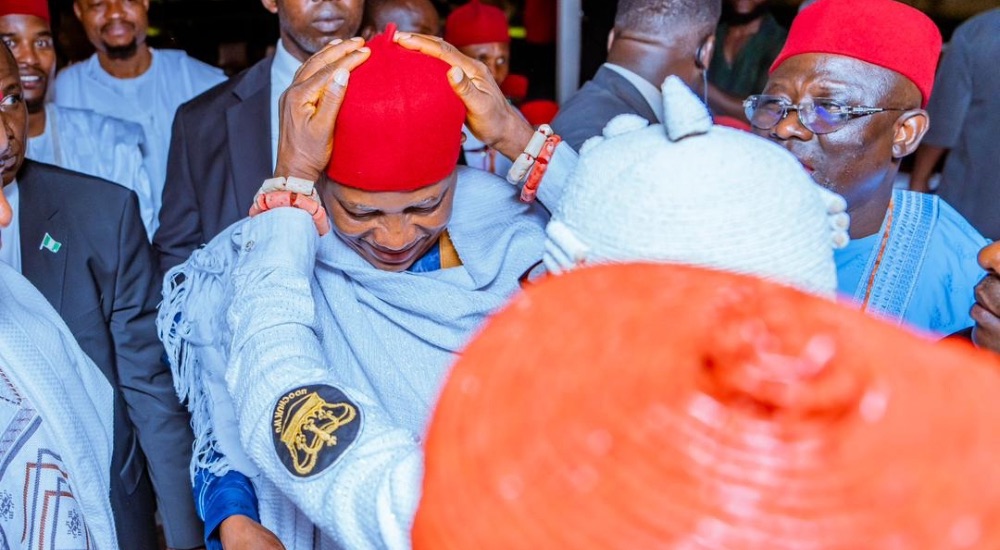
    Vice President Kashim Shettima was conferred with the traditional title of Odoziani 1 of Aniocha, meaning “the one who restores the glory of the land,” during a condolence visit to the family home of Chairman of Heirs Holdings and UBA Group, Tony Elumelu, on Saturday.

    The title was bestowed on Shettima in recognition of his service, leadership, and contributions to society, as well as his support for the progress and development of the Aniocha community.

    The honour came on the same day the VP led the Federal Government delegation to the funeral ceremony of the late Sir Israel Chinwuba Ogbue, Elumelu’s father-in-law, held at Onicha-Olona community in Aniocha North Local Government Area of Delta State.

    Pa Ogbue, who passed away on February 18, 2026, was eulogised by Shettima as a man of rare grace and legacy.

    Conveying the condolences of President Bola Tinubu to the bereaved family, Shettima said: “On behalf of President Bola Ahmed Tinubu, I extend our condolences and our respect to the family, the people of Onicha-Olona, and the government and people of Delta State. We honour the life he lived and the example he set.”

    Shettima described the burial as a celebration of a life well spent. He noted that the late patriarch’s values lived on in his children.

    “At a moment like this, we can list achievements, we can recount titles, but what matters most is the life behind them. Pa Ogbue lived a life of meaning. He served, he guided, and he left things better than he met them,” Shettima said.

    “And so, while we feel the weight of his passing, we must also recognise that this is a celebration. A celebration of a long life, well lived. A celebration of a legacy that will continue through generations.”

    Shettima acknowledged Pa Ogbue’s role in the early journey of United Bank for Africa (UBA), saying his wisdom helped guide the bank at critical moments.

    “He brought stability when it was needed and ensured that growth never lost its moral compass. This was a man who believed in balance. In a world that often chases excess, he chose moderation. He taught that ambition must be guided, that success must not come at the cost of one’s peace, and that a life of contentment is a life well lived,” Shettima added.

    The ceremony attracted dignitaries from within and outside Nigeria.

    The VP was accompanied by the Minister of Housing and Urban Development, Ahmed Dangiwa; Minister of State for Regional Development, Uba Maigari Ahmadu; House of Representatives member Usman Zannah; Bakari Kotoko; and businessman AYM Shafa, among others.

    Shettima Bags Chieftaincy Title During Condolence Visit To Elumelu’s Family is first published on The Whistler Newspaper