Author: Daily Post Nigeria

  • EPL: Pressure we put on ourselves too much – Arsenal’s Eze admits

    EPL: Pressure we put on ourselves too much – Arsenal’s Eze admits

    Arsenal forward, Eberechi Eze has said that Mikel Arteta team is under serious pressure.

    According to the England forward, the team has no time to listen to pundits or criticism coming from outside.

    Arsenal beat Newcastle United 1-0 on Saturday to return to the top of the Premier League table.

    Eze scored the game’s only goal to give the Gunners all three points at Emirates Stadium.

    The win over the visitors moved Mikel Arteta’s side to the top of the Premier League table with three points ahead of second-placed Manchester City.

    Manchester City have a game in hand as Pep Guardiola’s side were on FA Cup duties against Southampton.

    After the game, as quoted by Fabrizio Romano on X, Eze said, “I don’t hear pundits! The pressure we put on ourselves is so much more than what’s coming from outside.”

    He, however, said the pressure is necessary to win matches and the Premier League title.

    “It’s the necessary pressure to win, it’s not negative, it’s beautiful,” he said.

    EPL: Pressure we put on ourselves too much – Arsenal’s Eze admits

  • 2027: APC Govt will fail integrity, credibility test — ADC chieftain, Salihu

    2027: APC Govt will fail integrity, credibility test — ADC chieftain, Salihu

    A chieftain of the African Democratic Congress, ADC, Ladan Salihu, says the government of the ruling All Progressives Congress, APC, will fail the integrity and credibility test at the 2027 general elections.

    Salihu made this statement while fielding questions in an interview on ‘Sunday Politics’, a programme on Channels Television.

    According to him, the APC government led by President Bola Tinubu would face the anger and frustration of Nigerians at the polls.

    “When it comes to credible elections and elections that are based on integrity, this government will fail the integrity and credibility test at the polls.

    “This government will not measure up with the anger and the frustrations of the Nigerian people,” Salihu said.

    Salihu also renewed the call for the resignation or removal of the Chairman of the Independent National Electoral Commission, INEC, Prof Joash Amupitan, over alleged bias.

    INEC has, however, denied the allegation and insisted on the Amupitan’s neutrality.

    “Amupitan should resign or should be removed because in public service today, Amupitan to me is the number one persona non grata because he has failed the integrity test, he has failed the competency test, he has not presented himself as that impartial, credible umpire that can give Nigeria, a nation of 250 million people, an election to celebrate,” the ADC chieftain said.

    2027: APC Govt will fail integrity, credibility test — ADC chieftain, Salihu

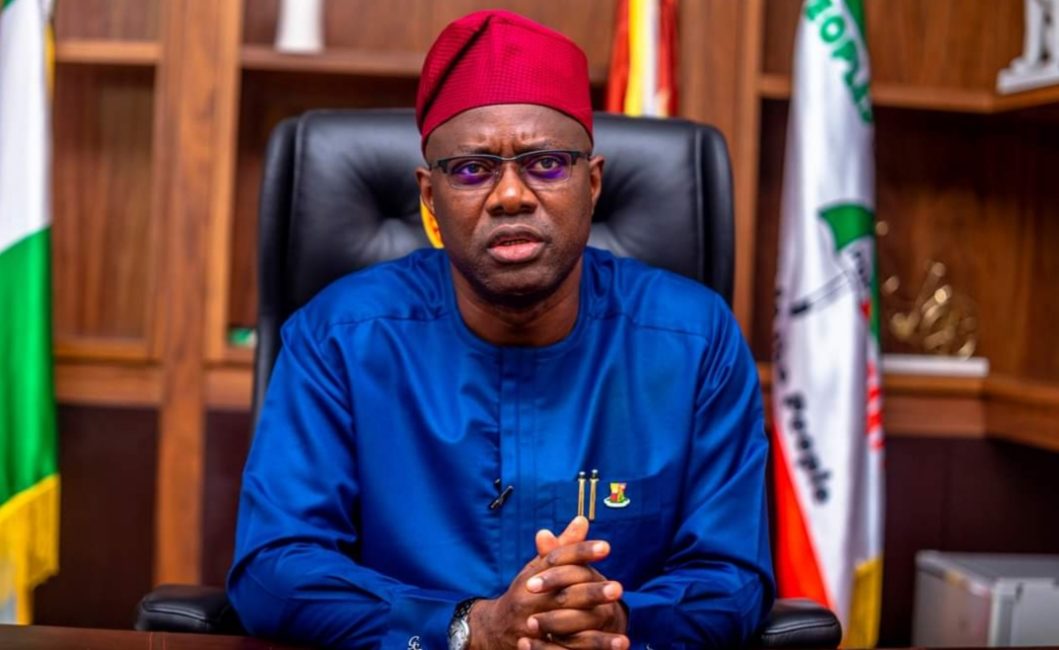
  • APC Slams Makinde Over ‘Operation Wetie’ Remarks, Alleges Incitement

    APC Slams Makinde Over ‘Operation Wetie’ Remarks, Alleges Incitement

    The All Progressives Congress (APC) has accused Governor Seyi Makinde of Oyo State of making remarks capable of inciting violence, following his address at a summit of opposition political parties held in Ibadan on Saturday.

    A statement issued on Sunday by the APC National Publicity Secretary, Felix Morka, the ruling party condemned what it described as Makinde’s invocation of the violent history of “Operation Wetie,” alleging that the governor used it to stoke tensions over claims that Nigeria is drifting toward a one-party state.

    “The APC categorically condemns Governor Makinde’s incitement as reckless, and a clear and present threat to peace and national security,” Morka said.

    “It is particularly disturbing for a sitting Governor who bears constitutional responsibility as the Chief Security Officer of his state to conjure up one of the darkest episodes of political violence in Nigeria’s history to threaten violence against the people and government of Nigeria.”

    The party argued that Makinde’s comments went beyond routine opposition rhetoric, warning of potential consequences for national stability. “Makinde’s violent rhetoric cannot be dismissed as mere opposition posturing. His statement risks fueling anarchy, murderous rage and widespread lawlessness capable of undermining national stability,” the statement read.

    Calling for immediate attention from authorities, the APC urged security and intelligence agencies to act. “We therefore call on all relevant security and intelligence agencies to take this unfortunate development seriously and act to safeguard lives, property, and defend Nigeria’s democratic order,” Morka added.

    The party further stressed that constitutional immunity should not shield public officials from accountability in matters relating to national security. “Makinde must be reminded that constitutional immunity from prosecution is not immunity from accountability for threats or acts against national security. No individual, however highly placed, should have the power to threaten or endanger the lives and safety of Nigerians,” the statement said.

    Beyond its criticism of the Oyo State governor, the APC dismissed broader opposition claims that the country is sliding into a one-party system, describing such assertions as unfounded and politically motivated.

    “The APC vehemently rejects attempts by confused opposition leaders to frame their internal shambles in alarmist narratives about so-called one-party domination,” Morka stated, attributing challenges within opposition parties to “anti-democratic practices, miserably poor leadership, internal contradictions, utter disregard for due process and the rule of law, persistent factionalization, and the desperate and dissonant presidential ambitions of their leaders.”

    The statement went further to criticise key opposition figures and parties, alleging that internal disputes and leadership struggles had weakened their credibility ahead of the 2027 general elections.

    On the Peoples Democratic Party (PDP), the APC claimed it was “destroyed by Atiku Abubakar’s ruthless confiscation of the PDP’s 2023 presidential ticket in violation of the party’s constitutionally entrenched rotational zoning formula.”

    It also took aim at the Labour Party (LP), alleging that it had been “effectively subverted by the restless nomadic disposition of its 2023 presidential candidate, Mr Peter Obi,” while describing the African Democratic Congress (ADC) as a “so-called coalition platform” that was “basically stillborn.”

    According to the APC, the opposition has failed to present a credible alternative to the policies of the ruling party. “These opposition leaders and their coalition of confusion have not put anything forward by way of an alternative vision for Nigeria’s development. All they have in their arsenal is fear mongering built on false narratives about the APC,” Morka said.

    Reaffirming its stance ahead of the next electoral cycle, the APC said it would not be drawn into managing the internal crises of rival parties. “Our great Party rejects the veiled expectation of opposition leaders that the APC would help them manage their internal affairs. We bear no such duty and will not provide any such leadership consulting services to them,” the statement read.

    The party maintained that Nigeria’s democratic system remains vibrant, citing the number of registered political parties and ongoing political activities nationwide. “Nigeria’s democratic space remains as robust as can be. With nearly two dozen parties registered and participating freely in the country’s electoral process, the opposition’s unjustifiable attacks… is nothing but primitive capitulation,” it added.

    Morka reaffirmed the APC-led administration’s commitment saying, “Our great party… remains committed to strengthening democratic institutions, upholding the rule of law, and delivering on the Renewed Hope Agenda for the peace, unity, and prosperity of all Nigerians.”

    APC Slams Makinde Over ‘Operation Wetie’ Remarks, Alleges Incitement is first published on The Whistler Newspaper

  • Many voices in northern Nigeria still unheard – Nabila

    Many voices in northern Nigeria still unheard – Nabila

    The convener of the Grand Arewa Twitter Connect, Nabila Yusuf Ahmad, has called for greater inclusion of young people in discussions that affect their future, saying many voices in Northern Nigeria are still unheard.

    She made this known on Sunday in Kano during the youth gathering, which brought together participants from different states to network and share ideas.

    According to her, the event was organised to give young people a platform to speak and be part of decisions that concern them.

    “There are so many voices that are not heard, and we need to have one strong voice for Northern Nigeria,” she said.

    She explained that over time, the connection among youths in the region has weakened, making it harder for them to collaborate and support one another.

    “We used to have strong connections among youths in Northern Nigeria, but that space reduced. That is why we decided to bring people together again and close the gap,” she added.

    Nabila stressed that unity among young people is key to addressing major challenges such as unemployment and insecurity.

    “Unity is one of the most important things we are targeting. If you look around, people are already connecting and building relationships,” she said.

    However, she noted that financial limitations affected participation, despite interest.

    Also speaking at the event, entrepreneur, Aliyu Muhammad, popularly known as Sarkin Mota, stressed the need for unity across the country.

    “We often say North, we say South, but the truth is the North cannot win alone and the South cannot succeed alone. If Nigeria fails, we all fail together,” he said.

    He criticised how young people use social media, saying it is often used for negative purposes.

    “We use X to drag instead of to build. We use influence to insult instead of to empower. Clout will make you popular, but only value will make you powerful,” he added.

    Sarkin Mota encouraged young Nigerians to focus on building and supporting one another.

    He noted that the generation is full of energy but needs better direction.

    Many voices in northern Nigeria still unheard – Nabila

  • Pupil’s death in Rivers school sparks outrage, as family alleges ‘cover up’ ​

    Pupil’s death in Rivers school sparks outrage, as family alleges ‘cover up’ ​

    The tragic death of two-year-old Winnie Akakue at Wisdom Gate International School, Campus 1, Eligbolo, on March 17, 2026, has sparked outrage and grief.

    Her parents are now demanding answers, insisting that justice must be served.

    DAILY POST reports that amid the storm, the family is accusing the police of biased investigation of the circumstances surrounding the incident.

    Father’s Account of the Incident

    Winnie’s father, Dr Iasuaka Akakue, recounted the painful sequence of events that led to the loss of his daughter.

    According to him, the school informed the family that Winnie had been asleep in her classroom when a bookshelf allegedly collapsed on her.

    A verbal briefing from the pathologist who conducted the autopsy indicated that the child suffered a fractured skull, he said.

    Akakue expressed concern that the family was only notified after the school had already taken the child to two separate medical facilities.

    At the University of Port Harcourt Teaching Hospital, UPTH, doctors reportedly confirmed that she was brought in dead.

    He further alleged that the scene of the incident was tampered with, claiming the bookshelf was moved and the area cleaned before any independent assessment could take place.

    He also accused certain individuals of attempting to pressure his family into a swift burial and an out-of-court settlement.

    He added, “I’m aware the said AIG has continued to mount pressure from wherever he is. On Thursday, I was told the detained had been released.

    “While we grieve and in our pain, we found the attitude of the school very disturbing, because they’ve been using proxies, highly placed persons to try to pressure me.

    “At this point, I don’t know how safe I am, but, all I want to ask is justice for my daughter, to at least, be able to lay her to rest, knowing actually what killed her.

    “No thorough investigation has been made on the matter, everything has been about suppressing the matter, hoping that we would be able to reach a resolution.”

    Concerns Over Autopsy Report and Police Process

    Akakue also challenged claims by the police that his family failed to request the autopsy report, insisting that authorities had earlier assured them they would be contacted once the report was ready.

    He said efforts to obtain clarity were unsuccessful, even after police confirmed receipt of the report during a follow-up inquiry.

    The father expressed dissatisfaction with the direction of the investigation, alleging that officials appeared more focused on reaching a quick resolution than uncovering the full truth.

    He added, “On Tuesday, when they invited us, they were only hammering on the idea of having a quick resolution.

    “Like I said, we have made that point clear and that we want to head to court. The claims of having gone to the first hospital, did the baby come there alive? Did she leave there alive? All of that we are not aware of.

    “The body language does not suggest any proper investigation has been done. And so, we are just now waiting for the police to finish their processes so that we head to court.”

    He confirmed that the family is preparing to seek legal redress.

    Mother’s Account and Family Impact

    Winnie’s mother, Mrs. Chinyere Akakue, described receiving conflicting information from the school in the immediate aftermath of the incident.

    She said the initial phone call from a teacher suggested that her daughter was still alive, only for her to arrive at the school and be confronted with a devastating reality.

    She said, “When I got there, a lot of persons were on ground already. I was wondering, why the crowd? I still didn’t realize what was happening, until one of the teachers took me down to where she was lying on the couch unattended to, nobody was answering me.

    “They now took me to the corner and started asking me, madam, how many children do you have. At that point, I just knew it was just all over.

    “I went close to my baby. I looked at her, I felt her, she was already cold.”

    Reflecting on the days since the incident, she added, “It’s been three whole weeks without my child. A child that I slept with on the same bed before letting her go to school in the morning.

    “Three whole weeks I’ve been expecting her to come back home, and she’s not been coming back home. She’s not there in the house.

    “Her siblings, everybody is worried. Of course, they heard from school, they lied to them too that Winnie was at home. When they got home, Winnie was not in the house.

    “When we finally got home that night, they were asking where Winnie was? Winnie was not there. They all started crying when I told them what had happened.”

    Calls for Investigation and Accountability

    A legal practitioner and activist, Chetam Nwala, called for decisive action, urging authorities to shut down the school pending the outcome of a thorough investigation.

    He also emphasized the need for law enforcement agencies to handle the case with diligence and transparency.

    School’s Official Response

    The management of Wisdom Gate International School expressed sorrow over the incident, describing it as deeply tragic.

    In an official statement, the school extended condolences to the bereaved family and maintained that immediate steps were taken to provide medical attention to the child.

    The school stated that it promptly reported the incident and has been cooperating fully with relevant authorities to ensure a transparent investigation.

    It also reassured parents and the public that the safety and well-being of pupils remain its highest priority.

    According to the management, internal reviews are ongoing to strengthen safety protocols, while maintaining that no information has been withheld from investigators.

    Government Directive and Regulatory Action

    In response to the incident, the Rivers State Government ordered the immediate closure of Wisdom Gate International School, Campus 1, Eligbolo.

    The Ministry of Education, in a statement dated April 20, said it undertook an independent review of the circumstances surrounding the child’s death after engaging with the school’s management.

    While extending condolences to the grieving family, the government urged the public to refrain from spreading unverified information and to respect the family’s privacy.

    Authorities confirmed that the school would remain closed until all concerns are fully addressed.

    The Commissioner for Education, Dr Peters Nwagor, reaffirmed the government’s commitment to enforcing strict safety and quality standards across all schools in the state.

    Appeals for Reopening Amid Ongoing Grief

    Despite the ongoing investigation, the school’s management and several concerned stakeholders have appealed for a reconsideration of the closure, citing its wider impact on pupils, parents and staff.

    They argued that while the tragedy remained deeply painful, prolonged suspension of academic activities was disrupting learning and placing additional strain on families who must now make urgent alternative arrangements.

    The school’s proprietress, Toyon Obikoya, described the shutdown as unexpected but acknowledged the authority of the government’s decision, while pleading for compassion.

    She stated, “The children in Wisdom Gate International School are our children. We see that our commissioner is a father, he is our grandfather in this institution. That’s why we are calling on him. He has the right to suspend activities for now.

    “But we are telling him that he should please show us mercy because other children’s education is equally at stake.

    “The parents are calling but because we are a law-abiding institution, we can’t do otherwise.

    “But these children, where do we turn them to? The period they were writing the exam was when this incident happened, and so we had to close the school.

    “We are crying out that the people should please intercede and see all children as theirs.”

    Obikoya maintained that the school has made several attempts to reach the bereaved family through appropriate channels, including community and religious leaders, emphasizing that these efforts were made in good faith.

    She said, “The family demanded that we speak to them through their lawyer and so on. Knowing this, we moved to his hometown in Tai, Ogoni kingdom, to reach the Bishop of the Anglican Diocese, who led us to the grandparents of our dear pupil.

    “And we reported the incident that happened and shared our sincere empathy with the family and then we left.

    “Afterwards, the management of the school equally travelled to Etche to see the Bishop. Why we did all of these is just to see how we can reach the family, not to intimidate or to show pomposity.”

    She also noted that the matter is now before the police and assured that the institution would not obstruct any investigation.

    Some parents of pupils echoed the appeal, highlighting the emotional and financial strain the closure has imposed on families.

    One parent, Cynthia, said, “It’s really heartbreaking. I’ve lost a child, so I understand the pain the parents are going through.

    “There is nothing we can do to bring back the child but we are pleading for empathy, for a little compassion, because we, parents, it’s really difficult for us. Wisdom Gate, they’ve been good academically, morally.

    “Please have mercy on behalf of my co-parents. It’s difficult for us. We are confused. Most of us are not sleeping well. Like me, my blood pressure is rising.”

    Pupil’s death in Rivers school sparks outrage, as family alleges ‘cover up’ ​

  • Opinion: Dr. Osahon Okunbo, Young Entrepreneur Of The Year, Stewarding The Legacy

    Opinion: Dr. Osahon Okunbo, Young Entrepreneur Of The Year, Stewarding The Legacy

    All successful entrepreneurs are trailblazers. They prioritise their vision, break down barriers, and take calculated risks that shapes the economic landscape in sectors where they operate. Their high-impact achievements are what distinguish them from the underling and the small-timer. They always have a legacy of impact.
    Whether it’s Evan Spiegel, who co-founded Snapchat, or Patrick and John Collison who founded Stripe that revolutionized online payments or Nathan Blecharczyk, co-founder of Airbnb, they’re all young entrepreneurs who transformed their business sectors and made indelible marks in the business world.
    In Nigeria, one of the youngest business moguls reshaping the country’s economic sectors is Dr. Osahon Okunbo, the Executive Director of Pipeline Infrastructure Nigeria Limited (PINL). Dr. Okunbo was on April 24 awarded the Young Entrepreneur of the Year 2025 by Vanguard Newspapers in recognition of his contributions across multiple sectors.
    According to the Vanguard, the recognition highlights Okunbo’s investments and leadership in sectors such as hospitality, oil and gas, agriculture, the arts, and the built environment.
    At just 38, Dr Okunbo has etched his name in the golden plaque of transformative business leaders. As the ED of PINL, the company responsible for the maintenance of the Trans Niger Pipeline,Okunbo has been part of the President Bola Tinubu administration’s effort to increase oil production through intensified action against oil theft, pipeline vandalism, and other acts of economic sabotage in the Niger Delta.
    Through sustained stakeholders’ engagements with host communities, including women empowerment, scholarship schemes, medical outreach, skills acquisition programmes, and environmental awareness initiatives, PINL is helping the country increase its oil production.
    Nigeria’s crude oil production has increased by about 40.5 per cent to 1.84 million barrels per day (bpd) from 1.31 million bpd recorded in February this year. And thanks to the initiatives of organisations like PINL, oil production is set to resume in Ogoni land after 33 years of stoppage.
    As Chairman of Vetrinox Capital, his business interests’ straddles Engineering, Oil & Gas Investments, Technology & Innovation, Security Solutions, Project Financing, Real Estate & Hospitality Development, Investment Management, Business Development, and Sustainable Growth.
    Vetrinox Capital is a holding company committed to driving sustainable economic progress across Nigeria and Africa. Through the diverse portfolio of the company, he provides the vision, resources and strategic oversight that enable businesses to thrive, communities to grow and industries to evolve.
    An entrepreneur who prioritises excellence, people, integrity and passion as core business values, Dr Okunbo is a chip off the old block. His late father, Captain Idahosa Wells Okunbo, was a Nigerian billionaire business magnate, investor, philanthropist, and trained commercial pilot who thought him to always put the people first in whatever he does.
    That advice has been his guiding philosophy since he broke on the business scene years ago. He acknowledged this much while receiving the Vanguard award. He recalled that his late father was also honoured by Vanguard as Industrialist of the Year before he died in 2021.
    “One of the greatest values my father taught me was that the best investment you can make is in people,” Osahon stated with pride during his acceptance speech.
    Dr. Okunbo is gracefully stepping into his late father’s shoes as he holds the baton of resilience, integrity and love for humanity. Besides the Okunbo blood flowing in his veins, he seemed to have studied his legendary father’s success recipe and made it his regular full course meal.
    While paying tribute to the late Okunbo, Pastor Osagie Ize-Iyamu described him as a “one of the true icons to have walked our ground, he had a special knack and the visionary brilliance to recognize opportunities long before others could see them, and the discipline and talent to build efficient systems and organizations out of bold ideas. He was a man of many dreams and ambitions who was able to defeat the limitations of the circumstances surrounding his birth and claim a prominent spot in our national memory. He was a solution provider.”
    Those who know Dr. Okunbo very well will no doubt agree that the young man also exemplifies these qualities. He is a young leader who continues to inspire others through his compassion and generosity. He carries on the tradition of a family where compassion and love for others are the essence of life and the purpose of wealth.
    It’s perhaps no coincidence that he set up businesses in the service industry, especially in the hospitality industry where the customer is treated as a king! His hotel, Wells Carlton Hotel & Apartments, located in the upscale district of Asokoro area of Abuja, is a trailblazer that has redefined the city’s hospitality features.
    The hotel offers a beautiful and glamorous world of luxury that focuses on providing comfort, security and leisure.
    Besides his service to the country, Dr Okunbi is also a philanthropist serving humanity with the same dedicated passion. Through The Osahon Okunbo Foundation, he is demonstrating commitment to human capital development and social empowerment. He has sponsored students and provided support for underserved communities.
    A lover of arts and creativity, Dr. Okunbo is a major supporter of the creative industry, supporting platforms like the +234 Art Fair and providing mentorship grants for emerging screenwriters. He pioneered the creative space in Lagos by founding Live Lounge, the city’s first purpose-built comedy club.
    During his birthday last year, a celebrity business leader and foremost promoter of Benin culture, Chief Owen Chamberlain Obaseki, penned a goodwill message which captured the essence of Dr. Okunbo. In the message titled “38 Garlands to a Young Prodigy: A Tapestry of Grace, Purpose, and Eternity,” Chief Obaseki praised his trailblazing achievements and commitment to humanity, noting that his life exemplifies passion, discipline, and a heart for service.
    He wrote: “Through his foundation, Dr. Okunbo’s transformative generosity shines as a city on a hill. He is not merely a philanthropist but a steward of hope whose work continues to bridge the gap between potential and destiny.
    “At 38, his life reminds us that time is a canvas, and his story is painted with fiery passion and unrelenting resolve.”
    It is not fortuitous that after a 12-week rigorous selection exercise, the Vanguard Board of Editors picked Dr.Okunbo for an award as the young entrepreneurship of the year 2025 for cross-sector impact among an array of impactful entrepreneurs in the country. It is a well-deserved award for a young achiever who has unlimited potential.
    For the Okunbos, there are no boundaries or restrictions on what is achievable. Success is a boundless target. At 38, Dr. Okunbo is just starting to fly.

    Tajudeen Suleiman is an Abuja based journalists

    Opinion: Dr. Osahon Okunbo, Young Entrepreneur Of The Year, Stewarding The Legacy is first published on The Whistler Newspaper

  • OPINION: Systemically Weak Banks Put Nigeria’s $1tn Ambition At Risk

    OPINION: Systemically Weak Banks Put Nigeria’s $1tn Ambition At Risk

    Nigeria’s banking sector has just undergone one of its most ambitious recapitalisation exercises in two decades, all thanks to the Central Bank of Nigeria under the leadership of Olayemi Cardoso. About N4.65tn ($3.38bn) has been raised. Balance sheets have been strengthened, at least the improvement could be said to exist in reports or accounting figures. Regulators have drawn a new line in the sand, proposing N500bn for international banks, N200bn for national banks, and N50bn for regional players. This is a bold reset.

    Meanwhile, as the dust settles, an uncomfortable question refuses to go away, which has been in the minds of many asking, “Has Nigeria once again solved yesterday’s problem, while tomorrow’s risks gather quietly ahead?”

    At a period when banks globally are being tested against tougher buffers, cross-border shocks, and higher regulatory expectations, Nigeria’s revised benchmarks risk falling short of what the global system demands.

    In a world where scale, resilience, and competitiveness define banking credibility, capital is not measured in isolation; it is judged relative to peers, risks, and ambitions.

    When placed side by side with a far more unsettling reality, that a single South African bank, Standard Bank Group, rivals or even exceeds the valuation and asset strength of Nigeria’s entire banking sector, the celebration begins to feel premature.

    The recapitalisation may be necessary. But is it sufficient? The numbers are not just striking, they are deeply revealing. Standard Bank Group, with a market valuation hovering around $21-22bn and assets approaching $190bn, stands as a continental giant. In contrast, the combined market capitalisation of Nigeria’s listed banks, even after recent capital raises, struggles to match that scale.

    The combined value of the 13 listed Nigerian banks reached N16.14tn ($11.9bn) using N1.367/$1 in early April 2026, following the recapitalisation momentum.

    Even more revealing is the contrast at the top. Zenith Bank is valued at N4.7tn ($3.44bn), Guaranty Trust Holding Company, widely admired for efficiency and profitability, is valued at under N4.6tn ($3.37bn), while Access Holdings, despite managing tens of billions in assets, carries a market value below the upper Tier’s N1.4tn ($1.02bn).

    This is not merely a gap. It is a structural disconnect. And it raises a critical point, revealing that recapitalisation is not just about meeting regulatory thresholds; it is about closing credibility gaps.
    With accounting figures or reports, Nigeria’s new capital thresholds appear formidable. But paper strength is not the same as real strength.

    The naira’s persistent depreciation has quietly undermined the meaning of these figures. What looks like N500bn in nominal terms translates into a much smaller and shrinking figure in dollar terms.

    This is the misapprehension at the heart of Nigeria’s banking reform, as we are measuring financial strength in a currency that has been losing strength.
    In real terms, some Nigerian banks today may not be significantly stronger than they were years ago, despite meeting much higher nominal thresholds. So while regulators see progress, global investors see vulnerability. Markets are rarely sentimental. They price risk with ruthless clarity.

    The valuation gap between Nigerian banks and their South African counterparts is not an accident; it must be made known that it is strategic intentionality. By this, it truly reflects a deeper judgment about currency stability, regulatory predictability, governance standards, and long-term growth prospects. Investors are not just asking how much capital Nigerian banks have. They are asking how durable that capital is.

    Even when Nigerian banks post strong profits, much of it has been driven by foreign exchange revaluation gains rather than core lending or operational efficiency. The CBN’s decision to restrict dividend payments from such gains is telling; it acknowledges that not all profits are created equal. True strength lies not in accounting gains, but in economic impact.

    Nigeria has travelled this road before. Under Charles Soludo, the 2004-2006 banking consolidation raised minimum capital from N2bn to N25bn, reducing the number of banks dramatically and producing industry champions like Zenith Bank and United Bank for Africa. For a time, Nigerian banks expanded across Africa and became formidable competitors.
    But the momentum did not last, emanating with lots of economic headwinds. One amongst all that played out was that the global financial crisis exposed weaknesses in governance and risk management, leading to another wave of reforms under Sanusi Lamido Sanusi. The lesson from that era remains clear, which revealed that capital reforms can stabilise a system, but they do not automatically transform it. Without bigger structural changes, the gains fade.
    The real weakness of Nigeria’s current approach is not the size of the thresholds; it is their rigidity. Fixed capital requirements do not adjust for inflation, reflect currency depreciation, scale with systemic risk, or capture the complexity of modern banking.
    In contrast, global regulatory frameworks are increasingly dynamic and risk-based. This is where Nigeria risks falling behind again. Because while the numbers have changed, the philosophy has not.

    Nigeria’s economic aspirations are bold. The country speaks confidently about building a $1tn economy, expanding infrastructure, and driving industrialisation, but in dollar terms, many Nigerian banks remain small, too small for the scale of ambition the country now proclaims. Albeit, it must be understood that ambition alone does not finance growth. Banks do.
    And here lies the uncomfortable mismatch, which is contradictory in nature because the economy Nigeria wants to build is significantly larger than the banks it currently has.
    In South Africa, what Nigerian stakeholders are yet to understand is that large, well-capitalised banks play a central role in financing infrastructure, corporate expansion, and consumer credit. Their scale allows them to absorb risk and deploy capital at levels Nigerian banks struggle to match. Without comparable financial depth, Nigeria’s development ambitions risk being constrained by its own banking system.

    At its core, banking is about channeling capital into productive sectors, as this stands as one of its responsibilities if it truly wants to ever catch up to a $1tn economy. Yet Nigerian banks have increasingly, in their usual ways, leaned toward safer, short-term returns, particularly government securities. This is not irrational. It is a response to high credit risk, regulatory uncertainty, and macroeconomic instability.
    But it comes at a cost. Yes! The fact is that when banks prioritise safety over lending, the real economy suffers. What this tells us is that manufacturing, agriculture, and small businesses remain underfunded, limiting growth and job creation.

    Recapitalisation is meant to change this dynamic. Stronger capital buffers should enable banks to take on more risk and finance larger projects. But capital alone will not solve the problem. Confidence will.

    One of the most persistent obstacles facing Nigerian banks is currency volatility. Each major devaluation of the naira erodes investor returns and reduces the dollar value of bank capital. This creates a contradiction whereby banks appear profitable in naira terms, but unattractive in global markets.
    In contrast, South Africa benefits from a more stable currency environment and deeper capital markets. Without much ado, it is clear that this stability attracts long-term institutional investors that Nigeria struggles to retain. Until this macroeconomic challenge is addressed, recapitalisation alone cannot close the gap because without making it a priority, even the strongest banks will remain constrained.

    In a global competitive financial market, one would agree that capital is necessary, but not sufficient. Beyond the capital, one crucial lesson stakeholders in Nigeria’s banking space must understand is that investors’ confidence is heavily influenced by governance standards and operational efficiency, which mainly guarantee more success and capability. Also, another relevant trait to sustainable banking is transparency, regulatory consistency, and accountability, which matter as much as balance sheet strength.

    While Nigerian banks have made progress, lingering concerns remain around insider lending, regulatory unpredictability, and complex ownership structures. If policymakers revisit and reflect on the episodes involving institutions like First Bank of Nigeria and the liquidation of Heritage Bank, this will reinforce the perceptions of systemic risk.
    Recapitalisation offers an opportunity to reset governance standards, but only if it is accompanied by stricter enforcement and greater transparency, with the key stakeholders seeing beyond the capital growth.

    As if traditional challenges were not enough, Nigerian banks are also facing increasing competition from fintech companies. Nigeria has emerged as a leading fintech hub in Africa, reshaping payments, lending, and digital banking.

    To remain relevant, banks must invest heavily in technology, an area that requires not just capital, but smart capital, ensuring that digital innovation becomes a core strength rather than an external add-on. The recapitalisation exercise provides the financial capacity. Whether banks use it effectively is another matter entirely.

    So, are Nigeria’s new capital thresholds already outdated? Not yet. But they are already under pressure, pressure from inflation, currency weakness, global competition, and Nigeria’s own economic ambitions.

    The truth is that the reforms are a step in the right direction, but they may already be systemically weak in the face of global realities. Whilst the actors keep focusing heavily on capital thresholds without addressing deeper structural issues, the reforms risk creating a system that is compliant, but not competitive, stable but not strong.
    The recapitalisation exercise has bought Nigeria time. That is its greatest achievement. But time is only valuable if it is used wisely.
    If policymakers treat this reform as a destination, the thresholds will age faster than expected. If they treat it as a foundation, Nigeria has a chance to build a banking system capable of supporting its ambitions.
    It can either strengthen its financial foundations to match its economic ambitions or continue to pursue growth on a fragile base.
    The warning signs are already visible. Systemic weaknesses, if left unaddressed, will not remain contained; they will surface at the worst possible moment, undermining confidence and limiting progress.
    Otherwise, the uncomfortable truth will persist; one well-capitalised bank elsewhere will continue to stand taller than an entire banking system at home. Whilst a $1tn economy cannot be built on a weak banking system. The sooner this reality is acknowledged, the better Nigeria’s chances of turning ambition into achievement.

    —Blaise, a journalist and PR professional, writes from Lagos and can be reached via: blaise.udunze@gmail.com

    OPINION: Systemically Weak Banks Put Nigeria’s $1tn Ambition At Risk is first published on The Whistler Newspaper

  • Insecurity: Troops rescue kidnapped victims, recover N8m ransom in Plateau

    Insecurity: Troops rescue kidnapped victims, recover N8m ransom in Plateau

    The Nigerian Army said its troops have rescued kidnapped victim and recovered the sum of N8 million paid as ransom by a family to terrorists in Qua’an Pan Local Government Area of Plateau State.

    ​A statement signed by Captain Chinonso Polycarp Oteh, Media Information Officer, Joint Task Force Operation Enduring Peace, said the troops deployed in Sector 9 Shendam, successfully rescued a kidnapped victim and recovered ransom paid by the family during a coordinated operation on Saturday, 25 April, 2026.

    It said the operation underscored the military’s commitment to dismantling criminal networks and protection of citizens within Operation Enduring Peace joint operations area.

    ​It said the rescue operation was initiated following the abduction of a female victim from Bauna area of Shendam Local Government Area on 19 April 2026.

    Oteh added that, “Through rigorous intelligence gathering and interrogation of an arrested suspect who confessed to the crime, troops were able to identify the victim’s location at Padam Forest in Quanpan Local Government Area, where the victim was found and rescued.

    “The operation also resulted in the recovery of the sum of 8 million Naira which was previously paid by the victim’s family as a ransom to the kidnappers.

    “Following the rescue, the victim underwent a thorough medical check up at the general hospital Shendam to ensure her well-being before being officially reunited with her family. The ransom amount of 8 million Naira was returned to the family.”

    He said that troops were currently conducting exploitation operations of the kidnappers hideouts within Quanpan and Shendam LGAs to identify and apprehend other members of the syndicate.

    It said that the Operation appreciated the citizenry for their support, while calling for more timely information that would assist in maintaining peace and security in the Joint Operations Area.

    Insecurity: Troops rescue kidnapped victims, recover N8m ransom in Plateau

  • Lagos Taskforce arrests 50 suspected hoodlums during sanitation exercise

    Lagos Taskforce arrests 50 suspected hoodlums during sanitation exercise

    Chairman of the Lagos State Environmental and Special Offences Unit (Taskforce), Adetayo Akerele, has disclosed that 50 suspected hoodlums were arrested during a statewide enforcement operation aimed at ensuring compliance with the monthly environmental sanitation exercise.

    Akerele said the arrests were made during coordinated operations across several areas identified for persistent environmental violations, including Ikeja, Iyana-Ipaja, Abule-Egba, Agege, Iyana-Oworo, Lagos Island, Lekki–Ajah Expressway, Ijora Causeway, Ijora Underbridge and Iddo.

    The disclosure was contained in a statement issued on Sunday by the Taskforce spokesperson, Abdulraheem Gbadeyan.

    According to the chairman, while there was a notable level of compliance with restrictions on movement and commercial activities, some residents did not fully participate in the sanitation exercise.

    In a related operation, the Taskforce also apprehended 50 individuals along the Lekki–Epe Expressway for allegedly engaging in activities that disrupted public peace during the sanitation period.

    “Some suspects were implicated in acts threatening public infrastructure, including billboards and road signage. All suspects will be charged to court accordingly,” Akerele stated.

    He explained that the sanitation exercise is designed to address issues such as indiscriminate waste disposal, open defecation, street trading and other environmental offences.

    Akerele reiterated that offenders would be prosecuted in line with the Lagos State Environmental Protection Law, 2017, stressing that sustained enforcement and public cooperation are critical to maintaining environmental order.

    He also advised youths to refrain from playing street football during sanitation hours and instead participate in keeping their surroundings clean.

    The chairman reaffirmed the government’s zero-tolerance approach, noting that continued compliance is essential to achieving a cleaner, safer and more livable Lagos.

    Lagos Taskforce arrests 50 suspected hoodlums during sanitation exercise

  • LP chieftain, Reuben warns of mass defection over persistent crisis

    LP chieftain, Reuben warns of mass defection over persistent crisis

    The Deputy National Chairman of the Labour Party (South-South), under the now de-recognized Julius Abure faction, Favour Reuben, has cautioned that ongoing legal disputes within the party are hindering its progress and contributing to the defection of members holding elective positions.

    Reuben said the protracted crisis had weakened the party’s internal cohesion, stressing the urgent need for reconciliation among stakeholders.

    Reacting to last week’s Court of Appeal judgement in favour of Esther Nenadi Usman, he noted that efforts were underway to stabilise the party and restore order to its leadership structure.

    Speaking with DAILY POST, Reuben expressed confidence that the disagreements within the party were not insurmountable, emphasizing that internal conflicts were common in political organizations and could be resolved through dialogue.

    “For now, based on the judgement, we are trying to reconcile, though Abure said he will go to the Supreme Court.

    “But I think the party is one. What we are after is that the party should be one.

    “And in every political party, those that live the party will want the party to go forward, because the litigation has been drawing us backwards.

    “You could see how many House of Reps members, Senators and Assembly we have lost because of this litigation.

    “And I think that in our own opinion, we better come together as a political party, so that we can face whatever that is going on.

    “It’s not a matter of faction. Remember we were the first set of people that dragged Abure. When Appeal Court gave him judgement, we all reconciled with him.

    “And now that Appeal Court has also given judgement to Nenadi Usman, I think we’re trying to see how the party can be one, so that we can work together,” he said.

    He, however, warned that failure to resolve the crisis before timelines set by the Independent National Electoral Commission, INEC, could have serious consequences for the party’s participation in future elections.

    According to him, prolonged uncertainty may compel members to seek alternative political platforms, as remaining in a party unable to conduct primaries or present candidates would be politically damaging.

    Despite the challenges, Reuben maintained that there is still room for optimism, expressing hope that the party will overcome its internal disputes and reposition itself ahead of upcoming electoral contests.

    “There is no amount of fight in political party that cannot be settled. And I’m very optimistic that we are going to settle this and the party will move forward.

    “If the party refuse to move forward, people will decide to go alternatively because, Labour Party is not the only political party in Nigeria.

    “Politicians will always move. You know the way defection is moving, crossing from this part to this party.

    “If people discover that the party is not ready for the settlement or to move forward, people will start moving and some of us too will leave the party, no matter how the party has been our passion.

    “Certainly if issues are not resolved. We will take an alternative route and move out, because you cannot be in a party where there will be no election, nobody will present candidates. That will be suicidal,” he added.

    LP chieftain, Reuben warns of mass defection over persistent crisis