President Bola Tinubu has approved allocation of land in Abuja to ambassadors and high commissioner-designates.
The Minister of the Federal Capital Territory, Nyesom Wike, disclosed this on Tuesday while receiving the envoys during a courtesy visit led by the Permanent Secretary of the Ministry of Foreign Affairs, Dunoma Ahmed, at his residence in Abuja.
Wike said Tinubu’s decision stemmed from a desire to ensure that Nigeria’s representatives have a permanent stake and a residence in Abuja for when they return for periodic briefings.
“The President believes that most of you do not have a place in Abuja… he will encourage you to see how you will put up where you can stay. Before you leave this morning, each and every one of you should have your form to apply for a land allocation in Abuja,” Wike stated.
The minister also stated that the President’s international engagements seek to boost investor confidence. He urged the diplomats to reinforce the president’s efforts by projecting Nigeria as a viable investment destination.
“Mr President has travelled extensively to attract investment. It is now your responsibility to reinforce that effort by building confidence in Nigeria as a viable destination for investment,” he said.
He urged the envoys to attract investment into key sectors such as agriculture and waste management, noting that areas like Gwagwalada and Kwali in the FCT have untapped potential.
“There is enormous agricultural potential in areas like Gwagwalada and Kwali, but investment is still limited. We need your support to attract investors and unlock these opportunities,” he said.
Wike disclosed plans to partner with Saudi Arabia and Egypt to boost key sectors, as well as engagement with the European Commission to enhance development cooperation.
Grief settled heavily over the quiet compound in Shagari Quarters, Dei Dei, Abuja, where a family now struggles to make sense of a loss that came without warning, without explanation, and, by their account, without justification.
“My golden boy is dead. If he was not safe in his home, where else can he be safe?” These were the repeated words of the mother of late Abdulsamad Jamiu, Mrs. Habiba Abubakar, to THE WHISTLER during a visit.
Mother of the deceased, Mrs. Habiba Abubakar
In the early hours of Saturday, April 25, 2026, bullets fired by soldiers of the Nigerian Army cut through the stillness of the night and ended the life of a 24-year-old who, until that moment, lay asleep in his room.
Jamiu, fondly called the “golden boy” by his family, served as a National Youth Service Corps (NYSC) member in Abuja and had looked forward to completing the programme in May 2026.
His journey, began in Okene, Kogi State, where he was born on September 29, 2001. He later graduated from the Federal University of Technology, Minna in 2025 with a Second Class Upper degree in Civil Engineering.
Inside the family home, his absence now echoes through carefully arranged spaces that once reflected routine, warmth, and shared aspirations.
THE WHISTLER observed that the compound opens into a short walkway leading to a white duplex with a balcony lined by a silver railing. The double doors open into a main sitting room, which connects to a dining area and kitchen.
A passage to the right leads to three rooms—Jamiu’s room sits slightly apart on the left. Upstairs, a staircase leads to a mini parlour, more rooms, and a balcony converted into a modest fashion workspace, which the jamiu had shared with his mother.
It was in this home that violence arrived.
Family members said Jamiu had planned to enrol in the Army short service after completing his NYSC. That ambition ended abruptly when soldiers, from the Guards Brigade, made their way into the compound around 2:00 a.m. and opened fire during what the Army later described as a “crossfire between the troops and armed robbers in the estate.”
His mother rejects that account. “Even if there was a robbery incident, which never occurred, what was the army doing inside my house at 2:00 am. They jumped my fence, went through the emergency door at the back because the main entrance was locked, and headed straight to his,” she said.
She continued, her voice breaking under the weight of disbelief, “The army gained illegal access to my home and killed my golden boy. How can a crossfire occur inside my son’s room? You shot him while he was unarmed, wearing shorts. What was his offence? He is just 24.
“Who will ask me what the problem is or what I wanted? Jamiu was, he made me a mother, he is supposed to bury me, but I buried him, because some people believe they can take his life. If my son were not safe in his home, where else could he have sought sanctuary?”
Mourners filled the house, their quiet consolations blending with the low hum of grief. In another corner, the father received visitors, his composure strained by the weight of unfolding realities.
Bullet holes visibly seen on the wall and door of the late Jamiu’s room
Physical evidence within the home tells a stark story. Jamiu’s bedroom door bears two bullet holes—one just above the doorknob, another closer to the frame. Inside, a bullet mark punctures the wall.
Dried blood stains the ceiling, walls, and a table nearby. No doors were broken. No signs of forced struggle appear beyond the gunfire itself.
Bloodstained walls inside Late Jamiu’s room
Outside, part of the barbed wire fencing on one side of the compound had collapsed, while the adjoining fence—shared with a neighbour—remained intact.
The Dislodged barbed wire through which soldiers allegedly gained access
“I wasn’t in Abuja when my son was killed,” Engr. Sani Jimoh, Jamiu’s father, told THE WHISTLER.
He had travelled to Okene with his wife following the death of his own mother just two days earlier. They left their children at home, trusting their eldest son to look after the family.
“I’m his father. And this is my residence. It’s not a rented apartment. So we built this house, and this is where we live.
“On that day, I was away with my wife. I lost my mom. I had to travel together with my wife. Then we believed Samad was old enough to take care of his siblings at home. And we left them at home to travel and went to Okene for the burial.”
What followed came through a frantic phone call. “That very day this happened was supposed to be the three-day prayer for my late mom. And a call came in from my daughter Farida. She said, ” Daddy, daddy, daddy, the worst has happened.
“I said, what happened? She couldn’t control herself. She ended the call. Then I called her back and said, please calm down and talk to me since you called.”
“So she said, they have killed Samad. I said, who? She said, soldier.”
Father of the late Abdulsamad Jamiu, Engr. Sani Jimoh
At first, he refused to believe it. He continues, “I said, okay, I will try to call the neighbour now. I don’t believe he is dead. I will try to call the neighbour, at least they will rush him to the hospital. But she repeated, ” Daddy, I said he is dead. They blew his head off.”
Still searching for clarity, he spoke directly with one of the soldiers after asking his daughter whether she still had company.
“She handed over the phone to one of the soldiers. I said, please can you tell me what happened? He said, they were pursuing armed robbers, suddenly they didn’t see the person they were again.”
“When they looked around, they saw a barbed wire that dropped down inside my compound and suspected the robbers had jumped through that fence. So, they also jumped through the fence” Jimoh noted
But the explanation only deepened the father’s questions. “I then asked him, how did you get into my house? This soldier said, Oga, don’t bother about it, calm down. I said, ” You killed my son, and you’re asking me to calm down? He said, ” Calm down.
“Then they saw a door and they were trying to open that door, but somebody was there forcing the door not to open… And I asked him, then the next thing you could do was to shoot him in the head.”
The soldier’s response remained unchanged, “Oga, calm down, calm down” Jimoh told THE WHISTLER.
Jimoh insisted the soldiers stay until the neighbours arrived, which they did, but moments later reality set in.
“I asked my neighbour to please check my son, if he could rush him to the hospital. Then my neighbour confirmed to me that my son is dead.”
Unable to break the news to his hypertensive wife, he told her only that their son had been arrested. They began the journey back to Abuja in the early hours of the morning.
Between 3:00a.m. and 7:15 a.m., events continued to unfold at the house.
THE WHISTLER gathered that the soldiers instructed Jamiu’s siblings to step outside, called for reinforcement, and directed vigilantes to clean the scene.
Farida, Jamiu’s sister, recalled the moment she encountered the soldiers in THE WHISTLER.
Sister of the deceased, Faridah Jimoh, during an interview with THE WHISTLER
“The gunshot woke me up, coming down to the sitting room. Torchlights were flashed to me, and immediately I started screaming please do not kill me, as I didn’t know who they were, and one of the soldiers shouted, stop shouting, it is too early. Who are you? He asked, and I responded, ‘This is my father’s house.’
“Then I asked, please, where is my brother, at first they stopped me, but I forced my way through, and that was how I saw my brother on the floor, in a pool of his blood and his brains scattered on the ground. Immediately, I called my dad.”
She described what followed, “After the neighbour had confirmed that my brother was dead to my dad. The soldiers told me to go outside with my siblings. Minutes later, the vigilantes arrived, the soldiers called for reinforcement, and I counted an additional ten soldiers. and some began to take pictures of themselves and our house.”
Faridah noted that the police arrived, took the body, and left while the soldiers instructed the vigilantes to clean his blood. She added that the soldiers locked the house after the cleanup, handed the keys to the vigilantes and instructed the gate to remain locked pending the parents’ return.
She added, “Our neighbours took us in because of the trauma, till my parents arrived from Kogi.”
Efforts by THE WHISTLER to speak with the neighbour proved unsuccessful, as a visit to the residence did not yield any response, and calls made were not answered as of the time of filing this report.
When Jimoh finally arrived, the official explanation he encountered did little to ease his doubts.
He said, “When I came, I called my neighbour and asked what had happened. They said the police had taken the body to Kubwa General Hospital.
“We went to the police station. I met with the DPO. He consoled me and described it as a big mistake. He repeated the same account from the soldier that they were chasing a suspect, who entered through the fence, and forced their way into the house.
“I asked the DPO: must you shoot without seeing the person? Why not call for backup and surround the house? I told them I wanted to bury my son according to Islamic rites. I wrote my statement and requested the release of the body. I also demanded to see the soldiers involved.”
The DPO in charge of the B-Division Dei-Dei is CSP Yahaya Doma.
Nigeria Police Force, B-Division, Dei Dei, Abuja
He continued, “I went to Kubwa General Hospital, completed the paperwork, and took my son’s body for burial. He was buried that Saturday.”
Tensions escalated the following day as youths in the community protested, demanding justice. Soldiers who arrived at the scene met resistance and required police intervention to calm the situation.
Jimoh revealed that the Army paid them a visit on Sunday afternoon, but was stopped by the angry youth who were protesting.
“That Sunday, youths in the community protested, demanding justice. Some soldiers, accompanied by their leader, Captain Esemota Osa, came around 3:00 pm but were blocked by protesters. The police intervened and calmed the situation.
“The army had earlier told me it was a mistake. But on Sunday, they released a statement claiming it was an armed robbery.
“When I saw that statement, I was upset. Instead of calming the family, it added to our pain.
“Ose called me the morning of Monday, April 27, 2026, to inform me of their plan to visit my house. The army returned with senior officers, including Colonel S.O. Buhari, representing the Chief of Army Staff. They promised a thorough investigation and justice.
“My brother, who is also in the army, challenged them saying trained soldiers do not shoot without identifying a target. My wife said Samad planned to join the army after NYSC. That dream is now gone, but the colonel told her that by the grace of God, she still has other sons and that dream would be actualised.”
Jimoh told THE WHISTLER that the army assured the culprits would be held accountable, the post would be brought down on all Army platforms and that the family would be involved in the investigation.
The shallow grave where parts of late Abdulsamad Jamiu’s brain were buried, located beside his residence.
“Investigators later interviewed witnesses, including vigilantes, who confirmed there was no robbery — only the gunshot from our house, which was how I discovered my son’s brain was buried beside my house.”
Father of the deceased, Engr. Sani Jimoh shows THE WHISTLER the shallow grave where his son’s brain was buried
“I want justice. Real justice not just what they tell us. My son is brilliant, he has prospects and ambitions, you could tell from his education. We want those responsible to be punished according to the military law. We want to know what prompted this. Were they sent, who sent them? If not, why did they do it? I believe it was deliberate, not a mistake.”
Accounts from local vigilantes appear to contradict the Army’s initial narrative.
Ibrahim Abubakar, who has patrolled the area for over seven years, said no robbery had been reported that night.
Abubakar noted that soldiers carry out patrols around the estate, so nothing seemed unusual the night of the incidents.
Estate vigilante, Ibrahim Abubakar, who cleaned Jamiu’s blood and buried parts of his brain following instructions from the soldiers
“At the time we heard the gunshot, we were on patrol. The three of us on duty did not know exactly where the sound came from.
“There has been no previous incident of robbery in this area. There was no robbery; we only heard gunshots.”
He also confirmed that it was a neighbour’s call that led them to the house before the soldiers instructed the cleaning of the crime scene.
“It was a neighbour who called us and informed us that he heard a gunshot in the area, which prompted us to come and check. When we arrived, we met soldiers. Otherwise, we would have contacted the police directly. We also met a lady who lives in the house, and she was being consoled.
“While we were consoling her, the soldiers noticed that we were vigilantes. They instructed us to position ourselves on both sides of the street and told us that the police were on their way, so we should direct them to the house.
“We were initially asked to remain outside. Even the soldiers were outside at that point. After the police arrived and removed the dead body, the soldiers asked us to clean the blood stains inside the house.
“While doing so, we also packed parts of the deceased’s brain into a bucket and took it outside to bury it beside the house”.
When THE WHISTLER inquired further on the recurrence of armed robbery or other related criminal activities within the estate, Abubakar responded, saying, “ There has been no previous incident of robbery in this area, as we regularly patrol the neighbourhood. There was no robbery; we only heard gunshots.”
Residents described a broader pattern of alleged misconduct.
One resident, speaking anonymously, recounted how soldiers had previously assaulted a vigilante member after profiling him as a suspect. Others claimed young men in the neighbourhood frequently bore the brunt of such encounters.
“This is not the first time soldiers have assaulted young men in this neighbourhood, sadly, a life was lost.”
Army Speaks
While new developments regarding Jamiu’s death have countered the earlier statement by the Army, sources familiar with the case offered a different perspective from the official statement.
One senior officer, speaking anonymously, described the incident as a failure of discipline.
“When you give power to unfit personnel, incidents such as this are what you get. Army personnel are trained with the utmost professionalism, which prohibits the use of lethal force against unarmed civilians, except in situations such as a reprisal attack.”
“The personnel involved can’t defend their actions. As a soldier, what are you doing jumping the fence and shooting an unarmed civilian?”
The officer further told THE WHISTLER that the three personnel have been arrested, and are currently in the guard room pending the conclusion of the investigation.
“The standard procedure is to detain the personnel involved, pending the conclusion of the investigation, and if found guilty they would all be court-martialled.” the officer disclosed.
However, THE WHISTLER contacted the Nigerian Army’s Acting Director of Public Relations, Lt. Col Appolonia Anele, following its findings, but messages sent on Tuesday, April 28, 2026, at about 9:48 p.m. via WhatsApp received no response.
A follow-up call made on Wednesday, April 29, 2026, also went unanswered.
THE WHISTLER sent another reminder later that same day at about 8:07 a.m., but as of the time of filing this report, no response had been received.
Police Reacts
Meanwhile, further findings by THE WHISTLER revealed that police authorities in the B-Division, Dei-Dei have transferred the case to the State Criminal Investigation Department (CID).
THE WHISTLER subsequently contacted the Police Command Public Relations Officer, SP Josephine Adeh, who noted that all inquiries regarding the case should be directed to the Nigerian Army.
“Contact the military not me” she said, adding that, “the military stated in regards to this case. The police are not involved, please redirect all inquiries to the military.”
The Ogun State Governor, Dapo Abiodun, has revealed that he played a key role in Gbenga Daniel’s gubernatorial victory in 2003 and subsequent election as senator for Ogun East on the All Progressives Congress (APC) platform in 2023.
According to Abiodun, if Daniel feels the only way to repay his gesture was through media attacks, then he leaves him to his conscience.
A video which has gone viral showed that Abiodun spoke at an APC stakeholders meeting held at his Iperu Remo residence on Tuesday night.
DAILY POST learnt that the governor at the meeting announced his intention to contest the Ogun East Senate seat in 2027.
It will be recalled that some APC leaders, at a recent caucus meeting held in Ijebu-Ode, adopted Abiodun as the consensus candidate for the Ogun East Senatorial District in the forthcoming election.
However, Daniel, on Tuesday, despite the outcome of the meeting, purchased the nomination form in a bid to continue representing the district at the senate.
Governor Abiodun explained that in 2003 when he lost the governorship ticket to Daniel on the platform of Peoples Democratic Party (PDP), he practically handed over his structure to the former governor to boost his victory at the poll.
The governor disclosed that he pleaded with the former deputy governor, Segun Adesegun, and the then incumbent senator, Lekan Mustapha, to step down their senate ambition for Daniel.
He said, “I was here when Senator Amosun became the governor, I was here when Otunba Gbenga Daniel became the governor and I actually contested against him in 2003 and when he emerged from the primaries, I was the first to congratulate him and handed over all my structures to him.
“And we know what we have done for each other over the years. I know how my relationship with Governor Daniel is when I assumed office, how I held his hands to reintegrate back him into the party. These are facts.
“I know what I did for Governor Daniel to become a senator, this is not something that I have ever said publicly but these are facts. Prince Segun Adesegun and Senator Lekan Mustapha were the front runners in that election.
“I know what my intervention was before the two of them agreed to step down for Otunba Daniel to eventually emerge as the party’s candidate. If Senator Daniel now feels that the only way he wants to repay my years of support is to be sponsoring negative publicity and media attacks against me, I leave him to his conscience.”
Abiodun while addressing the meeting promised to give the people of Ogun East quality representation at the Senate.
“When you gave me the mandate of Ogun State, I never disappointed you. I want to assure you that I will offer Ogun East the best representation ever in the history of the Red Chamber. I want to promise you that I will offer the district the best representation.
“I will not be a back bencher. I will not be a person that will get there to just look . I will offer good representation to the good people of Ogun East, so help me God.”
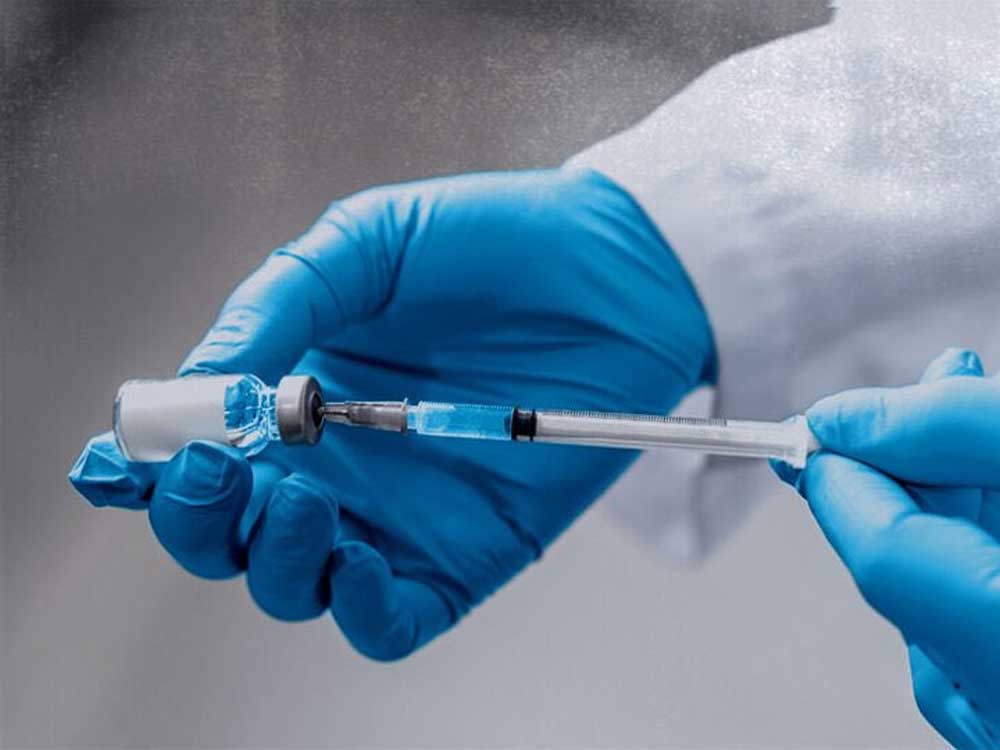
Ikotun Olayemi, President of the Nigeria Biochemistry Practitioners Association, says the recent approval by the World Health Organisation (WHO) of a newborn-specific malaria drug offers major biochemical and public health benefits for Nigeria.
Olayemi made the remarks in an interview with the News Agency of Nigeria (NAN) on Wednesday in Lagos, highlighting the importance of the breakthrough ahead of 2026 World Malaria Day.
The World Health Organization recently announced the prequalification of the first malaria treatment developed specifically for newborns and young infants weighing between two and five kilograms marking a significant milestone globally.
He described the development as more than a new medicine noting it represented a shift toward precision medicine in infectious disease management tailored specifically for neonates who required specialised dosing considerations.
Olayemi said effective adoption in countries like Nigeria could significantly reduce early life malaria deaths among newborns but warned poor implementation might limit access and impact across vulnerable populations nationwide.
He explained that previously newborns faced risks of overdose toxicity and poor pharmacokinetic outcomes because malaria treatments were designed for older children affecting immature organs such as the liver significantly.
The new therapy he said offered safer treatment options for newborns representing a major advancement while also opening opportunities for Nigerian biochemists to engage in drug monitoring and metabolism research activities.
He added that the development created pathways for further exploration of natural medicinal supplements and plant based adjuncts that could complement conventional malaria treatment especially within African neonatal populations.
Olayemi urged WHO to collaborate with the Nigerian government to ensure affordable distribution and availability of the drug across rural clinics primary healthcare centres and biochemistry practice facilities nationwide.
He also called for expanded training support for biochemists pharmacists and clinicians focusing on neonatal drug metabolism and appropriate dosing protocols to ensure safe and effective administration across healthcare settings.
According to him the association considers the drug scientifically sound and potentially lifesaving for neonates in malaria endemic regions urging continuous research pharmacovigilance and population specific evaluation to maximise its benefits.
The United Nations Children’s Fund (UNICEF) has raised concern over a worsening malnutrition crisis in northwestern Nigeria, warning that over 500,000 children across Sokoto, Kebbi, and Zamfara states are at risk of severe malnutrition.
The concern followed the presentation of findings from the 2025 Nutrition SMART Survey at a dissemination workshop held in Sokoto on Tuesday, where stakeholders gathered to review the region’s nutrition outlook and discussed response strategies.
The one-day workshop focused on translating data into action, with participants emphasising the need to scale up life-saving nutrition interventions and strengthen community-based responses to curb the growing crisis.
UNICEF Nutrition Specialist, Edward Kotundo, disclosed that the data revealed a troubling prevalence of acute malnutrition among children under five years, particularly in Sokoto and Kebbi states.
Kotundo said wasting affects 11 per cent of children in Sokoto and Kebbi, while Zamfara records 8.5 per cent, placing the first two states in the “high prevalence” category and Zamfara at a “medium level,” but still of serious concern.
He further disclosed that the survey found a “very high” rate of stunting across all three states, highlighting widespread chronic malnutrition and long-term nutritional deprivation among children.
He, however, noted that the findings are consistent with the October 2025 Integrated Food Security Phase Classification (IPC) Acute Malnutrition analysis, which projected that over half a million children could become severely wasted if urgent interventions are not implemented.
“The data clearly shows that this is not just a health issue but a development emergency that requires coordinated, multisectoral action,” Kotundo said.
The UNICEF Chief of Field Officer in Sokoto, represented by Michael Juma, commended government agencies and development partners for their collaboration in conducting the survey, stressing that credible data is key to effective planning and response.
Also, the Director of Medical Services at the Sokoto State Primary Healthcare Development Agency, Muhammad Kaura, described Sokoto, Kebbi, and Zamfara as sharing similar cultural and socio-economic realities, underscoring the need for a unified regional approach to tackling malnutrition.
He further acknowledged UNICEF’s continued support in strengthening primary healthcare systems, particularly in maternal and child health services.
The workshop witnessed the presence of state nutrition officers, officials from ministries of information and budget and planning, state bureaus of statistics, security agencies, and development partners such as Médecins Sans Frontières and Action Against Hunger.
The event witnessed goodwill messages from stakeholders who praised UNICEF’s interventions and expressed optimism that the survey findings would guide more targeted nutrition programmes and policies.
They called for sustained partnerships and increased investment to address the root causes of malnutrition, including food insecurity, poverty, and limited access to healthcare.
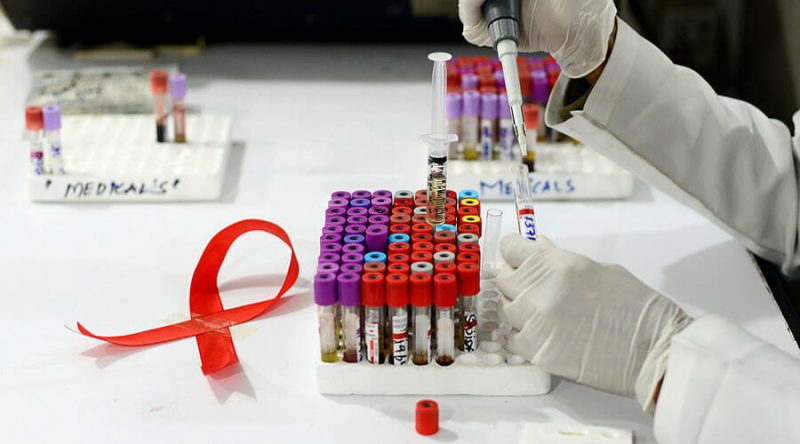
The National Agency for the Control of AIDS (NACA) has charged the Anambra State Technical Team for the 2026 Integrated Biological and Behavioural Surveillance Study (IBBSS) to identify persons living with HIV/AIDS in the state.
The agency also urged the team to ensure access to antiretroviral therapy and achieve significant viral suppression as part of efforts to control the spread of HIV/AIDS in Anambra.
Director-General of NACA, Dr Tope Ilori, gave the charge during the inauguration of the technical team at the 2026 IBBSS state entry meeting held at the Anambra State AIDS Control Agency (ANSACA) in Awka.
Ilori, represented by Mrs Joy Egwuonwu, Principal Programme Officer of NACA, said the survey was aimed at achieving HIV epidemic control in Anambra.
She explained that the IBBSS was a nationally coordinated survey designed to improve the prevention and control of HIV/AIDS in the country.
According to her, the survey will provide reliable data needed to strengthen HIV intervention programmes in the state. Ilori commended Gov. Chukwuma Soludo for appointing Dr Hilary Okeke as Executive Director and Programme Manager of ANSACA, describing him as a vibrant and competent public health expert.
She noted that Anambra was among the 12 states selected for the survey due to recent improvements in the state’s HIV response system.
“Anambra State data on HIV has been very poor, but with the appointment of Dr Okeke, the future is very bright,” she said.
Speaking, Okeke said the survey would focus on key populations, including female sex workers, men who have sex with men and people who inject drugs.
He said the Soludo administration had provided an enabling environment to reduce the prevalence of HIV/AIDS in the state. He also assured that the technical team would begin implementation strategies and policies necessary for the successful conduct of the survey.
Also speaking, Mr Chukwuebuka Ejekam, Acting Chief Executive Officer of the West Africa Centre for Public Health and Development, said the IBBSS was targeted at key populations as part of efforts to achieve HIV epidemic control in Nigeria by 2030.
Ejekam said the study, recommended by the World Health Organisation, was expected to be conducted across countries every three to five years. He pledged the organisation’s commitment to support the state government with evidence-based data and programme intelligence to strengthen health interventions in Anambra.
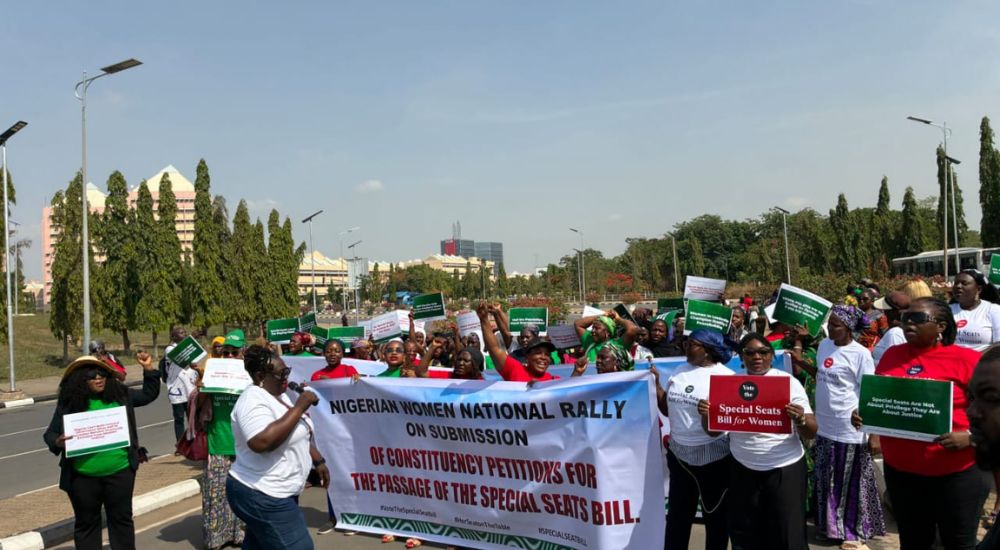
A coalition of women groups from across the 36 states and 700 local government areas on Wednesday submitted petitions to the National Assembly, demanding the immediate passage of the Special Seats for Women Bill to address the underrepresentation of women in governance.
The groups, led by the League of Women Voters of Nigeria and the National Council of Women Societies (NCWS), said the petitions were collated from constituencies nationwide over the last three weeks and delivered to members of the House of Representatives.
President of the League of Women Voters of Nigeria (NILOWV) Hon. Irene Mngupado Awunah-Ikyegh who addressed journalists at the entrance of the National Assembly, said some lawmakers received the petitions personally while others were submitted in their absence.
“Three weeks ago, we went to every constituency office and houses of House of Representatives members to submit a petition demanding an immediate passage of the Special Seats Bill. We are here today to formally submit all the petitions that we have collated across Nigeria,” she said.
Reading from the petition titled ‘Urgent demand for the passage of the Special Seats for Women Bill to enhance inclusive governance in Nigeria,’ Awunah-Ikyegh said Nigerian women, who make up about half of the country’s population, remain “severely underrepresented in all tiers of government.”
“Representation often hovers around less than five per cent in elected positions — one of the lowest in Africa,” the petition stated, while citing constitutional guarantees of freedom from discrimination and the right to participate in governance.
The Special Seats Bill for Women seeks to create additional seats for women in the National Assembly and State Houses of Assembly.
The petitioners argued that the mechanism, if adopted, would align Nigeria with countries like Rwanda, South Africa, Kenya, and Uganda in accelerating women’s political inclusion.
Awunah-Ikyegh noted that similar constitutional amendment bills considered by the 9th and 10th Assemblies “failed to secure required constitutional mandatory due to lack of political will.”
The coalition called on lawmakers to “mobilise all your colleagues and ensure that the bill gets majority to vote at the House of Representatives and Senate,” and to “vote in favour of it and reject any motion opposing it during plenary.”
Their prayers include an appeal to legislators to use their “good offices to influence the passage of this bill” and to “advocate for an emergency sitting to vote for this bill.”
Also speaking, National President of the National Council of Women Societies (NCWS) Nigeria,Princess Edna D.D. Azura, said Nigerian women have signed several protocols on women’s representation, including the 35 percentaffirmative action, but implementation remains poor.
“Other countries have passed that stage. Rwanda, they are about 67 percent now. Nigerian women, we don’t even want to go that far. They must get the 35 percent and above. But now, we are about just four percent representation in Nigeria and it’s not healthy for the entire nation,” Azura said.
She added that over 800 women are seeking elective positions in the current political transition, with more than 300 under the All Progressives Congress alone.
“The women are ready, and the women are vast. We are well-read, we are politicians, and you have tested, you have seen many that have been there and how they have performed,” she said.
Azura stressed that women groups are now “speaking with one voice” across the country.
“We are loving, but we are calling a critical call. Please, let them pass this bill because it is time. Other countries are far behind, maybe second to the last in the entire world for representation of women,” she said.
The increasing number of mentally-deranged people in Nsukka town of Enugu State has become a source of worry to the residents of the university community. Those who spoke to THE WHISTLER demanded urgent action from relevant agencies to evacuate the patients for treatment.
“They are now multiplying daily,” according to an Okada operator at Odenigbo roundabout, Ifeanyi Agbedo. “Everyday new faces emerge. I don’t know if they are being dumped in Nsukka by some disgruntled persons or they are migrating from somewhere. Some of them are not shabbily dressed, implying that they are newly infected. Some are almost going naked. They should not be left to be roaming along the roads because they constitute road hazards to both motorists and pedestrians.” A resident of Enugu road, Uchenna Ogbodo, said the prevalence of mad men and women in the town is becoming an eyesore. In her words, “Some of them walk naked. It makes the environment indecent. They walk unclothed in public. Concerned authorities should find a solution because it is getting out of hand. I am yet to hear that they hurt anybody, but allowing them freely does not portend a serene environment which we project. I saw many of them by dustbins, eating whatever they can lay their hands on.”
Johnpaul Ezea lives at Alor-Uno, Nsukka. He said, “I suspect that they are evacuated from neighbouring states to Nsukka. Some of them don’t understand Igbo; some speak Igbo very well. Some are natives. I know one said to be a native of Ede-Obara in Nsukka here. Some are very young, and one wonders what can make adolescents mad! Security agencies should do more to unravel where they are coming from.”
A social worker, Dr Sunday Agbo, said the situation might be difficult to handle because there are no psychiatric and rehabilitation centres in the state.
According to him, “The Federal Neuropsychiatric Hospital in Enugu is a tertiary health institution. It is more of a teaching hospital. The management won’t go about mopping up mental-challenged people for treatment. The closest place they can be treated is at Irrua in Edo State. But who will take up the responsibilities? Some of them may be hard-drug related. They need to be isolated at rehabilitation centres and given psychotherapeutic support. Unfortunately, Enugu-based Borstal Training Institute has been abandoned for decades. The core mad ones are also treatable. In the interim, the local government authorities can isolate and evacuate them to any centre where they can be taken care of. It is a responsibility of the government to handle.”
The former Lagos State Chairman of the Labour Party, LP, Pastor Dayo Ekong, on Wednesday said her defection to the Nigeria Democratic Congress, NDC, followed the new party’s promising and emerging future.
Ekong, who disclosed this in Lagos, decried the LP’s protracted leadership crises and legal battles since 2023.
Noting that she currently serves as the Southwest Vice Chairman of the NDC, said activities were in top gear to organise hitch-free congresses in the zone.
“I have moved on and gone to NDC, in fact, I am currently the National Vice Chairman of the party for the whole of Southwest,” she said.
Ekong said she decided to dump the LP to protect her political future.
“I am a politician and I have political aspirations. The way political parties are beset by all sorts of problems and leadership crisis is sickening.
One just has to find a way to achieve goals at the end of the day.So, I have to move forward.”
On the chances of NDC in the zone, Ekong said, “We all know that NDC is making waves everywhere now. It is a new political party and the hope of the future”.