Author: CKN

  • Nigerian Businessman Sues ex-wife Over Refusal To Leave His House After Divorce

    Nigerian Businessman Sues ex-wife Over Refusal To Leave His House After Divorce

    A businessman, Abibu Yakubu, has filed a petition against his ex-wife at the Upper Area Court 1, Karu, over alleged refusal to leave his house after divorce.

    Yakubu is also seeking custody of his four children.

    He filed the case against his estranged wife, Shuwadatu Mohammed, on October 13, 2025.

    According to the particulars of claim, Yakubu, who resides at Orange Market, Mararaba, Karu LGA, said the respondent is his ex-wife and also resides at the same address.

    He averred that the respondent does not respect him and his parents and often insults them.

    He said that the marriage is blessed with four children aged 22, 19, and a six-year-old twins.

    Mr Yakubu alleged that he divorced his wife about five years ago but she refused to vacate his house.

    He claimed she said she would not leave until she killed him.

    He further alleged that the respondent occupied his house and threatened his life, adding that he no longer sleeps with eyes closed.

    He prayed the court to hold the respondent responsible if anything happens to him.

    The petitioner also asked the court for a redissolution of the marriage and custody of the four children.

    The Judge, Mohammed Yakubu, after hearing the matter, adjourned the case until June 3, for continued hearing 

    (NAN)

  • CARITAS, Partners Train Sokoto IDPs On Peacebuilding, Trauma Support

    CARITAS, Partners Train Sokoto IDPs On Peacebuilding, Trauma Support

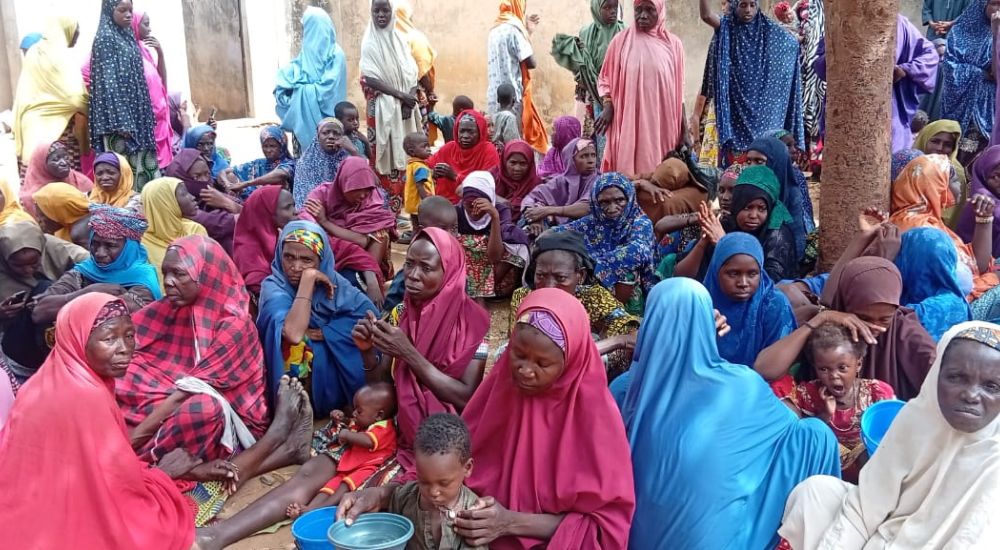
    No fewer than 200 internally displaced persons (IDPs), mostly women, benefited from a community dialogue and psychosocial support programme organised by the Catholic Caritas Foundation of Nigeria in collaboration with United Nations Interregional Crime and Justice Research Institute (UNICRI) at Guiwa IDP Camp in Sokoto State.

    The intervention, held under the project titled, “Building Community Resilience: Supporting Women’s Role in Conflict Prevention and Mediation,” targeted conflict-affected women and vulnerable families displaced by insecurity across the North-West.

    Speaking during the event, Project Lead of CARITAS Nigeria, Jude Akwo, said the initiative was aimed at strengthening women-led peacebuilding efforts and promoting community resilience against insecurity and violent extremism.

    Akwo said that the programme forms part of the UNICRI-funded project, “Assessing and Addressing the Nexus between Organized Crime and Terrorism in Africa.”

    According to him, the initiative is part of broader efforts to address the links between organised crime, terrorism and community vulnerabilities while strengthening inclusive peacebuilding mechanisms in conflict-affected communities.

    “Women constituted about 70 per cent of the participants of this dialogue because of the incredible role they play in peacebuilding.”

    While speaking Mahmoud Malami Sadik, a consultant with CARITAS Nigeria, disclosed that findings from field research conducted in Sokoto and Zamfara states showed that women remain the worst-hit victims of banditry and displacement.

    “We discovered that women are the major category of people affected. Many have lost their husbands and are now widows, while some were raped.”

    Sadik noted that the research covered Wurno and Goronyo Local Government Areas of Sokoto State, where interviews were conducted with IDPs, community leaders, security experts and other stakeholders.

    He lamented the poor living conditions in many IDP settlements, revealing that some displaced women still face abuse and insecurity even after fleeing violent attacks.

    “Some of them are living in uncompleted buildings without proper security. Some places do not even have perimeter fences, while others lack basic sanitary facilities such as toilets and access to potable water,” he added.

    He stressed that the project seeks to transform women from victims of conflict into agents of peace and mediation within their communities.

    “We want to turn the narrative from women being just victims to becoming agents of peace. As mothers, daughters and wives, they have critical roles to play in conflict prevention and mediation.”

    Highlights of the event was a psychosocial support session facilitated by Fauziyya Sani, a certified psychosocial specialist, who provided guidance on trauma management, emotional wellbeing and resilience-building.

    Also speaking, Abdulkareem M. Lawali, representing the Special Adviser to the Governor of Sokoto State on Resident Communities and IDPs, reaffirmed the state government’s commitment to supporting programmes aimed at improving the welfare of displaced persons and promoting sustainable peace.

    He commended CARITAS Nigeria and its partners for implementing interventions that address both the humanitarian and social dimensions of displacement.

    Participants expressed appreciation to CARITAS Nigeria and UNICRI for the intervention, describing the support as timely amid growing humanitarian challenges facing displaced families.

    CARITAS, Partners Train Sokoto IDPs On Peacebuilding, Trauma Support is first published on The Whistler Newspaper

  • DSS Officer Arrested , Disarmed While Attempting To Shoot FRSC Officers

    DSS Officer Arrested , Disarmed While Attempting To Shoot FRSC Officers

    The Corps Marshal, Federal Road Safety Corps (FRSC), Shehu Mohammed has strongly condemned the violent attack carried out against personnel of the Corps by an armed motorist who was later identified as a security operative, during a routine traffic enforcement operation at the RS7.118 Idu Unit Command, Abuja.

    The unfortunate incident occurred on Thursday, 21 May 2026, at about 3:20pm, when an enforcement team on routine patrol flagged down a Toyota Carina driver for suspected traffic violation. Rather than comply with lawful directives, the driver refused to stop and proceeded dangerously until he was eventually held up by traffic close to the Command.

    Upon approach by the patrol team for routine checks of vehicle and driver documents, the offender became hostile, verbally aggressive, and resisted lawful enforcement procedures.

    Despite several tactical and professional attempts by FRSC personnel to de-escalate the situation, the offender escalated the confrontation by physically advancing toward officers and later drawing a pistol, which he fired twice within the vicinity of the Command.

    In the face of imminent danger to lives and property, FRSC personnel acted with remarkable restraint, professionalism, and tactical discipline to swiftly disarm the assailant without loss of life. One Marshal sustained minor bruises during the process.

    The armed suspect was immediately handed over to the Nigeria Police Force at Life Camp Police Station alongside the firearm, ammunition components, and the vehicle involved. Preliminary identification later revealed the suspect to be a personnel of the Department of State Services (DSS). The matter has since been transferred to the appropriate State Command for further investigation.

    The Corps Marshal commends the courage, professionalism, and maturity displayed by its personnel who resisted provocation and ensured that the situation did not degenerate into chaos, despite growing public outrage at the scene.

    He further stated unequivocally that no individual, regardless of status, rank, or agency affiliation, is above the law. Security personnel are expected to lead by example through compliance with established traffic regulations and respect for constituted authority.

    Firearms and official status must never be used as instruments of intimidation against law enforcement officers carrying out legitimate duties. 

    The Corps therefore calls on all security agencies to continue strengthening inter-agency cooperation, mutual respect, and operational discipline in the collective interest of national security and public safety.

  • 2027: Poverty, inequality in Akwa Ibom motivated me join guber race – Udoedehe

    2027: Poverty, inequality in Akwa Ibom motivated me join guber race – Udoedehe

    An aspirant for the 2027 gubernatorial election in Akwa Ibom State, Senator John James Udoedehe, says the high level of poverty, unemployment and inequality ravaging the state motivated him to join the governorship race.

    Addressing a press conference in Uyo on Thursday, Udoedehe who is running under the platform of African Democratic Congress, ADC, regretted that despite the humongous allocations to the present government, the problems continue to weigh the state down.

    He said he is mentally and physically prepared to lift the people by not just creating wealth and employment but bridging the gap between the haves and have-nots, which according to him is very prominent in the state.

    “What gives me strength and motivation to do what I’m doing is when I see the level of poverty, inequality unemployment in the state; I know I needed to do something. Any government that fails to answer these questions of poverty, inequality and unemployment has not started. The level of poverty in Akwa ibom is high, you see a man of 35 years having grey hair all over due to hardship.

    ‘’Check the budget of Akwa Ibom for the past two years  weather it is speaking, weather the budget has a voice, not a matter of building blocks. The money Godswill Akpabio and Udom Emmanuel received all together for 16 years is not up to what governor Umo Eno has received for three years yet poverty is still walking in the streets of Akwa Ibom,” he said.

    On the capacity of the ADC to win elections in Akwa Ibom, Udoedehe, who was a former national secretary of All Progressives Congress, APC, said he brought APC to the state which has now become the ruling party, noting that with full grassroots sensitization and mobilization, the party shall succeed.

    Addressing the allegation of being a chronic governorship aspirant, Udoedehe said he only appeared on ballot twice, saying he would not be deterred as he has high hopes of winning in 2027.

    He cited the victories of governors Alex Otti of Abia State and Chukwuma Soludo of Anambra State, who failed multiple times before scaling through in their last attempts.

    The guber aspirant also dismissed as baseless and false the insinuations that he was coming out to collect money from the government and chicken out mid-way, while leaving his teaming supporters stranded.

    He said he had gone a long way and had been unjustly incarcerated because of his ambition, noting that it would be unwise for him to engage in such act.

    ‘’I am not coming to contest election because I want to collect money from anyone, I am contented with what I’m blessed with. This is mere blackmail and propaganda. I want Akwa Ibom people to leave joint stock hatred. I have not stolen the Commonwealth of the people.

    ‘’I have faced many ugly situations because of my people including imprisonment through emergency laws just to implicate me because of fighting for my people. People who are saying such things are sycophants and blackmailers who are busy endorsing Senator Akpabio even when they are not from Akpabio’s senatorial district.

    ‘’No matter the sentiments, I want Akwa Ibom people to try me in office as their governor. My conviction is that once Akwa Ibom people are enlightened properly, they would take decision in my favour in the 2027 election,” the aspirant said.

    2027: Poverty, inequality in Akwa Ibom motivated me join guber race – Udoedehe

  • Panic In Igando Lagos As Gunmen Kill Man In Broad Daylight Attack

    Panic In Igando Lagos As Gunmen Kill Man In Broad Daylight Attack

    Residents of the Igando area of Lagos were thrown into panic after suspected gunmen reportedly shot dead a man identified simply as Golden in a targeted attack carried out in broad daylight.

    The incident, which occurred on Tuesday in the Fatoki area of Igando, has heightened tension within the community as residents expressed fears over rising insecurity in parts of the state.

    According to police sources, the attackers, believed to be two armed men riding on a motorcycle, stormed the neighbourhood and appeared to have specifically targeted the deceased.

    Eyewitness accounts revealed that the gunmen located Golden and immediately opened fire on him before speeding away from the scene, leaving residents and passersby in shock.

    Security operatives who responded to distress calls reportedly arrived at Fatoki Street and found the victim lying in a pool of blood.

    The victim was rushed to a nearby hospital for urgent medical attention but was later confirmed dead by doctors.

    His body has since been deposited at the morgue pending further investigation.

    The motive behind the killing remains unclear as of the time of filing this report, while security agencies are said to have commenced efforts to track down the fleeing assailants.

    The latest attack has sparked renewed concerns among residents over safety and criminal activities in some parts of Lagos, with many calling for increased security patrols and swift justice for those behind the killing.

    Police authorities are yet to issue an official statement on the incident.

  • Lagos records ₦3.43trn asset valuation in transparency drive

    Lagos records ₦3.43trn asset valuation in transparency drive

    The Lagos State Government says it generated assets worth over ₦3.43 trillion in 2025 through its ongoing valuation exercise, as it intensified efforts to strengthen financial transparency…

    The post Lagos records ₦3.43trn asset valuation in transparency drive appeared first on Tribune Online.

  • NNDC pledges renewed commitment to transparency, value creation

    NNDC pledges renewed commitment to transparency, value creation

    The New Nigeria Development Company Limited (NNDC), belonging to the 19 Northern state governments, has pledged renewed commitment to transparency and value creation…

    The post NNDC pledges renewed commitment to transparency, value creation appeared first on Tribune Online.

  • ICPC allegedly denies ADC leaders access to El-Rufai in custody

    ICPC allegedly denies ADC leaders access to El-Rufai in custody

    Leaders of the African Democratic Congress (ADC) were allegedly denied access to former Kaduna State Governor, Nasir El-Rufai, who is currently in the custody of the Independent Corrupt Practices and Other Related Offences Commission.

    The ADC delegation included the party’s National Secretary, Rauf Aregbesola, National Publicity Secretary, Bolaji Abdullahi, and Secretary of the ADC Manifesto and Policy Committee, Salihu Lukman.

    The party leaders reportedly visited the ICPC facility in an attempt to see El-Rufai but were denied access. Details surrounding the incident were still unclear as of Friday afternoon.

    The development comes days after the ICPC dismissed allegations that El-Rufai was being denied access to food, family members and medical care while in detention.

    Speaking at a press conference earlier, ICPC spokesperson, Okor Odey, described the allegations as “false and misleading.”

    According to him, visitors are allowed into ICPC detention facilities between 9:00 a.m. and 6:30 p.m., adding that El-Rufai’s wife arrived outside the approved visiting hours.

    Odey also maintained that authorised visitors, including family members, lawyers and medical personnel, were permitted access under supervision.

    However, the El-Rufai family had alleged that the former governor was denied access to his personal doctors despite an earlier court order from the Kaduna High Court granting him unrestricted access to legal representatives and physicians.

    The family further claimed that the ICPC’s in-house doctor had recommended additional medical examination before access was allegedly blocked.

    “When you see a doctor and you run tests, you are expected to see the doctor back so that he explains what the problem is,” a family member said.

    “He was denied access to the doctor,” El-Rufai’s second wife, Hasiat, alleged.

    ICPC allegedly denies ADC leaders access to El-Rufai in custody

  • SWAN Drives Stakeholder-led Enforcement Against Illicit Trade in Nigeria’s Spirits and Wines Sector

    SWAN Drives Stakeholder-led Enforcement Against Illicit Trade in Nigeria’s Spirits and Wines Sector

    Across Nigeria, wines and spirits occupy an important place at Nigerian events, whether we are talking about weddings, birthdays, naming ceremonies, business engagements, launch events or weekend gatherings. They play important roles in moments of connection and celebration, often fostering shared experiences.

    Against this backdrop, the Spirits and Wines Association of Nigeria (SWAN) has called for stronger multi‑stakeholder collaboration to address illicit trade in the spirits and wines sector, following a high‑level workshop held in Abuja. The engagement brought together regulators, enforcement agencies, industry players, media, and development partners to align on practical steps to tackle illicit trade and strengthen the integrity of the market.

    SWAN is made up of notable organisations including Bacardi, Diageo, Guinness Nigeria, Moët Hennessy, Nigerian Breweries, Pernod Ricard Nigeria, Nigerian Bottling Company Ltd., William Grants & Sons and Brian Munro Limited.

    Speaking at the event, Michael Ehindero, Managing Director of Pernod Ricard and President of SWAN, described illicit trade as a direct threat not only to business integrity but to human life.

    “Illicit trade, defined as the production, importation, or sale of goods outside regulatory frameworks, continues to pose risks to consumer protection, government revenue, and legitimate businesses. 

    “This includes counterfeiting, smuggling, illegal production, tax evasion, and the diversion of legitimate products into unauthorised channels. It is a global challenge that cuts across multiple sectors in the consumer goods industry, food and beverages, pharmaceuticals, tobacco, cosmetics, and alcohol, with significant consequences for public health, government revenues, and economic development,” he stated.

    “Beyond the human cost, illicit trade has a devastating impact on our economy. Governments lose billions in tax revenue, funds that should be supporting education, healthcare, infrastructure, and public safety. Legitimate businesses that invest in compliance, quality, and employment are unfairly undercut. Jobs are lost. Investor confidence is shaken. This is not a victimless crime, it weakens entire value chains and slows national development,” Ehindero added.

    Tony Okwoju, SWAN Director-General, called for stronger stakeholder-led enforcement against illicit trade due to its impact on lives, legitimate business and government revenue.

    David Francis, Managing Director of the Alliance Against Counterfeit Spirits (AACS), provided a global perspective while highlighting the increasing sophistication of counterfeit operations regarding fake packaging materials often mass-produced abroad and shipped into local markets.

    “They’re becoming organised into gangs, well-organised networks and becoming really sophisticated. The quality of the things we are seeing coming from China into this market are making it increasingly challenging for consumers to spot fake goods, whether they’re bad or good, or whatever the fundamentals are.

    “So, you’ll see the labels, you’ll see the cartons, you’ll see the bottles, and you’ll see the caps. This is a do-it-yourself counterfeiting kit coming into the domestic market. All you need to find is the liquid. And we all know that the liquid is relatively easy to source in any domestic market around the world. So again, I just want to highlight how important it is that we stop these things getting into the market,” Francis said.

    At the regulatory level, agencies acknowledged the growing threat of illicit trade while outlining ongoing interventions. The Federal Competition and Consumer Protection Commission (FCCPC) described the situation as a serious public health and economic challenge. In his keynote address, Tunji Bello, Executive Vice Chairman of FCCPC, warned that illicit alcohol trade is a “multi-dimensional crisis” affecting consumer safety, market integrity, and public revenue.

    “It is not merely an industry problem,” Bello said, stressing that the issue touches on “consumer protection, health protection, public revenue, public safety, and indeed the overall integrity of our market. 

    A key outcome of the session was the shared recognition that no single stakeholder can address the challenge alone. Participants emphasized the importance of improved enforcement and intelligence sharing, enhanced regulatory coordination and sustained consumer awareness and education while promoting transparency across the supply chain.

    SWAN equally highlighted the critical role of informed consumer choices, encouraging the public to purchase products only from reputable and authorized outlets. Stakeholders noted that this remains one of the most effective ways to protect consumers while supporting legitimate businesses and maintaining trust in the market.

    The workshop also reinforced the role of responsible, legitimate industry players in supporting safe consumption and contributing positively to society. Across the industry, companies continue to invest in initiatives that promote consumer awareness, responsible drinking, and community wellbeing.

    These efforts include public education campaigns on responsible alcohol consumption and drink‑driving prevention, initiatives that encourage safer roads, as well as sustainability programmes such as glass bottle collection and recycling to reduce environmental impact. Such interventions reflect a broader commitment by compliant industry players to operate responsibly, uphold standards, and contribute to long‑term value creation.

    The event also underscored the need to strengthen Nigeria’s broader ecosystem through improved policy alignment, technology‑driven traceability solutions, and ongoing public‑private cooperation.

    With participation from the Federal Competition and Consumer Protection Commission (FCCPC), Nigeria Customs Service, Standards Organisation of Nigeria (SON), Nigeria Police Force, Nigeria Security and Civil Defence Corps (NSCDC), alongside media, civil society organisations, diplomatic partners, and industry representatives, the engagement marked an important step towards building a more secure and transparent market.

    SWAN reaffirmed its commitment to working with all stakeholders to drive long‑term, sustainable solutions. The consensus from the session was clear: only a unified and collaborative approach will effectively address illicit trade, protect consumers, and support the growth of a responsible and thriving industry.

    SWAN Drives Stakeholder-led Enforcement Against Illicit Trade in Nigeria’s Spirits and Wines Sector

  • Obasa blames APC crisis over Agege primaries on ‘disgruntled members’

    Obasa blames APC crisis over Agege primaries on ‘disgruntled members’

    The Speaker of the Lagos State House of Assembly, Mudashiru Obasa, has blamed alleged dissidents within the All Progressives Congress (APC)…

    The post Obasa blames APC crisis over Agege primaries on ‘disgruntled members’ appeared first on Tribune Online.