Author: CKN

  • Imo State Police Command Parades Armed Robbers , Criminals In Owerri ( Pictures)

    Imo State Police Command Parades Armed Robbers , Criminals In Owerri ( Pictures)

     The Commissioner of Police, Imo State Command, Audu Garba Bosso, has enumerated  the achievements of his command in the past few months 

    He made the revelations while briefing journalists during a parade of criminal suspects alongside recovered exhibits on 22nd May, 2026, at the Command Headquarters, Owerri.

    On parade were several stolen cars , recovered rifles and ammunition as well as other stolen items 

    CP Bosso stated his command’s zero tolerance for criminal elements operating in the State 

    He commended the bravery and sense of duty by officers and men of the Command in their efforts at combating crimes 

    Here are some of the exhibits displayed at the press briefing 

  • Fresh Facts On How Alleged Coup Plotters Planned To Share Positions After "Takeover"

    Fresh Facts On How Alleged Coup Plotters Planned To Share Positions After "Takeover"

    There is a fresh twist in the investigation into the alleged coup plot against the administration of President Bola Ahmed Tinubu, following the circulation of a handwritten document said to contain the proposed structure of a replacement government if the plot had succeeded.

    The document, reportedly recovered from a notebook compilation outlined strategic appointments and key offices expected to form the framework of a new regime after the planned overthrow of the Tinubu administration.

    Among the positions listed in the handwritten notes were 

    “Leader of New Nigeria and Commander-in-Chief,” 

    “Vice President or Prime Minister as second in command,” 

    Chief of Army Staff (COAS), 

    Secretary to the Government of the Federation (SGF), 

    Attorney-General of the Federation (AGF),

     National Security Adviser (NSA)

     As well as top anti-corruption and security positions tied to the EFCC and DSS.

    The alleged plotters were also said to have proposed the establishment of a 

    “National Patriotic Ruling Council” (NPRC), reportedly modelled after the defunct Armed Forces Ruling Council that functioned as the supreme decision-making body during Nigeria’s military era.

    The documents further revealed plans for the creation of new agencies and institutions, including the National Religion Regulatory Agency (NRRA), National Infrastructure Development Maintenance Agency (NIDMA), and the Nigerian Internal Security Committee (NISC).

    Other policy proposals allegedly contained in the notes included the formation of a committee to review the final removal of petroleum subsidy and another committee to examine salaries and welfare packages for members of the armed forces and other security agencies.

    The alleged conspirators were also said to have proposed a major restructuring of the armed forces into six command zones, with three General Officers Commanding (GOCs) assigned to each zone. The plans reportedly included a merger of the Economic and Financial Crimes Commission (EFCC) and the Independent Corrupt Practices and Other Related Offences Commission (ICPC).

    According to the handwritten notes, key offices in the proposed administration were to be allocated based on the federal character principle. 

    The Vice President position was allegedly zoned to the South East; the Secretary to the Government of the Federation and Minister of Defence to the South West; the Attorney-General of the Federation and Chief of Defence Staff to the South South; the National Security Adviser to the North West; the EFCC Chairman to the North East; while the Director-General of the DSS and Inspector-General of Police were to come from the North Central.

    Although portions of the document reportedly remain difficult to decipher, security sources believe the notes may have formed part of the operational framework of the alleged conspirators.

    The revelations add a fresh dimension to the ongoing treason and terrorism trial before the Federal High Court in Abuja.

    The Federal Government had in January 2026 announced that security agencies uncovered an alleged plan by a network of serving and retired military officers, alongside civilians, to topple the government of President Tinubu. Investigations later led to the arrest and detention of several suspects, while others were declared wanted.

    Those currently facing charges include retired Major General Mohammed Ibrahim Gana, retired Naval Captain Erasmus Ochegobia Victor, serving Police Inspector Ahmed Ibrahim, Zekeri Umoru, Bukar Kashim Goni and Abdulkadir Sani. Former Bayelsa State Governor Timipre Sylva was also named in court documents as allegedly linked to the plot and remains at large, according to prosecutors.

    Court filings accused the defendants of conspiring to “levy war against the state” and attempting to destabilise the democratically elected government through unconstitutional means. The charges include treason, terrorism, conspiracy and alleged terrorism financing.

    The case is widely regarded as Nigeria’s most serious alleged coup attempt since the country returned to democratic rule in 1999.

    During recent proceedings, the Federal High Court ordered an accelerated hearing of the matter, while journalists were reportedly barred from covering the trial due to security concerns. Witnesses from the Nigerian Army and intelligence services have already begun testifying on how the alleged plot was uncovered.

    One of the prosecution witnesses told the court that intelligence reports first alerted military authorities to suspicious meetings and covert communications involving some of the accused persons. Investigators also alleged that encrypted messaging platforms and secret coordination channels were used during the planning stages.

    The defendants, however, pleaded not guilty to all charges during their arraignment and remain in DSS custody pending the determination of their bail applications and continuation of the trial.

  • Content Creators Distorting My Comments On Banditry — Gumi

    Content Creators Distorting My Comments On Banditry — Gumi

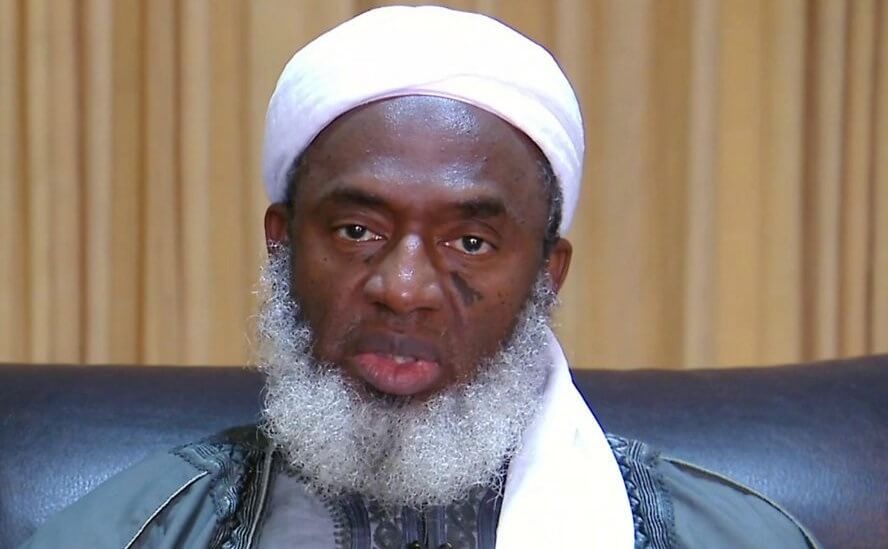
    Islamic cleric Ahmad Gumi has distanced himself from media and online reports suggesting he endorses or justifies banditry in Nigeria, threatening legal action against those he says are circulating fabricated claims about his views on insecurity.

    Gumi said he had been consistently misrepresented in coverage of his interviews, public lectures, and contributions to debates on tackling banditry, blaming the distortions on what he described as “ethnic-interest groups, individuals driven by prejudice, and sectional internet content creators” who deploy sensational headlines for attention.

    The cleric stated “unequivocally” that any video, written material, or message attributed to him directly or indirectly suggesting he supports, protects, or advocates for banditry does not originate from him, urging the public, media organisations, and government institutions to disregard what he termed “fake, manipulated, and doctored materials” in circulation.

    Gumi warned that individuals or groups who continue to spread such claims from the date of the statement would face legal consequences.

    Reaffirming his loyalty to Nigeria, the cleric described the country as one with unmatched potential and expressed hope for national healing, saying victims of banditry and violence should draw comfort from the collective resolve of Nigerians and the international community to confront insecurity rooted in poverty, ignorance, and social injustice.

    Content Creators Distorting My Comments On Banditry — Gumi is first published on The Whistler Newspaper

  • Tinubu Doesn’t Fully Trust Me Because I Supported Peter Obi… Cubana Chief Priest

    Tinubu Doesn’t Fully Trust Me Because I Supported Peter Obi… Cubana Chief Priest

    Socialite and businessman Pascal Okechukwu, popularly known as Cubana Chief Priest, has said President Bola Tinubu remains wary of him because of his support for Peter Obi during the 2023 presidential election.

    Cubana Chief Priest, who serves as the Imo State Coordinator of the Pro-Tinubu City Boys Movement, stated this during a livestream with popular streamer Peller.

    Speaking in a video circulating on Wednesday, the socialite discussed what he described as lingering suspicion from the presidency tied to his ethnic background and previous political alignment.

    “President Bola Tinubu no really trust me as an Igbo man that I am. He look me with one eye because he believes that this one that worked for Peter Obi, before at the last election,” Chief Priest stated.

    He explained his decision to switch allegiance to Tinubu, citing a desire to back a winning side and avoid repeated political losses.

    Asked why he left Peter Obi, he said, “Because I don’t want to lose again because they say first fool no be fool na the second fool be proper fool.”

    Chief Priest further dismissed the prospects of Obi in the 2027 presidential election, describing the Nigeria Democratic Party aspirant as “not serious” and asserting that “the serious people will win.”

    The comments, which quickly circulated on social media, sparked widespread reactions, with many criticising Chief Priest for alleged political opportunism and questioning his loyalty to the Igbo cause.

    Others, however, viewed his remarks as a pragmatic reflection of Nigeria’s winner-takes-all political landscape.

    Chief Priest was notably vocal in support of Obi and the Labour Party ahead of the 2023 polls.

    He has since aligned with the ruling All Progressives Congress and Tinubu.

    He recently purchased an APC primary form for a House of Representatives seat but pulled out on the morning of the election on Saturday.

  • Why Supreme Court Affirmed Acquittal Of Gen Hakeem Otiki

    Why Supreme Court Affirmed Acquittal Of Gen Hakeem Otiki


    The Supreme Court has affirmed the acquittal of former General Officer Commanding (GOC), 8 Division of the Nigerian Army, Major General Hakeem Oladapo Otiki (retd).

    The verdict brought to a close a six-year legal battle over the alleged disappearance of N100 million in military operational funds.

    In a unanimous judgment delivered by a five-member panel, the Supreme Court upheld the December 2024 decision of the Court of Appeal, which voided the conviction of the retired senior officer by a General Court Martial (GCM).

    The court dismissed the Nigerian Army’s appeal and sustained Otiki’s discharge and acquittal, effectively clearing him of all allegations linked to the missing funds.

    Otiki had been convicted in 2020 by a military tribunal over the disappearance of N100 million allegedly stolen by soldiers detailed to transport the cash from Sokoto to Kaduna in July 2019.

    Following the conviction, the tribunal ordered his dismissal from service, a reduction in rank from Major General to Brigadier General, and a severe reprimand. The sanctions were later ratified by the Army Council.

    The retired officer, however, consistently denied wrongdoing, maintaining that he neither stole nor concealed the money. He argued that he promptly reported the incident to military authorities and refunded the missing funds.

    The Court of Appeal subsequently nullified the entire proceedings of the General Court Martial, restored his rank and ordered the payment of his entitlements.

    Dissatisfied with the ruling, the Nigerian Army approached the Supreme Court, which on Friday affirmed the appellate court’s judgment.

    The verdict has revived discussions within military and legal circles over the circumstances surrounding Otiki’s prosecution, amid claims that the case may have been influenced by political interests linked to the 2019 Sokoto governorship election.

    Otiki was appointed GOC of 8 Division, Sokoto, on March 16, 2019, shortly after the March 9 governorship election in the state was declared inconclusive because of the narrow margin between Governor Aminu Waziri Tambuwal of the Peoples Democratic Party (PDP) and the All Progressives Congress (APC) candidate, Ahmad Aliyu.

    On assumption of office, the senior officer reportedly warned soldiers against unlawful involvement in the rerun election and insisted that military personnel could only participate in election duties with approval from Army Headquarters.

    During a “Show of Force” operation ahead of the supplementary poll, he also urged residents to come out peacefully to exercise their civic rights.

    Following the March 23, 2019, rerun, the Independent National Electoral Commission (INEC) declared Tambuwal the winner with 512,002 votes against Aliyu’s 511,660 votes, a margin of 342 votes that heightened political tension within Sokoto and Abuja.

    At the time, there were allegations that some political interests expected the newly deployed GOC to influence the outcome of the election.

    A source had claimed that Otiki’s refusal to compromise military neutrality allegedly triggered moves to remove him.

    Questions were also raised over the severity of the punishment imposed on the General, especially given his previously unblemished military career spanning more than three decades.

    Otiki, who was promoted Major General in December 2016, held several strategic military positions, including Commander of the Infantry Corps in Jaji, Aide-de-Camp to the Chief of General Staff during the late General Sani Abacha regime and Defence Attaché.

    He was credited with coordinating the rotation of over 3,500 overstayed troops from the North-East while serving as Commander of the Infantry Corps.

    Military operations such as Operation Sharan Daji and Operation Harbin Kunama III were also said to have recorded successes under his leadership as GOC 8 Division.

    Even the President of the General Court Martial, Lieutenant General Lamidi Adeosun, reportedly acknowledged Otiki’s record before delivering judgment against him.

    “Many will be praying to have such an unblemished career and record of military service in the country like the accused senior army officer,” Adeosun reportedly said during the proceedings.

    Similarly, Major General GAT Ochigbano, who testified as Military Secretary, Army, reportedly confirmed under oath that Otiki had no prior regimental offence throughout his career.

    Otiki’s lead counsel, Israel Olorundare (SAN), had pleaded for leniency during the trial, informing the tribunal that the General had refunded the N100 million and that projects linked to the operational funds had either been completed or were nearing completion.

    The soldiers accused of absconding with the money were identified as Corporal Gabriel Oluwaniyi, Corporal Mohammed Aminu, Corporal Haruna, Oluji Joshua and Hayatudeen.

    One of the soldiers, Lance Corporal Isah, reportedly returned N15 million and $6,600 voluntarily to military authorities.

    However, questions persisted over whether the fleeing soldiers were fully prosecuted and whether justice had been fairly administered in the case against the retired General.

    The General Court Martial that tried Otiki was headed by Lieutenant General Lamidi Adeosun as President, alongside Major General A. Tarfa, Major General F.O. Agbugor, Major General F.A. Nadu, Major General N. Mohammed, Major General C.T. Olukotu and Major General C.C. Okonkwo. Major A. Mohammed served as Judge Advocate, while Captain A. Ibrahim acted as Liaison Officer.

    With the Supreme Court judgment now affirming his acquittal, observers say the ruling has restored the retired officer’s reputation while renewing debate over alleged political influence in military justice administration.

  • 82 Killed In China Coal Mine Explosion

    82 Killed In China Coal Mine Explosion


    A devastating explosion at a coal mine in China has claimed the lives of at least 82 workers, with several others still unaccounted for as rescue operations continue at the site.

    Emergency responders were deployed immediately after the blast, which caused severe damage within the mining facility and trapped workers underground, complicating rescue efforts.

    Authorities say teams are still combing through debris in search of survivors, while the exact cause of the explosion remains under investigation.

    State Control and Allegations of Chinese Government Interference in African Civic Spaces

    Chinese ambassador applauds UN’s stand on transatlantic slave trade

    The incident has once again raised concerns over industrial safety standards in China’s mining sector, which has recorded similar tragedies in the past due to gas leaks, poor ventilation, and operational lapses.

    Officials have pledged a thorough probe into the disaster, as families of the victims await updates amid growing uncertainty over those still missing.

  • 2027: How Tinubu’s Ministers Adelabu , Tuggar, Alkali Gamble Boomerang

    2027: How Tinubu’s Ministers Adelabu , Tuggar, Alkali Gamble Boomerang

    The decision by some former ministers of President Bola Tinubu to resign from the Federal Executive Council in pursuit of elective offices ahead of the 2027 general elections appears to be yielding mixed fortunes, with only two securing party tickets so far.

    Five former cabinet members stepped down from their positions after the Presidency directed political appointees seeking elective offices to resign before participating in party primaries.

    Their resignation was in line with the Electoral Act 2026.

    Among those affected were former Minister of Foreign Affairs, Yusuf Tuggar, who resigned to contest for the All Progressives Congress governorship ticket in Bauchi State; and former Minister of State for Humanitarian Affairs, Yusuf Sununu, who resigned to pursue Kebbi senatorial ticket.

    Others are former Minister of Transportation, Saidu Alkali, who resigned to contest Gombe governorship ticket; former Minister of State for Labour and Employment, Nkeiruka Onyejeocha, pursuing House of Representatives ticket in Abia State; and former Minister of Power, Adebayo Adelabu, who resigned to contest the Oyo governorship primaries.

    Of the five, only Onyejeocha and Sununu have secured their tickets.

    Onyejeocha clinched the APC ticket for Isuikwuato/Umunneochi Federal Constituency in Abia after emerging as an unopposed candidate

    Sununu also secured the APC ticket for Yauri/Shanga/Ngaski Federal Constituency after withdrawing from the Kebbi South senatorial race.

    Adelabu, Alkali lose out, Tuggar’s fate hangs

    Adelabu, who resigned after the deadline set by the President, had hoped to secure the party’s governorship ticket in Oyo State ahead of the 2027 elections.

    The former minister was, however, defeated in the contest by Senator Sarafadeen Alli.

    Alli polled 578,143 votes to defeat Adelabu, who got 19,193 votes.

    Following the outcome of the exercise, Adelabu alleged manipulation in the primary process, insisting that the election did not reflect the true wishes of party members.

    He vowed to challenge the outcome of the election, adding that his team was preparing to petition the party leadership at the national level.

    Speaking to journalists during the exercise, the ex-minister said, “In some wards, our people were prevented from voting; they were intimidated, they were chased away violently. And in some wards, voting did not take place at all, but they recorded numbers for them.

    “All these kinds of misconduct are not good at this stage of our democracy in Nigeria and something has to be done about it. We are going to write serious petitions against all these things that took place.”

    Similarly, former transport minister Alkali failed to secure the APC governorship ticket in Gombe State after boycotting the primary process over alleged irregularities.

    Alkali lost to Jamilu Gwamna, who is backed by the incumbent, Governor Inuwa Yahaya.

    Gwamna emerged winner of the primary after polling 247,161 votes to defeat Alkali, who polled 11, 612 votes and the former Minister of Communications and Digital Economy, Professor Isa Pantami, who scored 12,120 votes.

    Alkali had earlier boycotted the primaries over alleged lack of fairness, inclusivity, and credibility.

    He also alleged that the exercise lacked the basic hallmarks of a credible democratic process.

    While Adelabu and Alkali have lost out in their political bids, the fate of Tuggar hangs in the balance.

    His supporters threatened to leave the APC if the party imposed a governorship candidate.

    The supporters made their position known on Friday amid speculations that former Bauchi State governor, Muhammad Abubakar, may emerge as the party’s consensus candidate.

    Speaking on the development, the Director of Media, Tuggar Foundation, Ibrahim Malam, said members of the movement would not remain in a party where internal democracy was allegedly being undermined.

    According to him, the position being canvassed was that of members of the movement and not that of Tuggar himself.

    “Regarding this narration of somebody becoming the APC flag bearer who is not competent, somebody who lost an election, we can’t remain in the party where democracy is not practised.

    “I’m saying this on behalf of my team, not on behalf of the former minister Yusuf Tuggar. But this is our collective mind with the people coordinating his social media. We cannot support a party where democracy is not being practised,” he said.

    Also speaking, a pharmacist and social media influencer, Bello Adamu, popularly known as Elder Karofi, rejected what he described as an attempt to impose a candidate on party members.

    Adamu alleged that the reported consensus arrangement in favour of Abubakar amounted to injustice and warned that many supporters of Tuggar might refuse to support the APC if the decision stood.

    “We reject this imposition and I don’t think any one of us is going to support anybody if that happens,” he stated.

    He further disclosed that consultations were ongoing among supporters on the next political step to take, including the possibility of defecting from the APC to another political party.

    Adamu also criticised the former governor’s record in office, insisting that Tuggar remained a more competent option among the aspirants seeking the APC governorship ticket in the state.

    Alkali not leaving APC

    Speaking on the matter, Umar Alkali, the media aide to ex-minister Alkali, clarified that his principal did not withdraw from the governorship race but merely boycotted the APC primary process.

    He said, “He (Alkali) is still in the race; he only boycotted the primaries. Given what happened during the previous House of Representatives and Senatorial primaries, after consultations, he deemed it fit to boycott the exercise.”

    Alkali explained that many people misunderstood the situation and wrongly concluded that the former minister had withdrawn from the contest.

    “He is not withdrawing from the governorship race. This is what most people misunderstood. He is still in the race; he only boycotted the process,” he added.

    He also dismissed speculation that the former minister was planning to leave the ruling party, saying “No, he (Alkali) is not quitting the party. He is still in the APC.”

    The aide further stated that Alkali remained loyal to the leadership of the APC and the Tinubu-led administration.

    Meanwhile, Adelabu has dismissed the outcome of the primary election.

    Speaking through his media aide, Femi Awogboro, the former minister said he was unaware of any officially declared result.

    “I don’t know what you are talking about. We don’t know of any result because we have not seen any result. The result has not been announced by anybody,” Awogboro said.

    Asked whether Adelabu would challenge the outcome of the election or consider leaving the party, Awogboro said, “I won’t be able to say anything as regards that,” he added.

  • Foreigners In U.S. Must Apply For Green Cards From Their Home Countries Henceforth..Trump

    Foreigners In U.S. Must Apply For Green Cards From Their Home Countries Henceforth..Trump

    Foreigners in the U.S. who want a green card will need to leave and apply in their home country, the Trump administration announced Friday, in a surprise change to a longstanding policy that sowed confusion and concern among aid groups, immigration lawyers and immigrants.

    For over half a century, foreign nationals with legal status have been able to apply for and complete the entire process for permanent residence in the United States — including individuals married to U.S. citizens, holders of work and student visas, and refugees and political asylum seekers, among others.

    The announcement from U.S. Citizenship and Immigration Services is the latest step by the Trump administration making legal immigration more difficult for foreigners already in the U.S. and for those hoping to come here.

    The changes comes on top of steps the administration has already taken to restrict and limit entry for people from dozens of countries. In some cases, there are outright bans on travel from those countries, while people from others face pauses in visa processing. Experts and attorneys warned that forcing people from those countries to return home to apply for a green card would result in them being barred from coming back.

    “If families are told that the non-citizen family member must return to his or her country of origin to process their immigrant visa, but immigrant visas are not being processed there, it’s a Catch-22. These policies will effectively create an indefinite separation of families,” wrote World Relief, a humanitarian and refugee resettlement organization.

    In the announcement, USCIS said foreigners who are in the U.S. temporarily and who want to apply to become lawful permanent residents, or green card holders, have to return home and apply there, except in “extraordinary circumstances,” without elaborating. USCIS officers would decide whether applicants meet those.

    “Nonimmigrants, like students, temporary workers, or people on tourist visas, come to the U.S. for a short time and for a specific purpose. Our system is designed for them to leave when their visit is over. Their visit should not function as the first step in the Green Card process,” the agency said in a statement.

    The USCIS announcement did not say whether individuals would be required to remain in another country throughout the entire process, or whether the policy impacts foreigners whose green card applications are already underway.

  • Elijah Adeyeye: Hayatu-Deen and radical power of a simple question

    Elijah Adeyeye: Hayatu-Deen and radical power of a simple question

    There is a peculiar moment that happens in Nigerian politics every election cycle. A candidate says something so ordinary, so fundamentally reasonable, that it feels almost radical. Not because the statement itself is revolutionary, but because of the political environment into which it is dropped.

    I had that feeling reading Mohammed Hayatu-Deen’s recent challenge to fellow aspirants in the African Democratic Congress presidential race. His request was deceptively simple, if you seek to lead Nigeria under the ADC, publicly affirm your commitment to the party’s Governance Principles and Code of Ethics, the Orange Book.

    That was it.

    No grandstanding, no insults, no ethnic signaling, no manufactured outrage. Just a straightforward proposition, if leadership matters, ethics should not be private. They should be declared openly, before power is attained rather than after it is abused.

    And yet, in Nigeria, that feels startlingly uncommon.

    The Orange Book itself is fascinating, not because political parties do not already have constitutions or manifestos, but because this document attempts something Nigerian politics has spent decades avoiding, moral specificity.

    Most political language in the country is intentionally vague. Candidates promise “development,” “security,” “prosperity,” and “change,” words so elastic they can survive any contradiction. What Hayatu-Deen highlighted, however, was different. The Orange Book names things directly, rejection of corruption, opposition to vote-buying, resistance to godfatherism, commitment to merit, accountability, discipline, and service over entitlement.

    That level of clarity matters.

    Because one of Nigeria’s enduring tragedies is not merely that leaders fail to perform. It is that the standards by which they should be judged are often left undefined until after disappointment arrives. We debate personalities instead of principles. We obsess over political arithmetic instead of political character.

    Hayatu-Deen’s intervention quietly shifts the focus.

    His challenge to figures like Atiku Abubakar and Rotimi Amaechi is significant not because it creates confrontation, but because it introduces accountability before candidacy matures into inevitability. It asks an uncomfortable question Nigerian politics rarely asks early enough, what exactly are you committing yourself to?

    There is a sentence in his statement that lingers long after reading it, “I am a public servant, not a ruler of Nigerians.”

    That line matters because it collides directly with the unwritten culture of power in Nigeria. Too often, public office in the country operates less like stewardship and more like inheritance. The language of democracy exists, but the psychology of feudalism remains. Leaders arrive in office surrounded by ceremony, insulation, and entitlement. Institutions become extensions of personalities. Public service mutates into personal privilege.

    So when a presidential aspirant insists that leadership should be measured by “completed, purposeful, and people-centred action,” he is not merely reciting ethics. He is challenging the operating assumptions of Nigerian power.

    And perhaps that is why voters should pay closer attention to Hayatu-Deen.

    Not because he is the loudest figure in the race. He is not. Not because he commands the biggest political machinery. He likely does not. But because integrity in politics often reveals itself first in what a person chooses to normalize.

    Most politicians normalize excuses. Hayatu-Deen is attempting to normalize standards.

    That distinction is important.

    Nigeria’s crisis today is frequently described in economic terms, inflation, unemployment, currency instability, debt, insecurity. But beneath all these sits a deeper issue, the collapse of public trust. Citizens no longer merely doubt whether leaders can solve problems, many doubt whether leaders genuinely see public office as an obligation to serve at all.

    Once trust erodes at that level, institutions weaken. Cynicism becomes rational. Corruption becomes expected. Elections become transactions instead of civic decisions.

    What Hayatu-Deen appears to understand is that rebuilding a country requires rebuilding moral expectations first.

    And this is where his background becomes relevant. Economists tend to think in systems. They understand that outcomes are often products of incentives, rules, and institutional culture. Nigeria has spent years trying to solve structural problems while leaving political culture untouched. But culture shapes conduct. Conduct shapes institutions. Institutions shape nations.

    You cannot sustainably reform governance while treating ethics as optional decoration.

    This is why the Orange Book matters beyond the ADC itself. Whether or not the party ultimately wins power is almost secondary to the precedent being proposed, that aspirants should publicly bind themselves to measurable ethical commitments before Nigerians entrust them with authority.

    Imagine if this became normal political practice across parties.

    Imagine if Nigerians demanded ethical declarations with the same intensity they demand campaign promises. Imagine if refusal to commit to anti-corruption standards became politically costly. Imagine if voters evaluated not merely charisma or patronage networks, but demonstrated willingness to submit oneself to moral accountability.

    That would represent a genuine political evolution.

    Of course, cynics will say codes of ethics are meaningless because politicians routinely break promises. They are not entirely wrong. Documents alone do not transform nations. But cultures do not change without symbols, expectations, and public rituals that reinforce new norms.

    And that is precisely what Hayatu-Deen is attempting to create.

    A political culture where integrity is not assumed quietly in private conversations, but affirmed publicly and tested collectively.

    In a country exhausted by leadership failures, that is not a small thing.

    It is the kind of signal voters should notice early, before the noise of campaigns drowns out the quieter indicators of character.

    —Adeyeye writes from Osun State.

    Elijah Adeyeye: Hayatu-Deen and radical power of a simple question

  • Omoyele Sowore to run for president again in 2027

    Omoyele Sowore to run for president again in 2027

    Omoyele Sowore has announced that he will contest Nigeria’s 2027 presidential election, positioning himself once again as an alternative to the country’s dominant political establishment. Speaking on Channels Television’s Politics Today, Sowore confirmed that he plans to run under the platform of the African Action Congress (AAC) in 2027, revealing that the party’s presidential primaries […]

    The post Omoyele Sowore to run for president again in 2027 appeared first on Tribune Online.