Author: The Whistler Newspaper

  • Ex-Minister Emerges Enugu PDP Guber Candidate

    Ex-Minister Emerges Enugu PDP Guber Candidate

    Former Minister of Innovation, Science and Technology, Chief Uche Nnaji, has emerged the Peoples Democratic Party’s governorship candidate in Enugu State ahead of the 2027 general elections.

    The former minister scored 7,424 votes to defeat his co-contender, Chief Samson Nnamani, who scored 600 votes in the primary election conducted across the 17 local government areas of the state.

    The result was announced by the Chairman of the seven-member Enugu State PDP governorship primary committee, Mr Austin Nwachukwu. He stated that the declaration of Chief Nnamani as winner was in line with the power vested in him, adding that Chief Nnaji secured the highest number of votes.

    According to him, “We are satisfied with the process. What our people demonstrated shows that Enugu remains a PDP state. We are committed to restoring the party’s strength ahead of the election.” He encouraged aggrieved stakeholders to return to the party to strengthen its chances in the general election.

    Chief Nnaji pledged not to take the opportunity for granted. He said his ambition to govern the state was to correct governance failures and improve the welfare of residents through industrial development and job creation.

    In his words, “We will correct the ills in governance in Enugu State. Our people are suffering from the mistakes made three years ago. Enugu governance is built on lies and deceit.”

    He said he would serve one tenure of four years in line with the state zoning arrangements, adding that four years “is sufficient for any committed administration to deliver meaningful development and transform the state”.

    Meanwhile, facts Monday emerged that Chief Nnaji’s co-contestant, Chief Samson Nnamani, was suspended before the contest following his anti-party activities, and his refusal to appear before a disciplinary committee to defend himself.

    The explanation was made by the Chairman of PDP, South, Barr Ray Nnaji, in Enugu. Nnaji explained that Chief Nnamani engaged in anti-party activities by sponsoring the publication against the party.

    According to him, “The decision was taken on Friday, 22nd May, 2026. It is to ensure that discipline is maintained in our party. Chief Samson Nnamani obtained the form for expression of interest; the same way former Minister Nnaji obtained a form. They filled their forms, and submitted themselves to the screening committee of the party. They were cleared to go for primaries. Then there was a publication which was traced to Nnamani.

    “In the publication, the party was accused of making a strong mistake to have cleared Chief Nnaji over an alleged forgery of certificate. Nnamani distributed the publication himself. It was published some days before May 20th. A petition was written by one person from Akpugo stating that the matter was creating disaffection within the party.”

    He said the party set up a disciplinary committee to investigate the matter. “Nnamani was invited to defend himself. Nobody saw him despite that the invitation was extended to him. A decision was taken. When an allegation is made against someone, and he fails to defend himself, it is an admission of the offence. Nnamani’s suspension was in line with Section 7 (1) of the party’s constitution. We were preparing for the primaries before he, on his own, caused what happened. Not only that the publication was made in his name, he distributed it. Because we are opposition party does not mean that we shall allow anything to go by. The constitution guides everything we have done. It is enough reason to suspend him. Nobody is above the party.”

    Gov Peter Mbah earlier emerged the standard-bearer of the All Progressives Congress for the same poll.

    Ex-Minister Emerges Enugu PDP Guber Candidate is first published on The Whistler Newspaper

  • Unity Cup: Chelle anticipates difficult test against Zimbabwe 

    Unity Cup: Chelle anticipates difficult test against Zimbabwe 

    Super Eagles head coach Éric Chelle is looking forward to his side’s Unity Cup semi-final encounter against the Warriors of Zimbabwe, DAILY POST reports.

    The two countries will do battle at the Valley, London, on Tuesday night with the winner getting a place in the final of the invitational tournament.

    The opponent will be either the Reggae Boys of Jamaica or India.

    Nigeria and Zimbabwe shared spoils in their last two encounters.

    Chelle is anticipating another difficult showdown in London.

    “Zimbabwe is a great team, a great team with strong players. They come with a lot of motivation. They want to win,” Chelle said ahead of the game.

    Unity Cup: Chelle anticipates difficult test against Zimbabwe 

  • Rivers: There was agreement Fubara won’t run for second term – Wike

    Rivers: There was agreement Fubara won’t run for second term – Wike

    Minister of the Federal Capital Territory, FCT, Nyesom Wike, on Monday said he was not surprised that Governor Sim Fubara of Rivers State withdrew from the governorship race.

    Wike said Fubara should not have purchased the All Progressives Congress, APC, governorship nomination forms due to an earlier agreement that barred him from seeking a second tenure in office.

    The minister disclosed this while on an inspection tour of some projects in the FCT.

    “I’m not surprised that the governor (Fubara) withdrew. In the first place, he ought not to have collected the form because the agreement was reached that impeachment should be dropped while he should also not talk about second tenure,” Wike said.

    Wike accused Fubara of failing to demonstrate “gentlemanliness” by initially obtaining nomination forms despite the political understanding reached among stakeholders.

    According to him, President Bola Tinubu had intervened several times to restore peace in the state and prevailed on lawmakers not to proceed with impeachment moves against the governor.

    Rivers: There was agreement Fubara won’t run for second term – Wike

  • 2027: Wike mocks Fubara’s withdrawal from Rivers APC guber primary

    2027: Wike mocks Fubara’s withdrawal from Rivers APC guber primary

    ​The Minister of the Federal Capital Territory (FCT), Barr. Nyesom Wike has broken his silence on the dramatic political shifts rocking Rivers State over the last 72 hours, mocking the sudden exit of the incumbent governor, Siminalayi Fubara, from the All Progressives Congress (APC) governorship race. He, however, declared that the emergence of Kingsley Chinda […]

    The post 2027: Wike mocks Fubara’s withdrawal from Rivers APC guber primary appeared first on Tribune Online.

  • Davido’s manager, Israel DMW reacts after Phyna calls him impotent

    Davido’s manager, Israel DMW reacts after Phyna calls him impotent

    Davido’s Logistics Manager and socialite, Israel Afeare, popularly known as Israel DMW, has blasted former BBNaija winner, Phyna, for calling him an impotent man.

    It all started when Phyna attributed her fallout with VeryDarkMan to her refusal to sleep with him.

    In response to the allegations, Israel claimed that Phyna’s private part is smelling.

    However, responding to a commenter that said, “VeryDarkMan has knack you tire”, Phyna during a Livestream on Sunday evening alleged that Israel is an impotent man who can’t father a child.

    Phyna said in Pidgin English, “No, I no dey knack man wey dey knack his fellow men, you won make he give me pile? Israel DMW, that one wey don loose. Fool at 40, wey be fool for ever.

    “Israel dey go comment say Phyna toto dey smell. At least now, shey as e dey smell, I still sey go. What of you wey be impotent? Israel wey no go fit father pikin. Israel can’t even father still born or imbecile . Israel that’s 52 years old,” she said in the video.

    Reacting in a series of posts on his Instagram page, Israel stated that he is yet to have a child because of his wish to have all his kids with his legally married wife and not with a baby mama.

    Sharing Phyna’s picture on his page, he wrote, “You automatically becomes impotent in Nigeria, as a public figure who has chosen to be legally married with one wife with kids from one woman, and not the baby mama. Wahala. Mumu.”

    Davido’s manager, Israel DMW reacts after Phyna calls him impotent

  • OPINION: Russia’s Role In Widening Insecurity In Africa

    OPINION: Russia’s Role In Widening Insecurity In Africa

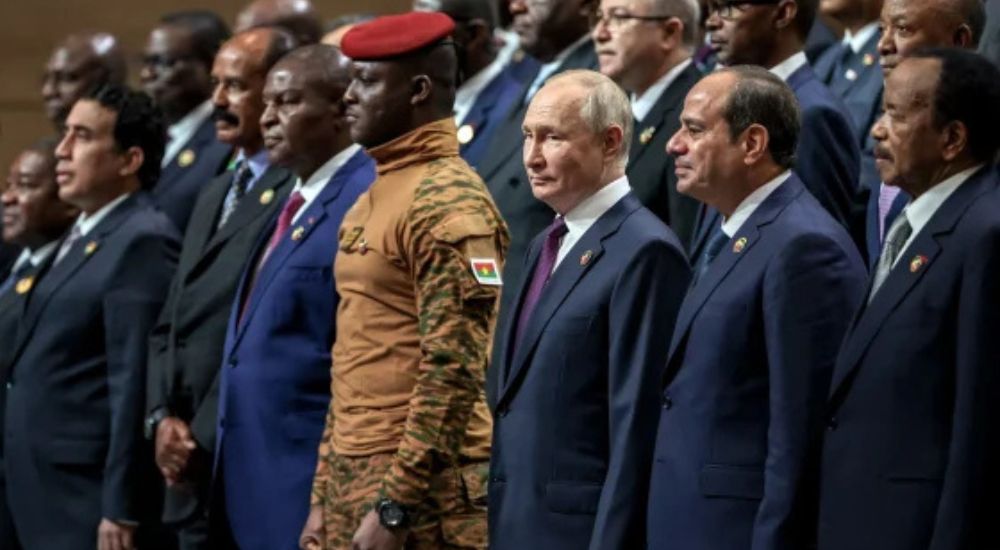
    The African continent is once again at the centre of a geopolitical storm. From the Sahel to Nigeria, insecurity is spreading at an alarming speed, threatening fragile states and destabilising entire regions. While local dynamics and systemic weaknesses play a role, Russia’s involvement raises troubling questions about its motives and the consequences for Africa and beyond.

    Nigeria faces a growing terrorist threat that is no longer confined to its borders. The collapse of governance in several states of the Alliance of Sahelian Juntas (AES) has created fertile ground for extremist groups. These failed states have become incubators of insecurity, exporting violence into neighbouring countries. The challenge is no longer whether to support or oppose the junta, but how to deal with their failures and the regional consequences of their isolation.

    Russia’s actions in Africa reveal a clear pattern: its primary aim is not to stabilise the continent but to create a secondary frontline against the West. By fostering instability in Africa, Moscow seeks to divert European attention and resources away from Ukraine. The Kremlin’s involvement is less about partnership and more about exploiting chaos for strategic advantage.

    This raises a critical question: is Russia simply incapable of offering meaningful support, or is it deliberately spreading insecurity? The evidence suggests that Moscow benefits from turmoil in Africa, whether by design or by opportunism.

    Whatever happens in Africa has little direct impact on Russia. The continent is geographically distant, and Russia’s economic ties with African nations are minimal. In fact, Africa’s collapse could even benefit Moscow. African oil, gas, and mineral exports compete with Russia’s own. If insecurity disrupts African production, global prices rise—strengthening Russia’s export revenues.

    Europe, however, bears the brunt of Africa’s instability. Migratory pressure from conflict zones is already reshaping European politics. Far-right parties, often sympathetic to Russia, are gaining ground in countries like France and the UK. By exacerbating insecurity in Africa, Moscow indirectly fuels migration flows that influence European voters. This strategy weakens European unity and undermines support for Ukraine.

    From a Russian perspective, encouraging instability in Africa is a shrewd way to manipulate European politics. The more Africans flee insecurity and attempt to reach Europe, the greater the strain on European societies. This pressure amplifies populist narratives, strengthens far-right movements, and erodes mainstream political consensus. Since many far-right parties are pro-Russia, the Kremlin gains strategic leverage by destabilising Africa.

    Russia’s record in the Sahel is damning. It has done nothing to fight terrorism. Instead, it has encouraged juntas to isolate themselves from the international community, sever ties with African neighbours, and expel Western intelligence and military support. In exchange, the Sahel states received nothing of substance. Russian involvement has failed to improve security, governance, or economic conditions. On the contrary, the situation has worsened.

    It is difficult to determine whether Russia is acting with malicious intent or simply behaving irresponsibly. Either way, the outcome is the same: worsening insecurity. Moscow’s promises of support have proven empty. Its presence has deepened instability, leaving African populations more vulnerable than before.

    The hypothesis of a cynical will to facilitate insecurity cannot be dismissed. Russia appears to be the only clear winner of Africa’s suffering. By exploiting chaos, Moscow strengthens its geopolitical position, increases its export revenues, and undermines European resolve.

    The lesson is stark: Africa must never again rely on a self-proclaimed outside “saviour.” Russia’s involvement has shown that external powers may prioritise their own interests over African stability. The continent must instead build resilience through self-reliance and multilateral cooperation.

    African nations should pursue balanced partnerships that preserve freedom of action. By engaging with multiple partners—regional organisations, international institutions, and diverse allies—Africa can avoid dependency and secure more effective support. Only through collective action can African states confront terrorism, strengthen governance, and protect their sovereignty.

    Russia’s role in Africa is not about solidarity or development. It is about exploiting insecurity to advance its global strategy. By destabilising Africa, Moscow weakens Europe, strengthens far-right allies, and boosts its own economic position. Whether through negligence or deliberate manipulation, Russia has worsened Africa’s plight.

    The challenge for Africa is to recognise this reality and chart a new path. The continent must rely on itself, build multilateral frameworks, and reject the false promises of external saviours. Only then can Africa safeguard its future and prevent its suffering from being weaponised to serve foreign ambitions.

    -Amajama, a social commentator, writes from Abuja and can be reached via amajamaip@gmail.com

    OPINION: Russia’s Role In Widening Insecurity In Africa is first published on The Whistler Newspaper

  • 29-year-old Lady Murdered, Body Dumped In Abuja Canal

    29-year-old Lady Murdered, Body Dumped In Abuja Canal

    A 29-year-old Sociology graduate of the Kogi State University, Blessing Moshood, was m8rdered and her body dumped in a canal in Jikwoyi, Abuja.

    Speaking on Sunday, May 24, 2026, a sister of the deceased, Abigail Moshood, said Blessing left their home around 8pm on Thursday, after speaking with someone on the phone.

    Abigail said the deceased later called about an hour later, saying she would be returning home briefly to pick up her phone charger which she had forgotten said the family became worried after they did not hear from Blessing again and she failed to return home the following day.

    “We later heard people talking about the body of a woman discovered inside a canal, and someone described the type of hairstyle the deceased had on, which matched my sister’s,” she said.

    “My mother started crying, and we also learnt that policemen from the Jikwoyi Police Station had evacuated the corpse, which was found half-naked with only a top on, to a mortuary in Mararaba, Nasarawa State.

    Abigail said she later visited the Jikwoyi Police Station to inquire about the incident and was shown photographs of the deceased.

    FCT Police Command spokesperson, SP Josephine, confirmed the incident, adding that investigation into the case is ongoing.

  • Kwara attacks testament to leadership failure – Ladipo Johnson

    Kwara attacks testament to leadership failure – Ladipo Johnson

    A former National Publicity Secretary of the New Nigerian Peoples Party, NNPP, now a chieftain of the Nigerian Democratic Congress, NDC, Ladipo Johnson, has said that the recent assault on the Yashikira Emir’s Palace and the Yashikira Police Divisional Headquarters in Baruten LGA, Kwara State, is a reminder that the current administration has completely lost its grip on the country’s security.

    ‎Johnson, who spoke in a statement on Monday, described recent attacks in Kwara and Oyo states as evidence of a systemic security collapse, highlighting the abduction of over 30 pupils in Oyo and fatal incidents in Baruten LGA.

    The Lagos Central senatorial aspirant warned that insecurity is causing severe economic paralysis, with food prices at Oyingbo market in Lagos State rising about 150 percent and logistics costs increasing 30-40 percent due to supply chain disruptions.

    ‎”Early Monday morning, while citizens slept, gunmen operated with impunity, setting a royal palace ablaze and abducting ten innocent Nigerians. This comes barely 48 hours after a separate horrific attack in Ekiti Local Government Area of Kwara, where three worshippers were murdered and fifteen kidnapped during a church vigil.

    ‎“The blood of the innocent is crying out from the soil of Kwara, just as it did only last week in Oyo State when bandits once again reminded us that no one is safe.

    ‎“This government’s ineptitude has turned the average Nigerian citizen into a pawn in a deadly game of survival. We are witnessing a systemic collapse where even police stations—the very symbols of state protection—are no longer sacrosanct,” he said.

    ‎The NDC stalwart maintained that the escalating insecurity is not merely a tactical failure but a lack of political will.

    He said, ‎“Nigeria needs leaders who have the political will and understand the machinery of defence. Peter Obi, whose record of administrative prudence and insistence on accountability is legendary and H.E. Rabiu Musa Kwankwaso who does not need a briefing on how to secure a nation; having served as the Minister of Defense under President Obasanjo, overseeing a period of decisive military stability.

    “Both gentlemen of the NDC offer the political will and experience required to bring sanity back to our streets.”

    Kwara attacks testament to leadership failure – Ladipo Johnson

  • Domestic Assets Surge Push Nigeria’s Money Supply To N124.99tn

    Domestic Assets Surge Push Nigeria’s Money Supply To N124.99tn

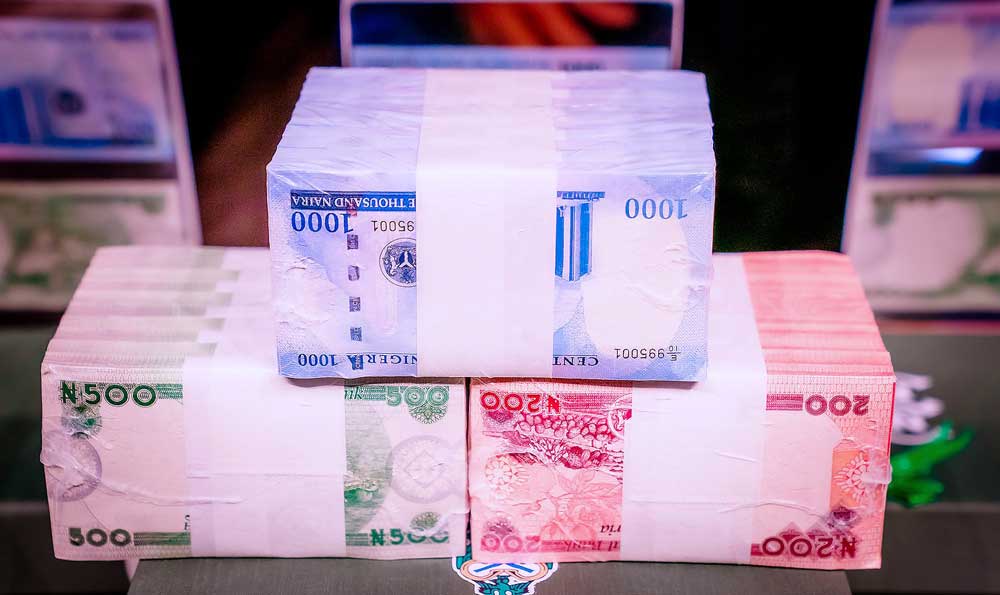
    Nigeria’s broad money supply (M3) rose to N124.99tn in April 2026, driven largely by a significant increase in domestic assets, underscoring continued liquidity expansion within the financial system despite a decline in the country’s net foreign asset position.

    Latest monetary statistics showed that broad money supply increased by N1.87tn from N123.12tn
    recorded in February 2026, reflecting sustained growth in liquidity available for spending, investment and lending across the economy.

    The data highlights the resilience of domestic liquidity conditions at a time when monetary authorities are pursuing a delicate balance between curbing inflationary pressures and supporting economic growth.

    Broad money supply, commonly referred to as M3, is a key measure of money circulating within an economy. It includes currency held by the public, demand deposits, savings and time deposits, as well as foreign currency-denominated deposits. Economists often monitor the indicator to assess liquidity trends, inflationary risks and the effectiveness of monetary policy.

    A breakdown of the figures revealed that Nigeria’s money supply has continued to expand on both a monthly and annual basis.

    On a year-on-year basis, M3 increased by N5.77tn, rising from N119.22tn in April 2025 to N124.99tn in April 2026.

    Similarly, narrow money supply (M2), which excludes certain longer-term financial assets but captures highly liquid monetary instruments, rose to N124.98tn in April from N123.11tn in February, further reflecting increased liquidity in the banking system.

    The growth in money supply was primarily supported by a sharp rise in net domestic assets, which climbed to N100.97tn in April 2026 from N97.55tn recorded two months earlier.

    The increase suggests stronger domestic credit creation and liquidity generation within the economy, offsetting pressures from external asset movements.

    In contrast, net foreign assets declined to N24.01tn in April from N25.57tn in February, indicating a weaker external asset position during the period.

    Analysts note that fluctuations in foreign assets often reflect changes in foreign exchange reserves, external capital flows and exchange rate dynamics.

    The contrasting movement between domestic and foreign assets suggests that liquidity growth in the Nigerian economy is increasingly being driven by domestic financial system activities rather than external asset accumulation.

    The latest monetary data comes amid cautious policy adjustments by the Central Bank of Nigeria (CBN), which has sought to maintain macroeconomic stability while fostering conditions for economic recovery and investment growth.

    At its 304th Monetary Policy Committee (MPC) meeting held in February 2026, the apex bank reduced the Monetary Policy Rate (MPR) by 50 basis points to 26.5 per cent from 27 per cent, marking a shift toward a more accommodative policy stance after an extended period of aggressive tightening aimed at combating inflation.

    The MPC, however, retained other key policy parameters, including the Cash Reserve Ratio (CRR) at 45 per cent for commercial banks and 16 per cent for merchant banks. The Liquidity Ratio was also maintained at 30 per cent, while the asymmetric corridor around the MPR remained unchanged at +50 and -450 basis points.

    Market analysts say the continued expansion in money supply will remain a key indicator for policymakers as they monitor inflation trends, exchange rate stability and economic growth prospects. While stronger liquidity can support credit expansion and business activity, excessive growth in money supply could also complicate efforts to rein in inflation if not matched by corresponding increases in productive output.

    With domestic assets continuing to strengthen, attention will remain focused on how monetary authorities manage liquidity conditions in the months ahead to sustain economic growth without undermining price stability.

    Domestic Assets Surge Push Nigeria’s Money Supply To N124.99tn is first published on The Whistler Newspaper

  • How 87 Degree Medical Aesthetic Clinic Is Redefining Medical Aesthetics in Lagos, Nigeria

    How 87 Degree Medical Aesthetic Clinic Is Redefining Medical Aesthetics in Lagos, Nigeria

    In recent years, Lagos has witnessed a remarkable shift in the beauty and wellness industry. What was once dominated by traditional spas and basic skincare routines has evolved into a growing demand for science-backed aesthetic treatments, personalized wellness experiences, and medically guided beauty solutions. As more Nigerians prioritize self-care, skin health, anti-aging solutions, and confidence-enhancing treatments, medical aesthetics is becoming one of the fastest-growing sectors in the country’s wellness economy.

    At the forefront of this transformation is 87 Degree Medical Aesthetic Clinic, a modern wellness destination that is redefining what medical aesthetics means in Lagos, Nigeria.

    The Rise of Medical Aesthetics in Nigeria

    Medical aesthetics is no longer viewed as a luxury reserved for celebrities or the ultra-wealthy. Across Lagos, professionals, entrepreneurs, creatives, and wellness-conscious individuals are increasingly embracing treatments that improve not only appearance but also overall confidence and well-being.

    This shift has fueled demand for treatments such as:

    • Advanced facials 
    • Botox and dermal fillers 
    • Laser skin treatments 
    • IV therapy 
    • Hair restoration 
    • Body contouring 
    • Skin rejuvenation procedures 

    However, as demand increases, clients are becoming more selective. Today’s consumers want more than temporary beauty fixes. They are searching for clinics that combine professionalism, safety, modern technology, and personalized care.

    This is where 87 Degree Medical Aesthetic Clinic has distinguished itself.

    A New Standard for Medical Aesthetics in Lagos

    Located in Lagos, 87 Degree Medical Aesthetic Clinic has built its reputation around a holistic approach to beauty and wellness. Rather than offering isolated treatments, the clinic focuses on integrating aesthetics, wellness, relaxation, and preventive care into one seamless experience.

    The clinic’s philosophy is simple: beauty should be approached scientifically, safely, and personally.

    From skin correction procedures to wellness therapies, every treatment plan is tailored to the individual needs of each client. This personalized approach has helped position 87 Degree as one of the emerging names shaping the future of medical aesthetics in Nigeria.

    Combining Wellness With Aesthetic Excellence

    One of the defining features of 87 Degree Medical Aesthetic Clinic is its ability to bridge the gap between traditional wellness services and advanced medical aesthetics.

    Clients can access a wide range of services, including:

    • IV hydration and wellness therapy 
    • Advanced facial treatments 
    • Laser procedures 
    • Botox and fillers 
    • Teeth whitening 
    • Spa treatments 
    • Grooming and self-care services 
    • Fitness and wellness support 

    This integrated model reflects a growing global trend where wellness and aesthetics are no longer treated separately. Instead, beauty is viewed as a combination of healthy skin, internal wellness, physical confidence, and lifestyle balance.

    For many Lagos residents dealing with the pressures of fast-paced urban living, this type of comprehensive wellness experience has become increasingly valuable.

    Personalized Treatments for Modern Clients

    One of the reasons many people struggle with skincare and aesthetic treatments is the lack of personalization. Generic product recommendations and one-size-fits-all procedures often fail to address individual concerns.

    At 87 Degree Medical Aesthetic Clinic, consultations are designed to understand each client’s goals, skin concerns, and lifestyle before treatments are recommended.

    Whether a client is dealing with:

    • Acne and breakouts 
    • Hyperpigmentation 
    • Uneven skin texture 
    • Signs of aging 
    • Fatigue and low energy 
    • Hair loss 
    • Stress-related skin conditions 

    the clinic develops customized treatment approaches aimed at achieving measurable, lasting results.

    This emphasis on personalization has become one of the major factors driving the clinic’s growing recognition within Lagos’ beauty and wellness industry.

    Professional Expertise and Client Trust

    In medical aesthetics, expertise and safety are critical. Treatments such as Botox, fillers, laser therapy, and advanced skincare procedures require trained professionals who understand both the medical and aesthetic aspects of treatment.

    87 Degree Medical Aesthetic Clinic places strong emphasis on professional care, treatment precision, and client education. The clinic’s approach prioritizes natural-looking results while maintaining high standards of safety and professionalism.

    As awareness around medical aesthetics grows in Nigeria, many consumers are becoming more cautious about where they receive treatments. Clinics that combine credibility, expertise, and modern treatment standards are increasingly earning the trust of informed clients.

    The Future of Medical Aesthetics in Lagos

    The medical aesthetics industry in Lagos continues to evolve rapidly. Increasing awareness of skincare, anti-aging treatments, wellness therapy, and preventive beauty solutions is creating new opportunities for clinics that can deliver premium, results-driven experiences.

    87 Degree Medical Aesthetic Clinic represents this new generation of wellness-focused aesthetic centers: modern, client-centered, and grounded in professional care.

    As Lagos continues to establish itself as a leading hub for beauty, wellness, and lifestyle innovation in Africa, medical aesthetic clinics are expected to play an even greater role in helping individuals look better, feel more confident, and prioritize long-term wellness.

    For many clients seeking advanced beauty and wellness solutions in Lagos, 87 Degree Medical Aesthetic Clinic is becoming more than just a clinic, it is becoming a destination for transformation, confidence, and modern self-care.

    Website – https://eightysevendegree.com

    Email Address – 87degreeaesthetics@gmail.com

    T. + 2349167924432 T. +2342018891712

    No 8, Goshen Estate Road, Opposite UPDC Estate Lekki, Lagos , Nigeria

    How 87 Degree Medical Aesthetic Clinic Is Redefining Medical Aesthetics in Lagos, Nigeria