Speaking on the Kogi West senatorial primary, the group maintained that Ustaz Ola secured the highest number of
The post Kogi West: Declare Ustaz Ola winner of senatorial primary, APC group urges NWC appeared first on Tribune Online.

Speaking on the Kogi West senatorial primary, the group maintained that Ustaz Ola secured the highest number of
The post Kogi West: Declare Ustaz Ola winner of senatorial primary, APC group urges NWC appeared first on Tribune Online.

The average retail price of household kerosene has risen sharply across Nigeria, with residents of Sokoto, Lagos and Kebbi now paying close to N4,000 per litre, according to the latest figures released by the National Bureau of Statistics (NBS). Kerosene was once one of the most commonly used cooking fuels in Nigeria before many households […]
The post Kerosene price nears N4,000 per litre in Nigeria appeared first on Tribune Online.

A coalition of civil society organisations has urged the African Development Bank Group to invest in agroecological and climate resilient farming approaches rather than financing industrial livestock models that drive land conversion and degrades the ecosystem
They called for the prioritization of support for small holder farmers, pastoralists, women producers and indigenous and local communities.
The call comes as leaders gather in the Republic of Congo for the 2026 African Development Bank Annual Meetings.
The organisations under the Stop Financing Factory Farming Coalition, in a statement made available to newsmen on Thursday, harped on the need for greater transparency and accountability on finances shaping the food systems across Africa,
stressing that decisions reached at the meeting would shape African agriculture, land use and economies for decades.DAILY POST reports that AFDB’s flagship Feed Africa Strategy estimated that transforming African agriculture would require between US$315 billion and US$400 billion in investment over ten years. The Bank has committed US$24 billion to catalyze additional public and private investment through large scale value chain development, agro-industrialization and blended-finance mechanisms.
However, the coalition warned that without stronger safeguards, transparency and participation from affected communities, the financing could reinforce unsustainable and extractive food system models that would strain land, water, biodiversity, and rural livelihoods across the continent.
The statement reads, “As leaders gather in Brazzaville for the African Development Bank Annual Meetings 2026, civil society organizations under the Stop Financing Factory Farming coalition are calling for greater transparency and accountability around how development finance is shaping the future of food systems across Africa.
“The urgency is growing as Africa simultaneously faces escalating climate shocks, water stress, debt pressures, biodiversity decline, and food insecurity. As development finance institutions deepen their engagement in agriculture, transparency and accountability are essential. The question is not only how much finance is mobilised, but what kind of food systems that finance is designed to support.
“Civil society organisations are calling on the African Development Bank Group to: stop financing industrial livestock production models that contribute to environmentally destructive land conversion, unsustainable water use, and ecosystem degradation; prioritise support for smallholder farmers, pastoralists, women producers, and Indigenous and local communities.
“Invest in agroecological and climate-resilient farming approaches; improve transparency and accountability around agricultural lending portfolios and value chain investments.
“Agricultural finance must therefore be designed to scale food systems that strengthen food sovereignty, climate resilience, biodiversity, and community wellbeing while supporting locally rooted and sustainable food systems.”
According to Opeyemi Elujulo, the Campaign Coordinator of Stop Financing Factory Farming Coalition, the organisations are advocating for financing approaches that support equitable, climate resilient and community led food systems.
He maintained that the decision made will influence whether Africa’s food future is centred on resilient local food systems, biodiversity protection, sustainable water use, and community wellbeing, or increasingly concentrated industrial models that deepen environmental and economic vulnerabilities.
Civil society coalition calls for community-led agriculture, warns against factory farming

She said the plans are designed for users who want more functionality, particularly creators….
The post Meta launches paid subscriptions for Facebook, Instagram, WhatsApp appeared first on Tribune Online.

The Iyaloja-General of Nigeria, Folashade Tinubu-Ojo, has rejected the outcome of some of the recently concluded All Progressives Congress (APC) primaries in Lagos State, warning that aggrieved party members may stage protests if the disputed results are not reviewed.
Tinubu-Ojo made the remarks during a stakeholders’ meeting held in Alausa, Ikeja, where she openly criticised what she described as alleged manipulation of the primaries in favour of the Justice Forum faction within the party.
She specifically questioned the results announced for Mushin Federal Constituency 02, Agege Constituency 2, and Ojokoro constituencies, insisting that the actual winners of the primaries should be officially recognised by the party leadership.
According to her, Hon. Seye Oladejo, Mutiu Olaide Oladeebo, and Olotu Ojo genuinely emerged victorious in their respective contests and should not be replaced by other candidates.
Tinubu-Ojo warned that attempts to alter the outcome of the primaries could further deepen tensions within the Lagos APC ahead of future elections.
She also alleged that members loyal to the Mandate Group were increasingly being sidelined as politicians allegedly rushed to align themselves with the Justice Forum due to speculations surrounding the 2027 governorship race and the growing political influence of Deputy Governor Obafemi Hamzat.
The Iyaloja-General called on the APC leadership to urgently intervene and investigate complaints arising from the primary elections to prevent a major internal crisis within the party.
She maintained that market women and traders across Lagos remain loyal supporters of the APC, but urged the party to give traders greater political inclusion and recognition in its structure and decision-making process.
Political observers believe the growing disagreements over the Lagos APC primaries may further intensify internal party rivalries ahead of the next general election cycle.

Against widespread allegations of imposition of candidates in the primary elections of the Adamawa State chapter of the All Progressives Congress (APC), Governor Ahmadu Fintiri has warned members against anti-party activities.
Fintiri spoke on Thursday, barely a week after the primary elections for governorship, senatorial, House of Representatives and state House of Assembly slots, in which leaders of the party were widely perceived to have imposed their preferred aspirants, causing disenchantment among those who felt unfairly treated.
The disenchantment is already being seen as the kind that contributed to anti-party activities, which played a significant role in the party’s loss in the governorship elections in the state in 2019 and 2023.
Receiving Adamawa APC executives on a Sallah homage at the Government House in Yola on Thursday, Governor Fintiri appealed to party members to remain united and committed to strengthening the APC to secure victory in all elective positions during the 2027 elections.
He said the party members who emerged as candidates after last week’s primaries were chosen by the will of God and expressed confidence that they would defeat candidates of other parties in the coming general elections.
Assuring party members that his administration would continue to promote unity and political stability across Adamawa State, and reaffirming his commitment to ensuring that all APC candidates emerge victorious in the coming elections, the governor reiterated the need for all party members to work for, and not against, the party.
The state chairman of the APC, Alhaji Hamza Madagali, who led his executive committee on their Eid al-Kabir visit to Fintiri, thanked the governor for his role in the conduct of the party’s primaries.
Gov Fintiri warns APC members against anti-party activities amid primary election disputes

Industry leaders and procurement experts have warned that unmanaged procurement transactions and weak digital visibility are increasing fraud exposure, compliance breaches, and operational inefficiencies across many African organisations.
The experts raised the concerns during the Digital Procurement Africa Summit held in Lagos, where procurement professionals, supply chain executives, and business leaders examined strategies for accelerating digital transformation within procurement operations.
Speaking at the summit themed, “Accelerating Procurement Transformation for Large Enterprise in the Digital Era,” the Chief Executive Officer of Gloopro, Olumide Olusanya, said many organisations across Africa were still struggling with poor procurement digitisation despite growing global interest in Artificial Intelligence-driven procurement systems.
According to him, fragmented procurement records, weak data accessibility, and outdated procurement processes remain major barriers preventing organisations from fully leveraging artificial intelligence, automation, predictive analytics, and compliance monitoring technologies.
“AI depends on data. Organisations must first digitise procurement activities before artificial intelligence can deliver meaningful value within procurement operations,” Olusanya stated.
He explained that several procurement activities still occur outside structured digital platforms, thereby limiting transparency, weakening governance systems, and making AI deployment ineffective or potentially risky.
Olusanya noted that organisations embracing digital procurement systems were already recording significant operational gains, including about 67 per cent reduction in procurement turnaround time.
He added that technology-driven procurement platforms also improve transaction visibility, supplier coordination, approval workflows, and compliance oversight across departments.
According to him, procurement-as-a-service models are increasingly helping organisations reduce operational costs while improving efficiency through externally managed digital procurement platforms.
Olusanya urged organisations across Africa to prioritise procurement digitisation as part of broader governance and operational reform efforts aimed at improving accountability and transparency.
Also speaking, Indirect Procurement Manager, Supplier Chain at The Coca-Cola Company, Adenrele Thompson warned that organisations delaying procurement digitisation could face growing operational and governance challenges in increasingly technology-driven business environments.
“If you are not digital, it is only a matter of time. The consequences are inevitable,” Thompson said.
He stressed that repeated bypassing of approved procurement systems weakens compliance culture and creates governance gaps capable of undermining institutional accountability.
Thompson further highlighted the growing risks associated with unmanaged tail spend, explaining that frequent low-value purchases often escape adequate scrutiny because individual transactions appear financially insignificant.
According to him, such practices gradually normalise weak procurement behaviour, expose organisations to control failures, and reduce operational discipline over time.
Also contributing, Chukwuma Nkwodinmah, Supply Chain Leader at Aradel Holdings, warned that repeated emergency purchases outside approved procurement channels often create parallel procurement structures lacking proper oversight and accountability.
He explained that unmanaged procurement systems increase exposure to fraud risks, regulatory violations, reputational damage, and operational inefficiencies.
“Once executives begin to see procurement leakage as governance failure rather than operational inefficiency, organisations will pay greater attention to controlling unmanaged spending,” Nkwodinmah stated.
The experts collectively called on organisations to strengthen procurement governance structures, improve digital visibility, and invest in structured procurement data systems to enhance compliance, reduce leakages, and position their operations for effective AI adoption.
Procurement Leakage Increasing Fraud, Compliance Risks — Experts is first published on The Whistler Newspaper

The 15th and 16th Emirs of Kano, respectively, Aminu Ado Bayero and Muhammadu Sanusi II, have responded to directives from the Kano State Police Command asking them to stop their planned durbar, Hawan Daushe, and Hawan Nassarawa processions, respectively.
Earlier, both Bayero and Sanusi had announced plans to hold separate Sallah durbar celebrations during the Eid festivities.
The Kano State Police Command, in what it described as proactive measures, issued a directive prohibiting the planned parallel durbar.
Announcing the suspension on behalf of Emir Bayero, Sarkin Dawaki Babba, Alhaji Aminu Babba Dan’agundi, said the decision was taken in compliance with police directives issued to ensure peace and stability in Kano.
He stated that they are law-abiding citizens and would fully comply with the orders of the security agencies in the interest of maintaining peace in the state.
Similarly, speaking on behalf of Emir Sanusi, Matawallen Kano, Alhaji Aliyu Ibrahim said the emirate council received security reports indicating that some individuals were planning to use the durbar celebrations to disrupt public peace and create chaos in Kano.
According to him, the decision to suspend the activities was taken to avoid any breakdown of law and order and to preserve the peaceful atmosphere in the state during the Eid celebrations.
The suspension of the traditional durbar activities comes amid a police statement urging the two emirs to prioritise peace and stability and suspend their planned traditional processions.
Kano emirs suspend durbar processions following police directive over security concerns
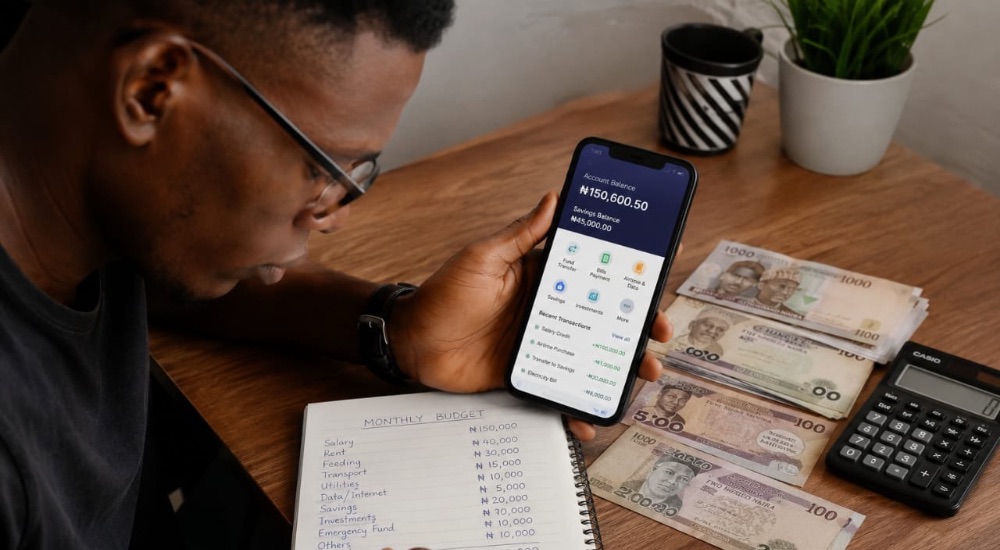
For millions of Nigerians, the phrase “build wealth” often sounds unrealistic. With rising food prices, expensive transportation, unstable electricity, school fees, rent increases, and a weakening naira, many workers believe wealth creation is reserved for high-income earners, politicians, or successful business owners.
But financial experts say wealth is not always determined by how much a person earns. More often, it is shaped by habits, discipline, long-term planning, and the ability to make smart financial decisions consistently over time.
Across Nigeria today, many civil servants, junior bankers, teachers, freelancers, artisans, and small business owners are trying to survive on salaries that barely last through the month. Yet some individuals earning modest incomes still manage to save, invest, and gradually improve their financial position.
Building wealth on a small salary may be difficult, but it is not impossible.
One of the biggest misconceptions about money is that a high salary automatically means financial success. In reality, many high-income earners live from paycheck to paycheck because of poor financial habits and excessive spending.
Wealth is not simply about earning money; it is about keeping, growing, and protecting money over time.
A person earning N150,000 monthly who saves consistently, avoids debt, and invests wisely may become financially stable faster than someone earning N1m monthly but spending recklessly.
The first step towards wealth creation is therefore changing one’s mindset.
Rather than focusing only on increasing income, financial discipline must become a priority.
Many Nigerians do not operate a budget. Salaries come in and disappear within days because spending is often emotional rather than planned.
A budget helps individuals understand where their money is going and identify unnecessary expenses.
Financial advisers recommend dividing income into key categories such as feeding, transportation, rent, utility bills, savings, investments and emergency funds
Tracking expenses for even one month can reveal surprising spending habits.
Frequent online shopping, daily food deliveries, excessive data subscriptions, impulse purchases, betting, and regular social outings may appear small individually but can consume a large portion of income over time.
The goal of budgeting is not to make life miserable but to ensure spending aligns with financial priorities.
One of the most effective financial habits is paying yourself first. Many people save whatever remains after spending. Unfortunately, little or nothing is usually left. Instead, savings should be treated like a compulsory monthly bill.
Even if the amount is small, consistency matters more than size. Someone saving N10,000 monthly may feel insignificant initially, but over five years, excluding interest or returns, that amounts to N600,000.
Automated savings platforms and cooperative societies have also become increasingly popular in Nigeria because they reduce the temptation to spend impulsively.
Emergency savings are particularly important in Nigeria’s unpredictable economy. Medical emergencies, sudden rent increases, job losses, or family obligations can easily throw people into debt when there is no financial cushion.
Experts often advise keeping at least three to six months of living expenses as emergency funds.
One major reason many workers remain financially stagnant is lifestyle inflation. As salaries increase slightly, spending rises immediately. A new phone, expensive clothes, luxury apartments, frequent dining out, and social pressure often consume income that could have been invested.
Social media has worsened this problem. Many Nigerians now feel pressured to maintain appearances online even when financially struggling offline.
Building wealth sometimes requires delayed gratification. Not every salary increase should translate into a more expensive lifestyle.
Living below one’s means remains one of the strongest foundations of wealth creation.
In today’s Nigeria, relying on one source of income can be risky.
Inflation continues to reduce purchasing power, while job security has become increasingly uncertain.
This is why many financially stable individuals build additional income streams.
A secondary source of income does not necessarily require huge capital. Many Nigerians now earn extra money through freelancing, graphic design, writing, photography, fashion design, catering, hairdressing, mini importation, digital marketing, online tutoring, farming, POS business, and social media management
Some people also monetise skills through platforms like YouTube, TikTok, or online marketplaces.
The objective is not to overwork endlessly but to gradually increase income capacity.
In many cases, small side businesses eventually grow into major income sources.
Saving money alone is not enough because inflation gradually reduces the value of cash. Investment allows money to grow over time.
Contrary to popular belief, investing is not reserved for wealthy people.
Today, Nigerians can start investing with relatively small amounts through treasury bills, mutual funds, fixed-income products, cooperative investments, agricultural investments, stocks and real estate cooperatives
Young workers who begin investing early often benefit from long-term growth and compounding returns.
However, financial experts warn Nigerians to be careful of fraudulent investment schemes promising unrealistic profits.
Over the years, thousands of people have lost money to Ponzi schemes disguised as investment opportunities.
If an investment promises extremely high returns with little or no risk, caution is necessary.
Understanding where money is being invested is critical.
Not all debt is harmful, but uncontrolled debt can destroy financial progress. Many salary earners now depend heavily on loans, salary advances, and “buy now, pay later” platforms just to survive monthly expenses.
Repeated borrowing creates a cycle where future income is already spent before it arrives.
Credit card misuse, betting debts, unnecessary car loans, and excessive consumer loans often leave workers trapped financially.
Where possible, individuals should prioritise paying off high-interest debts quickly. Borrowing for productive reasons, such as business expansion or education, may provide long-term value. However, borrowing mainly for consumption can become dangerous.
One of the most profitable investments is self-development. Increasing skills often increases earning potential.
The job market is changing rapidly, and many traditional jobs are being disrupted by technology and automation.
Workers who continuously learn new skills place themselves in stronger financial positions.
Digital skills, communication, project management, data analysis, software development, artificial intelligence tools, and financial literacy are becoming increasingly valuable.
Fortunately, many free or affordable online learning platforms now exist. Learning should not stop after graduation.
In many cases, a new skill can create opportunities for promotion, better jobs, or side income.
Wealth building is usually slow. Many people abandon financial plans because they expect quick results. But genuine financial growth often takes years of consistency.
Small savings, careful investments, modest living, and disciplined spending may not appear impressive immediately, but over time they can create stability and financial freedom.
The biggest danger is comparison.Comparing oneself constantly to friends, colleagues, or social media influencers can lead to frustration and reckless financial decisions.
Every financial journey is different.
One common mistake people make is waiting for the “perfect time” before starting.
Some believe they need a higher salary first. Others think investing can only begin with large sums.
But wealth creation often begins with small steps. A modest salary does not automatically prevent financial progress. Poor financial habits are usually the bigger obstacle.
Even in Nigeria’s challenging economy, disciplined individuals can still improve their financial future gradually.
The process may not be fast, but consistency can produce powerful results over time.
Ultimately, building wealth is less about earning huge amounts instantly and more about making wise decisions repeatedly.
For many Nigerians, financial freedom may begin not with millions of naira, but with one disciplined financial habit started today.
How To Build Wealth On A Small Income is first published on The Whistler Newspaper

A former Speaker of the Delta State House of Assembly, Victor Ochei, Esq., have resigned his membership of the All Progressives Congress, APC.
Ochei announced his resignation in a letter to the leadership of the APC.
The former lawmaker did not disclose if he is going to join any other political party as the 2027 general election draws near.
In the resignation letter, Ochei stressed that he worked tirelessly for the APC long before many who currently occupy positions within the party.
The letter read, “My dear political associates, supporters, friends, and the good people of Delta State.
“After deep reflections and wide consultations, I have taken the difficult but necessary decision to formally resign my membership of the All Progressives Congress (APC) and move on to continue my political journey elsewhere.
“In 2016, I joined the All Progressives Congress with sincerity of purpose and a strong belief in the vision and future of the party.
“Over the last ten years, I devoted myself wholeheartedly to building and strengthening the APC at all levels. Together with many committed party faithfuls, we expanded the party’s reach, deepened its structures, mobilized support across communities, and worked tirelessly to give the party relevance and visibility within our political environment.
“Long before many who currently occupy positions within the party joined the political family they now belong to, I had already committed myself to the ideals of leadership, service, grassroots development, and the pursuit of a better society for our people.
“I leave the party proud of the progress we made together. We nurtured relationships, built bridges across divides, encouraged participation among the youth and women, and contributed meaningfully to democratic growth and political engagement within our state and beyond.
“However, growth remains a constant necessity in every institution, political movement and human endeavour. Leadership must continually evolve to reflect inclusion, mutual respect, fairness, and the aspirations of the people. It is in recognition of this need for broader growth and the continuation of my political convictions that I have chosen to chart a new course.”
Ochei said his resignation from the APC is not borne out of “bitterness, resentment or hostility towards anyone”.
“Rather, it is inspired by my enduring commitment to service, progress, and the political future I envision for our people.
“I remain grateful to the many loyal supporters, leaders, stakeholders, and party members who stood with me throughout this journey. Your friendship, trust, and dedication will always be appreciated and remembered.
“As I move forward to continue my political journey from the APC, I do so with hope, renewed determination, and faith in the future. I urge all my supporters and associates to remain peaceful, focused, and committed to the democratic ideals we all share,” the letter concluded.