
The Kano State Government has announced that Nigeria’s First Lady, Oluremi Tinubu, is expected to officially launch the North-West zonal deployment….
Author: Tribune Online
-
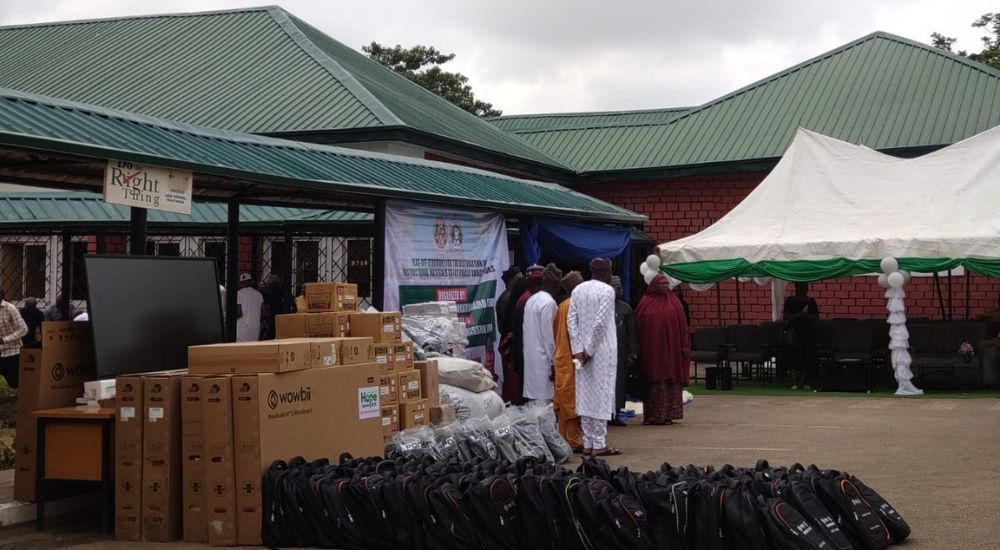
UBEC Returns 700,000 Children To School, Distributes Learning Materials
The Universal Basic Education Commission has disclosed that it has returned 700,000 out-of-school children to classrooms nationwide and distributed 15 million learning support kits to pupils.
The Executive Secretary Dr. Aisha Garba who was speaking during the flag-off ceremony for the distribution of around 140,000 instructional materials to FCT public basic schools on Thursday in Abuja, described the FCT intervention was “a continuation of these nationwide efforts” to ensure every child has access to quality education.
“The FCT SUBEB has received allocations that include core subject textbooks, teacher resource packs, and digital learning aids designed to strengthen teaching and learning outcomes.
“These items, which are around 140,000 in number, are expected to impact no fewer than 10,000 pupils in the FCT. This is indeed a milestone worth celebrating,” she said.Garba said UBEC has advanced inclusive education initiatives through partnerships with all 37 SUBEBs and the FCT, focusing on infrastructure, teacher development, structured pedagogy, teaching aids, and digital learning tools.
She said UBEC, in collaboration with states, recently distributed 100,000 instructional materials and school records to Integrated Quranic and Tsangaya Education centres nationwide, strengthening non-formal education and addressing Nigeria’s out-of-school children challenge.
“Beyond core textbooks, the Commission has distributed smart boards, tablets, desktop computers, and over 400,000 library materials, benefiting hundreds of schoolchildren across the country.
“Recently, 15 million learning support kits were distributed across the country to support wholesome learning among our children,” Garba added.
She described the instructional materials as “tools of empowerment—resources that will enable our teachers to teach more effectively and our pupils to learn more meaningfully.”
Garba commended the leadership of FCT SUBEB for the “timely flag-off” and said she remained optimistic that the materials would reach end users as soon as possible.
She urged the FCT Administration to replicate the initiative through its annual statutory budget, “especially in terms of the timely release of counterpart funding for UBE projects, so that together, we can strengthen the quality of our basic education as well as minimize the incidence of out-of-school children in the FCT and indeed in Nigeria over time.”
Garba said the Nigerian child “remains at the heart of the Renewed Hope Agenda of the President and indeed the Minister and Minister of State for Education.”
“Our combined resolve to place Nigerian children at par with their counterparts across the globe remains unshaken,” she said.
Also speaking, the Minister of the Federal Capital Territory, Nyesom Wike said he had approved the renovation of 108 schools across the capital territory with the mandate of President Bola Tinubu renewed hope agenda.
Represented by the Education mandate secretary, Dr Danlami Hajo disclosed that FCT has always been regular with the payment of marching grant of UBEC.
UBEC Returns 700,000 Children To School, Distributes Learning Materials is first published on The Whistler Newspaper
-

PDP ALGON condemns APC LG officials’ protest in Osun
Chairmen and councillors elected under the Peoples Democratic Party (PDP) in Osun State have condemned a protest staged by
-

NDLEA, police partner to fight drug abuse, trafficking in Ogun
The State Commander, National Drug Law Enforcement Agency, NDLEA, Ogun State Command, CN Tijjani Rabe, has emphasised the significance of robust cooperation between security agencies in the fight against drug abuse and trafficking.
Rabe opined that combating drug-related crimes and improving public safety require effective cooperation.
He stated this while hosting the Commissioner of Police, Ogun State Police Command, CP Bode Ojajuni, on a familiarization visit to the Command Headquarters on Thursday.
Speaking earlier, CP Ojajuni, disclosed that the visit was aimed at familiarizing with the Command and to reaffirm his commitment to sustained collaboration in tackling drug abuse and illicit trafficking across Ogun State.
Responding, the NDLEA boss expressed appreciation to the Commissioner for the visit and engaged him on practical steps to strengthen coordination, improve intelligence sharing, and sustain joint enforcement operations.
Rabe stressed that drug trafficking and abuse continue to drive violent crime and require a unified, intelligence-led response.
The Commander of Narcotics marked the visit by presenting a symbolic memento to the Commissioner and decorated him as a War Against Drug Abuse (WADA) Ambassador.
NDLEA, police partner to fight drug abuse, trafficking in Ogun
-
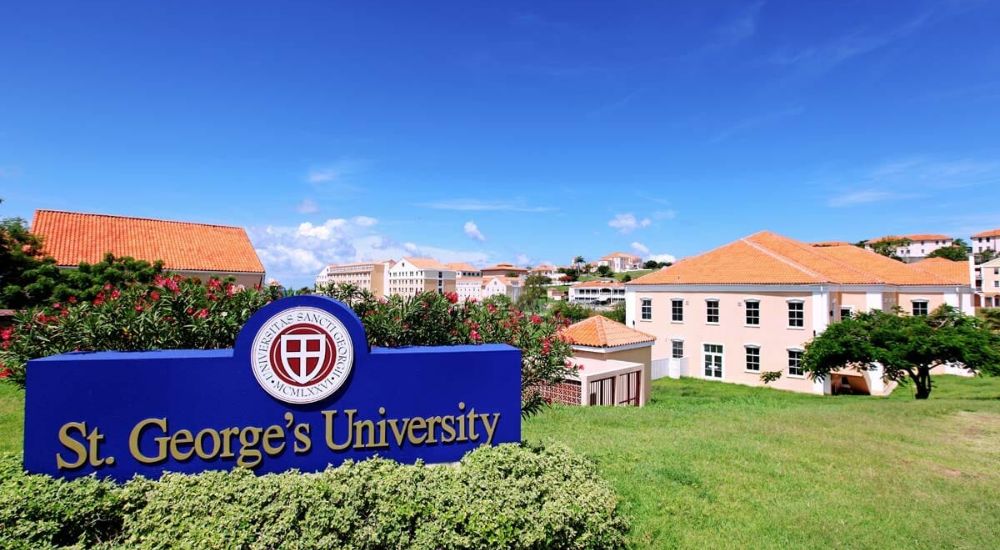
Over 800 Foreign-Trained Doctors Enter US Residency Programme
More than 800 doctors trained at St. George’s University in Grenada will begin residency programmes across the United States , securing placements in 23 specialties across 42 states and the District of Columbia, according to 2026 Match results.
The number keeps the Caribbean-based medical school as the single largest source of new residents in the US system for the 12th consecutive year, with roughly two-thirds headed into primary care and many to underserved communities.
The school in a statement noted that graduates will begin residency training in a wide range of specialties, including highly competitive fields such as surgery and neurology, as well as essential primary care disciplines like pediatrics, emergency medicine and family medicine.
“Match Day is a pivotal milestone at the start of a doctor’s career. On behalf of the entire SGU community, I congratulate this remarkable class of medical students on their success. We are proud to see them take the next step in their journey to serve patients and communities,” the President of St. George’s University and dean of the School of Medicine, Dr. Marios Loukas said.
It added that many will return to their home states and communities to begin their medical careers.
“Among them is Brigid Midwa, a Kenyan SGU graduate from the Class of 2025, who matched into Internal Medicine in New Jersey.
“Her achievement reflects the growing presence of globally trained medical graduates contributing to the US healthcare system,” the statement said.
Reflecting on her Match Day experience, Midwa said, “Matching into residency is a defining moment for me. SGU challenged me to grow across different healthcare settings, and that experience has prepared me to take this next step with confidence.
“I am eager to gain these specialised skills in the United States so that I can eventually bring this advanced medical expertise back to the healthcare system in Kenya.”
According to the school, approximately two-thirds of SGU School of Medicine graduates enter primary care specialties, and a significant number go on to practice in medically underserved areas.“St. George’s University graduates have been meeting the medical needs of communities across the United States for decades.
“We look forward to the meaningful impact this newest class of SGU-trained physicians will make in the years ahead,” Loukas said.Founded in 1976, St. George’s University is a center for academic excellence with students and faculty drawn from more than 150 countries.
The SGU School of Medicine is accredited by the Grenada Medical and Dental Council, which has been recognized by the World Federation for Medical Education.
The school offers a four-year Doctor of Medicine degree program, and students can also enter the MD program from many education systems worldwide via five-, six-, or seven-year tracks.
SGU has a network of more than 75 affiliated hospitals and health centers in the US and UK, with the option for students to begin their medical career in Grenada or the UK.
Over 800 Foreign-Trained Doctors Enter US Residency Programme is first published on The Whistler Newspaper
-

NNL: Sporting Lagos clinch return ticket to NPFL
Sporting Lagos have secured promotion to the Nigeria Premier Football League, NPFL, following a 1-0 victory over Osun United, DAILY POST reports.
Alex Leme scored the decisive goal in the 17th minute of the encounter which took place on Thursday.
Jeffrey Butler’s side are making a return to the NPFL after two years.
Sporting Lagos finished top of Conference B table with 36 points from 18 matches.
Akwa United finished in second position despite a 2-1 victory over Solution FC.
The Promise Keepers opened scoring through Aniebiet Sunday in the 50th minute.
Michael Okenwa doubled the advantage three minutes later.
Solution FC reduced the deficit towards the end of the game.
Inter Lagos and Doma United have previously secured promotions to the NPFL.
-
Over 20 Million Africans Face Food Insecurity, IMF Warns
The International Monetary Fund (IMF) has warned that more than 20 million people across sub-Saharan Africa could be pushed into moderate or severe food insecurity due to rising global prices.
The warning was contained in the Fund’s April 2026 Regional Economic Outlook titled “Hard-Won Gains Under Pressure,” which examined recent growth trends in the region and emerging risks from global commodity shocks and geopolitical tensions.
According to the report, while sub-Saharan Africa entered 2026 with relatively strong economic momentum, external pressures are now threatening those gains. Rising inflation risks, weakening trade conditions, and tightening financial markets were identified as key challenges facing the region.
The IMF noted that the region recorded its strongest growth in a decade in 2025, but momentum is expected to slow slightly in 2026 amid worsening global conditions. The data points to a region facing both short-term inflationary pressure and weakening external balances as global commodity prices rise and financial conditions tighten.
“Poverty, food insecurity, and other social indicators, already weakened by the pandemic, face renewed headwinds from declining foreign aid and rising food prices.”
“IMF staff estimates that a 20 per cent increase in international food prices can push more than 20 million people into moderate or severe food insecurity across the region.”
Regional growth was estimated at 4.5 per cent in 2025, the fastest in ten years, driven by stronger global conditions and improved domestic policy management in several large economies. Inflation eased toward the end of the year, supported by falling global food and oil prices, tighter monetary policy, and reduced exchange rate pressures across multiple countries.
Fiscal positions also improved during the period, helped by stronger economic activity and favourable currency movements in key markets.
However, growth is projected to slow to 4.3 per cent in 2026, while median inflation is expected to rise to 5.0 per cent, up from 3.4 per cent in 2025. The IMF warned that renewed inflationary pressures and slowing growth signal a reversal of some of the macroeconomic stability achieved in 2025.
The report noted that sub-Saharan Africa’s recent recovery was driven by improved policy decisions and supportive global conditions following years of economic shocks, including the COVID-19 pandemic and earlier commodity price volatility. Despite the recovery, performance remained uneven between oil-importing and resource-rich economies.
The IMF attributed emerging risks to escalating global tensions, particularly the ongoing conflict in the Middle East, which has disrupted trade routes and increased the cost of key commodities such as oil, gas, fertilisers, and shipping.
It also highlighted broader spillover effects, noting that trade relations with Gulf partners have weakened, while tourism and remittance inflows are expected to decline in several African economies due to global uncertainty. Rising risk aversion has also tightened access to international financing, limiting fiscal buffers in many countries.
Oil-importing economies are expected to face higher import costs, while oil exporters remain exposed to price volatility.
The IMF further warned that a prolonged global conflict could reduce regional output by 0.6 percentage points and increase inflation by 2.4 percentage points.
Meanwhile, the Fund recently cut Nigeria’s 2026 growth forecast by 0.3 percentage points to 4.1 per cent, citing mounting global and domestic pressures.
It stressed that the most immediate concern remains the social impact of rising food and energy prices, particularly on vulnerable populations, warning that a sharp increase in global food prices could significantly worsen food insecurity levels already elevated by past economic shocks.
Over 20 Million Africans Face Food Insecurity, IMF Warns is first published on The Whistler Newspaper
-

We will give priority to PWDs, elderly on election days – INEC
The Independent National Electoral Commission, INEC, in Ogun State has assured that Persons With Disabilities, PWDs, the elderly, and pregnant women will be given priority during the 2027 elections in the state.
The Resident Electoral Commissioner, REC, in Ogun State, Feyijimi Shaseyi, gave the assurance during a media parley held at the Secretariat of the Nigerian Union of Journalists, NUJ, Abeokuta, on Thursday.
Shaseyi stated that the Commission has put in place deliberate measures to ensure inclusivity and ease of participation for vulnerable groups, stressing that no eligible voter would be disenfranchised on account of physical condition or circumstance.
According to her, INEC has developed policies and operational frameworks to cater specifically to the needs of PWDs, adding that dedicated departments within the Commission have been tasked with overseeing the welfare and participation of vulnerable voters, to ensure that they are attended to promptly and with dignity.
She said, “The provisions include the provision of assistive materials such as Braille guides for visually impaired voters, as well as support systems for those with mobility challenges.
“On election day, nobody will be excluded. We have structures in place to ensure that persons living with disabilities, the elderly, and pregnant women are given priority at polling units.
“I want to encourage PWDs not to stay away from the electoral process due to fear or uncertainty. Adequate arrangements have been made to guarantee their comfort and safety at polling units across the state.”
Speaking earlier, the NUJ Chairman, Wale Olanrewaju, affirmed that journalists are not mere observers in the electoral process but active partners in promoting transparency, credibility, and public trust.
“As journalists, we do not only see ourselves as critical stakeholders, but also as partners in ensuring transparency, deepening credibility, and building public trust in our electoral system.
“The media has taken deliberate steps to actively engage political actors by providing platforms where they can openly discuss their ambitions and policies,” he stated.
We will give priority to PWDs, elderly on election days – INEC
-

Reps approve N248.6bn for Kano, Jos, Ikeja DisCos
House of Representatives Public Accounts Committee has resolved to approve financial relief measures and a 10-year debt restructuring framework for
-

Flutterwave convenes dialogue on Africa’s digital economy at IMF-World Bank spring meetings
Flutterwave, Africa’s leading payments technology company, hosted a private roundtable with Invest Africa on the Digital Economy Roundtable on April 14, 2026, on the sidelines of the IMF/World Bank Spring Meetings in Washington, D.C.
Moderated by Shannon Stround, Chief Executive Officer, US, Invest Africa, the session gathered a distinguished group of global investors, development finance institutions, policymakers, and technology leaders to evaluate the current state of investment in Africa’s digital economy and the infrastructure needed to scale it.
In attendance was Dr. Jumoke Oduwole, Nigeria’s Minister of Industry, Trade and Investment, who spoke on the positive investment landscape in Nigeria’s digital economy.
Other attendees include Haytham Elmaayergi, Executive Vice President of Global Trade at Afreximbank; Wale Adeosun, Founder & CEO of Kuramo Capital; Yvonne Ike, Managing Director and Head of Sub-Saharan Africa at Bank of America; Bolaji Balogun, CEO of Chapel Hill Denham; and Miguel Azevedo, Managing Director EMEA at Citibank.
Flutterwave was represented by members of its senior leadership team, who led focused discussions across three strategic pillars, including: scaling digital infrastructure across borders, fintech integration and regulatory harmonisation, and mobilising investment capital for Africa’s digital economy.
Bankole Falade, Flutterwave’s Chief Legal, Regulatory, and Public Policy Officer, opened with a remark about Building Africa’s Payments Superhighway,” tracing the company’s decade-long journey from connecting fragmented payment networks to operating as a full financial operating system for Africa’s digital economy.
“When Flutterwave started 10 years ago, the primary goal was to connect fragmented payment infrastructure across the continent. When businesses are able to make and receive payments, economies grow and businesses thrive,” Bankole said.
“What we’ve done is connect these disconnected islands with one API. As we look forward to the next 10 years, what we want to do is connect Africa to the rest of the world, and the world to Africa, with seamless payment solutions.”
Bridgit Antwi, Head, Strategy and Operations, anchored the conversation on mobilising investment capital to enable ecosystem consolidation, while expanding access to short-term liquidity solutions that support real-time transaction flows and working capital needs.
Bolanle Baruwa, Head, SME Business, contributed to the discussion on scaling digital infrastructure, advocating for the Payments Superhighway as a bridge for global capital deployment into Africa’s $1.5 trillion digital economy. She emphasized the importance of building systematic talent pipelines, shifting the narrative from basic digital training to creating sustainable employment that aligns with infrastructure growth.
Bankole Falade championed “Regulatory Passporting” to reduce cross-border entry costs and deepen continental integration for digital scale. Today, Flutterwave has built the robust financial infrastructure, regulatory frameworks, and bank-grade governance required to turn these strategic objectives into reality.
This reinforces a growing conviction that Africa remains one of the most compelling long-term investment opportunities globally, particularly across digital infrastructure, payments, fintech, and broader technology-enabled sectors.
Reform momentum is improving the investment climate, with macroeconomic adjustments, regulatory reforms, and policy modernisation in key markets creating stronger foundations for capital deployment. While individual market opportunities are significant, scaling across borders was identified as the key to unlocking the next level of growth. Deeper regional integration and interoperable systems will be essential for accessing larger addressable markets.
The roundtable was also attended by senior representatives from Afreximbank, Bank of America, British International Investment, Chapel Hill Denham, Citibank, Dalberg, the European Bank for Reconstruction and Development (EBRD), the Gates Foundation, Google, Helios Towers, Kuramo Capital, Premier Invest, and the Nigerian Exchange Group.
Others were the Nigerian Sovereign Investment Authority (NSIA), the U.S. International Development Finance Corporation (DFC), UBA, and the World Bank Group. It reflected a broader shift in investor sentiment: execution matters more now than narrative, with investors increasingly backing businesses and platforms capable of delivering at scale.
Flutterwave convenes dialogue on Africa’s digital economy at IMF-World Bank spring meetings