Author: The Whistler Newspaper

  • United Capital Expands Into East Africa, Secures Ethiopia, Rwanda Licences

    United Capital Expands Into East Africa, Secures Ethiopia, Rwanda Licences

    United Capital has expanded its pan-African footprint after securing investment banking licences in Ethiopia and Rwanda, strengthening its presence in East Africa’s emerging financial markets.

    With the approvals, the financial services group becomes the first foreign investment bank licensed to operate in Ethiopia, where it will provide services including financial advisory, securities brokerage, and portfolio management.

    The entry is expected to contribute to the development of Ethiopia’s evolving capital market ecosystem and broaden access to investment banking services in the country.

    In addition to Ethiopia, United Capital has also obtained regulatory approval from Rwanda’s Capital Market Authority to offer trust services, investment banking, and portfolio management. The dual approvals reinforce the group’s growing presence across East and Central Africa and align with its broader ambition to deepen intra-African financial integration.

    The licences allow the company to formally establish operations in both markets and participate in capital market activities aimed at mobilising investment, supporting enterprise growth, and enhancing the efficiency of capital allocation across strategic sectors.

    According to the Ethiopian Capital Market Authority, the approval followed a rigorous regulatory review process involving multiple government institutions and extensive due diligence across jurisdictions, reflecting increasing openness in the country’s financial sector reforms.

    The expansion comes shortly after the group’s successful regulatory entry into Rwanda, further positioning it as a key player in Africa’s rapidly developing financial services landscape. With the latest approvals, United Capital now operates across 12 African countries, spanning West, East, and Central Africa.

    Group Chief Executive Officer, Peter Ashade, described the development as a significant milestone in both the company’s growth journey and Africa’s broader capital market evolution. He noted that Ethiopia and Rwanda represent high-potential markets driven by ongoing economic reforms, strategic geographic positioning, and growing investor interest.

    He added that the expansion reflects not only corporate progress but also the strengthening of cross-border financial collaboration across the continent, highlighting the role of African-led institutions in mobilising capital for development.

    According to the company, the East African expansion aligns with its long-term strategy to build deeper, more integrated capital markets across Africa while leveraging its expertise in investment banking, asset management, and financial advisory services.

    Executive Director for Africa, Ejikeme Okoli, said the licences expand the group’s operational footprint and reinforce its commitment to supporting financial market development across emerging African economies. He added that the company brings decades of experience in financial services across the continent, which it intends to deploy in advancing market infrastructure and investment flows in East Africa.

    He further noted that the expansion reflects growing collaboration among African financial institutions and regulators, describing it as evidence of increasing confidence in pan-African financial service providers.
    United Capital said its entry into Ethiopia and Rwanda underscores its commitment to supporting governments, corporates, and investors through diversified financial solutions, while contributing to the development of integrated and efficient capital markets across Africa.

    The expansion also reflects a broader trend of African financial institutions increasingly seeking cross-border opportunities as regional markets continue to liberalise and deepen.

    United Capital Expands Into East Africa, Secures Ethiopia, Rwanda Licences is first published on The Whistler Newspaper

  • 2028 Olympic Qualifiers: Comoros wallop Sudan to set up Super Falcons showdown 

    2028 Olympic Qualifiers: Comoros wallop Sudan to set up Super Falcons showdown 

    Comoros have set up a date with African champions Super Falcons of Nigeria after a 30-0 aggregate victory over Sudan in the first round of the qualifiers for the 2028 Olympic Games.

    The Coelacanths won the first leg 17-0, and completed the rout with a 13-0 victory in the reverse fixture.

    Comoros, who produced a relentless attacking exhibition against the Sudanese, won the contest 30-0 on aggregate.

    They will, however, face a more difficult test against the Super Falcons, who are Africa’s most successful side in the next round.

    The Super Falcons will be the overwhelming favourites to win the contest and move to the next round.

    .

    Justine Madugu’s side defeated Senegal 3-0 in a friendly at the Remo Stars Stadium, Ikenne on Monday night.

    The West Africans claimed a 2-1  victory against the Terangha Lionesses in their first friendly last week.

    The second round qualifiers will be played between October 5-13, 2026.

    Two countries will represent Africa in the women’s football event of the 2028 Olympic Games to be staged in Los Angeles, USA.

    2028 Olympic Qualifiers: Comoros wallop Sudan to set up Super Falcons showdown 

  • Understanding Bank Charges And How To Reduce Them

    Understanding Bank Charges And How To Reduce Them

    For many Nigerian bank customers, the experience of checking an account statement is often accompanied by surprise. Not because of large withdrawals or unexpected spending, but due to a steady stream of small deductions that quietly reduce account balances over time.

    These charges, though individually modest, accumulate into significant amounts over weeks and months.

    In a country where millions of citizens are battling rising living costs, inflationary pressures, and stagnant wages, even minor banking fees can have a noticeable impact on household finances. What appears as a few naira here and there can eventually translate into thousands of naira lost annually.

    As Nigeria deepens its transition toward a cashless economy, more financial transactions are now conducted through electronic channels such as mobile apps, USSD codes, Point of Sale (POS) terminals, and instant bank transfers. While these innovations have improved convenience, they have also introduced a wider range of service charges that many users do not fully understand.

    A growing number of customers are beginning to question not only the frequency of deductions but also the clarity of how these charges are applied. Terms such as maintenance fees, transfer fees, SMS alerts, card usage charges, and interbank commissions often appear on statements without sufficient explanation to the average user.

    Financial experts note that this lack of understanding contributes to widespread frustration among bank customers, particularly those in low- and middle-income brackets who rely heavily on small daily transactions. For such users, repeated deductions can erode trust in the banking system and discourage digital financial inclusion.

    However, banking regulators, including the Central Bank of Nigeria (CBN), maintain that these charges are part of the operational structure required to sustain financial services, maintain infrastructure, and support the growing volume of digital transactions across the country. The challenge, they argue, lies in ensuring transparency and encouraging financial literacy among customers.

    Beyond the confusion surrounding deductions, bank charges remain a necessary component of modern financial systems. They help banks manage transaction processing costs, maintain digital platforms, and comply with regulatory requirements. Still, for the average customer, understanding how these fees work is the first step toward reducing their impact.

    Why Banks Charge Fees

    Banks are financial intermediaries that provide services such as money transfers, account maintenance, ATM access, digital banking platforms, and payment processing. Each of these services comes with operational costs. Charges are therefore applied to sustain infrastructure, comply with regulations, and ensure service delivery.

    In Nigeria, many of these charges are also influenced by policies from the Central Bank of Nigeria (CBN), which sets limits on certain fees while allowing banks to recover costs on transactions and account maintenance.

    However, customers often argue that the frequency and accumulation of deductions can feel excessive, especially in low-income segments where small charges have a larger financial impact.

    The most common deductions from bank accounts include:

    Account Maintenance Fees

    Most current accounts attract monthly or quarterly maintenance charges, depending on the bank and account type.

    Transfer Charges (Intra and Interbank)

    Customers are charged for transferring funds, with interbank transfers typically costing more than transfers within the same bank.

    SMS Alert Charges

    Banks charge monthly fees for transaction notifications sent via SMS, usually deducted automatically.

    ATM Withdrawal Charges

    While a limited number of free withdrawals may be allowed per month, additional withdrawals—especially from other banks—attract fees.

    Card Maintenance Fees

    Debit cards often carry annual maintenance charges or replacement fees when lost or expired.

    USSD and Mobile Banking Fees

    Transactions carried out via USSD codes or mobile apps may attract service charges depending on the bank and network provider.

    Hidden Costs Customers Often Overlook

    Beyond visible deductions, customers sometimes incur indirect costs such as data usage for mobile banking, failed transaction reversals delayed over time, and charges from third-party payment platforms.

    Another common issue is duplicate or unclear deductions, which may arise from failed transactions that are not reversed immediately or from multiple attempts to complete a transfer.

    Several factors contribute to the perception of rising bank charges in Nigeria. Some of them are increased reliance on digital banking platforms, higher transaction volumes due to cashless policy adoption, inflationary pressures affecting operational costs, and expansion of financial services such as instant transfers and agency banking

    As more Nigerians adopt electronic payment channels, even small fees per transaction accumulate rapidly.

    How To Reduce Bank Charges

    While bank fees cannot be completely eliminated, customers can significantly reduce them by understanding how they work and adopting smarter financial habits. The key is to first know what each strategy means, then apply it in practical everyday situations.

    Use Intra-Bank Transfers Where Possible

    Intra-bank transfers refer to sending money between accounts within the same bank. These transactions are usually cheaper because they do not require switching between different banking networks, which often attract higher processing fees.

    For example, if you bank with First Bank and you send money to another First Bank customer, the charge is usually lower than sending money to someone with an Access Bank or GTBank account. In some cases, intra-bank transfers may even be free depending on the account type or promotional policies.

    Limit ATM Withdrawals

    ATM withdrawals attract charges after you exceed your bank’s free monthly withdrawal limit. The more frequently you withdraw small amounts, the more likely you are to incur repeated fees. Reducing the number of withdrawals helps you avoid these cumulative charges.

    For example, instead of withdrawing N5,000 five different times in a week, you can withdraw N25,000 or N50,000 once to cover your needs. This reduces the number of chargeable transactions.

    Switch To App-Based Banking

    Mobile banking apps are often more cost-efficient than USSD codes or ATM transactions. Banks tend to encourage app usage by offering lower fees, faster processing, and better transaction tracking.

    For example, transferring money through a bank’s mobile app may cost less than using USSD codes like *737# or *901#, especially for frequent transactions.

    Review Your Account Type

    Different bank accounts come with different fee structures. Some accounts attract higher maintenance charges, while others especially digital or basic savings accounts have lower or no maintenance fees. Choosing the right account helps you avoid unnecessary deductions.

    For example, a salary current account may charge monthly maintenance fees, while a low-tier savings account designed for digital banking users may have minimal charges.

    Opt Out Of SMS Alerts (If Safe)

    SMS alerts notify customers of every transaction but often come with monthly charges. Customers who regularly use mobile banking apps may choose to rely on app notifications instead to save costs.

    For example, instead of paying monthly SMS fees to receive alerts for every ₦1,000 POS payment, you can monitor all transactions directly on your banking app without additional charges.

    Consolidate Transactions

    Making multiple small transfers increases the number of times you are charged. Consolidating payments into a single transaction helps reduce total fees and improves financial tracking.

    For example, instead of sending N2,000 three separate times for transport, airtime, and food, you can send N6,000 at once to reduce multiple transfer charges.

    Avoid Unnecessary Card Replacements

    Replacing ATM cards comes with fees and sometimes delays. Frequent replacements due to carelessness or poor handling can add unnecessary costs over time.

    For example, losing your debit card at a social event or misplacing it repeatedly means you may pay replacement fees each time, which can accumulate significantly over a year.

    By understanding these banking habits and applying them in daily financial decisions, customers can reduce avoidable charges and take better control of their personal finances.

    Role Of Regulation And Consumer Protection

    The Central Bank of Nigeria continues to regulate banking fees to ensure fairness and transparency. However, financial experts argue that improved disclosure by banks is equally important.

    Clearer breakdowns of charges on statements and digital platforms would help customers better understand what they are paying for and identify avoidable costs.

    Consumer advocacy groups also encourage customers to report suspicious or unexplained deductions to their banks and, where necessary, escalate complaints through regulatory channels.

    Building Financial Awareness

    Ultimately, reducing bank charges is not only about avoiding fees but also about improving financial literacy. Many customers unknowingly trigger avoidable charges through repeated transactions, inefficient banking habits, or lack of awareness of their account terms.

    Experts recommend that Nigerians regularly review their bank statements, compare fee structures across banks, and adopt digital tools that provide real-time transaction tracking.

    Bank charges are a necessary part of modern financial systems, but their impact on personal finances can be minimized through awareness and disciplined usage. As Nigeria continues to deepen its digital payment ecosystem, customers who understand how these fees work are better positioned to protect their income and make more efficient financial decisions.

    In a challenging economic environment, every naira saved counts and reducing unnecessary bank charges is one practical step toward financial stability.

    ENDs

    Understanding Bank Charges And How To Reduce Them is first published on The Whistler Newspaper

  • Freed Ngoshe Victims Recount Ordeal In Boko Haram Captivity

    Freed Ngoshe Victims Recount Ordeal In Boko Haram Captivity

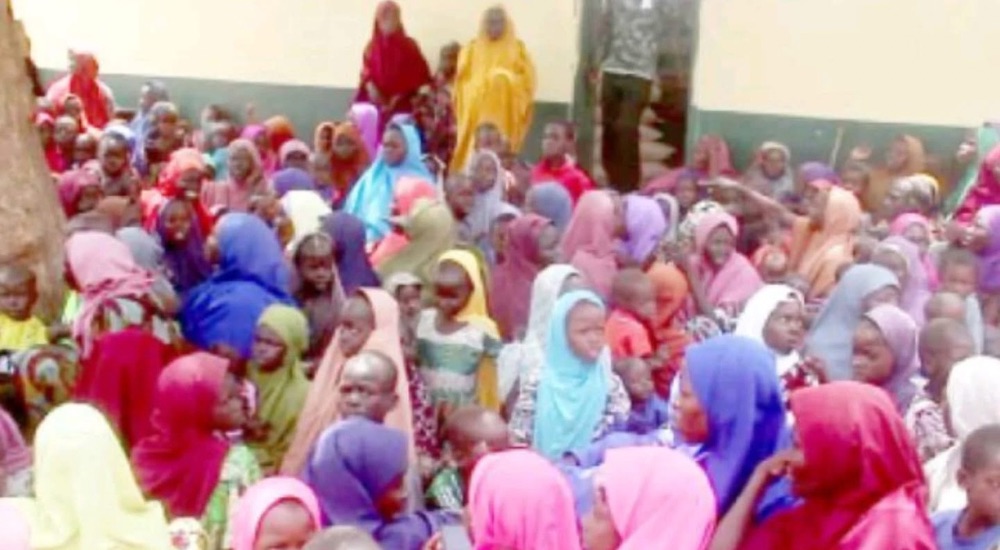
    Victims rescued from the recent mass abduction in Ngoshe, Gwoza Local Government Area of Borno State, have recounted the harsh conditions they endured during more than three months in Boko Haram captivity.

    The victims were among hundreds of residents abducted on March 3 when insurgents raided communities in Ngoshe, a border town near the Mandara Mountains. The attack resulted in the kidnapping of more than 400 people, mostly women and children.

    Troops of Operation Hadin Kai recently rescued 360 captives from terrorist hideouts in the Mandara Mountains. The freed victims are currently receiving care at the Pulka Internally Displaced Persons (IDPs) camp, where they were visited on Monday by Borno State Governor, Babagana Umara Zulum.

    Speaking about her experience, one of the victims, Aisha Bukar, said she spent three months and two weeks in captivity, surviving mainly on raw corn soaked in water.

    According to her, the captives were fed only once a day throughout their ordeal.

    “We survived on soaked raw corn and ate only once daily. That was how we lived for more than three months,” she said, adding that many of the victims were still struggling to adjust to normal meals after their rescue.

    Another survivor, Hafsat Musa, said she lost her husband and three children while in captivity.

    Musa recalled being beaten during the abduction before being taken into the mountains, where the captives were held in a cave under severe conditions.

    “We were left without food, proper shelter or the opportunity to bathe. Hunger and starvation were constant. During my time there, I lost my husband and my three children,” she said.

    She alleged that food sent by the group’s leader was often diverted by subordinates, leaving many captives hungry and weak.

    Musa also revealed that another woman held alongside her lost four of her seven children during the ordeal and only learned of the tragedy after arriving at the camp.

    Another freed victim, Zainab Abubakar, said the hostages were fed only once daily and expressed gratitude for their rescue.

    Most of the survivors said the conditions they experienced remain similar to what many captives still in the terrorists’ custody are enduring.

    One of the rescued men, Idrissa Mustapha, offered a different account. He said he was taken while breaking his Ramadan fast and was later housed by one of the insurgent leaders.

    According to him, he was not subjected to physical abuse and was provided meals regularly during his captivity.

    Meanwhile, Governor Zulum confirmed that 357 captives were released in the latest rescue effort, while dozens of others had regained their freedom in earlier phases, bringing the total number of released victims to 434.

    The governor said the state government had released funds for the rehabilitation of Ngoshe community to facilitate the safe return of displaced residents.

    He noted that discussions were ongoing with community leaders and security agencies to ensure the voluntary, safe and dignified return of residents willing to resettle in the area.

    Zulum commended President Bola Ahmed Tinubu, the Nigerian Armed Forces, the Department of State Services, the Office of the National Security Adviser, the Civilian Joint Task Force, vigilantes and hunters for their roles in securing the victims’ release.

    He also directed the distribution of food and other relief materials to the rescued persons.

    The freed captives are currently receiving medical attention, psychosocial support and rehabilitation services before their eventual reintegration into their communities.

    Freed Ngoshe Victims Recount Ordeal In Boko Haram Captivity is first published on The Whistler Newspaper

  • Kenyan Police Tear-Gas Protesters Over U.S. Ebola Facility

    Kenyan Police Tear-Gas Protesters Over U.S. Ebola Facility

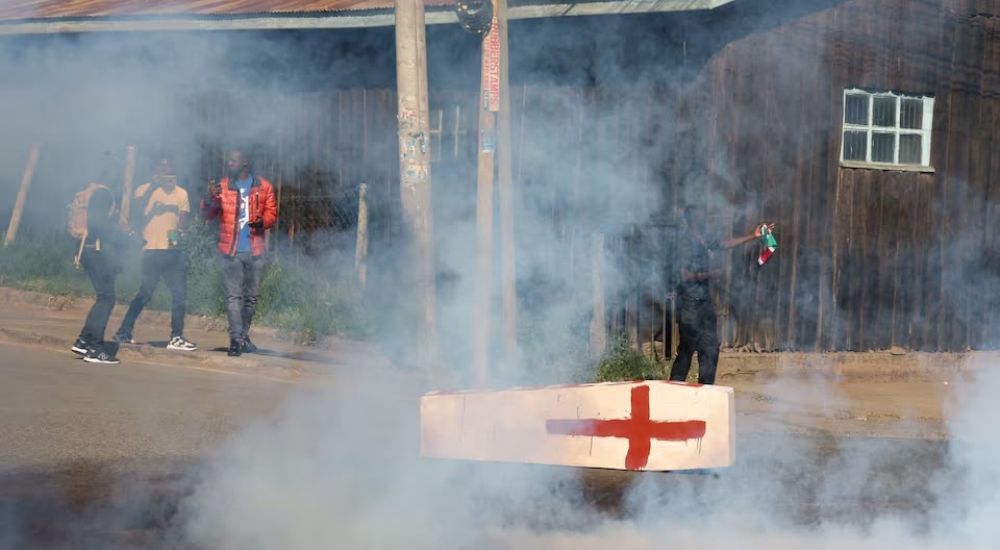
    Kenyan police fired tear gas on Tuesday to disperse protesters in the central town of Nanyuki opposing a proposed United States-backed quarantine facility for Americans exposed to Ebola, as Washington pressed ahead with construction despite court orders barring further work.

    The proposed 50-bed unit, to be built on a Kenyan air force base at Laikipia, has angered many Kenyans who accuse the United States of offloading the health risk of caring for those exposed to the ongoing Ebola outbreak in eastern Democratic Republic of Congo and Uganda.

    Two protesters were killed in demonstrations at the same location last week.

    Police fired tear gas early on Tuesday to scatter small groups who had gathered in Nanyuki, where frustration has deepened as both Kenyan and United States authorities have publicly reaffirmed their commitment to the project despite the court rulings.

    One protester carried a white cross bearing the words “Respect Ebola” in red lettering.

    The Trump administration has said it “cannot and will not allow” any Ebola cases to enter the United States, departing from the approach taken during the 2014-2016 West Africa outbreak when several infected American nationals were treated on home soil.

    The Nanyuki facility is intended for Americans who have been exposed to the virus but remain asymptomatic. Those who go on to develop symptoms would be transferred to other countries for treatment, according to United States officials.

    United States military planes have continued to ferry staff and equipment into the base even after Kenyan courts issued orders blocking the project, according to United States and diplomatic sources and flight tracking data.

    Satellite imagery shows a growing build-up of white tents on approximately 11 acres of cleared land within the Laikipia Air Base since 27 May.

    The United States said it was aware of the court challenge and was “working with the Kenyan government to resolve any objections.”

    Kenyan officials have said the facility would also serve Kenyan and other foreign nationals, though United States officials have not confirmed this.

    Kenyan Police Tear-Gas Protesters Over U.S. Ebola Facility is first published on The Whistler Newspaper

  • ‘Real King of Pop is Janet Jackson, not Michael Jackson’ – Singer, Amaarae claims

    ‘Real King of Pop is Janet Jackson, not Michael Jackson’ – Singer, Amaarae claims

    Ghanaian-American singer, Amaarae has claimed that Janet Jackson is more deserving of the title “King of pop” than her late brother, Michael Jackson. 

    The ‘Sad Girls Love Money’ crooner made the claim while speaking on the impact of Janet Jackson’s 1997 album ‘The Velvet Rope’ Pitchfork.

    “Every Janet Jackson’s album is fantastic. But ‘The Velvet Rope’ is the best. If I was conscious in 1997 when the album dropped, I would have played it nonstop. It’s so vulnerable, sexy, aggressive and experimental. 

    “Janet, to me, is the real king of pop. No shade to Michael Jackson,” she said. 

    ‘Real King of Pop is Janet Jackson, not Michael Jackson’ – Singer, Amaarae claims

  • Again, Rev Dachomo cries out over fresh death threats 

    Again, Rev Dachomo cries out over fresh death threats 

    The Regional Chairman of the Church of Christ in Nations (COCIN) for Barkin Ladi Local Government Area of Plateau State, Rev. Ezekiel Dachomo, has once again cried out over a fresh death threat and bounty placed on his head by people and groups he described as Islamist extremists and terrorists.

    The outspoken man of God, who has been very vocal in speaking about alleged Christian genocide in Plateau State in particular and the Middle Belt in general, took to his X handle on Monday to reveal that he and three other men of God have been marked for death for speaking the truth to the government.

    Dachomo, who just came back to the country after spending some time in India to attend to his health, said he was surprised to see that the death threats against him have been intensified with the extremists increasing an earlier bounty that was placed on him, urging Muslims to hunt him down and kill him.

    “They have marked me for death for speaking the truth”, Rev Dachomo said, noting that he is not scared of death, adding that as a human being, it is natural for him to be scared.

    “I am among the three people they have marked for death in this country; they have publicly declared that anyone who kills any one of us will be rewarded,” he wrote.

    He noted that his only crime is speaking the truth, which has made him a target for the terrorists, but in the face of such threats, he cannot abandon his people as he must speak for them.

    “My name has become a target, my life has been priced by men who hate the truth, yet even with the threats, the fear, and the danger that follows me every day, I cannot abandon my people.

    “Every morning, I wake up knowing that there are those who wish I would not see another sunrise; every night, I sleep not knowing what tomorrow may bring, but how can I remain silent when innocent people are crying? How can I turn my back when widows are mourning, children are becoming orphans, and families are being buried in sorrow

    “I have seen mothers weep over the lifeless bodies of their children; I have listened to little boys and girls ask questions that no child should ever have to ask: Where is my father, why did they kill my mother, when is she coming back home? Their tears have become my tears, their pain has become my burden.

    “Many times people ask me if I am afraid, the truth is that I am human, I know what fear feels like, I know what it means to look over your shoulder, I know what it means to receive threats and know that people are waiting for an opportunity to silence you, but I also know that God has not given us a spirit of fear, but of power, and of love, and of a sound mind as written in 2 Timothy 1:7.

    “When I remember the words of our Lord Jesus Christ, I find strength: ‘Blessed are they which are persecuted for righteousness’ sake, for theirs is the kingdom of heaven’, Matthew 5:10.

    “The path of truth has never been easy. The prophets suffered, the apostles suffered, even our Savior suffered, yet they stood firm because they knew that darkness can never overcome the light

    “There are days when the burden feels heavy, there are nights when the cries of suffering families echo in my heart, but then I remember Isaiah 41:10, ‘Fear thou not, for I am with thee, be not dismayed, for I am thy God, I will strengthen thee, yea, I will help thee’; those words remind me that I do not walk this road alone

    “If speaking for the voiceless makes me a target, then I will continue to speak; if standing with the oppressed puts my life at risk, then I will continue to stand; if defending my people means carrying a cross of persecution, then by God’s grace I will carry it

    “For every child who has lost a parent, for every mother who sleeps with tears on her pillow, for every father who has been taken from his family, and for every believer suffering because of their faith, I will not stop standing with them, my life is in God’s hands.

    “They may threaten us, they may try to silence us, they may put a reward on our heads, but our hope is not in man, it is in God, and as long as He gives us breath, we will continue to stand with our people, speak the truth, comfort the brokenhearted, and shine His light in the midst of darkness,” he said.

    Again, Rev Dachomo cries out over fresh death threats 

  • Many arrested as Kenyans protest American Ebola quarantine centre 

    Many arrested as Kenyans protest American Ebola quarantine centre 

    Several protesters were arrested on Monday as demonstrations intensified against the construction of an Ebola quarantine centre intended to accommodate American citizens arriving from the Democratic Republic of Congo (DRC) in the central Kenyan tourist town of Nanyuki.

    The facility, located at the Laikipia Air Base beneath the slopes of Mount Kenya, is designed to quarantine Americans travelling from the DRC, where authorities continue to battle a significant Ebola outbreak.

    Police moved to disperse demonstrators who gathered near the air base, firing tear gas and arresting several individuals after protesters staged a symbolic display by carrying a coffin bearing the inscription “Ebola.” Some demonstrators also wore protective gear to express their opposition to the project.

    Kenya has never recorded a confirmed case of Ebola, a fact protesters cited as justification for resisting the establishment of the quarantine facility.

    “We don’t have that disease in this country… they are bringing a virus into our country,” one protester, 30-year-old Zipporah Wachira, said during the demonstration.

    The quarantine centre, which is nearing completion, is expected to house 50 isolation beds and be operated by American personnel. The project has generated controversy since it was announced, triggering an earlier round of protests on June 1. Human rights groups reported that two people died during those demonstrations, although the circumstances surrounding the deaths remain unclear.

    Construction was temporarily halted following an order by Kenya’s High Court, while local political leaders in Laikipia have openly opposed the initiative.

    Despite the resistance, President William Ruto’s administration has insisted the project will proceed, citing the longstanding health partnership between Kenya and the United States.

    Speaking last week, President Ruto defended the decision, saying the United States had supported Kenya’s health sector for nearly three decades.

    “The American people and government have been partners with us on matters of health for close to 25 to 30 years,” he said, adding that rejecting Washington’s request to establish the facility would appear “very inhuman.”

    Kenya’s Health Ministry has also sought to reassure the public, maintaining that the facility would serve both Kenyan and American nationals if necessary.

    The United States has pledged approximately $13.5 million to strengthen Kenya’s Ebola preparedness, including support for the quarantine centre.

    Many arrested as Kenyans protest American Ebola quarantine centre 

  • BBNaija Reunion: ‘Love has shown me shege’ – Kola

    BBNaija Reunion: ‘Love has shown me shege’ – Kola

    Former Big Brother Naija Season 10 housemate, Kola, has revealed that he has not been lucky with love.

    Speaking ahead of the reunion, which premiered on Monday night, Kola said he has had a rough love journey. 

    According to him, love has shown him “shege.”

    He, however, said he is grateful to have experienced love.

    “Love has shown me shege. The funny thing is that some people die without never falling in love. So, the joy is that every time you fall in love, you should be happy that you are in love because not everyone gets to experience it,” he said. 

    DAILY POST recalls that during the show, Kola was famous for relentlessly expressing his love for Dede, who never reciprocated.

    After the show, Dede said she still wouldn’t have considered Kola even if she doesn’t have a boyfriend outside.

    She explained that the Canada-based businessman was not her ideal man.

    BBNaija Reunion: ‘Love has shown me shege’ – Kola

  • Nigerian labour leader dies in Geneva

    Nigerian labour leader dies in Geneva

    Chairman of the Lagos State Joint Negotiating Council, JNC, Domingo Michael Adeleke, has died in Geneva after a brief illness.

    Adeleke was in Switzerland as part of Nigeria’s delegation to the 114th Session of the International Labour Conference (ILC) in Geneva.

    The deceased reportedly became ill and was later taken for medical attention but subsequently passed away.

    His death was confirmed by an official of the Nigeria Labour Congress, NLC, who described Adeleke as a committed trade unionist dedicated to the welfare of workers.

    “It is with deep sorrow that the Nigeria Labour Congress and the entire trade union movement in Nigeria, especially the 2026 Workers’ Delegates to the International Labour Conference, announce the passing of Comrade Domingo Michael Adeleke, who died today in Geneva after a brief illness while attending the 114th Session of the International Labour Conference,” the official said.

    A member of the Nigeria Civil Service Union, NCSU, Adeleke served as Chairman of the Lagos State Joint Negotiating Council, where he was involved in labour-related advocacy and workers’ welfare initiatives.

    According to the NLC, he remained committed to the promotion of decent work and social justice throughout his career.

    Nigerian labour leader dies in Geneva